




16th Century Wood Carving
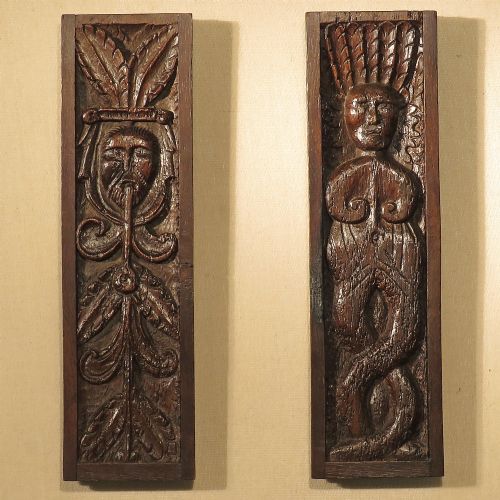
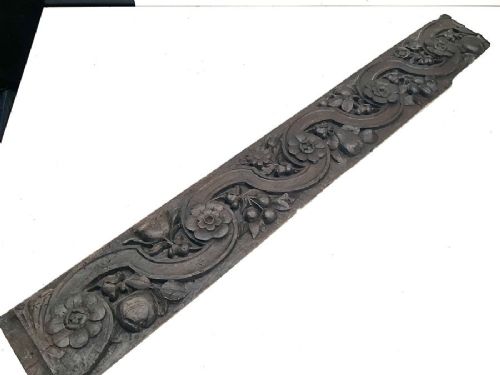
These pieces of 16th century wood carving bring the hand of the Renaissance bench worker directly into a room.
16th Century Wood Carving
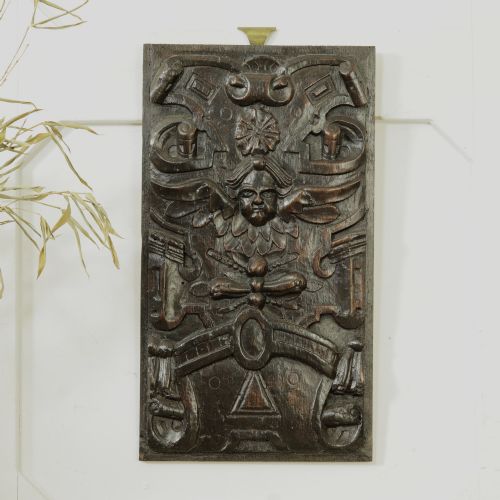
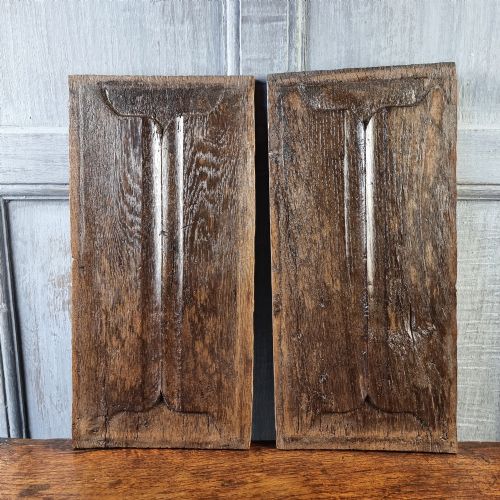
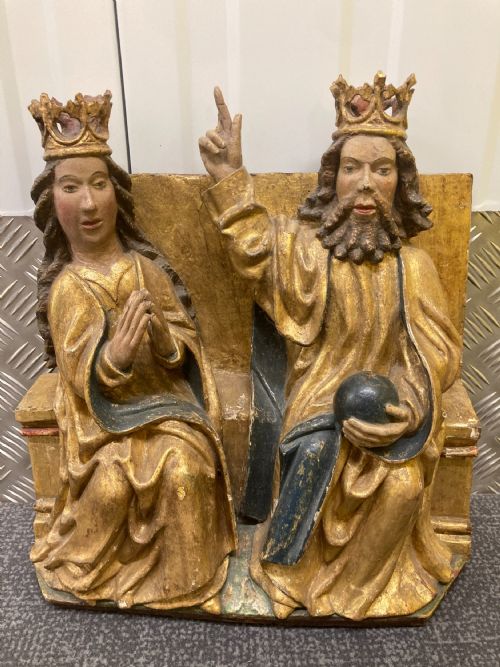
Buyers seeking 16th century wood carving encounter architectural fragments, relief panels, and figural sculptures that served devotional or domestic purposes. Oak and walnut dominate the selection, often appearing in English linenfold panels, Flemish devotional groups, and French Renaissance architectural elements.
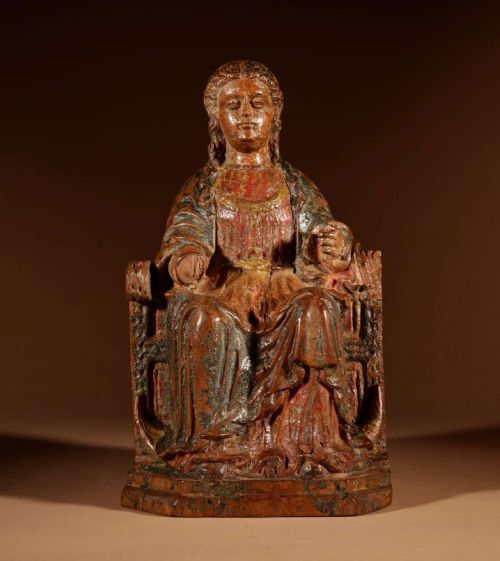
The objects on this page range from small panel fragments to substantial figures of saints, Madonnas, and biblical scenes. Continental workshops supplied many of the limewood and walnut sculptures, while English makers produced dense oak coffers and wall panels.
Alongside authentic period work, buyers find later interpretations and revivals reflecting Tudor and Elizabethan designs. These later pieces share the heavy timber construction and surface treatment of the earlier examples.
Materials and construction methods
Carpenters and carvers shaped these pieces primarily from seasoned oak and walnut, utilising hand chisels and gouges to remove material along the grain. Limewood also served sculptors who required a tight, predictable matrix for delicate facial expressions and drapery folds.
Many surfaces received layers of gesso followed by polychrome paint and gold leaf, a finish that united multiple blocks of timber and protected the porous substrate. Panels were joined using pegged mortise and tenon joints designed to accommodate the natural seasonal movement of solid wood.
Listings feature oak, walnut, and limewood as the primary timber supports, occasionally enhanced with polychrome paint and gold leaf.
Standards of execution and survival
Quality rests upon the depth of the relief and the confidence of the cutter's chisel work in handling anatomy and drapery. Master carvers achieved three-dimensional movement within shallow panels, whereas lesser workshops relied on repetitive geometric stamping and flat surface incisions.
The degree of original surface survival dictates the visual impact of each piece, distinguishing items retaining traces of polychrome pigment or parcel gilt from those stripped to bare timber. Structural integrity also separates workshop fragments from complete, undisturbed panel fronts and figures.
Hugues Sambin
The 16th Century Wood Carving Glossary
- Linenfold
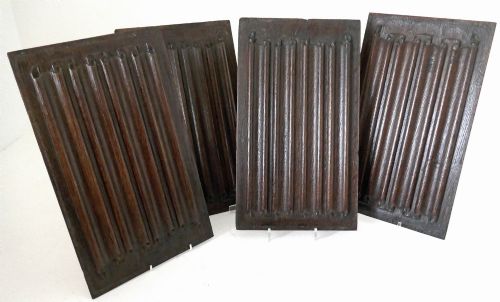
- A style of wood panel carving imitating folded parchment or linen, common in Tudor interior architecture. The pattern creates vertical shadows across the face of the timber.
- Polychrome
- Painted in several colours, frequently applied over a gesso ground on wooden sculptures and panels. This surface treatment brought realism to religious figures.
- Architectural fragment
- A surviving piece of a larger building structure, such as a carved bracket, frieze, or beam. These items were salvaged when buildings were altered or demolished.
- High-relief
- A sculptural technique where figures project significantly from the background plane, often detached from it in places. This approach creates deep shadows and strong spatial depth.
- Terme
- A pedestal figure or pillar that tapers towards the base, topped with a bust or head. Renaissance furniture makers used these architectural supports on commodes and cabinets.
16th Century Wood Carving: Frequently Asked Questions
How were linenfold panels used?
Carpenters fitted these vertical timber boards into interior wall panelling and coffer fronts to decorate plain rooms. The design added texture and rigidity to domestic spaces without requiring figurative carving.
Over time, these panels found new life in various wall arrangements as interior fashions shifted across the centuries.
What is polychrome paint on wood?
Makers applied mineral pigments mixed with a binder over a prepared gesso layer on wooden religious sculptures. This finish brought lifelike colour to the garments and flesh tones of saints and biblical figures.
Most surviving examples show fragmented traces of this paint after centuries of cleaning and environmental exposure.
How do I distinguish regional styles?
English carvers typically worked in dense oak, favouring structural utility and flat geometric patterns like linenfold. Continental workshops in Flanders and France utilised walnut and limewood for more expressive figural sculptures influenced by the Renaissance.
Examining the tool marks and timber choice reveals the geographic origin of each piece.