


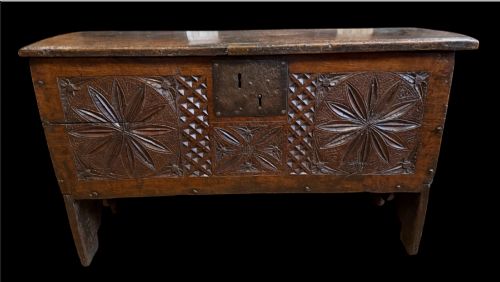


16th Century Oak Coffer
A 16th century oak coffer is a heavy domestic storage chest that anchors a room with dense grain and centuries of honest use.
16th Century Oak Coffer
A 16th century oak coffer serves as a robust domestic trunk designed for holding valuables, textiles, and documents in early homes. These pieces emerge from periods including the 16th, 17th, and 18th centuries, spanning styles such as Tudor, Elizabethan, Gothic, Jacobean, and Flemish Renaissance. Buyers most frequently encounter sturdy boarded, plank, and carved variants originating from English, Welsh, French, and Spanish workshops.
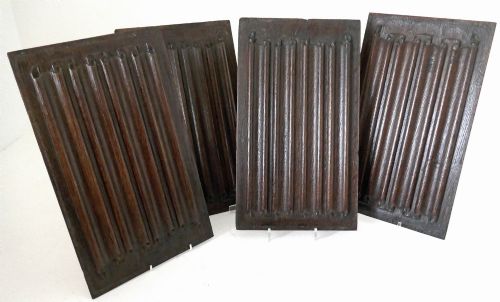
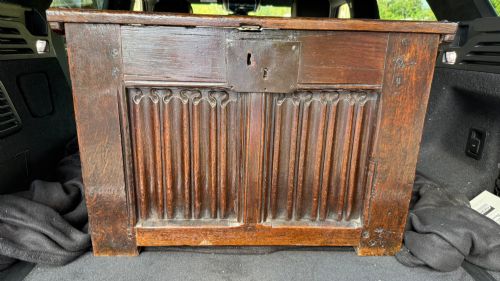
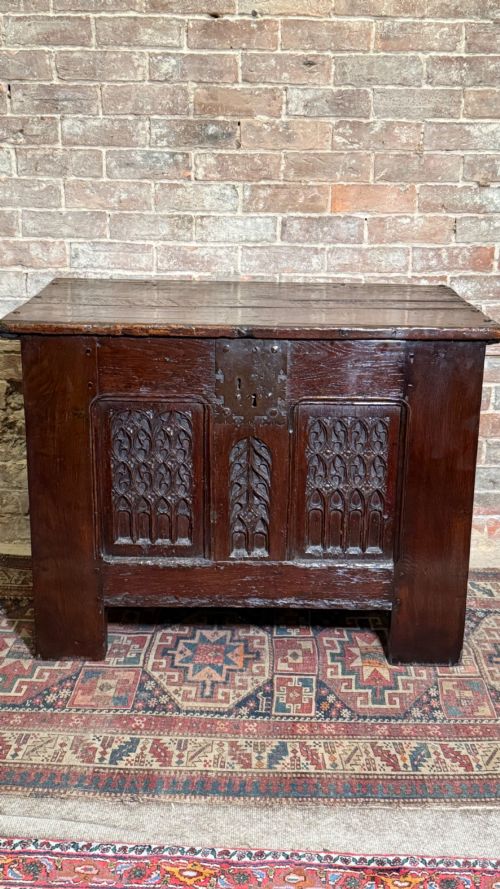
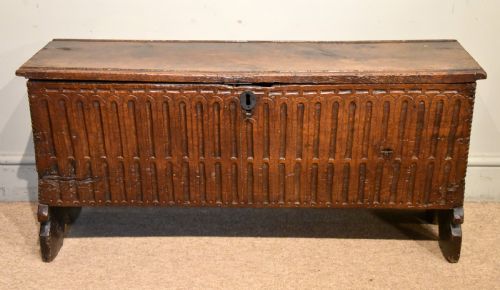
The primary forms on this page include storage chests, coffers, meal arks, travel strong boxes, and wall panels. Pieces range from simple plank construction to heavily carved fronts bearing linenfold motifs, figural scenes, and fluted detailing. Regional differences appear between English examples and Welsh or continental pieces through distinct carving depth and structural joinery.
Materials and Construction Methods
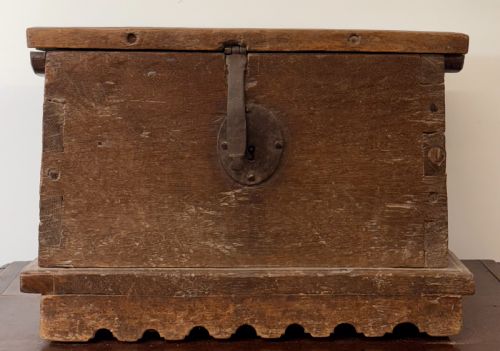
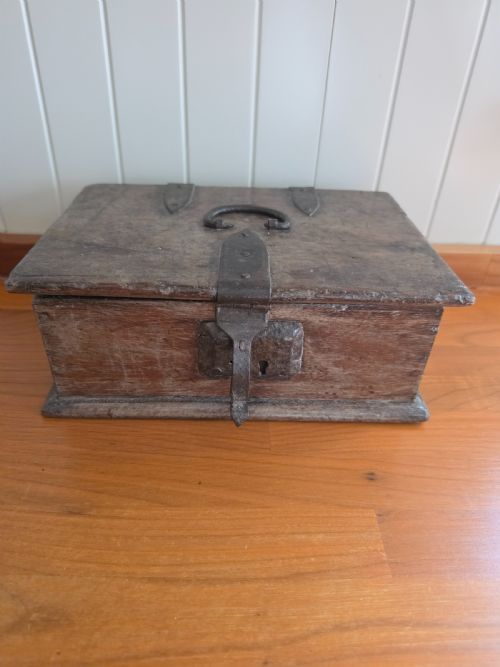
Makers built these pieces primarily from solid English, Welsh, and continental oak, occasionally incorporating walnut, iron, and wrought iron for reinforcement and hinges. Boards were cleft or sawn by hand, yielding irregular grain patterns and deep texture that respond directly to age and wear. Iron bands and straps provided necessary security for travelling strong boxes and parish chests.
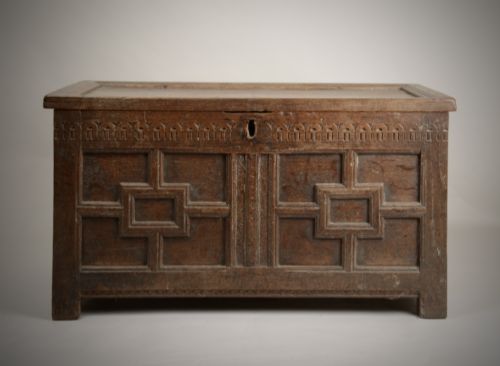
Joinery relied on heavy pegging, boarded plank assembly, and frame-and-panel construction before the widespread use of metal nails. Carvers utilised gouges and chisels directly on the timber to produce high-relief panels, linenfold folds, and mythological scenes. Surfaces remained largely unpolished, relying on wax and centuries of handling to develop a deep natural patina.
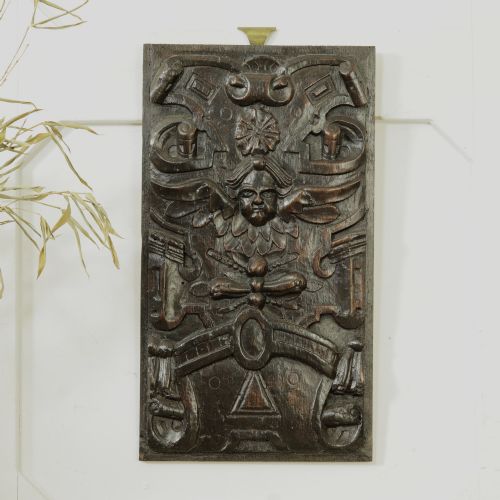
Some early panels depict mythological figures like Venus and Dido alongside fighting birds carved directly into the oak.
Assessing Quality and Authenticity
Quality rests upon the integrity of the original timber and the crispness of the hand carving rather than surface polish or symmetry. Pieces retain value when original boards, base plates, and forged iron strapwork survive intact without extensive modern timber replacement. The depth and skill of the chisel work on carved panels distinguish standard workshop output from exceptional commissions.
Proportion and structural honesty separate superior survivors from heavily altered examples reconstituted from later timber. The survival of original lid boards, cleats, and authentic peg fastenings determines the true standing of a coffer. Heavy restoration of the lower rails or base boards alters the balance of an early piece.
The 16th Century Oak Coffer Glossary
- Linenfold
- A style of carved wooden panelling that resembles folded fabric, popular on Tudor and Elizabethan furniture. This motif gives flat surfaces texture and depth.
- Boarded coffer
- A chest constructed from thick planks joined directly at the edges with pegs or nails rather than a framed skeleton. These represent an earlier and more primitive method of chest building.
- Meal ark
- A specialised chest or bin used for storing oatmeal or grain in rural households. They often feature sloping lids to shed flour and keep contents dry.
- Strong box
- A small, heavily iron-bound chest designed for securing currency, documents, or valuables during travel. They rely on complex internal locks and straps.
- High-relief
- A sculptural technique where figures and motifs project far out from the background wood. This style appears on Flemish and late Elizabethan panels.
16th Century Oak Coffer: Frequently Asked Questions
How were these chests used?
These chests served primarily for storing household textiles, blankets, silver, and important legal documents securely in domestic and ecclesiastical settings. In an era before built-in wardrobes, a coffer acted as the main movable wardrobe and bench.
Travellers also utilised iron-bound strong boxes for moving money and valuables across long distances. Parish churches kept larger coffers to store vestments, parish registers, and church funds safely under multiple locks.
How do I live with a coffer?
A coffer fits easily into modern living spaces as a coffee table at the foot of a bed, or as a hallway storage bench. The flat top surface bears everyday objects while the interior conceals clutter.
Keep these pieces away from direct heat sources and radiators to prevent the dry oak from splitting. Apply occasional beeswaxes to maintain the timber rather than modern varnishes.
How do I tell periods apart?
Early 16th century pieces often feature simple boarded construction, Gothic tracery, or linenfold panels reflecting Tudor tastes. As the century progressed towards the Elizabethan and Jacobean eras, carved panels incorporated strapwork, fluting, and figural scenes.
Joinery techniques also shift from simple plank boxes to more complex frame-and-panel assemblies held together with wooden pegs. Later revival pieces from the 19th century often display mechanical saw marks and lighter timber weight.
What is a boarded coffer?
A boarded coffer is constructed by nailing or pegging thick vertical planks of oak directly together at the corners. This represents an older, simpler method of carpentry that pre-dates advanced frame-and-panel joinery.
These pieces rely on the sheer thickness of the timber for structural strength without an internal frame. They often have V-notch decoration and simple board lids.