57,149  PAGES BROWSED TODAY PAGES TODAY • 221 ANTIQUES UPLOADED TODAYNEW ARRIVALS
GIFTS
221 ITEMS ADDED TODAY
Sort Order
Items Per Page
Browse Categories
Sort order
Relevant Links
Items per page
ID #SA1203487
SOLD
Email Phone
Save
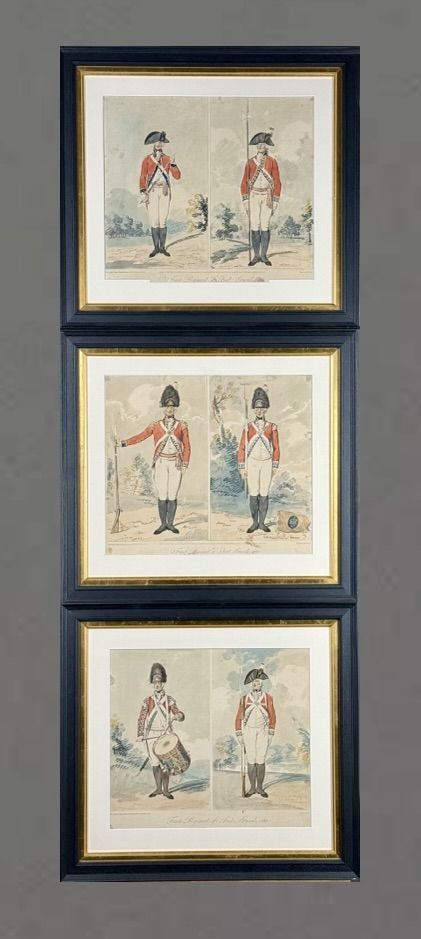
The First Regiment of Foot 1660 - Three Hand Coloured Military Engravings by Thomas Kirk After Edward Dayes, London, 1792
Sold by The English Interior
sold SA1203487
Sorry, but this item has been sold.
The English Interior

The English Interior

Sellingantiques Verified Since Jul 2023
Browse dealers 74 items
  • About Us
    Specialist dealer in 17th century to the 20th century fine art, furniture and decorative antiques for your home.
Id #SA1203487
PDF SHARE
SAVE

The First Regiment of Foot 1660 - Three Hand Coloured Military Engravings by Thomas Kirk After Edward Dayes, London, 1792

18th century
Sold 3 April 2026 · The English Interior
This “First Regiment of Foot 1660 - Three Hand Coloured Military Engravings by Thomas Kirk After Edward Dayes, London, 1792” found a buyer.

It was listed by The English Interior. Sold pieces stay on Sellingantiques as a record of what has passed through, and the next one is rarely far away.

Description

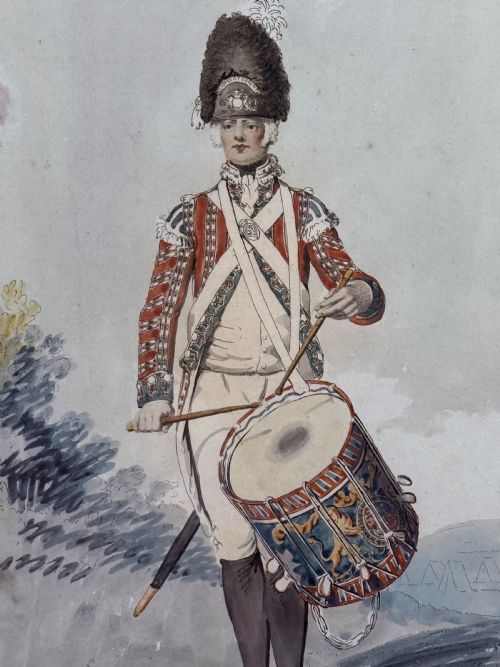
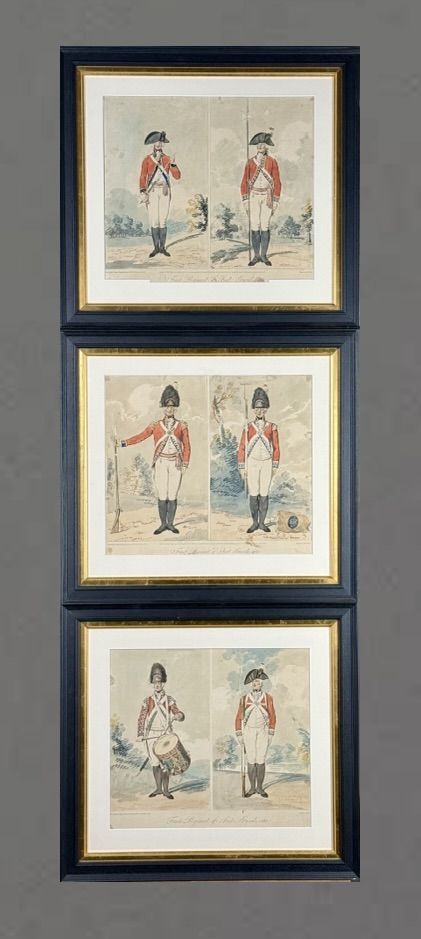
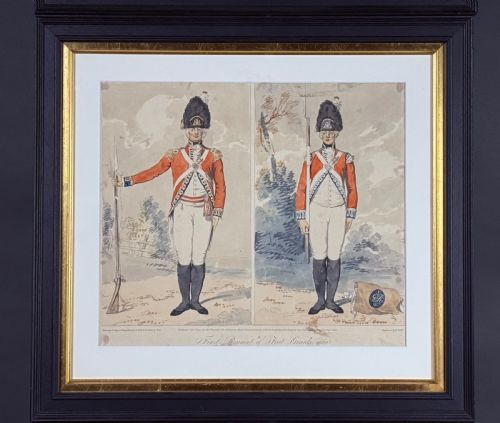
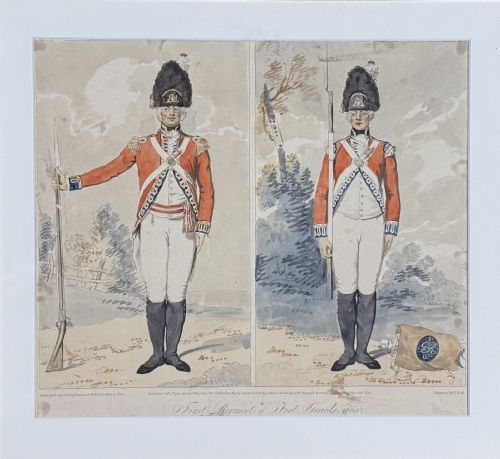
Three very rare, beautifully finished coloured plates from a series of nine military mezzotint/etchings showing the dress of the Foot Guards and the first nine regiments of foot with two figures on each plate. Published in London by Captain Hewgill of the Coldstream Guards and sold by John & Josiah Boydell. 1792-3, after a drawings by Edward Dayes. Nevill considers these to be "the most attractive representations of English uniforms ever executed" (page XXXI).

The regiment was raised at Bruges in 1656 by King Charles II whilst he was in exile in Belgium. The King, allied to the Spanish, was short of funds and so only five regiments were raised, the most loyal supporters formed 'the Royal Regiment of Guards'. Upon his restoration to England the King raised another Regiment of Foot Guards, namely the King's Regiment of Guards, for his protection. On the death of Thomas, Lord Wentworth in 1665, these two Regiments were joined to form the First Regiment of Foot Guards. this title remained from thence until 1815 when, due to the Regiment's actions at Waterloo, it was granted the present title - The Grenadier Guards. Often referred to as 'Pontius Pilate's Body Guard' the First Regiment of Foot is the oldest in the British Army, and was posted to North America during the French & Indian War 1757-1763; stationed in Canada & New York serving in Louisburg, Nova Scotia & Ticonderoga.

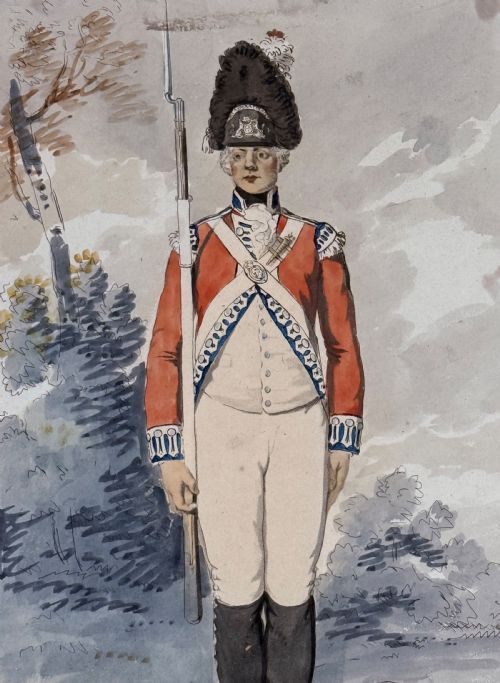
Apart from their rarity (very limited numbers being produced), the desirability of these fine images is assured as it is the work of the colourist that makes them so collectable. They are reputed to be the watercolour work of Joseph Mallord William Turner (1775-1851) who as a lad of seventeen was Dayes' apprentice, and it was to him that the task of tinting these fine military images fell (Carman xvii).

The technique of minimalist etched guidelines allowed full scope for the talented colourist to create subtle and interesting shading. A technique and individual style which was to be perfected to such great effect in his later works.

Edward Dayes who began his career as a pupil of William Pether and rose to become draughtsman to H.R.H. the Duke of York. Known as a painter of watercolours of a simple, yet graceful, character producing views of considerable merit; much like the character of the man himself. He taught drawing and wrote a book upon the subject. Although frequently praised for the excellence of his figure drawings (as may be seen from this fine plate) he, alas, took his own life, as a result of a loss of a contract, in May 1804.

The outline plate was etched by Thomas Kirk (fl.1785-97). A pupil of R. Cosway, Kirk became well known as an artist and engraver. He first exhibited at the Royal Academy in 1785 and twelve years later died of consumption, continuing to work right up to the end and being supported in his chair the day before his death to put the finishing touches to a proof. Dayes said of him that "He passed like a meteor through the region of art.”

Provenance: The collection of the late Willie Landels former editor of Harpers & Queen magazine.

Condition: Fine and bright, with minor staining to margins.

Each print of three in total: 49cm x 46xcm framed.

Price: £1400

Date of Manufacture

The English Interior has dated these Framed Military Engravings to the 18th Century.
Physical Dimensions
Height
46cm (18.11")
Width
49cm (19.29")
Depth
2cm (0.79")
Reference Numbers
Sellingantiques Reference
SA1203487
Description
Three very rare, beautifully finished coloured plates from a series of nine military mezzotint/etchings showing the dress of the Foot Guards and the first nine regiments of foot with two figures on each plate. Published in London by Captain Hewgill of the Coldstream Guards and sold by John & Josiah Boydell. 1792-3, after a drawings by Edward Dayes.
“
Nevill considers these to be "the most attractive representations of English uniforms ever executed" (page XXXI).
The English Interior
fig 1. Three stacked black frames with gold inner liners containing hand-coloured historical military engravings of soldiers in red coats.
fig 1. The First Regiment of Foot 1660 - Three Hand Coloured Military Engravings by Thomas Kirk After Edward Dayes, London, 1792

The regiment was raised at Bruges in 1656 by King Charles II whilst he was in exile in Belgium. The King, allied to the Spanish, was short of funds and so only five regiments were raised, the most loyal supporters formed 'the Royal Regiment of Guards'. Upon his restoration to England the King raised another Regiment of Foot Guards, namely the King's Regiment of Guards, for his protection. On the death of Thomas, Lord Wentworth in 1665, these two Regiments were joined to form the First Regiment of Foot Guards. this title remained from thence until 1815 when, due to the Regiment's actions at Waterloo, it was granted the present title - The Grenadier Guards. Often referred to as 'Pontius Pilate's Body Guard' the First Regiment of Foot is the oldest in the British Army, and was posted to North America during the French & Indian War 1757-1763; stationed in Canada & New York serving in Louisburg, Nova Scotia & Ticonderoga.
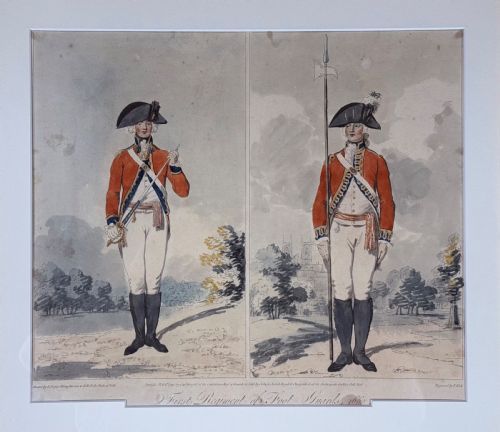
fig 2. Three stacked black frames with gold inner liners containing hand-coloured historical military engravings of soldiers in red coats.
fig 2. The First Regiment of Foot 1660 - Three Hand Coloured Military Engravings by Thomas Kirk After Edward Dayes, London, 1792

Apart from their rarity (very limited numbers being produced), the desirability of these fine images is assured as it is the work of the colourist that makes them so collectable. They are reputed to be the watercolour work of Joseph Mallord William Turner (1775-1851) who as a lad of seventeen was Dayes' apprentice, and it was to him that the task of tinting these fine military images fell (Carman xvii).
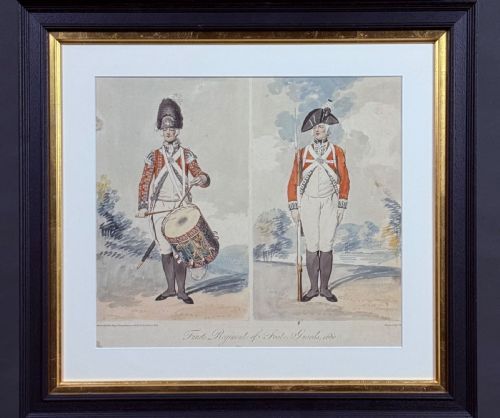
fig 3. Three stacked black frames with gold inner liners containing hand-coloured historical military engravings of soldiers in red coats.
fig 3. The First Regiment of Foot 1660 - Three Hand Coloured Military Engravings by Thomas Kirk After Edward Dayes, London, 1792

The technique of minimalist etched guidelines allowed full scope for the talented colourist to create subtle and interesting shading. A technique and individual style which was to be perfected to such great effect in his later works.
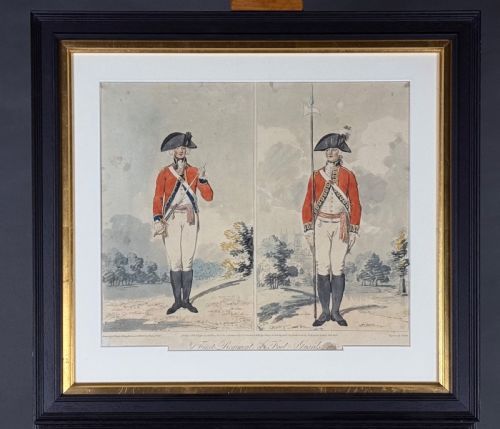
fig 4. Three stacked black frames with gold inner liners containing hand-coloured historical military engravings of soldiers in red coats.
fig 4. The First Regiment of Foot 1660 - Three Hand Coloured Military Engravings by Thomas Kirk After Edward Dayes, London, 1792

Edward Dayes who began his career as a pupil of William Pether and rose to become draughtsman to H.R.H. the Duke of York. Known as a painter of watercolours of a simple, yet graceful, character producing views of considerable merit; much like the character of the man himself. He taught drawing and wrote a book upon the subject. Although frequently praised for the excellence of his figure drawings (as may be seen from this fine plate) he, alas, took his own life, as a result of a loss of a contract, in May 1804.
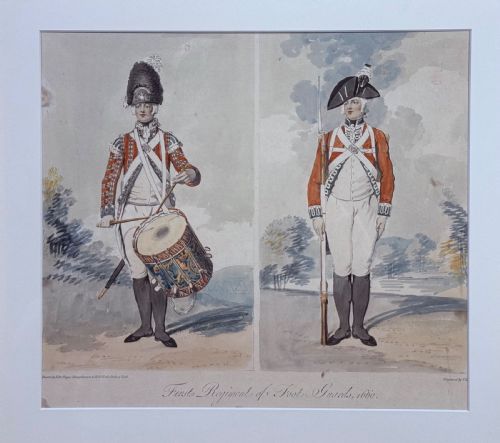
fig 5. Three stacked black frames with gold inner liners containing hand-coloured historical military engravings of soldiers in red coats.
fig 5. The First Regiment of Foot 1660 - Three Hand Coloured Military Engravings by Thomas Kirk After Edward Dayes, London, 1792

The outline plate was etched by Thomas Kirk (fl.1785-97). A pupil of R. Cosway, Kirk became well known as an artist and engraver. He first exhibited at the Royal Academy in 1785 and twelve years later died of consumption, continuing to work right up to the end and being supported in his chair the day before his death to put the finishing touches to a proof. Dayes said of him that "He passed like a meteor through the region of art.”
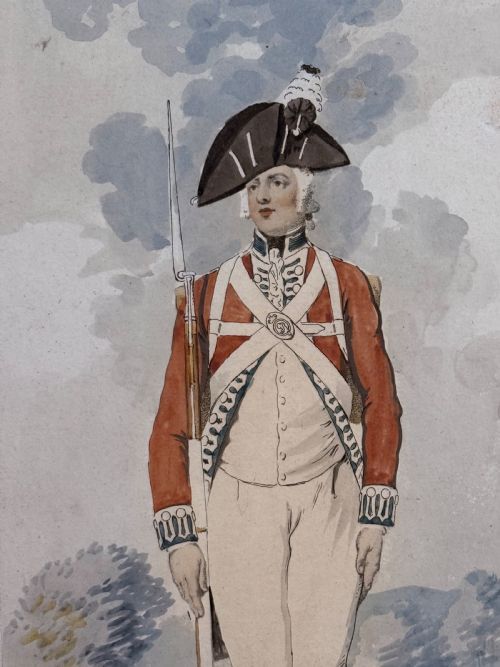
fig 6. Three stacked black frames with gold inner liners containing hand-coloured historical military engravings of soldiers in red coats.
fig 6. The First Regiment of Foot 1660 - Three Hand Coloured Military Engravings by Thomas Kirk After Edward Dayes, London, 1792

Provenance: The collection of the late Willie Landels former editor of Harpers & Queen magazine.

Condition: Fine and bright, with minor staining to margins.

Each print of three in total: 49cm x 46xcm framed.

Price: £1400

Date of Manufacture

The English Interior has dated these Framed Military Engravings to the 18th Century.

Height
46cm (18.11")
Width
49cm (19.29")
Depth
2cm (0.79")
Reference Numbers
Sellingantiques Ref
SA1203487
The English Interior
Sellingantiques verified Since Jul 2023

Specialist dealer in 17th century to the 20th century fine art, furniture and decorative antiques for your home.

Dealer Profile

You can view the stock and full dealer information on the The English Interior Profile Page
PDF SHARE
SAVE
Three stacked black frames with gold inner liners containing hand-coloured historical military engravings of soldiers in red coats. SOLD6+ MONTHS AGO
1 / 11
Archive I Three stacked black frames with gold inner liners containing hand-coloured historical military engravings of soldiers in red coats. SOLD6+ MONTHS AGO

The First Regiment of Foot 1660 - Three Hand Coloured Military Engravings by Thomas Kirk After Edward Dayes, London, 1792
Archive II Three stacked black frames with gold inner liners containing hand-coloured historical military engravings of soldiers in red coats. View II
Archive III Three stacked black frames with gold inner liners containing hand-coloured historical military engravings of soldiers in red coats. View III
Archive IV Three stacked black frames with gold inner liners containing hand-coloured historical military engravings of soldiers in red coats. View IV
Archive V Three stacked black frames with gold inner liners containing hand-coloured historical military engravings of soldiers in red coats. View V
Archive VI Three stacked black frames with gold inner liners containing hand-coloured historical military engravings of soldiers in red coats. View VI
Archive VII Three stacked black frames with gold inner liners containing hand-coloured historical military engravings of soldiers in red coats. View VII
Archive VIII Three stacked black frames with gold inner liners containing hand-coloured historical military engravings of soldiers in red coats. View VIII
Archive IX Three stacked black frames with gold inner liners containing hand-coloured historical military engravings of soldiers in red coats. View IX
Archive X Three stacked black frames with gold inner liners containing hand-coloured historical military engravings of soldiers in red coats. View X
Archive XI Three stacked black frames with gold inner liners containing hand-coloured historical military engravings of soldiers in red coats. View XI
Enlarged Archival View
Telephone 07860 363 882
Location
The Duke of Somersets House
Kirkgate
Tadcaster
North Yorkshire
LS24 9AD
United Kingdom

By appointment only.
Verified Since Jul 2023
Items For Sale 74
Items Sold 66
The English Interior
Verified Since Jul 2023
View Dealer Info
Location: The Duke of Somersets House, Kirkgate, Tadcaster, North Yorkshire, LS24 9AD , United Kingdom, , By appointment only.
Verified
Jul 2023
For Sale
74
Sold
66
Three stacked black frames with gold inner liners containing hand-coloured historical military engravings of soldiers in red coats.
THE FIRST REGIMENT OF FOOT 1660 - THREE HAND COLOURED MILITARY ENGRAVINGS BY THOMAS KIRK AFTER EDWARD DAYES, LONDON, 1792
Ref: SA1203487
Three stacked black frames with gold inner liners containing hand-coloured historical military engravings of soldiers in red coats.
Detail View 1
Detail View 2
Detail View 3
Detail View 4
Detail View 5
Detail View 6
Detail View 7
Detail View 8
Detail View 9
Detail View 10
Archival Detail
Every single antique dealer on our platform is individually approved by our internal team. We verify their professional trade history, ethical standards, and photographic quality to ensure a secure, high-standard buying environment. Upon joining, every dealer agrees to a strict 9-point code of conduct. While issues can occasionally arise, our dealers typically resolve them swiftly and directly with the buyer. In fact, since our founding in 2002, Sellingantiques has only had to step in to help resolve an issue on roughly five occasions—a true testament to the quality of our dealers and their dedication to your happiness.
Our dealers are highly experienced in packing and shipping fragile, high-value antiques. Because you are in direct contact with the dealer, you will be able to easily go through all available shipping and insurance options together to ensure your item arrives safely.
Antiques are the ultimate green purchase. By choosing historical pieces over newly manufactured goods, you completely eliminate the carbon footprint of modern mass production while preserving exceptional, timeless craftsmanship.
Written by Sellingantiques from the dealer’s photographs and listing
  • ObjectFramed Prints
  • Period18th century
  • StyleGeorgian
  • MaterialPaper, Wood, Glass
  • ColourMulticoloured
  • MotifsMilitary figures, Uniform details, Hand-coloured wash, Inscribed captions
  • SizeH 46 cm (18 in) x W 49 cm (19 in) x D 2 cm (1 in)

Eighteenth-century military engravings document the evolution of military uniforms, ranks, and equipment during a period of significant geopolitical conflict. They serve as primary visual records for historians, researchers, and collectors interested in military heritage.

These pieces typically involve copperplate or steelplate line engravings printed on laid or wove paper, subsequently finished with hand-applied watercolour pigments. They are generally housed in timber frames, often featuring gilded liners and glass protection.

Authentic period engravings exhibit plate marks impressed into the paper, distinct dot-matrix or ink-dot absence under magnification, and paper degradation consistent with age, such as natural oxidisation and toning. Modern reproductions usually display uniform digital printing patterns and lack plate impressions.

These works suit traditional study spaces, libraries, or hallway galleries where their historical narrative complements classic architectural details. Pairing them with dark wood furniture, leather upholstery, and brass accents creates a cohesive, scholarly aesthetic.

Preservation requires framing with acid-free mats and UV-blocking glazing to prevent paper degradation and fading from light exposure. Artworks should be hung away from direct sunlight, high humidity, and radical temperature fluctuations.
items
Add keywords to the filter
Price
£100
£250000
Era
Period
Style
Material
Origin
Stock Location
Recently Added
Online Payments
Categories