

A 2026 Guide by Sellingantiques
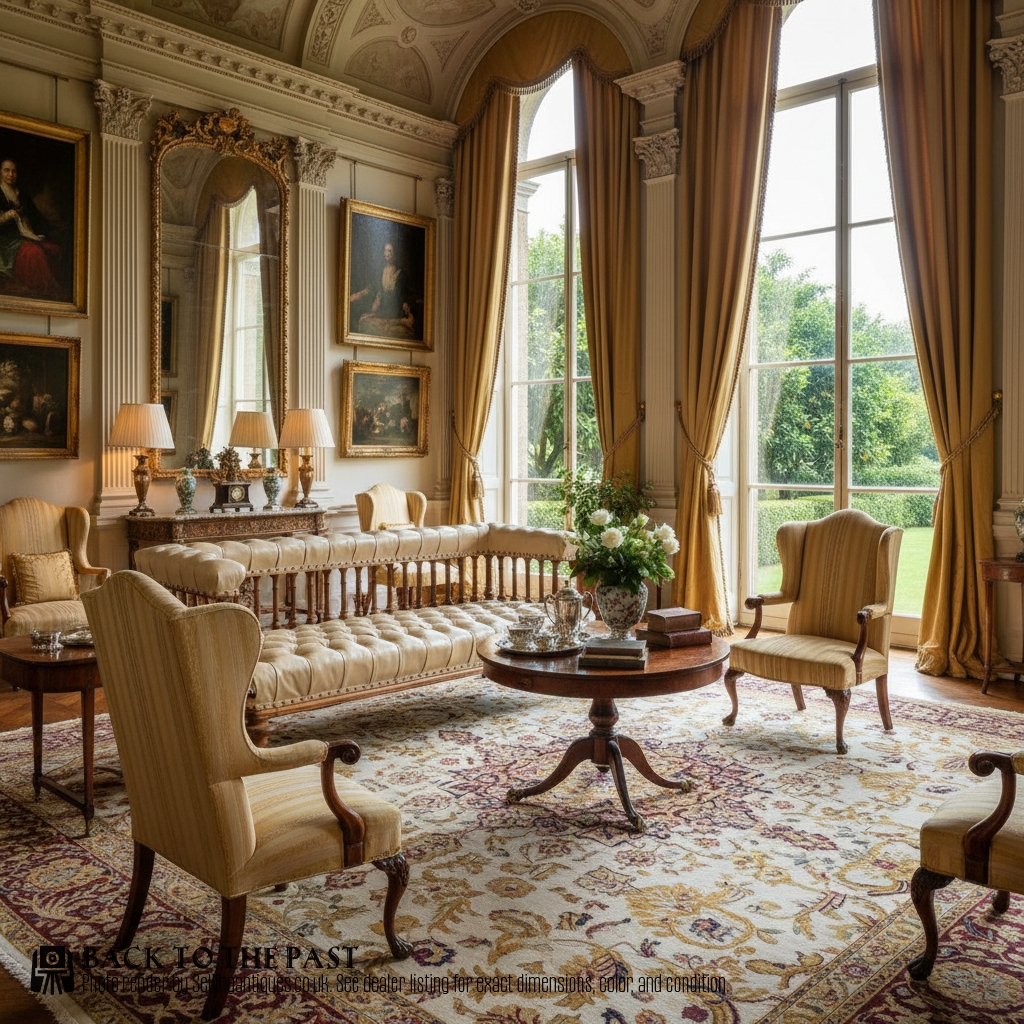
Large 19th Century Open Arm Sofa, 1870
Priced at £2,250 from Desired Effect Antiques Ltd
Gentlemen's clubs drove the early demand for antique leather sofas during the nineteenth century.
Victorian makers adapted domestic seating formats to handle constant daily use by heavy occupants in public rooms.
Check the overall proportions because Edwardian shifts towards relaxed posture lowered the seat heights and deepened the base.
Smoking rooms required surfaces that wiped clean easily without holding stale tobacco odours.
Most provincial towns supported local upholsterers who bought in standard frames to cover for prosperous regional clients.
Howard and Sons produced highly regarded upholstered frames incorporating their patented coil spring systems.
Holland and Sons supplied substantial seating to government buildings and prominent London clubs throughout the later nineteenth century.
Many fine antique leather sofas carry no stamps because the trade relied heavily on anonymous wholesale frame makers.
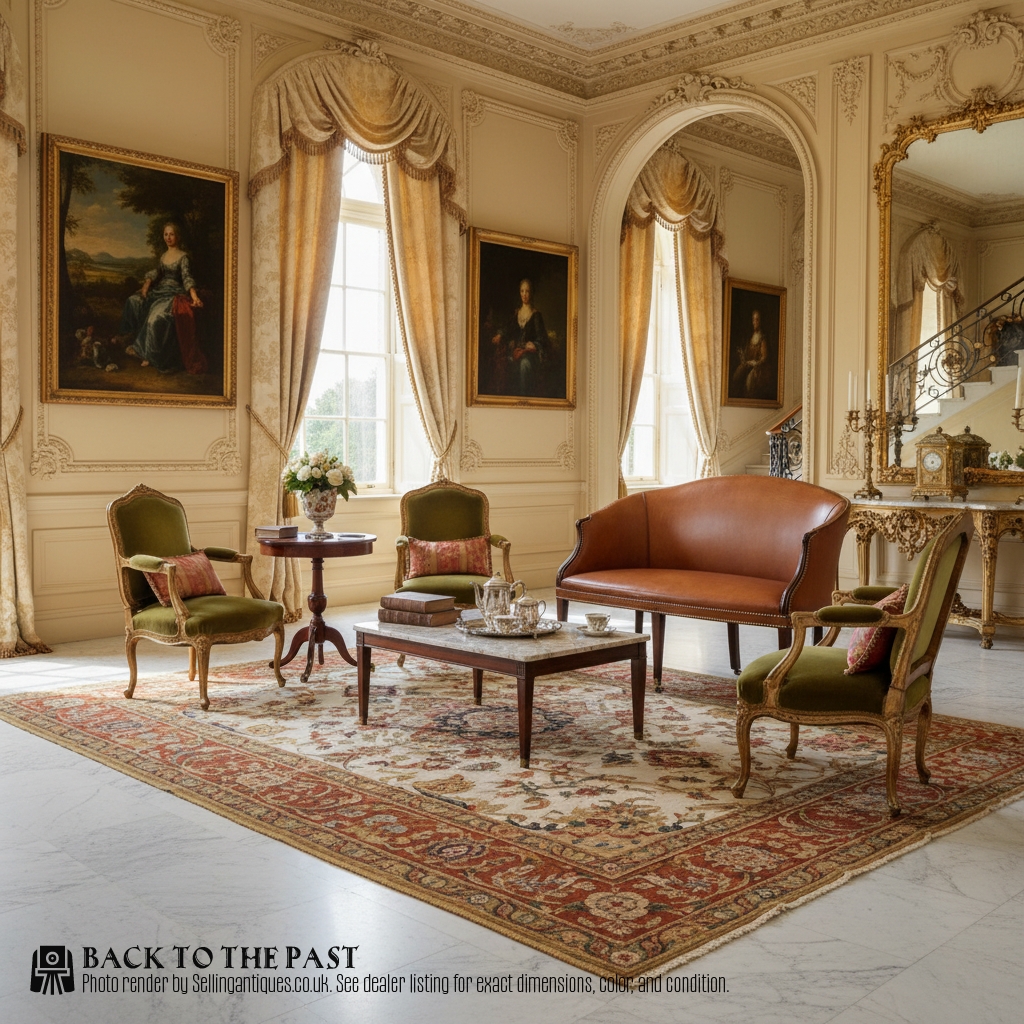
A Rare 18thc Hepplewhite Period Mahogany Sofa, 18th Century
Priced at £3,750 from W.J. Gravener Antiques Ltd.
The 2026 retail price guide for Antique Leather Sofas is drawn from a proprietary archive of over 1.1 million retail prices indexed by Sellingantiques since 2003. This guide relies exclusively on their own internal data; no external sources or auction records are used.
Analysing nearly 25 years of UK antique market history alongside current retail values, the data indicates that typical UK retail prices for Antique Leather Sofas range between £1,500 and £7,000. Entry-level prices generally fall under £1,500 and premium examples upwards of £7,000.
Deep buttoning creates a distinctive diamond grid pattern across the back and inside arms.
Brass castors often terminate the short turned front legs to allow movement across heavy carpets.
Sit on the front edge to feel the sprung seat foundation housed beneath the fixed leather cushion.
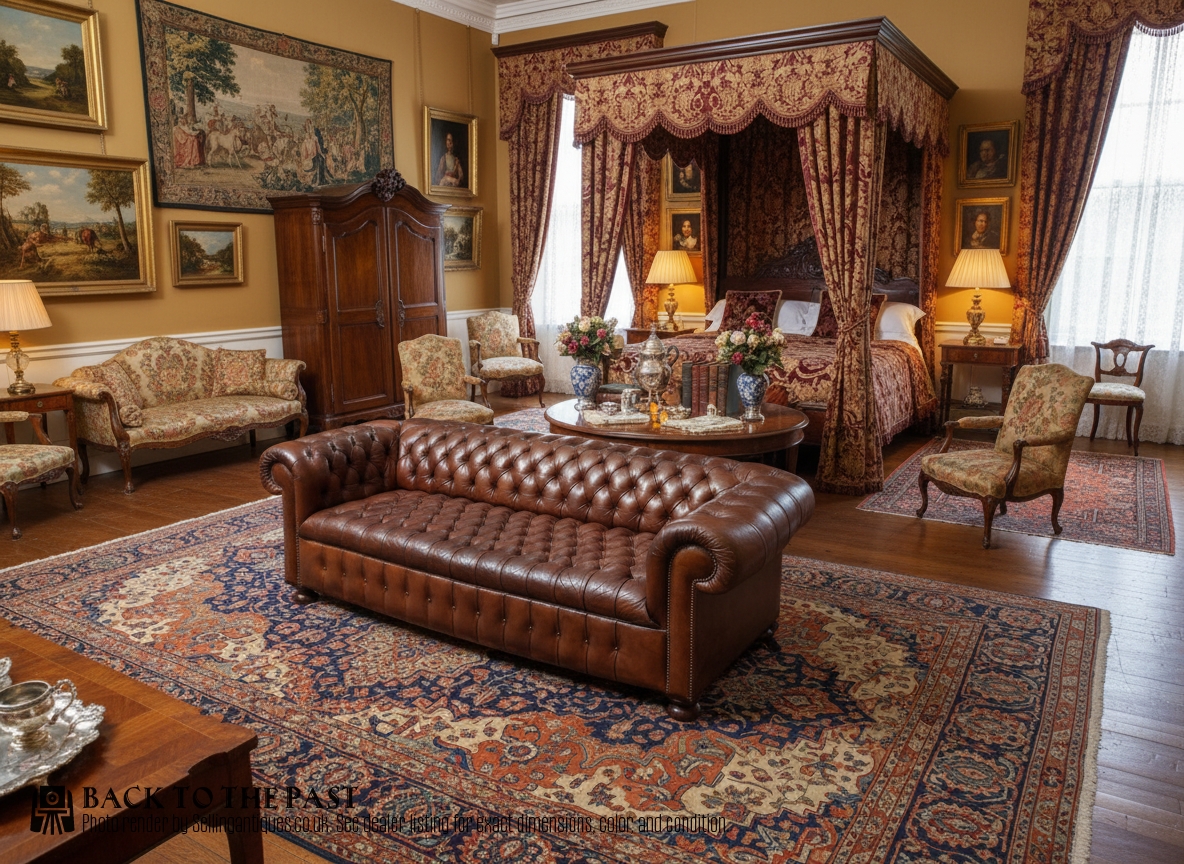
Brown Leather Deep Buttoned Chesterfield, 1910
Priced at £3,275 from Shackladys Antiques
Traditional stuffing required careful layering of curled horsehair over coarse linen scrim to build the required profile.
Bridle ties formed from heavy twine kept the loose hair filling evenly distributed across the broad seat area.
Tying down the coil springs involved lashing each metal ring eight ways to the adjacent springs and wooden frame.
"Good original hides develop a rich patination that takes on the varied tones of aged tortoiseshell."
"Local saddlers sometimes carried out the initial upholstery work using skills transferred directly from harness making."
"Finding horsehair spilling from a torn dust cover guarantees the piece retains its correct period internal structure."
Based on almost 25 years of Sellingantiques UK antique market data, Antique Leather Sofas appeared 893 times (out of 1,100,000 antiques) which gives it a rarity score of 84/100.
This score measures scarcity within the Sellingantiques archive only and is not a survey of the entire antiques market, so these statistics may not be indicative of the general availability of Antique Leather Sofas elsewhere.
Feed the hide gently with a decent microcrystalline wax rather than heavy oils. Oils darken the surface unevenly and weaken the historic seams.
Those cracks form part of the physical history and you can't reverse them. A light wax simply stops the edges drying further.
Direct sunlight acts as a powerful bleaching agent on dyed animal skins. Months of UV exposure will fade the rich russet tones into a flat grey. The heat also bakes the remaining natural moisture out of the hide.
Keep it in a shaded room away from the radiators. If it must sit near glass, use UV-filtering films on the windows and draw the blinds during the brightest part of the day.
Late nineteenth-century seating reflects a shift in how people rested. Earlier upright postures gave way to lounging, so makers dropped the seat rail closer to the floor and angled the backrest.
Deep sprung bases also need room for the metal coils to compress. A lower front edge stops the sitter's knees being pushed up uncomfortably when they sink into the upholstery.
Removing original brass fittings alters the intended stance of the frame. The rear legs usually lack castors and splay backwards. Taking the front wheels off drops the front edge by an inch, tipping the occupant forward.
Leave the hardware in place and tackle the floor issue instead. Castor cups spread the point load over a wider area. Thick felt pads glued under wooden cups allow the piece to slide without scoring the pine boards.
Please note: This Antique Leather Sofas guide and its associated pricing data are provided for general informational purposes only. It does not constitute formal financial, investment, or appraisal advice and should not be relied upon as the sole basis for any commercial activity, purchasing, or sales decisions. Sellingantiques.co.uk accepts no liability for any actions taken in reliance on this information. Always consult with a qualified professional or independent appraiser.
