
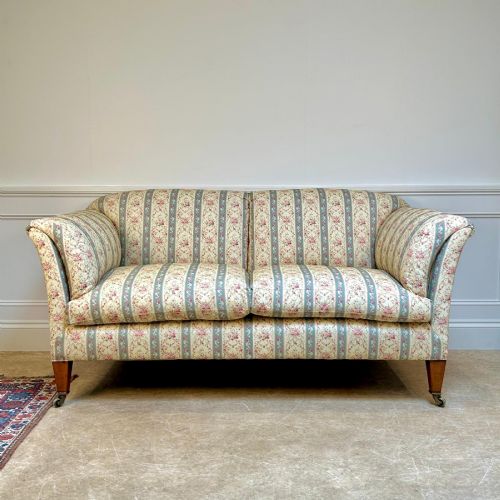
Antique Edwardian Sofas
Upholstered seat furniture from the years around 1900 to 1914, made for the drawing rooms of smaller houses, and led by the two-seat settee on a polished mahogany frame.
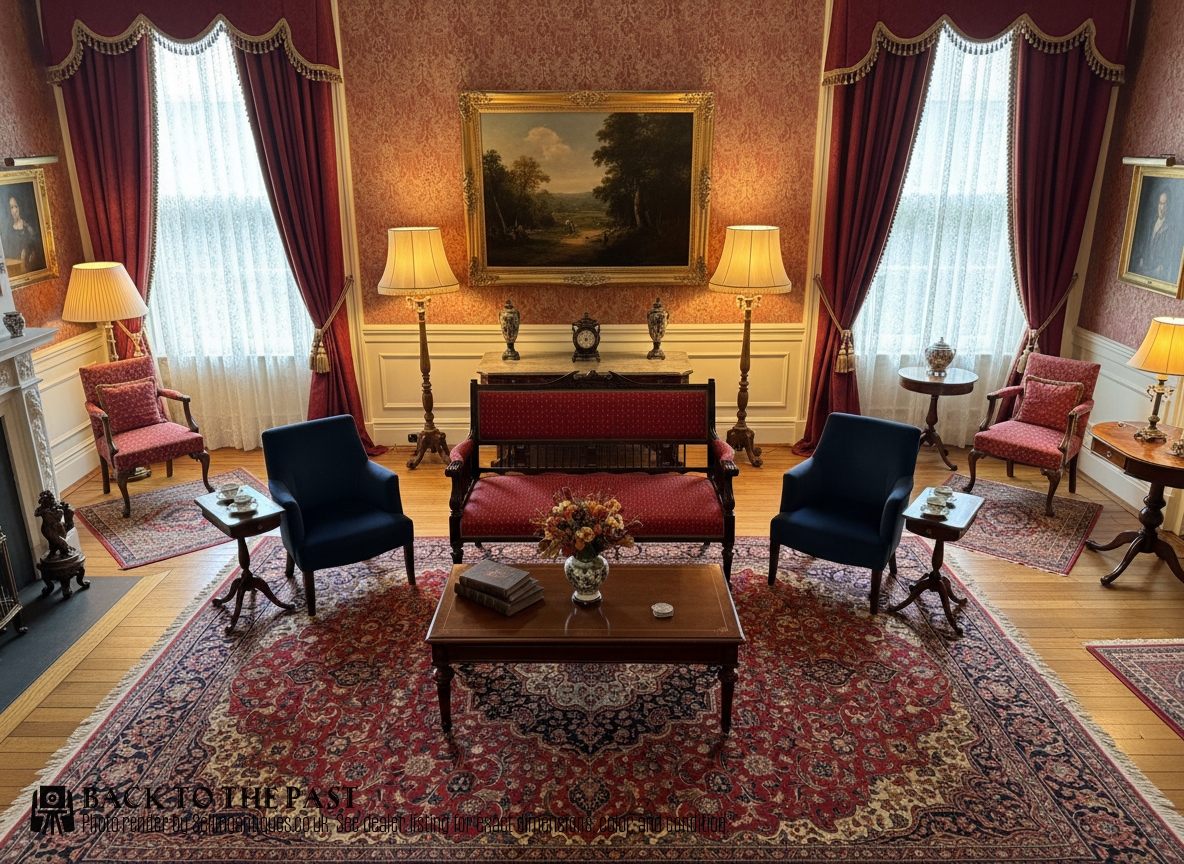
Antique Edwardian Sofas
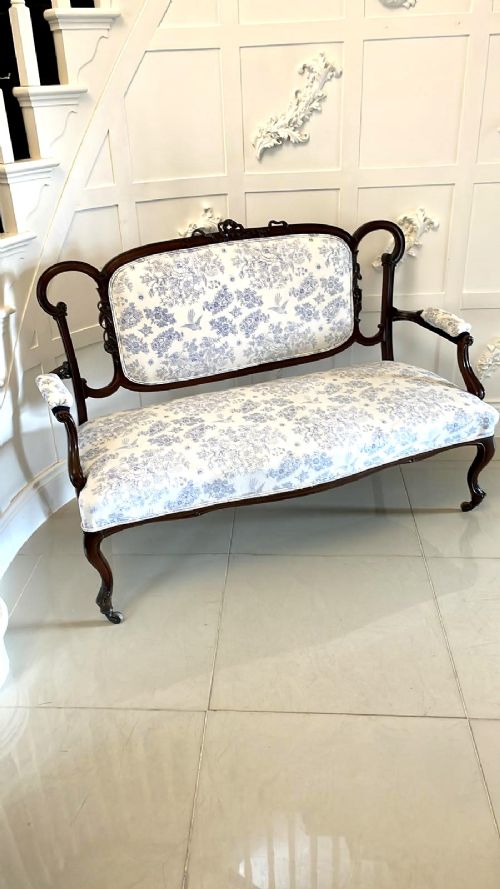
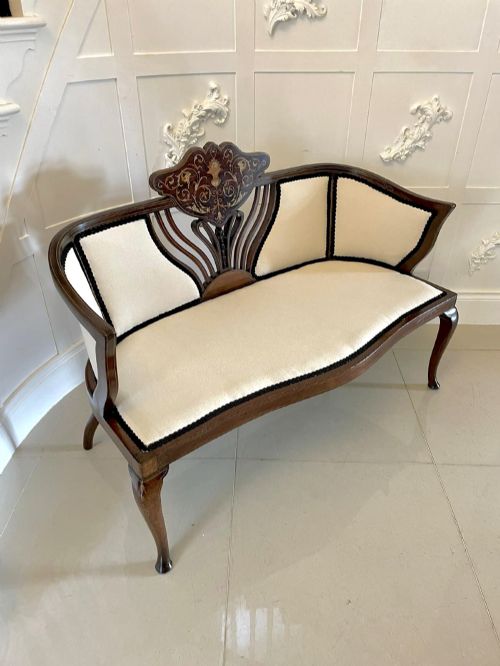
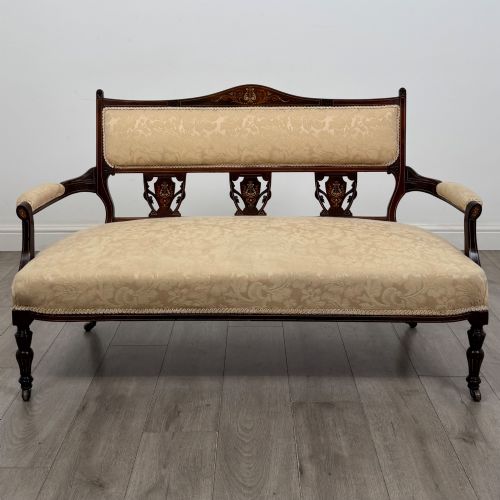
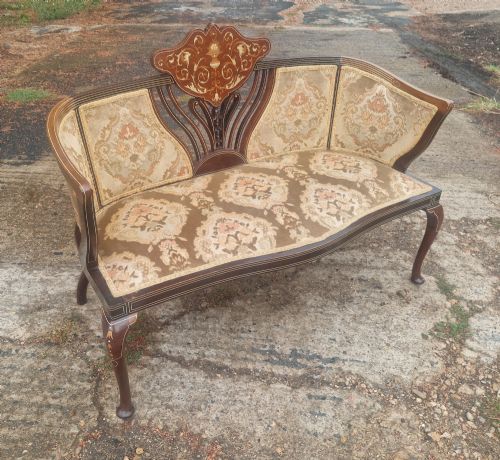
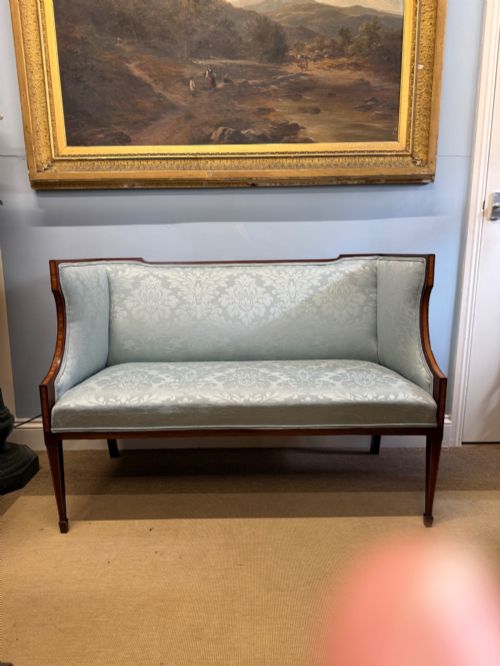
The commonest thing in this category is a small-to-medium two-seater settee with a show-wood frame: mahogany, inlaid with banding or stringing, an upholstered seat and a back that is part upholstered, part exposed timber. Mahogany is named in a third of the titles on Sellingantiques, inlay in nearly as many.
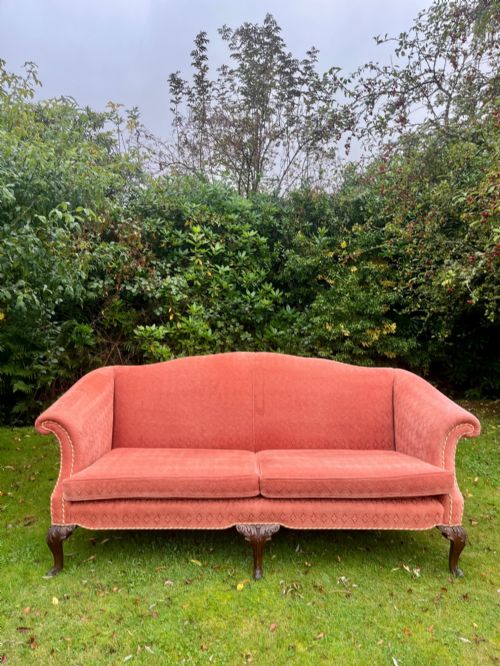
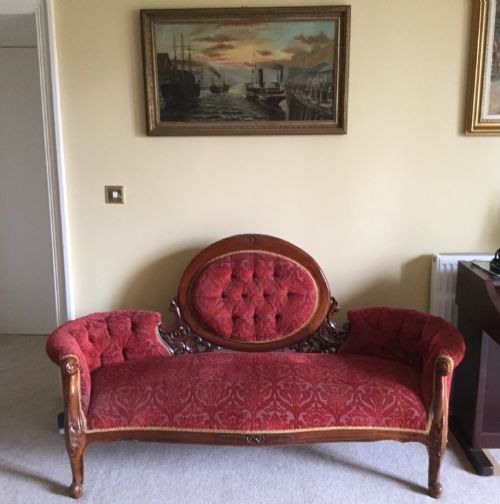
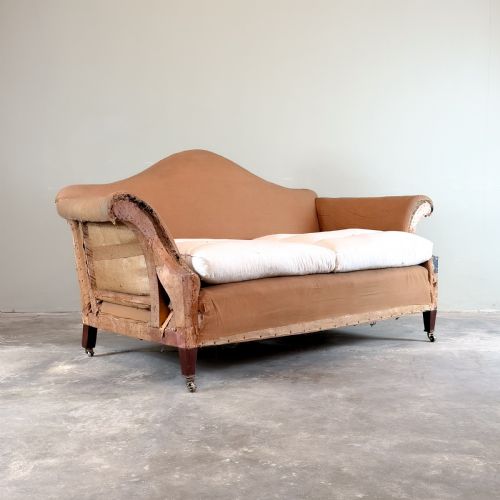
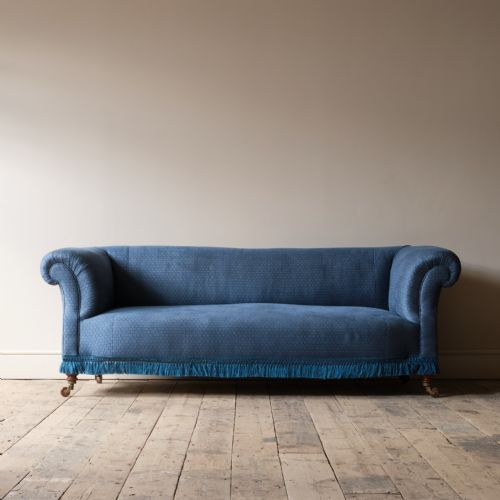
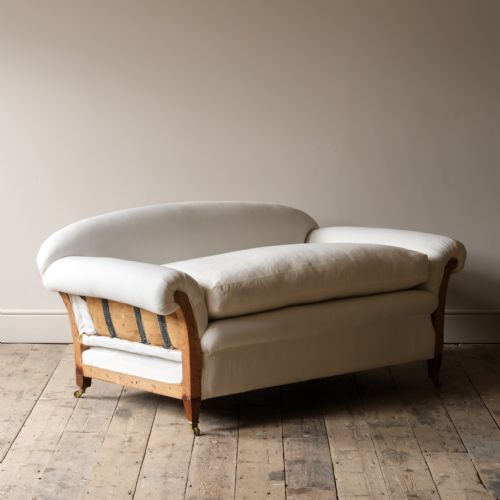
Around that core sit the fully upholstered forms. Chesterfields and leather club sofas, camel-backs, knole sofas with hinged sides, wing sofas. Then a long tail: window seats and end-of-bed benches, chaises longues and day beds, caned bergere and bentwood frames, oak settles, hall seats and three-piece suites.
The two-seat drawing-room settee took its sprung and stuffed form in the nineteenth century, and by 1900 was being made in quantity for smaller middle-class rooms. The Edwardian trade worked both ends of that market: light show-wood frames in the revived eighteenth-century manner, and heavy upholstered shapes for libraries and clubs.
Dating is loose. Two hundred listings say simply "Edwardian" with no year, and where years are given the field runs from 1870 to 1930, taking in "Late Victorian", "Early 20th Century" and "c.1920" titles. Edwardian here is a style and a manner of construction as much as a reign. The naming is loose too: settee, sofa, couch and chaise get used for overlapping things, and one listing will often carry two of them.

Top And Bottom
Attribution does more than anything else. The highest-priced pieces are almost all fully upholstered sofas from named workshops, several carrying model names. Below that, what the frame is made of and how it is decorated sets the order: satinwood, rosewood, marquetry, hand-painted and carved frames all sit above plain mahogany, and a title reading simply "Edwardian mahogany sofa" sits near the bottom.
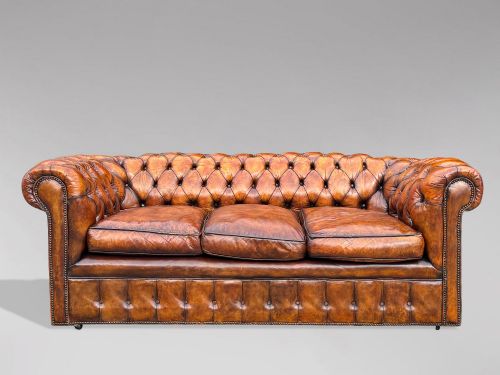
The other divide runs between fully upholstered and show wood. Leather chesterfields and deep-buttoned club sofas cluster in the upper half of the range; small inlaid settees cluster at the lower end. Scale works the same way. Three-seaters and country-house sofas sample well above the small and cottage sizes, and end-of-bed seats sit lowest of all.
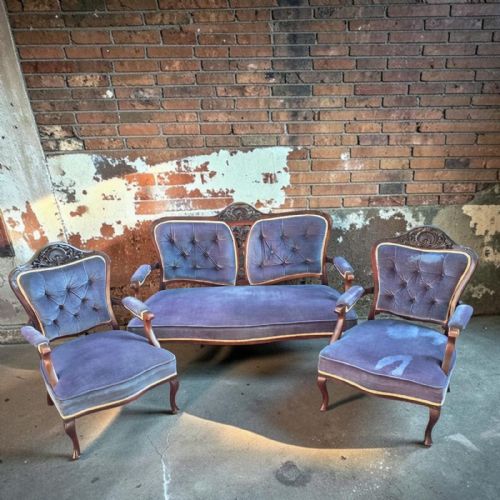
Sets beat singles. Only eight titles offer a pair, but pairs, three-piece suites and settees sold with matching armchairs all sample above a comparable single settee. Some listings include reupholstery in the price, which is stated in the title rather than left to be worked out.
Antique Edwardian Sofas Retail Price Guide 2026
Typical UK retail prices for edwardian sofas, calculated from the Sellingantiques database of over a million retail prices indexed since 2003. This retail price guide relies exclusively on Sellingantiques data; no external sources or auction records are used, so the figures do not describe the wider market.
Edwardian sofas have been listed on Sellingantiques since 2008, with over three hundred through the archive since then.
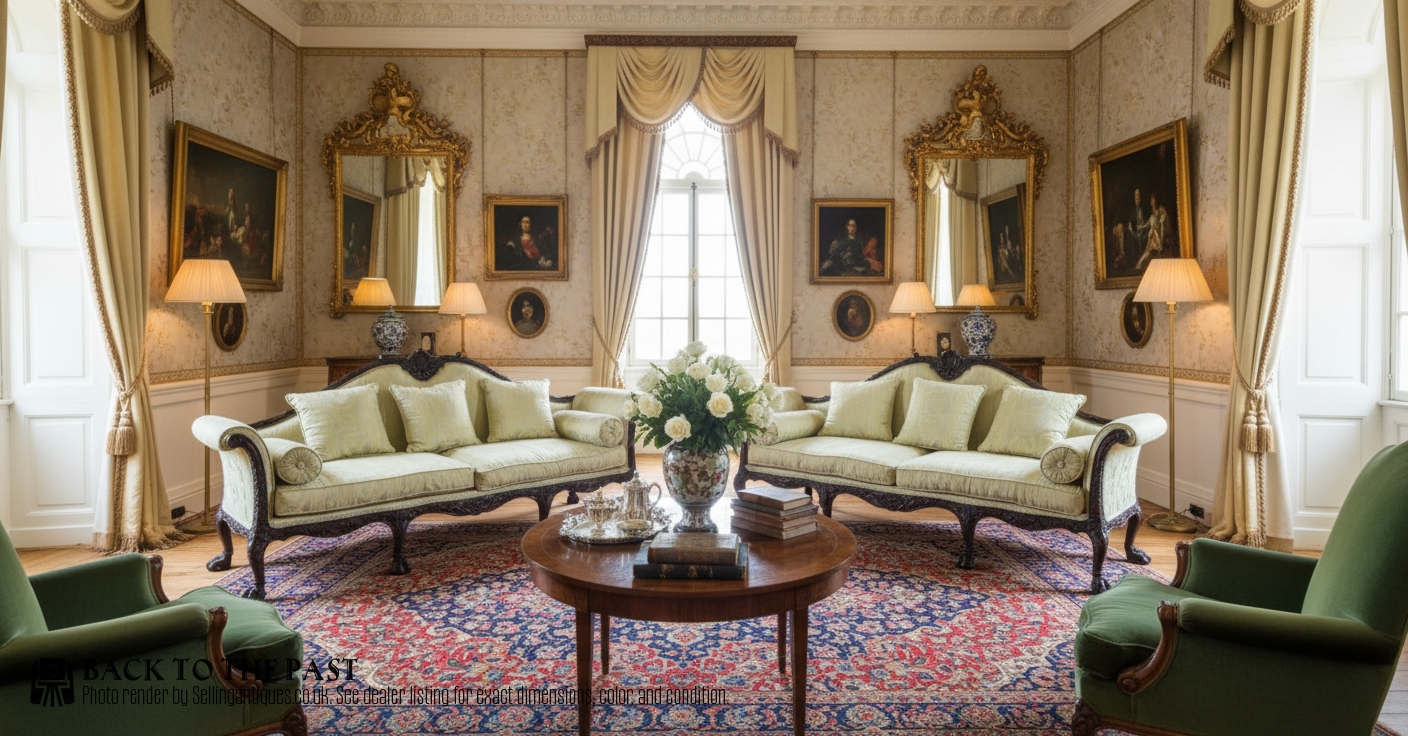
The Antique Edwardian Sofas Glossary
- Settee
- The commonest word in these titles for a two-seat upholstered sofa with a visible wooden frame. Sofa and couch are used for the same thing.
- Show wood
- The polished timber of the frame left exposed around the upholstery, on the arms, the back rail and the legs.
- Inlaid
- Decorative banding or stringing let into the show wood. It appears in nearly three in ten titles, usually paired with mahogany.
- Chesterfield
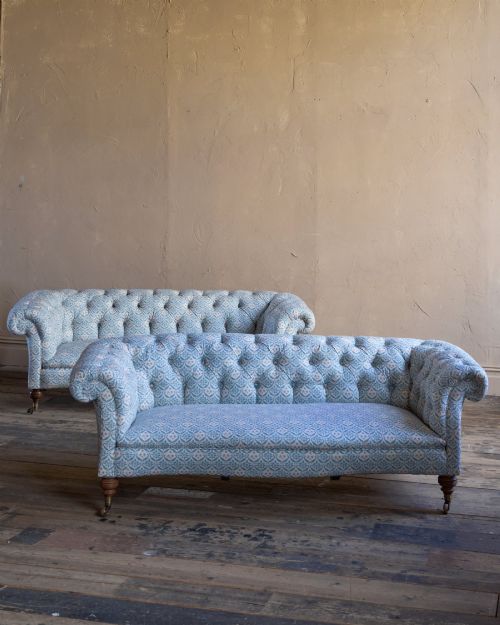
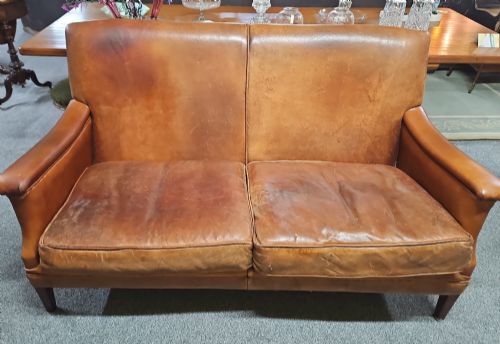
- A fully upholstered sofa with arms and back at one height, commonly deep buttoned and often in leather.
- Drop arm
- An arm hinged or shaped to fold down, opening the seat out into a day-bed. Also listed as drop end.
- Bergere
- A frame with caned back and sides, described in these listings as double-caned where there are two layers of cane.
- Knole
- A high-backed sofa with hinged sides, spelled knole and knowle across the titles.
Antique Edwardian Sofas: Frequently Asked Questions
What's the difference between a settee and a sofa here?
Very little. Settee appears in 141 titles, couch in 20, chaise longue in 17, and plenty of listings use two of the words at once.
In practice settee tends to attach to the lighter show-wood two-seater, while sofa gets used across the whole category, upholstered forms included.
How many come up for sale each year?
About 38 a year come to market on Sellingantiques, and 126 different dealers have listed one.
That spread tells you it's a form almost every general furniture dealer handles at some point, rather than a specialist's line.
Why do some listings say Victorian or 1920s?
The dated field runs from 1870 to 1930. Inside the category sit 22 vague "19th Century" entries, 11 Victorian, 7 from the 1890s and 9 from the 1920s.
Edwardian is doing double duty as a style label. A light inlaid show-wood frame made in 1895 or 1922 looks and is built like one from 1905, and the trade lists it accordingly.
Are leather chesterfields common in this category?
They're a minority. Chesterfield appears in 27 titles and leather in 30, against 147 mentioning mahogany.
What they lack in numbers they make up in position: leather chesterfields and deep-buttoned club sofas cluster in the upper half of the range.
What unusual pieces have turned up?
One-offs that surface and don't repeat include a Savonarola X-frame two-chair sofa, a hooded porter's sofa and a Glasgow School oak settle.
Also recorded: a rattan two-seater, a bobbin-framed oak sofa and a gilt-wood Louis XVI sofa.
Do these ever come as pairs or suites?
Yes, though not often. Eight titles offer a pair, and there are three-piece boudoir suites, bergere lounge suites and club suites among the listings.
Settees sold with matching armchairs sample above single settees of similar type.