
There are no results to show on this page for that combination of filters:
Antique Conversation Sofas Dated 1900 - 1920
A 2026 Guide by Sellingantiques
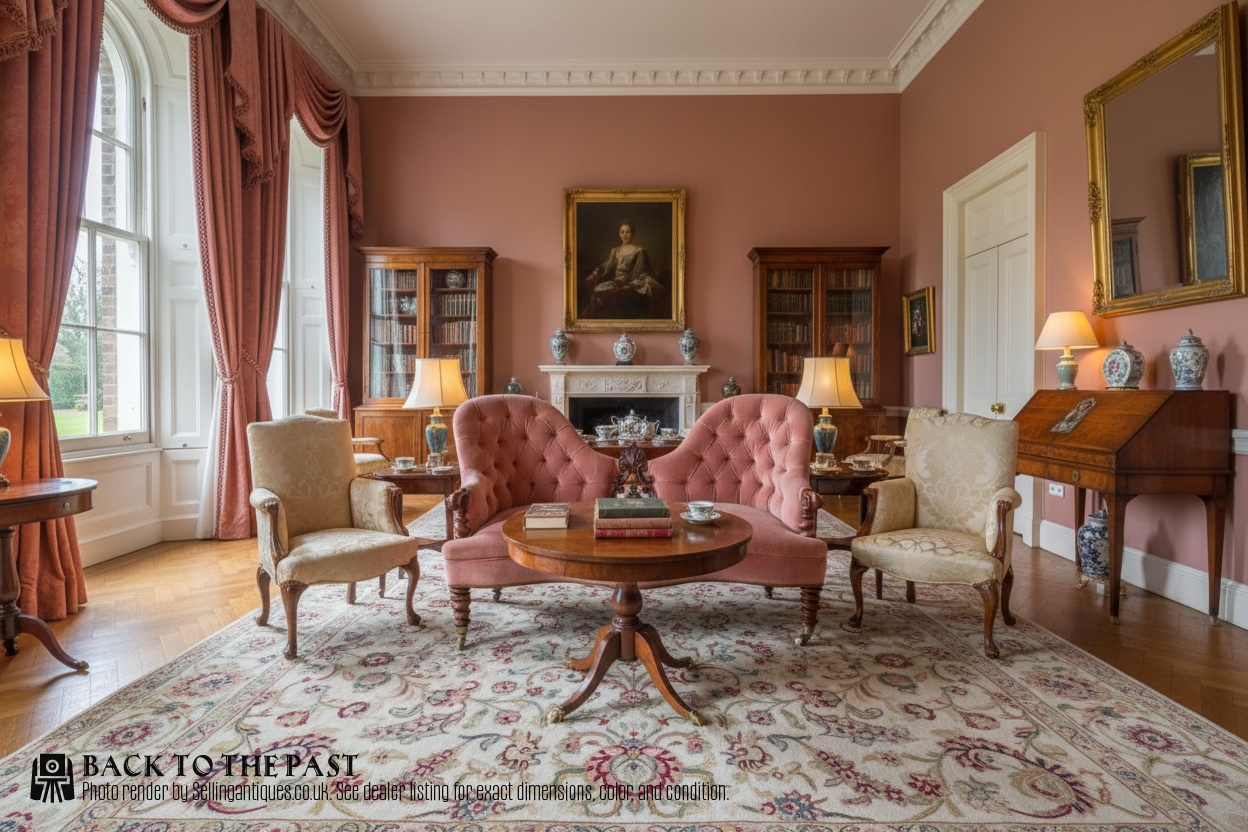
Victorian Conversation Seat with Barley Twist Frame., Victorian
Priced at £395 from Rupert Hitchcox Antiques
Emerging in nineteenth-century France, these frames were initially sold under the name tête-à-tête.
Victorians embraced these seating arrangements to maintain strict social etiquette during courtships.
Look for the transition from formal drawing rooms to grand hotel lobbies as the century progressed.
Antique conversation sofas allowed discreet chats while keeping a watchful chaperone happy.
John Henry Belter produced heavily carved laminated rosewood frames in New York during the mid-nineteenth century.
Turn the piece over to look for stamps on the back legs if you suspect a London maker like Howard & Sons.
Most surviving antique conversation sofas lack a maker's mark and belong to the broader provincial upholstery trade.
The 2026 retail price guide for Antique Conversation Sofas is drawn from a proprietary archive of over 1.1 million retail prices indexed by Sellingantiques since 2003. This guide relies exclusively on their own internal data; no external sources or auction records are used.
Analysing nearly 25 years of UK antique market history alongside current retail values, the data indicates that typical UK retail prices for Antique Conversation Sofas range between £900 and £3,900. Entry-level prices generally fall under £900 and premium examples upwards of £3,900.
The typical S-shaped configuration relies on opposing seats that share one central twisting backrest to keep the sitters facing each other.
Notice the heavily padded armrests acting as a divider between the sitters.
Castors frequently cap the turned front legs to help servants push them across thick carpets.
Early Victorian frames rely on dense hand-carved solid timbers cut with traditional cabinet saws.
Inspect the curves. Later nineteenth-century makers used steam-bending techniques to achieve those sweeping wooden backrests.
The arrival of coiled steel wire springs allowed upholsterers to build thicker seats than flat webbing could support.
"Three-seat versions called confidentes exist with an extra chair attached to the ends."
"Consider the acoustics. The twisted shape helps funnel hushed voices directly to the other person's ear in a crowded room."
"Some hotels used them as central lobby pieces to seat strangers without forcing awkward shoulder-to-shoulder contact."
Based on almost 25 years of Sellingantiques UK antique market data, Antique Conversation Sofas appeared 163 times (out of 1,100,000 antiques) which gives it a rarity score of 97/100.
This score measures scarcity within the Sellingantiques archive only and is not a survey of the entire antiques market, so these statistics may not be indicative of the general availability of Antique Conversation Sofas elsewhere.
Most require two strong people to move. The solid mahogany or walnut frames carry substantial weight before you even factor in the heavy steel coil springs.
Castors help shift them on a flat floor, but you still need caution when lifting them over a door threshold.
Yes. A traditional upholsterer can manage the deep buttoning.
Sticking with horsehair instead of modern foam maintains the correct period profile.
They rarely look right pushed flat against a wall. The curving backrest leaves awkward gaps, and you lose the visual impact of the twisting frame.
These were built to sit in the centre of a room. If you need hallway seating, a traditional straight-backed settle makes better use of the floor space.
The frames were built to last, but the central joint takes a lot of stress. That twisting backrest relies on dowels and old animal glue to stay rigid.
If a child vaults over the centre, the wood can crack. They suit a quiet sitting room much better than a busy family space.
Check the joints by giving the top rail a gentle shake before you buy.
Please note: This Antique Conversation Sofas guide and its associated pricing data are provided for general informational purposes only. It does not constitute formal financial, investment, or appraisal advice and should not be relied upon as the sole basis for any commercial activity, purchasing, or sales decisions. Sellingantiques.co.uk accepts no liability for any actions taken in reliance on this information. Always consult with a qualified professional or independent appraiser.
