

A 2026 Guide by Sellingantiques
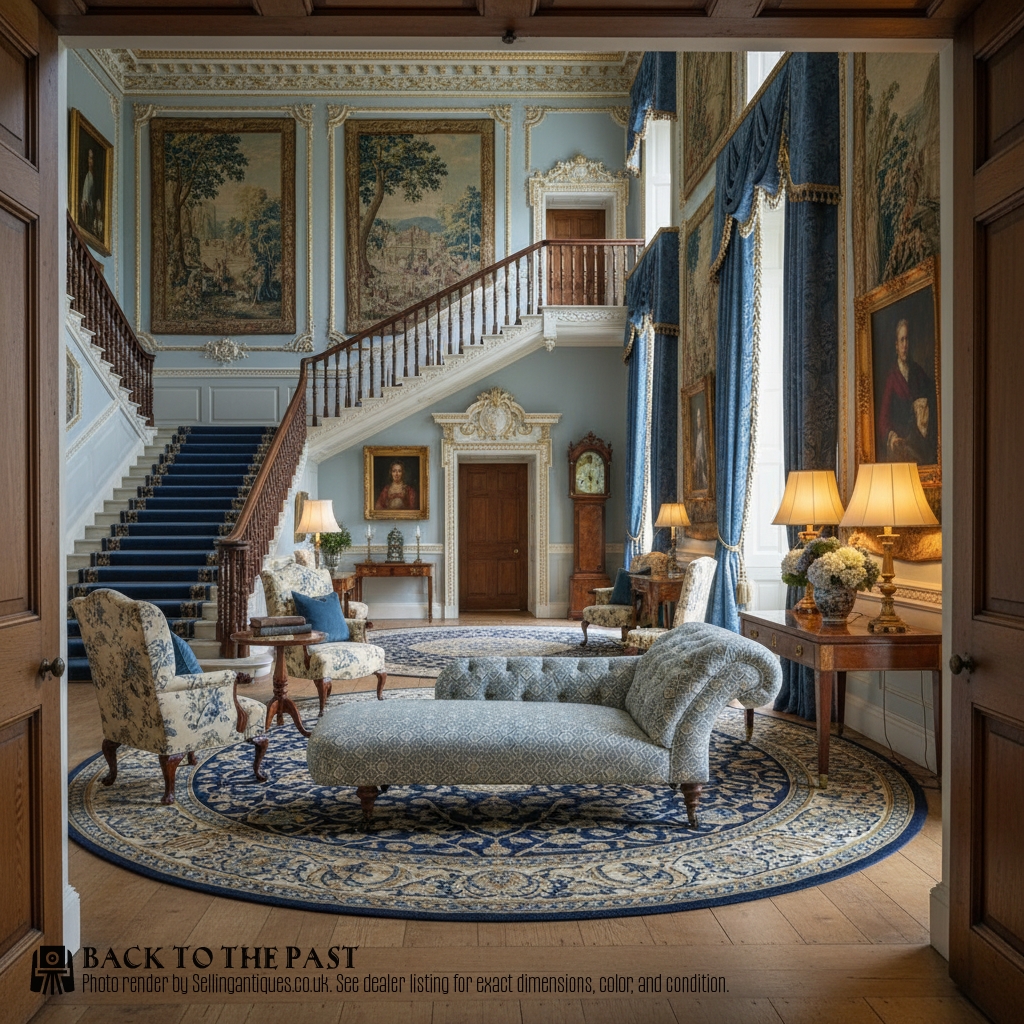
Antique 19th Century Howard & Sons Chaise Lounge, 1860
Priced at £3,995 from Desired Effect Antiques Ltd
Originating in ancient Egypt as basic daybeds, the form evolved over centuries.
French cabinetmakers codified the antique chaise we recognise today during the eighteenth century.
Essential drawing room furniture for the wealthy during the Regency period.
Note the shift towards heavier proportions in later Victorian examples designed for middle-class parlours.
Buttoned upholstery became the standard finish around the mid-nineteenth century.
Thomas Chippendale supplied carved mahogany daybeds during the mid-eighteenth century.
Gillows of Lancaster produced fine Regency examples between 1790 and 1830. Look for their stamp on the underside of pieces featuring signature reeded legs and brass castors.
Howard and Sons later patented specific coil-sprung seats for their upholstered loungers.

Antique English Victorian Mahogany Upholstered Chaise Longue Sofa Couch (Circa 1860), 1860
Priced at £2,950 from Yolanda Gray Antiques
The 2026 retail price guide for Antique Chaise is drawn from a proprietary archive of over 1.1 million retail prices indexed by Sellingantiques since 2003. This guide relies exclusively on their own internal data; no external sources or auction records are used.
Analysing nearly 25 years of UK antique market history alongside current retail values, the data indicates that typical UK retail prices for Antique Chaise range between £600 and £2,700. Entry-level prices generally fall under £600 and premium examples upwards of £2,700.
Asymmetrical backrests provide structured support for one shoulder and the back, while deliberately leaving the opposite side open so the sitter can extend their legs.
Sweeping scroll arms at the head end are common on a classical antique chaise.
Check the brass castors fitted to the turned or swept legs.
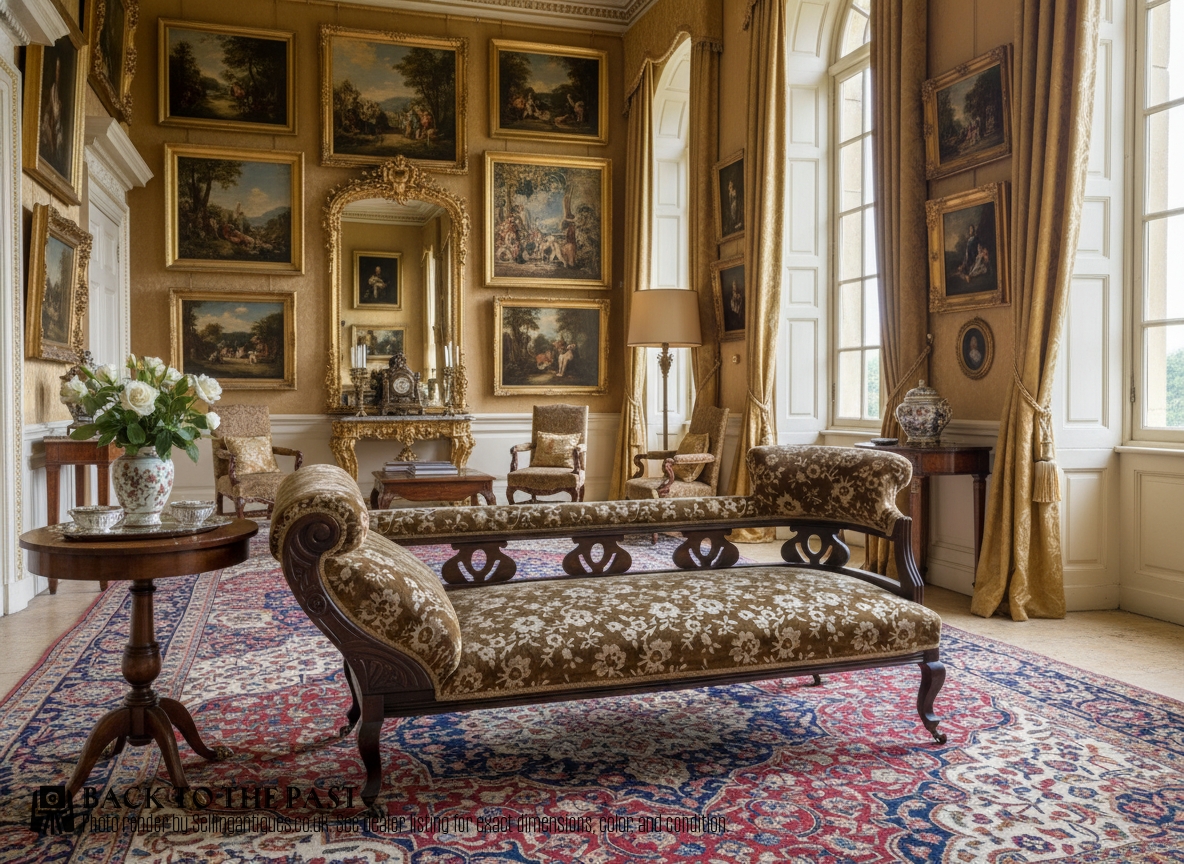
A Late Victorian Walnut Chaise Longue, Victorian
Priced at £110 from Robert Dee
Early antique chaise frames rely on deep mortise and tenon joints to withstand the leverage placed on the long seat.
Carved decoration on the cresting rail changes across decades. Standard neoclassical fluting gives way to deep rococo revival foliage on later pieces.
When springs replaced fixed webbing and basic stuffing, cabinetmakers required much deeper side rails to hide the internal mechanisms.
"Some were made in mirrored pairs. These sat symmetrically on either side of a large fireplace."
"Victorian cataloguers routinely anglicised the French word longue to lounge."
"They provided an accepted space for corseted women to rest and breathe easily without loosening their restrictive day clothing."
Based on almost 25 years of Sellingantiques UK antique market data, Antique Chaise appeared 1803 times (out of 1,100,000 antiques) which gives it a rarity score of 70/100.
This score measures scarcity within the Sellingantiques archive only and is not a survey of the entire antiques market, so these statistics may not be indicative of the general availability of Antique Chaise elsewhere.
This describes which end the headrest sits when you look directly at the piece from the front. A right-hand facing antique chaise has the tall arm on your right side.
Dealers use this specific terminology to help buyers match furniture to alcoves, fireplaces or bay windows in their rooms.
The asymmetrical back on many examples does reduce the visual bulk in a room. Because the backrest tapers down to nothing at the foot end, they often intrude less into a walkway than a standard sofa.
You still need to measure the maximum depth across the scroll arm. The widest point is always at the head end, and the legs can sometimes splay outwards past the upholstery line.
They are substantial pieces of furniture. A mid-nineteenth century antique chaise packed with iron springs and a solid mahogany frame is heavy.
Moving one safely always requires two people.
Cabinetmakers often used secondary fabrics on areas designed to sit firmly against a drawing room wall. It saved money on imported silks and damasks.
If the plain cloth is black cambric or a simple linen, it is standard practice. Free-standing centrepiece models would have show fabric all the way around, but wall-facing designs rarely did.
Please note: This Antique Chaise guide and its associated pricing data are provided for general informational purposes only. It does not constitute formal financial, investment, or appraisal advice and should not be relied upon as the sole basis for any commercial activity, purchasing, or sales decisions. Sellingantiques.co.uk accepts no liability for any actions taken in reliance on this information. Always consult with a qualified professional or independent appraiser.
