


A 2026 Guide by Sellingantiques
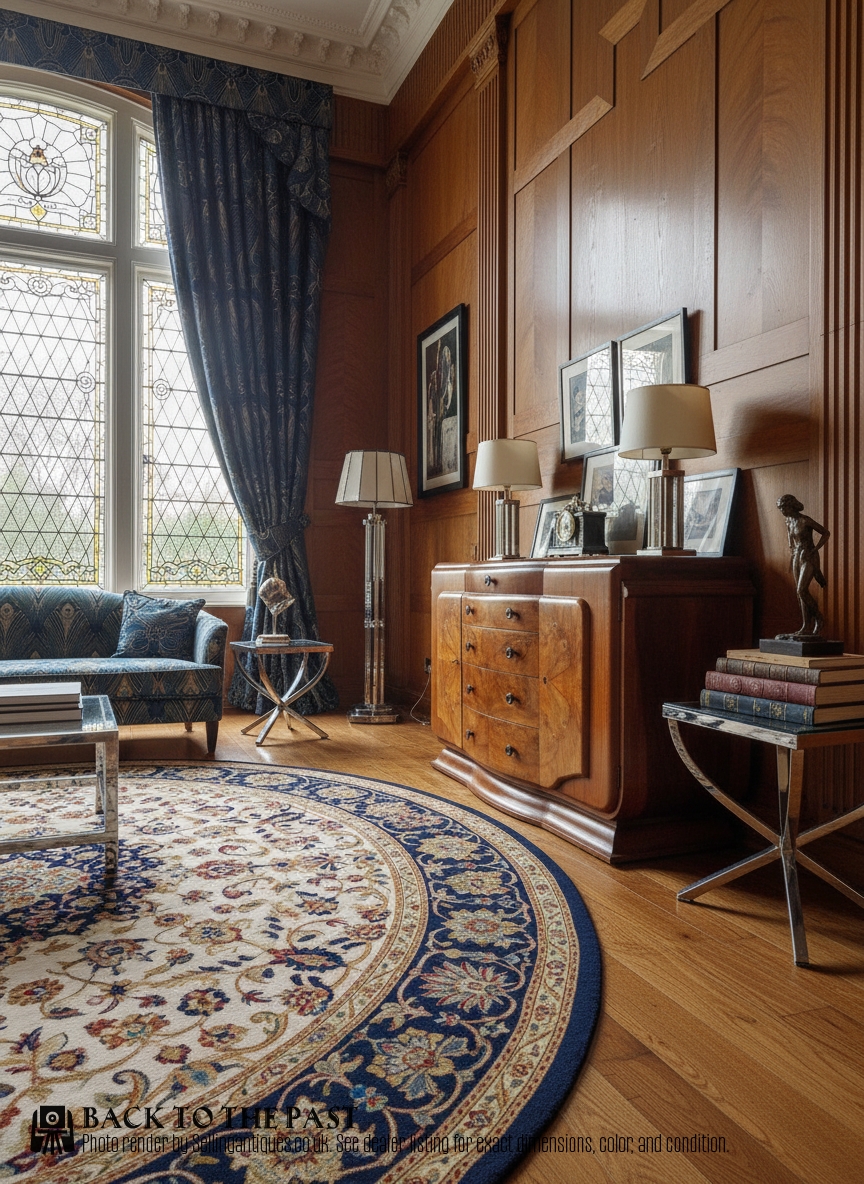
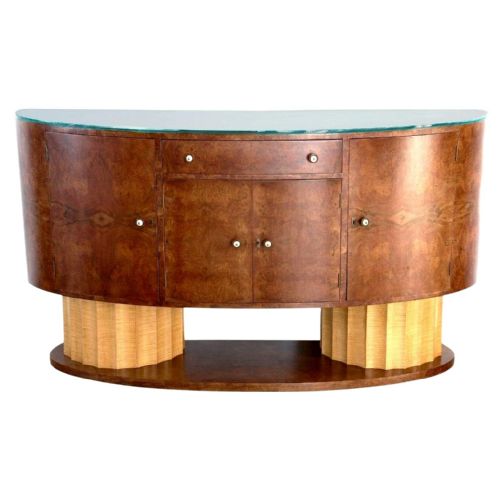
Art Deco Walnut Sideboard C1925-39, 1920
Priced at £925 from Mews Antiques
Born from the 1925 Paris Exhibition. French designers moved away from traditional carving towards sleek, uninterrupted surfaces on case furniture.
Look at British production later in the 1930s. Mass manufacturers adopted the style, scaling down the heavy French proportions for suburban semi-detached homes.
Cocktail sections often merged with Art Deco sideboards during this period. The rising popularity of home entertaining demanded built-in drink storage.
Streamlined forms appeared towards the end of the decade. U-shapes and asymmetrical profiles replaced the strict rectilinear blocks of earlier models.
Harry and Lou Epstein produced vast numbers of these cabinets in London. Their cloud-shaped models remain widely recognised within the British trade.
Jules Leleu built continental versions during the 1920s. His workshops employed complex marquetry alongside ivory or metal inlay on grand proportions.
Ray Hille's London firm. They manufactured heavy walnut examples featuring geometric veneers and prominent carved handles into the late 1930s.
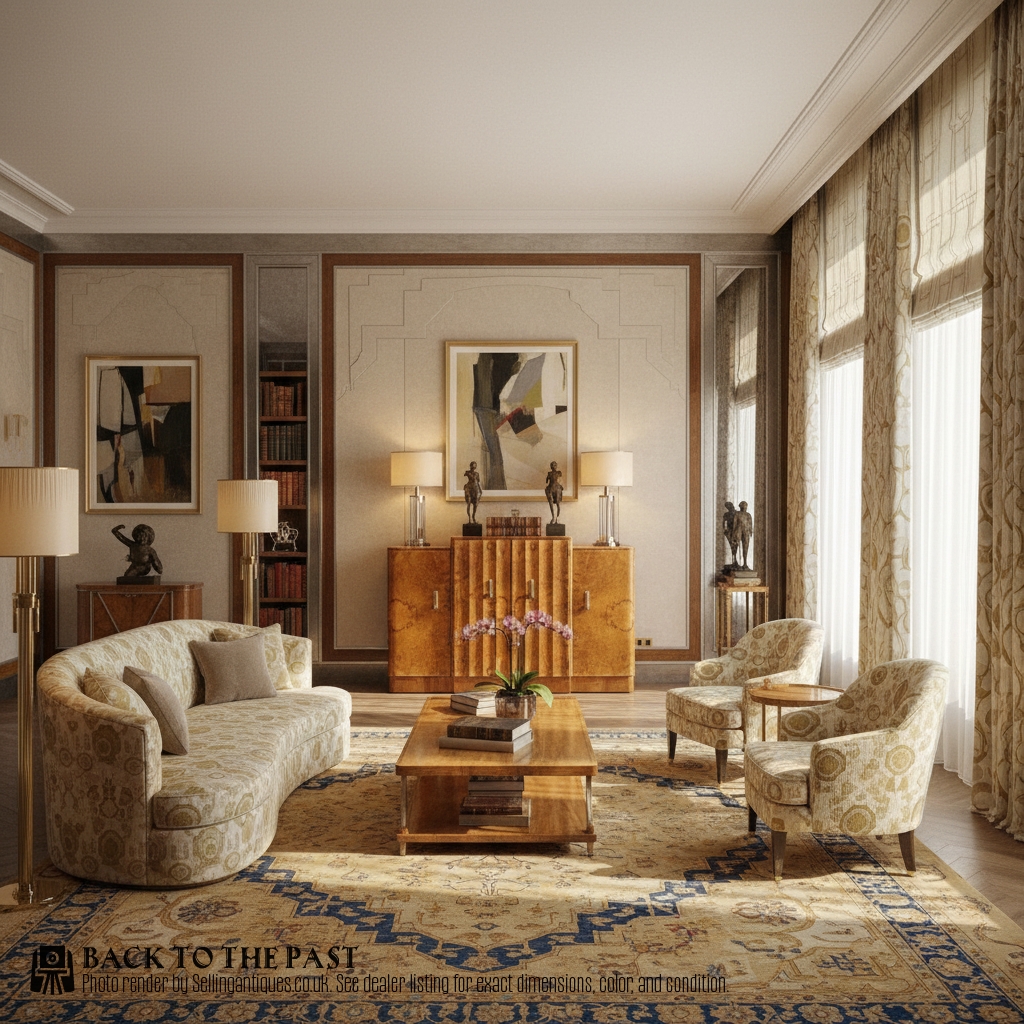
Art Deco Sideboard by Harry and Lou Epstein, 1930
Priced at £2,450 from Poirot Art Deco
The 2026 retail price guide for Art Deco Sideboards is drawn from a proprietary archive of over 1.1 million retail prices indexed by Sellingantiques since 2003. This guide relies exclusively on their own internal data; no external sources or auction records are used.
Analysing nearly 25 years of UK antique market history alongside current retail values, the data indicates that typical UK retail prices for Art Deco Sideboards range between £1,100 and £4,000. Entry-level prices generally fall under £1,100 and premium examples upwards of £4,000.
Curved edges and stepped profiles dominate the shape. Some sit on solid plinth bases, while others stand on distinctive U-shaped or bracket feet.
Central banks of drawers flanked by cupboards. This standard layout allowed maximum storage for cutlery sets and tall bottles in one unit.
Pull out the top drawer. Many contain original green baize lining with wooden dividers specifically fitted for flatware.
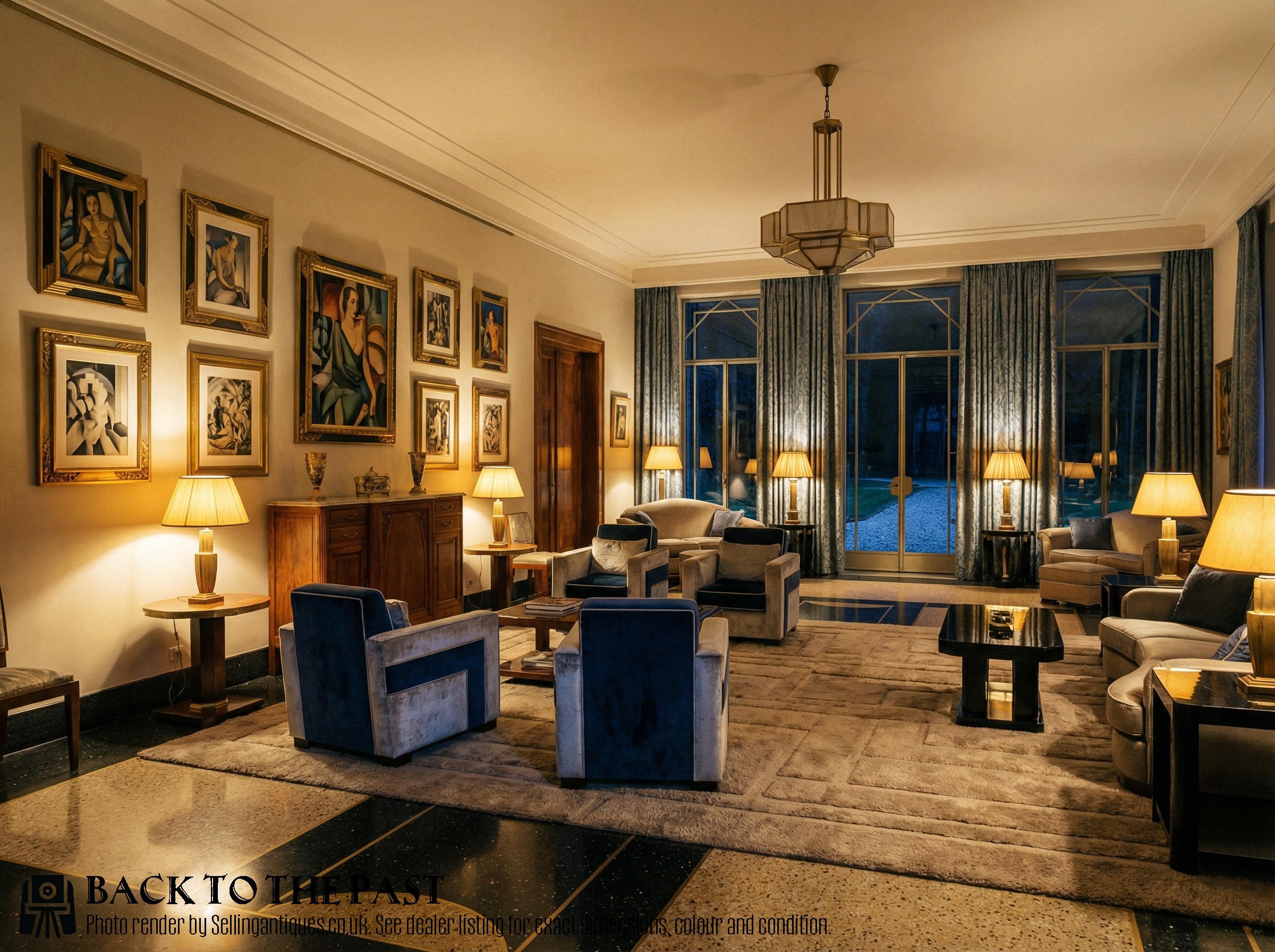
Small Art Deco Sideboard C.1925, 1930
Priced at £795 from Collinge Antiques
Traditional cabinet making adapted to new industrial materials. Workers pressed thin, brittle exotic veneers onto thick blockboard carcases using large mechanical presses.
Examine the door hinges. Quality examples use heavy brass piano hinges running the full length of the door to support the substantial weight.
French polish applied by hand. This traditional technique built up a high gloss finish that made the strong grain patterns stand out under electric lighting.
"The deep lower drawers were often lead-lined. This heavy construction created a cool environment specifically for storing wine bottles upright."
"Secret compartments exist in custom commissions. Clever cabinet makers hid shallow trays behind the main drawer boxes for securing valuable silver flatware."
"Notice the integration of lighting. Select pieces occasionally wired small bulbs into the central cocktail section to illuminate glassware when the doors opened."
Based on almost 25 years of Sellingantiques UK antique market data, Art Deco Sideboards appeared 693 times (out of 1,100,000 antiques) which gives it a rarity score of 87/100.
This score measures scarcity within the Sellingantiques archive only and is not a survey of the entire antiques market, so these statistics may not be indicative of the general availability of Art Deco Sideboards elsewhere.
Most British examples run between four and five feet wide. The continental models often stretch much longer, sometimes reaching six or seven feet across the dining room wall.
Measure your space carefully. The pronounced curves and deep bow fronts make them sit further into the room than a standard rectangular piece.
Standard dinner plates fit comfortably inside. Internal depth averages fifteen to eighteen inches.
Shelves often adjust. You can alter the spacing for stacked crockery.
They rarely break down into smaller sections. The carcase is glued and screwed as one solid unit that moves in a single piece.
You need to plan your route carefully. These cabinets weigh a considerable amount, especially models built on thick blockboard with heavy glass central sections.
You can usually unscrew the doors from their hinges. Taking them off removes a fair bit of weight and prevents them swinging open during transit.
The legs or plinth bases are structural. They are built directly into the carcase and will not detach.
Please note: This Art Deco Sideboards guide and its associated pricing data are provided for general informational purposes only. It does not constitute formal financial, investment, or appraisal advice and should not be relied upon as the sole basis for any commercial activity, purchasing, or sales decisions. Sellingantiques.co.uk accepts no liability for any actions taken in reliance on this information. Always consult with a qualified professional or independent appraiser.
