

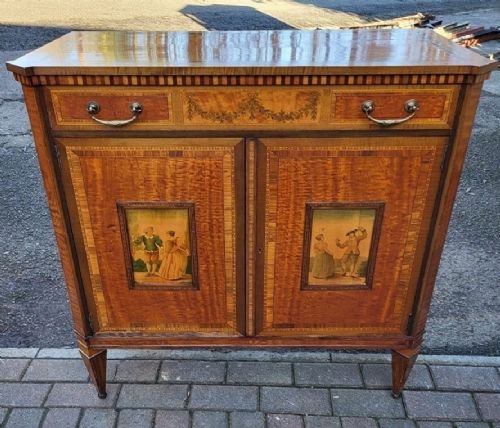



A 2026 Guide by Sellingantiques
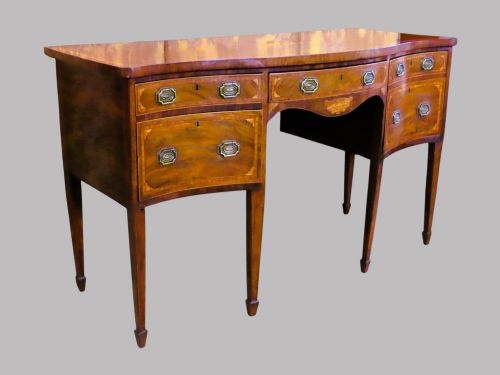
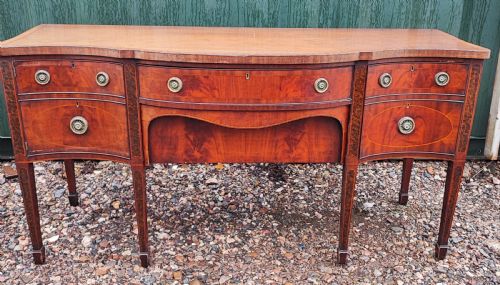
Superb Quality Large Antique Edwardian Mahogany Inlaid Sideboard, 1900
Priced at £2,185 from London City Antiques
Robert Adam first introduced the separate pedestal and urn arrangement to dining rooms.
Thomas Shearer integrated those pedestals into a single piece of furniture.
They became standard equipment in the dining rooms of middle-class Georgian homes.
Check the shape of the front to spot distinct regional variations across British antique inlaid sideboards.
Victorian cabinet makers often favoured heavier proportions than the earlier eighteenth-century designs.
Gillows of Lancaster produced hundreds of these functional tables during the late eighteenth and nineteenth centuries.
Thomas Sheraton published influential designs for them in his drawing book.
Scottish makers like William Trotter developed their own distinct, heavier forms for the regional market.
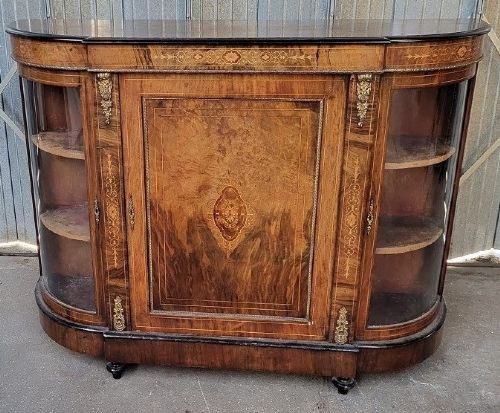
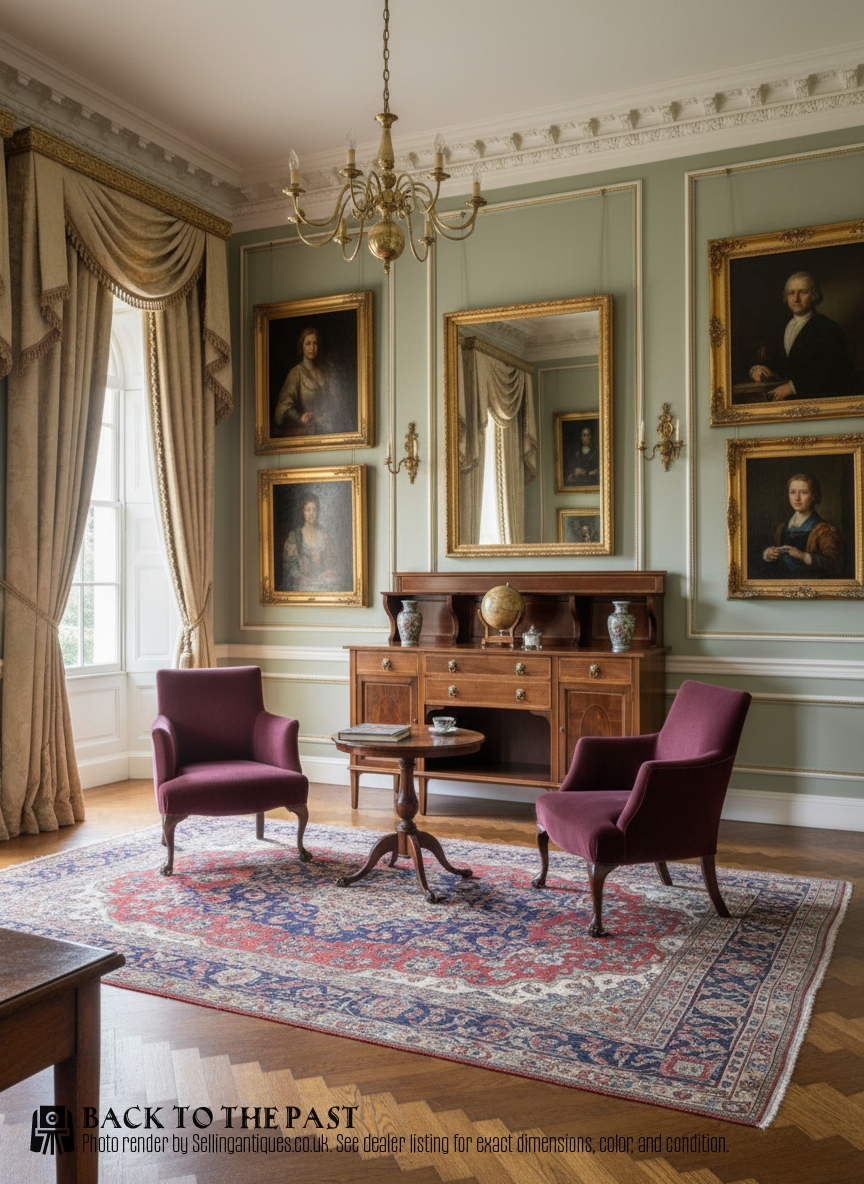
Superb Edwardian Mahogany Inlaid Sideboard, 1900
Priced at £995 from Fernyhough Antiques Ltd
The 2026 retail price guide for Antique Inlaid Sideboards is drawn from a proprietary archive of over 1.1 million retail prices indexed by Sellingantiques since 2003. This guide relies exclusively on their own internal data; no external sources or auction records are used.
Analysing nearly 25 years of UK antique market history alongside current retail values, the data indicates that typical UK retail prices for Antique Inlaid Sideboards range between £500 and £3,300. Entry-level prices generally fall under £500 and premium examples upwards of £3,300.
Tapering legs ending in simple spade feet on most early pieces.
A central napery drawer often sits directly above an arched apron.
Deep cellarette drawers flank the centre to hold wine bottles upright.
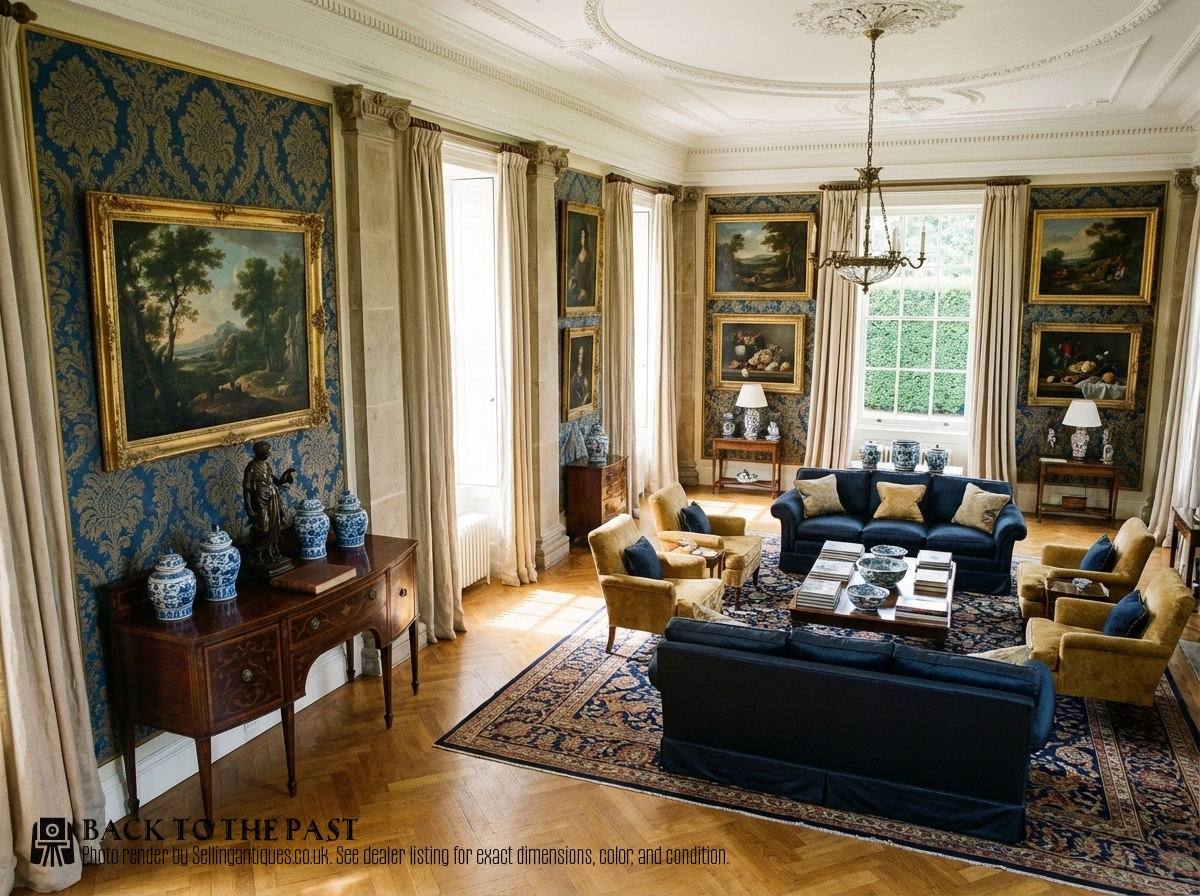
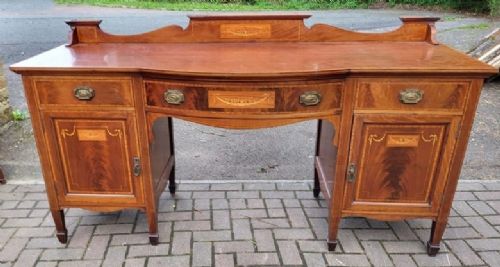
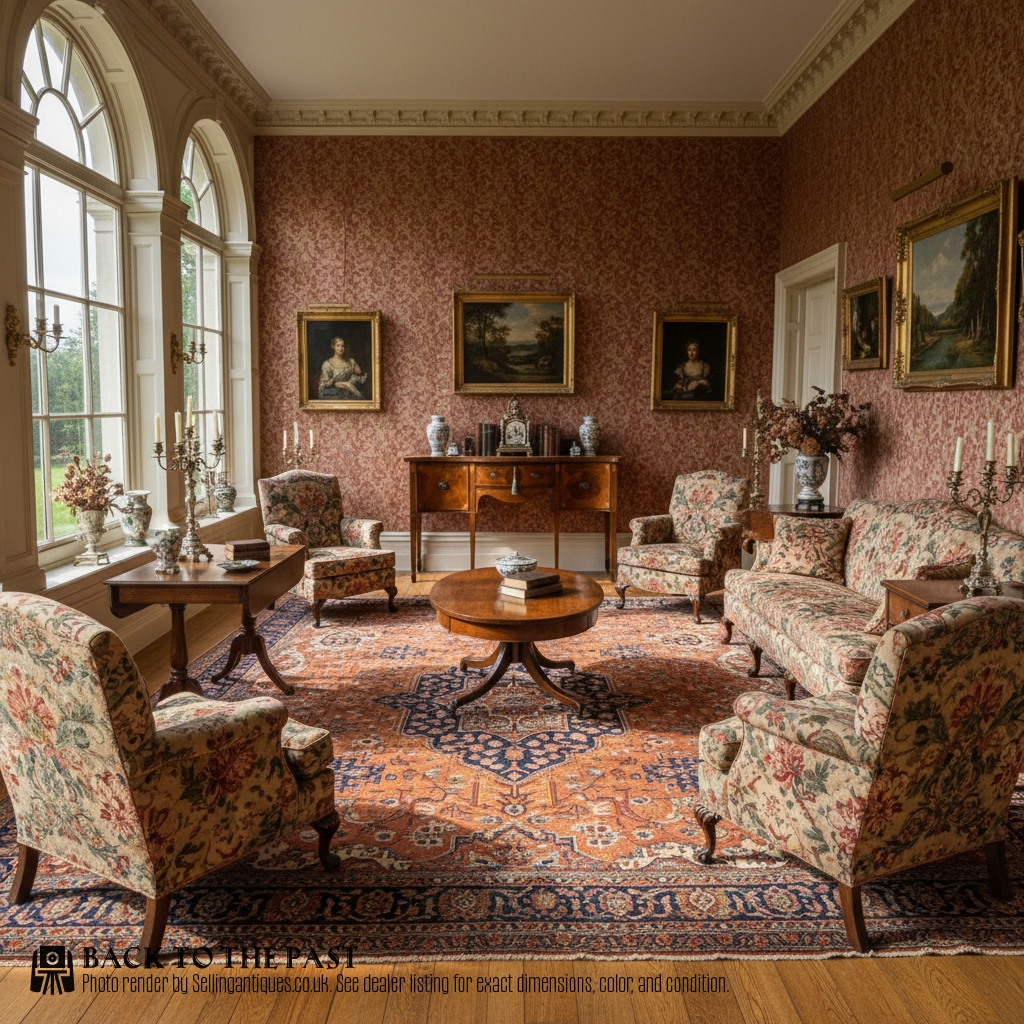
Superb Marquetry Inlaid Mahogany Sideboard, 19th Century
Priced at £875 from Wayne Long Antiques and Interiors
Early examples feature solid carcase woods with thick, saw-cut veneers glued on top.
Craftsmen cut intricate banding using specialised tools called purfling cutters.
Steam-powered machinery later allowed for thinner, machine-cut veneers on mass-produced pieces.
"Some designs include a discrete pot cupboard hidden within one of the pedestals."
"The central arch was specifically shaped to hold a large wooden wine cooler underneath."
"Brass rails across the back edge were used to prop up display plates."
Based on almost 25 years of Sellingantiques UK antique market data, Antique Inlaid Sideboards appeared 40058 times (out of 1,100,000 antiques) which gives it a rarity score of 1/100.
This score measures scarcity within the Sellingantiques archive only and is not a survey of the entire antiques market, so these statistics may not be indicative of the general availability of Antique Inlaid Sideboards elsewhere.
You can wax over it safely. Most stringing and banding sits flush with the main veneer. A good quality beeswax feeds the surface and protects the edges of the inlay from drying out.
Never use chemical strippers. They dissolve the old animal hide glue holding the delicate patterns in place.
Radiators and veneered furniture do not mix well. Constant cycles of heating and cooling dry out the timber carcase beneath. The wood shrinks slightly, but the veneer moves at a different rate.
This movement breaks the bond of the old glue. You will soon see the inlay popping out and the crossbanding starting to split.
Keep it on a different wall. If you have no choice, turn the radiator off.
That is the cellarette drawer. It was built to hold wine bottles. Many retain wooden divisions to stop the glass clinking when the drawer is opened.
Some are lined with lead. This kept the contents cool and caught any drips.
Cabinet makers often fitted wooden stops to the drawer runners. These prevent the drawer from pushing too far in and ruining the flush line of the front. They were fixed with a single iron nail or a wooden dowel.
Sometimes you can tilt the drawer upwards at a sharp angle to clear the stop. Pull it out halfway, lift the front up, and try pulling again.
Do not force it. If it refuses to budge, the stop might be glued or the carcase slightly bowed.
Please note: This Antique Inlaid Sideboards guide and its associated pricing data are provided for general informational purposes only. It does not constitute formal financial, investment, or appraisal advice and should not be relied upon as the sole basis for any commercial activity, purchasing, or sales decisions. Sellingantiques.co.uk accepts no liability for any actions taken in reliance on this information. Always consult with a qualified professional or independent appraiser.
