


A 2026 Guide by Sellingantiques
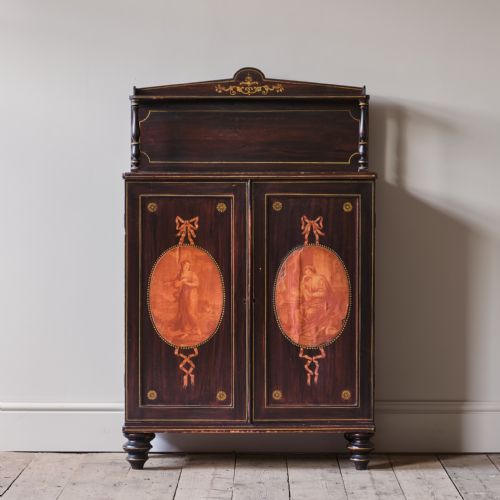
Rosewood Chiffonier Brass Inlaid, Regency
Priced at £1,950 from James Reeve (Quinneys of Warwick)
Originating in late eighteenth-century France, early models functioned as narrow chests of drawers.
Form shifted during the Regency period. They became low cupboards with open shelves.
A staple of middle-class Victorian homes, relied upon heavily for dining room storage.
Look at the overall proportions to gauge the date. Later nineteenth-century examples grew much heavier.
You'll notice their popularity dropped as Edwardian tastes favoured lighter display cabinets.
Gillows of Lancaster produced rosewood examples during the early nineteenth century.
Mostly unlabelled provincial work. The regional trade built thousands of them straight from published pattern books.
Check the internal locks. Stamped brass locks sometimes carry names of prominent Birmingham hardware foundries.
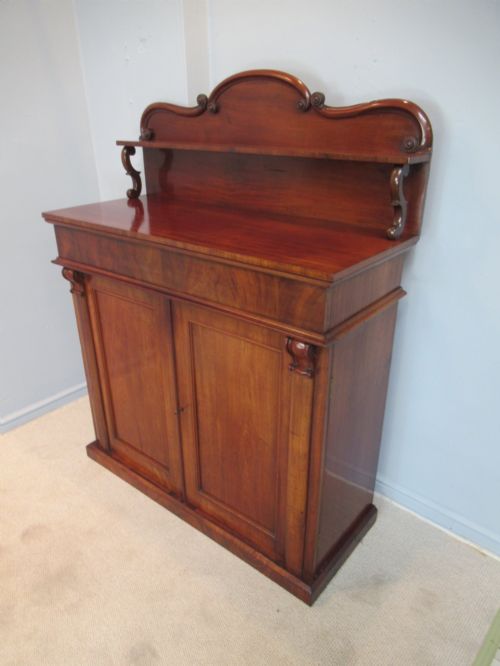
Regency Mahogany Chiffonier with 2 Tier Shelf Back & Writing Drawer, Regency
Priced at £1,250 from E W Cousins and Son
The 2026 retail price guide for Antique Chiffoniers is drawn from a proprietary archive of over 1.1 million retail prices indexed by Sellingantiques since 2003. This guide relies exclusively on their own internal data; no external sources or auction records are used.
Analysing nearly 25 years of UK antique market history alongside current retail values, the data indicates that typical UK retail prices for Antique Chiffoniers range between £700 and £2,500. Entry-level prices generally fall under £700 and premium examples upwards of £2,500.
Most sit flat on a plinth base or raised up on turned bun feet.
A raised back with a single shelf acts as the defining mark of British examples.
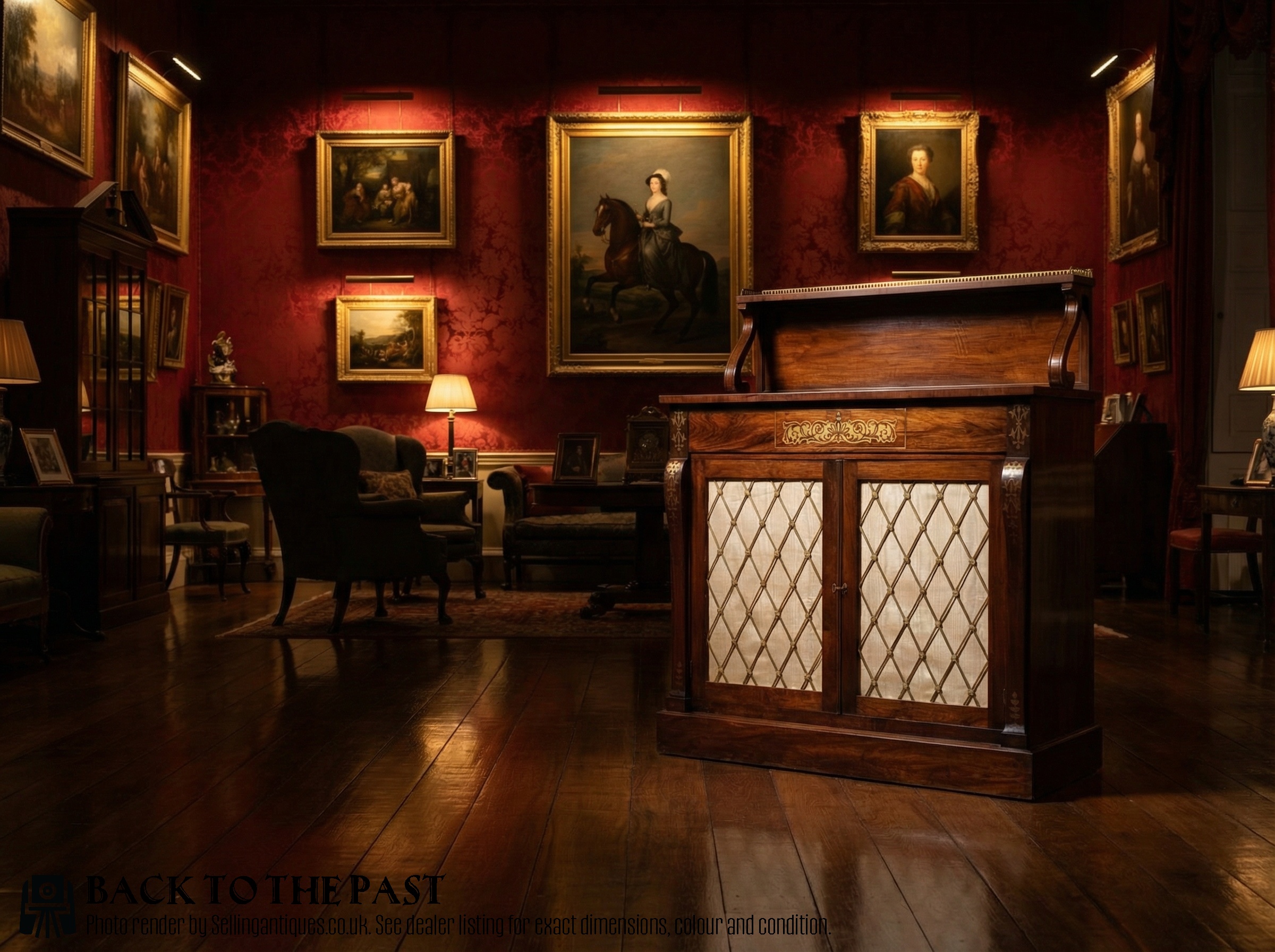
Doors frequently feature arched panels, sometimes fitted with pleated silk behind brass grilles.
Rosewood Breakfront Chiffonier / Sideboard, 1880
Priced at £1,100 from Athey Antiques
Early craftsmen used hand-cut dovetails on the frieze drawers.
Thinner veneer application over time. Machine-cut wood on later Victorian pieces looks visibly different.
Scrollwork on the backboards was usually shaped by hand using traditional coping saws and gouges.
"The name originally comes from the French word for a rag-gatherer."
"Some hidden drawers in the frieze open by reaching underneath rather than pulling handles."
"They aren't just for dining rooms. Larger country houses often placed them upstairs in the main bedrooms."
Based on almost 25 years of Sellingantiques UK antique market data, Antique Chiffoniers appeared 3174 times (out of 1,100,000 antiques) which gives it a rarity score of 53/100.
This score measures scarcity within the Sellingantiques archive only and is not a survey of the entire antiques market, so these statistics may not be indicative of the general availability of Antique Chiffoniers elsewhere.
They were built for versatility. The cupboards held decanters or large stacks of plates. The frieze drawers took napkins and serving tools.
The top surface and raised back shelf were meant for display. Mantel clocks or silver serving dishes sat there during meals.
Hallways suit them well. An early nineteenth-century antique chiffonier in rosewood often has shallow proportions. They sit flat against the wall without sticking out too far into the room.
Pieces with brass grilles and silk panels feel visually lighter than solid mahogany doors. The raised back also breaks up the blank wall space above the dado rail.
Always lift from the solid carcase at the base. Don't pull by the overhanging top or the raised back shelf. Those upper sections are secured by screws that can tear out.
Take the drawers and shelves out first to reduce the weight. Tape the doors shut with low-tack masking tape so they don't swing open on the stairs.
Regency models work well with modern interiors. They rely on flat veneers and simple brass mouldings rather than heavy carving.
Late Victorian examples tend to carry heavy scrollwork and larger bases. Those demand more visual space. Keep to the earlier straight-lined forms for a quieter look.
Please note: This Antique Chiffoniers guide and its associated pricing data are provided for general informational purposes only. It does not constitute formal financial, investment, or appraisal advice and should not be relied upon as the sole basis for any commercial activity, purchasing, or sales decisions. Sellingantiques.co.uk accepts no liability for any actions taken in reliance on this information. Always consult with a qualified professional or independent appraiser.
