
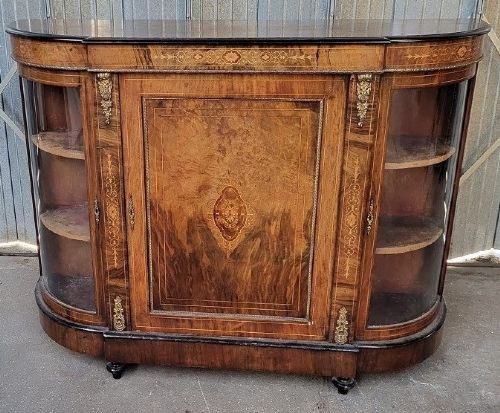
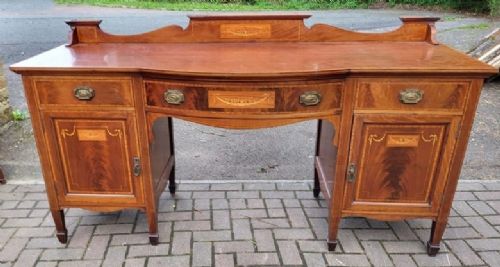


A 2026 Guide by Sellingantiques
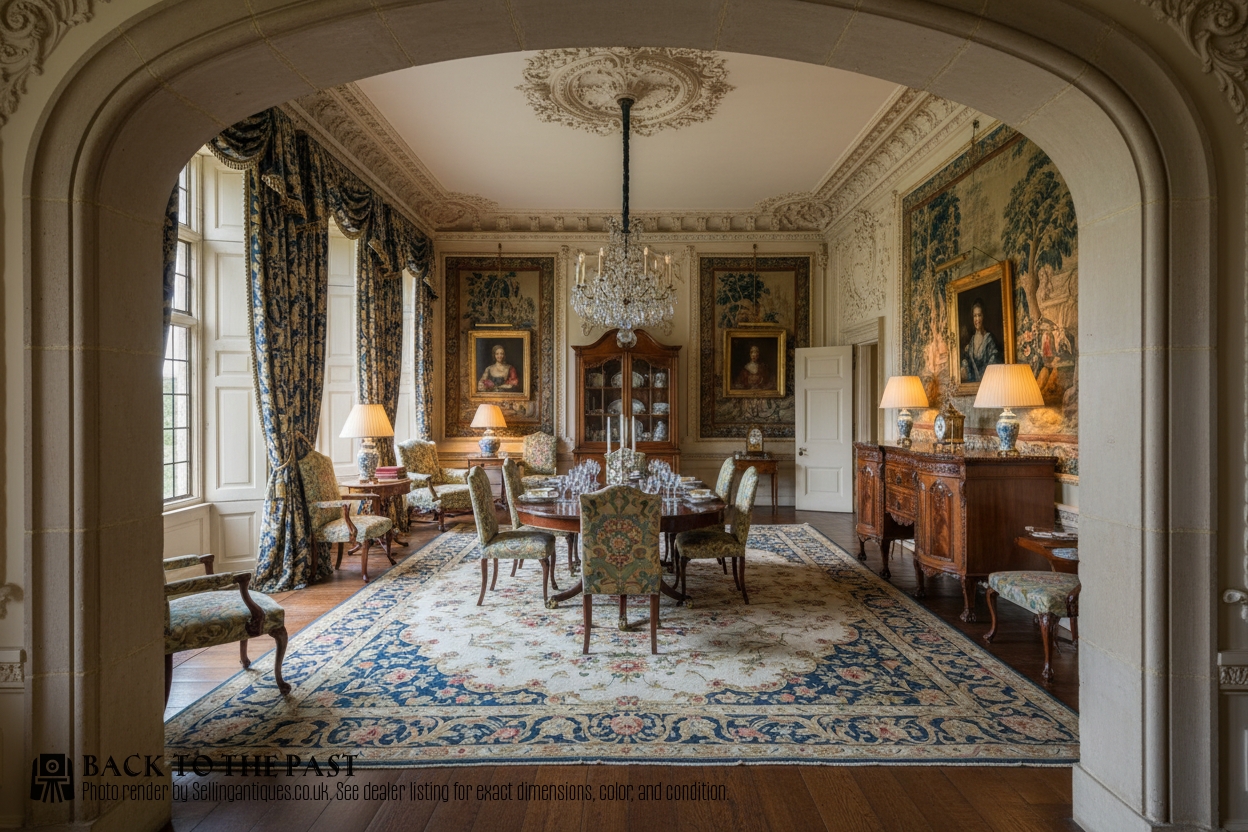
Carved Mahogany Inverted Break Front Sideboard, 1900
Priced at £2,245 from Shackladys Antiques
Late eighteenth-century dining habits driving the need for more serving space.
Look at how dining rooms changed during the Georgian period. People moved away from eating in the main hall and needed dedicated furniture for the new private dining spaces.
They evolved from the simple side table, gaining pedestals and drawers to hold the growing amount of silver and ceramics wealthy households owned.
Eventually, Robert Adam unified these separate pedestals and tables into the single massive carcase we recognise as the antique breakfront sideboard.
Thomas Sheraton published designs for breakfront sideboards in his 1791 drawing book. His patterns influenced provincial cabinetmakers across Britain for decades.
Gillows of Lancaster produced massive mahogany examples throughout the early nineteenth century. They stamped their names on drawer edges or carcase backs.
Remember that most antique breakfront sideboards carry no maker marks. The regional furniture trade built the vast majority of surviving pieces using pattern books.
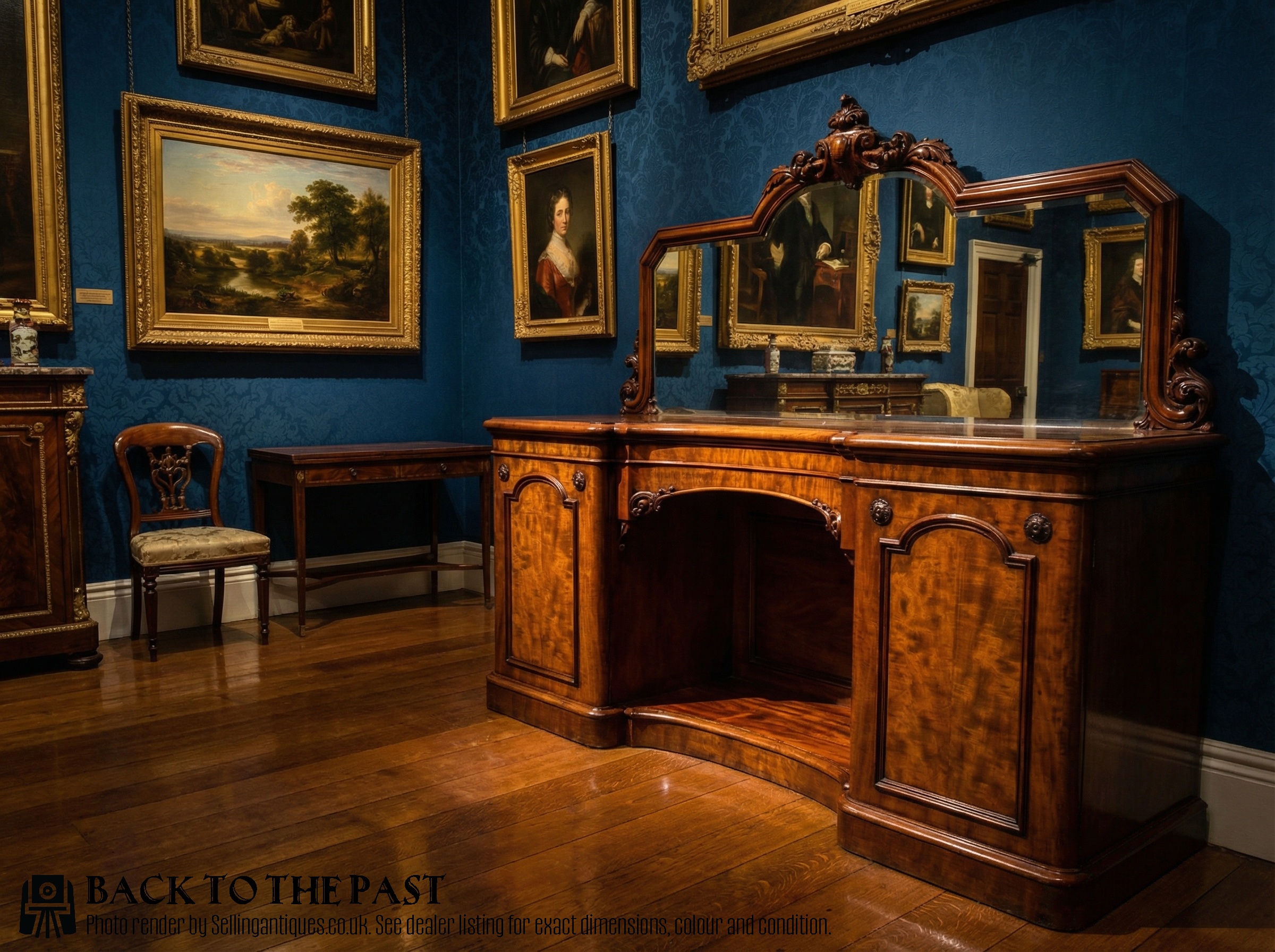
Mahogany Mirror Back Breakfront Chiffonier Sideboard, Victorian
Priced at £985 from The Antique Shop
The 2026 retail price guide for Antique Breakfront Sideboards is drawn from a proprietary archive of over 1.1 million retail prices indexed by Sellingantiques since 2003. This guide relies exclusively on their own internal data; no external sources or auction records are used.
Analysing nearly 25 years of UK antique market history alongside current retail values, the data indicates that typical UK retail prices for Antique Breakfront Sideboards range between £1,300 and £5,800. Entry-level prices generally fall under £1,300 and premium examples upwards of £5,800.
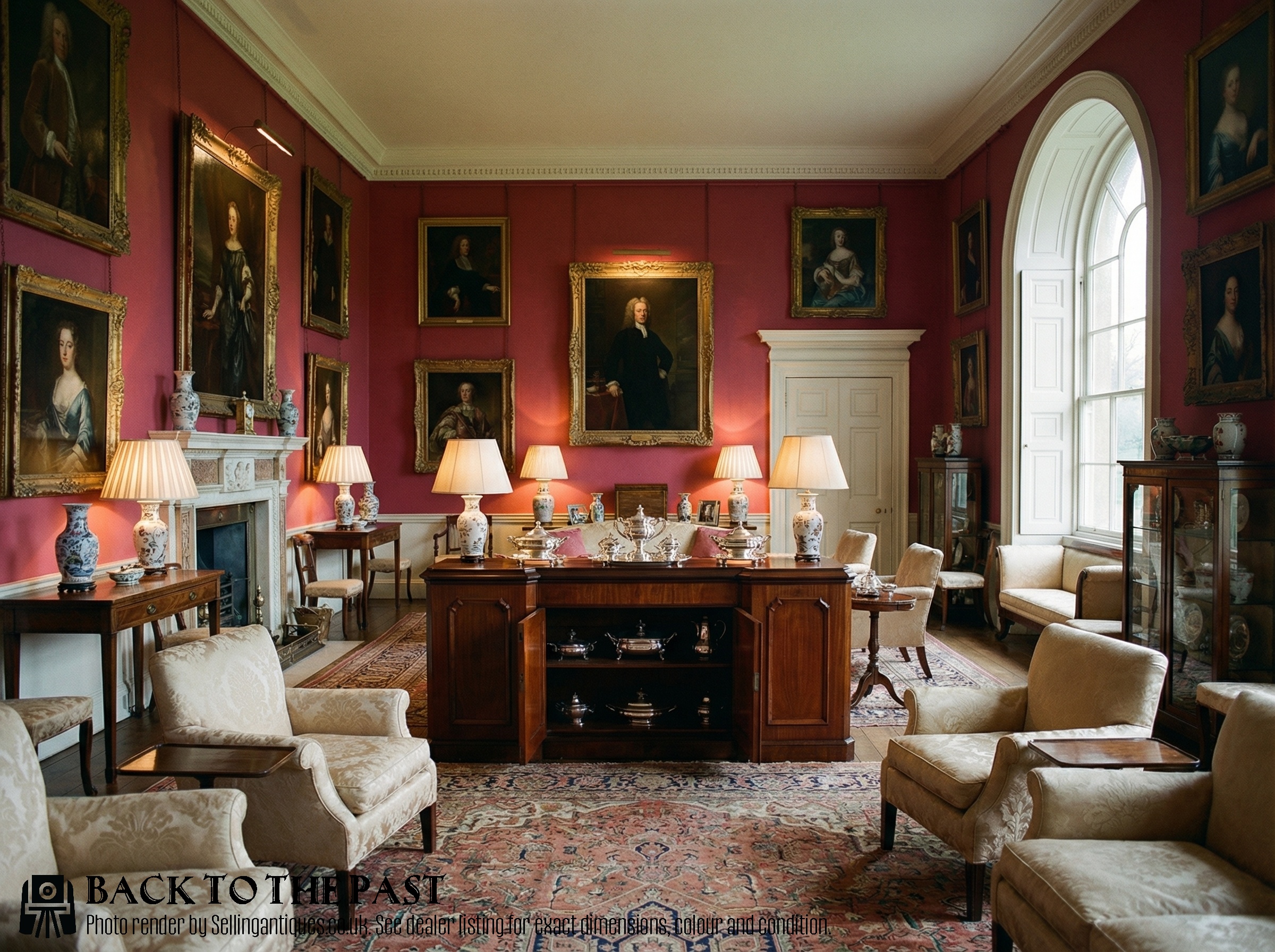
The central projecting section gives the antique breakfront sideboard its name. This stepped front breaks up the flat line of a long wall.
Behind the central doors you often find wide, shallow linen drawers, while the flanking wings typically house deep bottle drawers or cupboards.
Notice the brass rail running along the back edge of some models. Servants hung a curtain here to protect the wall from splashes.
Victorian Mahogany Four Door Sideboard, 1880
Priced at £1,100 from Nicholas Little Antiques
Cabinetmakers used hand-cut dovetails to join the drawer sides to the fronts. This joint handles the constant pulling of heavily loaded drawers.
Check the back boards. They are rough-sawn and held together with hand-forged iron nails, showing the tool marks from the original workshop.
The curved doors on a bow-centre antique breakfront sideboard require complex hammer veneering over a shaped pine core.
"The deep drawer on the right side often masks a hidden compartment. Makers fitted these false bottoms to secure the household tea caddy."
"Look closely at the middle drawer. Some contain a baize-lined sliding tray designed specifically for brushing crumbs off silver serving trays."
"A pot cupboard. A small side compartment historically held a chamber pot for gentlemen who lingered in the dining room after dinner."
Based on almost 25 years of Sellingantiques UK antique market data, Antique Breakfront Sideboards appeared 762 times (out of 1,100,000 antiques) which gives it a rarity score of 86/100.
This score measures scarcity within the Sellingantiques archive only and is not a survey of the entire antiques market, so these statistics may not be indicative of the general availability of Antique Breakfront Sideboards elsewhere.
Most large antique breakfront sideboards come apart for transport. The top usually lifts off the pedestals once you remove the securing screws hidden inside the top drawers.
Always check underneath the top board before pulling. Some early Georgian pieces were built as a single solid carcase and will not dismantle at all.
A Sheraton-style sideboard on slender turned legs looks much lighter than a Victorian piece sitting flat on a plinth base. The open space underneath the carcase helps the floor flow visually, making the room feel larger.
Choosing a piece with a shallow central section also helps. A gentler breakfront curve intrudes less into the walking space around your dining table.
The brass gallery rail supported a small curtain to protect expensive dining room wallpaper from food splashes.
Some rails also feature circular brackets. These held additional candle branches to reflect light across the mahogany top.
Vertical cracks in veneer happen because the solid pine core underneath shrinks across the grain as it dries out over the centuries. The thin mahogany veneer on top simply splits to relieve the tension.
This movement usually settled over a century ago. Provided you keep the sideboard away from direct heat sources like radiators, those existing cracks remain stable.
Please note: This Antique Breakfront Sideboards guide and its associated pricing data are provided for general informational purposes only. It does not constitute formal financial, investment, or appraisal advice and should not be relied upon as the sole basis for any commercial activity, purchasing, or sales decisions. Sellingantiques.co.uk accepts no liability for any actions taken in reliance on this information. Always consult with a qualified professional or independent appraiser.
