


A 2026 Guide by Sellingantiques

Antique Copper Riveted Bucket for Logs or Coal, 19th Century
Priced at £225 from Antiquus
Domestic kitchens relied heavily on this metal. Particularly from the seventeenth century onwards.
Look at the large estate houses. The wealthy often had entire rooms dedicated just to storing their copperware, managed by specialised kitchen staff.
Shifting from hand-beaten ingots to rolled sheets. Industrial demand pushed production methods forward rapidly during the eighteenth century.
Tinned linings became standard practice for any vessel holding acidic foods. This prevented the raw metal from creating toxic salts that ruined a meal.
Most pieces turning up today date from the Victorian era. You'll find urban demand for intricate jelly moulds and heavy saucepans peaked during this period.
Benham & Froud operated in London during the nineteenth century. They stamped their output with a distinctive orb and cross mark.
French production centred heavily around Villedieu-les-Poêles. Workshops there produced heavy-gauge sauté pans and stockpots for professional kitchens across Europe.
William S. Adams supplied high-quality culinary antique copper to the London trade. He often provided stock for the major retail outfitters of the day.
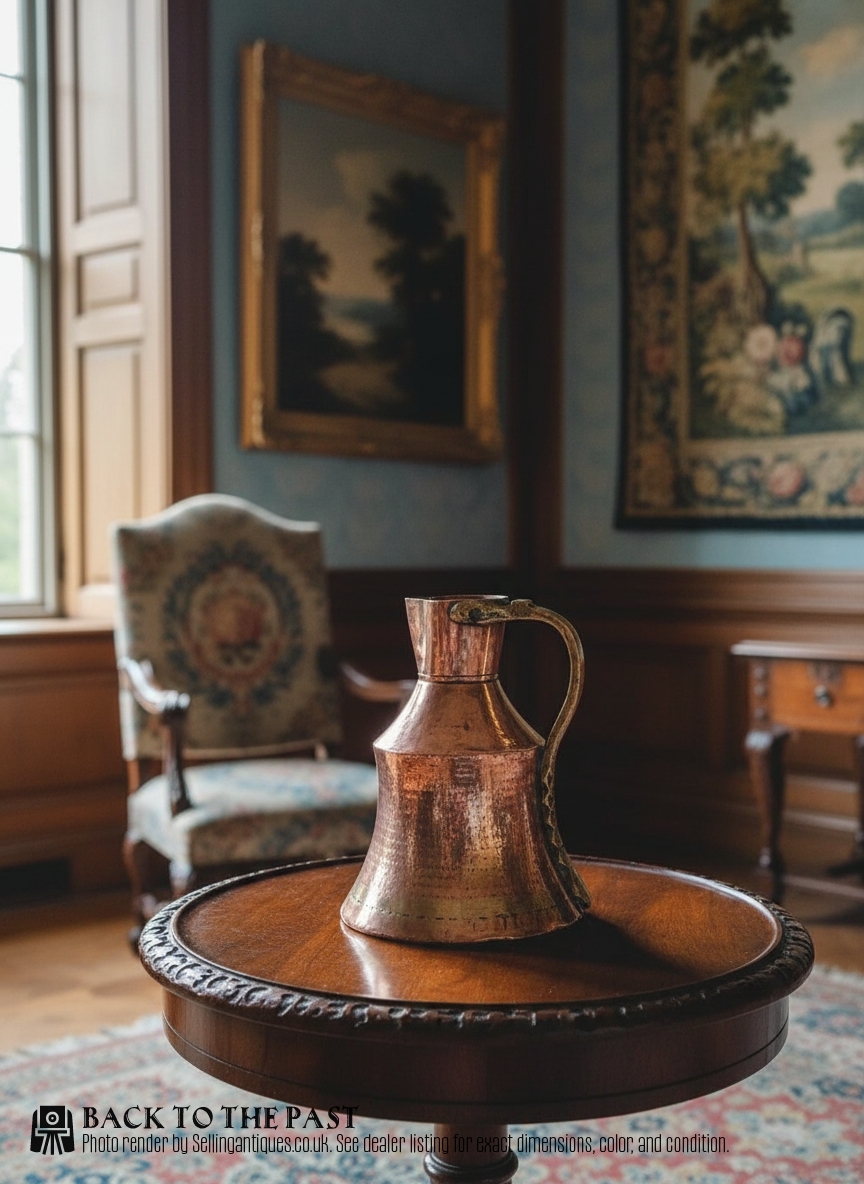
Antique Arts and Crafts Copper and Brass Milk Jug, 1910
Priced at £495 from London City Antiques
The 2026 retail price guide for Antique Copper is drawn from a proprietary archive of over 1.1 million retail prices indexed by Sellingantiques since 2003. This guide relies exclusively on their own internal data; no external sources or auction records are used.
Analysing nearly 25 years of UK antique market history alongside current retail values, the data indicates that typical UK retail prices for Antique Copper range between £200 and £1,000. Entry-level prices generally fall under £200 and premium examples upwards of £1,000.
Cramped seams show up on earlier holloware. Smiths cut zig-zag teeth into two edges, hammered them together and brazed the joint.
Rolled rims provide structural strength. The maker curled the top edge over, sometimes enclosing a heavy iron wire to keep the circular shape rigid.
Check for stamped marks near the rim or on the handle. Large country houses frequently stamped their pans with estate initials or crests to deter theft.

Antique George III Quality Copper Kettle, 1800
Priced at £365 from London City Antiques
Early antique copper vessels were raised by hand from a single flat disc. The smith worked the metal over an anvil, annealing it in the fire as it hardened.
Sheet metal mills changed the trade. Workshops could buy uniform rolled sheets, cutting and folding them rather than beating out from raw ingots.
Spinning lathes arrived later in the nineteenth century. The maker pushed a spinning disc of metal over a mould to form seamless bowls.
"Some Victorian jelly moulds have numbered stamps. They don't indicate the size. These correspond to specific designs in a manufacturer's catalogue."
"Large preserving pans were deliberately left untinned. The high sugar content in jam prevents a toxic reaction with the bare metal."
"Turn a heavy saucepan over. The thickness at the base is often twice that of the side walls to improve heat retention."
Based on almost 25 years of Sellingantiques UK antique market data, Antique Copper appeared 7466 times (out of 1,100,000 antiques) which gives it a rarity score of 22/100.
This score measures scarcity within the Sellingantiques archive only and is not a survey of the entire antiques market, so these statistics may not be indicative of the general availability of Antique Copper elsewhere.
Wash them with warm soapy water and a soft cloth. Most dirt and kitchen grease will lift off without much effort.
If the metal is dull, a mixture of salt and lemon juice rubbed gently over the surface will brighten it. Wash it thoroughly afterwards. Avoid heavy chemical brass cleaners on anything used for food.
Yes, provided the internal tin lining remains intact. The metal conducts heat well, making these pans practical for modern cooking.
Check the interior carefully. If bare reddish metal shows through the silver-coloured tin, the pan needs re-tinning before normal use.
That green crust is copper acetate, commonly known as verdigris. It forms when the metal reacts with moisture, acidic substances or certain atmospheric pollutants over a long period. You frequently find it trapped in crevices, around handles, or inside spouts where water sits.
It is toxic, so it needs removing if the piece is meant for domestic use. A soft brush and some white vinegar will usually dissolve the build-up. Once clean, dry the kettle thoroughly to stop the crust returning.
Loose handles are a standard issue with antique copper holloware. Heavy use over a hot stove causes the metal to expand and contract, which slowly stretches the rivets holding the cast iron or brass handles in place.
A traditional coppersmith can tighten them easily. They rest the pan on an anvil and strike the rivet heads with a hammer to swell the metal and pull the handle tight against the body again.
Please note: This Antique Copper guide and its associated pricing data are provided for general informational purposes only. It does not constitute formal financial, investment, or appraisal advice and should not be relied upon as the sole basis for any commercial activity, purchasing, or sales decisions. Sellingantiques.co.uk accepts no liability for any actions taken in reliance on this information. Always consult with a qualified professional or independent appraiser.
