
There are no results to show on this page for that combination of filters:
Chippendale Edwardian Beds
A 2026 Guide by Sellingantiques
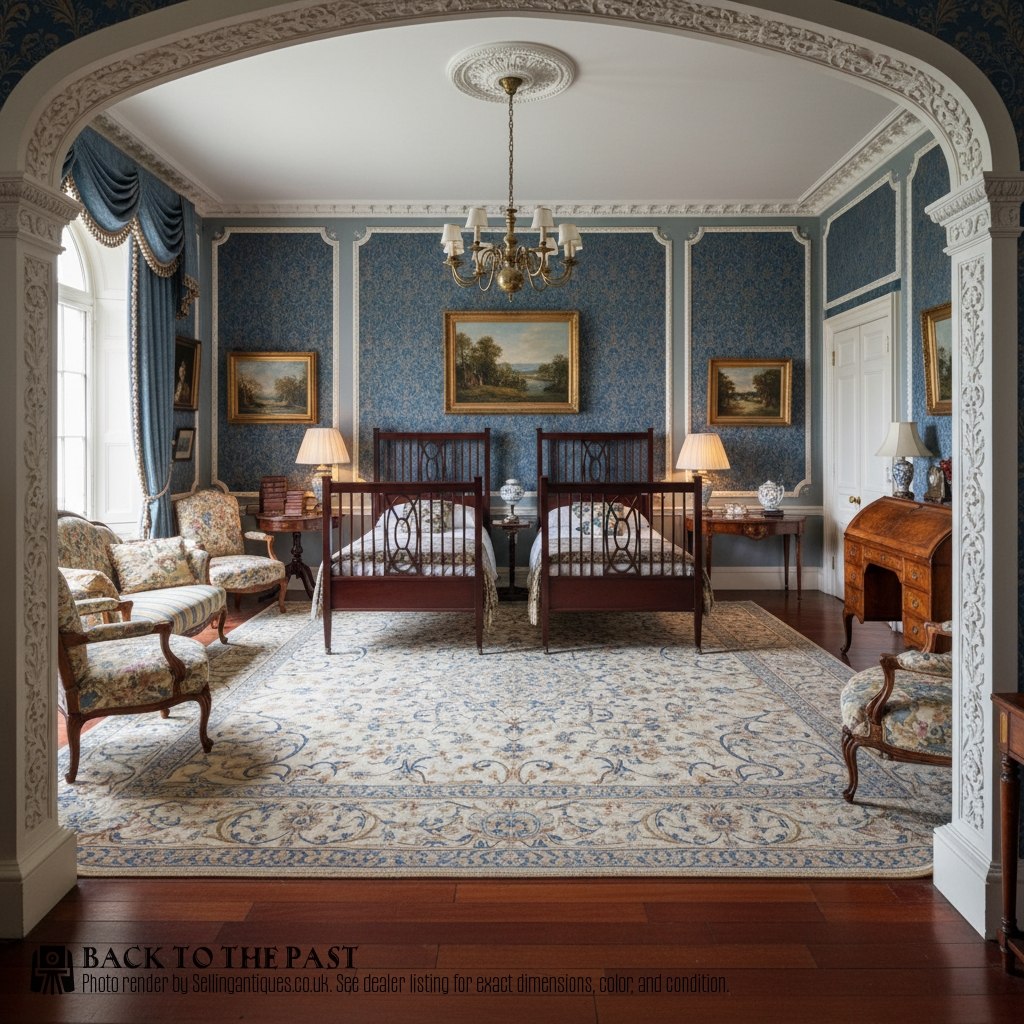
Antique Pair Edwardian Mahogany Single Beds C1900, Edwardian
Priced at £675 from Castleforge Antiques Ltd
The era spans just nine years from 1901 to 1910. Edwardian beds often act as a bridge between heavy Victorian aesthetics and lighter twentieth-century tastes.
Hygiene concerns reshaped bedroom furniture during these years. Medical advice pushed people away from heavy draped canopies toward open frames.
Look at the wider adoption of metal over wood. Foundries across the Midlands produced thousands of iron bedsteads for the domestic market.
Mass production hit its stride. Catalogues offered everything from simple hospital cots to elaborate brass-mounted frames for wealthy households.
Heal & Son dominated the London retail market for Edwardian beds. Their workshops produced simple, well-proportioned wooden frames without excessive carving.
Hoskins & Sewell operated a major brass and iron foundry in Birmingham. They supplied metal bedsteads across the country and for passenger ships.
Regional manufacturers handled most of the basic iron models. Unmarked frames usually came from the industrial Midlands rather than individual craftsmen.
The 2026 retail price guide for Edwardian Beds is drawn from a proprietary archive of over 1.1 million retail prices indexed by Sellingantiques since 2003. This guide relies exclusively on their own internal data; no external sources or auction records are used.
Analysing nearly 25 years of UK antique market history alongside current retail values, the data indicates that typical UK retail prices for Edwardian Beds range between £400 and £2,000. Entry-level prices generally fall under £400 and premium examples upwards of £2,000.
Slatted headboards are a common sight on timber frames. They allowed air to circulate freely around the sleeper.
Check the brass knobs and finials on metal frames. Most unscrew on a threaded rod dropping down into the main corner post.
Cast iron joints secure the side rails to the head and foot boards. V-shaped brackets slot together using gravity to hold the frame rigid.
Spun brass techniques allowed makers to create hollow shapes. This kept the weight down while mimicking the look of solid metal.
Cabinet makers shifted to flat veneers rather than deep carving. Mahogany stringing and simple inlay work replaced the bulky Victorian applied mouldings.
Notice the use of machine-cut dovetails on wooden examples. Factories adopted these routers to join drawer boxes and bed frames faster.
"Standard mattress sizes emerged during this period. The push for uniformity meant buyers could finally purchase bedding off the shelf without custom measuring."
"Many iron frames fold flat in seconds. The simple wedge joints pull apart without tools for easy transport up narrow staircases."
"Wood finishes shifted to French polish across standard retail models. This brought out the figure of the mahogany much better than earlier wax treatments."
Based on almost 25 years of Sellingantiques UK antique market data, Edwardian Beds appeared 971 times (out of 1,100,000 antiques) which gives it a rarity score of 82/100.
This score measures scarcity within the Sellingantiques archive only and is not a survey of the entire antiques market, so these statistics may not be indicative of the general availability of Edwardian Beds elsewhere.
Most original iron frames fall short of modern length requirements. An Edwardian double bed often measures just four foot six inches wide and struggles to hold a standard length mattress without overhang.
You'll usually need a custom mattress or an extension piece. Specialist firms weld longer side irons to the original joints. This lengthens the frame without altering the head and foot boards.
That brown dullness is tarnish where the original protective lacquer has worn away. Damp air reacts with the bare brass over decades.
Polishing it back requires stripping the remaining lacquer entirely before using a metal abrasive. It's a messy job. Most dealers prefer to leave the tarnished patina alone as it shows the age of the piece. If you do polish it, you must reapply a clear metal lacquer or it will dull again within months.
Yes, wooden beds from this era usually break down into four main pieces. The headboard, footboard, and two side rails separate for transport.
The side rails typically use a metal hook and slot system or long iron bed bolts. Turn the bolt anti-clockwise with a spanner and the frame pulls apart.
Those small wooden wheels are castors. They made it much easier for domestic staff to pull the bed away from the wall when sweeping the floors and turning the heavy mattresses.
Pottery and brass castors are also common on Edwardian beds. Many survive today, though they tend to stiffen up with trapped dust. It's worth checking they spin freely before pushing the bed across a modern wooden floor to avoid deep scratches.
Please note: This Edwardian Beds guide and its associated pricing data are provided for general informational purposes only. It does not constitute formal financial, investment, or appraisal advice and should not be relied upon as the sole basis for any commercial activity, purchasing, or sales decisions. Sellingantiques.co.uk accepts no liability for any actions taken in reliance on this information. Always consult with a qualified professional or independent appraiser.
