Cheshire Antiques Consultant Ltd has dated this piece to the 1900s.
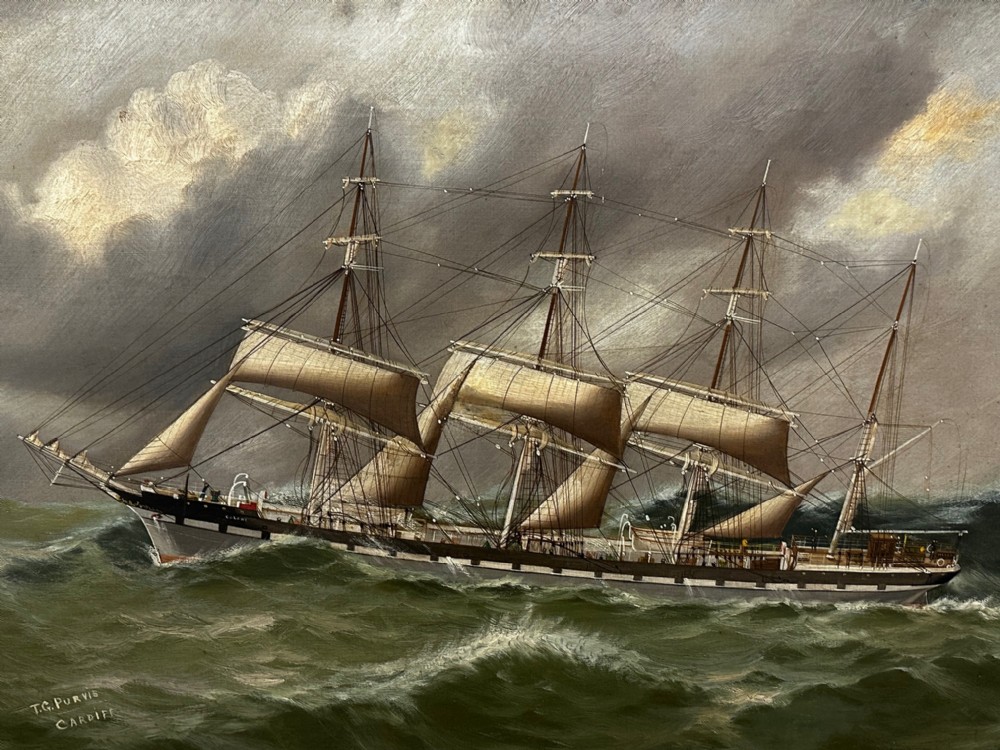
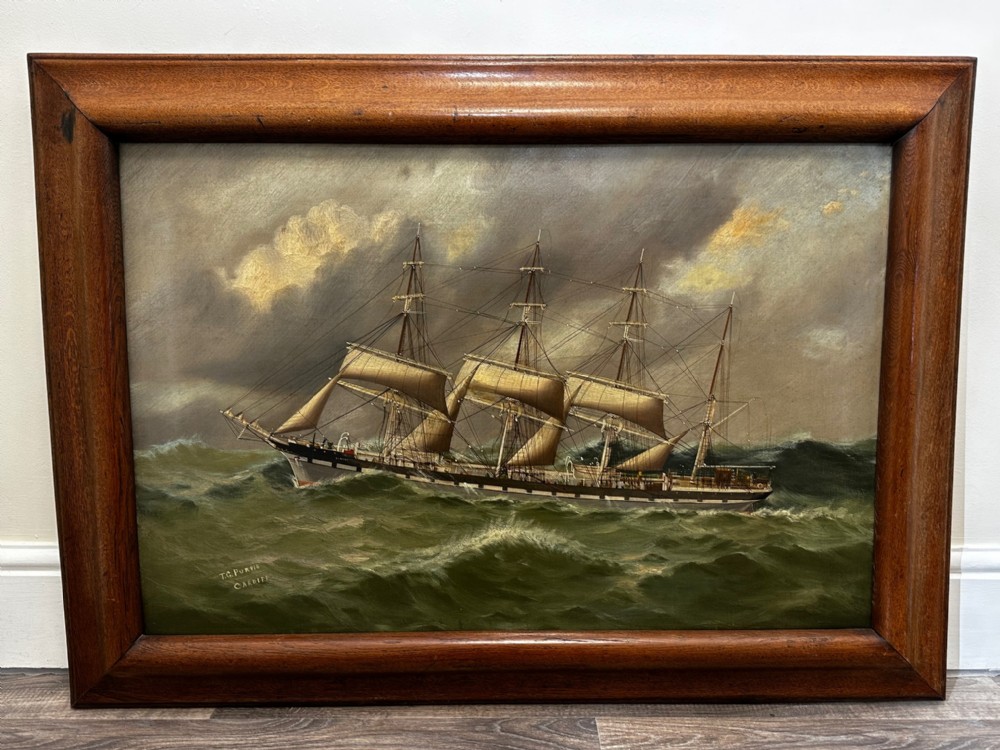
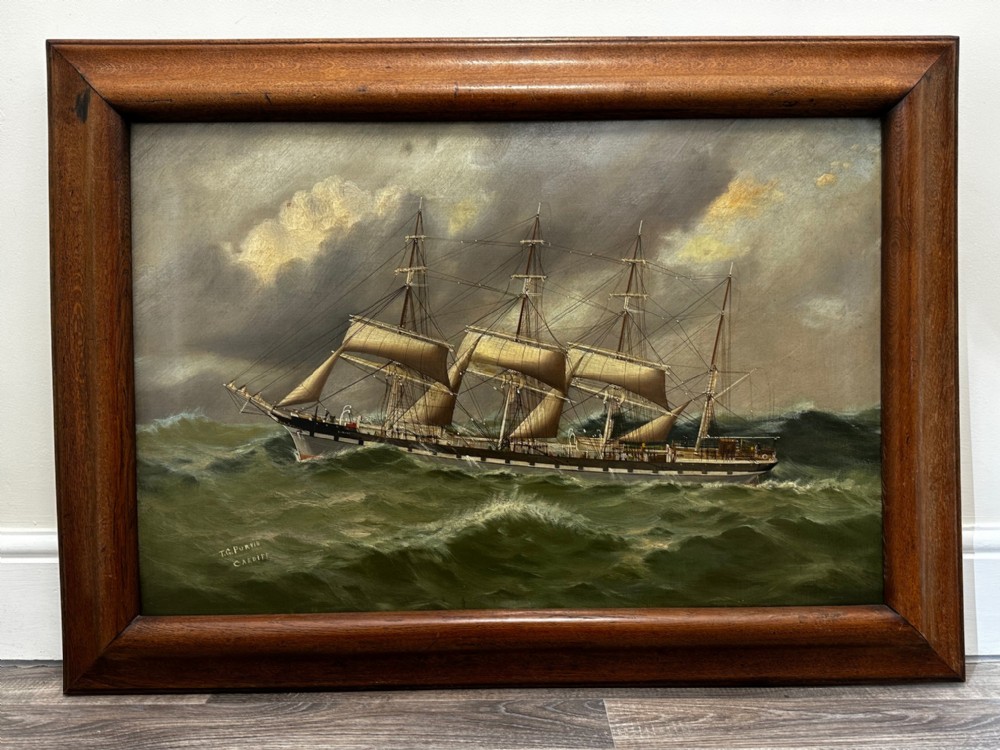
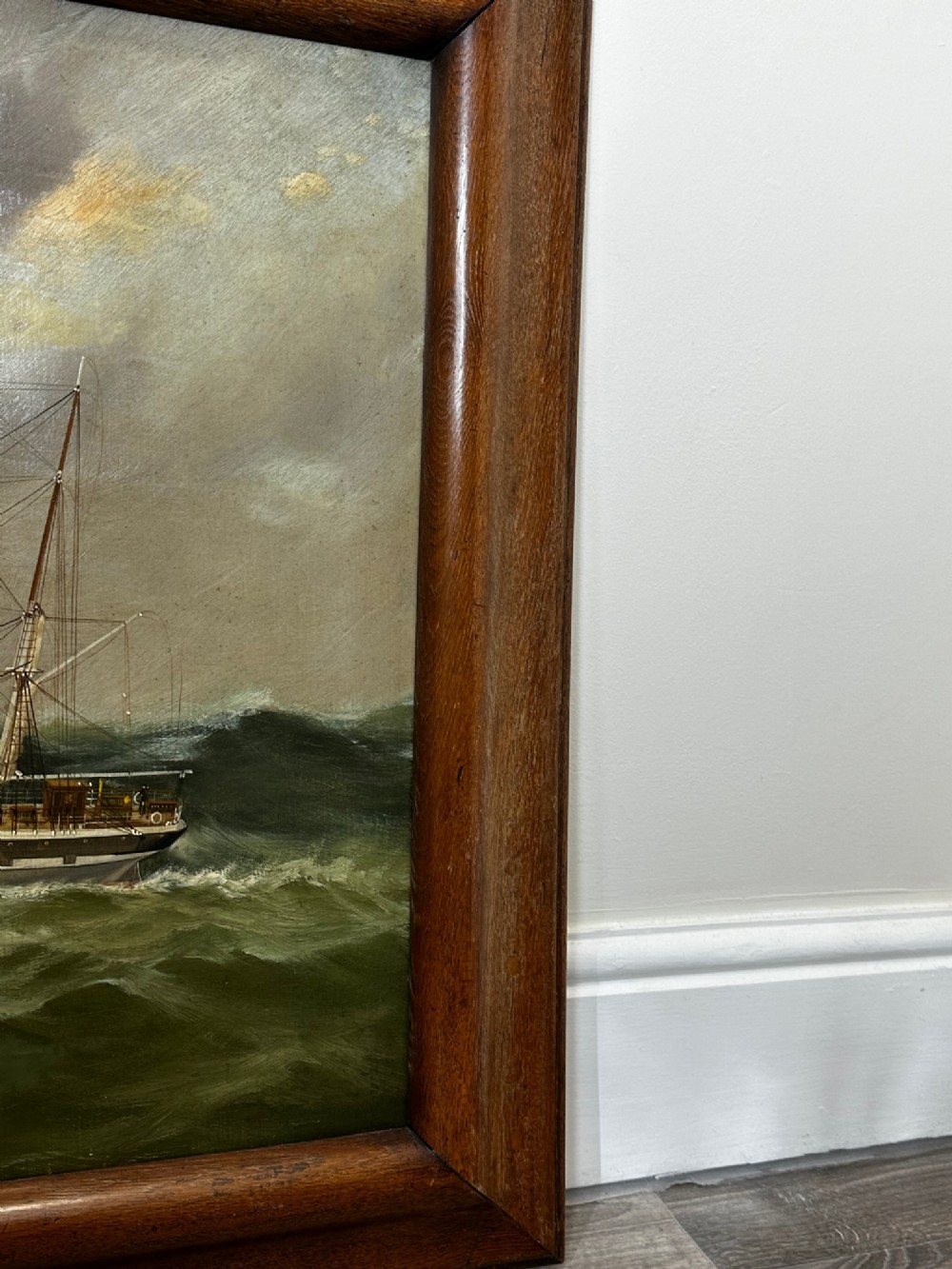
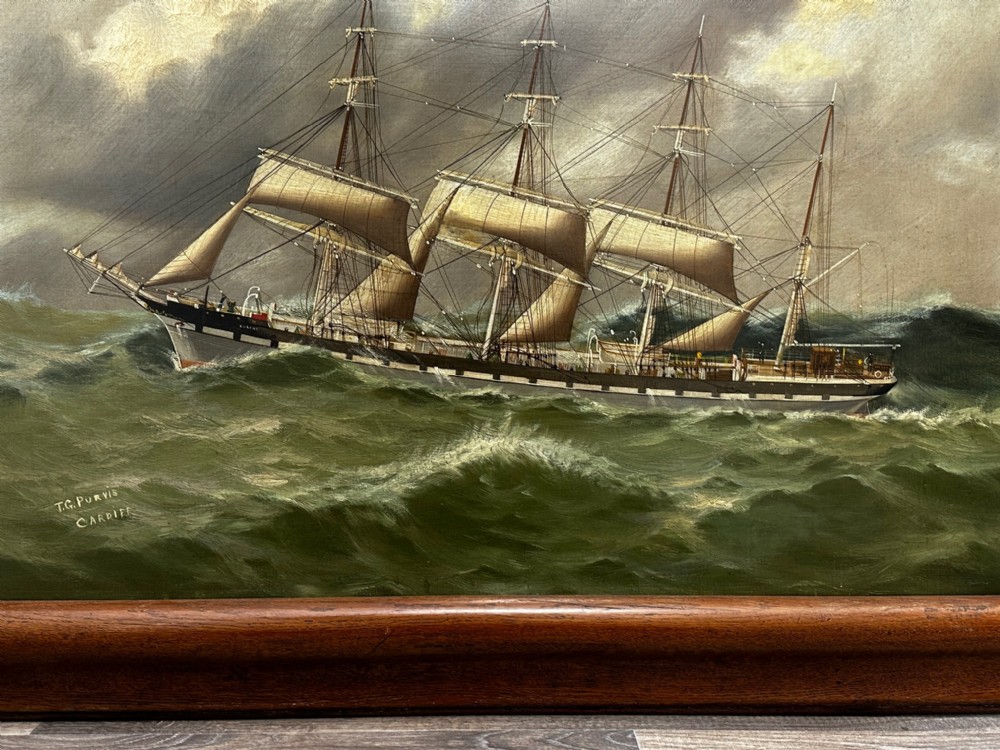
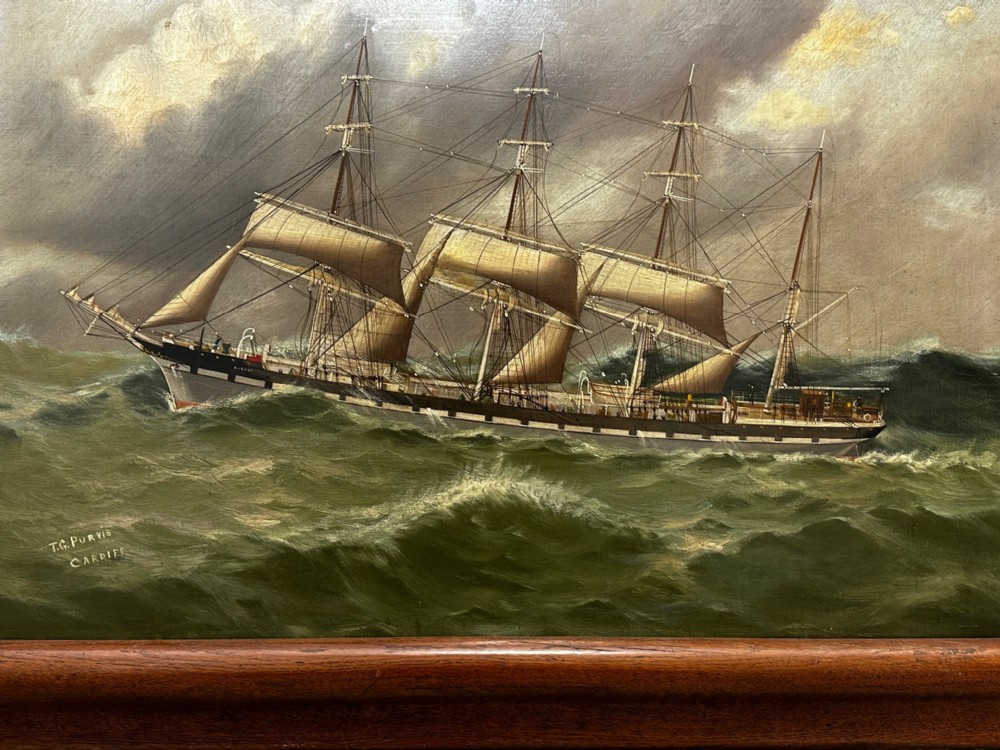
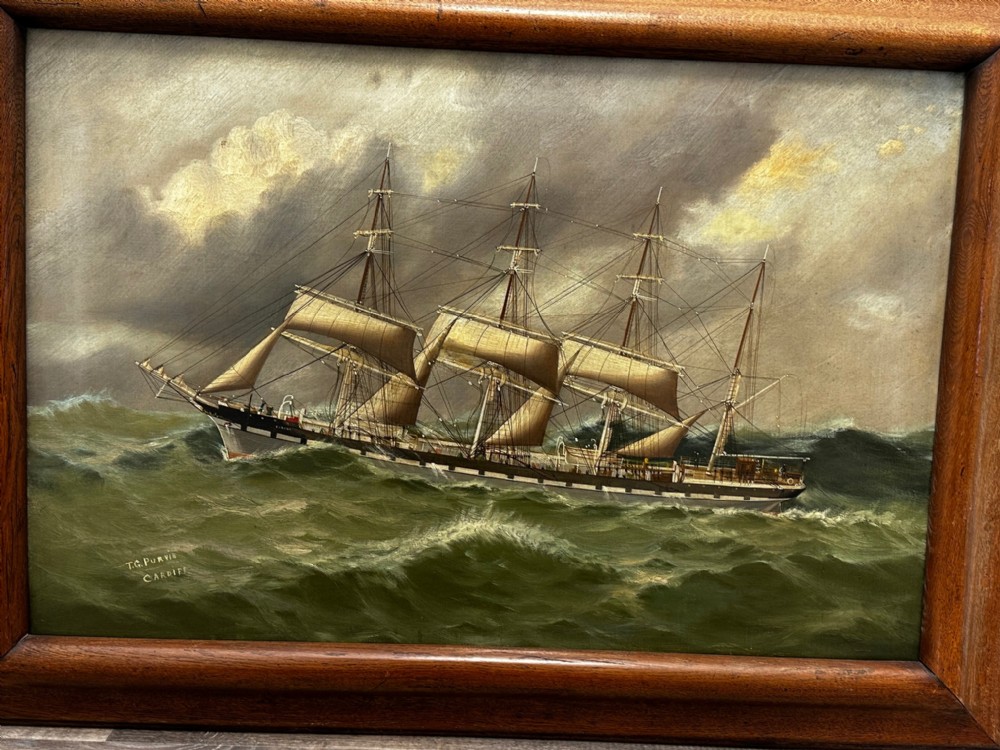
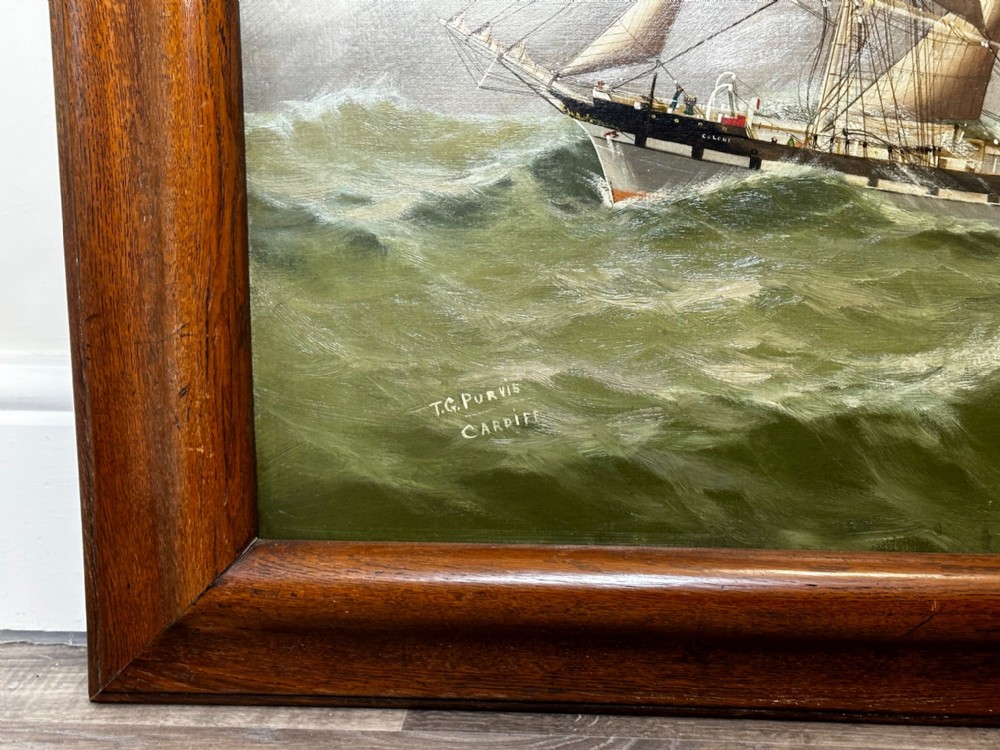
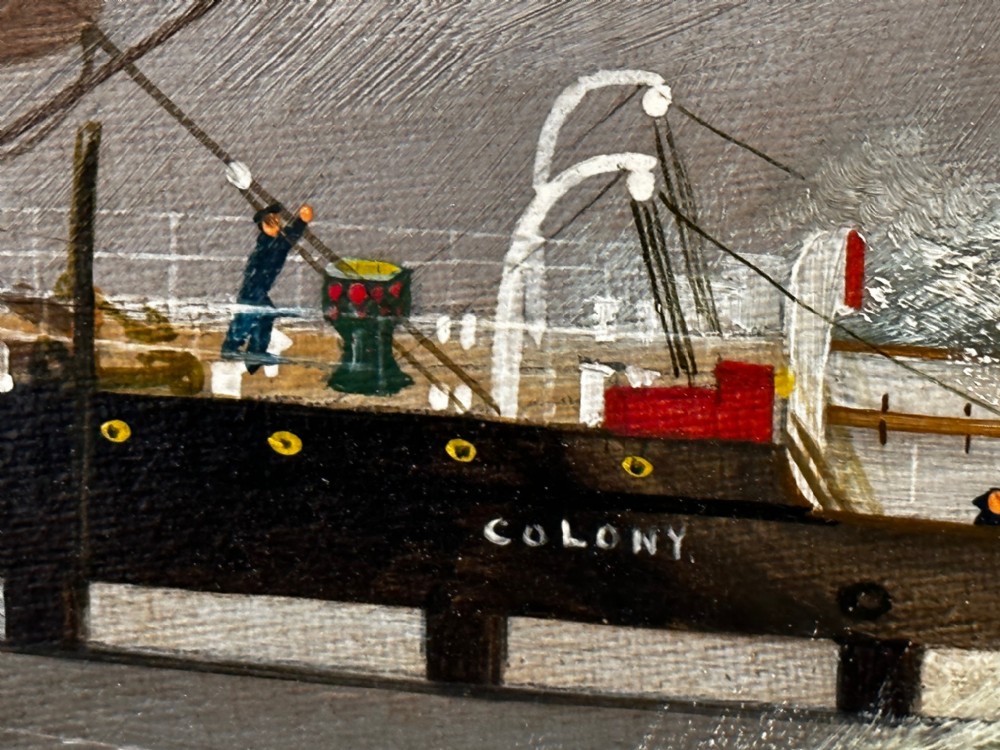
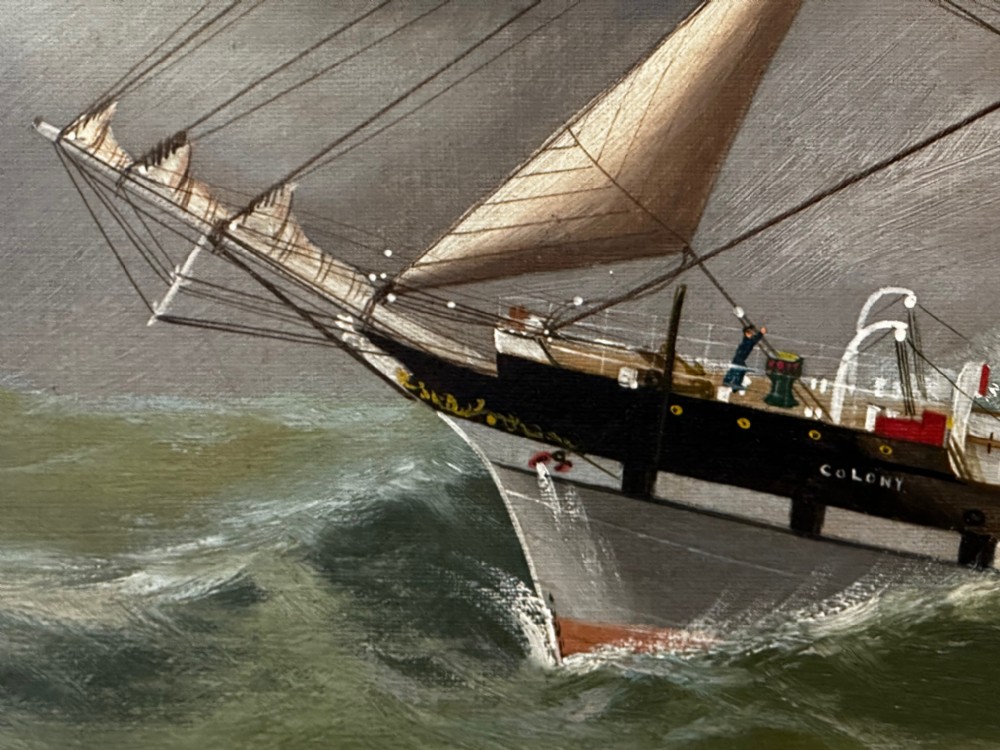
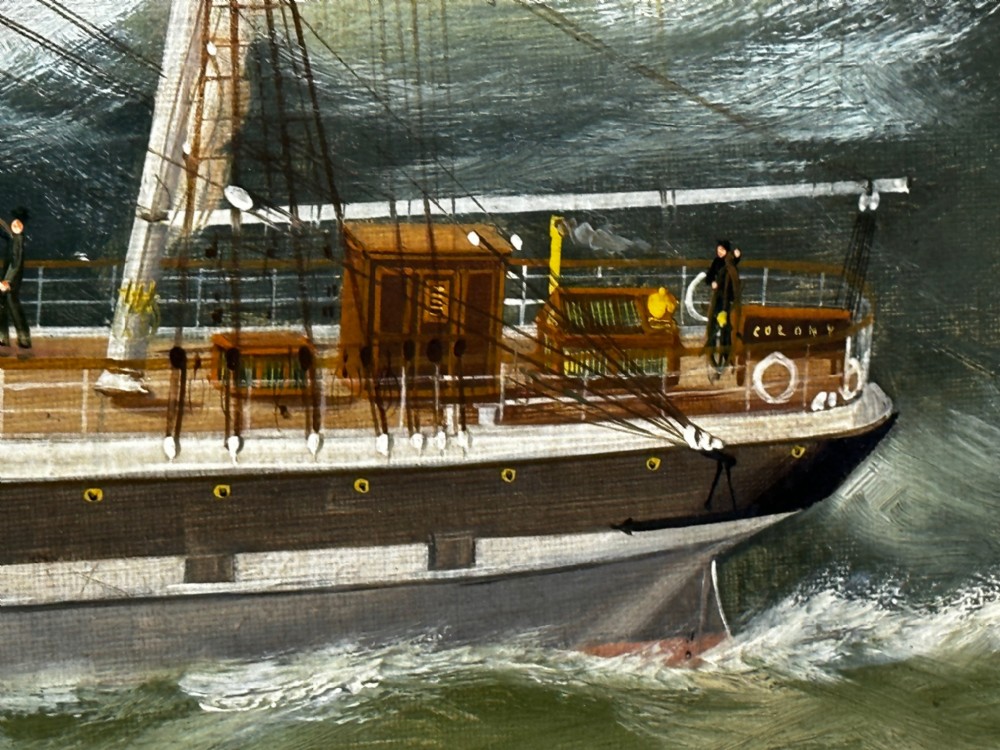
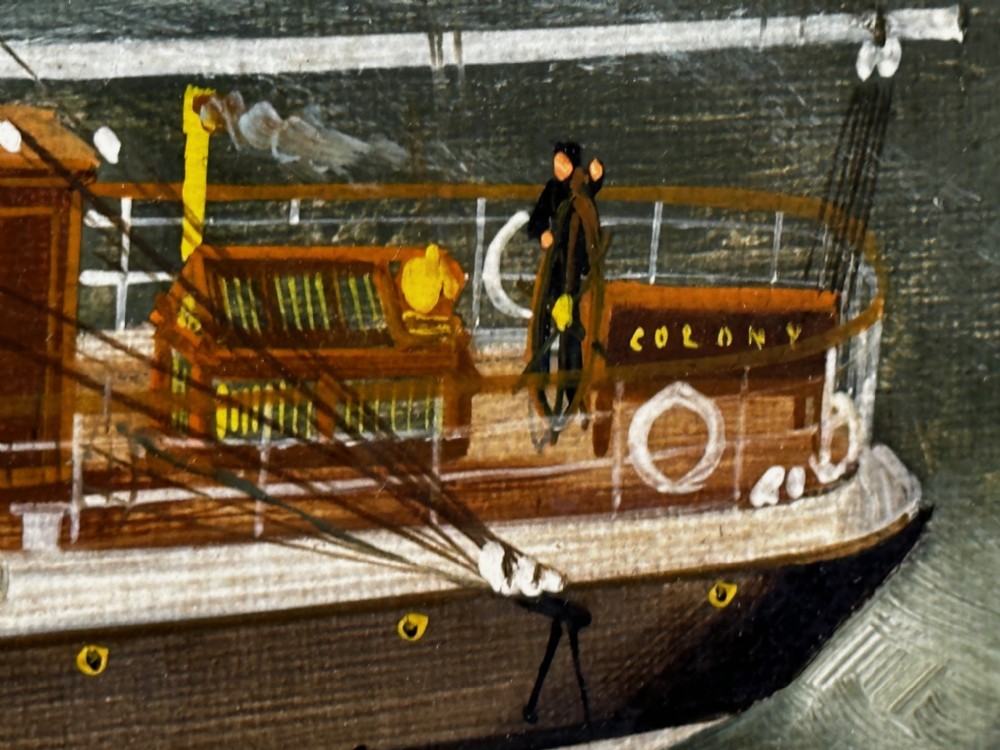
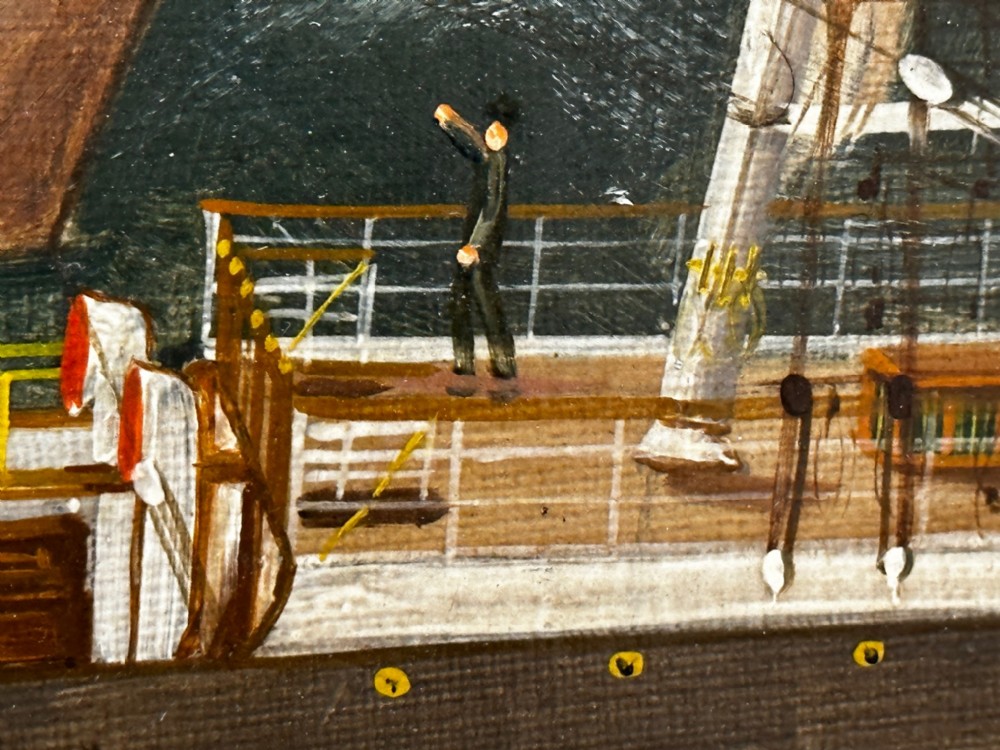
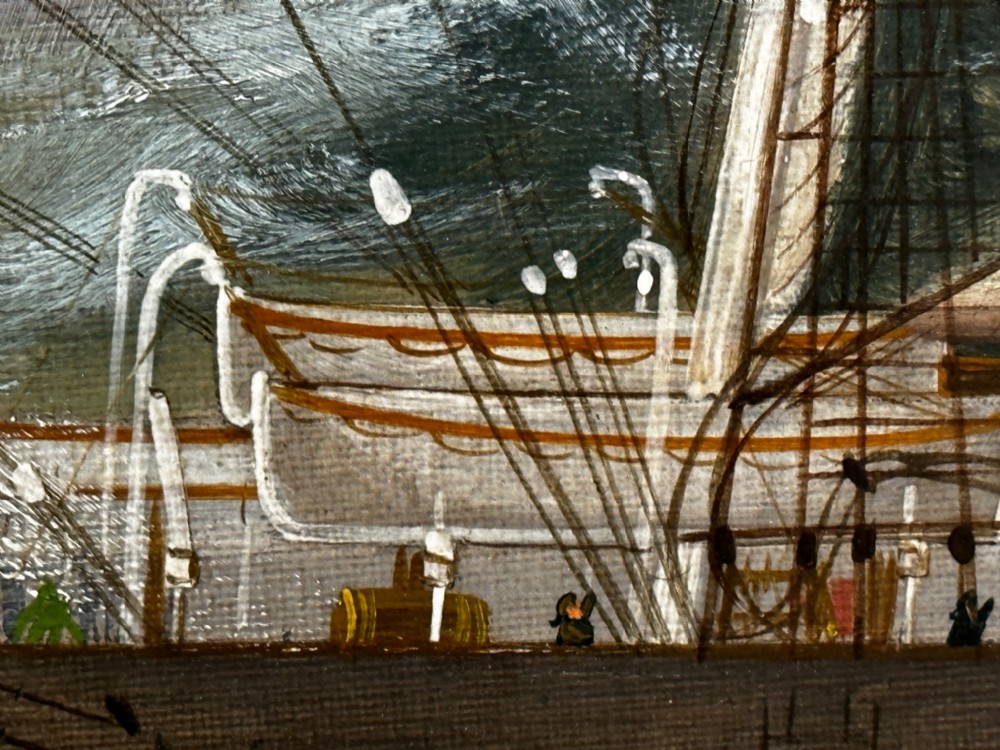
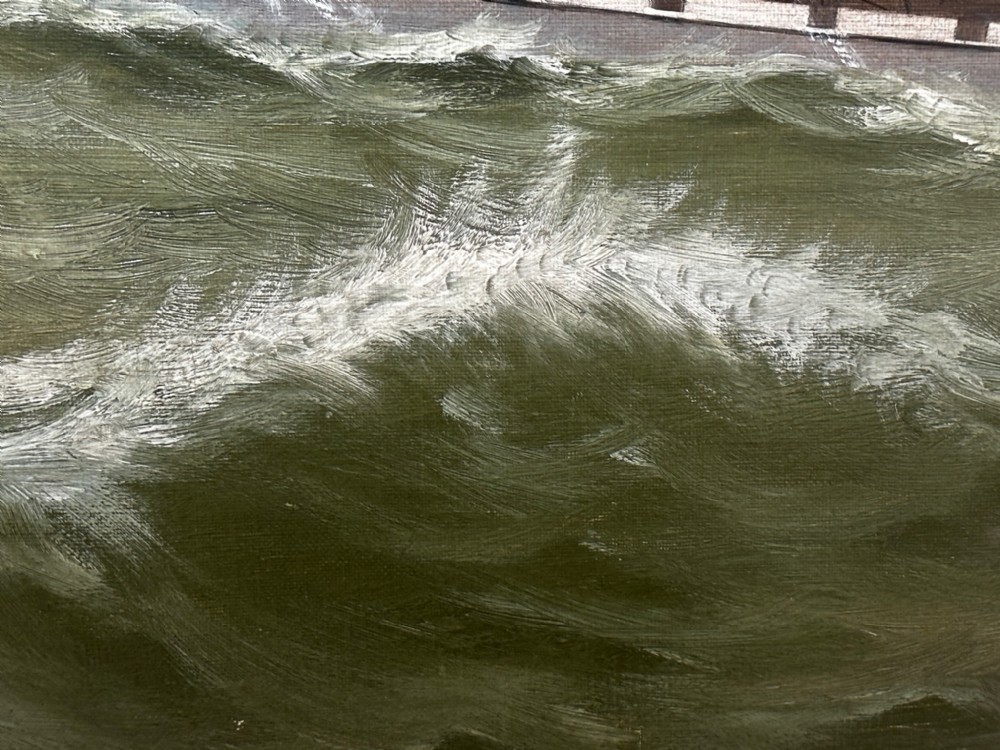
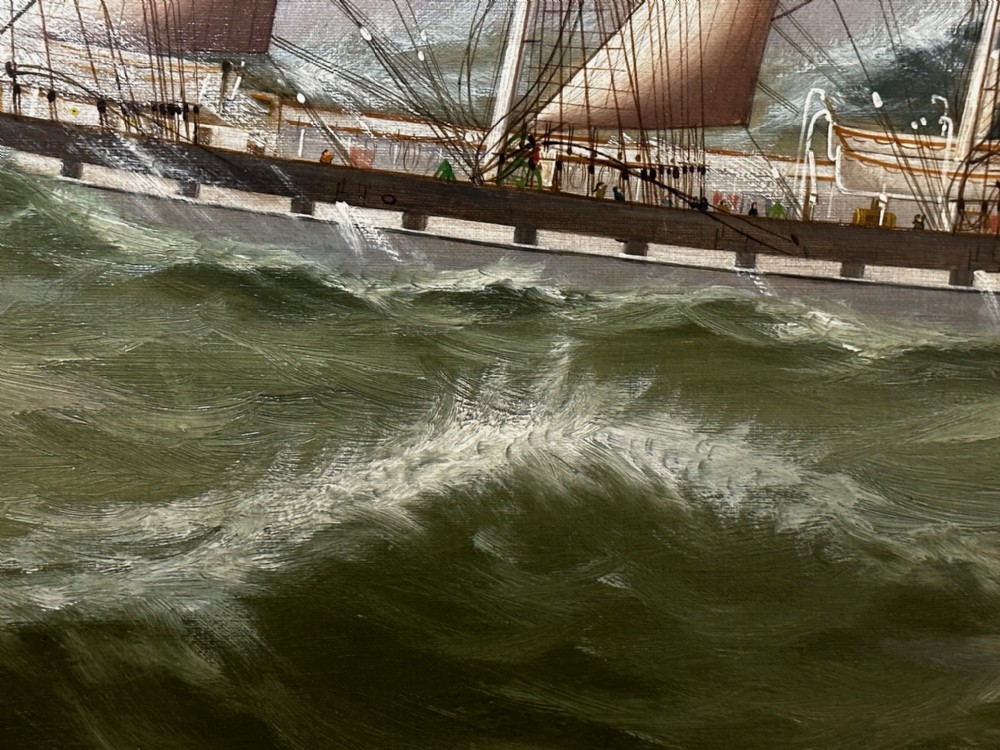
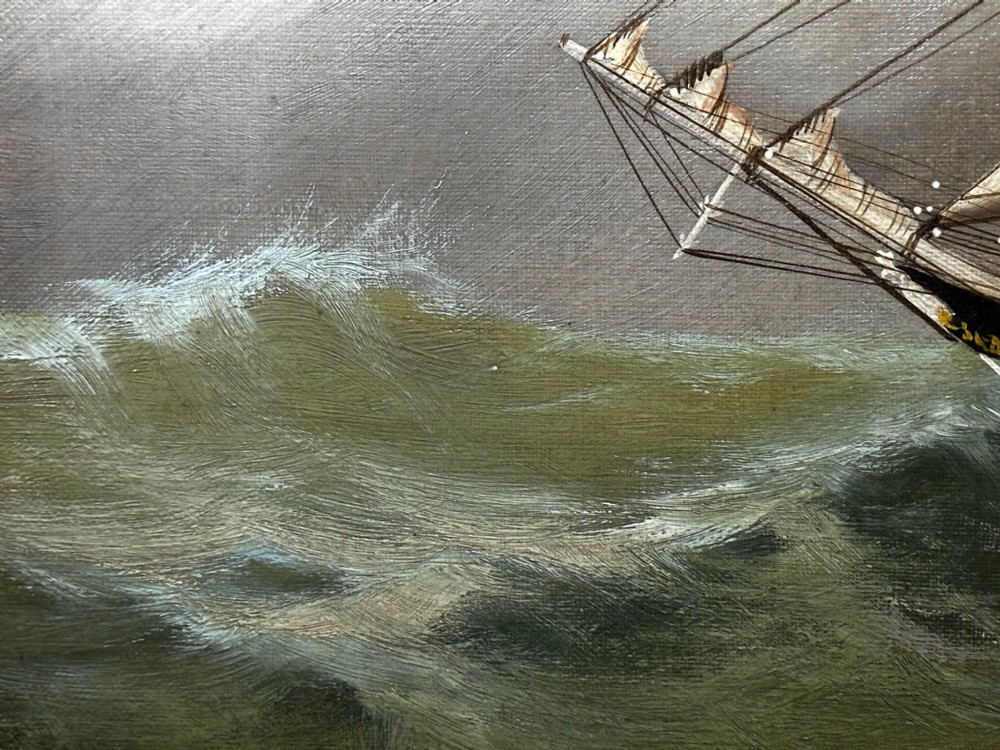
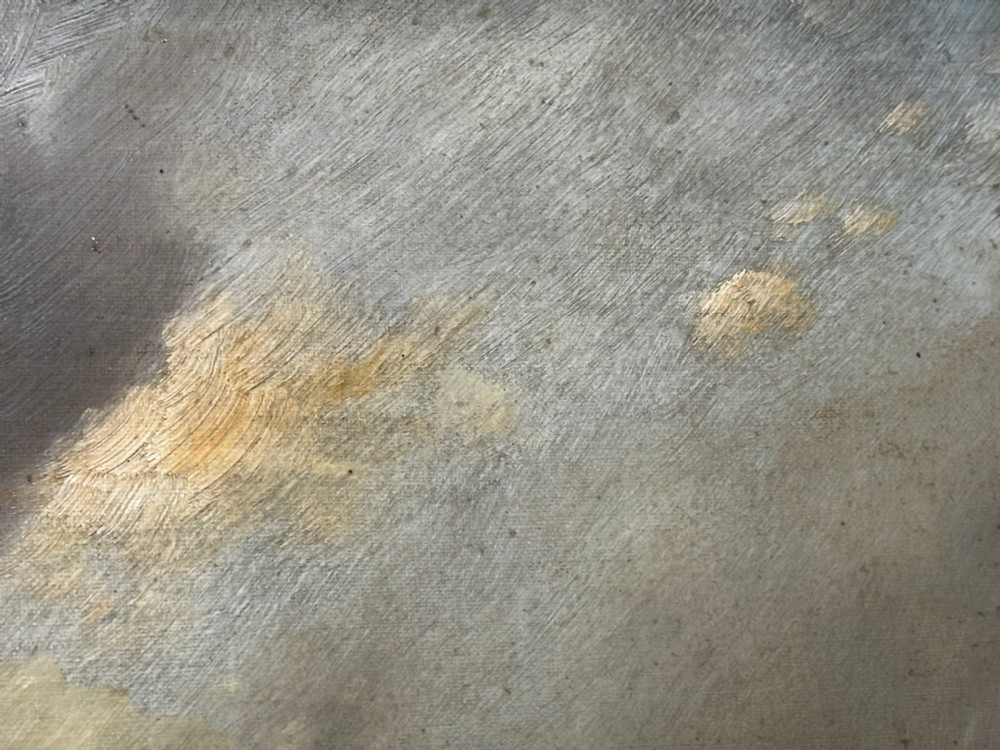
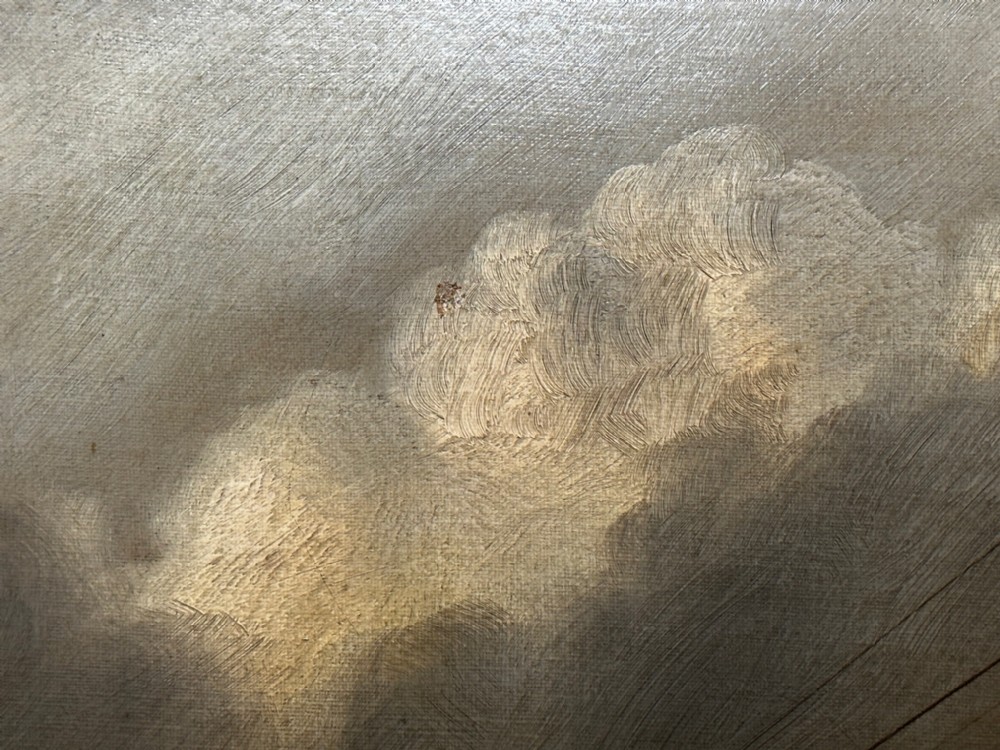
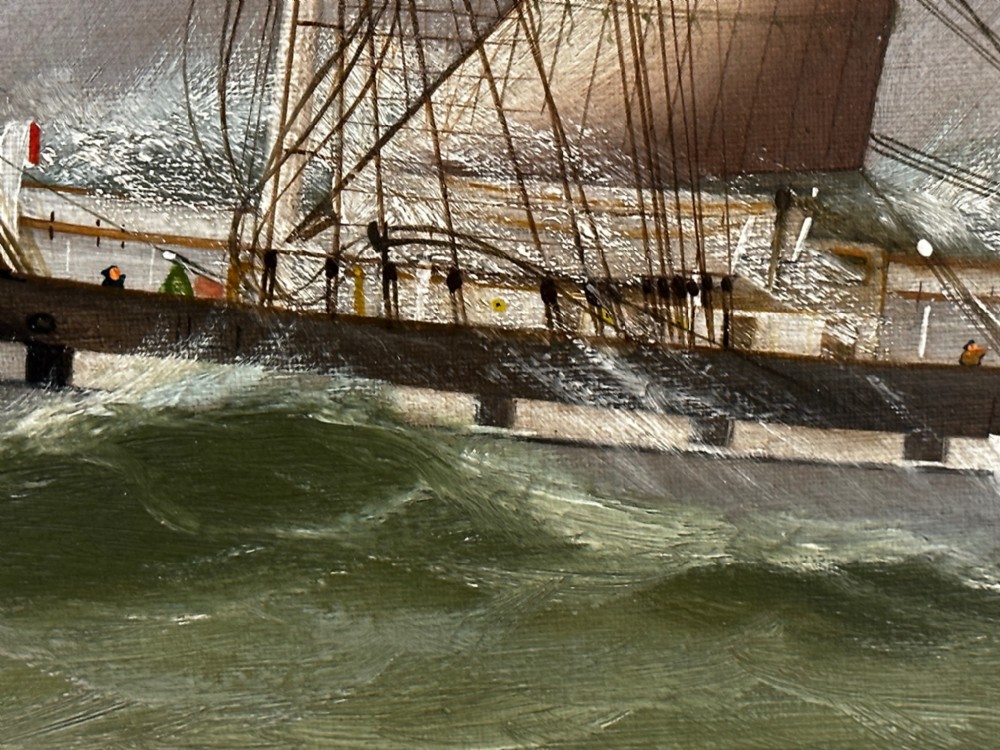
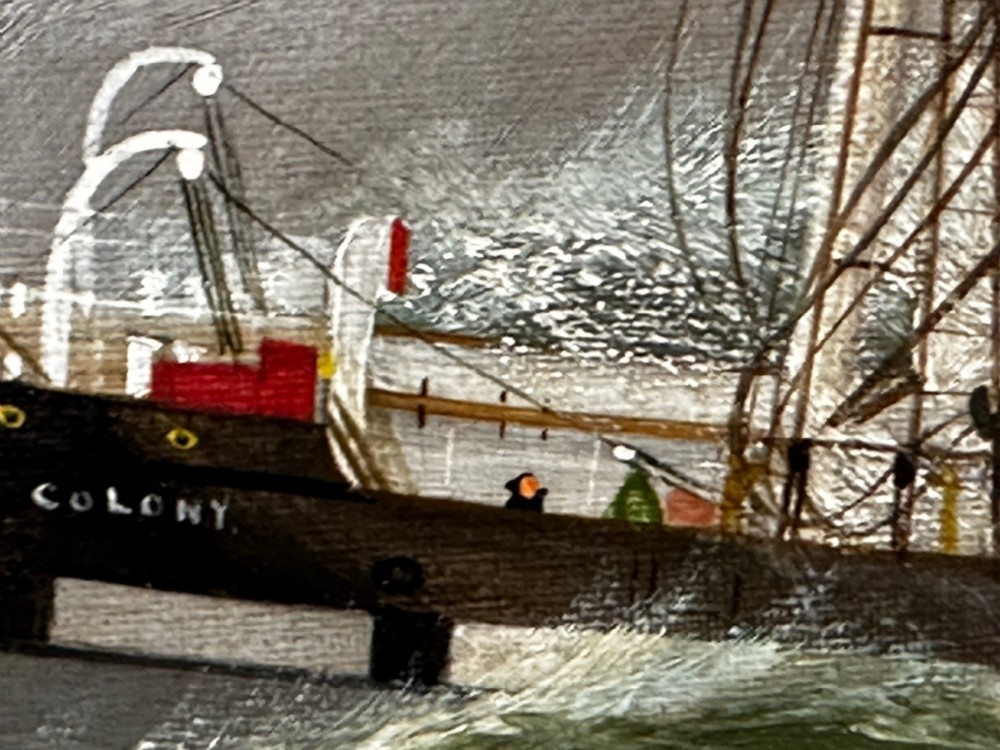
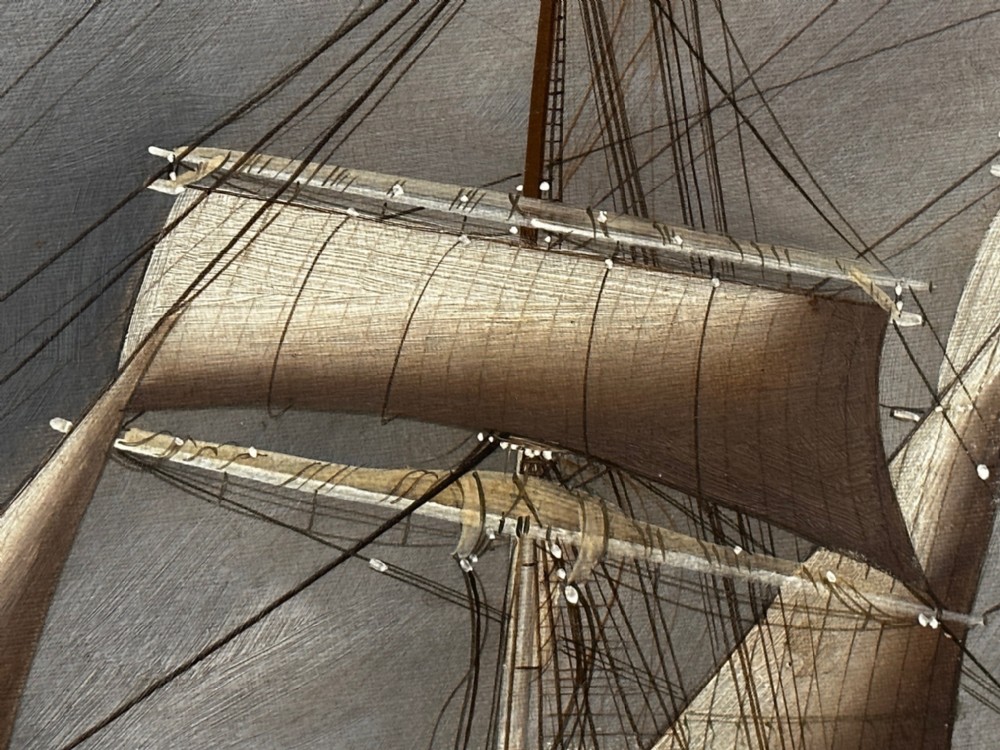
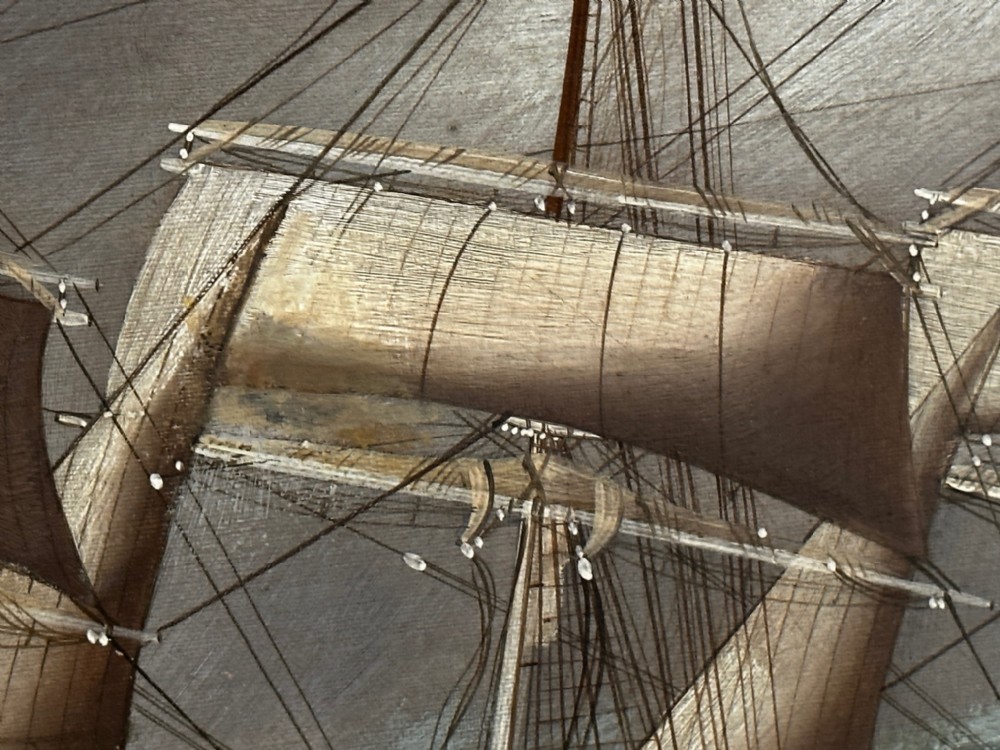
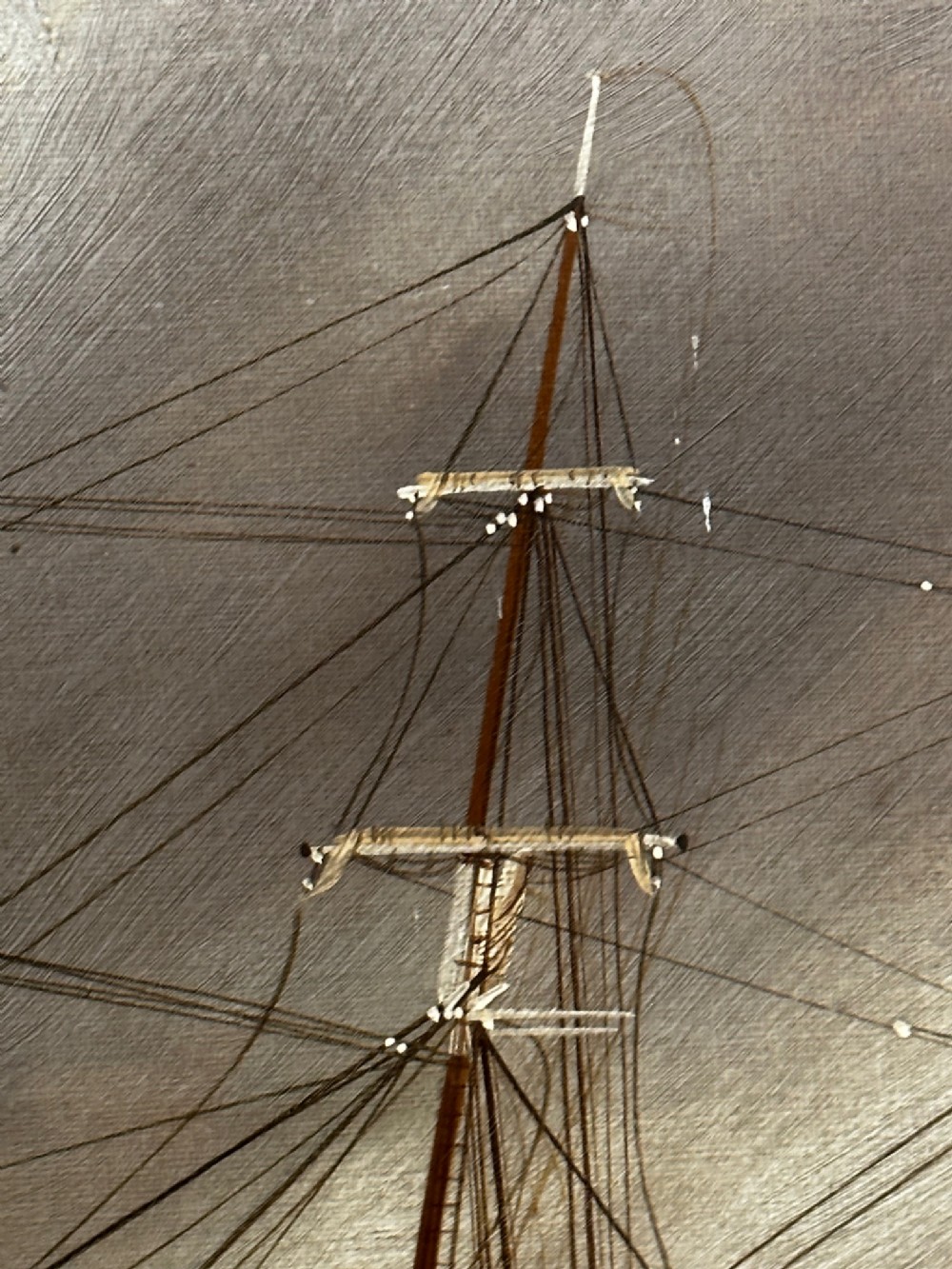
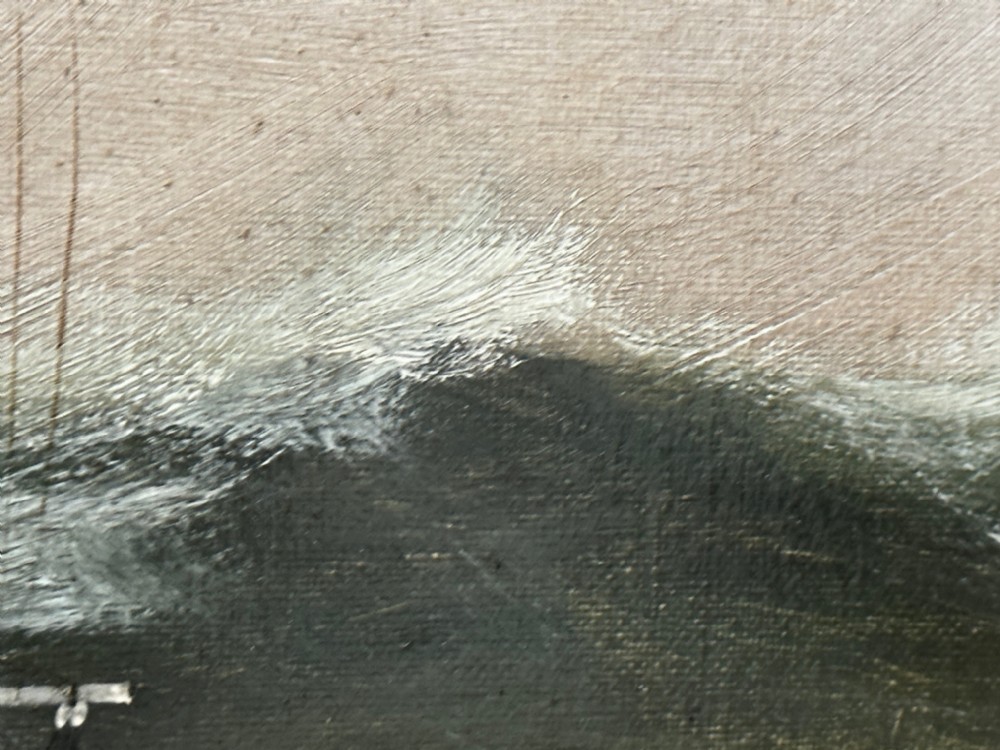
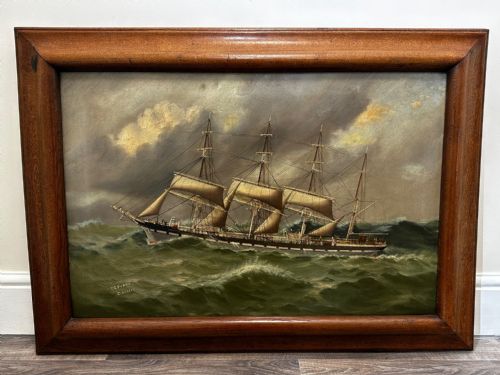
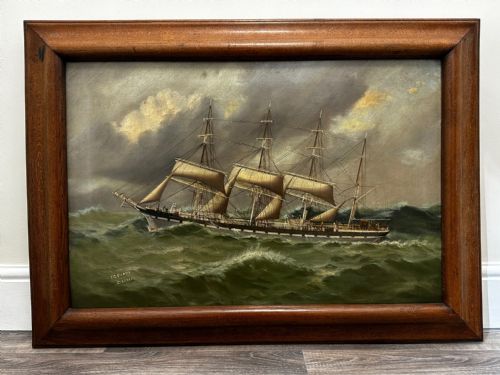
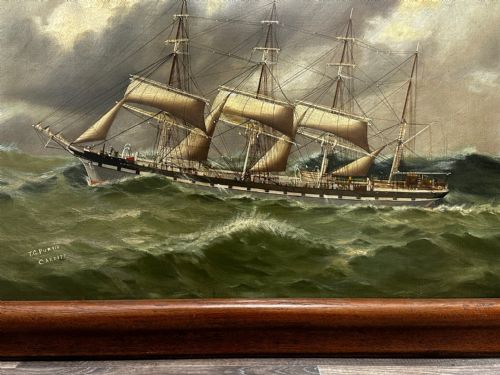
Subject seascape marine portrait of the known four masted sailing ship Colony, in full side profile view on the high rolling seas, sailing along choppy rough high seas, you can see the rigging and various sails. Having 4 masts, you can see the crew sailors figures on the deck to the bow and stern and also a couple lifeboats along the side near the centre, You can also see the name of the ship by the bow & also on the stern Colony. With mainly dark grey skys overhead with a few lighter patches coming through.
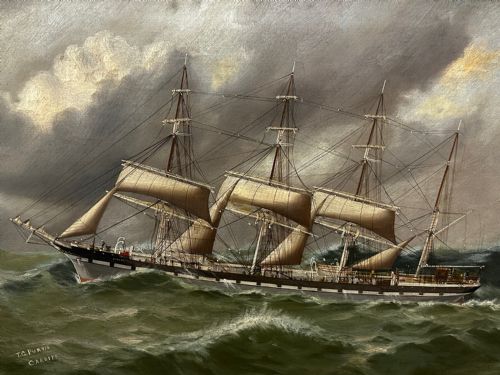
Title "Colony".
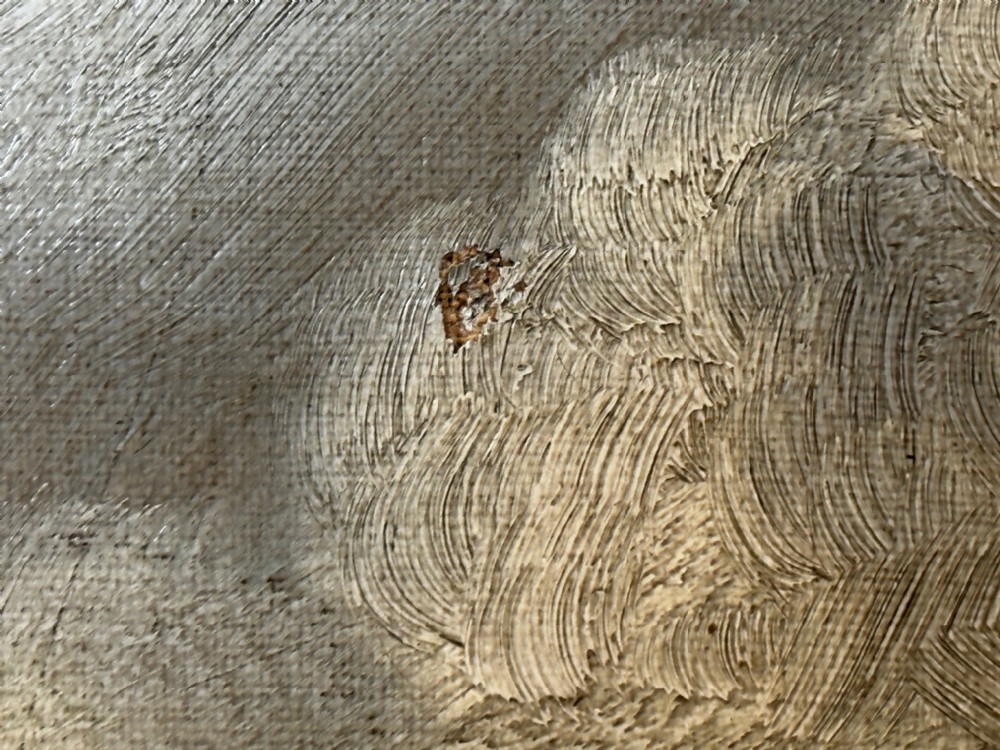
Oil on canvas.
Circa early beginning of 20th century 1900 end of Victorian era.
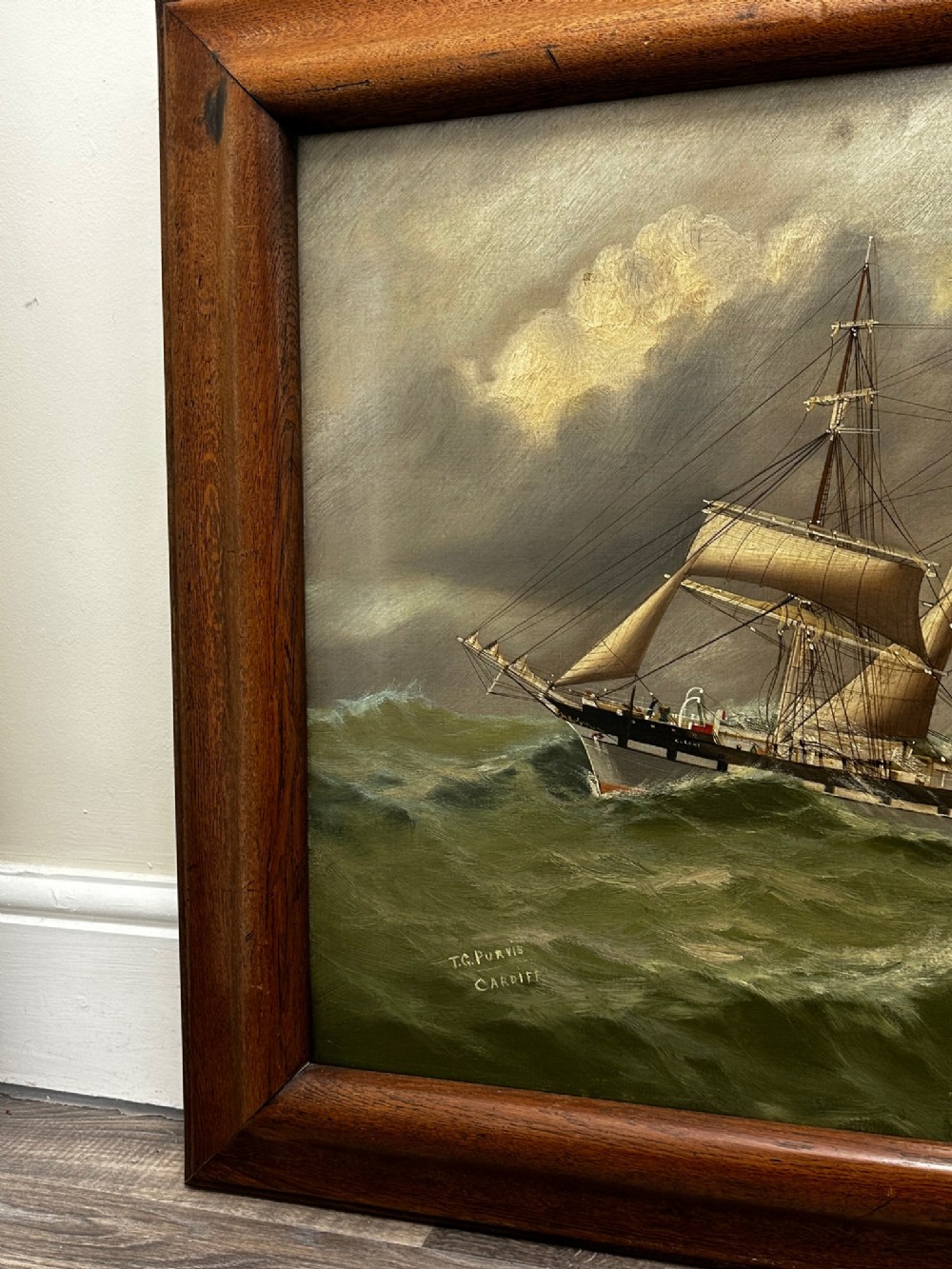
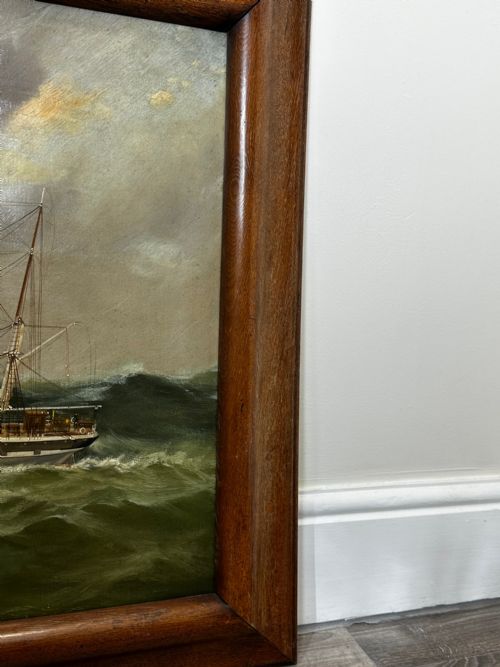
Set in a beautiful traditional original oak frame.
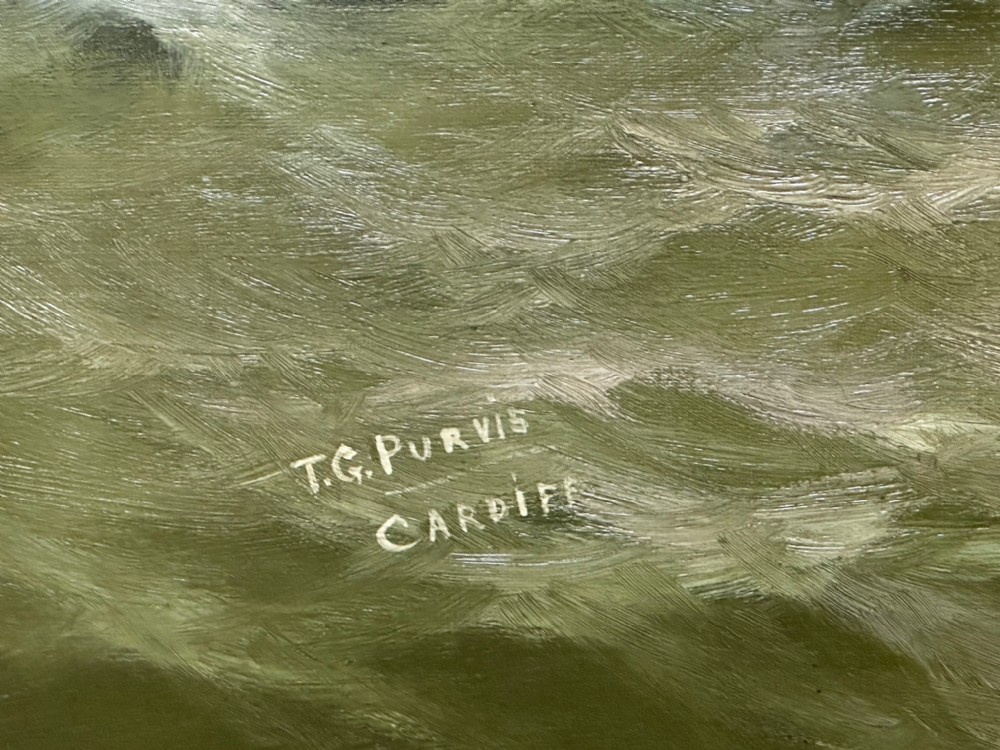
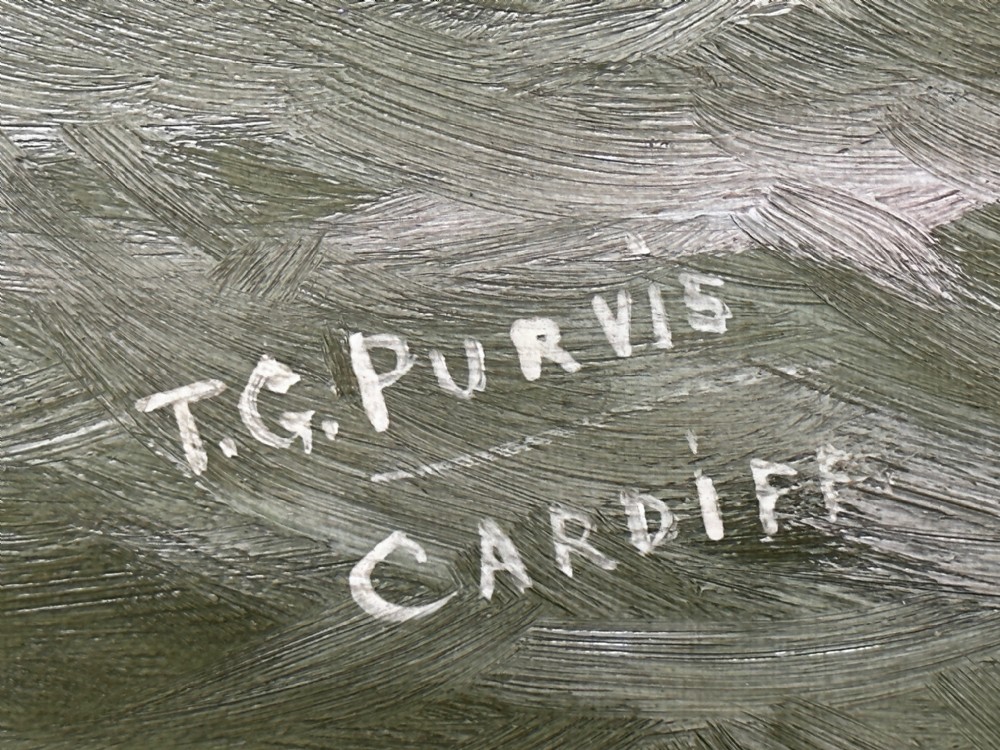
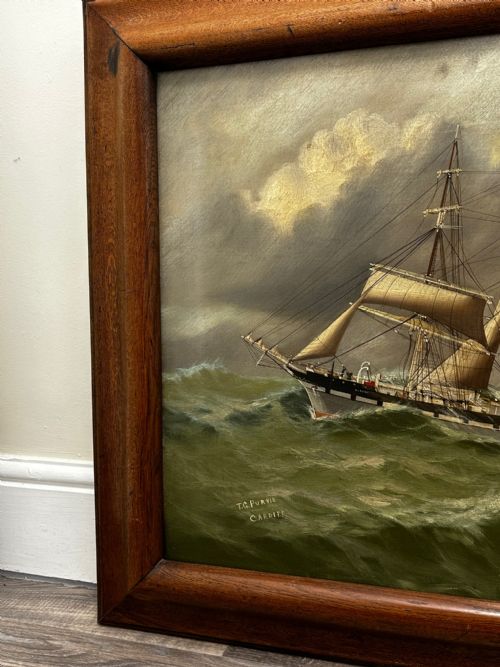
Signed by the known artist Thomas G Purvis bottom left.
Impressive size with the frame being 108.75 cm wide and 78 cm high.
Thomas G Purvis (12 April 1861 – 17 January 1933) was a British marine artist.
His paintings can be found in a number of public collections, notably the National Maritime Museum and the National Museum of Wales. Thomas George Purvis (professionally known as T G Purvis) was born in Chirton, Northumberland, on 12 April 1861. He was the only child of the then 46-year-old Jane Scott, daughter of a master mariner, and her husband, Thomas Joseph Purvis (1821–86), a blockmaker born in Alnwick.
Purvis went to sea as an apprentice in December 1878, working his way up to obtain his Master's certificate in August 1887. He sailed on a variety of steam and sailing vessels; the latter including two and a half years on the bark Arabella and a voyage to Australia in the Dundee-built clipper, La Escocesa. In 1886, he married Grace Elizabeth Dodgin (1861-1948), eldest daughter of shipbuilder and marine engineer Charles William Dodgin (1839-1917). As a ship's captain, T G could only find employment delivering new small steamships to South America, and he gave this up in July 1891 to become a full-time painter; he had already described himself as "marine artist" in the census earlier that year. From this time until the beginning of the First World War he was a prolific painter, mainly of ship portraits, though probably his best paintings are those where he was not constrained by the conventions of ship portraiture.
By 1888, when his oldest son Tom Purvis was born, he was living in Bristol. He moved in early 1894 to Cardiff,[9]where he for a time also ran a photographic studio, and was still there in 1902. Soon after, he moved to Blackheath, London. He was in Blackheath when his son Tom started at Camberwell School of Art in ca. 1904. By the outbreak of the First World War, the great sailing ships Purvis loved to paint were in decline. In 1915 he moved to the Far East, leaving his family behind, and took employment as mate or master of various steamships, at least until 1925. Meanwhile, he continued to paint. Purvis died in Hong Kong on 17 January 1933, after an accident.
His five children all showed artistic talent in varying degrees, especially his oldest son, Tom Purvis (1888-1959), who became one of the most distinguished and distinctive of 20th century poster artists.
The Colony ship was a four-masted iron ship built in 1886 by W. Doxford & Sons, Sunderland, as new building 167. Dimensions: 78,63×12,00×7,03 meters [258'40×39'5"×23'1"] and tonnage 1750 GRT and 1694 NRT. Rigged with double top- and topgallant sails. 1886 March
Launched at the shipyard of W. Doxford & Sons, Sunderland, for William Thomas & Co., Liverpool. 1899 Re-rigged as a four-masted barque. 1915 July
Sold to Skibs A/S Kringsjaa (Kr. Knudsen), Kristiansand, Norway, for £ 7500 and was renamed Kringsjaa. Assigned the Norwegian signal
Cheshire Antiques Consultant Ltd has dated this piece to the 1900s.
Source the historic in 17th, 18th, 19th & 20th century fine arts, painting, sculptures & collectibles
You can view the stock and full dealer information on the Cheshire Antiques Consultant Ltd Profile Page
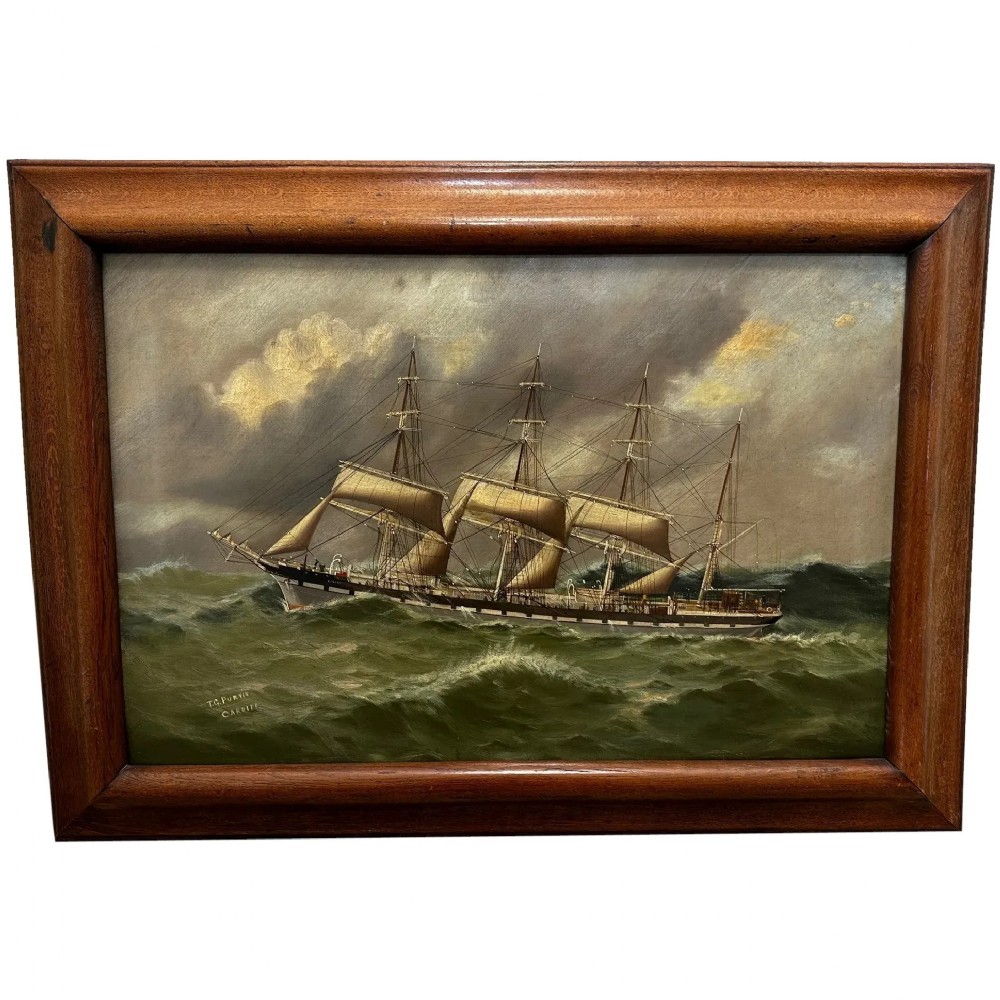
Oil Painting Four Masted Iron Merchant Ship Colony by Thomas G Purvis C1900