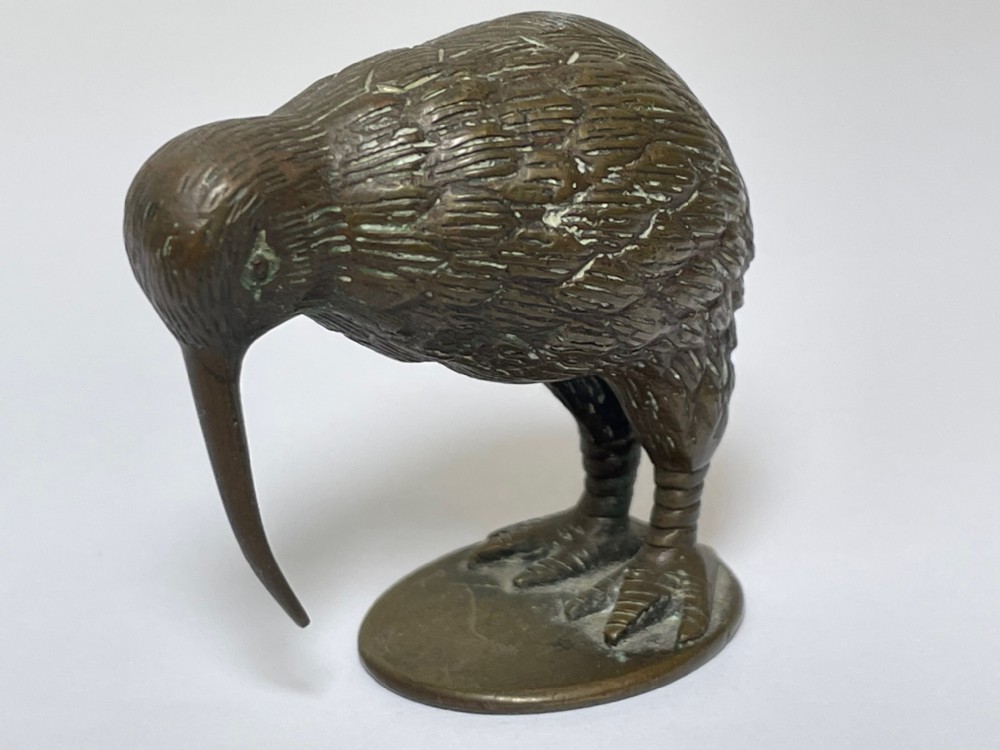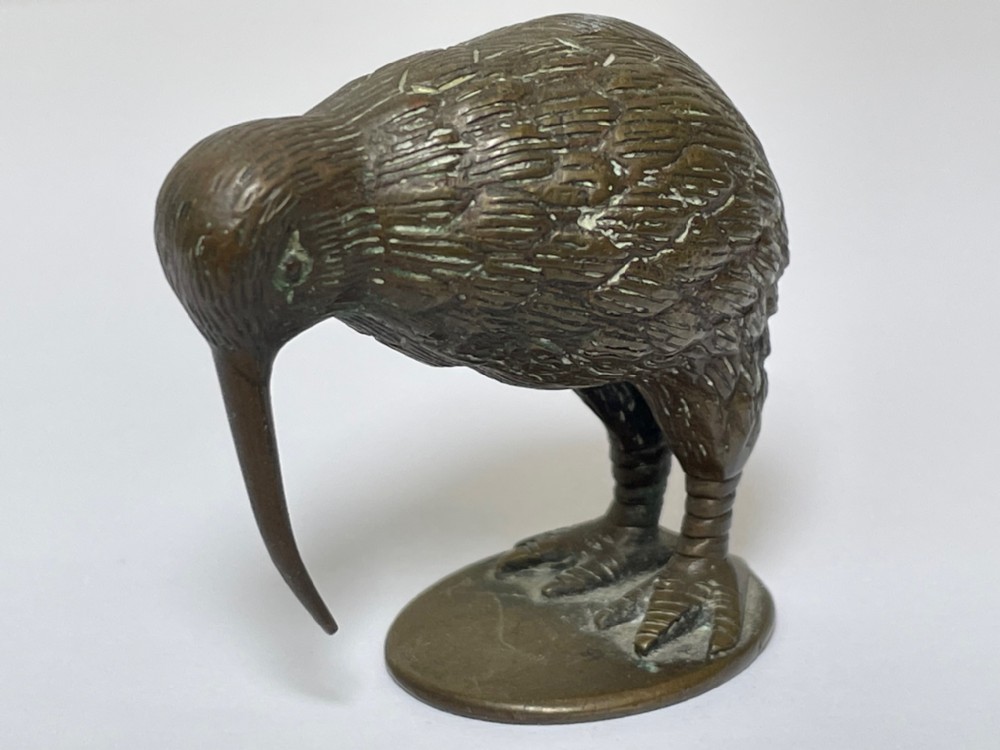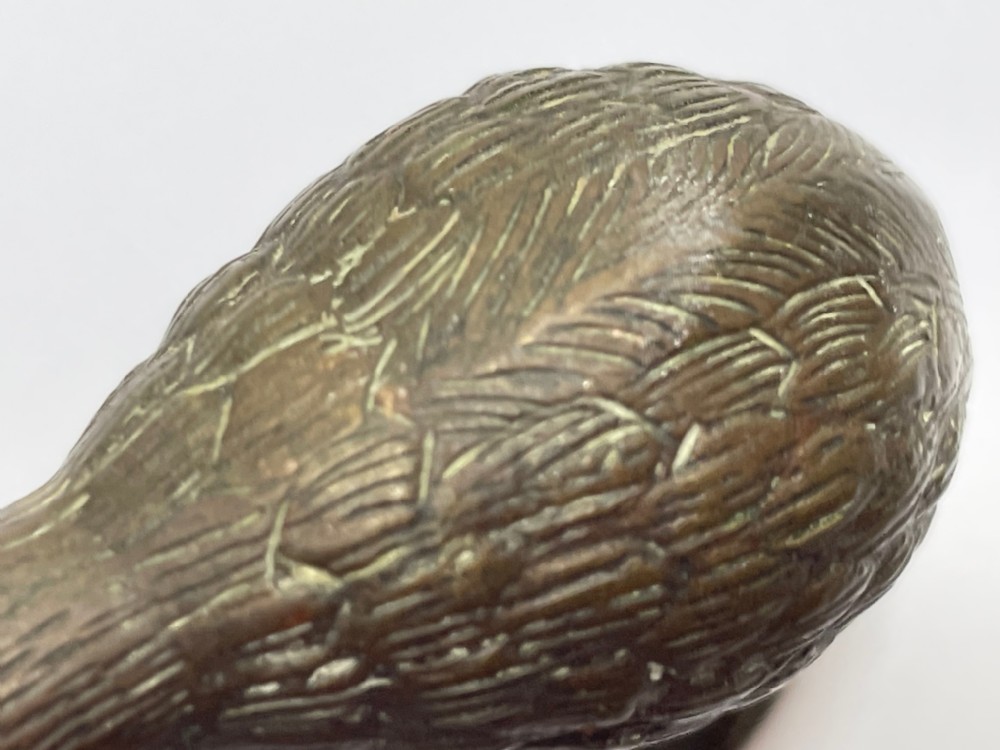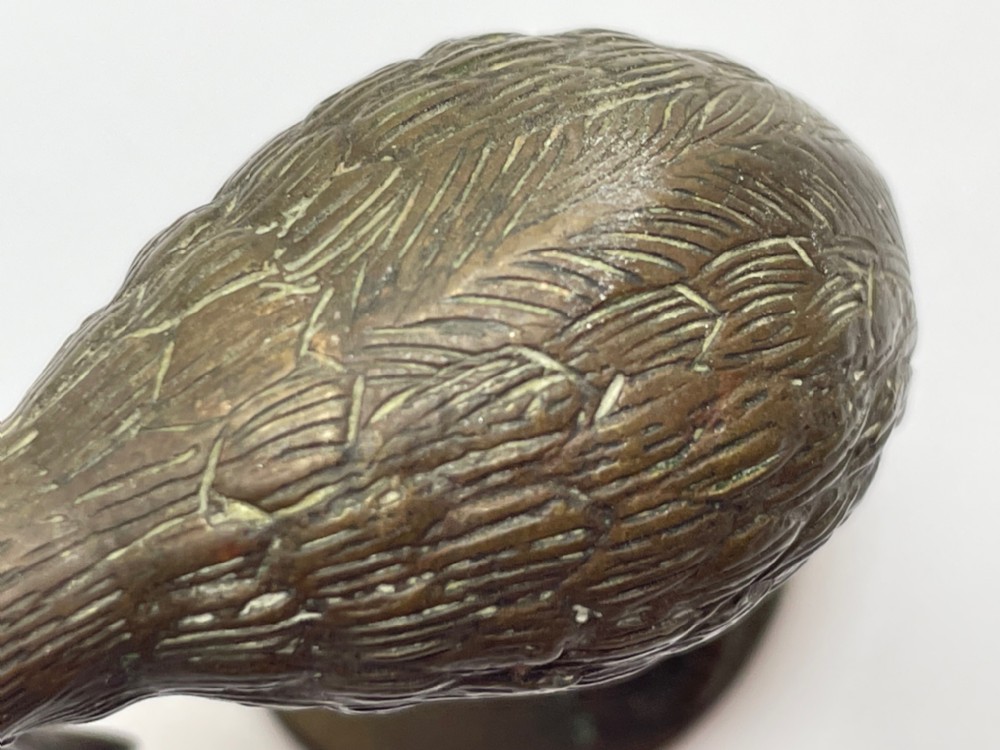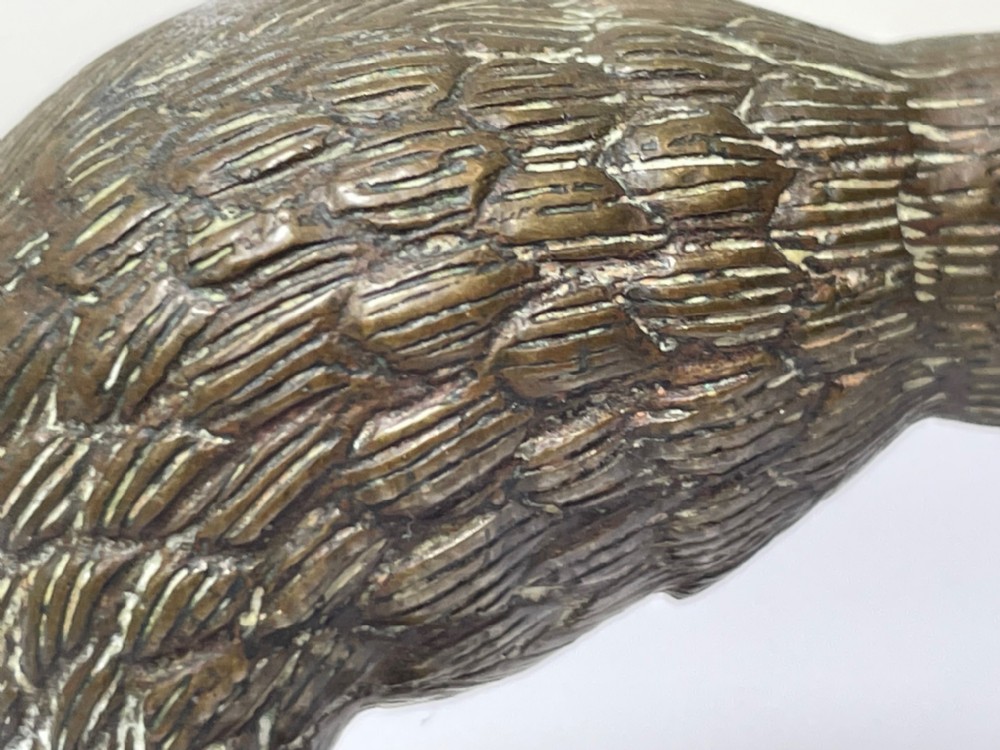
Cheshire Antiques Consultant Ltd has dated this piece to the 1900s.
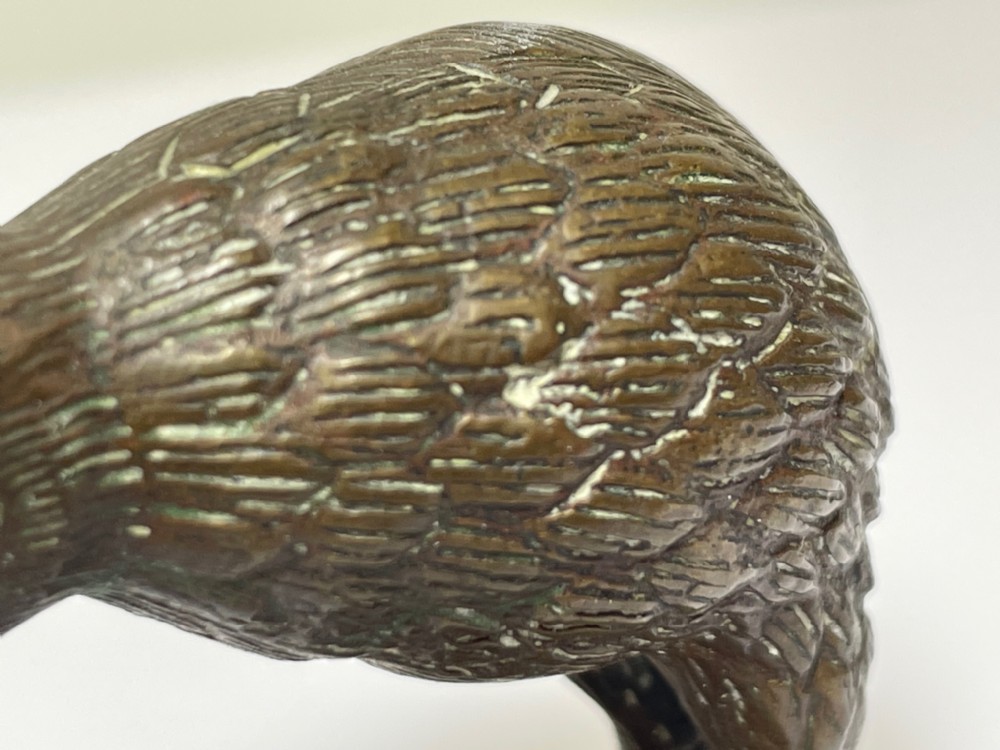
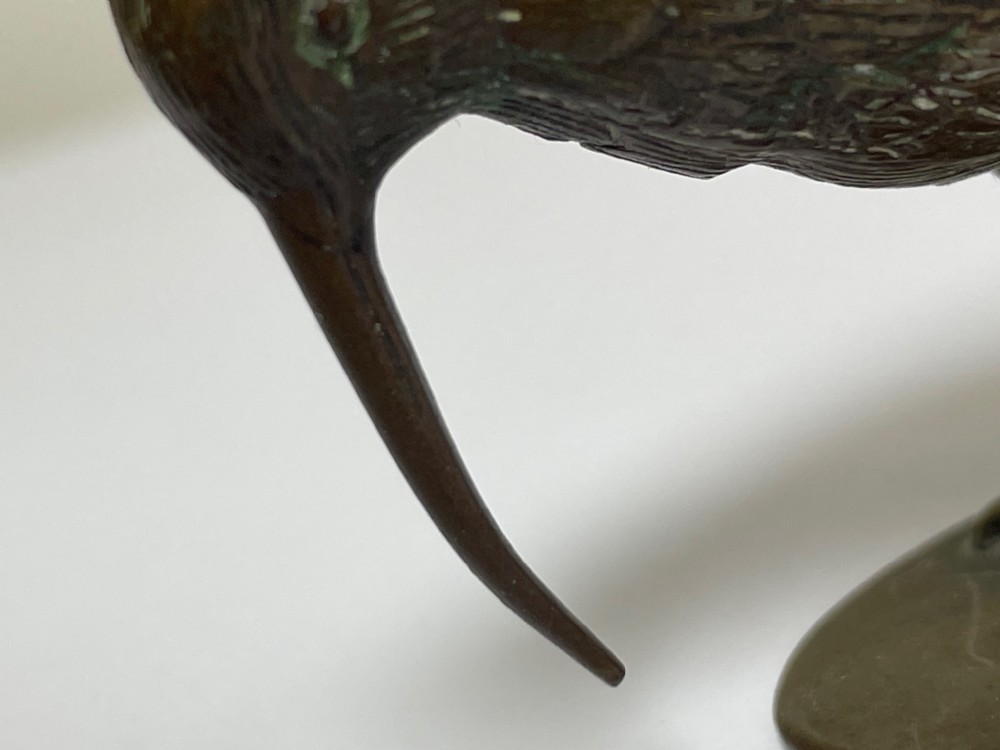
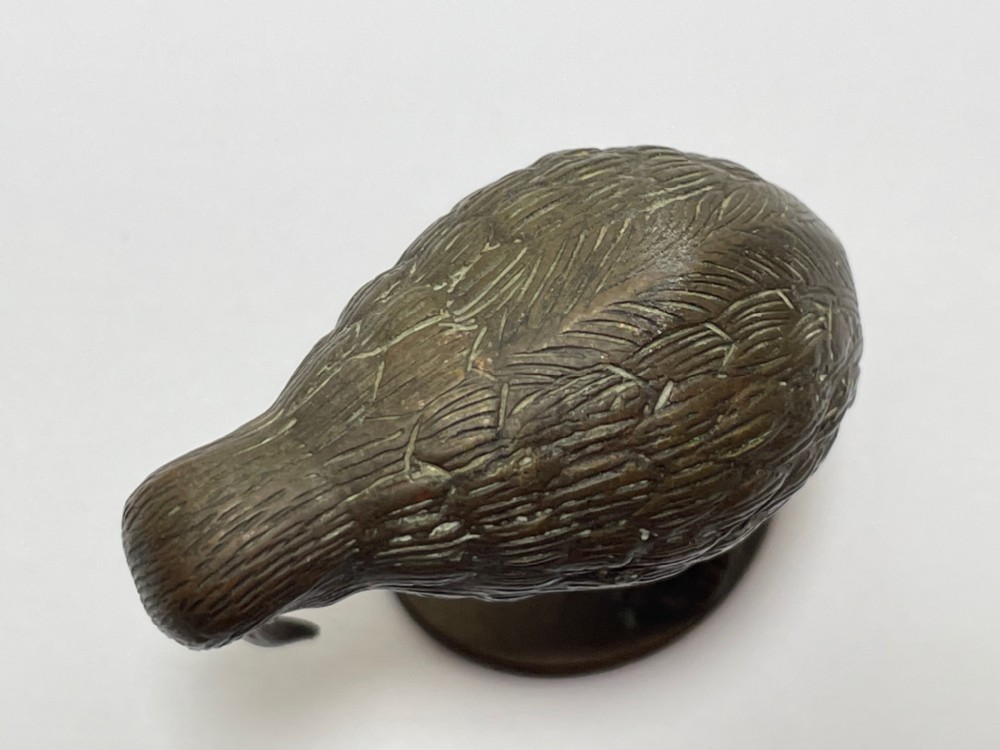
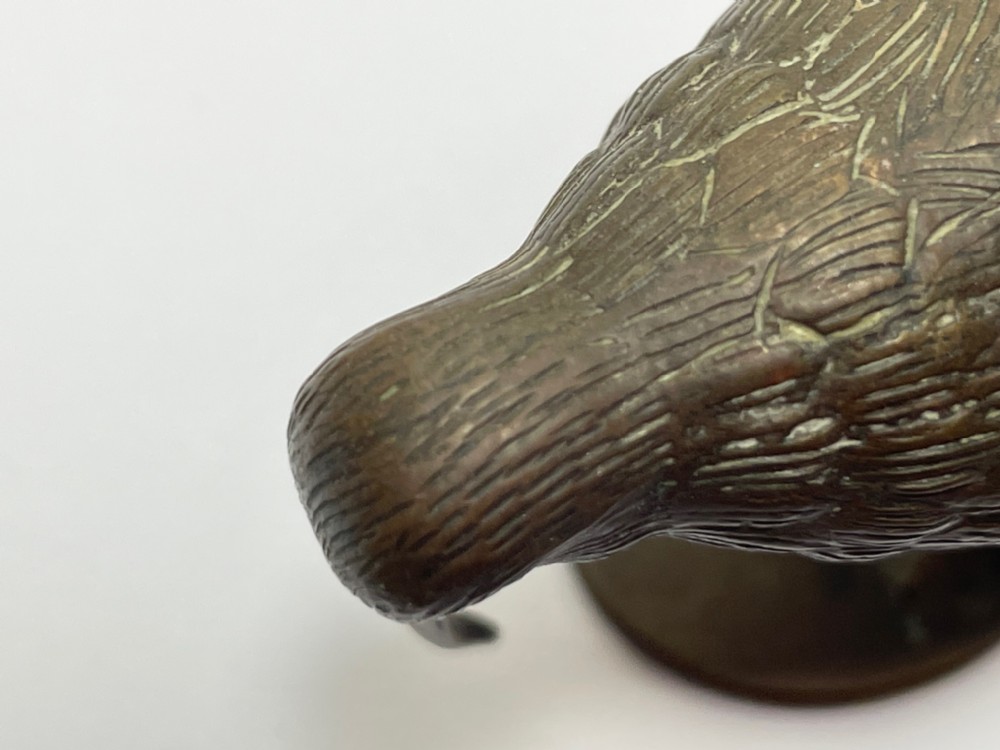
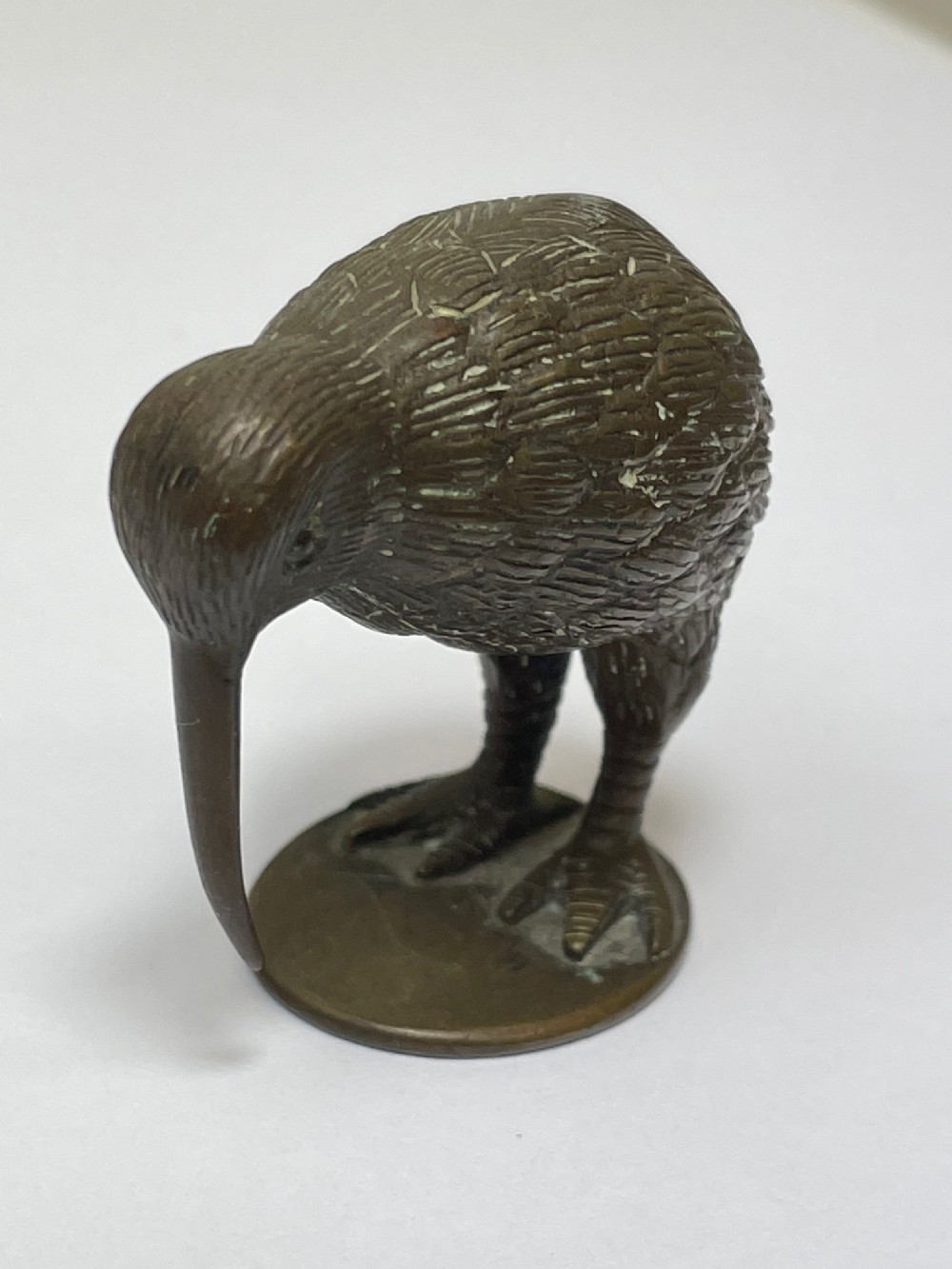
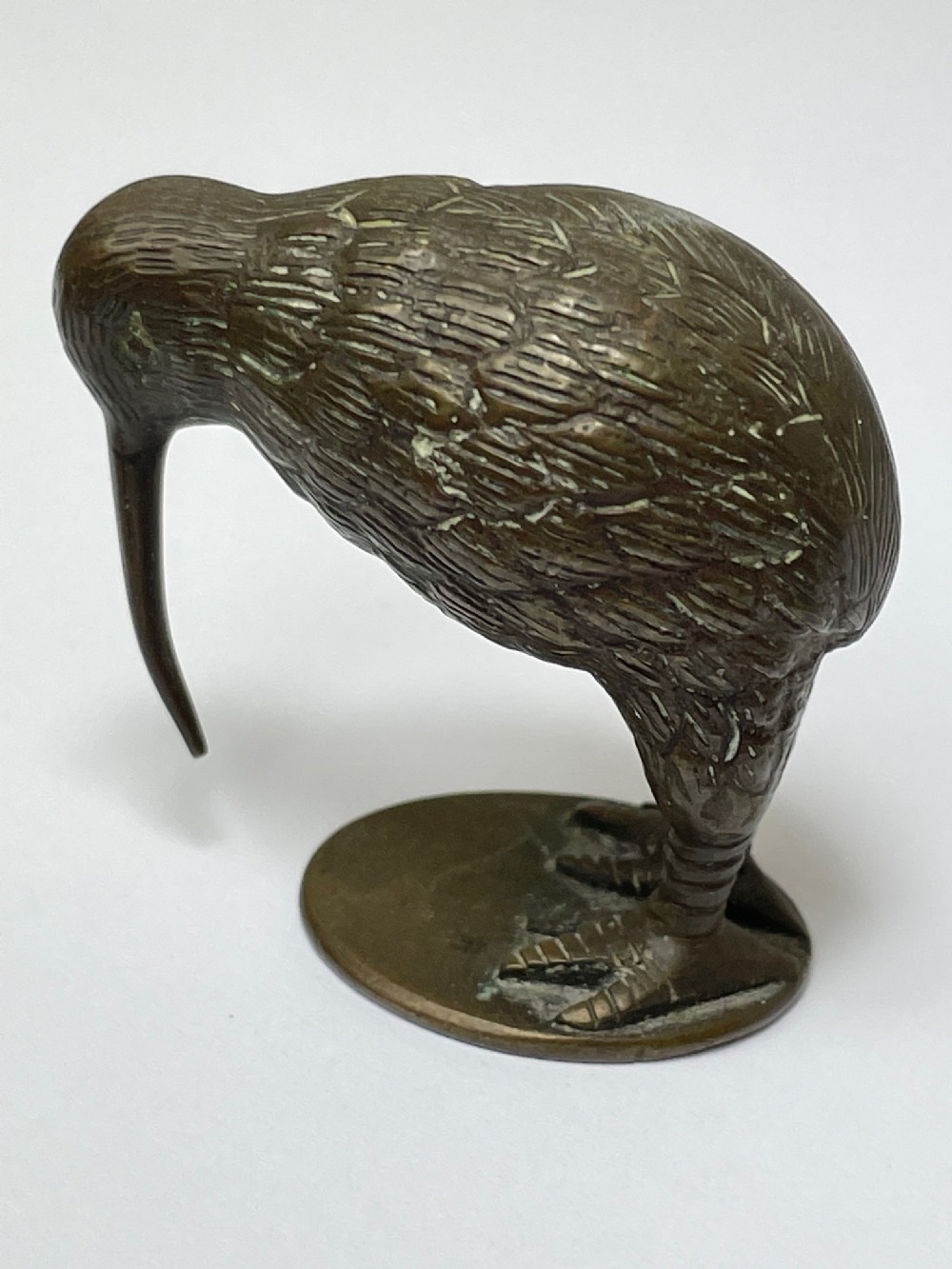
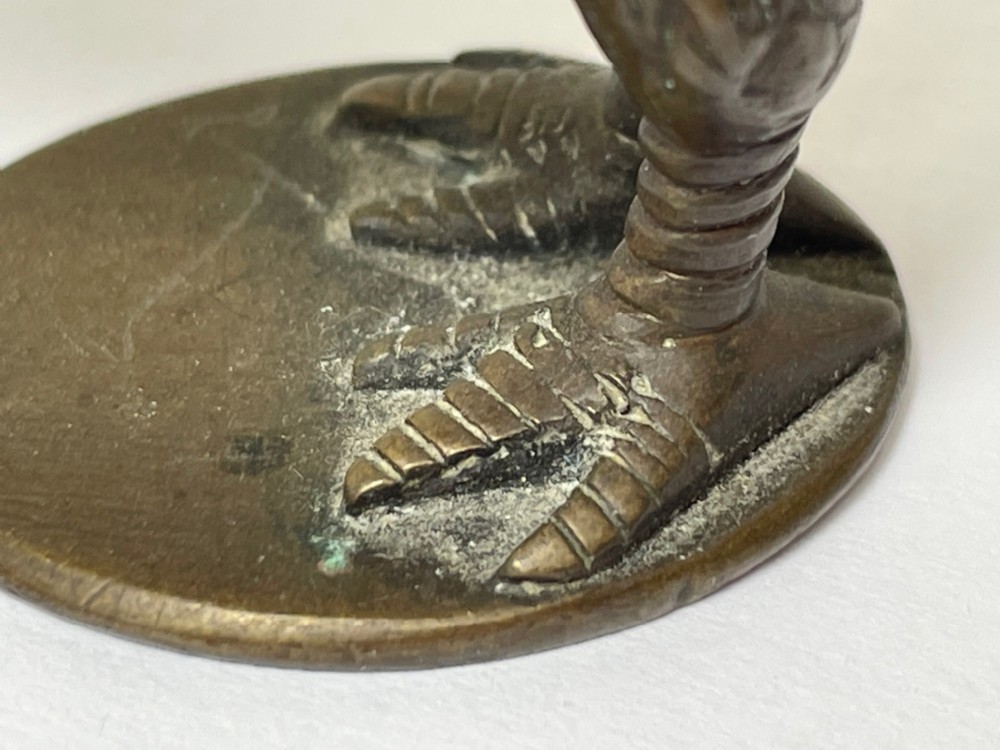
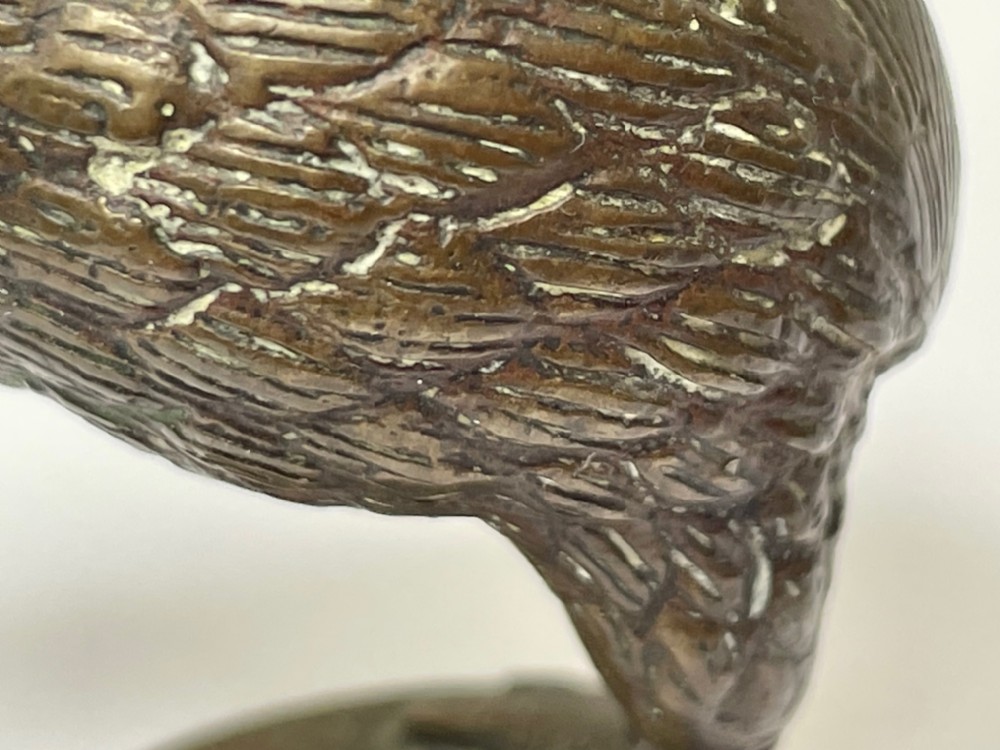
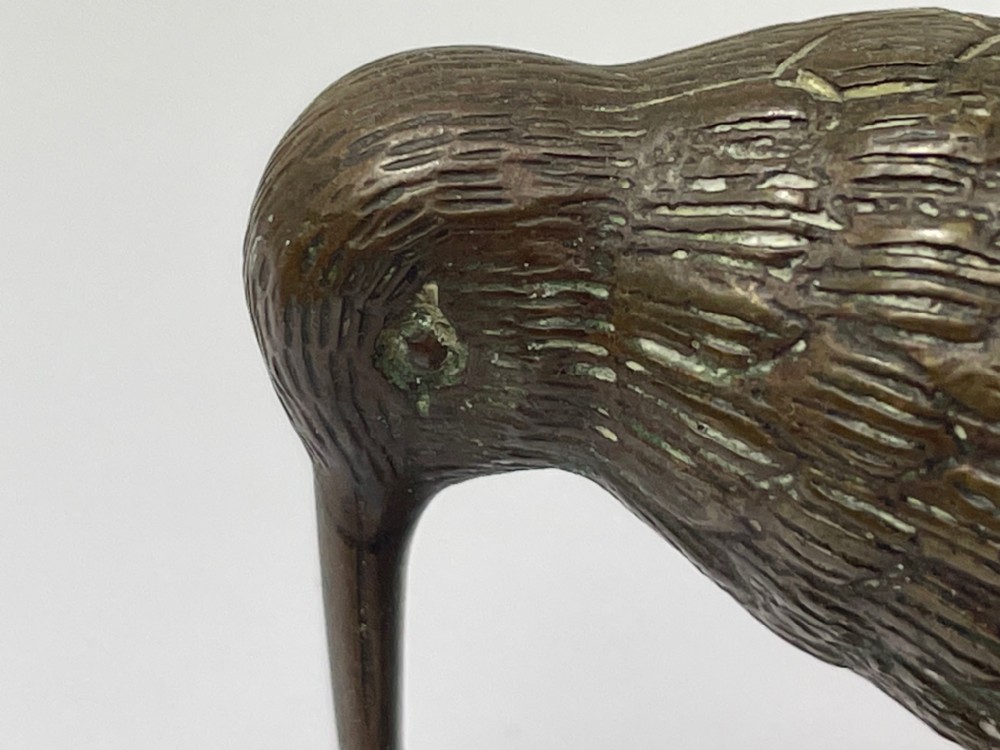
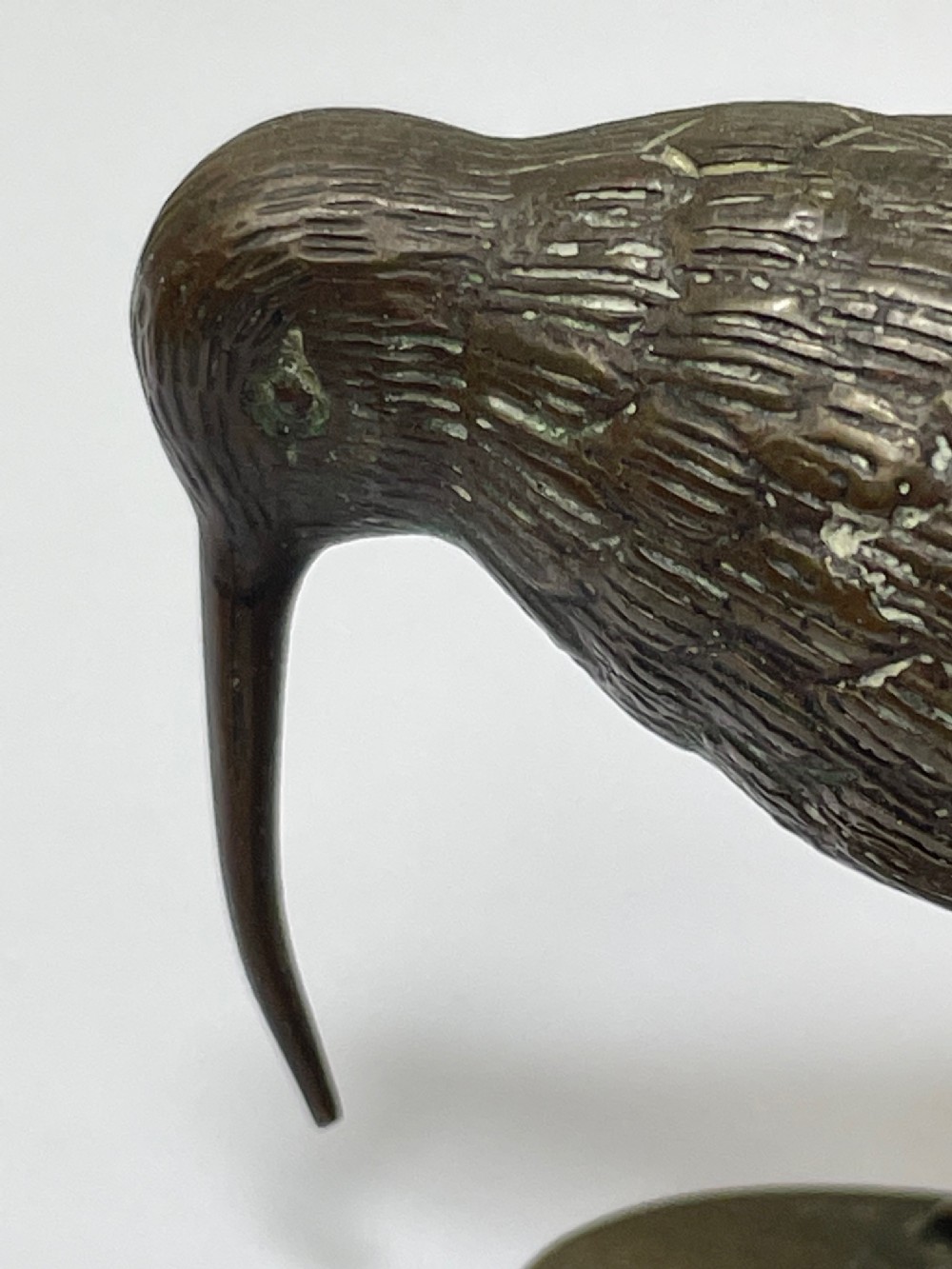
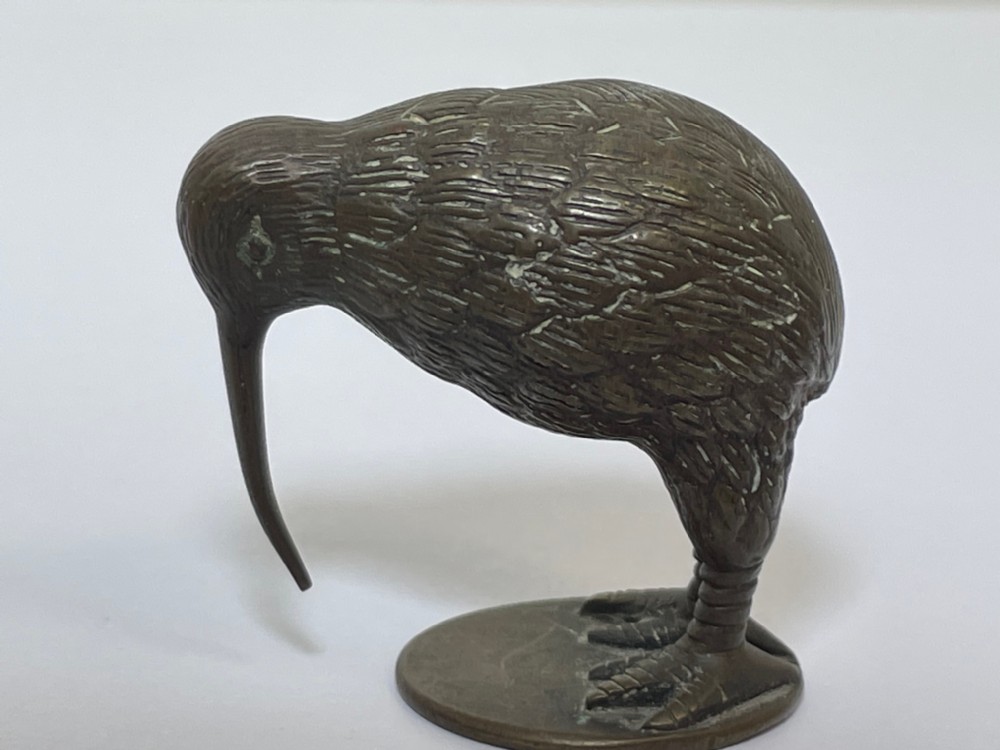
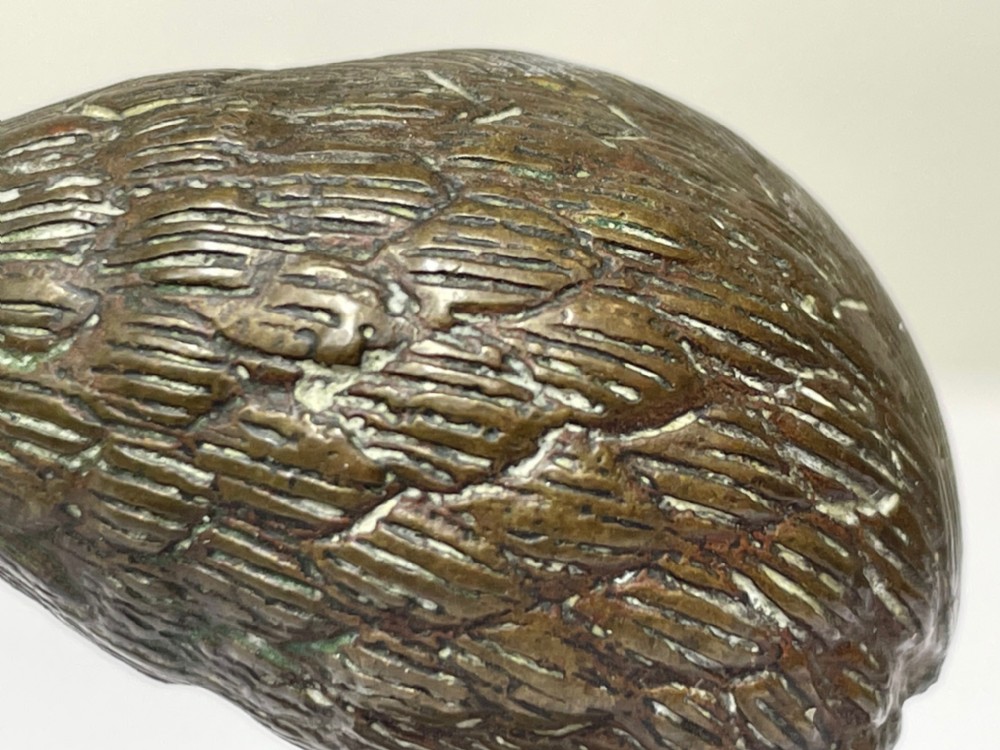
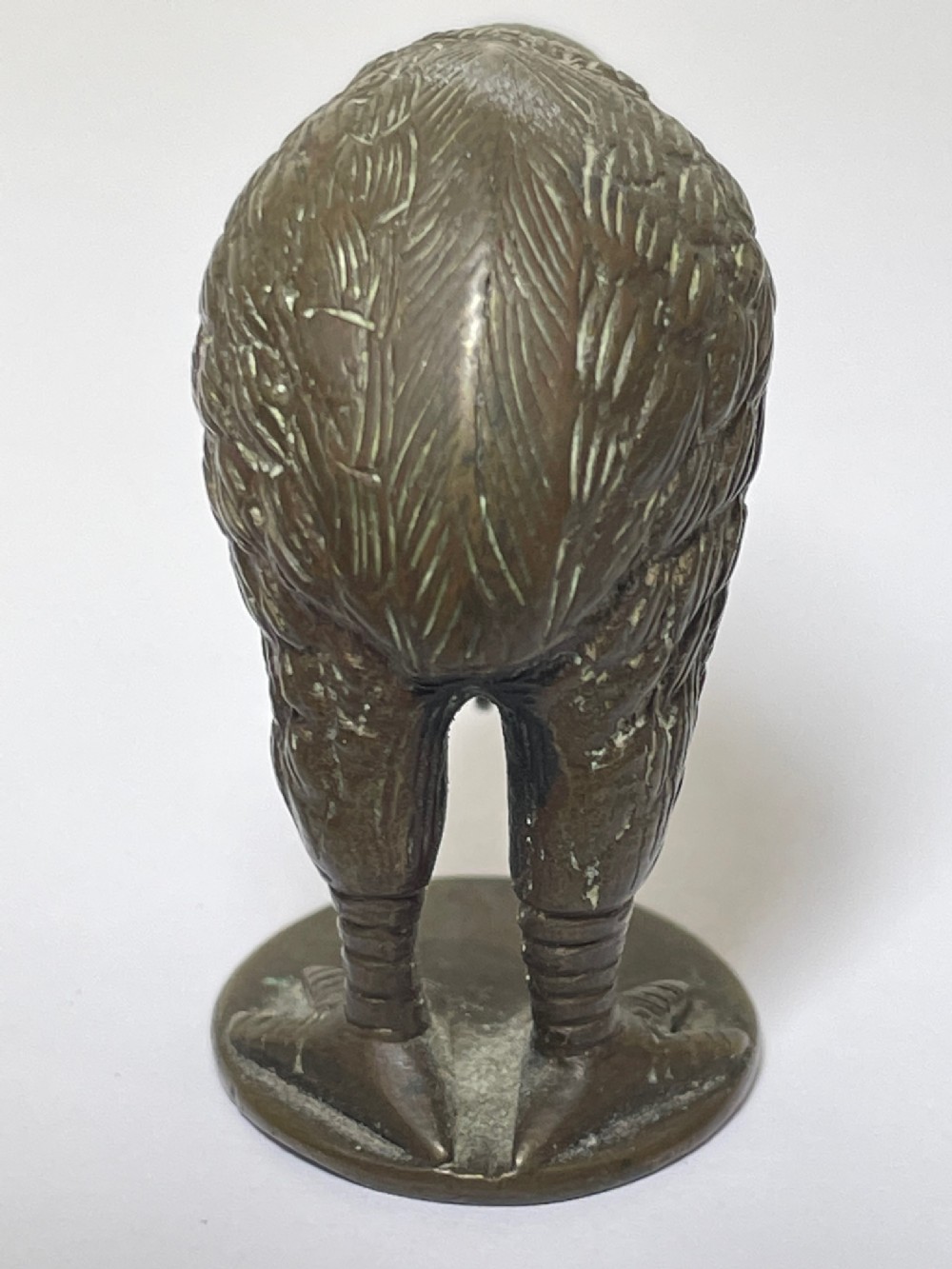
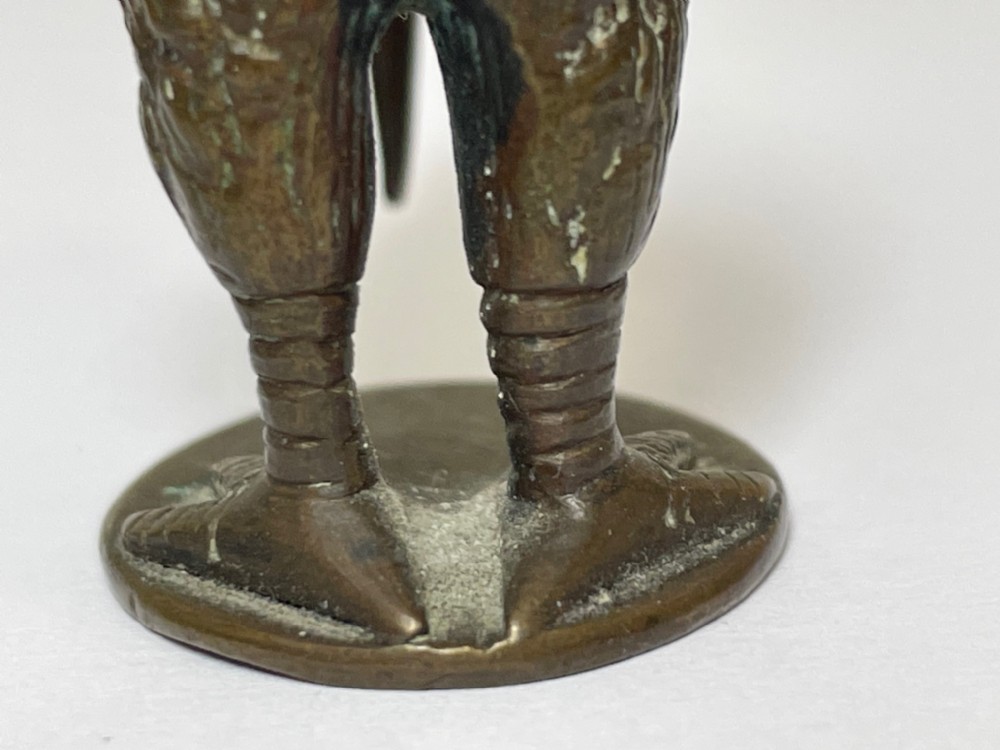
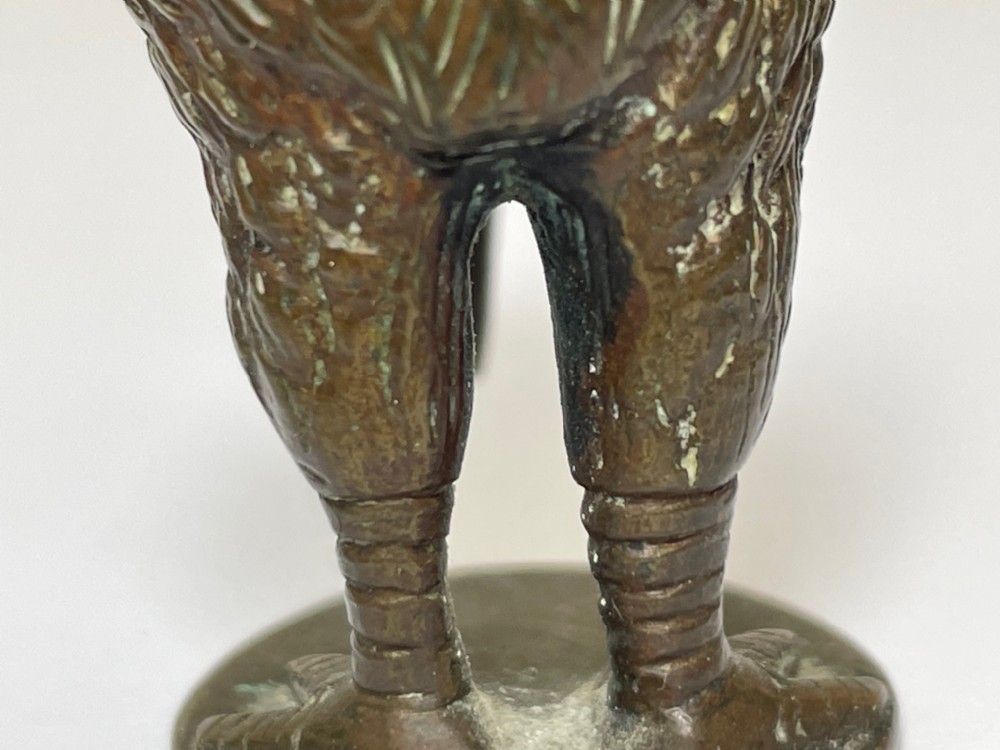
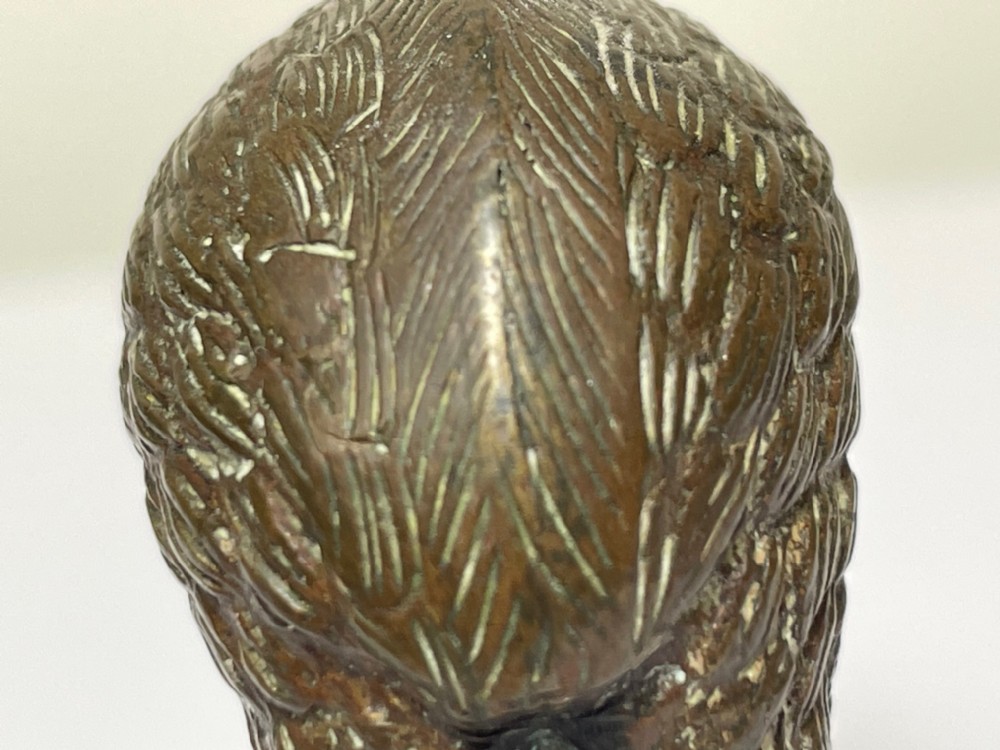
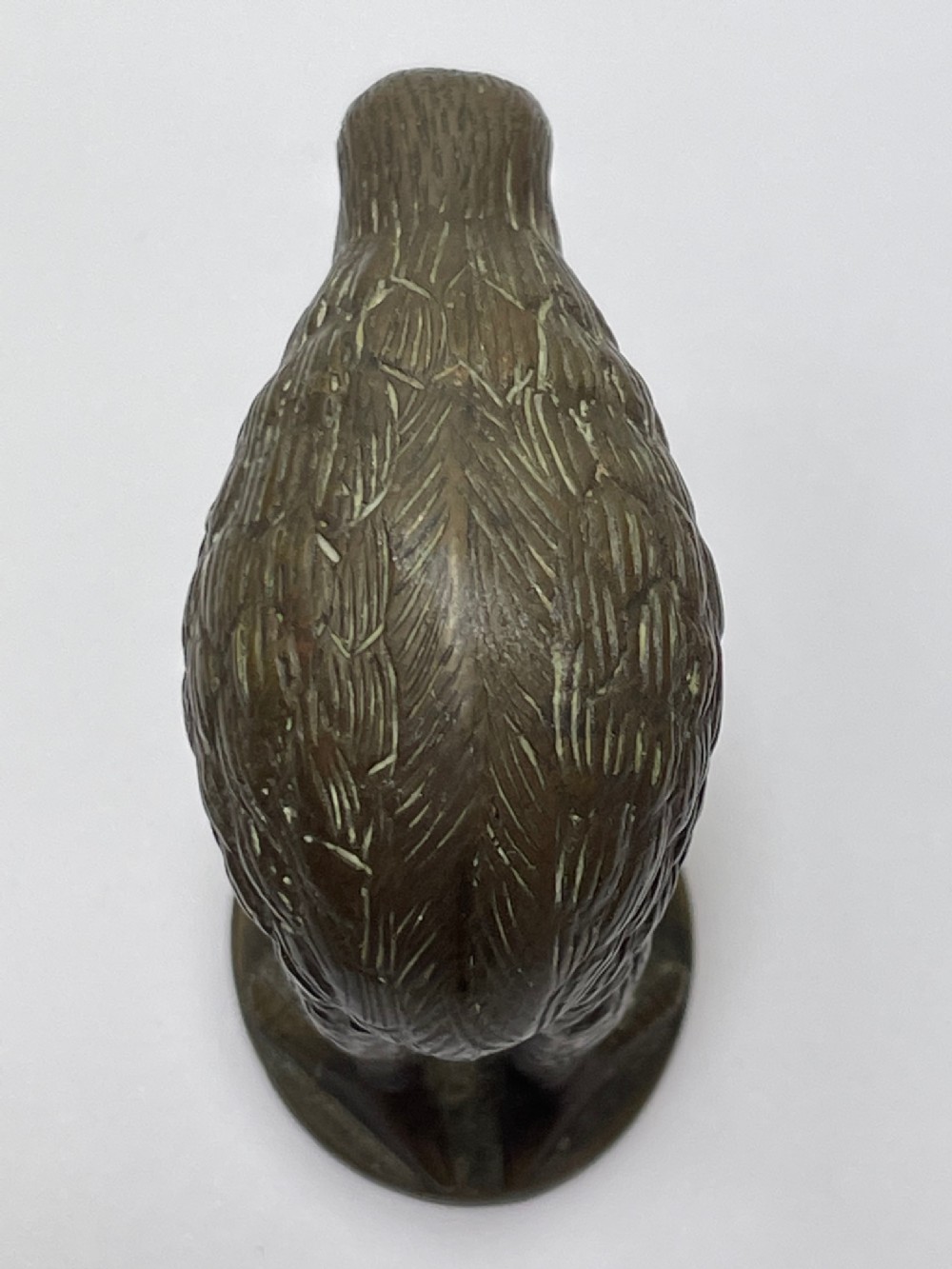
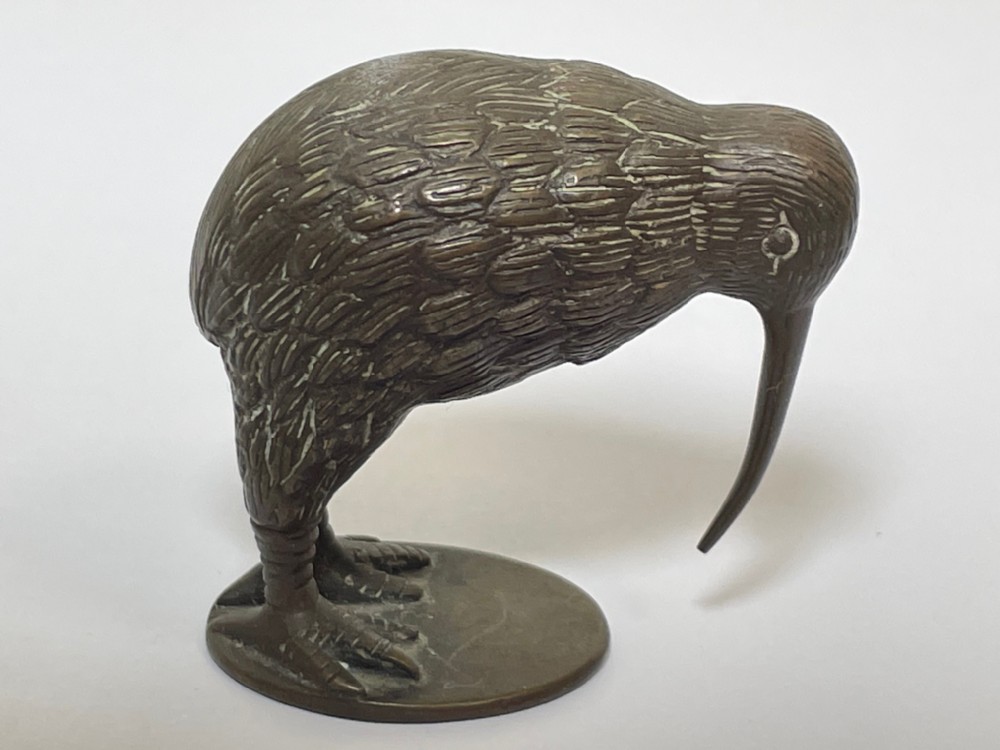
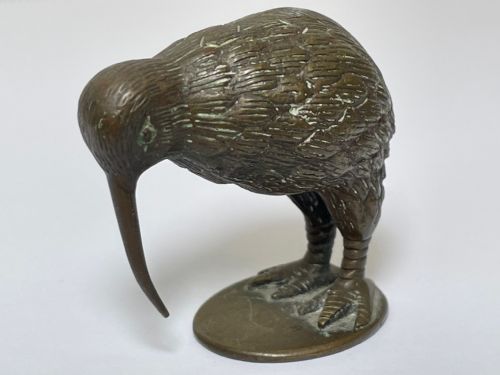
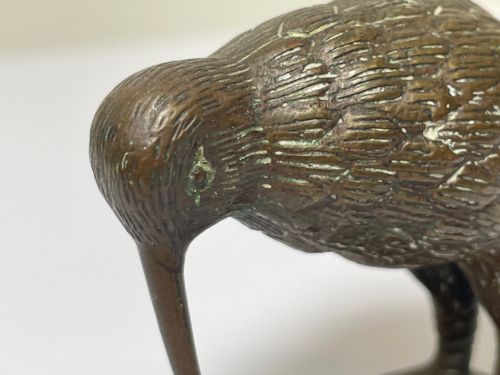
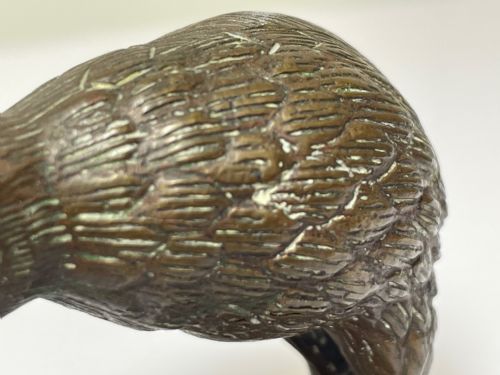
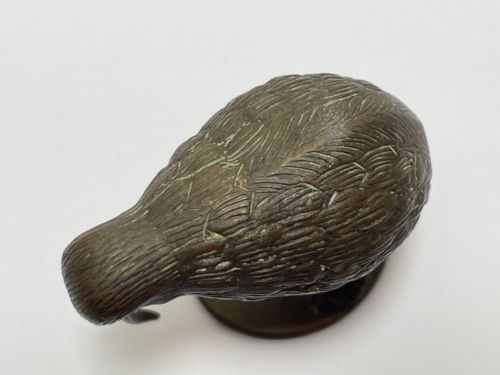
Subject in the model form of a Kiwi bird.
Visual beauty such fine craftsmanship which is so realistic.
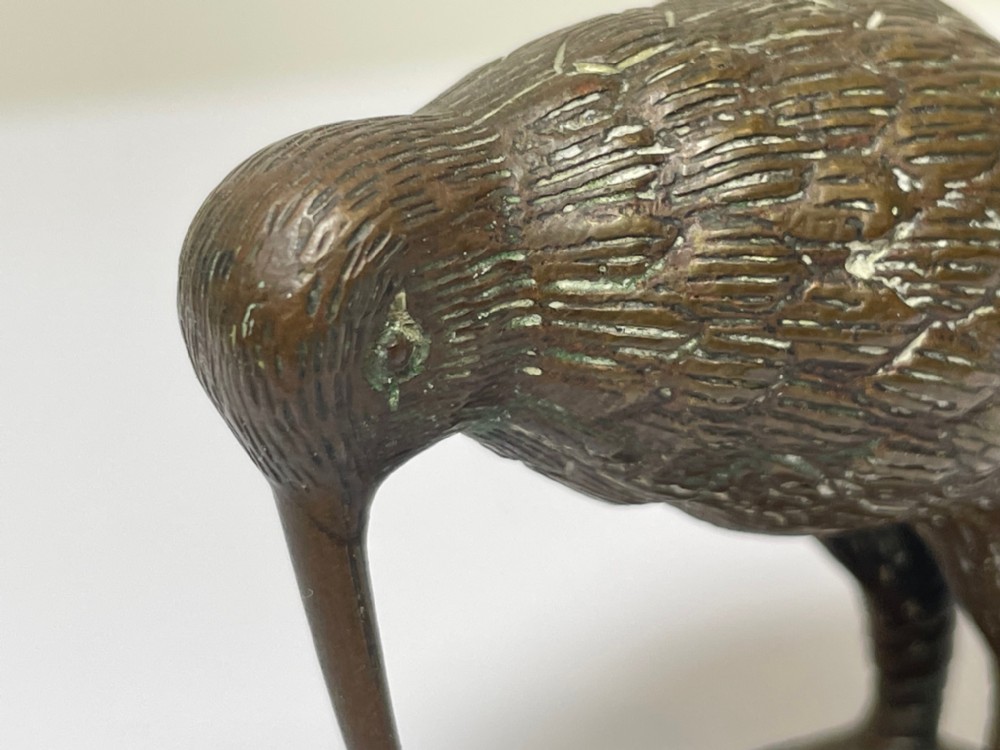
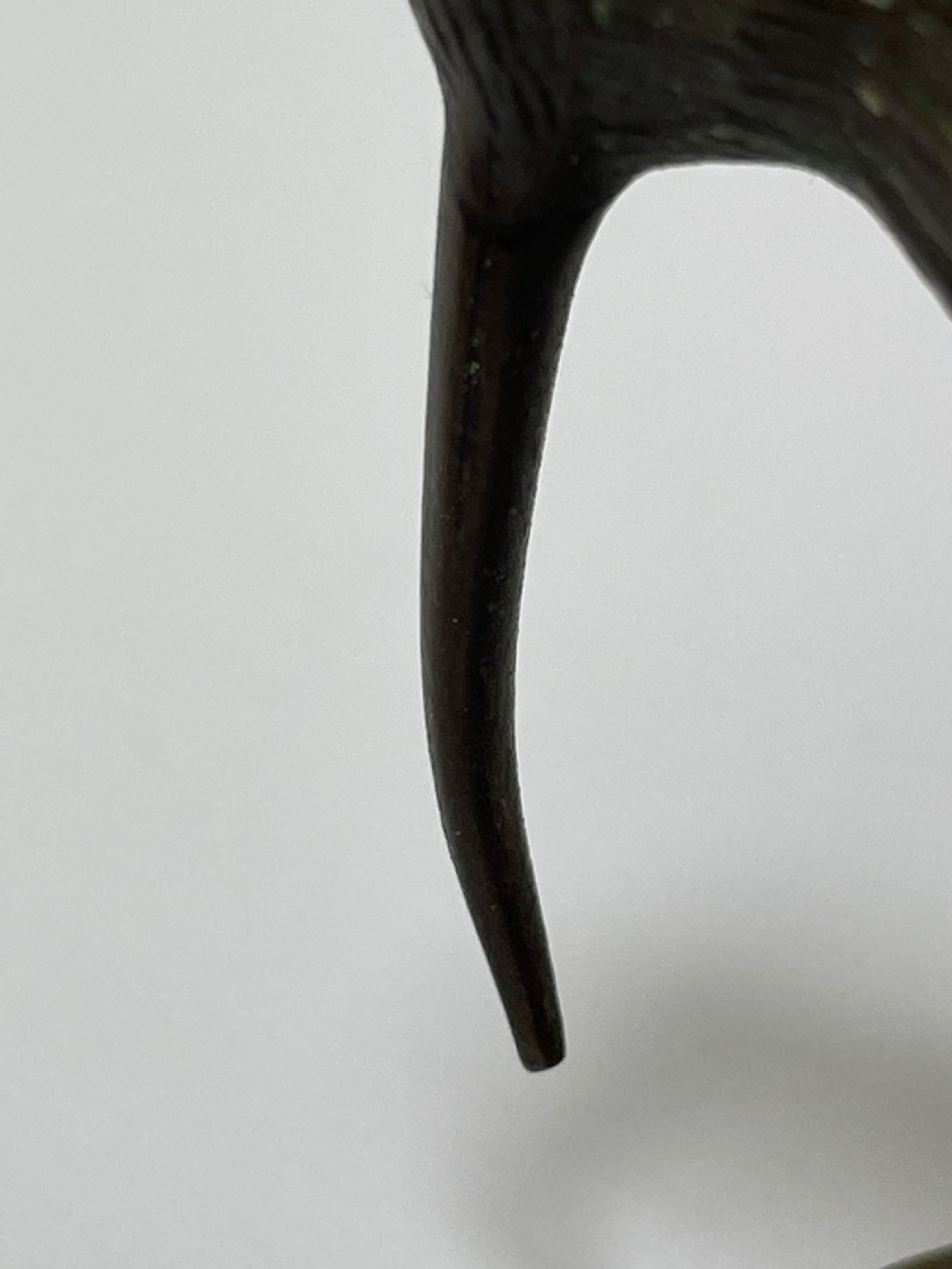
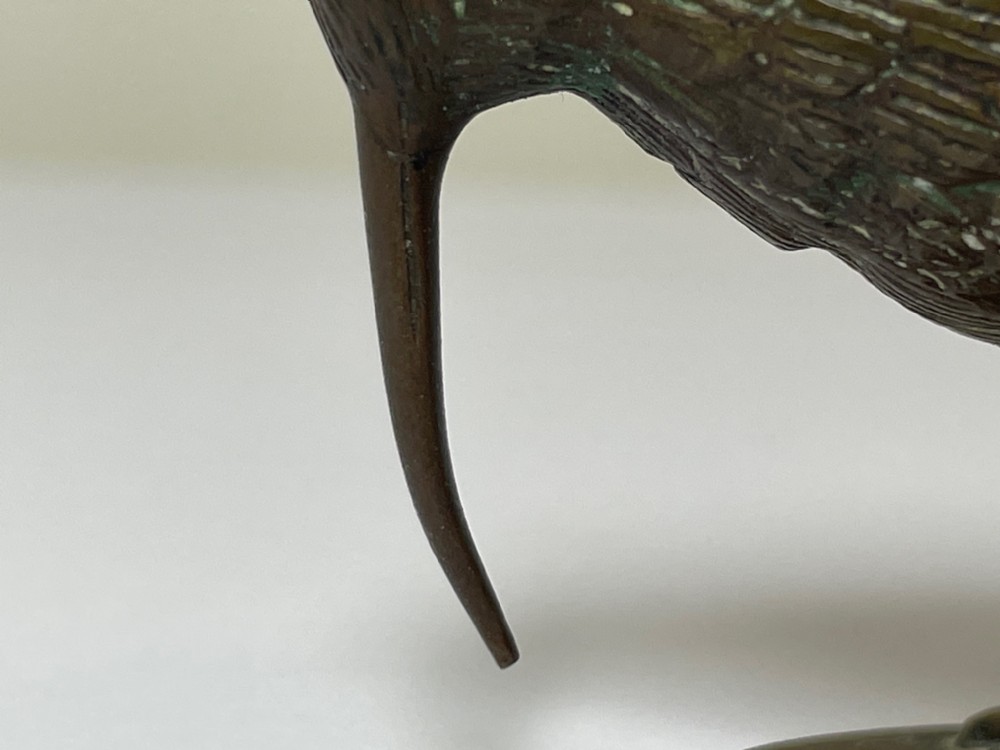
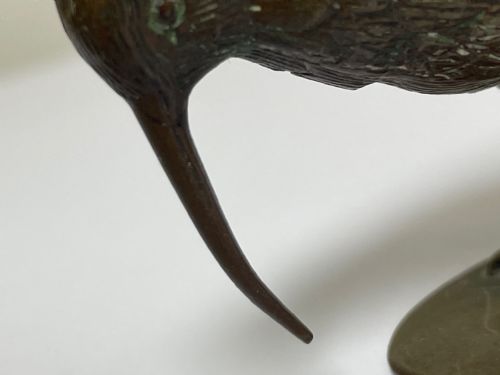
A feature that stands out is its beak. The kiwi's beak is much more than just a very pointy version of a nose, however. It's a vibration detector too.
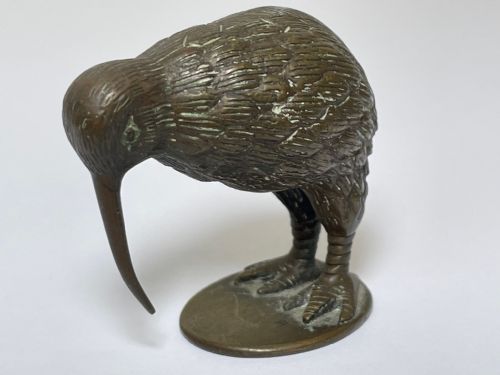
A cute adorable small size being 4cm high and 2.2cm wide and weighs around 60 grams.
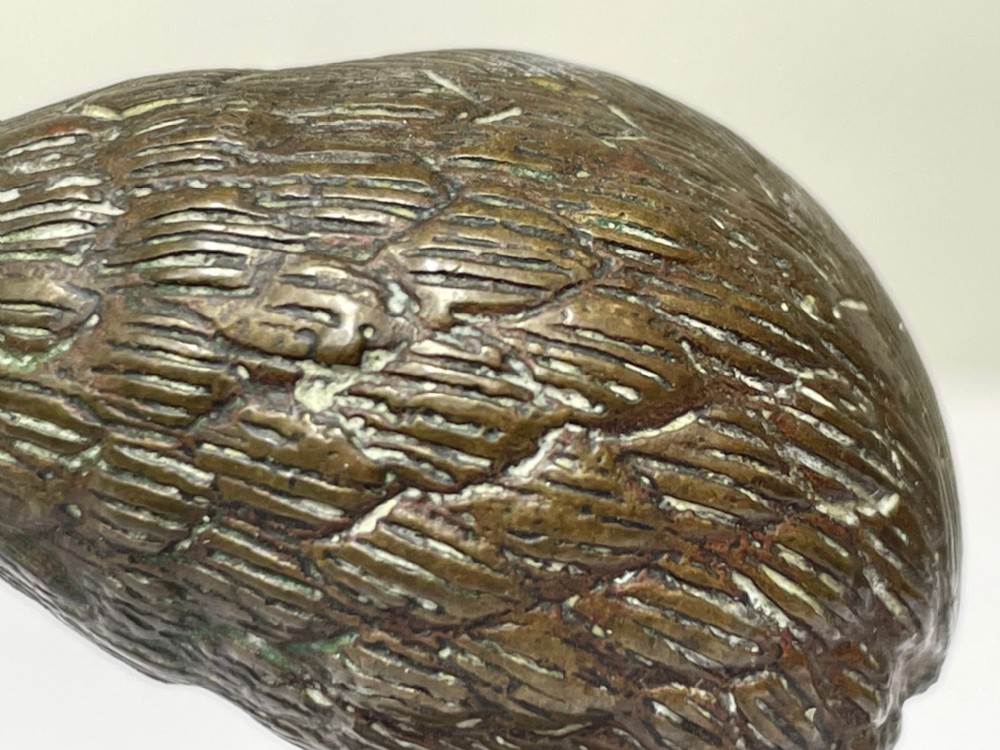
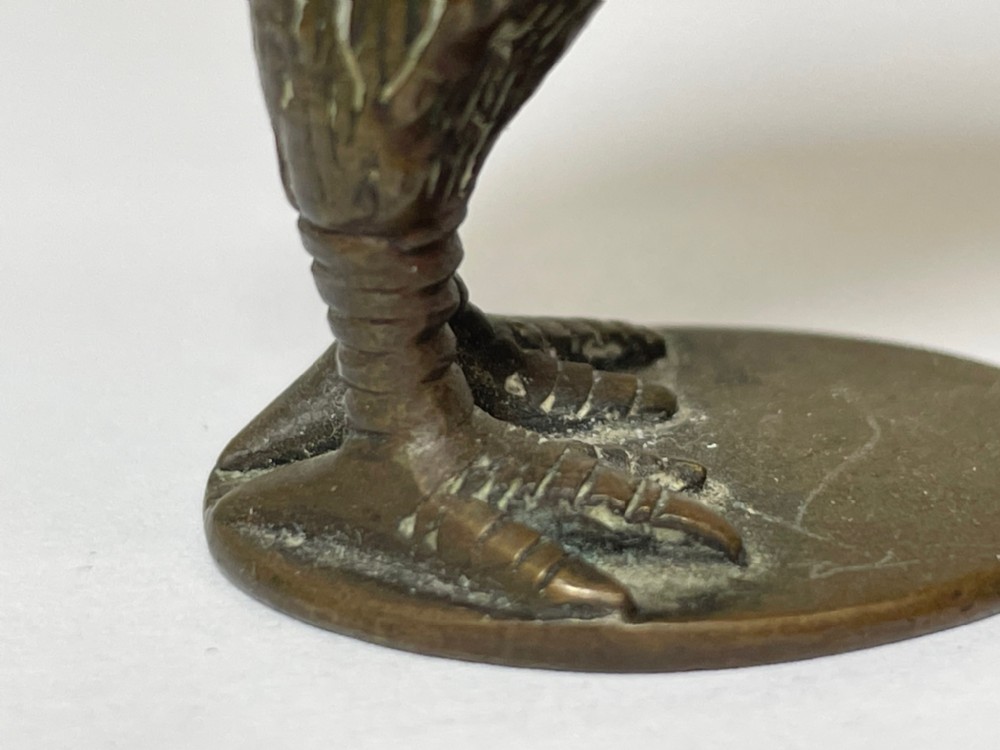
Very finely modelled and beautifully cast.
Kiwi (/'ki?wi?/ KEE-wee)[4] are flightless birds endemic to New Zealand of the order Apterygiformes. The five extant species fall into the family Apterygidae (/?æpt?'r?d??di?/) and genus Apteryx (/'æpt?r?ks/). Approximately the size of a domestic chicken, kiwi are the smallest living ratites (which also include ostriches, emus, rheas and cassowaries).
DNA sequence comparisons have yielded the conclusion that kiwi are much more closely related to the extinct Malagasy elephant birds than to the moa with which they shared New Zealand. There are five recognised species, four of which are currently listed as vulnerable, and one of which is near-threatened. All species have been negatively affected by historic deforestation, but their remaining habitat is well-protected in large forest reserves and national parks. At present, the greatest threat to their survival is predation by invasive mammalian predators.
Kiwi eggs are one of the largest in proportion to body size (up to 20% of the female's weight) of any order of bird in the world. Other unique adaptations of kiwi, such as their hairlike feathers, short and stout legs, and using their nostrils at the end of their long beak to detect prey before they see it, have helped the bird to become internationally well-known.
The kiwi is recognised as an icon of New Zealand, and the association is so strong that the term Kiwi is used internationally as the colloquial demonym for New Zealanders.
Made from cast bronze.
Origin from Austria.
An ideal collectors present.
Circa 1900s early 20th century.
Unsigned no makers mark.
Condition report.
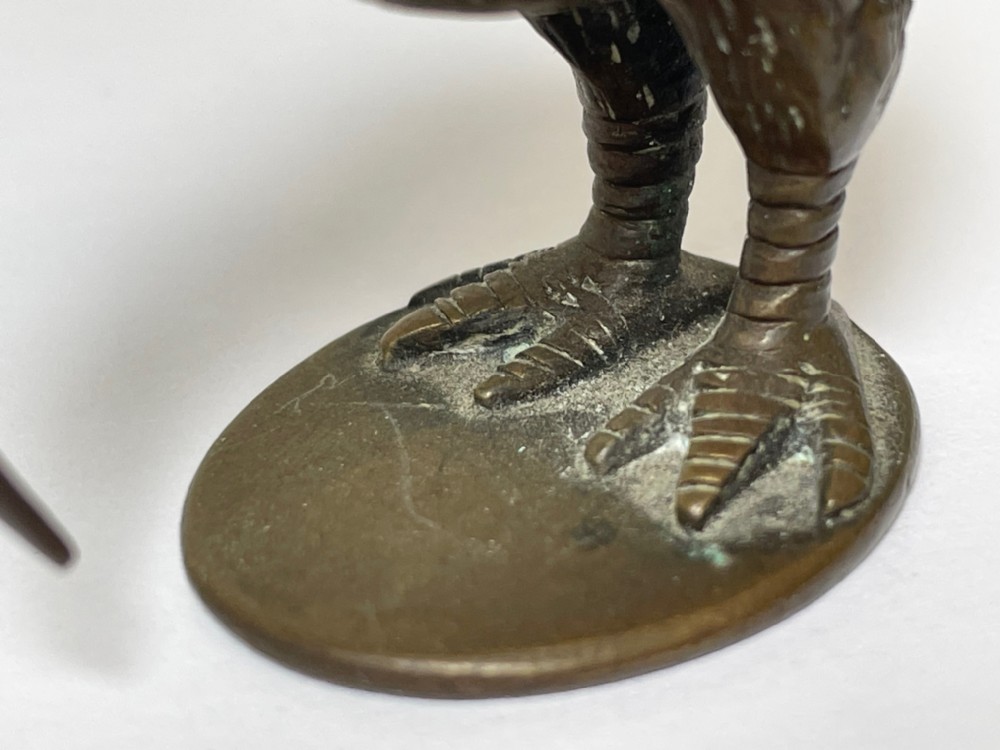
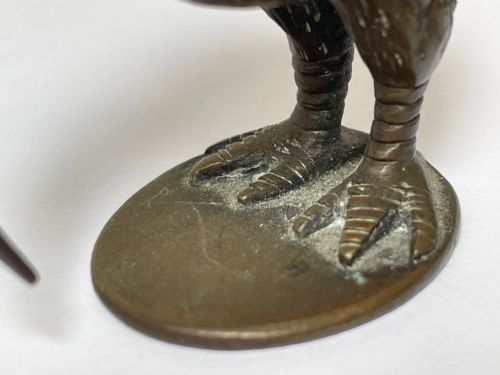
Offered in fine used worn patina condition.
Having noticeable wear, stains, patina age marks commensurate with usage & old age.
We offer our clients exceptional professional customer service.
We only sell decorative artworks based upon subject, quality & significance.
International worldwide shipping is available please ask for a quote.
Browse our other exciting intriguing collections available in our shop gallery, happy shopping.
Dimensions in centimetres
High (4cm)
Depth front to back (4.2cm)
Width (2.2cm)
Width widest point of the base (2.7cm)
Cheshire Antiques Consultant Ltd has dated this piece to the 1900s.
Source the historic in 17th, 18th, 19th & 20th century fine arts, painting, sculptures & collectibles
You can view the stock and full dealer information on the Cheshire Antiques Consultant Ltd Profile Page

Small Antique Austrian Bronze Kiwi Bird Sculpture