It was listed by Jason Clarke Antiques. Sold pieces stay on Sellingantiques as a record of what has passed through, and the next one is rarely far away.
Jason Clarke Antiques has dated this piece to the 1800s.
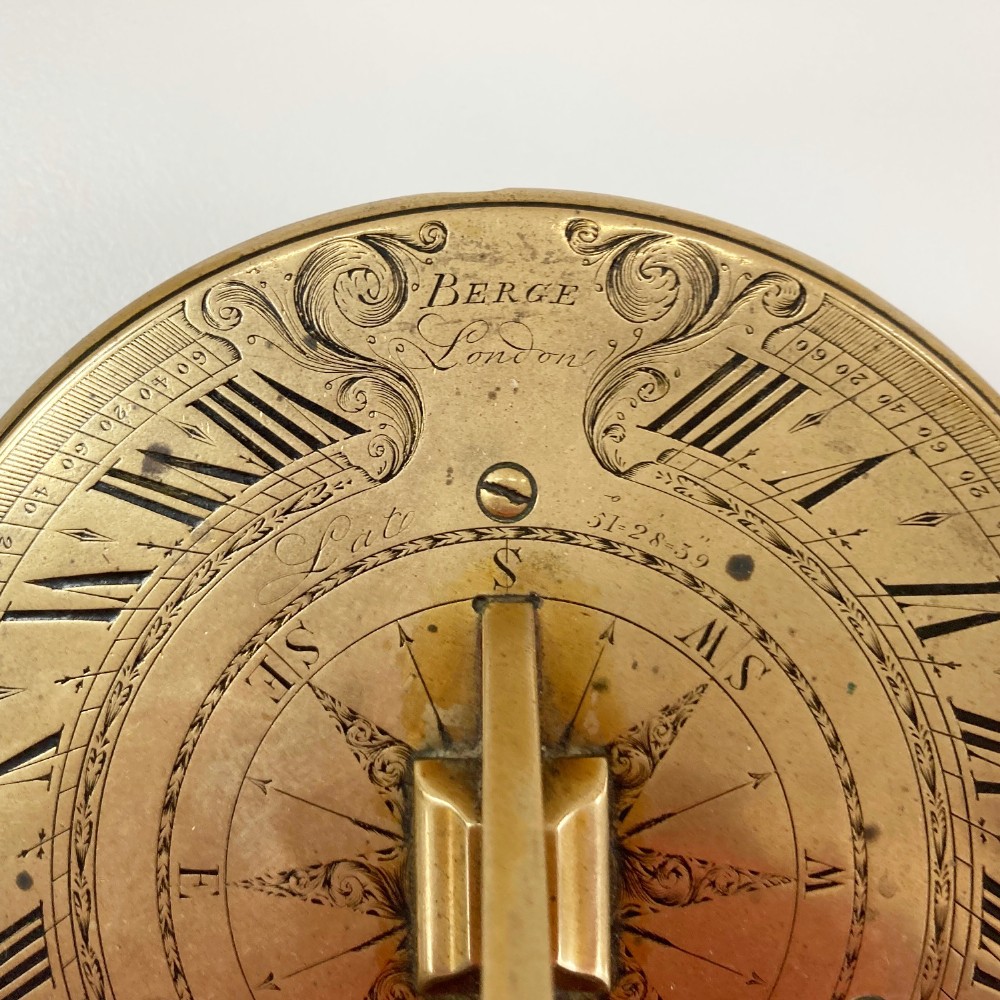
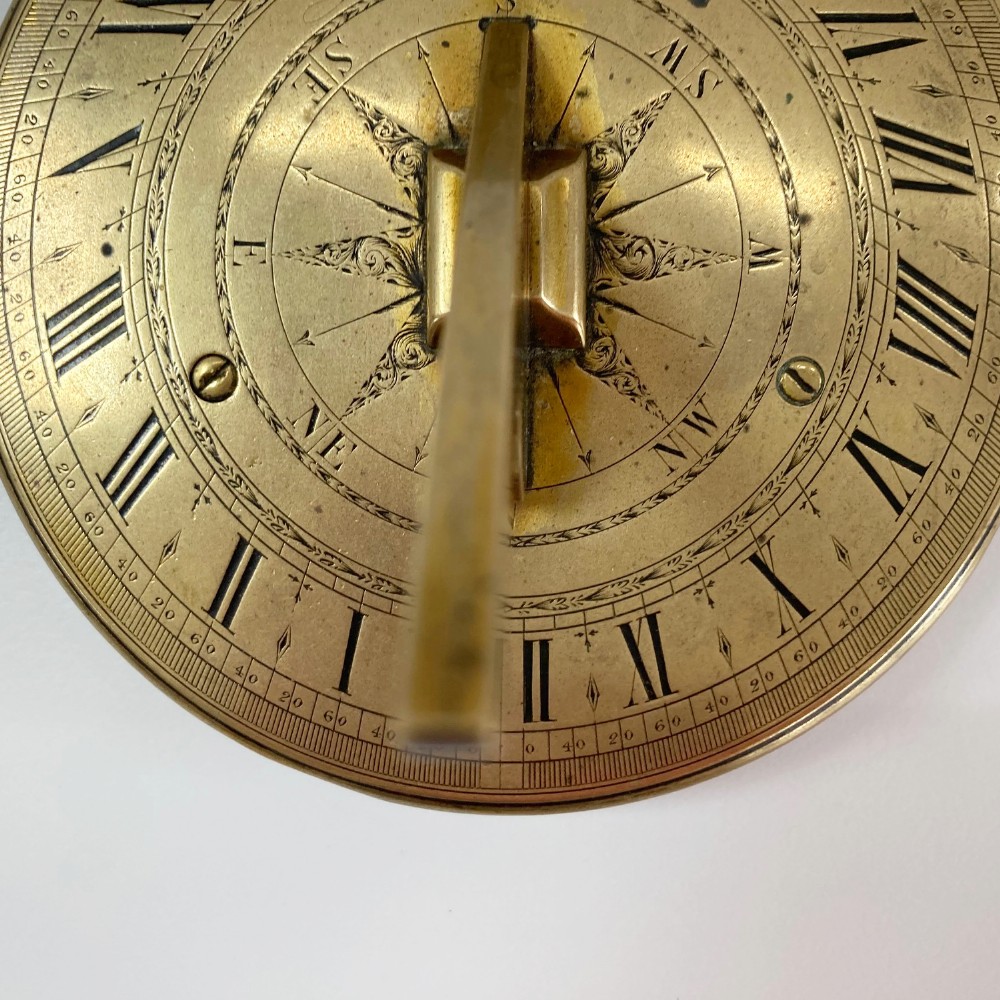
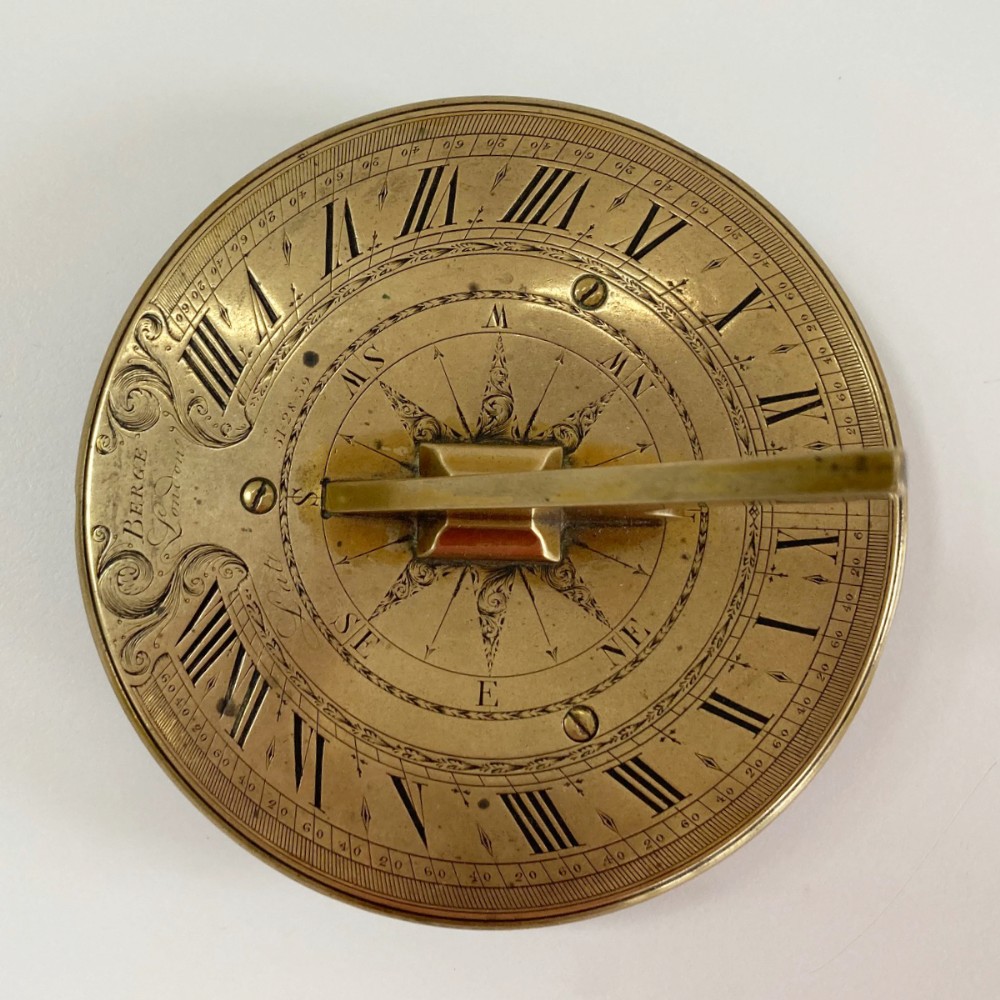
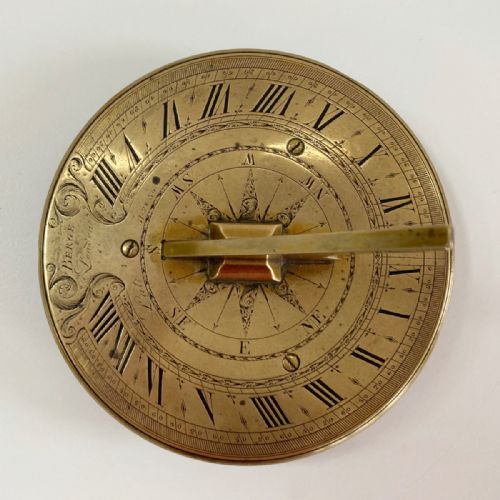
It has a roman numeral scale, marked with hour points and two further circumference rings divided for twenty and four minute intervals. The scale is surrounded by a dart pattern engraving which culminates at the South position with floral scrolls and the centre point denoting the famous London instrument maker, Matthew Berge, London.
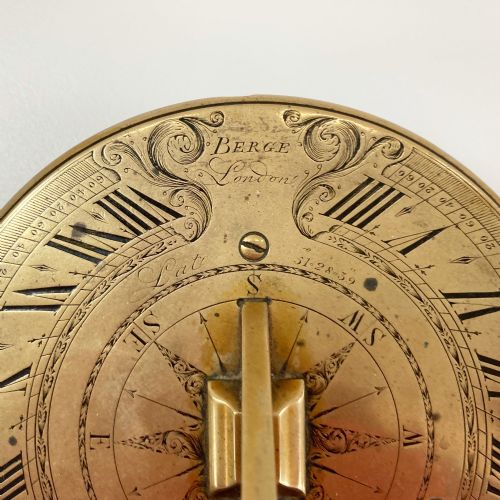
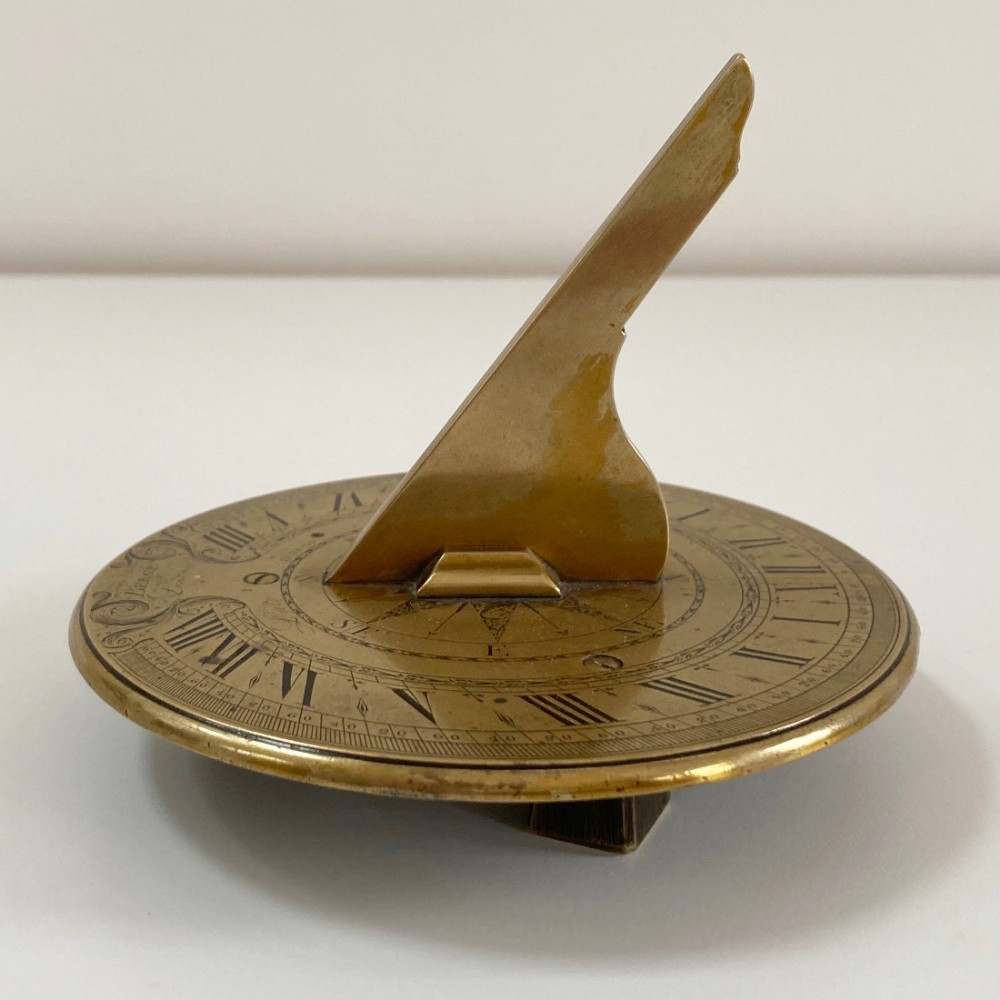
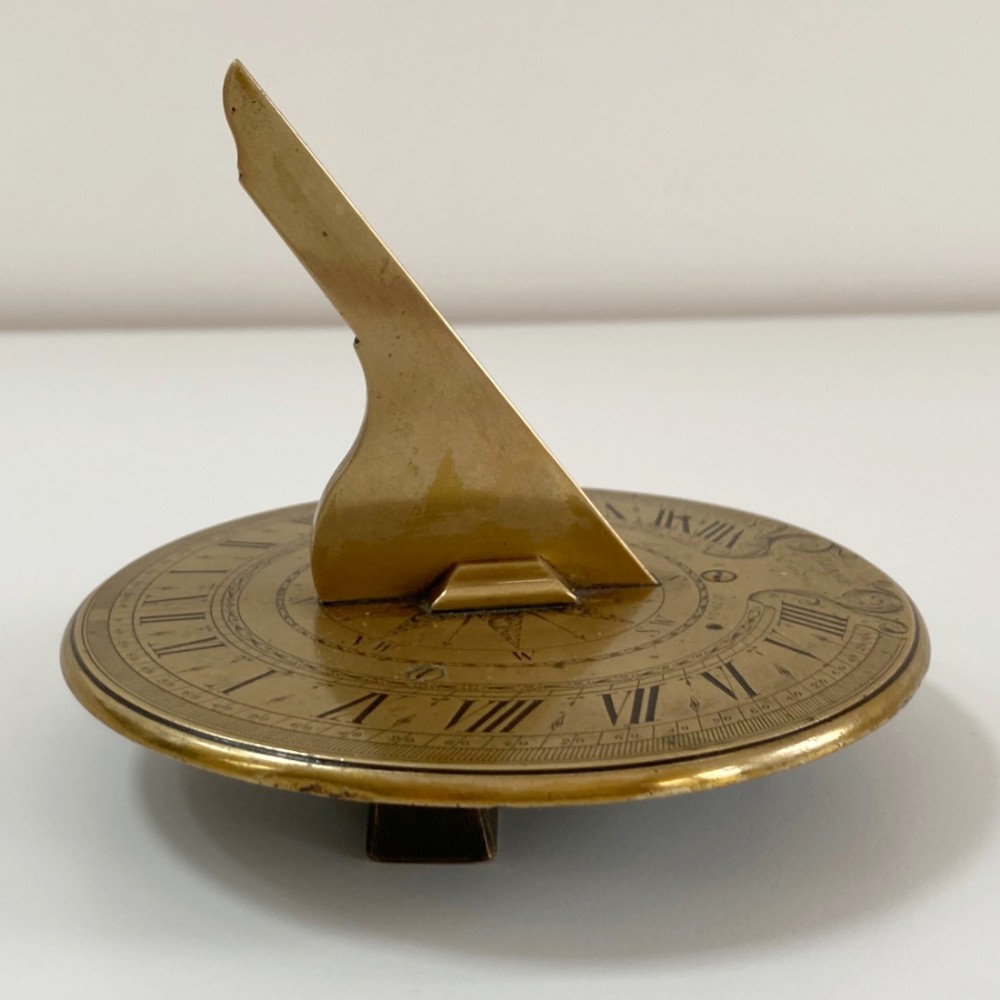
The inner section of the dial is provided with a sixteen-pointed compass rose with minutely engraved floriat arms at the eight main compass points and a beautifully designed miniature gnonmon to the centre.
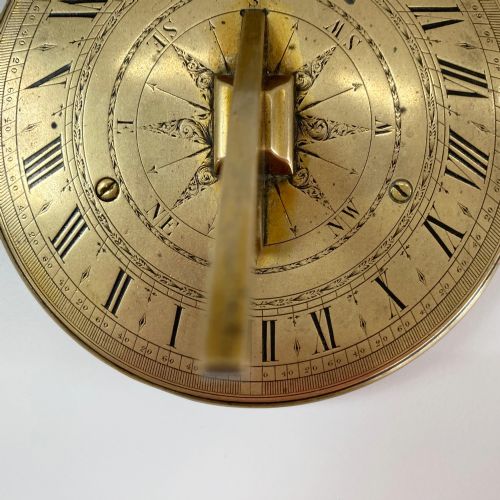
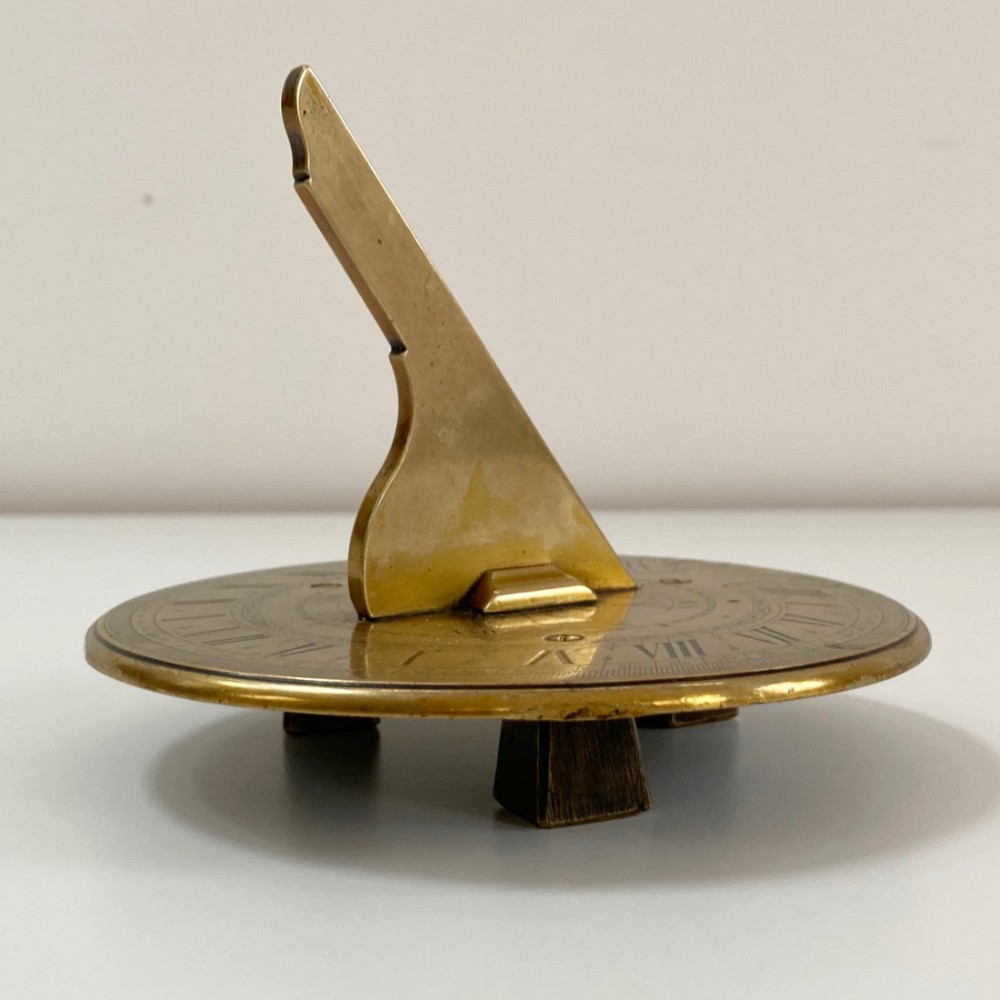
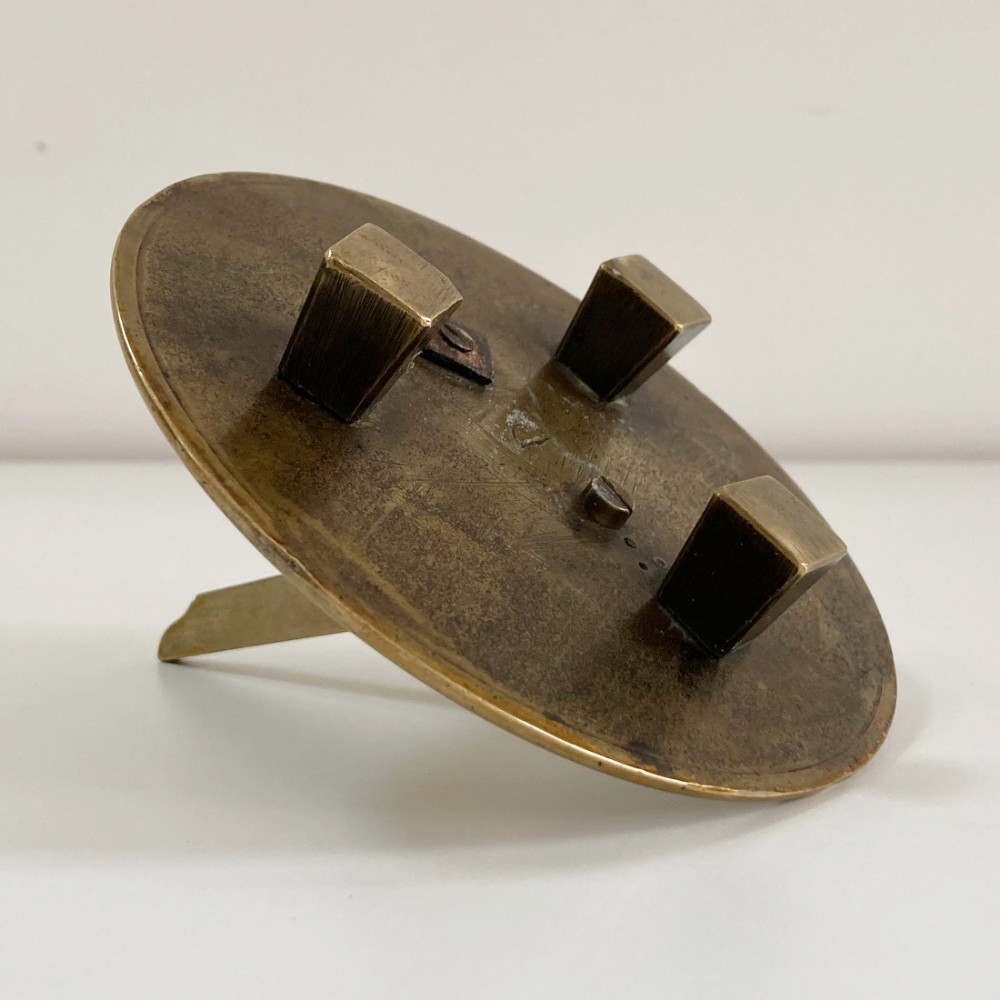
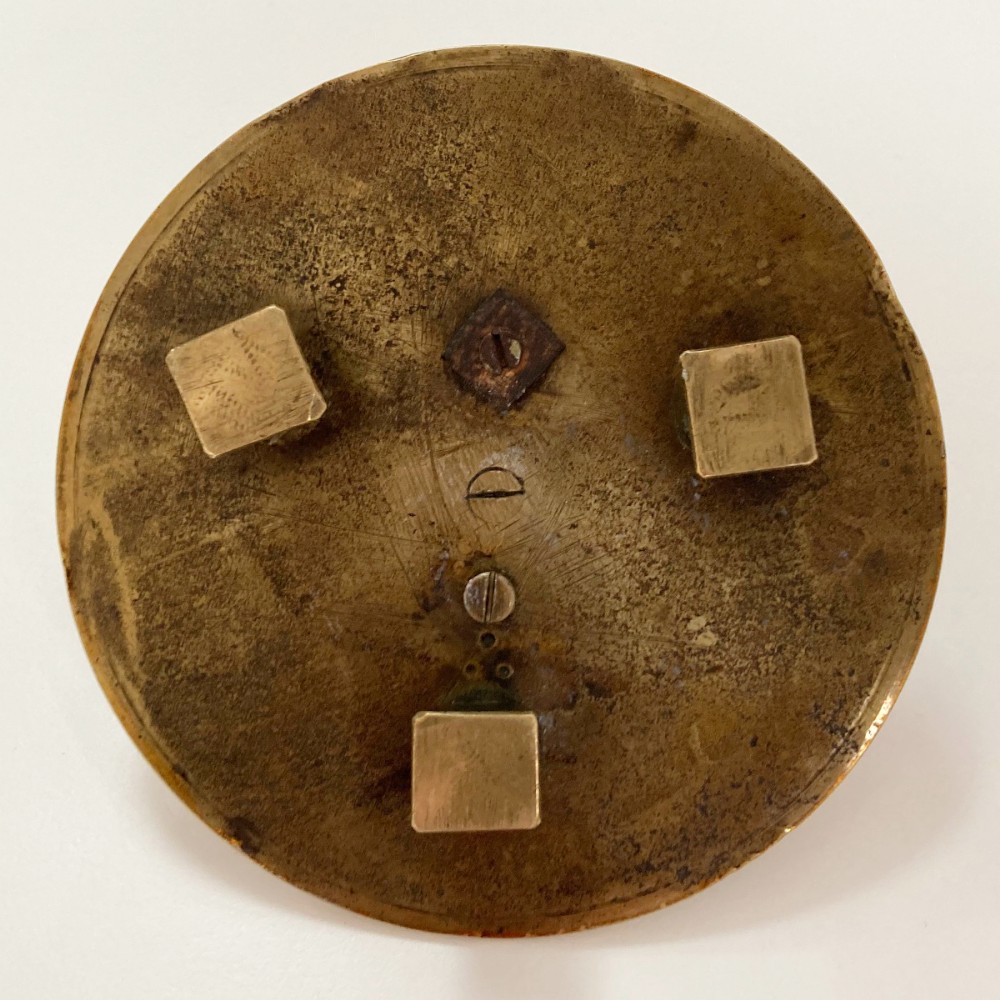
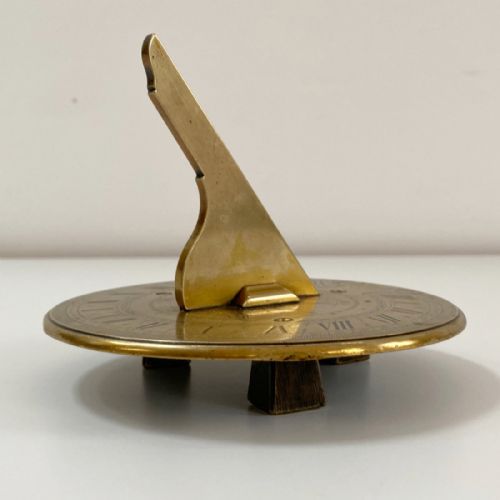
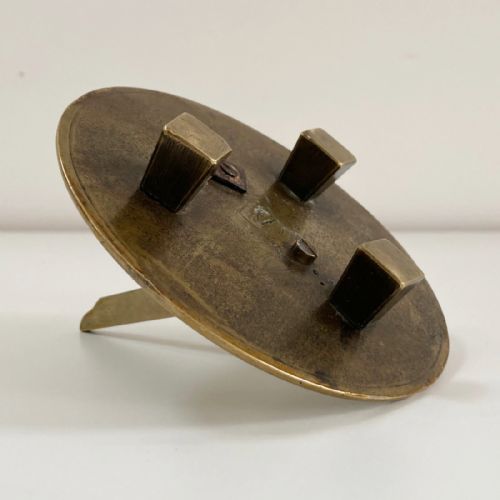
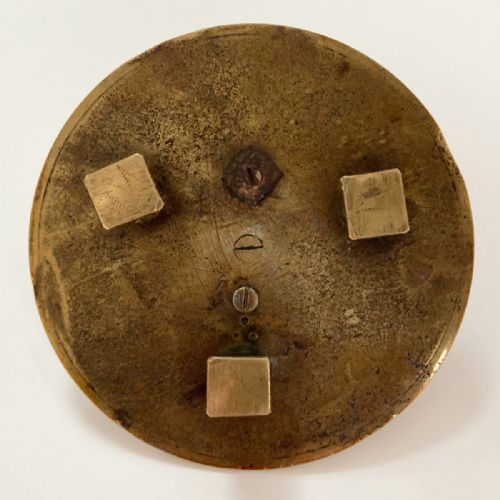
Of significant rarity are the three base feet which still remain with this dial and coupled with the definition remaining on the engraved dial, it strongly suggests that it has never been installed during its long existence.
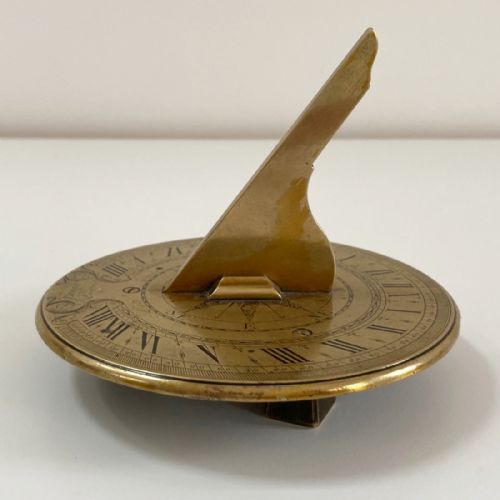
To return to the dial engraving, a small additional feature between the compass rose and the outer roman numeral dial provides an interesting and most unusual conundrum, an arc seconds latitude reading for 51-28-39. It is highly unusual to encounter such a precise reading on a sundial, so it is interesting that the co-ordinate for which this sundial was produced, relates to an area of land which cuts directly through Greenwich Observatory.
Rather than suggesting a firm attribution I will temper this owing to the lack of a corresponding longitude, however, given the maker, the proximity of his workshop and the quality and likely expense of this piece, it is at least a reasonable likelihood that it might have been manufactured for the Observatory at Greenwich. As mentioned below, we do also know for sure that Berge and Ramsden before him, were commissioned by them to carry out manufacture and installations.
We should also consider who might have been capable during this period of providing a surveyed latitude of such precision. I suspect the Observatory archives held at Cambridge will not have a record of purchases so this is probably as much as can be suggested at this stage.
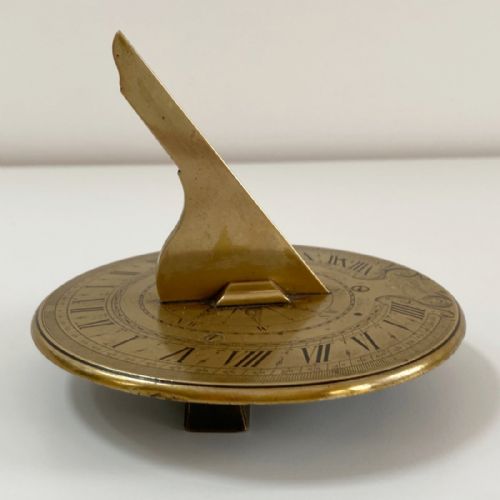
Forgetting for a minute, the difficult, yet interesting possibilities of provenance, this sun dial stands alone as a very fine and rare example in its own right. There is only one other Berge sun dial recorded in the British Sun Dial Society’s records and this is in somewhat poor condition. A Berge sun dial of this size, in such fine condition and complete with its feet is an extraordinarily rare encounter.
Matthew Berge featured amongst the honoured list of Jesse Ramsden’s apprentices. Born in 1753 it is thought that he was apprenticed to Ramsden in 1767 whilst his older brother had been apprenticed to Peter Dollond a few years before.
Berge’s career decision to remain working with the hugely famous Ramsden as his foreman means that his story is forever overshadowed but there is no doubting the trust and appreciation for Berge’s skill that Ramsden maintained throughout his career. Berge was perhaps the only person that Ramsden confided his methods to for hand dividing circles and he was also entrusted to complete the work on the Shuckburgh equatorial at the Greenwich Observatory following Ramsden’s demise.
These glimpses of Berge shining through the writings about Ramsden’s life are perhaps small appreciation, but with no wife (and a son who had joined the East India Company), it was Berge that Ramsden chose in his will as the beneficiary for his premises at 199 Piccadilly.
His will states:
“I give and bequeath to my old servant Matthew Berge, the lease of my house and workshops No 199 Piccadilly next St James’s Church with my working tools and stock except those before mentioned on condition that he pays the remaining debts for
Jason Clarke Antiques has dated this piece to the 1800s.
You can view the stock and full dealer information on the Jason Clarke Antiques Profile Page
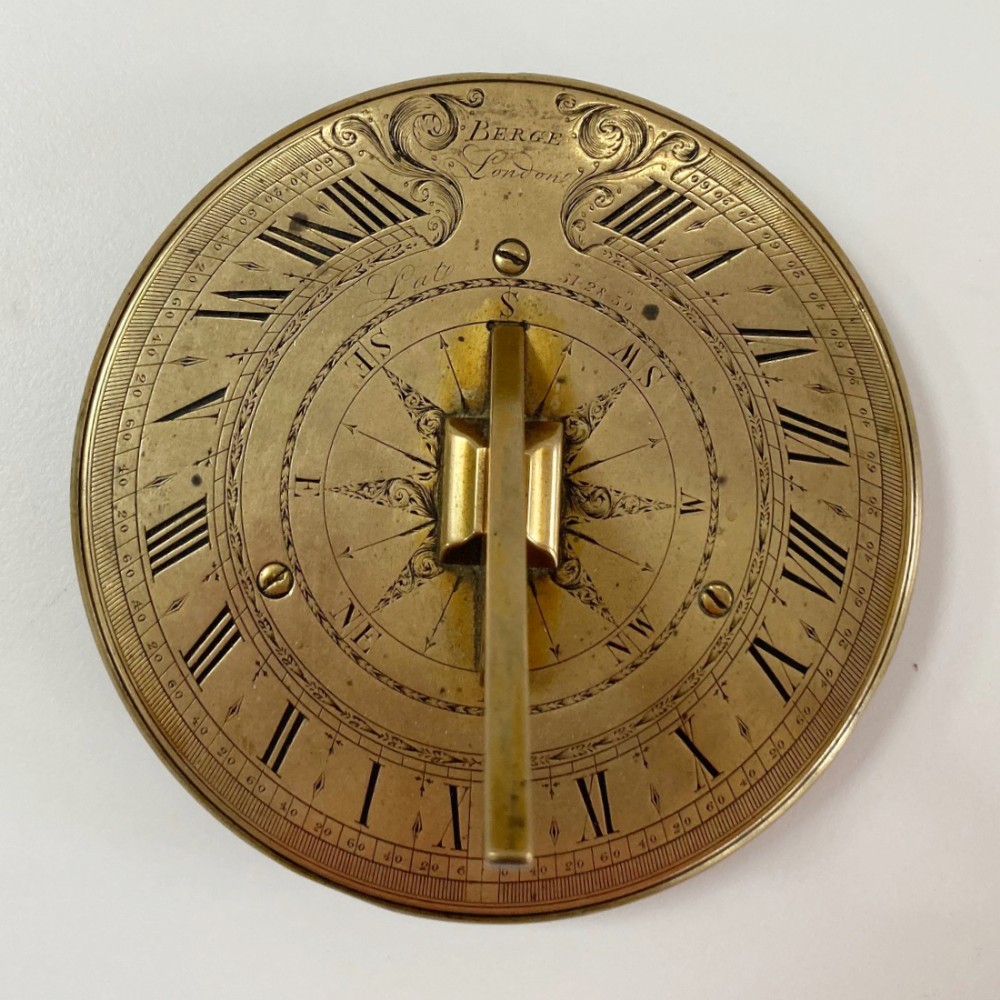
Georgian Five Inch Sun Dial by Matthew Berge - Royal Observatory Interest