Steve Sly Japanese Works of Art has dated this piece to the 19th Century.

Literature :
Please see pages 66 and 541 in the Toso Kinko Jiten by Wakayama Takeshi for biography, however two further metalworkers with the same name are also listed below .

Iwamoto Kansai ????. Meiji – Taisho periods, Shiba district, Edo (Tokyo)
Imoya Kansai (Kasahara Kansai) ??(??)??. The Tsuchiya School, Tottori, Inaba province.
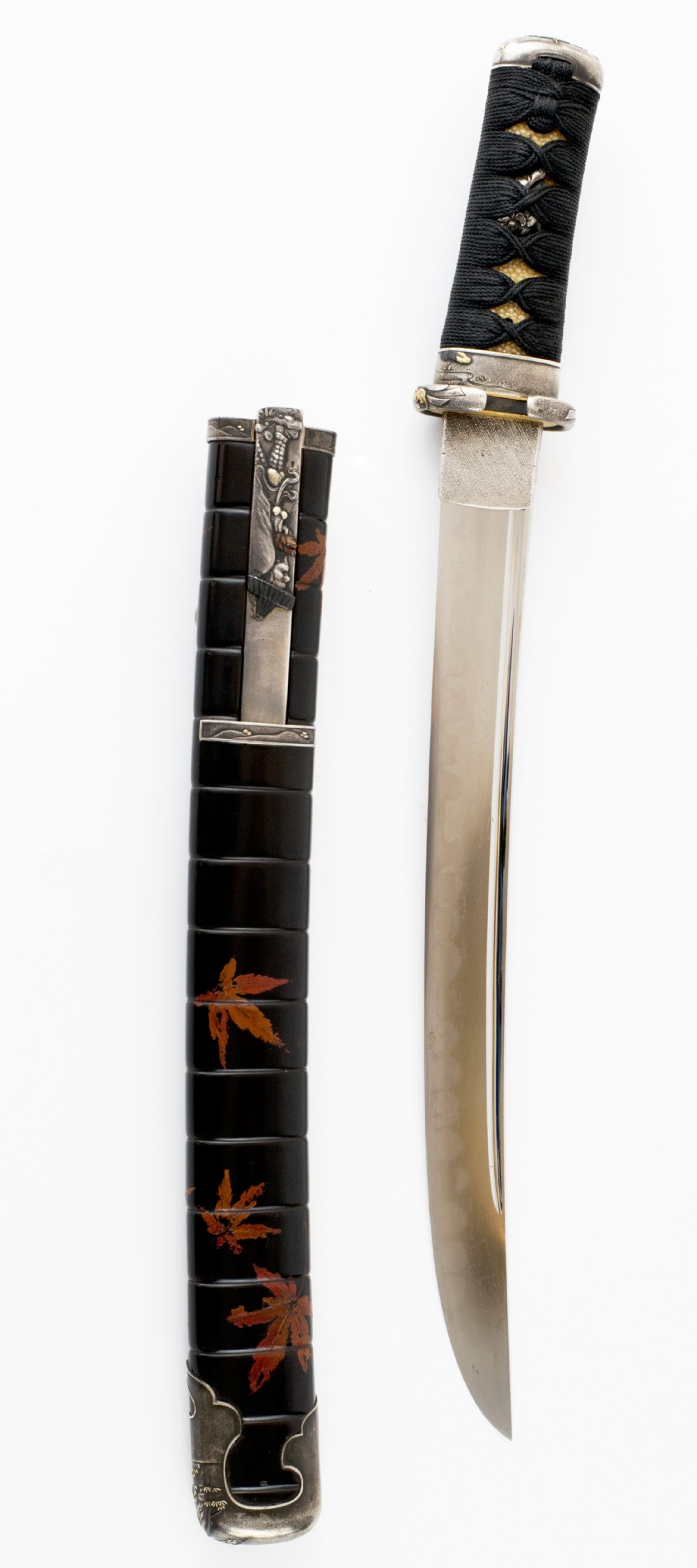
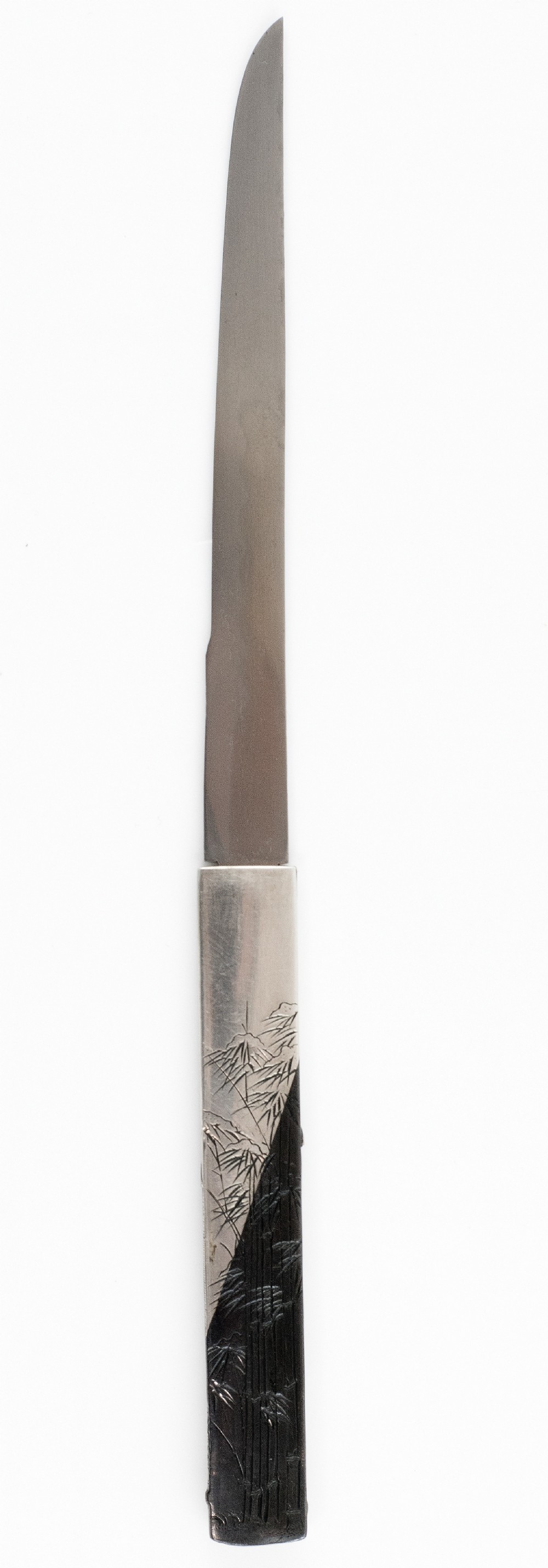
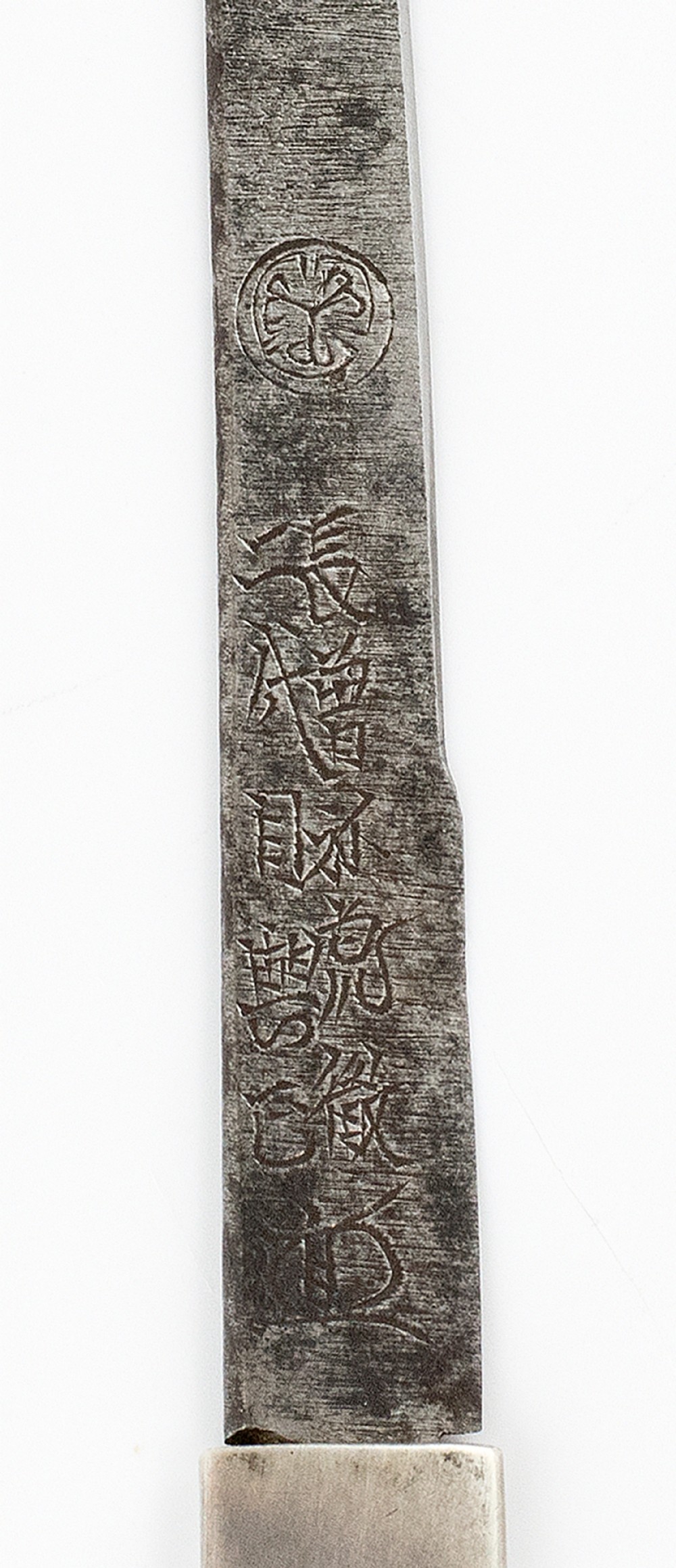
The artist Nagasone Kotetsu's signature is on the Kozuka blade although in my view the blade might have been made by a later Edo period sword-smith, for example Minamoto no Kiyomaro who often emulated the blades of the past great masters, furthermore I am reliably informed that two of the Kanji characters on the blade of the Kozuka are written incorrectly, although many examples of this signature have been recorded.

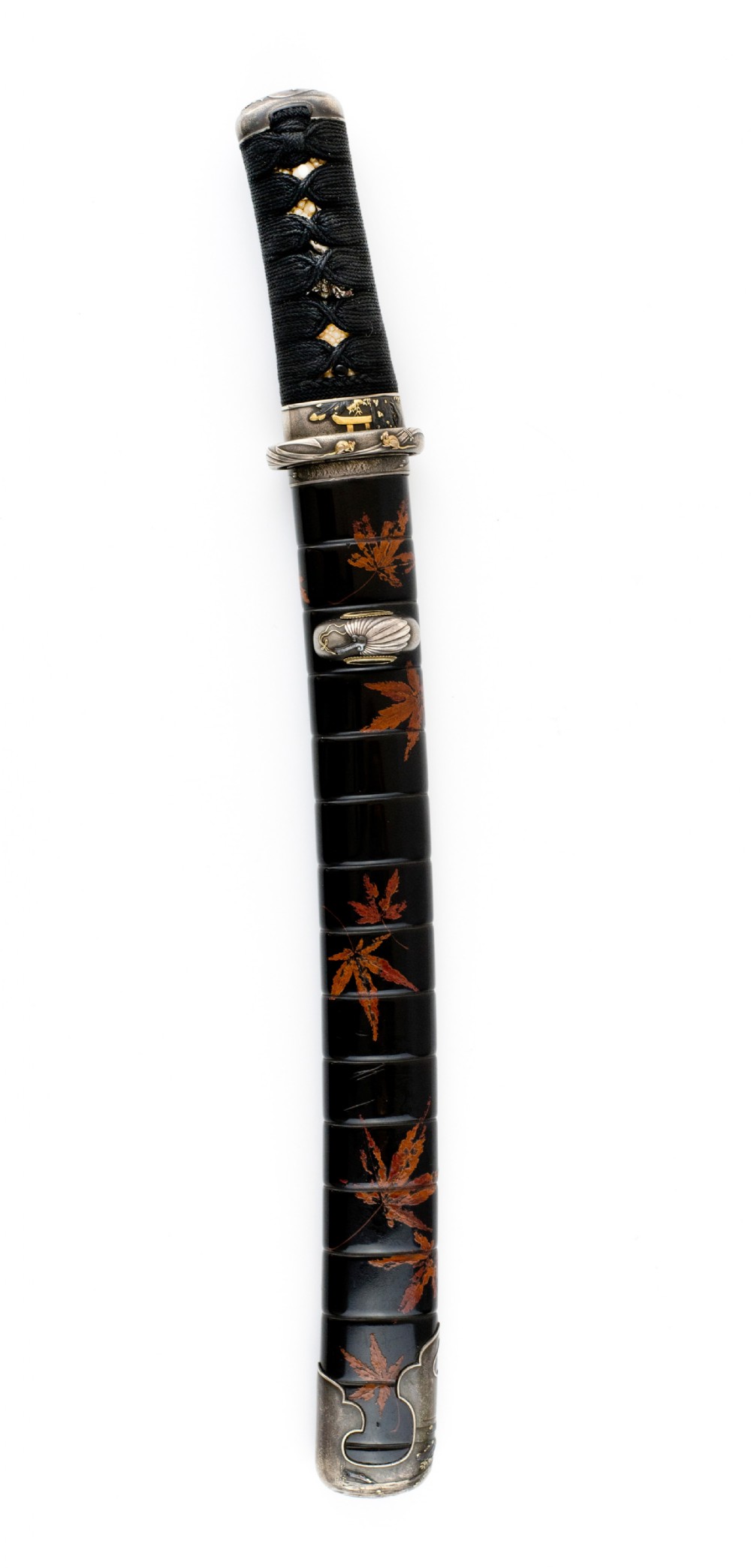
The Fittings: Mixed metals and alloys of gold, silver, shakudo and shibuichi.
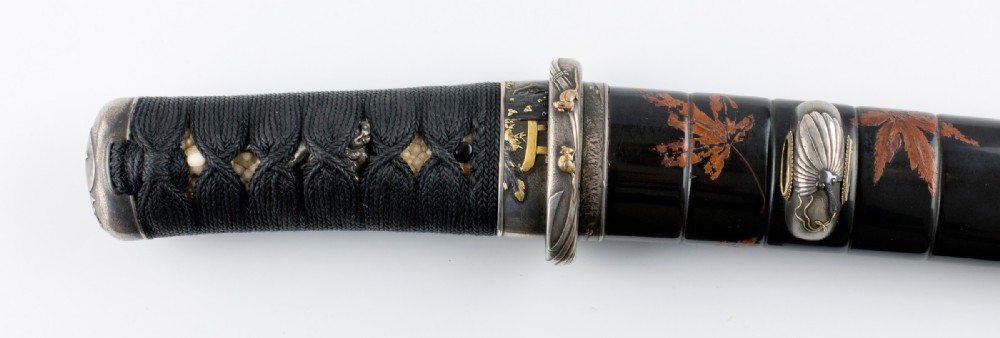
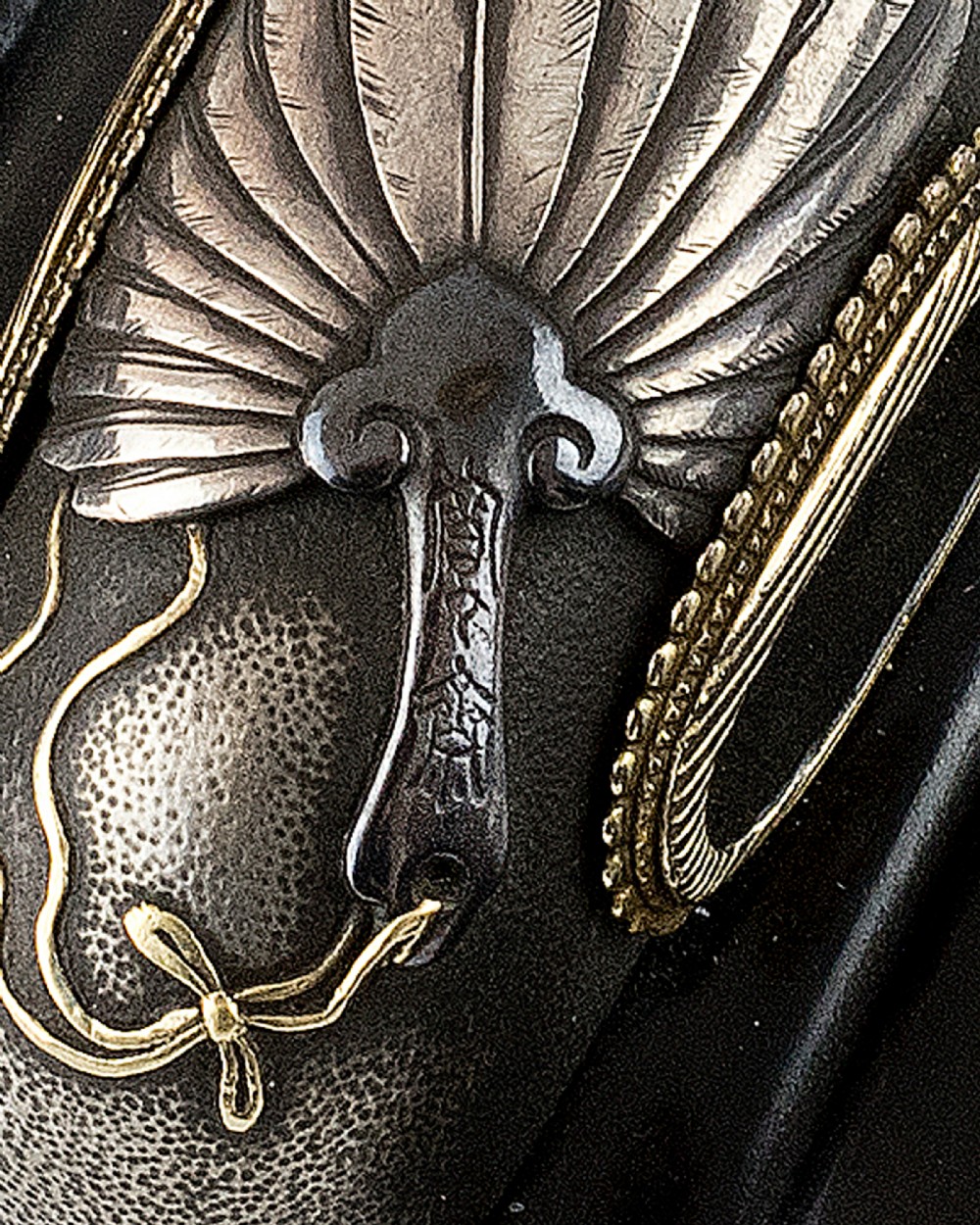
Kurikata : Chinese style fan, one of the auspicious symbols.
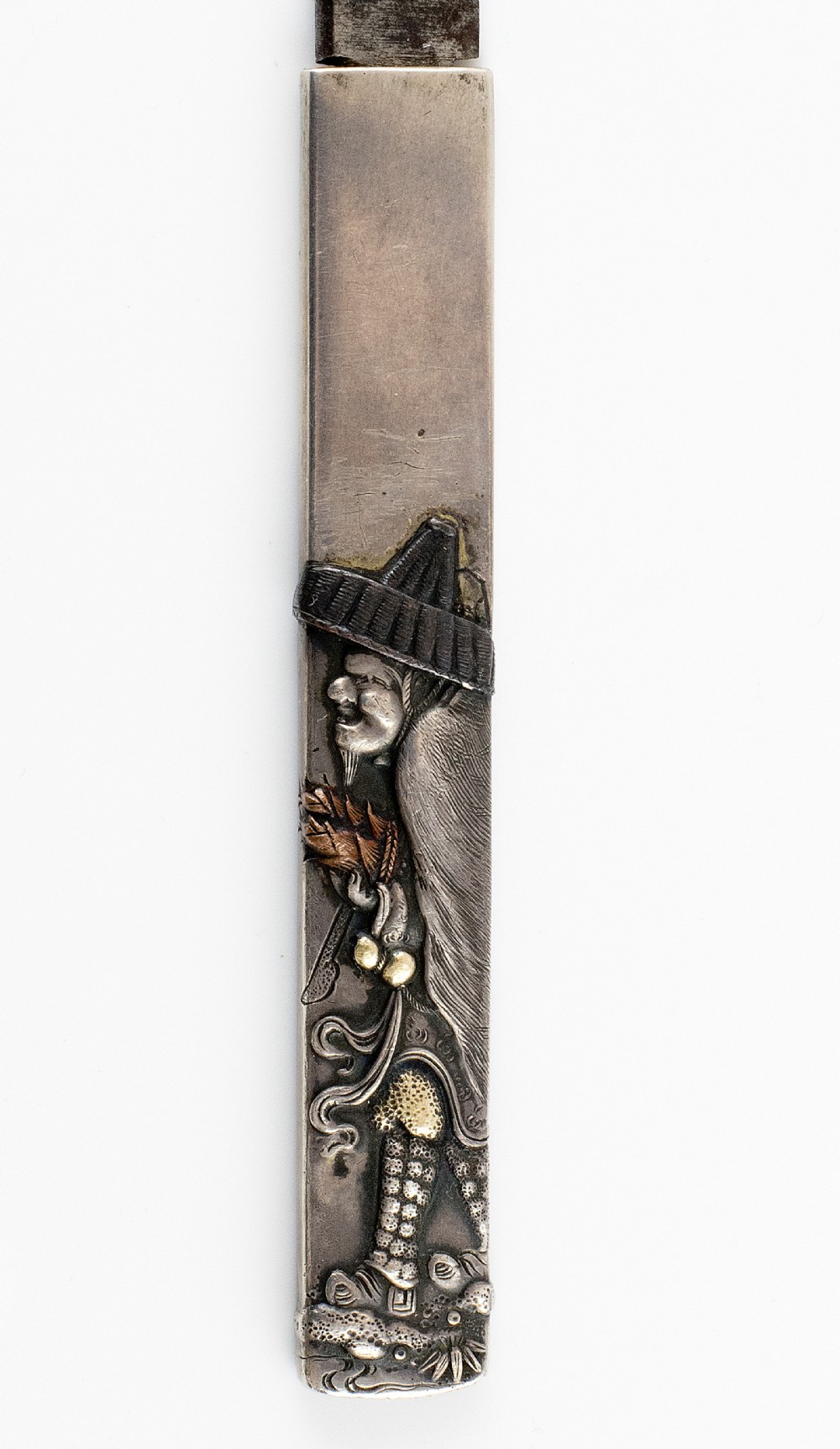
Kozuka handle: The subject matter of the Kozuka: Moso ?? (Meng Zong in Chinese) who is a Chinese paragon of filial piety, and lived in the 3rd century AD. On the reverse of the Kozuka, a bamboo grove is aptly pictured. In the depth of winter when his mother was ill and expressed a strong desire to eat stewed bamboo shoots, Moso bravely went out to dig in the snow. Moso is often depicted as one of twenty four Paragons of Filial Piety (???? )

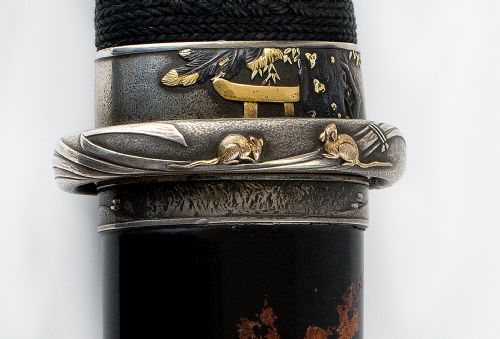
Kakure : Two rats sitting on the Shinto paper ribbons (Noshi). The rats are messengers of God Daikoku.
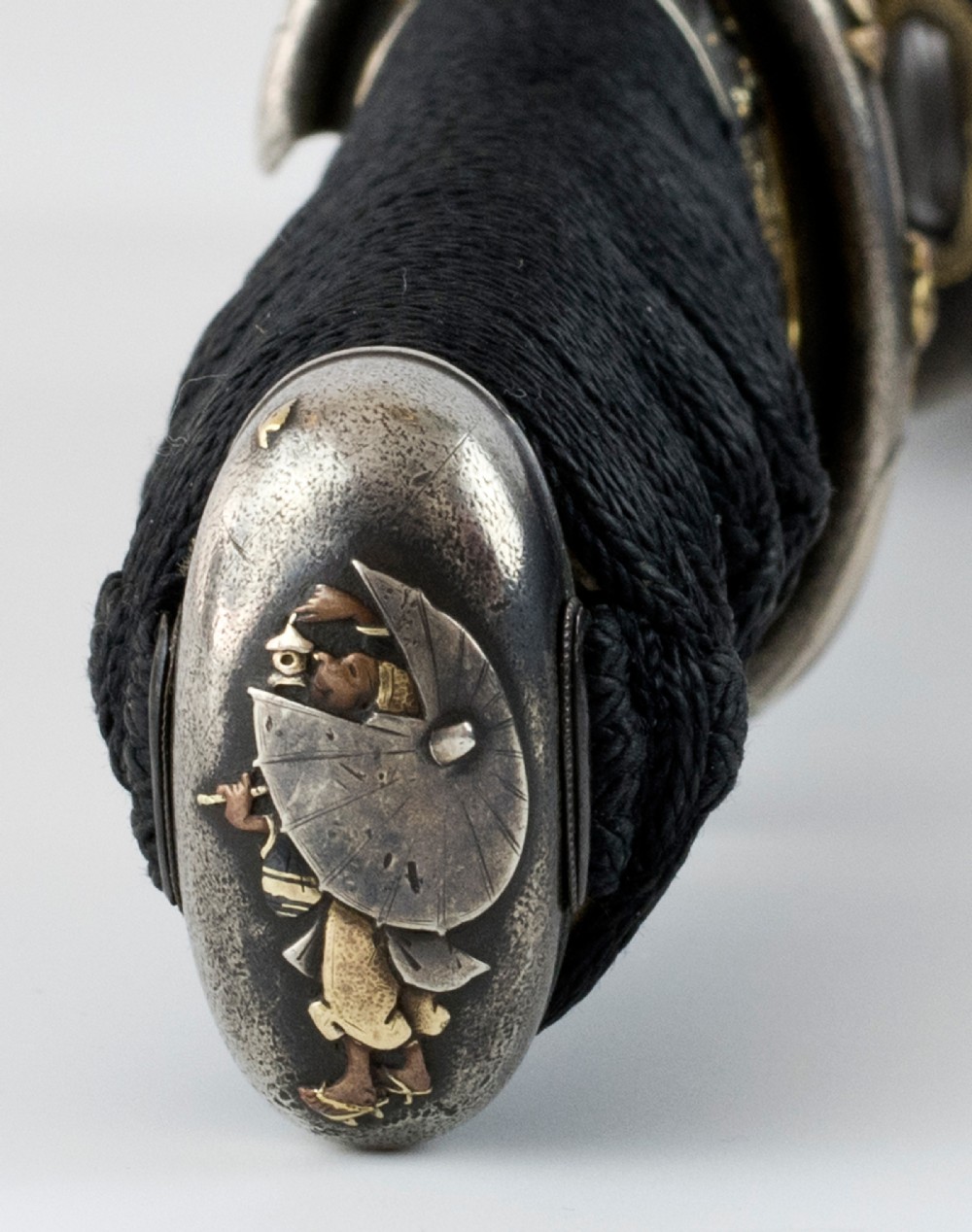
Kakure-gasa : Man with broken umbrella possibly represents Kino Tsurayuki approaching the Aridoshi shrine in Osaka .

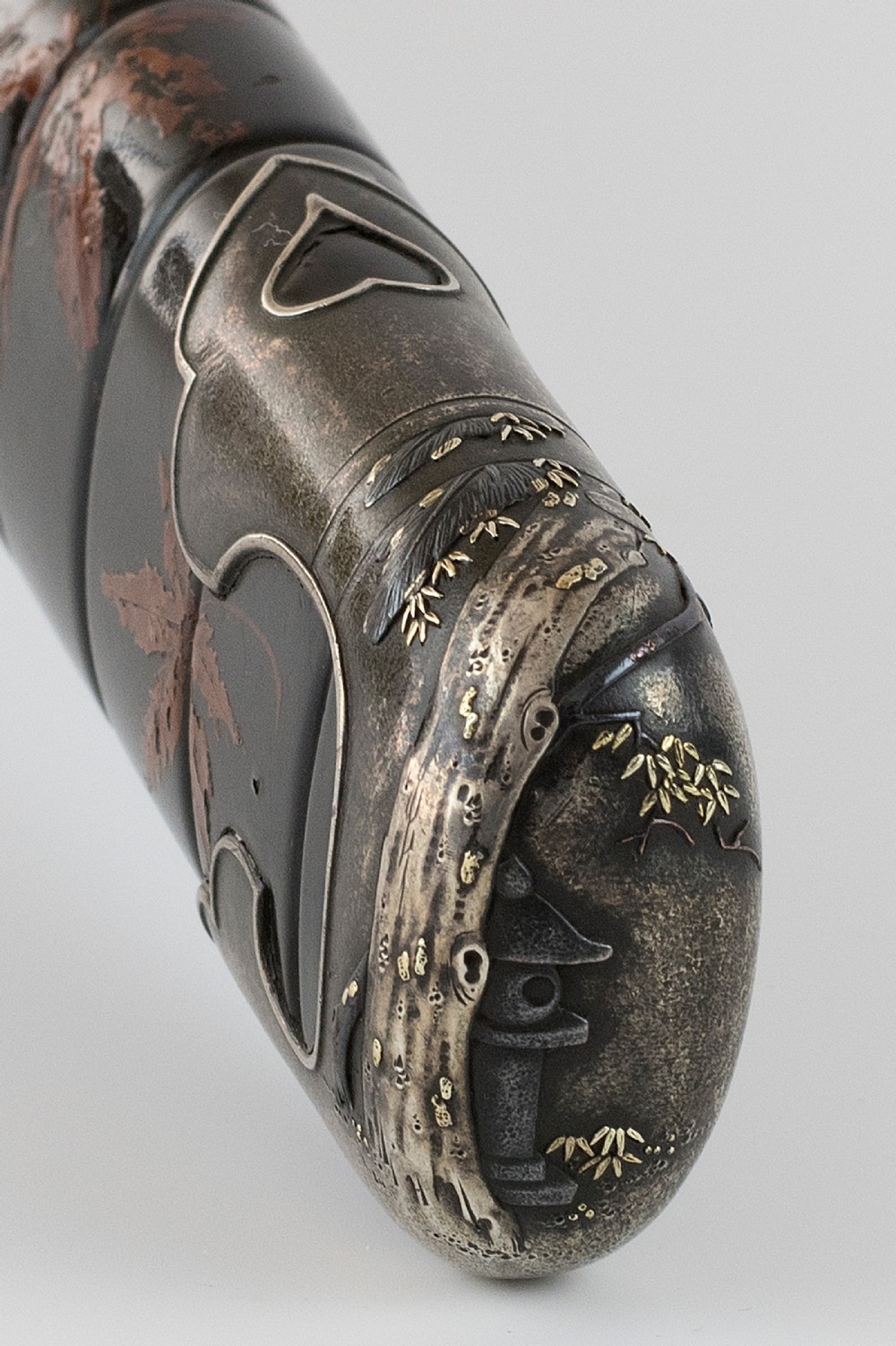
Kojiri : Decorated with traditional lantern (toro) made of stone, wood, or metal, like many other elements of Japanese traditional architecture, it originated in China where they can still be found in Buddhist temples and Chinese gardens.
Provenance :
UK based Japanese works of art collection .
2020 Vision of an enlightened ruler Vol II - Plate 18
Condition report :
Lovely original condition .
Approximate Sizes :
Length overall : 18" 46 cm
Length of blade : 12 1/2" 32 cm
Width : 2 1/4" 5.5 cm
Free worldwide delivery and a certificate of authenticity are included within the price of this item.
Steve Sly Japanese Works of Art has dated this piece to the 19th Century.
Specialists in japanese works of art from the meiji period 1868-1912
You can view the stock and full dealer information on the Steve Sly Japanese Works of Art Profile Page
Steve Sly Japanese Works of Art is a registered member of BADA

Japanese Mixed Metal Mounted Tanto - Dagger