It was listed by Jason Clarke Antiques. Sold pieces stay on Sellingantiques as a record of what has passed through, and the next one is rarely far away.
Jason Clarke Antiques has dated this George IV Wheel Barometer to the 1800s.
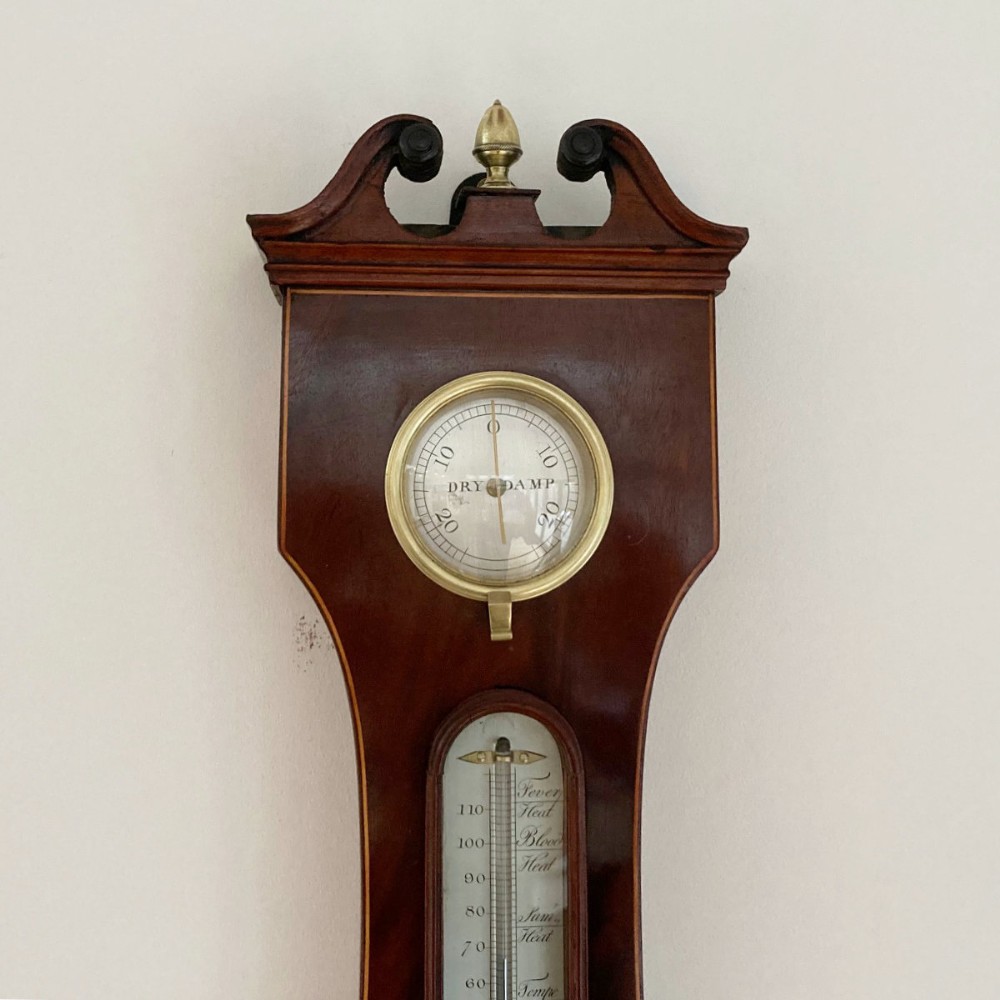
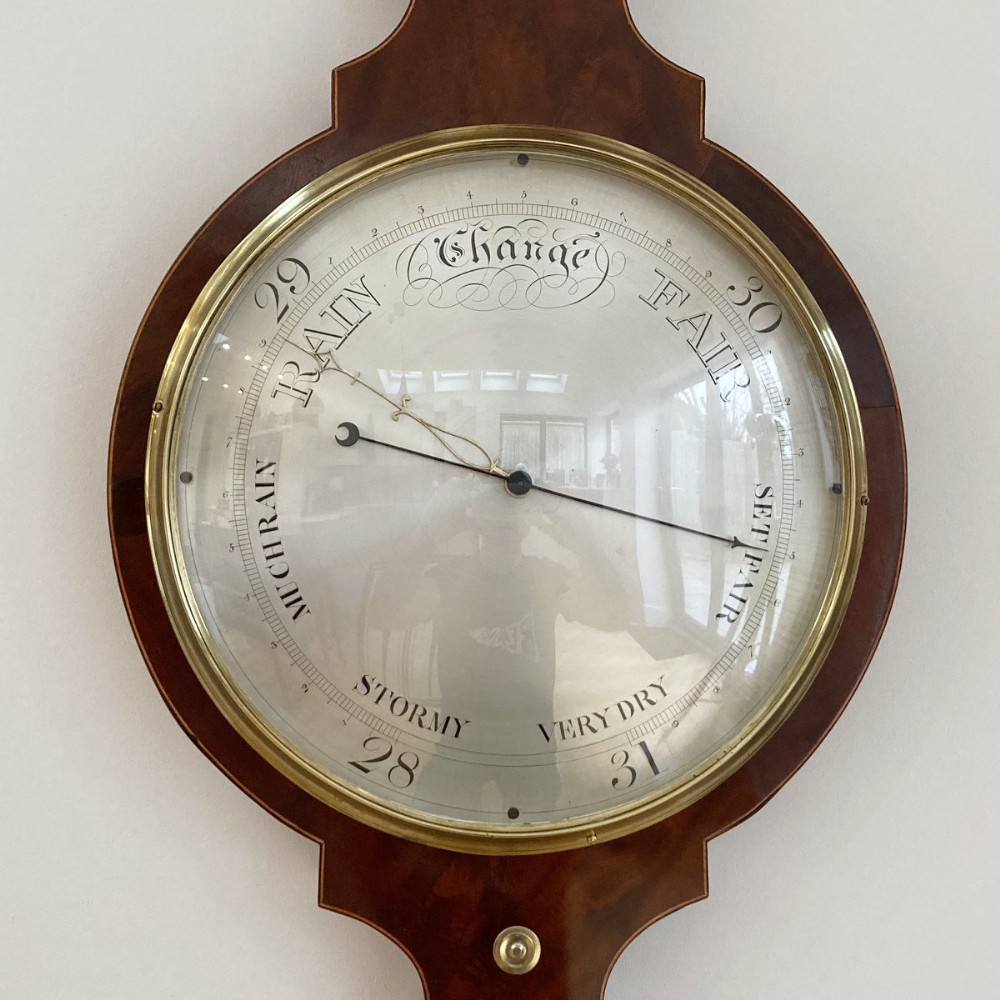
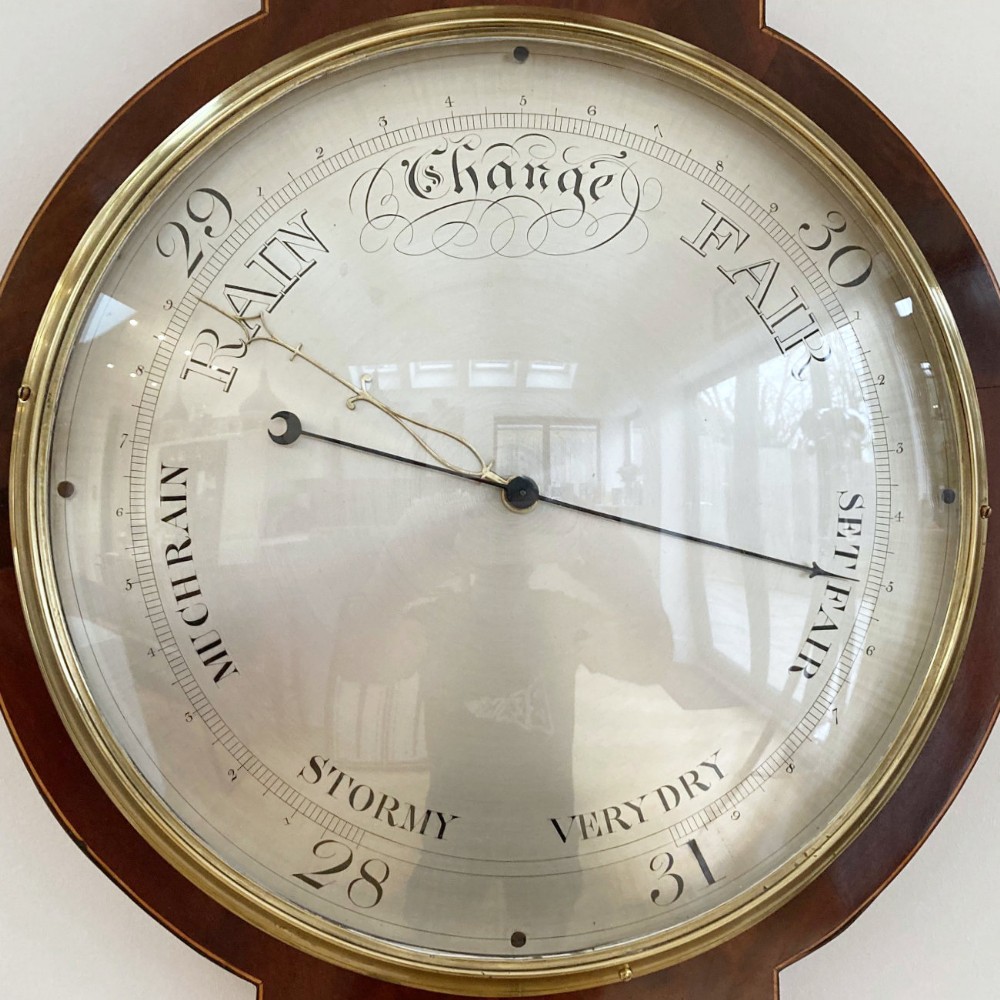
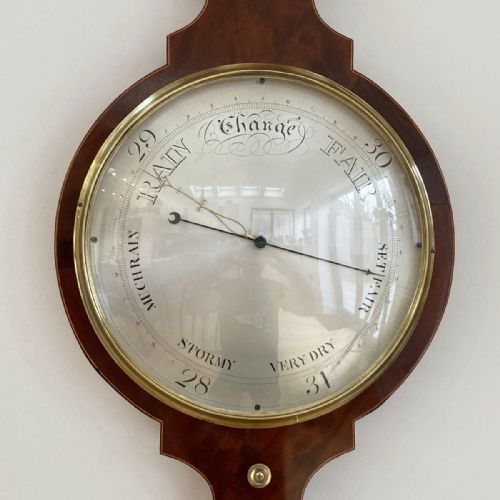
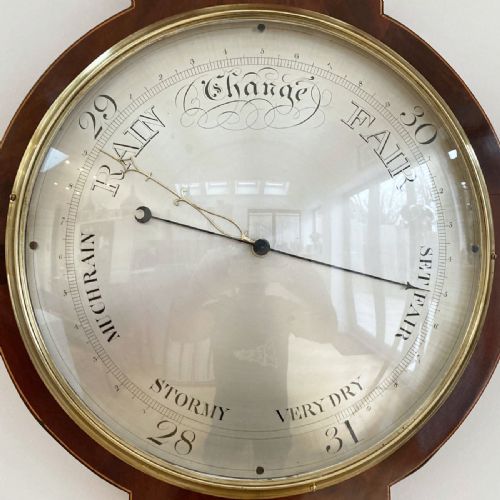
This beautifully imposing wheel barometer is fitted with a very large twelve inch silvered and engraved dial measuring 28 to 31 inches of barometric pressure with weather indications around the inner circumference of the scale.
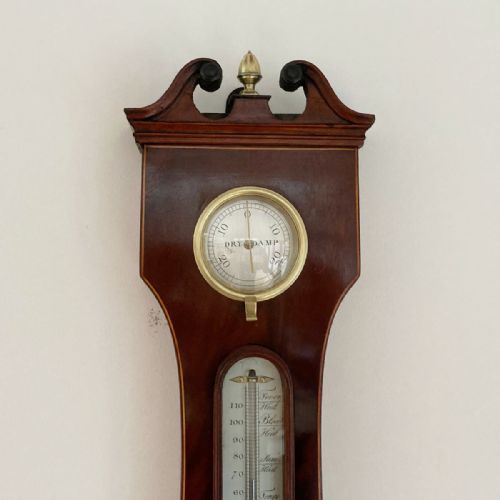
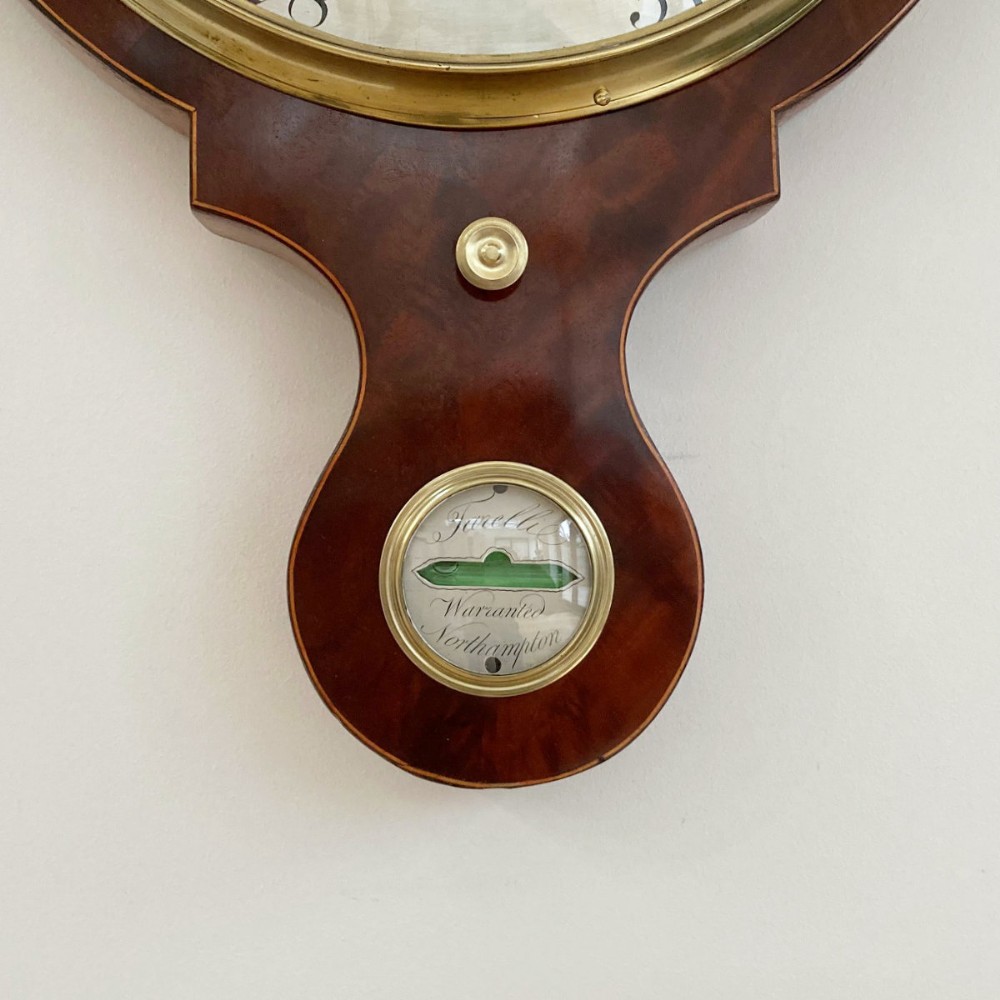
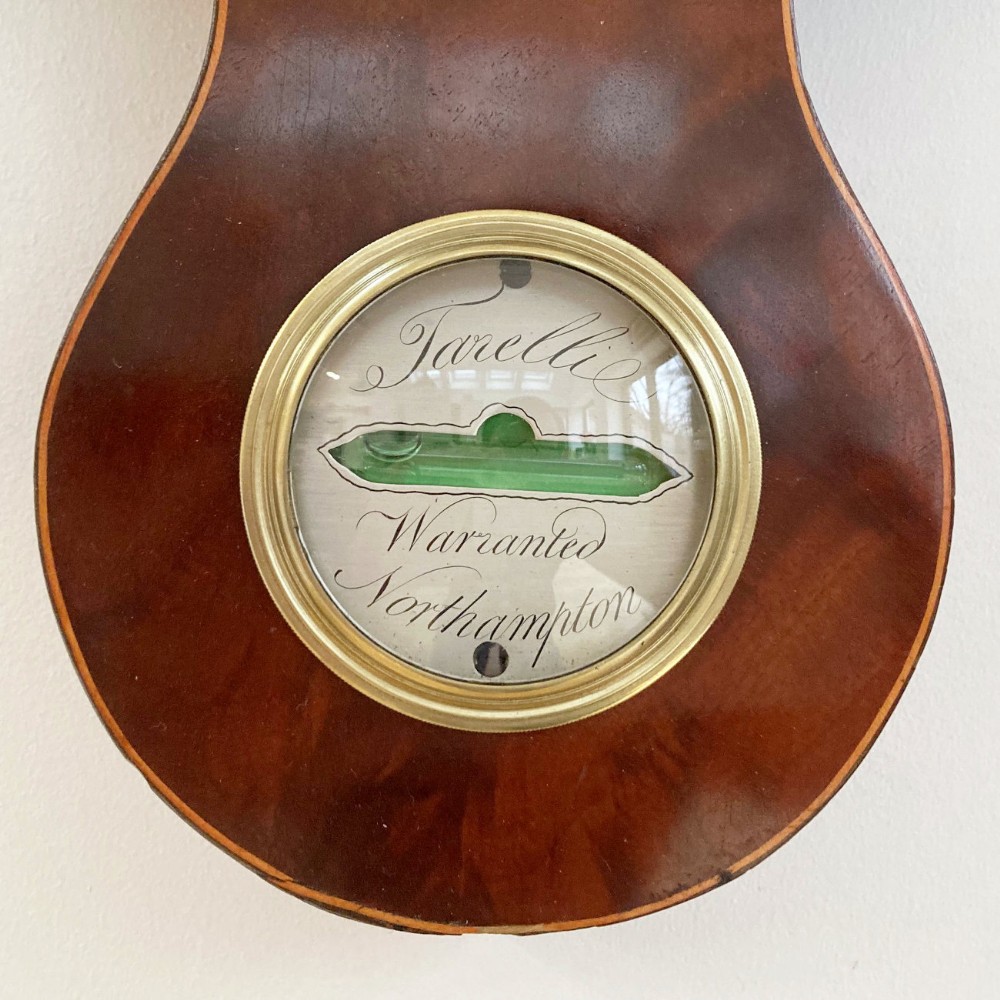
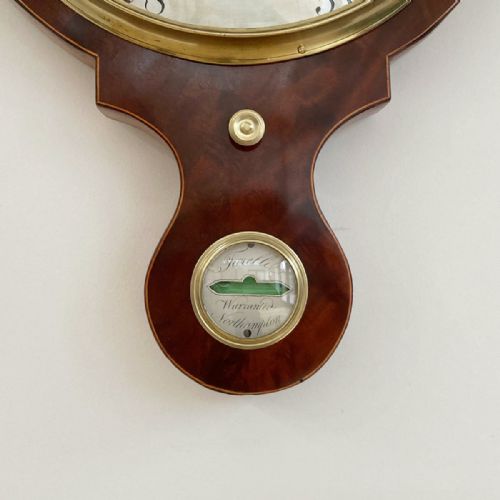
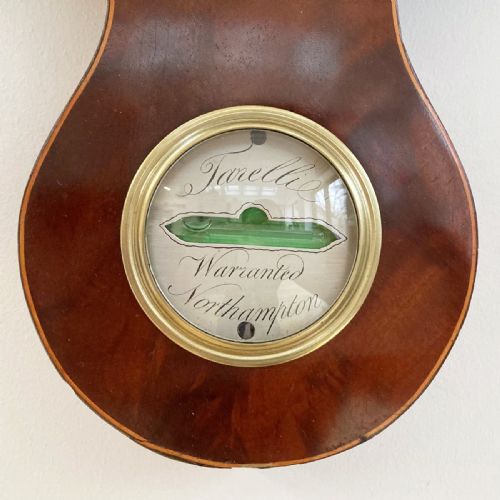
The set hand is operated below by means of a brass dial and is accompanied at the base with a spirit level with an engraved face plate behind a convex glass stating the name, Tarelli (Warranted), Northampton.
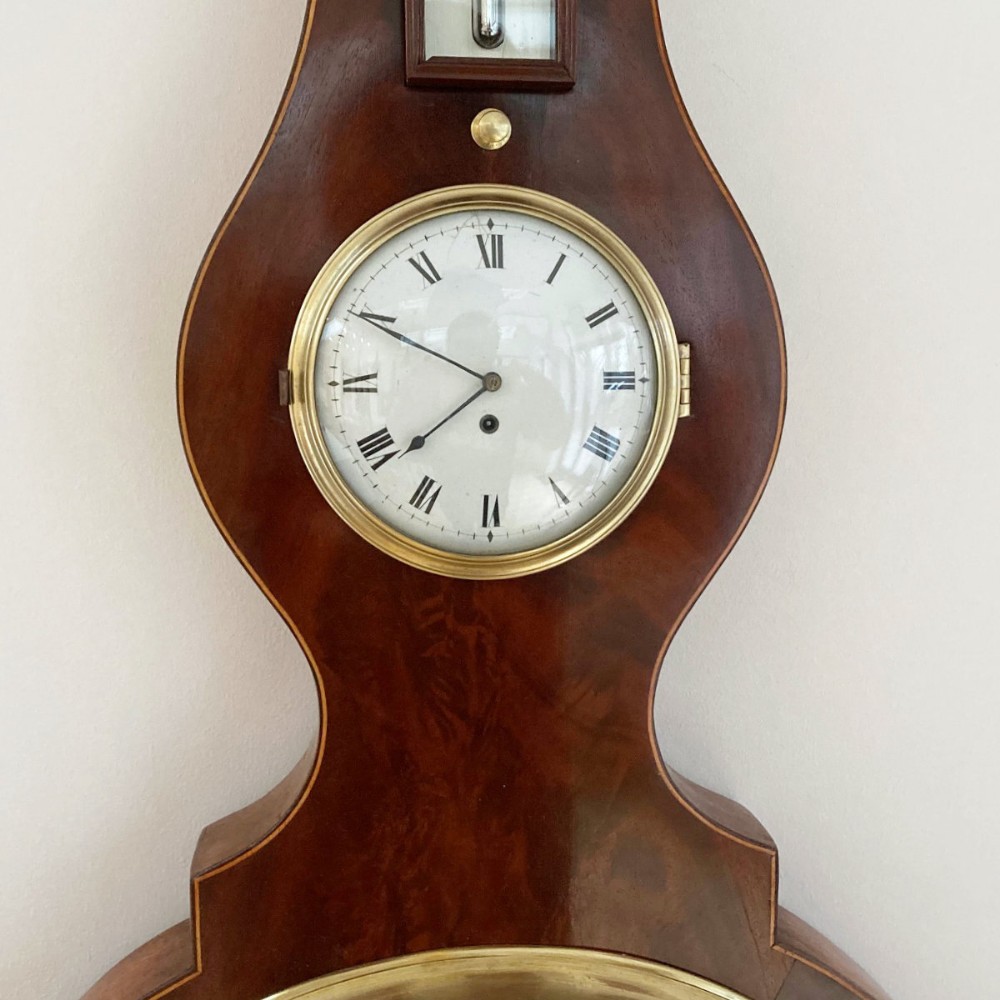
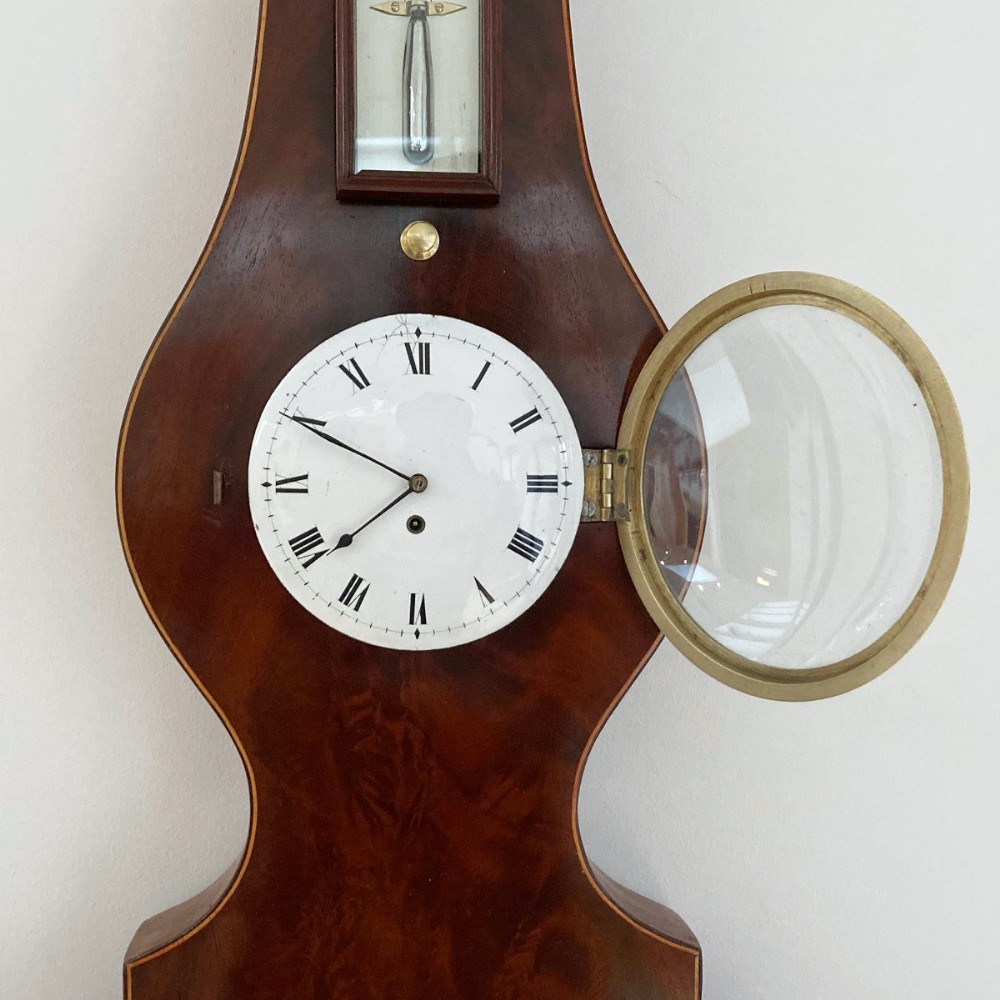
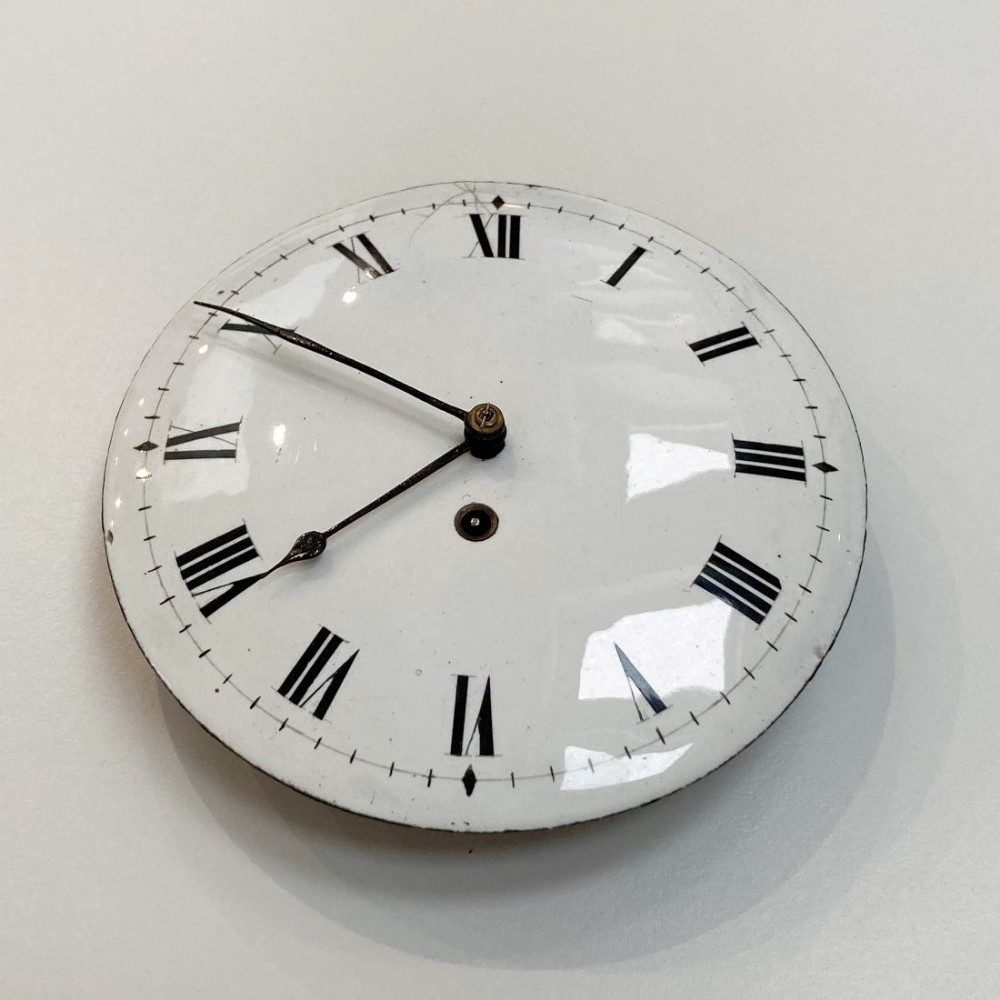
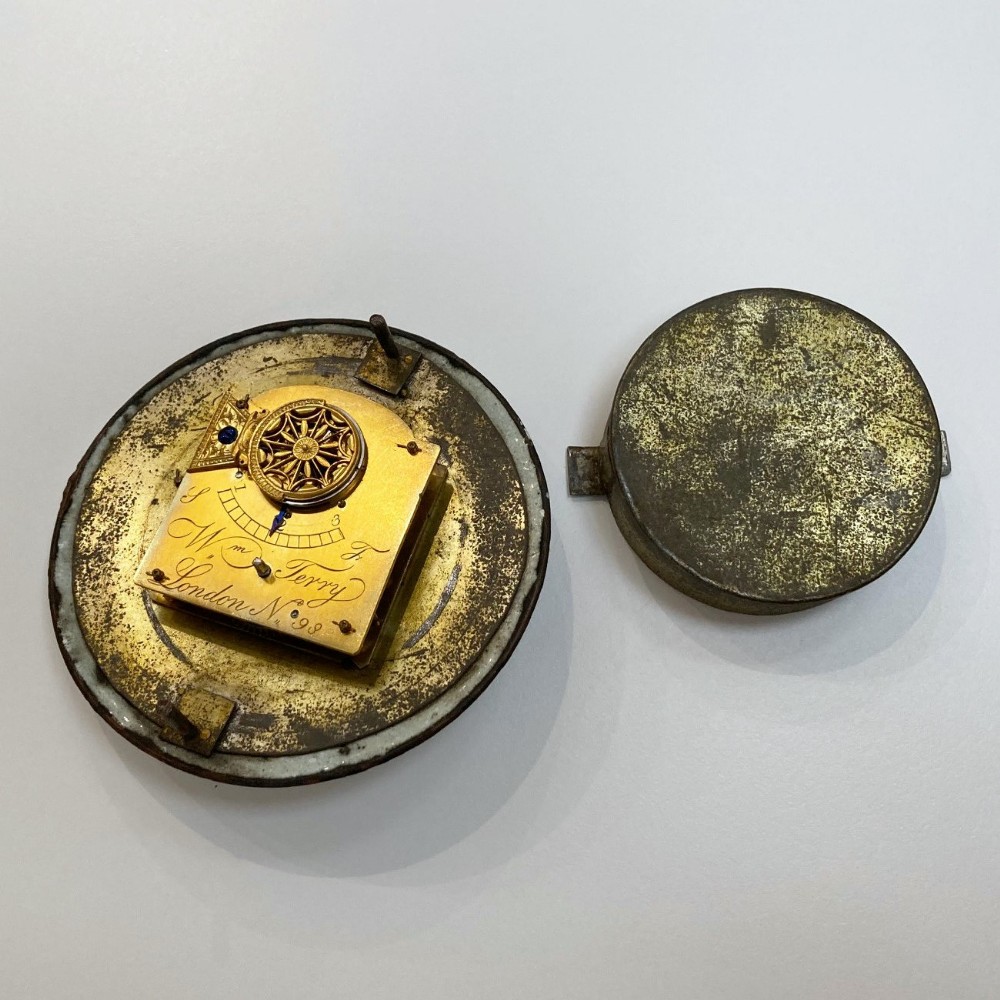
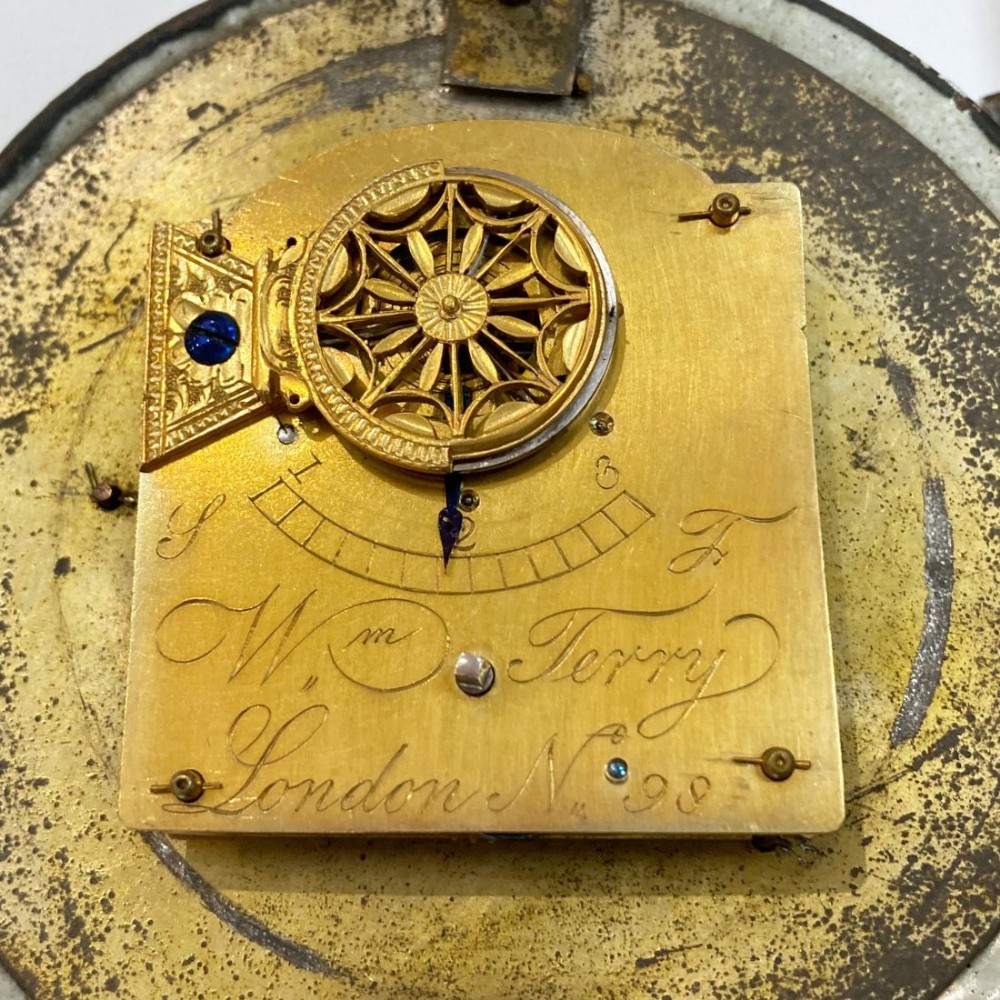
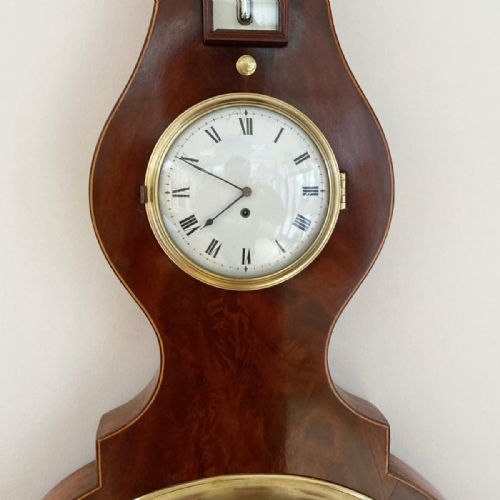
Above the main dial, the outswept neck provides space for a sedan clock with a superb 30-hour fusee movement and ceramic dial with a hinged bezel and convex glass to the front. The movement is engraved to the clockmaker, William Terry, London with the serial number: 98. Having been hidden behind its backplate, the movement looks almost as it would have when the barometer was manufactured. Terry was a prolific maker of these clock movements and his name is often encountered on both sedan clocks and clock barometers of this period.
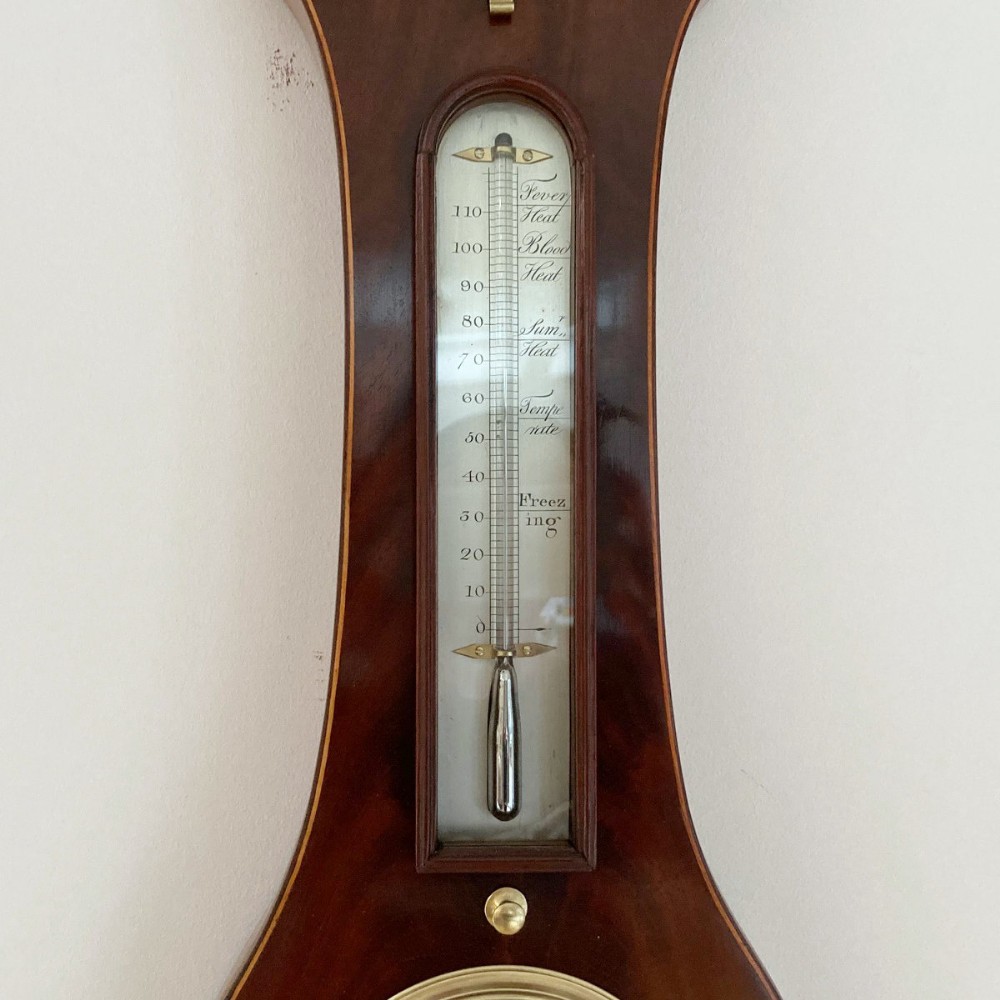
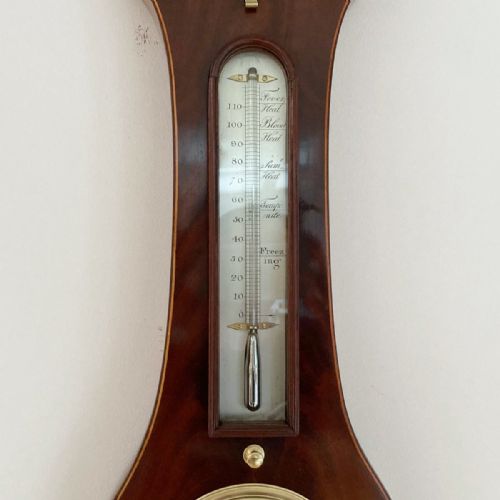
The centre of the neck has a removable, cased Fahrenheit thermometer with silvered dial measuring 0 to 100 degrees and with temperature indications on the right. Above is a removable wheat beard hygrometer with convex glass for monitoring humidity and the barometer is completed with a fine broken swan neck pediment with a central brass acorn finial.
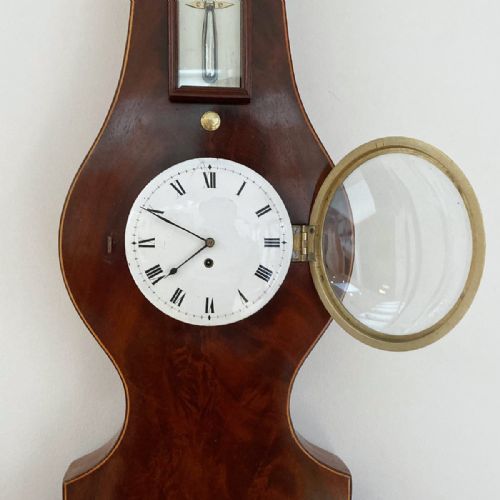
The barometer case is covered with a superb flame mahogany veneer with satinwood banding around the entire outer edge giving it subtle but very refined definition. Given the addition of a twelve-inch dial, this is also makes a superb statement on the wall. It measures 120cms in length and 37cms in width.
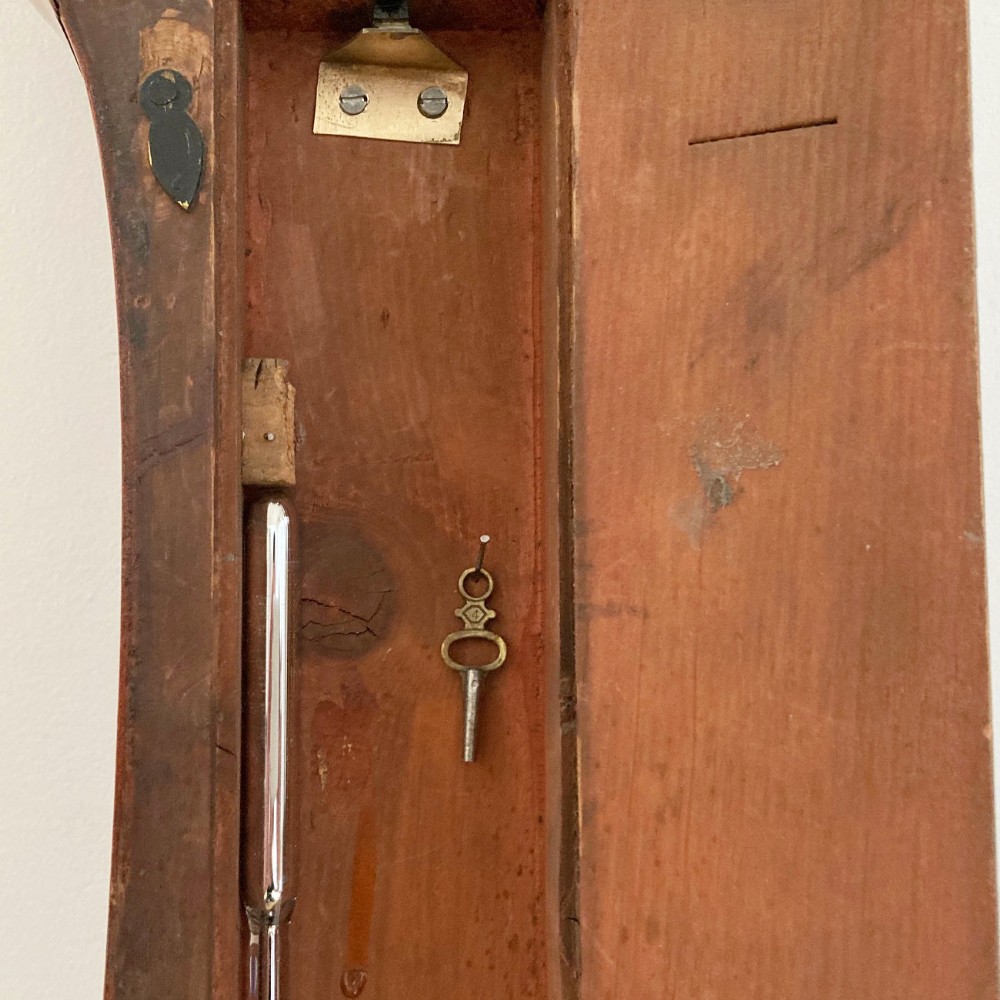
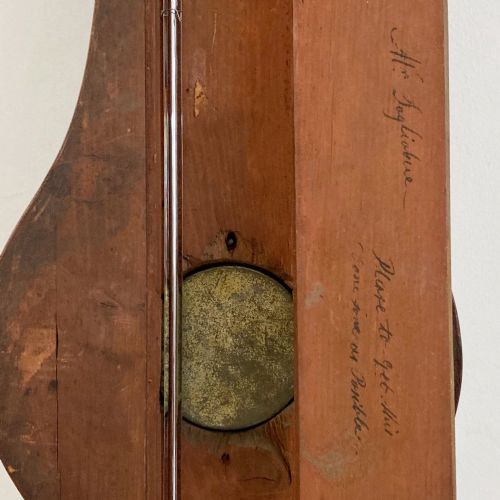
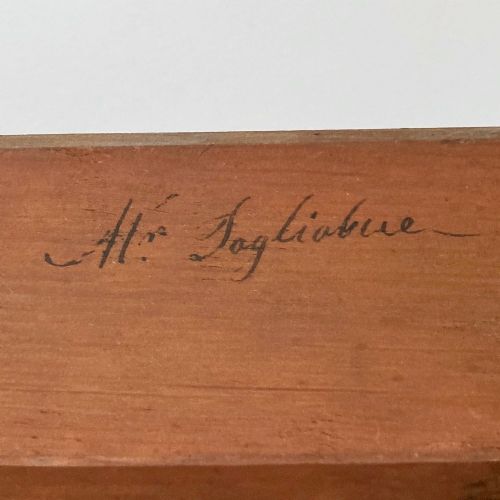
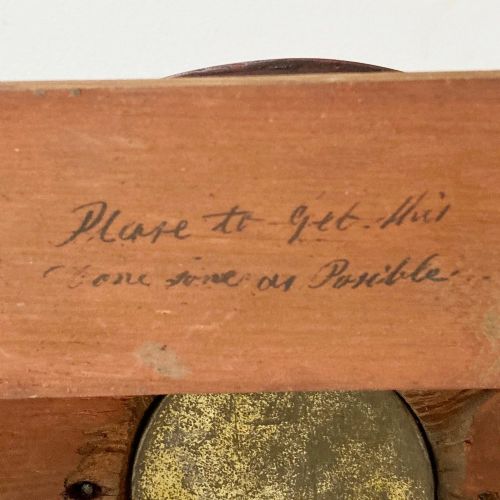
The reverse of the barometer has a door to access the barometer tube and it reveals some interesting associated history. Some contemporary writing states:
“Mr Tagliabue - Please to get this done soon as possible”
There are numerous indications confirming this barometer to be of London manufacture. The style and quality of finish is not what one would expect from a regional example and the inclusion of a London clock movement provides some further support to this theory. Given the contemporary reference to the Tagliabue family (presumably Cesare), it is reasonably certain that this was manufactured under their capable hands and that the barometer had been returned by Tarelli for urgent repair after having been purchased and engraved specifically for his Northampton business.
Information on Charles Tarelli’s career is sparse expect for some indicative working dates of 1800 to 1830. He is also listed as having dealings in Northampton, Banbury and London but I suspect the latter is probably an early apprenticeship.
The London maker Cesar Tagliabue played a significant part in the history of Nineteenth Century scientific instrument manufacturing. Like many makers of this period of Italian birth, Tagliabue hailed from the Como region of Italy. Born in 1767, it is unclear when he arrived in Britain but is considered to have begun trading in Holborn, London in 1799 with a partner Anthony Della Torre until 1806 where after he traded under his own name. By 1820, Tagliabue had moved to the famous London centre of scientific instrument making at Hatton Garden and took on a young Louis Casella as an apprentice. The name Casella is now synonymous with the history of the industry and after marrying Tagliabue’s daughter in 1837, went on to form the partnership of Tagliabue and Casella with his new father-in-law in 1838. Tagliabue was already known to have been exporting his products to South America and Europe and must have provided Casella with a perfect grounding in both instrument m
Jason Clarke Antiques has dated this George IV Wheel Barometer to the 1800s.
You can view the stock and full dealer information on the Jason Clarke Antiques Profile Page
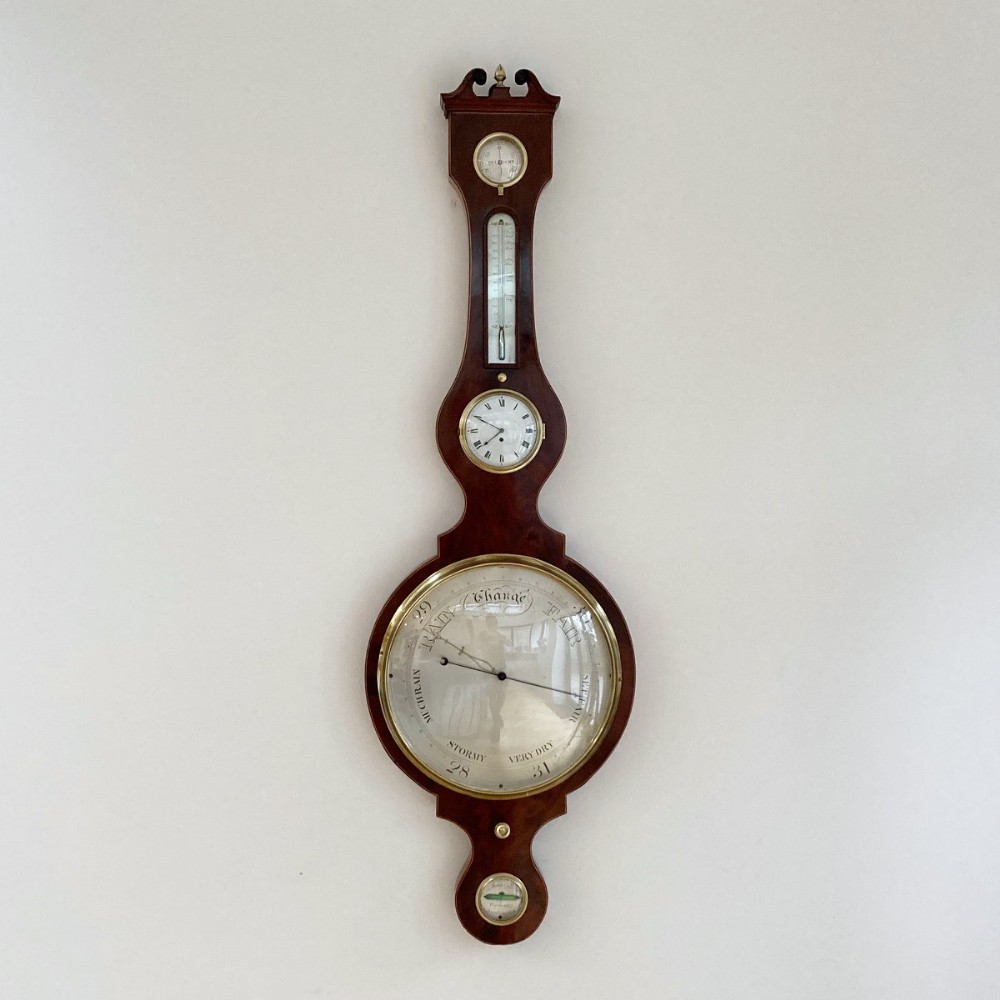
George IV Clock Wheel Barometer for Tarelli of Northampton with Tagliabue Provenance