Jason Clarke Antiques has dated this piece to the 1850s.
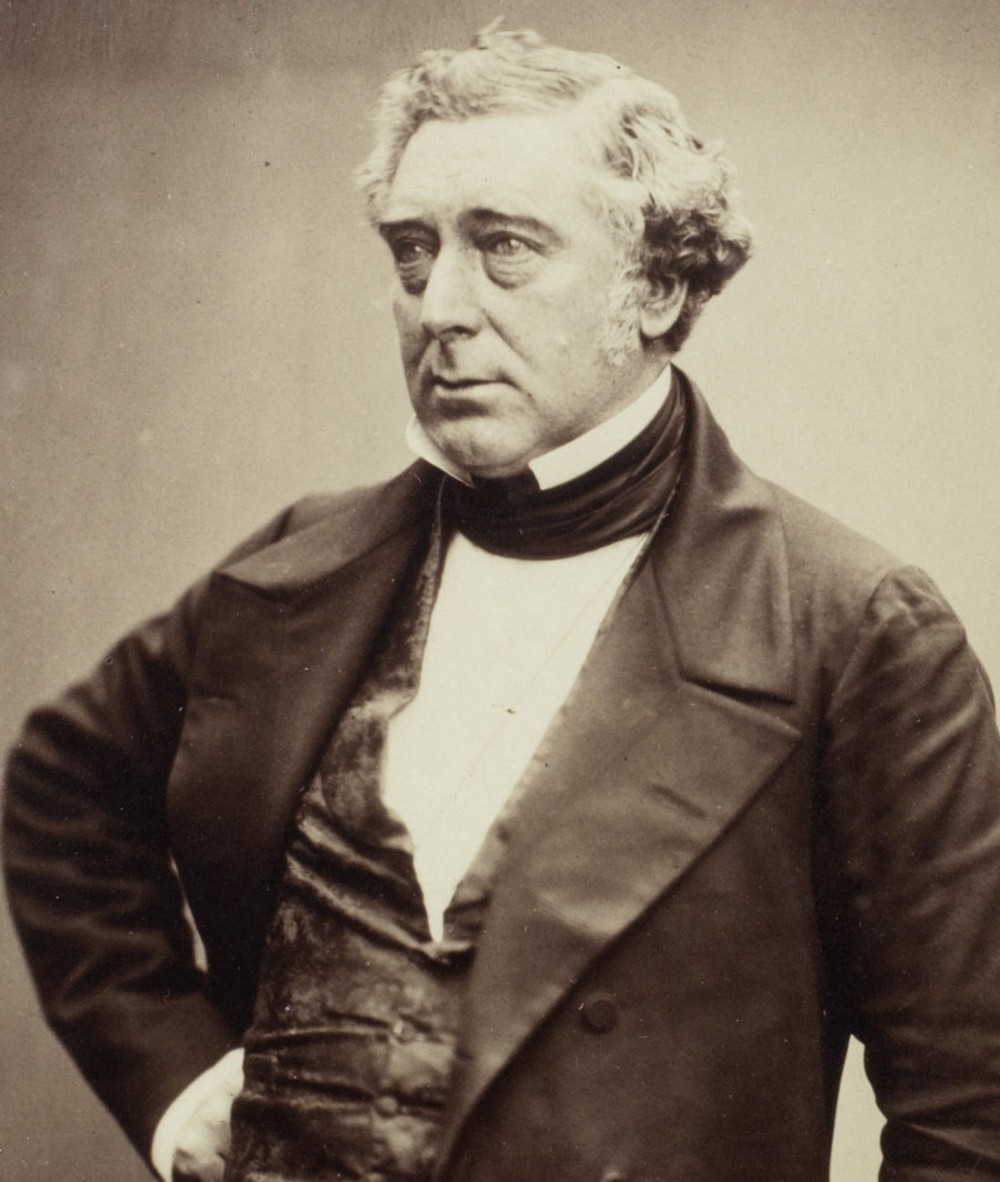
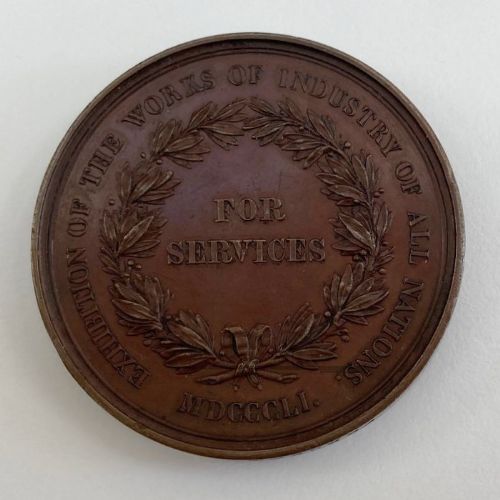
The outer circumference of the wreath is further struck with the words, “Exhibition of The Works of Industry of all Nations” and the roman numerals for the year 1851.
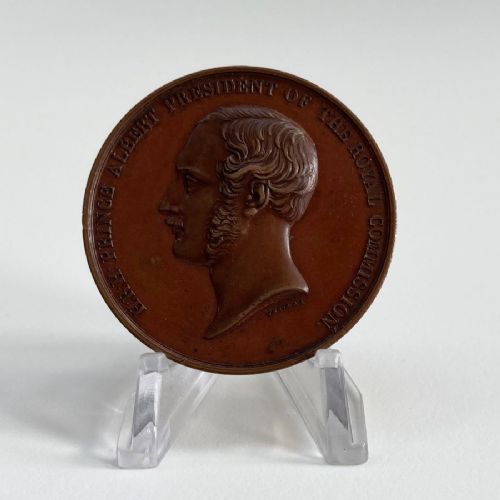
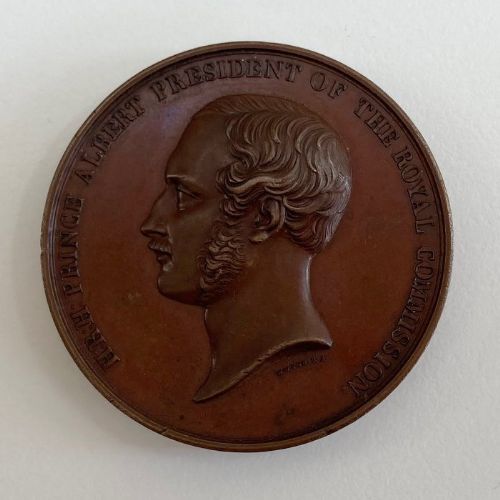
The reverse has a bust portrayal of Prince Albert with the words, “HRH Prince Albert President of The Royal Commission” around the outer edge. The name of the artist W. Wyon RA is further embossed under the portrait of Prince Albert.
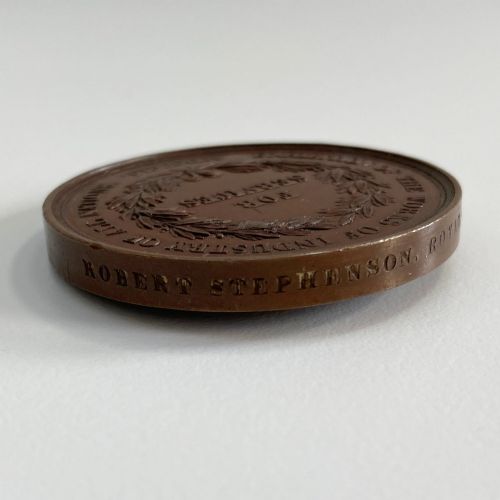
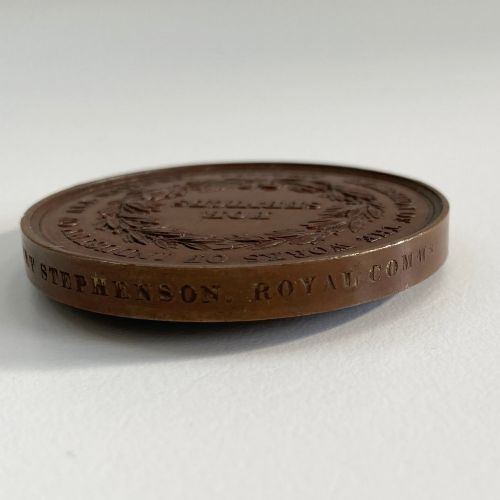
The edge of the medal is engraved with the recipient’s name: Robert Stephenson – Royal Comm(ission).
This historic medal is slightly larger than the exhibitor’s medal that was given out to all those that showed at The Great Exhibition, measuring 4.6cms in diameter. It was provided to numerous contributors up and down the country for assisting with the country wide organisation prior to and during the period of the Exhibition’s opening.
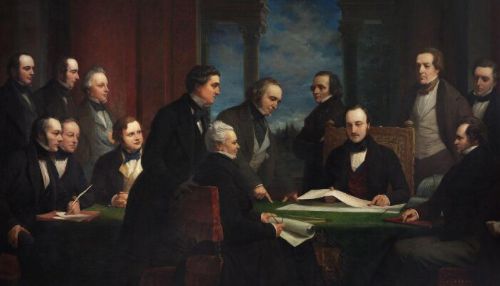
What gives this medal its historic presence is that it is one of only thirteen of these medals given to the Royal Commissioners who were hand picked by Price Albert to support him through this enormous undertaking. The Royal Commission included:
Mr (afterwards Sir) Charles W. Dilke, John Scott Russell, Mr (afterwards Sir) Henry Cole, Mr (afterwards Sir) Charles Fox, Joseph Paxton, Lord John (afterwards Earl) Russell, Sir Robert Peel, Robert Stephenson, Richard Cobden, Mr (afterwards Sir) Charles Barry, Lord Granville, Mr (afterwards Sir) William Cubitt, HRH The Prince Consort, Lord Derby.
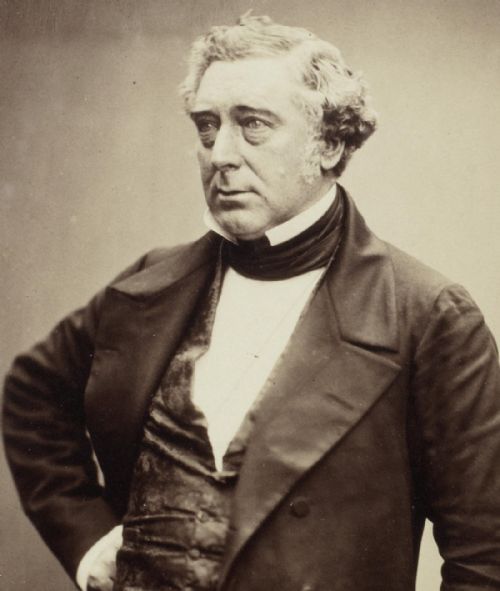
Robert Stephenson was undoubtedly one of the most famous engineers of the early Nineteenth Century and is most renowned for building the The Rocket locomotive. It is quite fitting therefore that he is often dubbed, “the Father of Railways”.
Born in 1806 to the equally famous engineer, George Stephenson in Wallsend, Northumberland, Stephenson was first apprenticed to the mining engineer, Nicholas Wood before leaving that position to join his Father in surveying the Stockton & Darlington railway in 1821. Both Stephensons and a wool manufacturer, Edward Pease shortly after received a commission to build locomotives for this early railway line and in 1823, the company of Robert Stephenson & Co was created.
Between 1824 and 1827, under the Stephenson Company he worked as a mining engineer in Colombia but he returned again to work with his Father on building the Liverpool & Manchester railway. The Directors of the railway engaged in trials for various locomotives suitable for this new endeavour and in 1829, trials were held in Rainhill to decide which might be best suited.
For this occasion, Robert Stephenson designed and constructed what would later be famously named, “The Rocket” and in front of a crowd of fifteen thousand people the new locomotive outperformed all of its rivals and gained the Stephensons a contract to provide the railway with four similar engines. The railway was finally opened in 1830 with The Duke of Wellington travelling on the inaugural journey.
The 1830’s were a prolific period for the Stephensons and with Robert Stephenson & Co employed in building locomotives, a second company was created, George Stephenson & Son for the building of railways. This company was involved in numerous of the largescale contracts for railways that were now being built across the country including the Canterbury & Whitstable, the Leicester & Swannington, the Liverpool & Manchester, the Bolton & Leigh, the Warrington & Newton and the London & Birmingham lines.
Now a member of The Institution of Civil Engineers and with the onset of the London to Birmingham line, he moved from Newcastle to London and after four years,
Jason Clarke Antiques has dated this piece to the 1850s.
You can view the stock and full dealer information on the Jason Clarke Antiques Profile Page
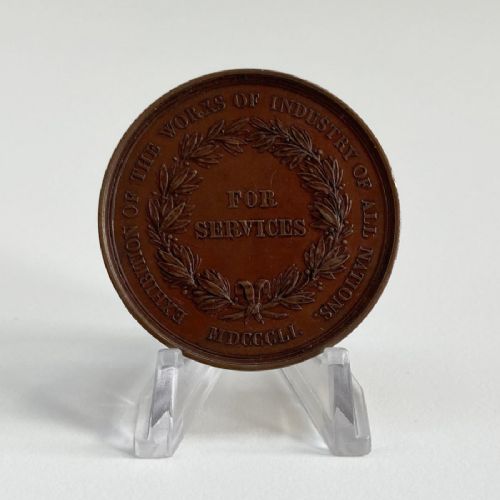
Great Exhibition Royal Commission Service Medal to Robert Stephenson Engineer