18,222  PAGES BROWSED TODAY PAGES TODAY • 66 ANTIQUES UPLOADED TODAYNEW ARRIVALS
GIFTSNEW
66 ITEMS ADDED TODAY
Sort Order
Items Per Page
Browse Categories
Sort order
Items per page
ID #SA838610
SOLD
Email Phone
Save
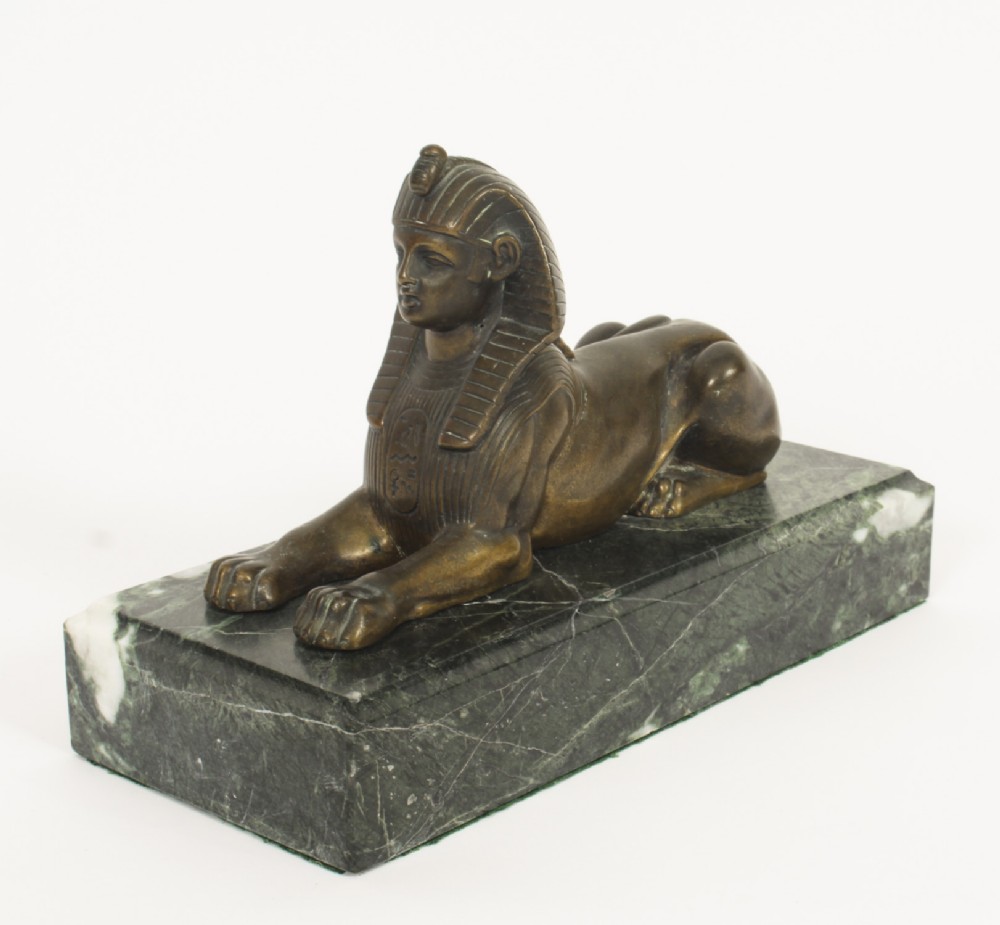
Antique French Egyptian Revival Bronze Sphinx 19th C
Sold by Regent Antiques
sold SA838610
Sorry, but this item has been sold.
Regent Antiques

Regent Antiques

Sellingantiques Verified Since Sep 2016
Browse dealers 674 items
  • About Us
    We specialise in english and continental furniture, silver, porcelain and decorative items.
  • Trade Associations
    Regent Antiques is a registered member of LAPADA  CINOA
Id #SA838610
PDF SHARE
SAVE

Antique French Egyptian Revival Bronze Sphinx 19th C

19th century
Sold 14 September 2022 · Regent Antiques
This “Antique French Egyptian Revival Bronze Sphinx 19th C ” found a buyer.

It was listed by Regent Antiques. Sold pieces stay on Sellingantiques as a record of what has passed through, and the next one is rarely far away.

Description

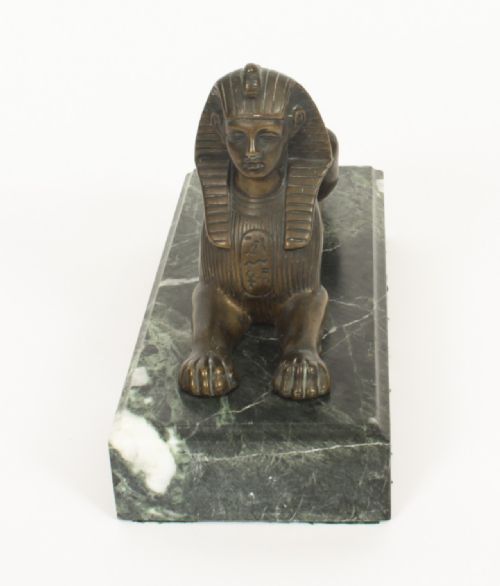
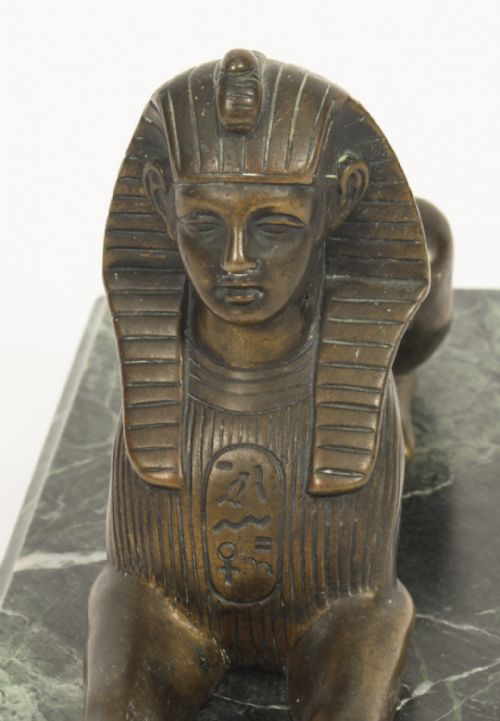
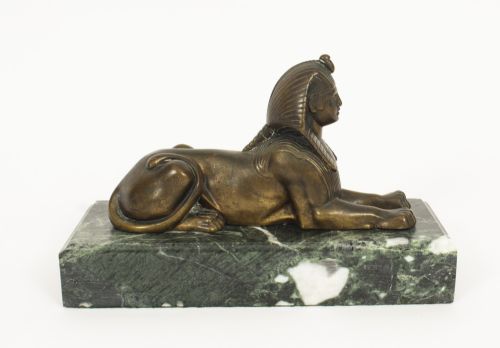
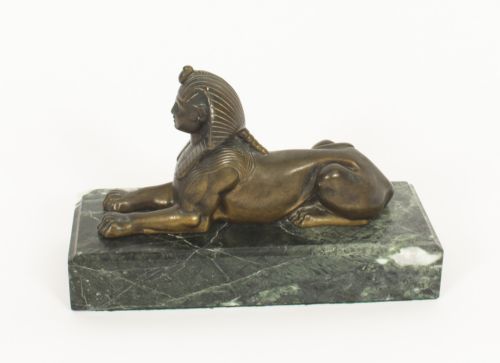
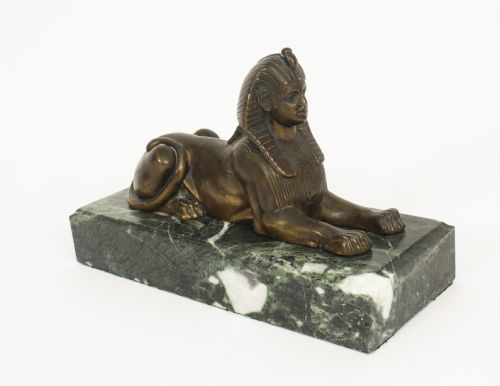
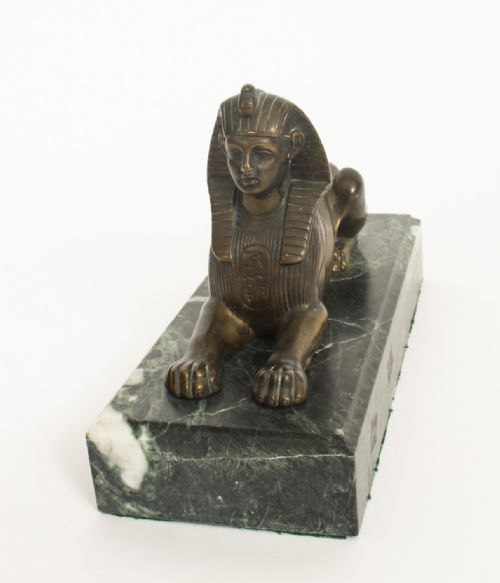
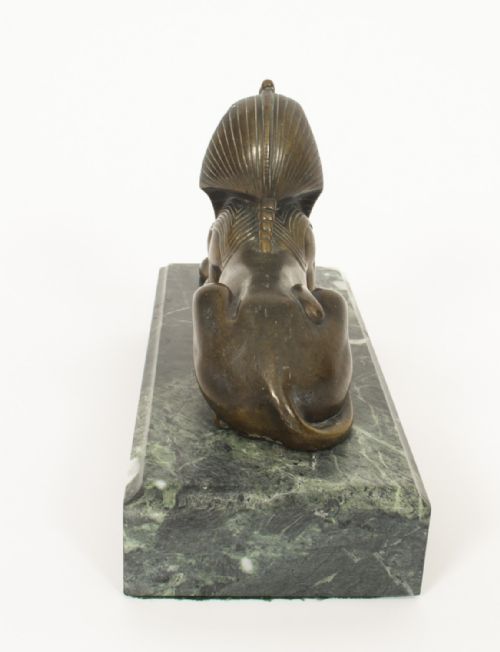
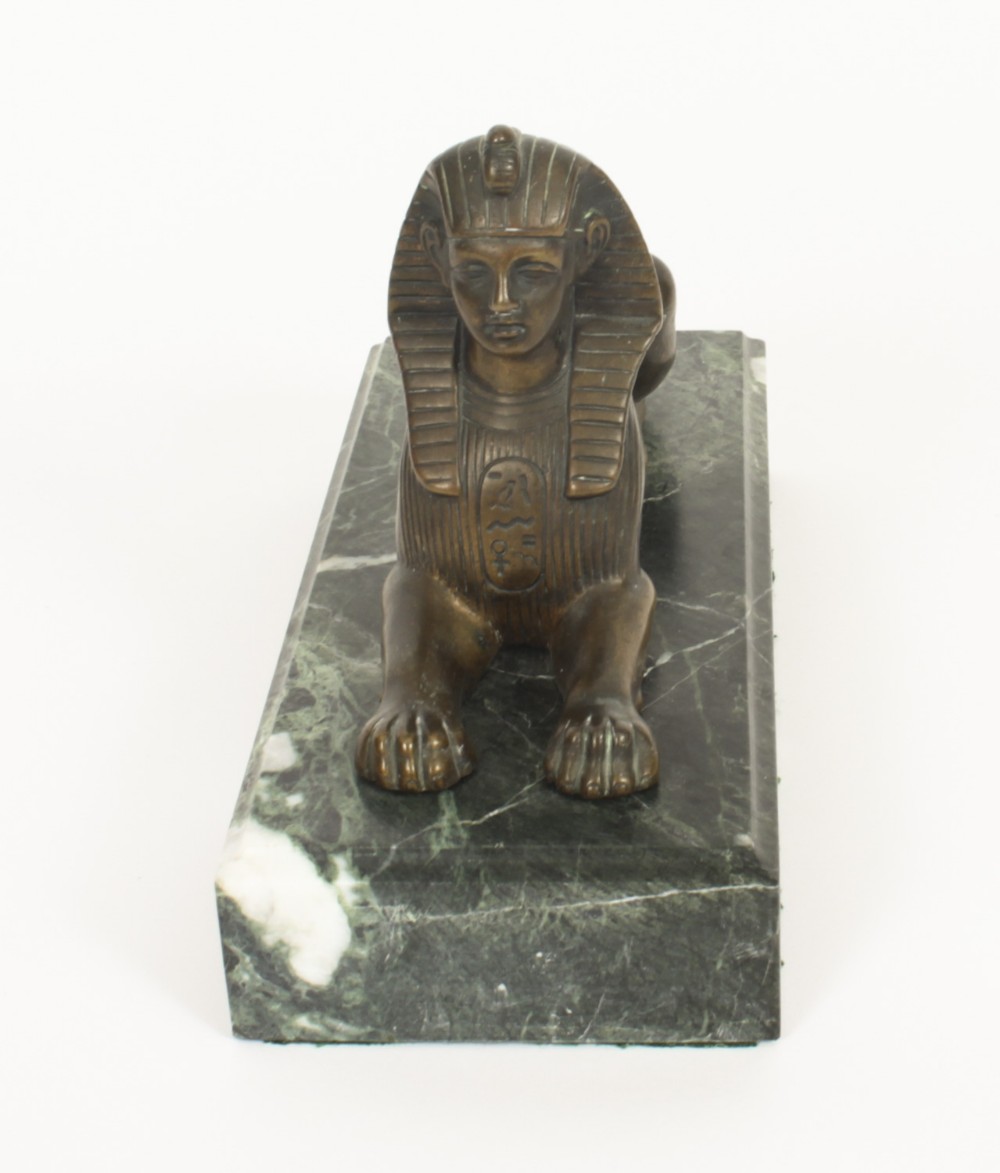
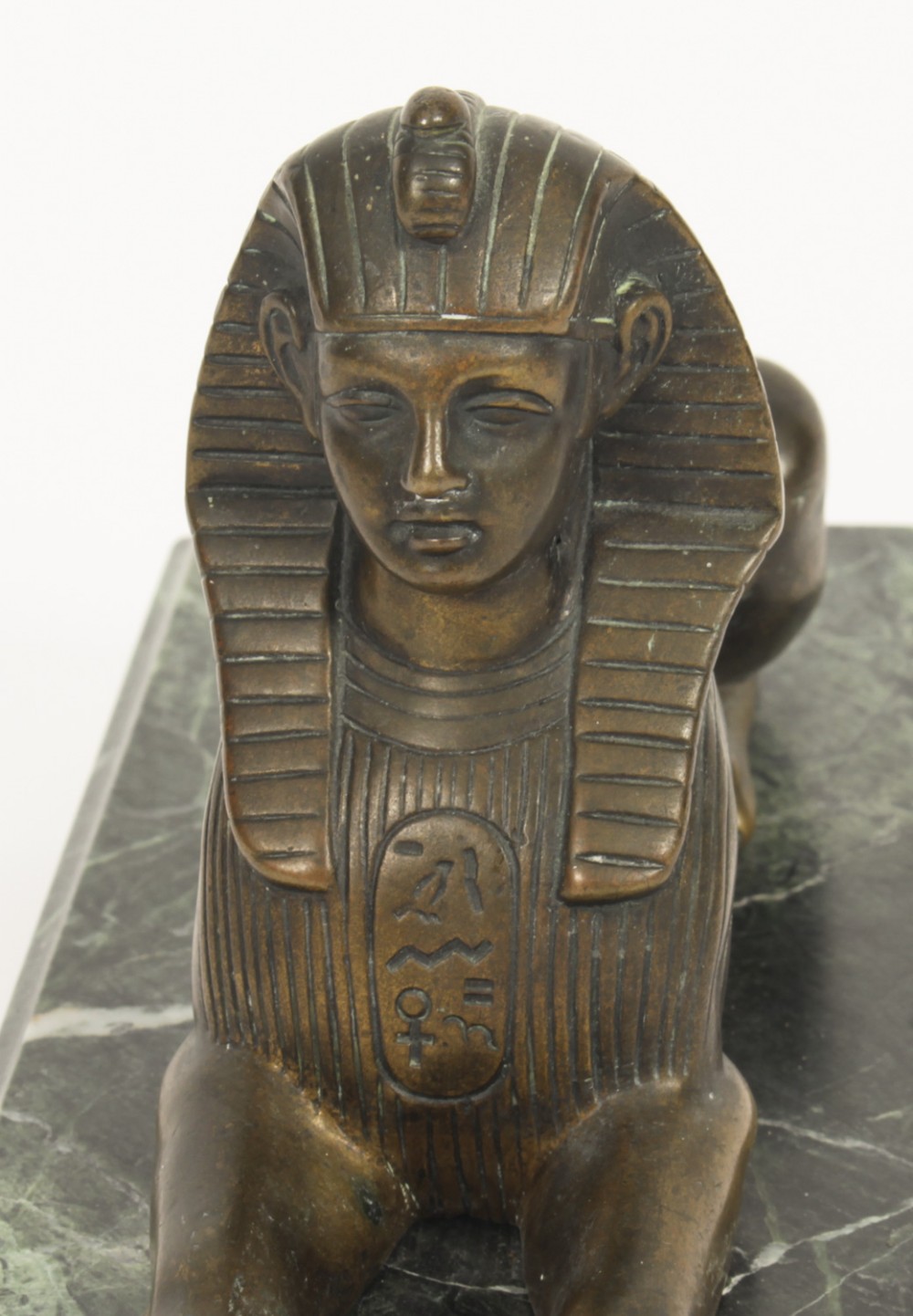
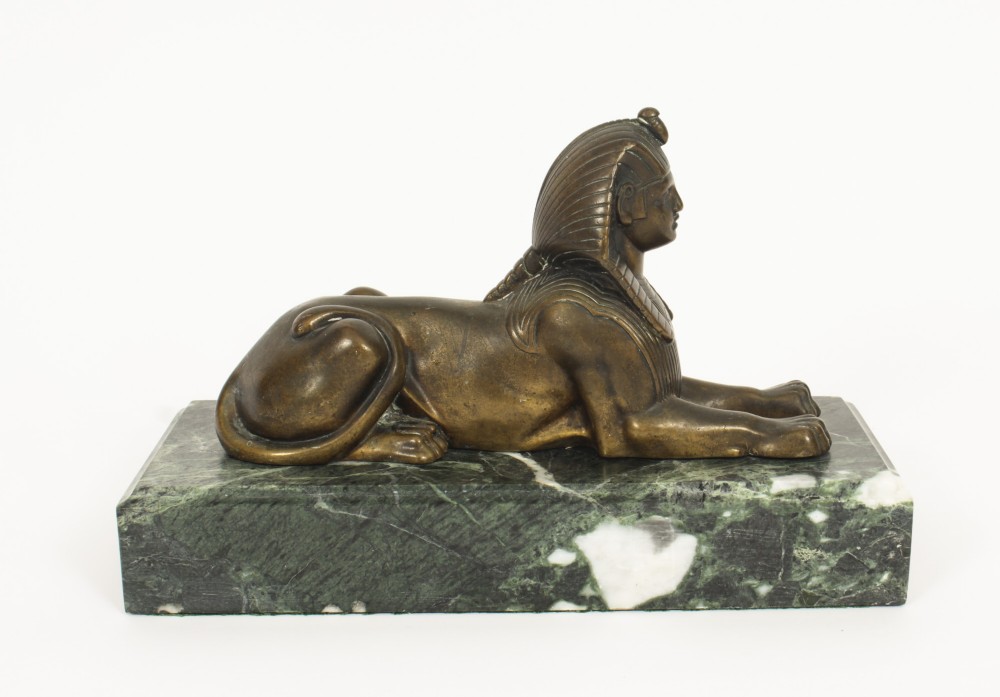
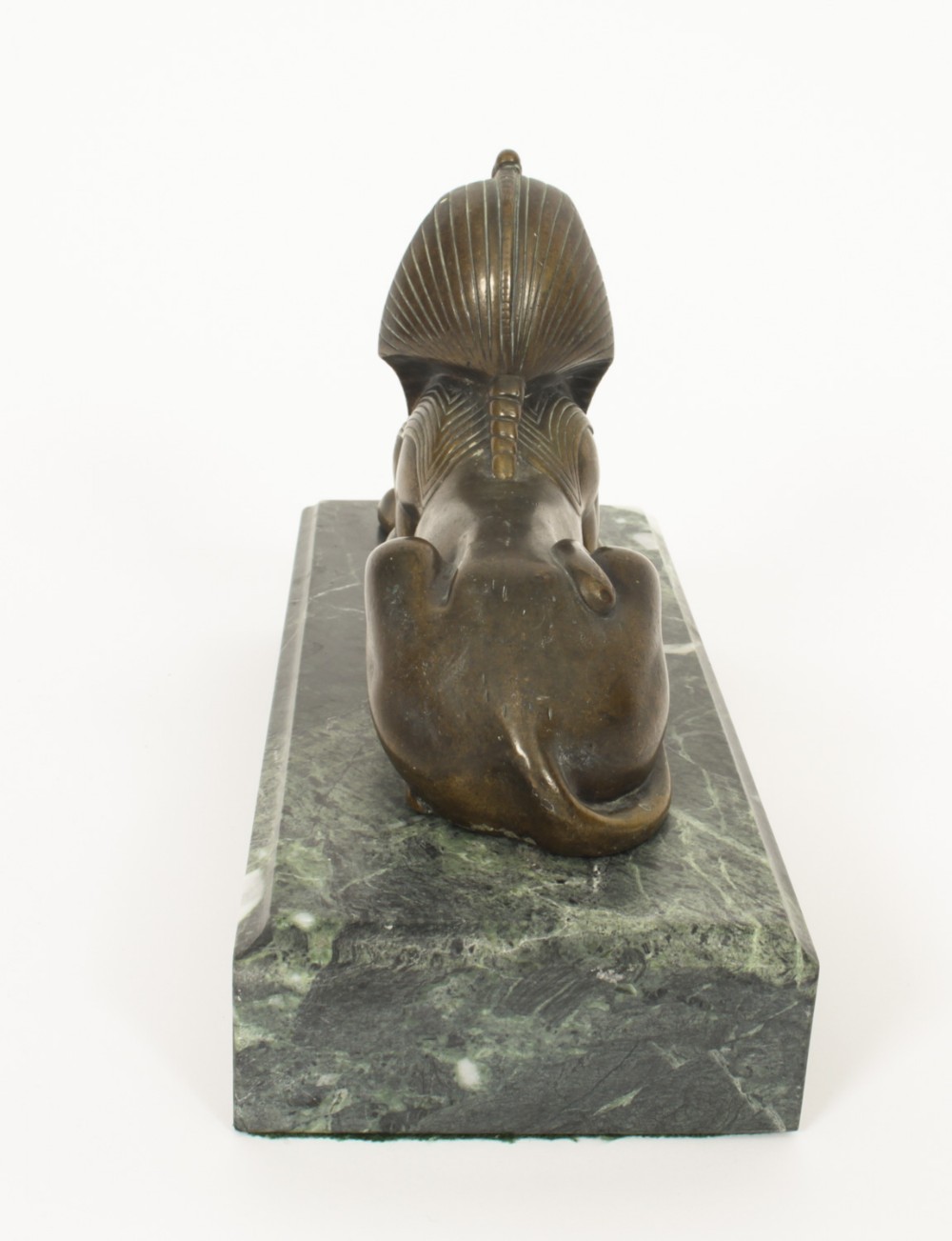
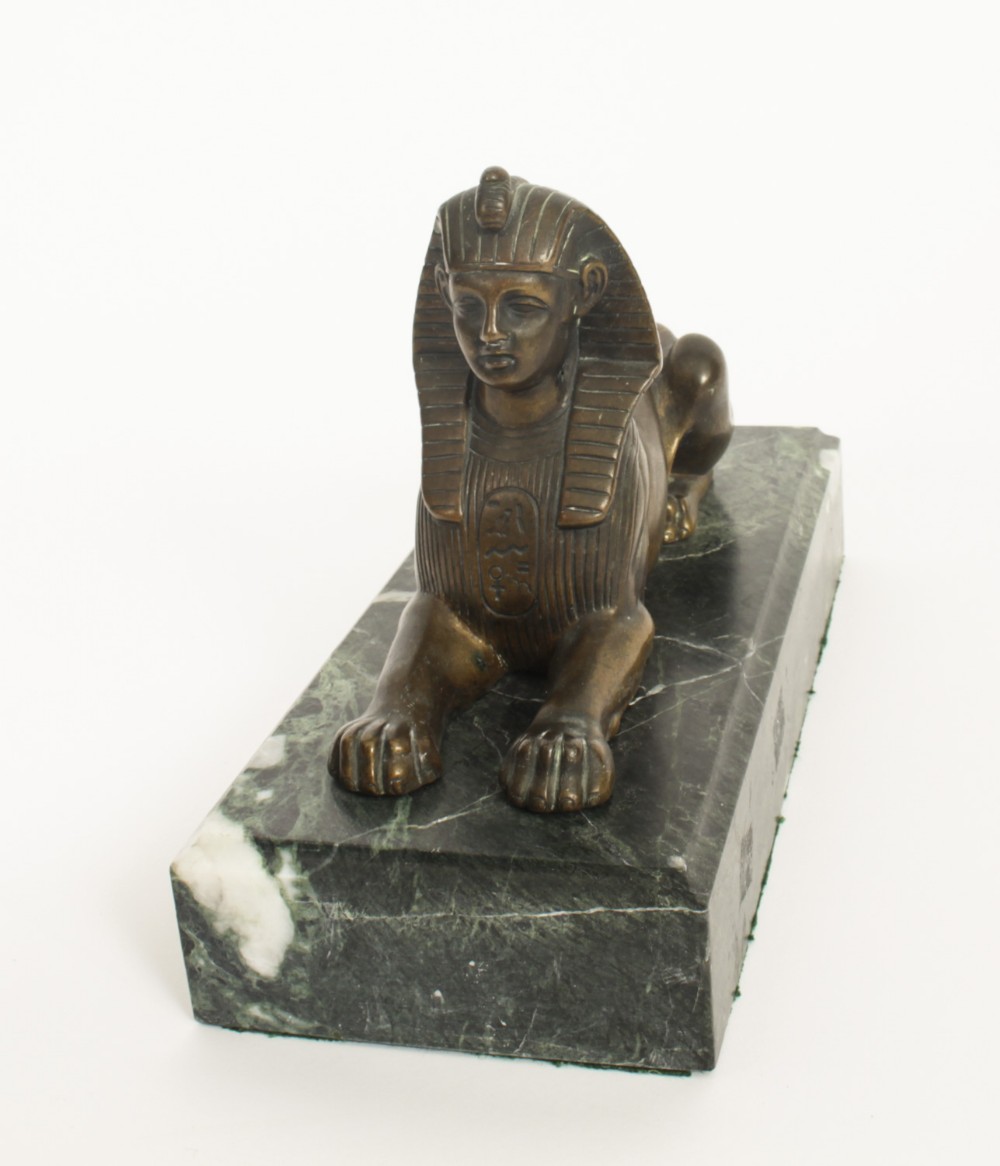
This is a fine antique 19th centurybronze Egyptian Revival figure of a recumbent sphinx raised on a decorative verde antico marble rectangular plinth.

It is a fine piece which will look beautiful wherever placed.
Condition:

In excellent condition, please see photos for confirmation.

Dimensions in cm:

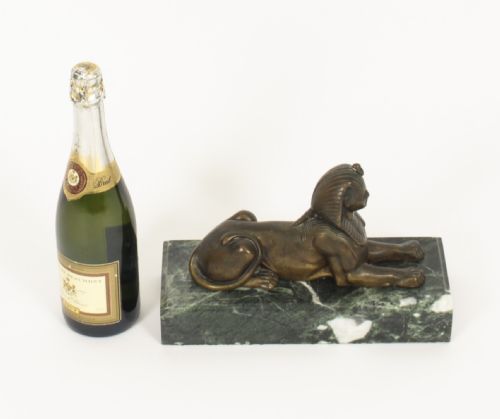
Height 20 x Width 31 x Depth 13

Dimensions in inches:

Height 8 inches x Width 1 foot x Depth 5 inches

Serpentine Marble / Verde Antico

Serpentine is a major rock forming mineral and is found as a constituent in many metamorphic and weathered igneous rocks. Serpentine’s structure is composed of layers of silicate tetrahedrons linked into sheets; this structure is what gives it its high flexural strength rating.
Verde Antico is the commercial name for the serpentine “marble” derived from highly sheared ultramafic rocks that have been rewelded and metasomatized by the process of serpentinization. These ultramafic bodies are now recognized as segments of ancient oceanic crust that became part of the eastern North American continent during the Taconian orogeny. This is considered to be middle Ordovician in age, around 450 million years ago.
More deformation and metamorphism took place during the Acadian orogeny around 360 million years ago.

Empire symbols.

The Consular period in France began in November 1799 when the Directory was overthrown in a bloodless coup and replaced by three consuls, including Napoleon. This overthrow followed a series of military disasters and insurrections that led to a breakdown of faith in the government. A few weeks after the coup Napoleon was named First Consul. In 1802 he was named First Consul for life and in December 1804 Napoleon crowned himself Emperor. The period of his reign as Emperor, from May 1804 to June 1815, is known as the Empire period.
Napoleon, having gained his position through his political and military achievements, used artists, designers and architects to promote and legitimise his regime. He appointed Charles Percier (1764–1838) and Pierre-François-Léonard Fontaine (1762–1853) as the official architects and designers of the Empire period and they became major exponents of the Empire style.
Design of the Consular and Empire periods was characterised by militaristic elements – symbols of war and victory, imperial emblems, such as the golden eagle, classical palm leaves and laurel wreaths. These symbols of power made a direct visual connection between the regime and the glory and authority of the ancient Roman emperors.
Sphinxes, winged lions and creatures with heads of eagles were employed as table legs and armrests on chairs. Broad, austere surfaces of exotic woods, particularly mahogany, were ornamented with motifs in marquetry and ormolu (gilt-bronze) and the heavy, monumental style of the furniture reflected a grandiose magnificence. Heavy bases accentuated a monumental appearance and symmetry was closely followed. At the height of the Empire period, the style was majestic and magnificent.
Napoleon’s Egyptian Campaign brought about a craze in France for all things Egyptian. The detailed drawings of art and architecture published on his return by artist and archaeologist Dominique-Vivant Denon led to the incorporation of Egyptian motifs in the furniture and decorative arts of the following decades.
As well as military, Egyptian and Classical imagery, the Empire period also embraced opulence and imagery of love, sensuality and seduction: the swan – one of the forms the god Zeus took to seduce mortal women; the lyre – an instrument of art and seduction; and bows and arrows – the tools of Cupid.

Swans, also emblems of Venus and the adopted symbol of Josephine – were employed as armrests or as entire arms of chairs. Aspects of the myth of C

Physical Dimensions
Height
20cm (7.87")
Width
31cm (12.20")
Depth
13cm (5.12")
Declaration

Regent Antiques has dated this piece to the 19th Century.

Reference Numbers
Sellingantiques Reference
SA838610
Dealers Internal Reference
A2249
Description
This is a fine antique 19th centurybronze Egyptian Revival figure of a recumbent sphinx raised on a decorative verde antico marble rectangular plinth.

It is a fine piece which will look beautiful wherever placed.

fig 1. Antique French Egyptian Revival Bronze Sphinx 19th C

Condition:

In excellent condition, please see photos for confirmation.

Dimensions in cm:

Height 20 x Width 31 x Depth 13

Dimensions in inches:

Height 8 inches x Width 1 foot x Depth 5 inches

Serpentine Marble / Verde Antico

“
Serpentine is a major rock forming mineral and is found as a constituent in many metamorphic and weathered igneous rocks.
Regent Antiques

Serpentine’s structure is composed of layers of silicate tetrahedrons linked into sheets; this structure is what gives it its high flexural strength rating.

fig 2. Antique French Egyptian Revival Bronze Sphinx 19th C

Verde Antico is the commercial name for the serpentine “marble” derived from highly sheared ultramafic rocks that have been rewelded and metasomatized by the process of serpentinization. These ultramafic bodies are now recognized as segments of ancient oceanic crust that became part of the eastern North American continent during the Taconian orogeny. This is considered to be middle Ordovician in age, around 450 million years ago.

fig 3. Antique French Egyptian Revival Bronze Sphinx 19th C

More deformation and metamorphism took place during the Acadian orogeny around 360 million years ago.

Empire symbols.

The Consular period in France began in November 1799 when the Directory was overthrown in a bloodless coup and replaced by three consuls, including Napoleon. This overthrow followed a series of military disasters and insurrections that led to a breakdown of faith in the government. A few weeks after the coup Napoleon was named First Consul. In 1802 he was named First Consul for life and in December 1804 Napoleon crowned himself Emperor. The period of his reign as Emperor, from May 1804 to June 1815, is known as the Empire period.

fig 4. Antique French Egyptian Revival Bronze Sphinx 19th C

Napoleon, having gained his position through his political and military achievements, used artists, designers and architects to promote and legitimise his regime. He appointed Charles Percier (1764–1838) and Pierre-François-Léonard Fontaine (1762–1853) as the official architects and designers of the Empire period and they became major exponents of the Empire style.

fig 5. Antique French Egyptian Revival Bronze Sphinx 19th C

Design of the Consular and Empire periods was characterised by militaristic elements – symbols of war and victory, imperial emblems, such as the golden eagle, classical palm leaves and laurel wreaths. These symbols of power made a direct visual connection between the regime and the glory and authority of the ancient Roman emperors.

fig 6. Antique French Egyptian Revival Bronze Sphinx 19th C

Sphinxes, winged lions and creatures with heads of eagles were employed as table legs and armrests on chairs. Broad, austere surfaces of exotic woods, particularly mahogany, were ornamented with motifs in marquetry and ormolu (gilt-bronze) and the heavy, monumental style of the furniture reflected a grandiose magnificence. Heavy bases accentuated a monumental appearance and symmetry was closely followed. At the height of the Empire period, the style was majestic and magnificent.

fig 7. Antique French Egyptian Revival Bronze Sphinx 19th C

Napoleon’s Egyptian Campaign brought about a craze in France for all things Egyptian. The detailed drawings of art and architecture published on his return by artist and archaeologist Dominique-Vivant Denon led to the incorporation of Egyptian motifs in the furniture and decorative arts of the following decades.

fig 8. Antique French Egyptian Revival Bronze Sphinx 19th C

As well as military, Egyptian and Classical imagery, the Empire period also embraced opulence and imagery of love, sensuality and seduction: the swan – one of the forms the god Zeus took to seduce mortal women; the lyre – an instrument of art and seduction; and bows and arrows – the tools of Cupid.

Swans, also emblems of Venus and the adopted symbol of Josephine – were employed as armrests or as entire arms of chairs. Aspects of the myth of C

Height
20cm (7.87")
Width
31cm (12.20")
Depth
13cm (5.12")
Date of Manufacture

Regent Antiques has dated this piece to the 19th Century.

Reference Numbers
Sellingantiques Ref
SA838610
Dealers Internal Ref
A2249
Regent Antiques
Regent Antiques
Sellingantiques verified Since Sep 2016

We specialise in english and continental furniture, silver, porcelain and decorative items.

Dealer Profile

You can view the stock and full dealer information on the Regent Antiques Profile Page

Trade Associations

Regent Antiques is a registered member of LAPADA  CINOA
PDF SHARE
SAVE
Antique French Egyptian Revival Bronze Sphinx 19th C
SOLD6+ MONTHS AGO
1 / 10
Archive I Antique French Egyptian Revival Bronze Sphinx 19th C
SOLD6+ MONTHS AGO

Antique French Egyptian Revival Bronze Sphinx 19th C
Archive II Antique French Egyptian Revival Bronze Sphinx 19th C
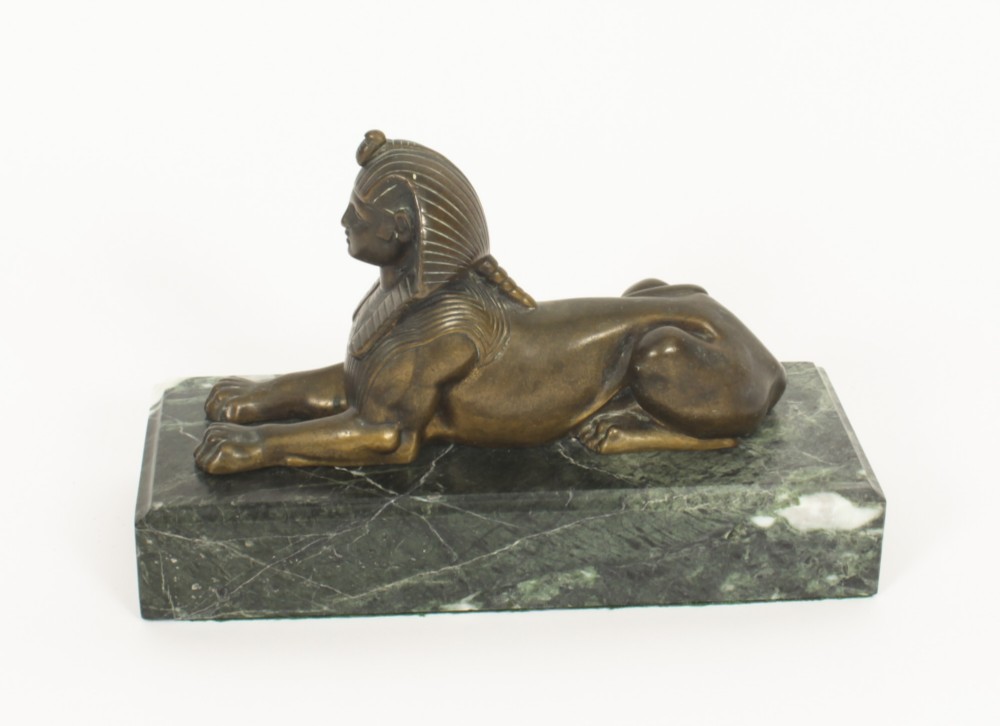
 View II
Archive III Antique French Egyptian Revival Bronze Sphinx 19th C
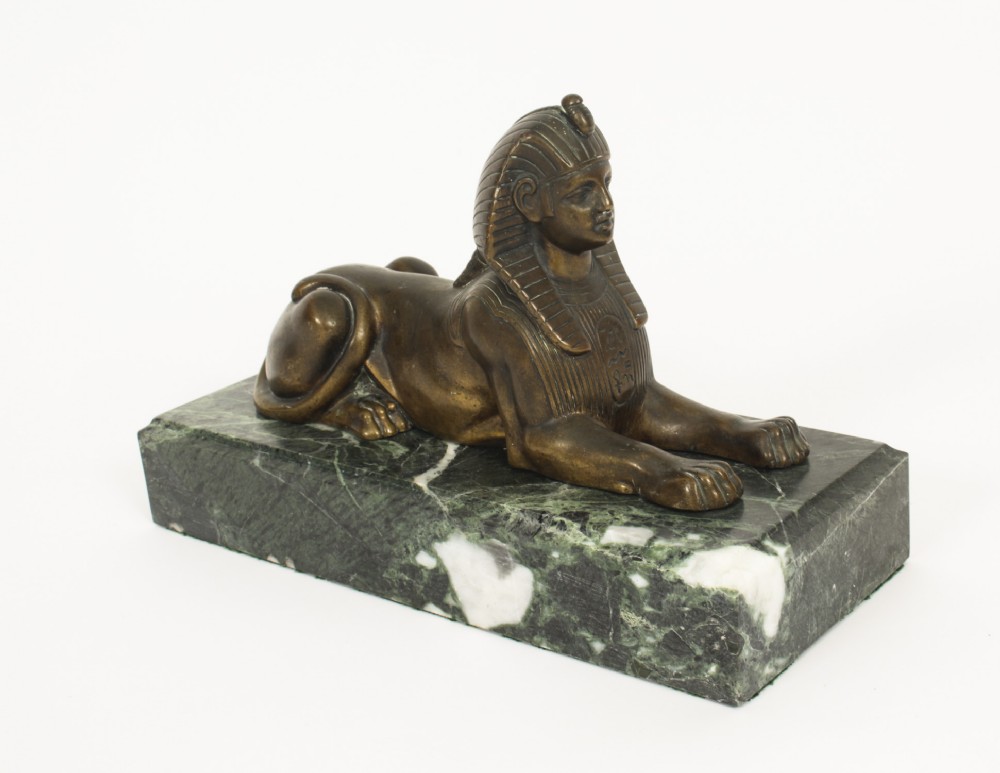
 View III
Archive IV Antique French Egyptian Revival Bronze Sphinx 19th C
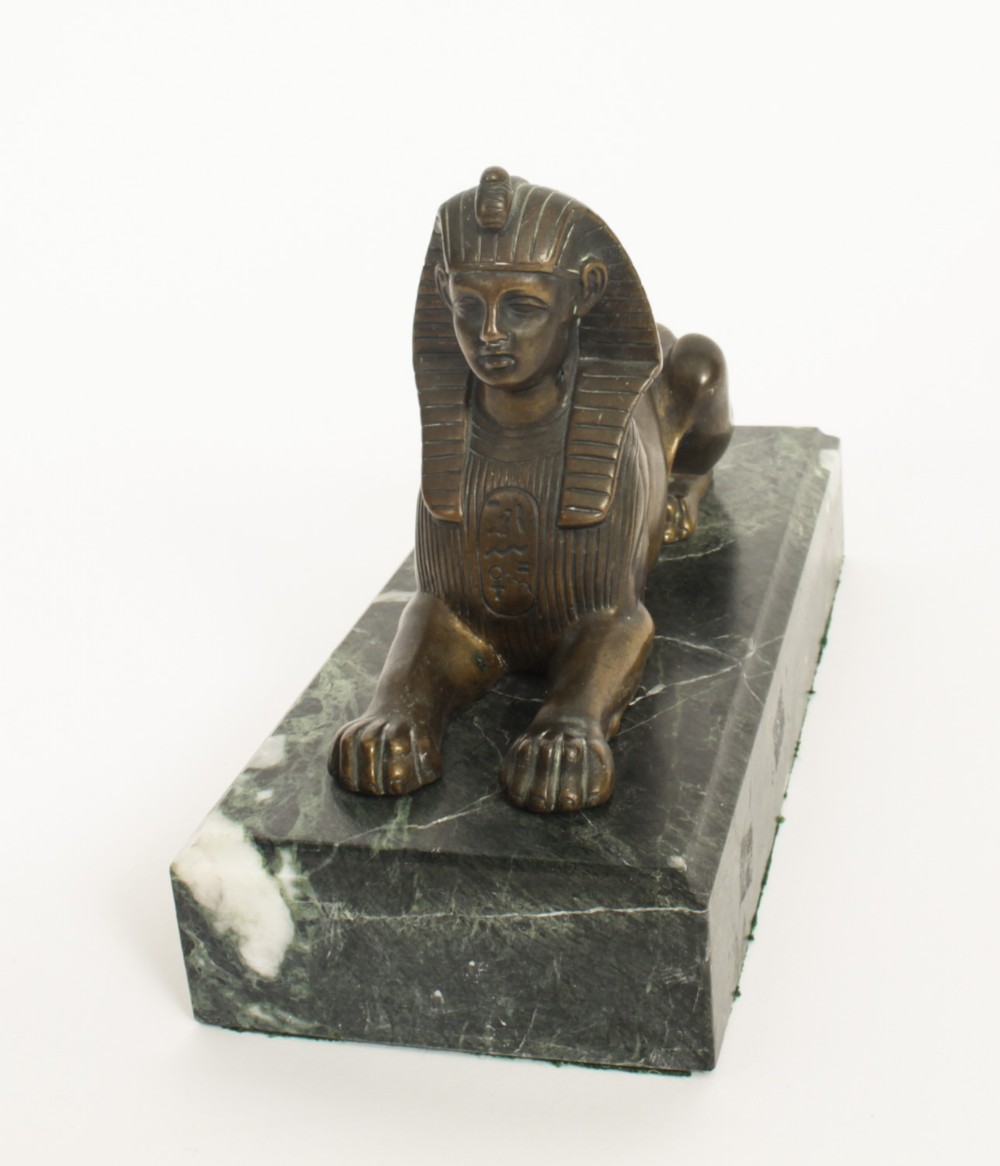
 View IV
Archive V Antique French Egyptian Revival Bronze Sphinx 19th C
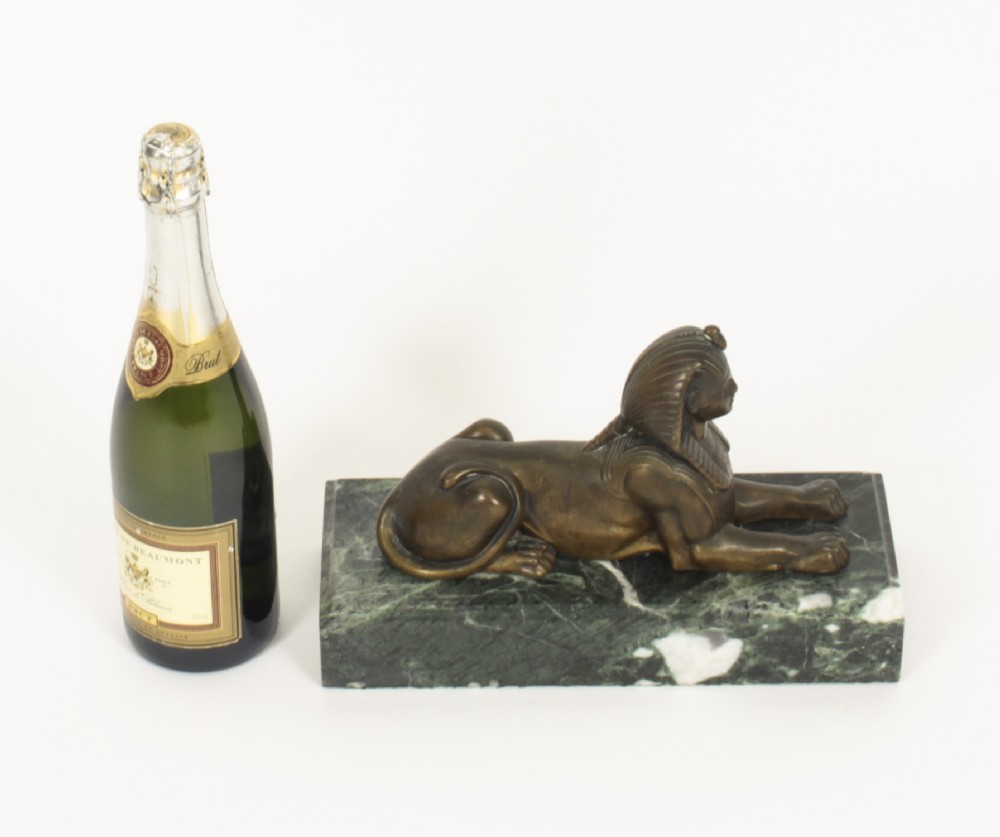
 View V
Archive VI Antique French Egyptian Revival Bronze Sphinx 19th C
 View VI
Archive VII Antique French Egyptian Revival Bronze Sphinx 19th C
 View VII
Archive VIII Antique French Egyptian Revival Bronze Sphinx 19th C
 View VIII
Archive IX Antique French Egyptian Revival Bronze Sphinx 19th C
 View IX
Archive X Antique French Egyptian Revival Bronze Sphinx 19th C
 View X
Enlarged Archival View
Location
Manor Warehouse
318 Green Lanes
London
N4 1BX
United Kingdom
Verified Since Sep 2016
Items For Sale 674
Items Sold 2,657
Regent Antiques
Regent Antiques
Verified Since Sep 2016
View Dealer Info
Location: Manor Warehouse, 318 Green Lanes, London, N4 1BX, United Kingdom
Verified
Sep 2016
For Sale
674
Sold
2,657
Antique French Egyptian Revival Bronze Sphinx 19th C
Ref: SA838610
Antique French Egyptian Revival Bronze Sphinx 19th C
Detail View 1
Detail View 2
Detail View 3
Detail View 4
Detail View 5
Detail View 6
Detail View 7
Detail View 8
Detail View 9
Archival Detail
Every single antique dealer on our platform is individually approved by our internal team. We verify their professional trade history, ethical standards, and photographic quality to ensure a secure, high-standard buying environment. Upon joining, every dealer agrees to a strict 9-point code of conduct. While issues can occasionally arise, our dealers typically resolve them swiftly and directly with the buyer. In fact, since our founding in 2002, Sellingantiques has only had to step in to help resolve an issue on roughly five occasions—a true testament to the quality of our dealers and their dedication to your happiness.
Our dealers are highly experienced in packing and shipping fragile, high-value antiques. Because you are in direct contact with the dealer, you will be able to easily go through all available shipping and insurance options together to ensure your item arrives safely.
Antiques are the ultimate green purchase. By choosing historical pieces over newly manufactured goods, you completely eliminate the carbon footprint of modern mass production while preserving exceptional, timeless craftsmanship.
Written by Sellingantiques from the dealer’s photographs and listing
  • Period19th century
  • SizeH 20 cm (8 in) x W 31 cm (12 in) x D 13 cm (5 in)
items
Add keywords to the filter
Price
£100
£250000
Era
Period
Style
Material
Origin
Stock Location
Recently Added
Online Payments
Categories