41,825  PAGES BROWSED TODAY PAGES TODAY 98  ANTIQUES UPLOADED TODAY NEW ARRIVALS
ID #SA837531
FOR SALE
£1,000
Email
Save
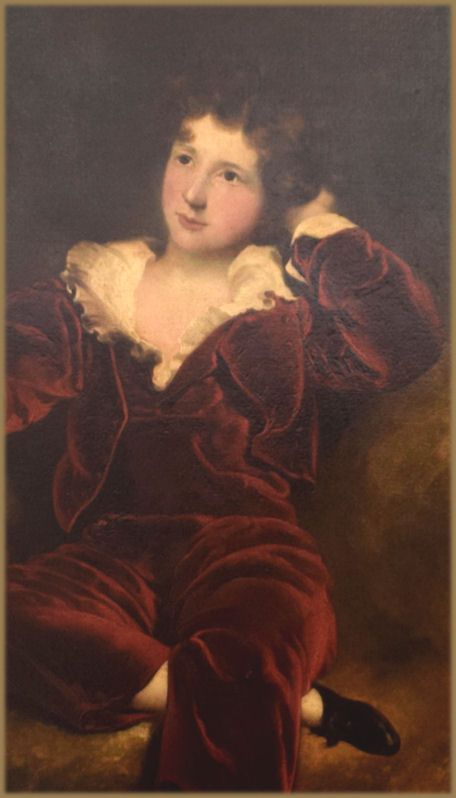
After Sir Thomas Lawrence , Pra, 1769–1830 Portrait of Master Charles William Lambton 'The Red Boy' (1818- 1831)
Artware Fineart
for sale €1,170     $1,270
£1,000

Artware Fineart

Sellingantiques Verified Since Sep 2008
View Dealers Stock Page
Id #SA837531
PDF SHARE
SAVE

After Sir Thomas Lawrence , Pra, 1769–1830 Portrait of Master Charles William Lambton 'The Red Boy' (1818- 1831)

19th century
For Sale by Artware Fineart
Description

After Sir Thomas Lawrence , PRA, 1769–1830

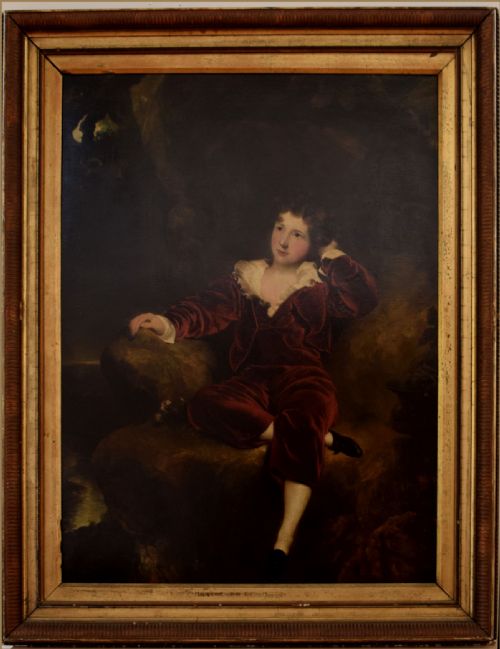
Portrait of Master Charles William Lambton 'The Red Boy' (1818- 1831)

oil on canvas

33 x 25 in. (84 x 64 cm.)

After the picture in a private collection.

Notes

One of Lawrences most famous paintings, Charles William Lambton, subsequently known as The Red Boy (1825), was painted for John Lampton 1792-1840 first earl of Durham at the price of 600 guineas.The portrait attracted much praise when it was exhibited in Paris in 1827. It has frequently graced tins of toffees and shortbread, and in 1969 appeared on the British 4d postage stamp. Wordsworth, the great poet of remembered childhood, said of The Red Boy when it was first exhibited: “Lawrence’s portrait of young Lambton is a wretched histrionic thing; the public taste must be vitiated indeed, if that is admired.” A recent art critic in the London Observer noted dryly: “Lawrence painted children the way Disney does deer.” Charles Lambton would die tragiclly aged thirteen. He is a child who will never live to grow up. Moreover we learn that he was quickly assumed to be an imaginary portrait of the dreaming youthful Byron, the very soul of English Romanticism. This was partly why he was reproduced across Europe, and then America, as a symbol of eternal hope and youthful promise. The original portrait remains in the collection of the Lampton Family.
Artist Biography

Sir Thomas Lawrence, (1769–1830), painter and draughtsman, chiefly of portraits, was born on 13 April 1769 at 6 Redcross Street, Bristol, the youngest of the five surviving children of Thomas Lawrence (1725–1797), then a supervisor of excise, and Lucy (1731?–1797), younger daughter of the Revd William Read and his wife, Sarah, née Hill. Through her father Lucy Lawrence was related to the Read family of Brocket Hall, Hertfordshire, and she had connections through her mother with other county families. As many as perhaps eleven other children were born to her between 1754 and 1772, but all died in infancy.
To a most unusual degree, childhood and early activity were synonymous in the life of Lawrence. His father moved from Bristol to Devizes in 1773, becoming landlord of the Black Bear, a well-known coaching inn of the London–Bath road. Within two or three years the very young Lawrence had revealed his talent for drawing, being capable particularly of sketching, in pencil, likenesses of people.

Visitors to Lawrence's father's inn included numerous social and cultural personalities, and the boy was much noticed by them—for his own sake and through the efforts of his proud, pretentious, and probably over-persistent father. Profile portraits in pencil of Lord and Lady Kenyon, who stayed at the Black Bear in 1779, document Lawrence's ability at that date (1779; priv. coll.). He would remain continuously at work as an artist for the subsequent fifty years, until the day before he died.

The boy Lawrence was early noticed, additionally, because of his handsome appearance and his gift for reciting verse, from Shakespeare and Milton. Fanny Burney recorded in April 1780 that she had found at the inn ‘a most lovely boy of ten years of age’ (Diary and Letters, 1.304), who possessed an astonishing skill in drawing. Mrs Lawrence informed her that he had already visited London and been pronounced a genius by Sir Joshua Reynolds. Another, more frequent visitor, David Garrick, seems to have seriously considered that the future career of the boy (not quite ten at Garrick's death) lay between painting and the stage.

Although early and usefully conditioned in social behaviour, with manners that were to be commented on later by contemporaries as extremely, if not excessively, polished, Lawrence received little formal general education. In adulthood, he wrote of his regret that his parents, for all their love, had not provided their son with ‘two or three parts in ed

Physical Dimensions
Height
84cm (33.07")
Width
64cm (25.20")
Depth
2cm (0.79")
Declaration

Artware Fineart has dated this Regency Portrait Oil Painting to the 19th Century.

Reference Numbers
Sellingantiques Reference
SA837531
Dealers Internal Reference
3765
Description
After Sir Thomas Lawrence , PRA, 1769–1830

Portrait of Master Charles William Lambton 'The Red Boy' (1818- 1831)

oil on canvas

33 x 25 in. (84 x 64 cm.)

After the picture in a private collection.

Notes

One of Lawrences most famous paintings, Charles William Lambton, subsequently known as The Red Boy (1825), was painted for John Lampton 1792-1840 first earl of Durham at the price of 600 guineas.
Artware Fineart

The portrait attracted much praise when it was exhibited in Paris in 1827. It has frequently graced tins of toffees and shortbread, and in 1969 appeared on the British 4d postage stamp. Wordsworth, the great poet of remembered childhood, said of The Red Boy when it was first exhibited: “Lawrence’s portrait of young Lambton is a wretched histrionic thing; the public taste must be vitiated indeed, if that is admired.” A recent art critic in the London Observer noted dryly: “Lawrence painted children the way Disney does deer.” Charles Lambton would die tragiclly aged thirteen. He is a child who will never live to grow up. Moreover we learn that he was quickly assumed to be an imaginary portrait of the dreaming youthful Byron, the very soul of English Romanticism. This was partly why he was reproduced across Europe, and then America, as a symbol of eternal hope and youthful promise. The original portrait remains in the collection of the Lampton Family.

fig 1. An oil painting depicting a young boy in a crimson velvet suit seated thoughtfully on a rock within a darkened natural landscape.
fig 1. After Sir Thomas Lawrence , Pra, 1769–1830 Portrait of Master Charles William Lambton 'The Red Boy' (1818- 1831)

Artist Biography

Sir Thomas Lawrence, (1769–1830), painter and draughtsman, chiefly of portraits, was born on 13 April 1769 at 6 Redcross Street, Bristol, the youngest of the five surviving children of Thomas Lawrence (1725–1797), then a supervisor of excise, and Lucy (1731?–1797), younger daughter of the Revd William Read and his wife, Sarah, née Hill. Through her father Lucy Lawrence was related to the Read family of Brocket Hall, Hertfordshire, and she had connections through her mother with other county families. As many as perhaps eleven other children were born to her between 1754 and 1772, but all died in infancy.

fig 2. An oil painting depicting a young boy in a crimson velvet suit seated thoughtfully on a rock within a darkened natural landscape.
fig 2. After Sir Thomas Lawrence , Pra, 1769–1830 Portrait of Master Charles William Lambton 'The Red Boy' (1818- 1831)

To a most unusual degree, childhood and early activity were synonymous in the life of Lawrence. His father moved from Bristol to Devizes in 1773, becoming landlord of the Black Bear, a well-known coaching inn of the London–Bath road. Within two or three years the very young Lawrence had revealed his talent for drawing, being capable particularly of sketching, in pencil, likenesses of people.

Visitors to Lawrence's father's inn included numerous social and cultural personalities, and the boy was much noticed by them—for his own sake and through the efforts of his proud, pretentious, and probably over-persistent father. Profile portraits in pencil of Lord and Lady Kenyon, who stayed at the Black Bear in 1779, document Lawrence's ability at that date (1779; priv. coll.). He would remain continuously at work as an artist for the subsequent fifty years, until the day before he died.

The boy Lawrence was early noticed, additionally, because of his handsome appearance and his gift for reciting verse, from Shakespeare and Milton. Fanny Burney recorded in April 1780 that she had found at the inn ‘a most lovely boy of ten years of age’ (Diary and Letters, 1.304), who possessed an astonishing skill in drawing. Mrs Lawrence informed her that he had already visited London and been pronounced a genius by Sir Joshua Reynolds. Another, more frequent visitor, David Garrick, seems to have seriously considered that the future career of the boy (not quite ten at Garrick's death) lay between painting and the stage.

Although early and usefully conditioned in social behaviour, with manners that were to be commented on later by contemporaries as extremely, if not excessively, polished, Lawrence received little formal general education. In adulthood, he wrote of his regret that his parents, for all their love, had not provided their son with ‘two or three parts in ed

Height
84cm (33.07")
Width
64cm (25.20")
Depth
2cm (0.79")
Date of Manufacture

Artware Fineart has dated this Regency Portrait Oil Painting to the 19th Century.

Reference Numbers
Sellingantiques Ref
SA837531
Dealers Internal Ref
3765
Artware Fineart
Sellingantiques verified Since Sep 2008
Dealer Profile

You can view the stock and full dealer information on the Artware Fineart Profile Page

PDF SHARE
SAVE
An oil painting depicting a young boy in a crimson velvet suit seated thoughtfully on a rock within a darkened natural landscape.
1 / 3
Archive I An oil painting depicting a young boy in a crimson velvet suit seated thoughtfully on a rock within a darkened natural landscape.

After Sir Thomas Lawrence , Pra, 1769–1830 Portrait of Master Charles William Lambton 'The Red Boy' (1818- 1831)
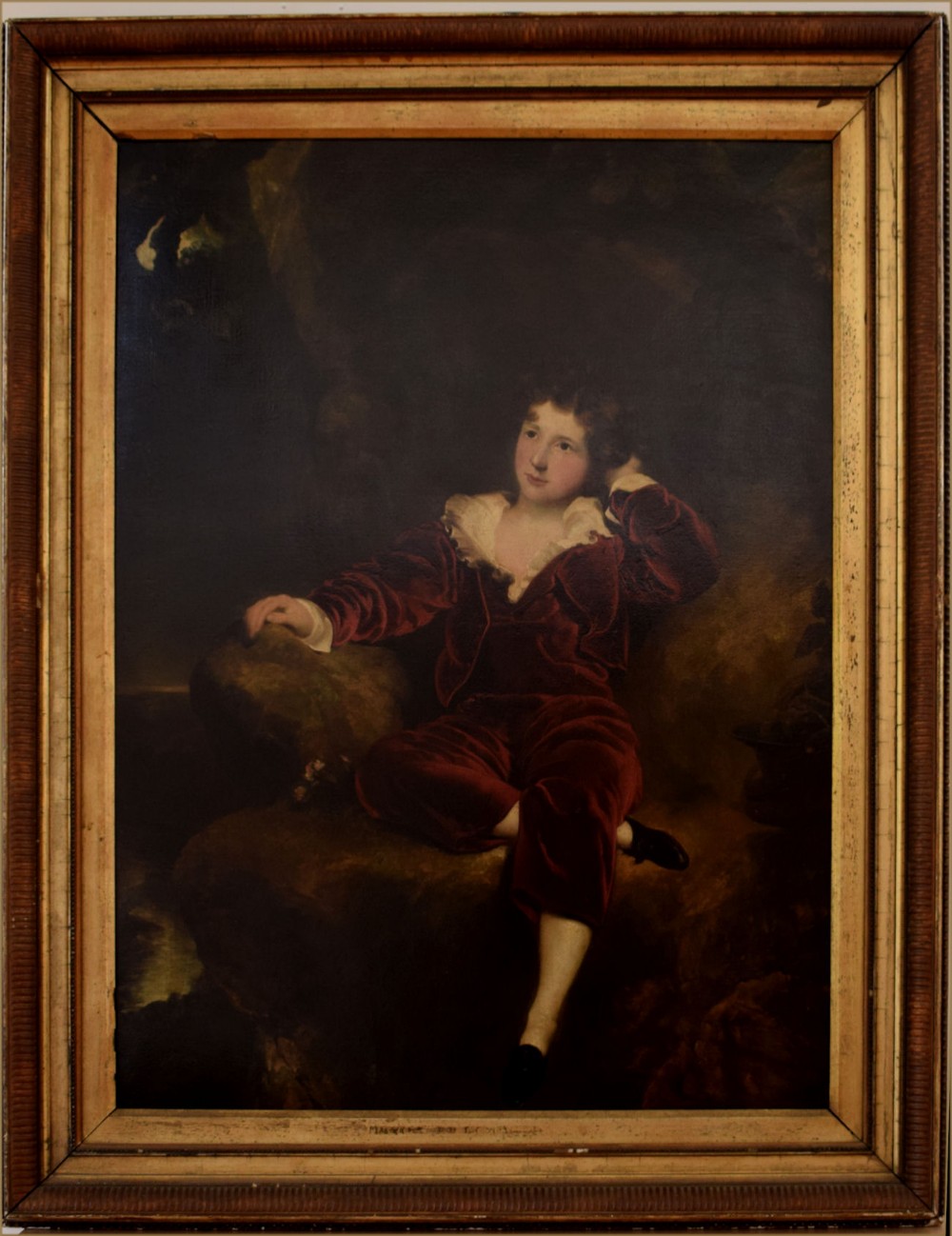
Archive II An oil painting depicting a young boy in a crimson velvet suit seated thoughtfully on a rock within a darkened natural landscape. View II
Archive III An oil painting depicting a young boy in a crimson velvet suit seated thoughtfully on a rock within a darkened natural landscape. View III
Enlarged Archival View
Telephone 07958 699 645
Location
18 La Gare
51 Surrey Row
London
SE1 0BZ
United Kingdom
Verified Since Sep 2008
Items For Sale 243
Items Sold 223
Artware Fineart
Verified Since Sep 2008
View Dealer Info
Location: 18 La Gare , 51 Surrey Row , London , SE1 0BZ , United Kingdom
Verified
Sep 2008
For Sale
243
Sold
223
An oil painting depicting a young boy in a crimson velvet suit seated thoughtfully on a rock within a darkened natural landscape.
After Sir Thomas Lawrence , PRA, 1769–1830 Portrait of Master Charles William Lambton 'The Red Boy' (1818- 1831)
Ref: SA837531
An oil painting depicting a young boy in a crimson velvet suit seated thoughtfully on a rock within a darkened natural landscape.
Detail View 1
Detail View 2
Archival Detail
Every single antique dealer on our platform is individually approved by our internal team. We verify their professional trade history, ethical standards, and photographic quality to ensure a secure, high-standard buying environment. Upon joining, every dealer agrees to a strict 9-point code of conduct. While issues can occasionally arise, our dealers typically resolve them swiftly and directly with the buyer. In fact, since our founding in 2002, Sellingantiques has only had to step in to help resolve an issue on roughly five occasions—a true testament to the quality of our dealers and their dedication to your happiness.
Our dealers are highly experienced in packing and shipping fragile, high-value antiques. Because you are in direct contact with the dealer, you will be able to easily go through all available shipping and insurance options together to ensure your item arrives safely.
Antiques are the ultimate green purchase. By choosing historical pieces over newly manufactured goods, you completely eliminate the carbon footprint of modern mass production while preserving exceptional, timeless craftsmanship.

Originally painted by Sir Thomas Lawrence in 1825, this portrait depicts Master Charles William Lambton and became one of the most prominent child portraits of the British Regency era.

Artists traditionally used oil pigments suspended in linseed or walnut oil, applied onto stretched linen or cotton canvas prepared with a gesso ground.

Period pieces display natural age-related craquelure patterns, hand-hewn stretcher bars, and canvas backings showing oxidation consistent with age.

Positioning a classical oil painting above a mantelpiece or dark timber sideboard creates a focal point within traditional, maximalist, or eclectic design schemes.

Dust the surface gently with a soft, dry brush and avoid hanging the canvas in direct sunlight, high humidity, or near active heat sources.
items
Add keywords to the filter
Price
£100
£250000
Era
Movements
Material
Origin
Stock Location
Freshness
Online Payments
Categories