It was listed by Regent Antiques. Sold pieces stay on Sellingantiques as a record of what has passed through, and the next one is rarely far away.
Regent Antiques has dated this piece to the 19th Century.
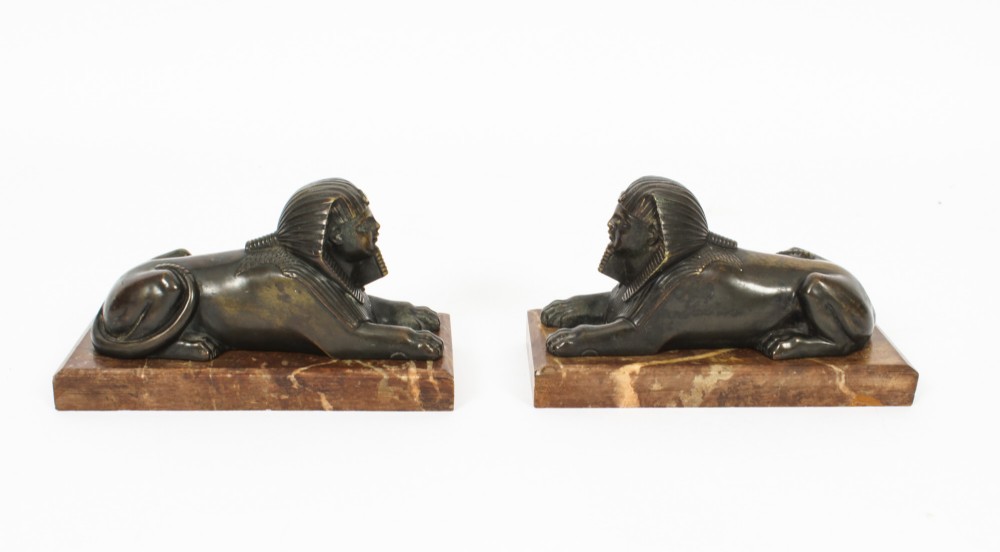
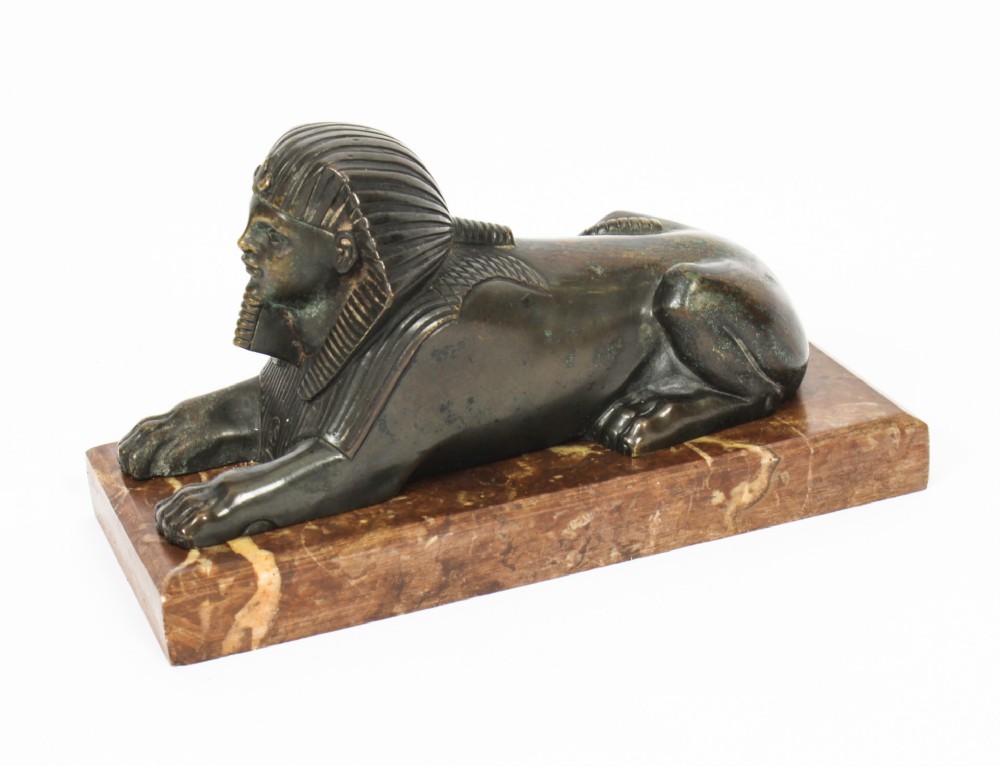
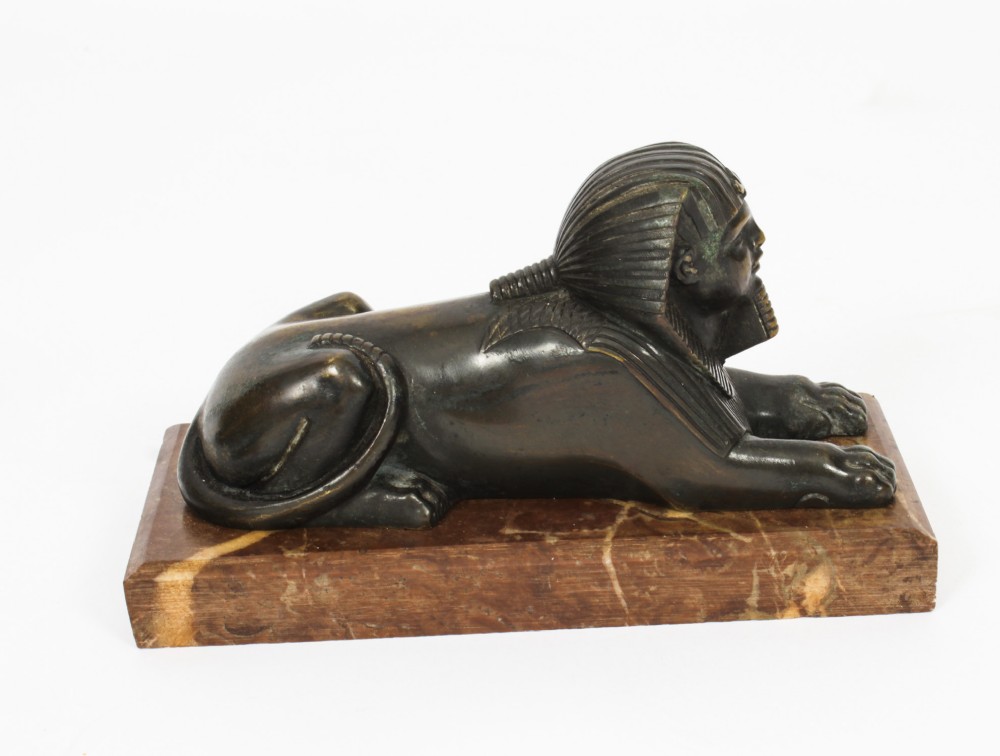
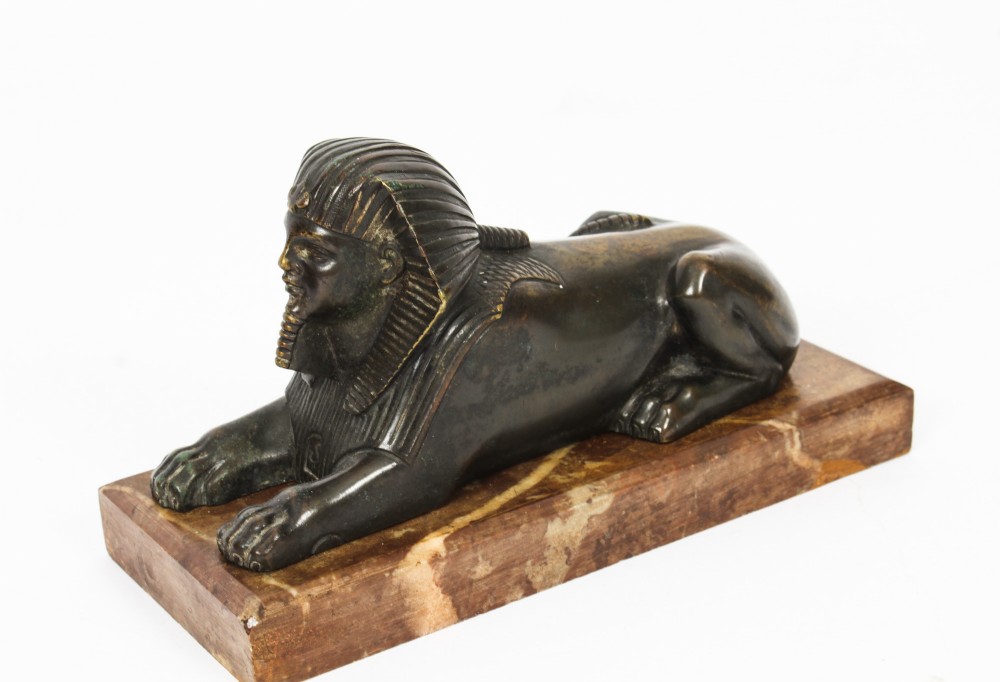
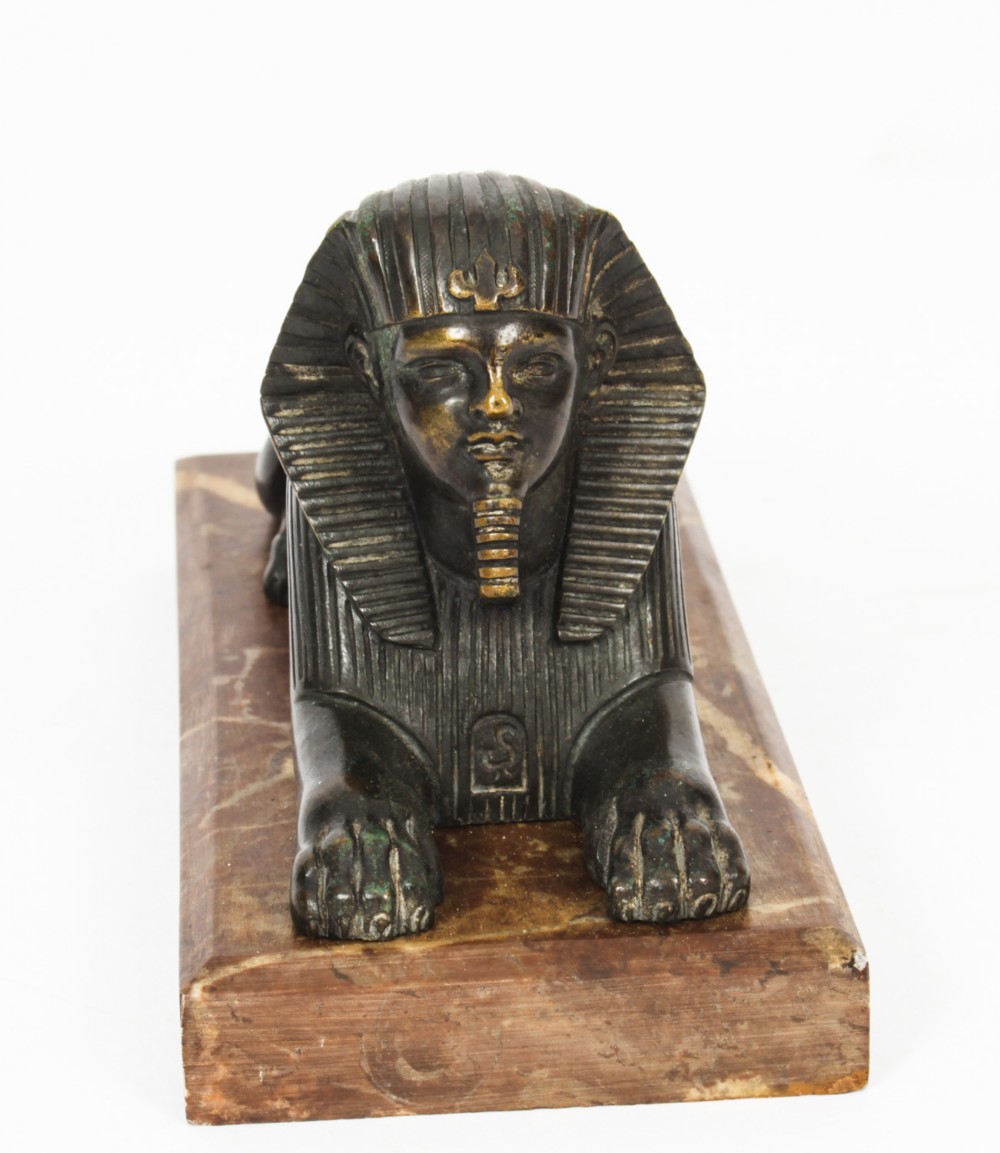
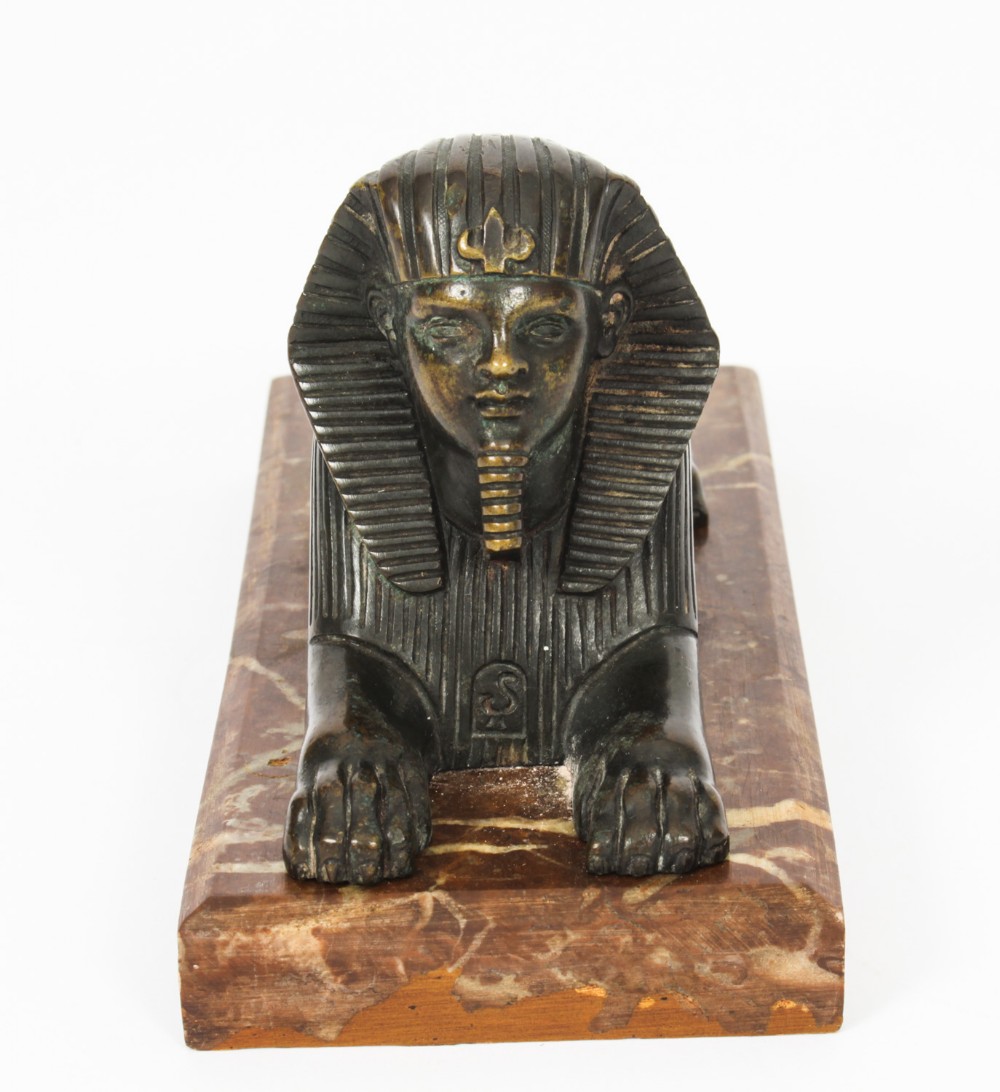
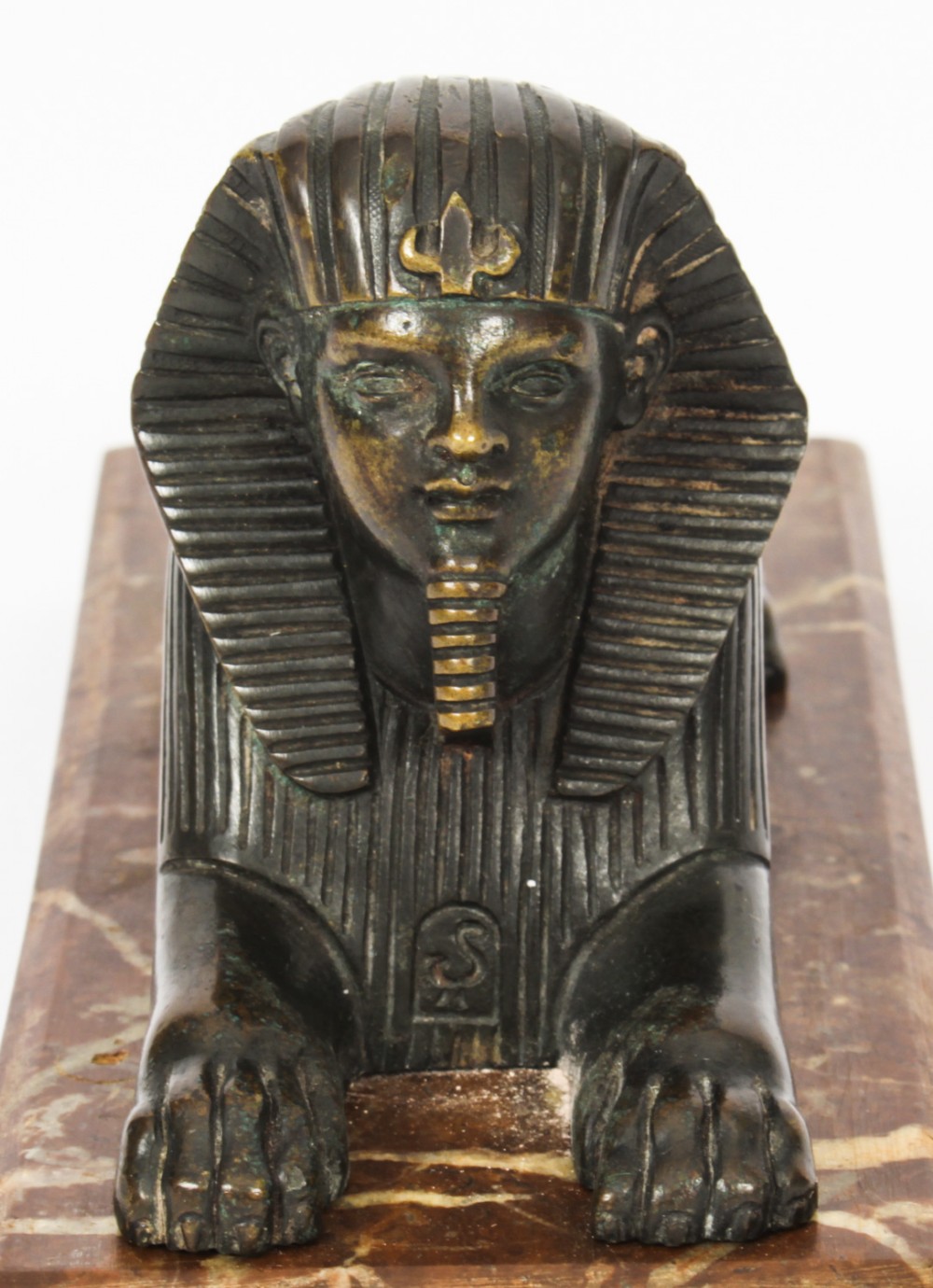
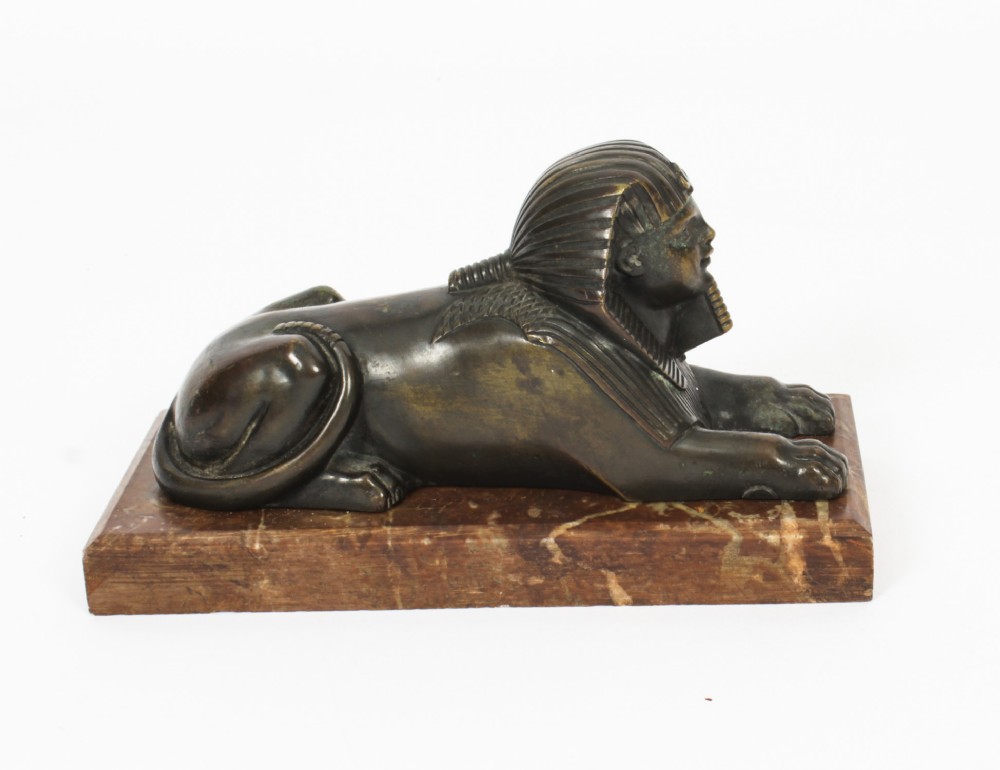
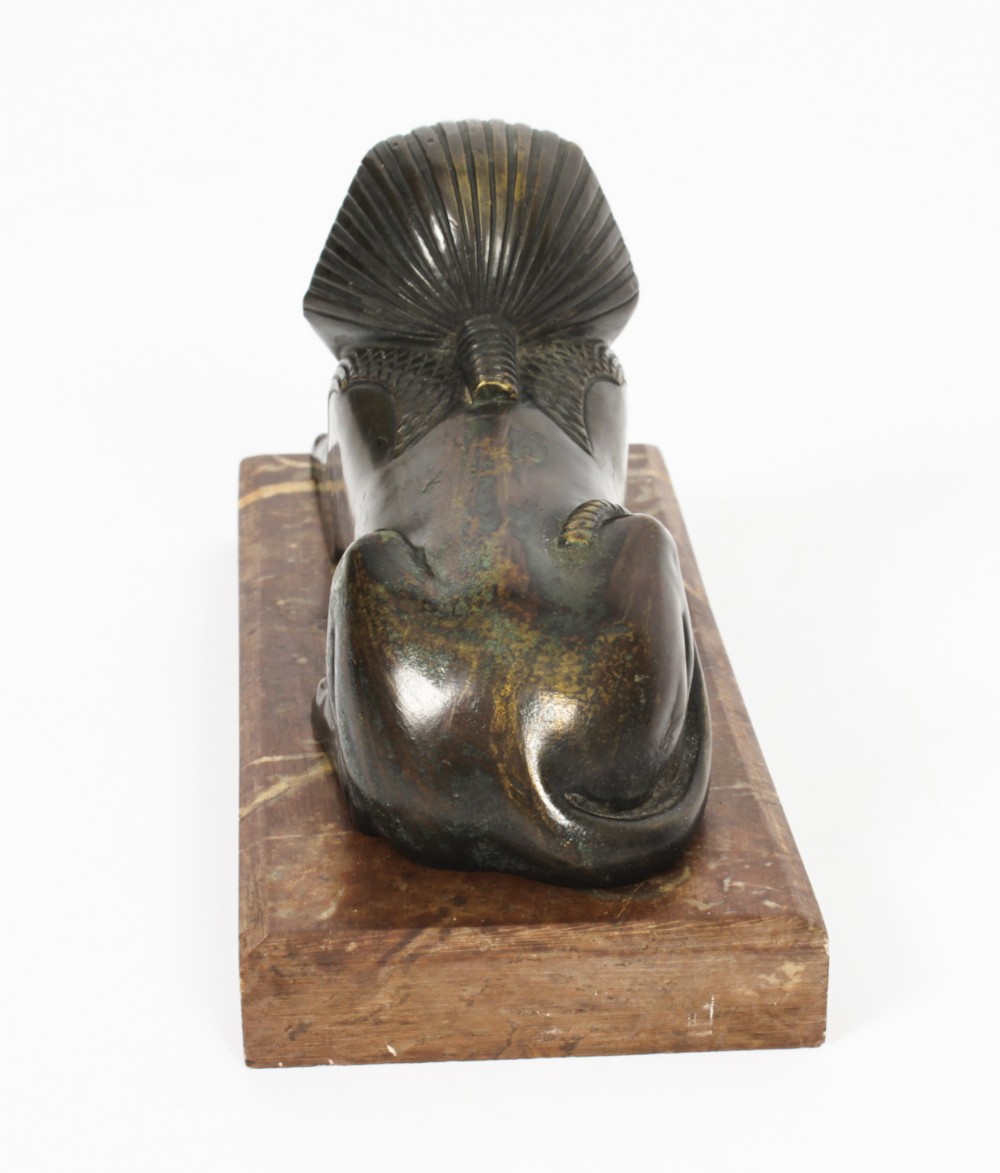
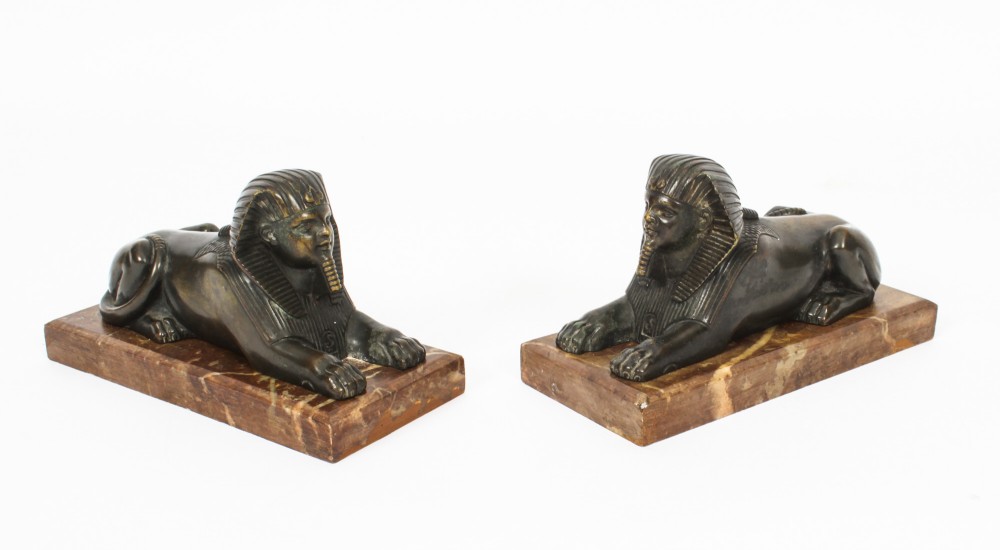
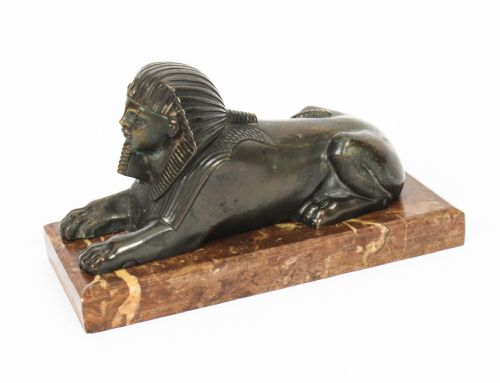
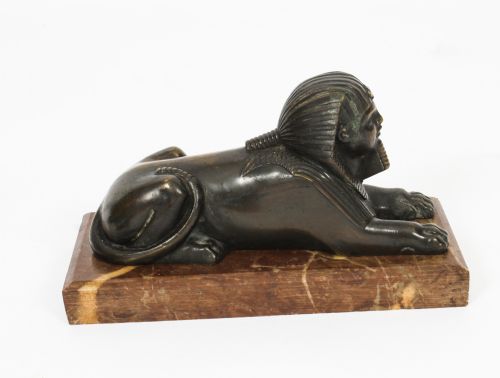
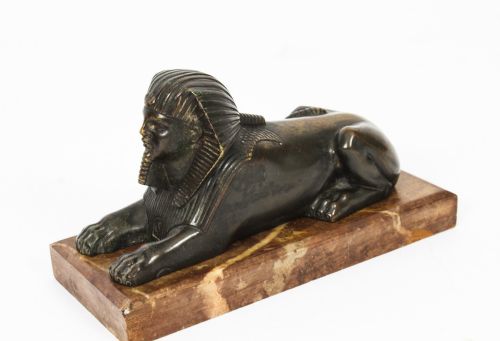
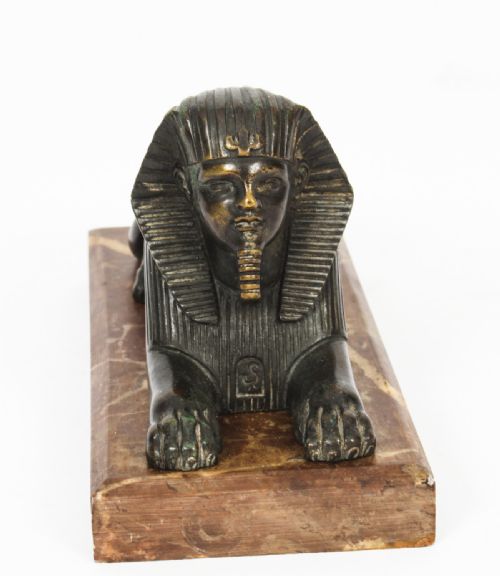
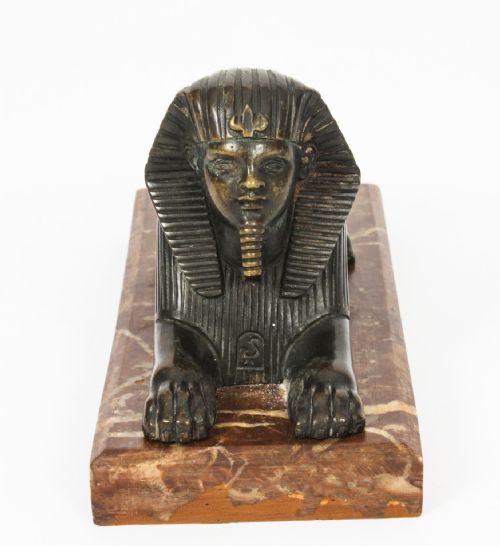
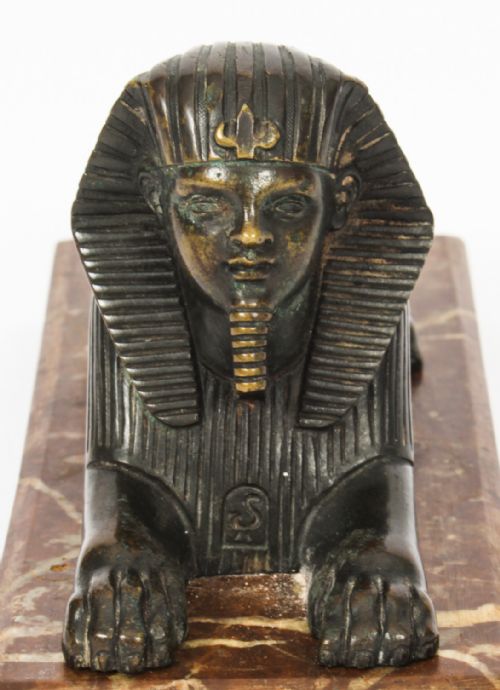
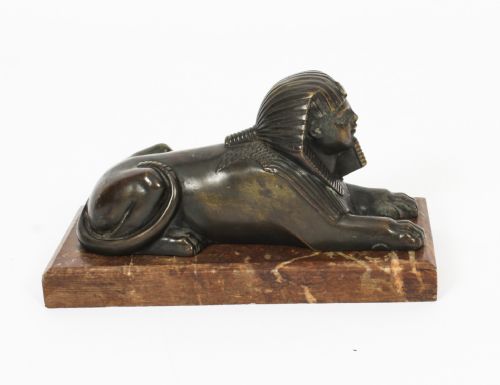
Each sphinx is modelled with a pharaonic headdress on a man's head with a lions body.
These high-quality hot cast solid bronze statues were produced using the traditional "lost wax" process, otherwise known as the "cire perdue" method.
The attention to detail here is remarkable and this truly beautiful pair of bronze statues are sure to receive the maximum amount of attention wherever placed.
Provenance:
Wormington Grange
Condition:
In excellent condition, please see photos for confirmation.
Dimensions in cm:
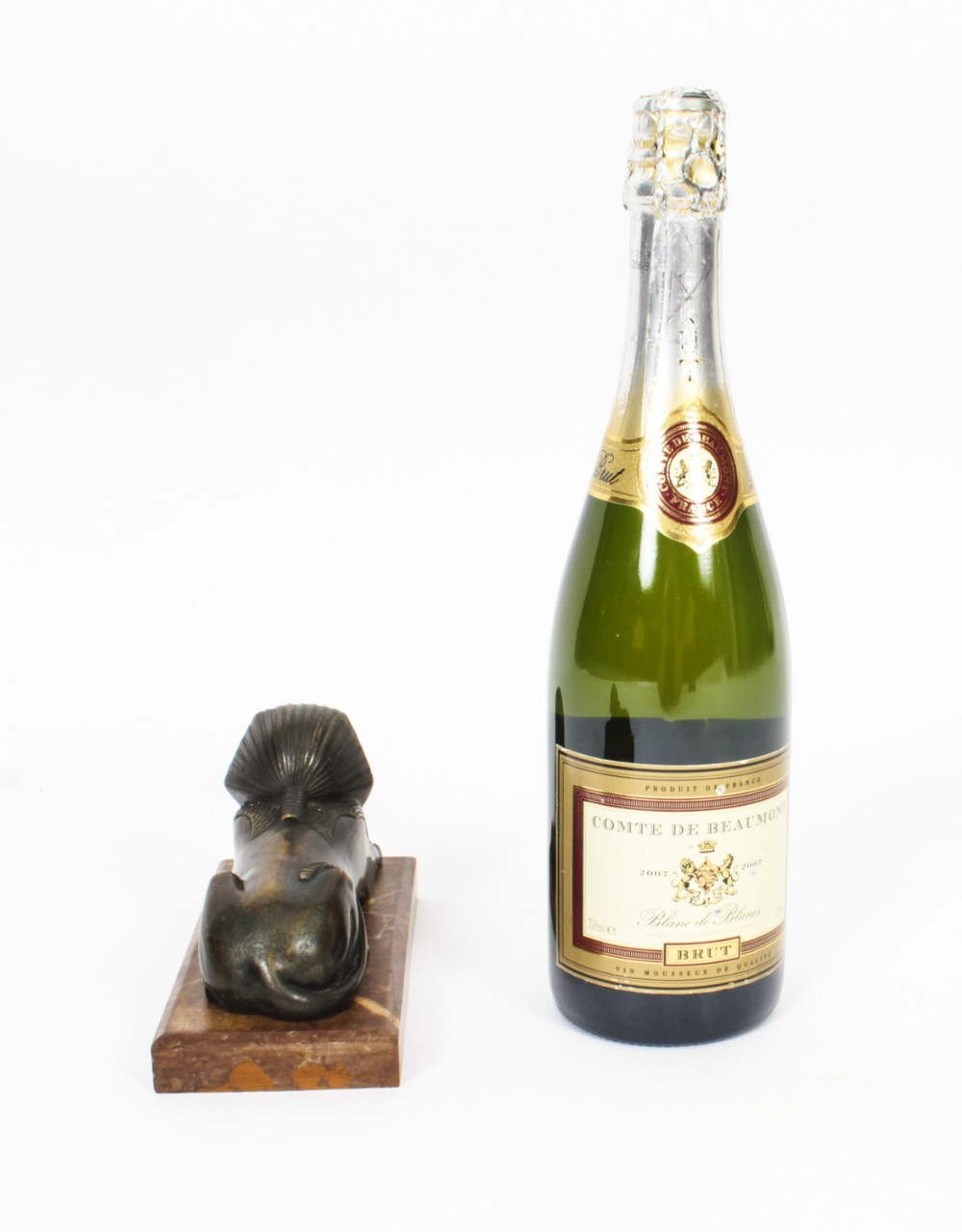
Height 11 x Width 18 x Depth 8
Dimensions in inches:
Height 4 inches x Width 7 inches x Depth 3 inches
Wormington Grange
is a Grade II* listed country house in the civil parish of Stanton, Gloucestershire, England. It lies a mile south of the village of Wormington. Although the lodge is of Tudor origins, the main house was constructed in the 1770s for Nathaniel Jeffreys.
Sphinx, mythological creature with a lion’s body and a human head, an important image in Egyptian and Greek art and legend. The word sphinx was derived by Greek grammarians from the verb sphingein (“to bind” or “to squeeze”), but the etymology is not related to the legend and is dubious. Hesiod, the earliest Greek author to mention the creature, called it Phix.
The winged sphinx of Boeotian Thebes, the most famous in legend, was said to have terrorized the people by demanding the answer to a riddle taught her by the Muses—What is it that has one voice and yet becomes four-footed and two-footed and three-footed?—and devouring a man each time the riddle was answered incorrectly. Eventually Oedipus gave the proper answer: man, who crawls on all fours in infancy, walks on two feet when grown, and leans on a staff in old age. The sphinx thereupon killed herself. From this tale apparently grew the legend that the sphinx was omniscient, and even today the wisdom of the sphinx is proverbial.
The earliest and most famous example in art is the colossal recumbent Great Sphinx at Giza, Egypt, dating from the reign of King Khafre (4th king of 4th dynasty, c. 2575–c. 2465 BCE). This is known to be a portrait statue of the king, and the sphinx continued as a royal portrait type through most of Egyptian history. Arabs, however, know the Great Sphinx of Giza by the name of Abu al-Hawl, or “Father of Terror.”
Through Egyptian influence the sphinx became known in Asia, but its meaning there is uncertain. The sphinx did not occur in Mesopotamia until about 1500 BCE, when it was clearly imported from the Levant. In appearance the Asian sphinx differed from its Egyptian model most noticeably in the addition of wings to the leonine body, a feature that continued through its subsequent history in Asia and the Greek world. Another innovation was the female sphinx, which first began to appear in the 15th century BCE. On seals, ivories, and metalwork the sphinx was portrayed sitting on its haunches, often with one paw raised, and was frequently paired with a lion, a griffin (part eagle and part lion), or another sphinx.
About 1600 BCE the sphinx first appeared in the Greek world. Objects from Crete at the end of the middle Minoan period and from the shaft graves at Mycenae throughout the late Helladic age showed the sphinx characteristically winged. Although derived from the Asian sphinx, the Greek examples were not identical in appearance; they customarily wore a flat cap with a flame like projection on top. Nothing in their context connected them with later legend, and their meaning remains unknown.
After 1200 BCE the depiction of sphinxes disappe
Regent Antiques has dated this piece to the 19th Century.
We specialise in english and continental furniture, silver, porcelain and decorative items.
You can view the stock and full dealer information on the Regent Antiques Profile Page
Regent Antiques is a registered member of LAPADA CINOA
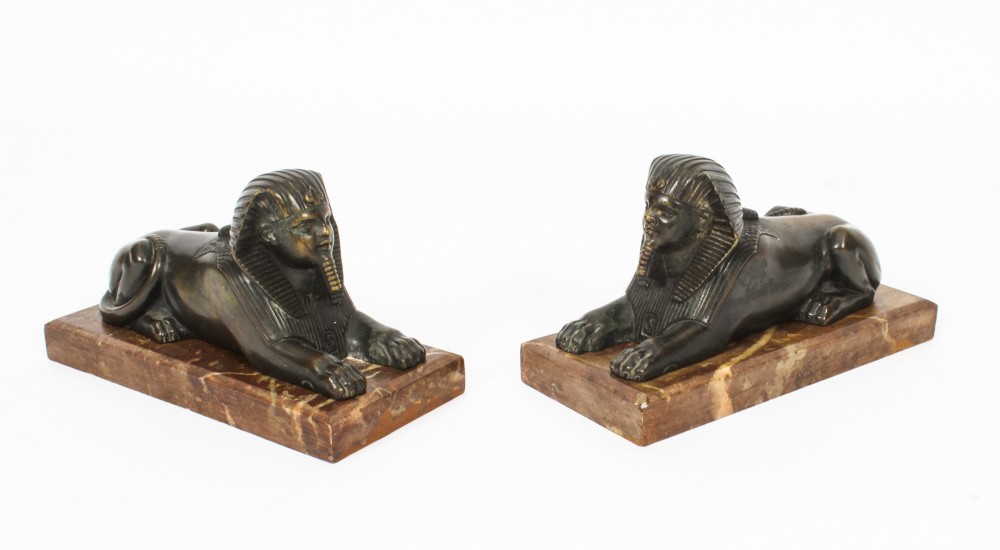
Antique Pair of French Bronzes Recumbent Sphinxes C1860 19th C