It was listed by Regent Antiques. Sold pieces stay on Sellingantiques as a record of what has passed through, and the next one is rarely far away.
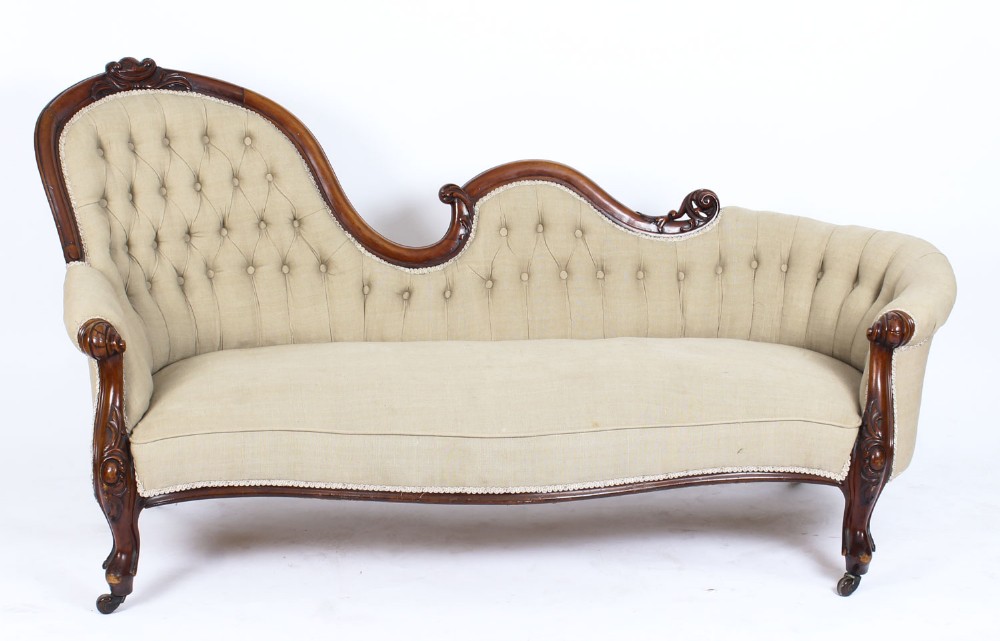
Regent Antiques has dated this piece to the 1860s.
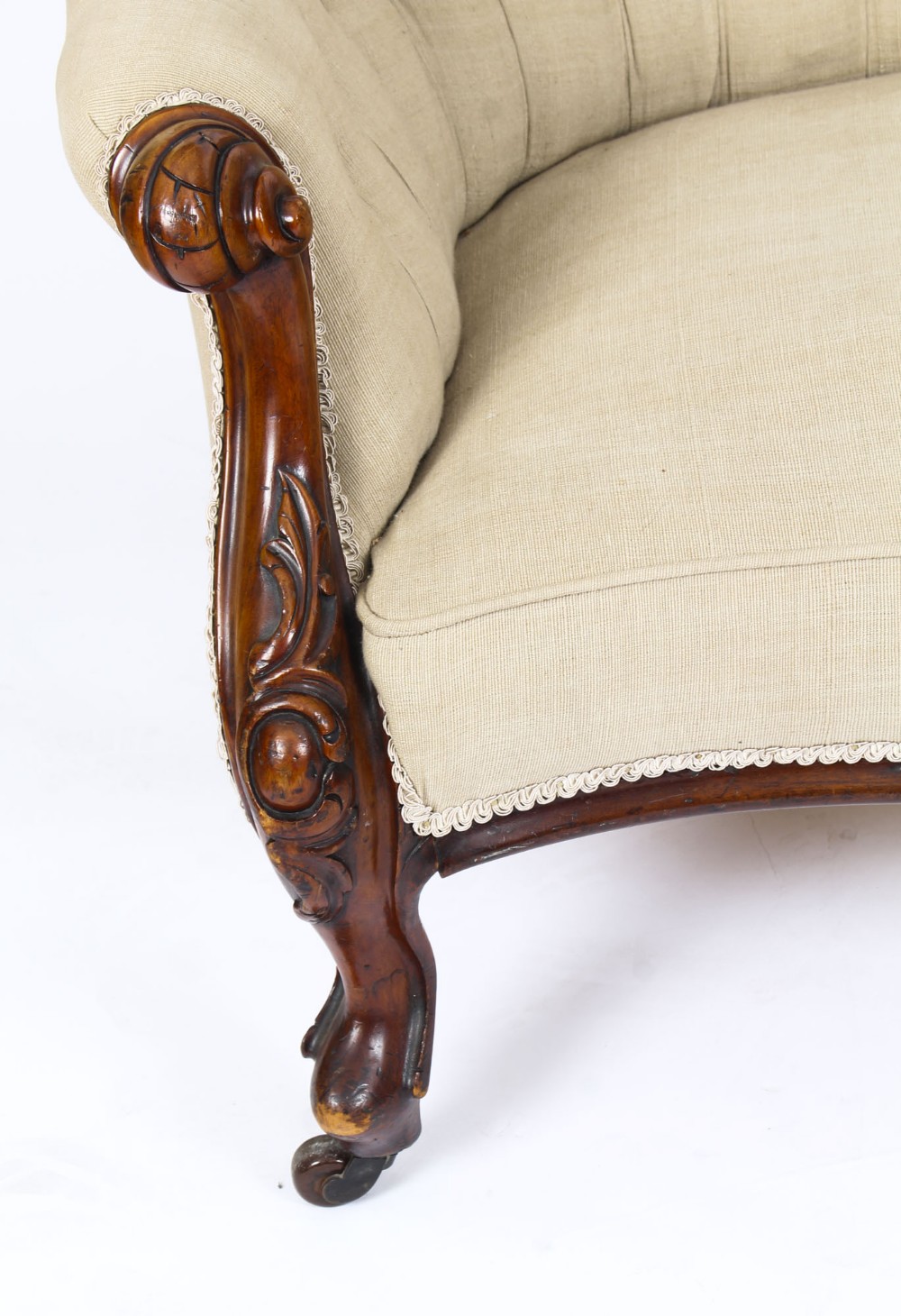
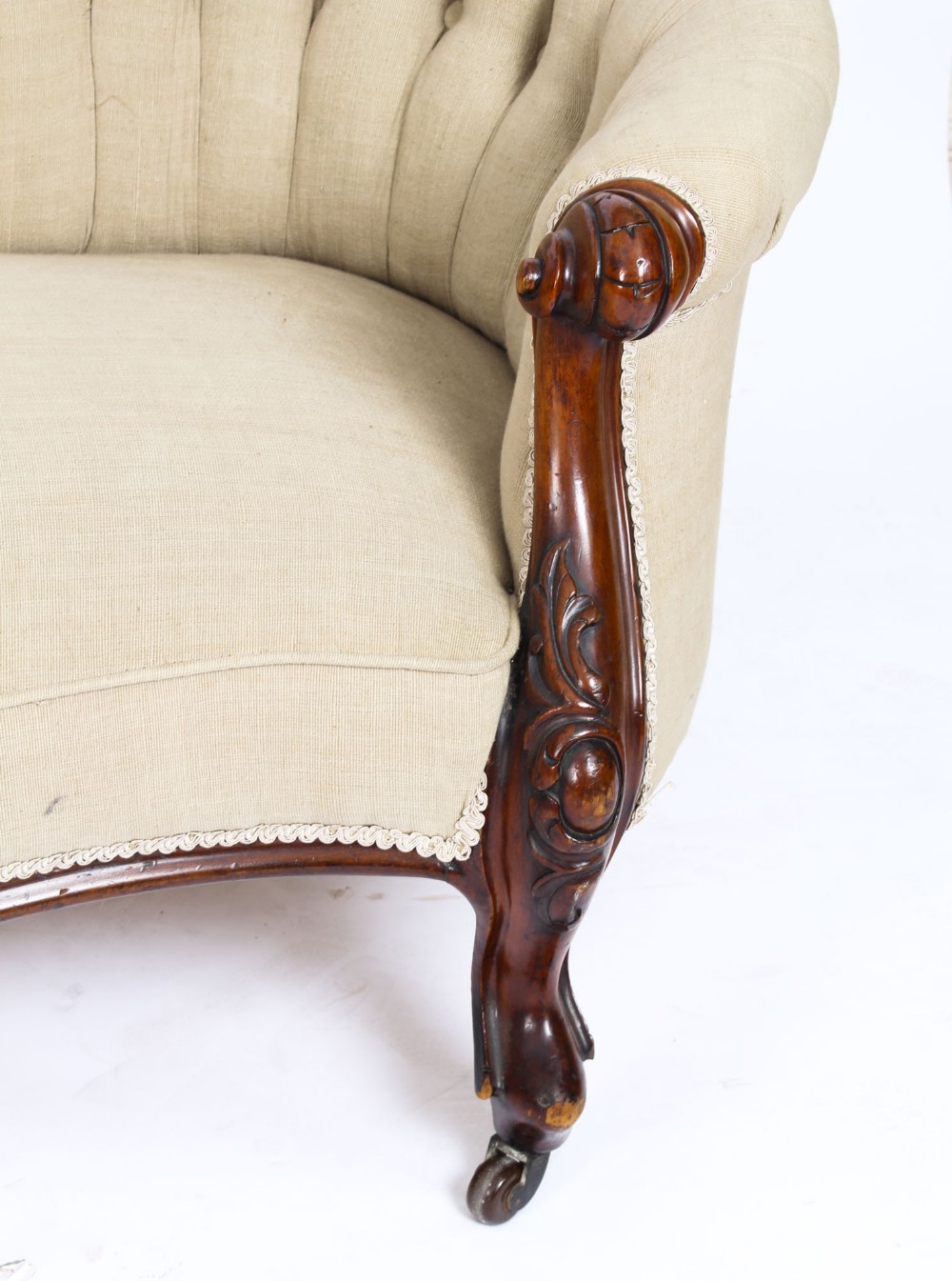
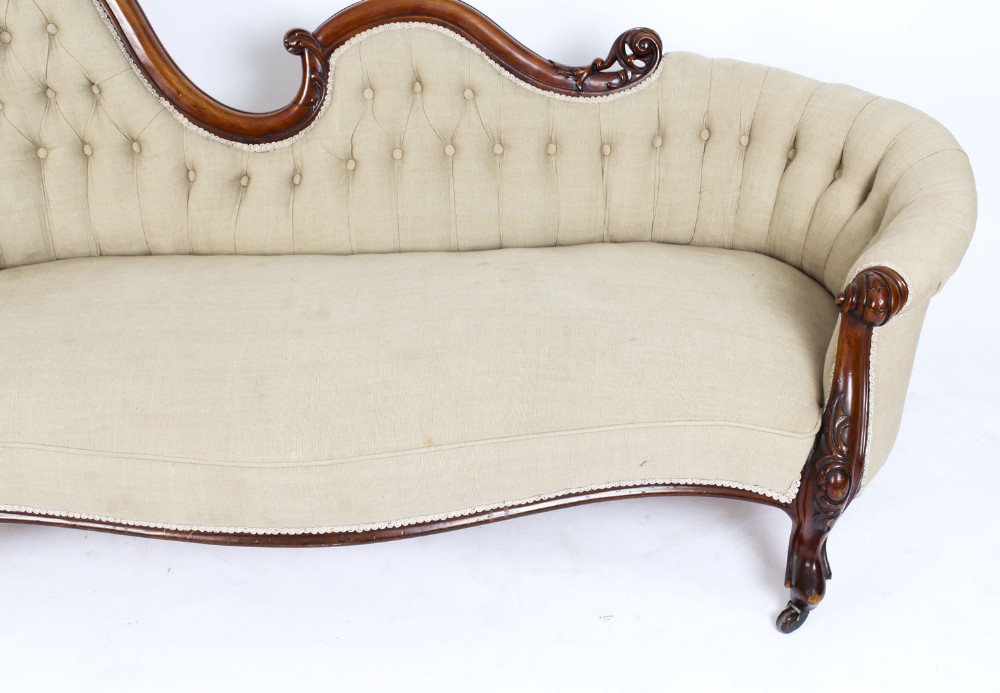
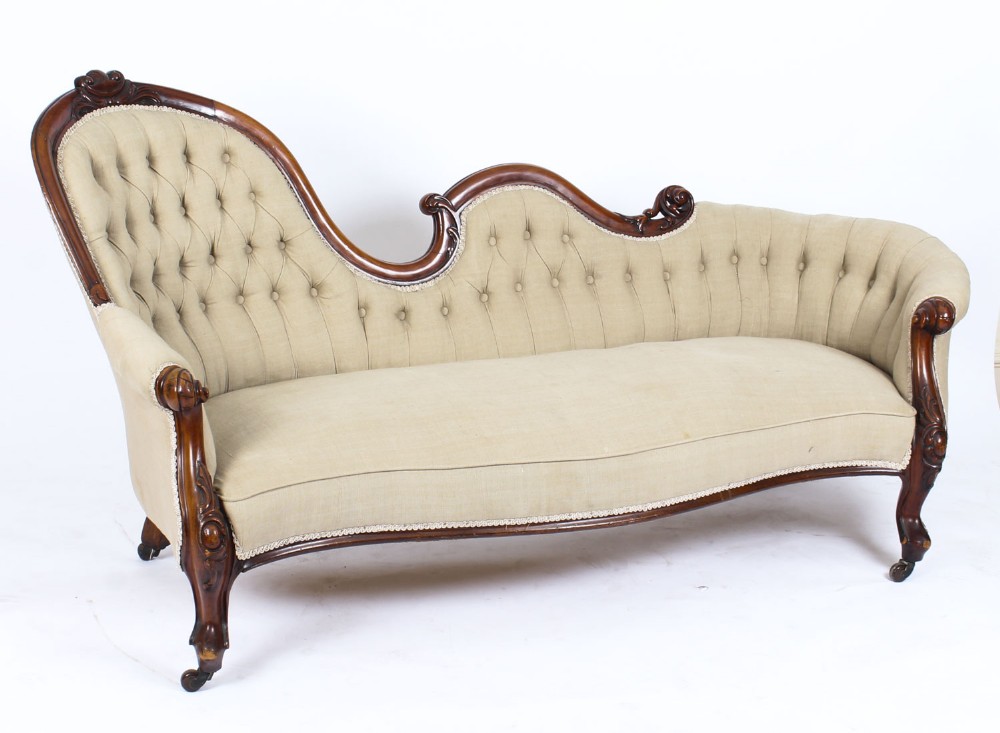
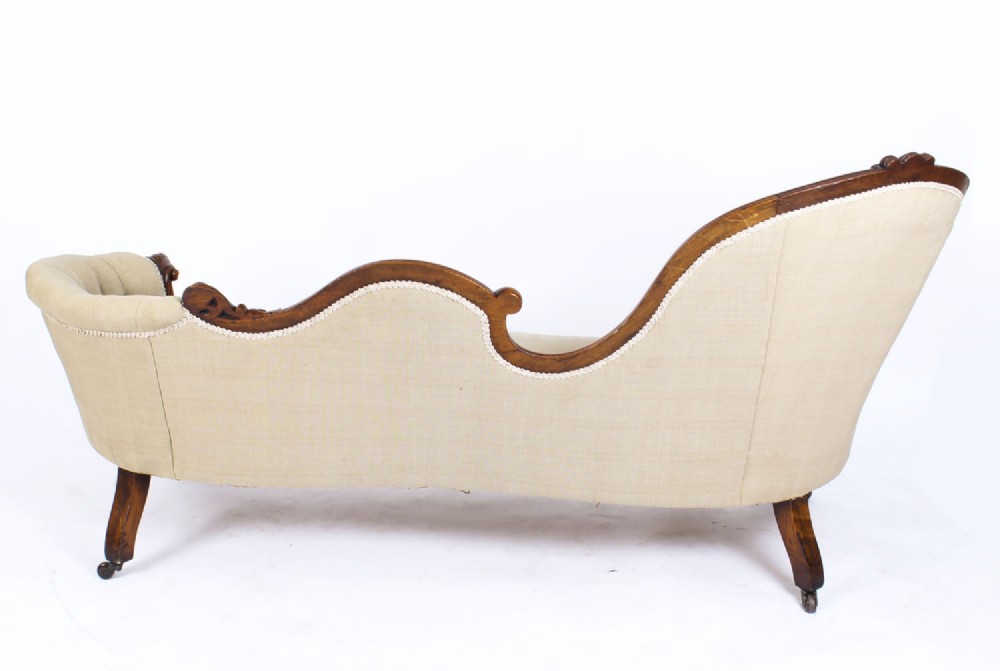
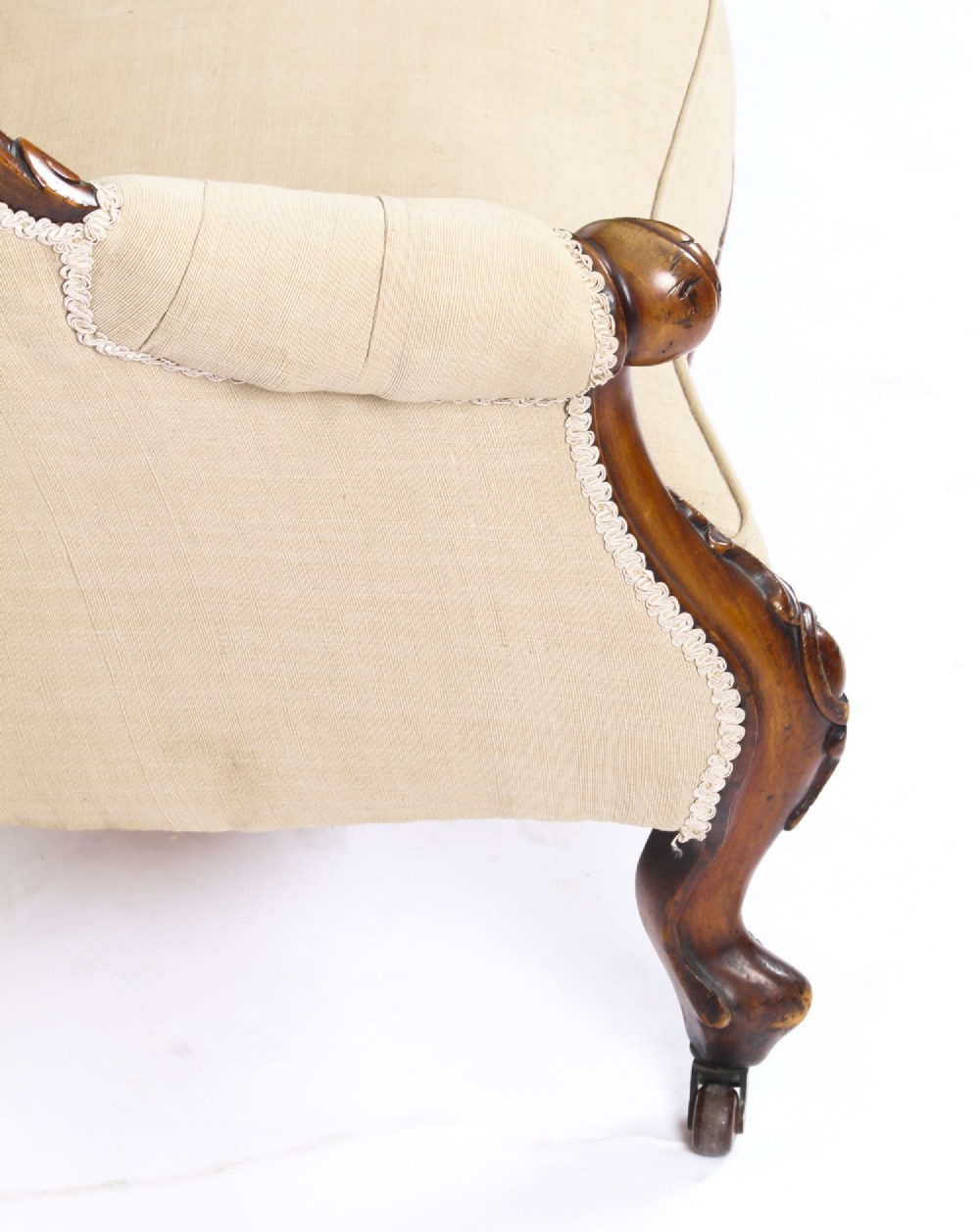
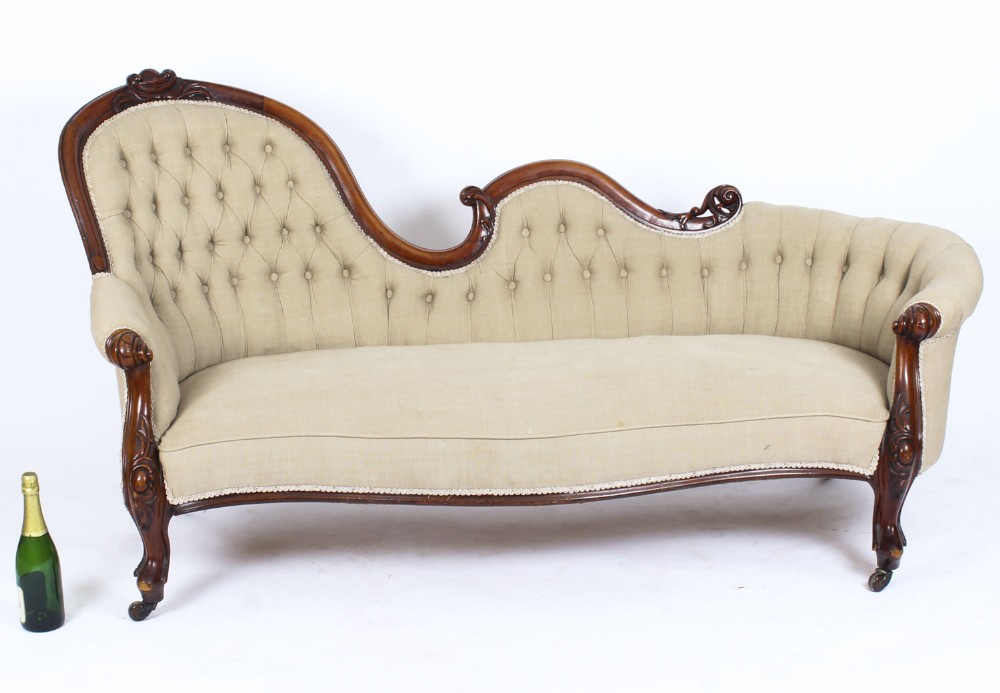
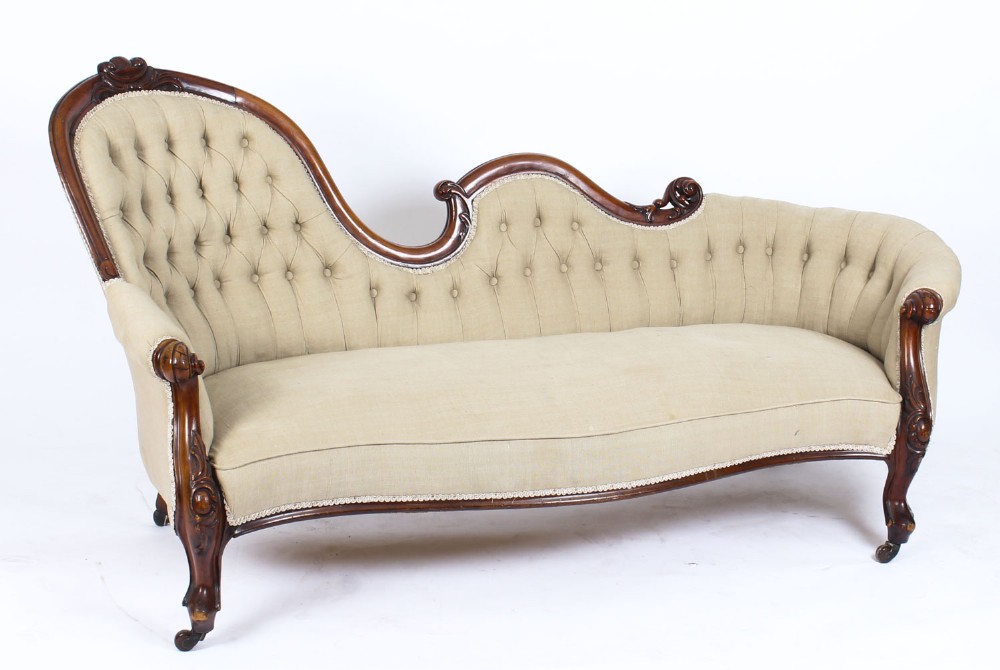
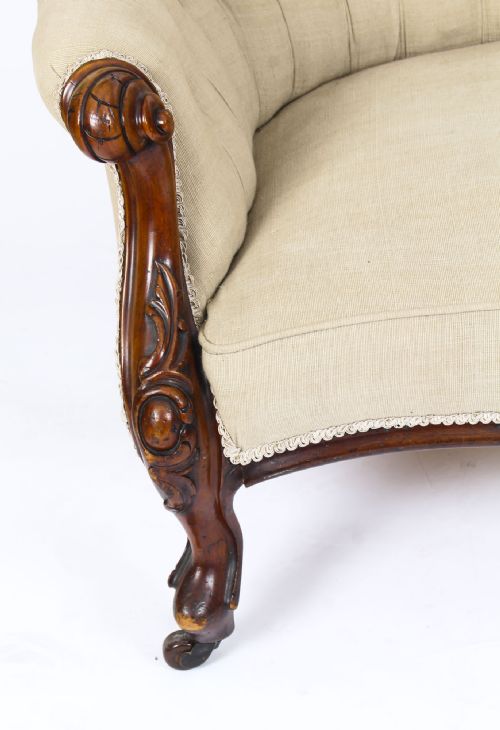
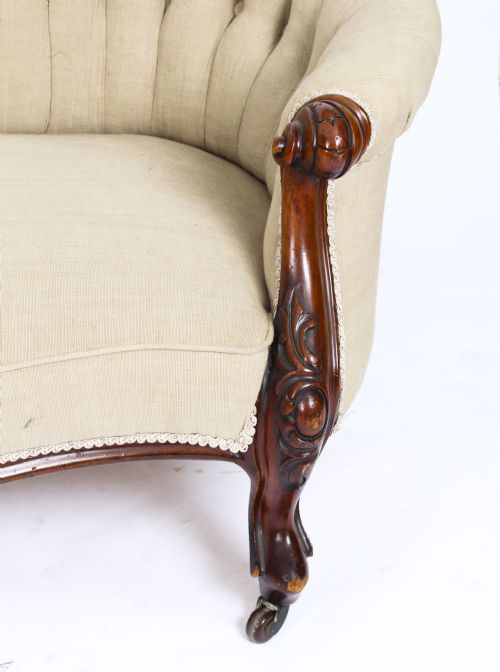
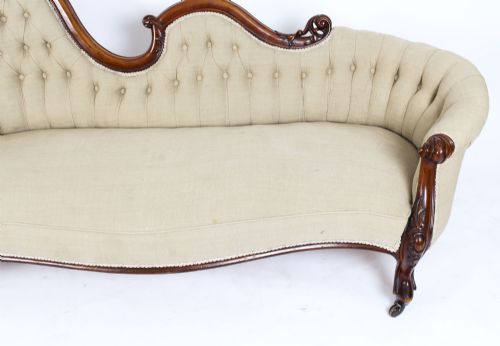
The sofa is raised on elegant cabriole legs that terminate in pad feet and brass castors.
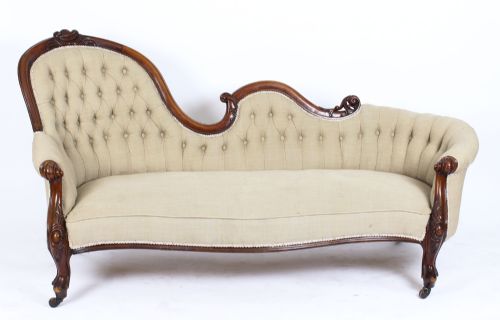
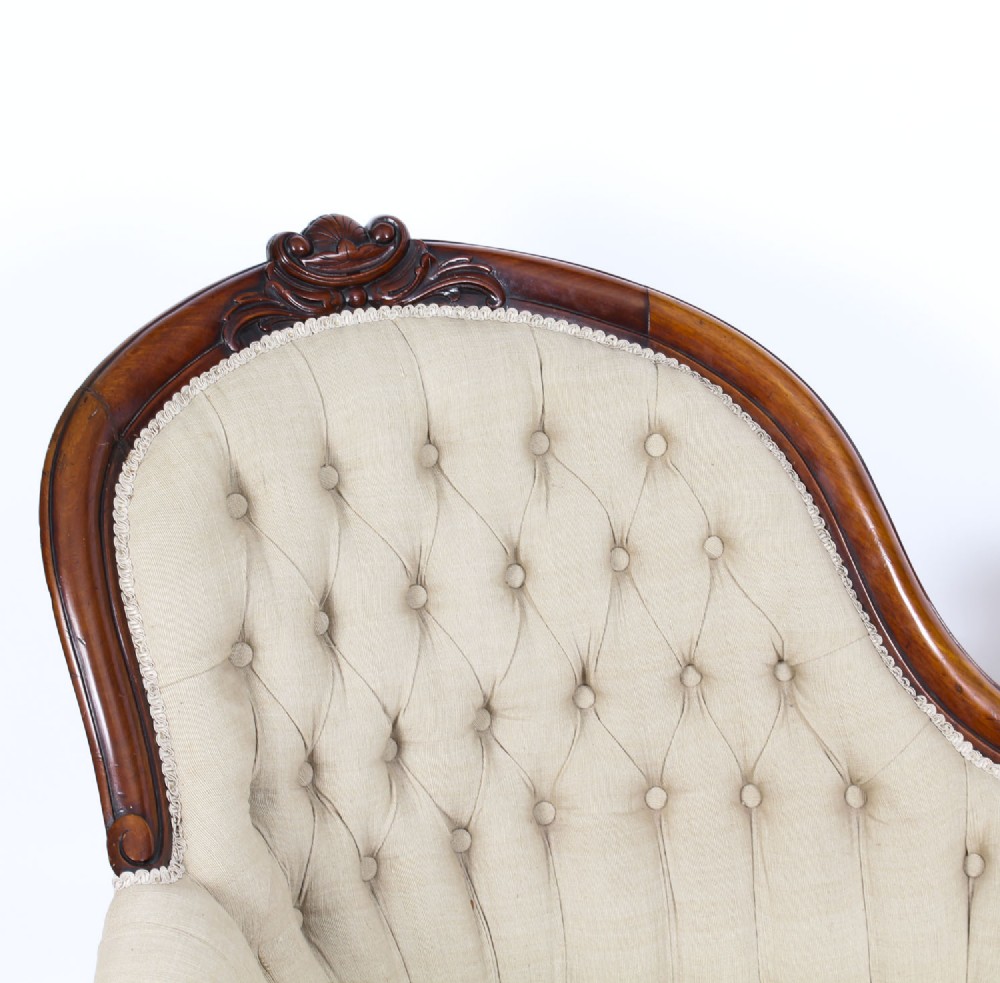
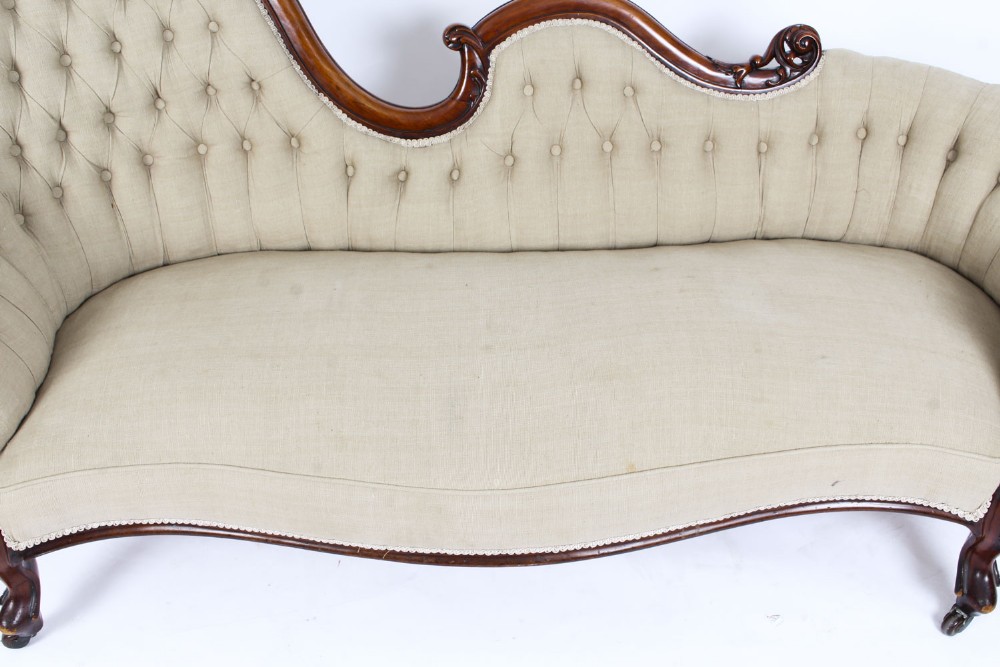
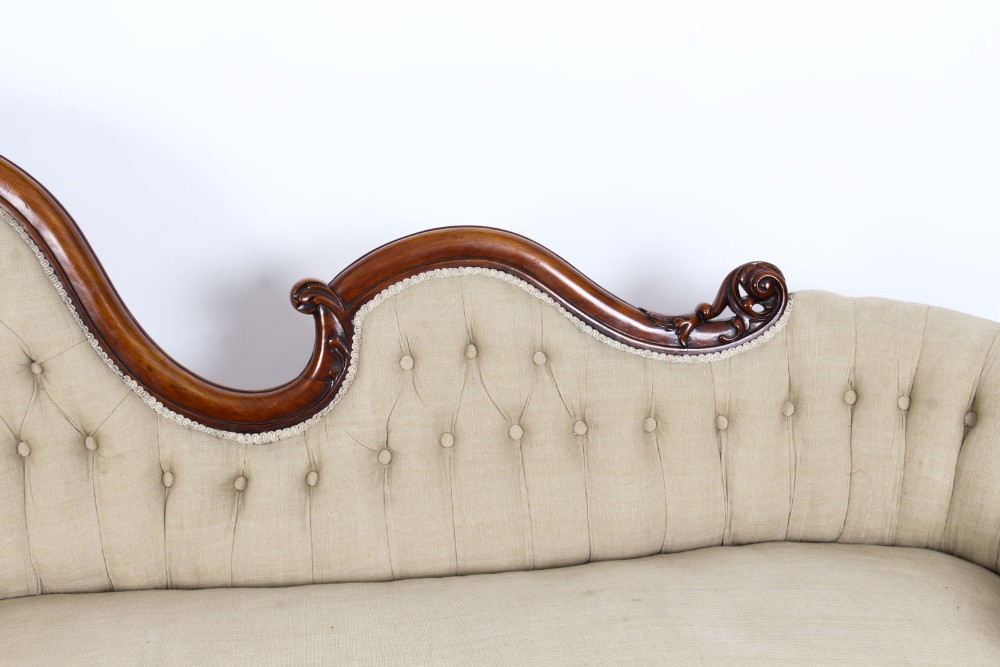
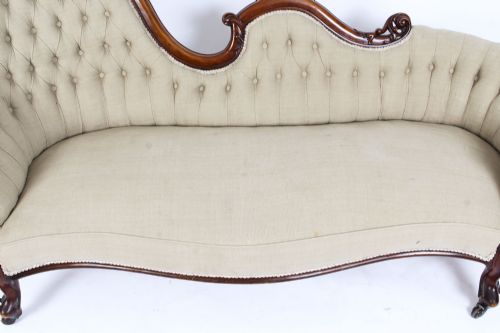
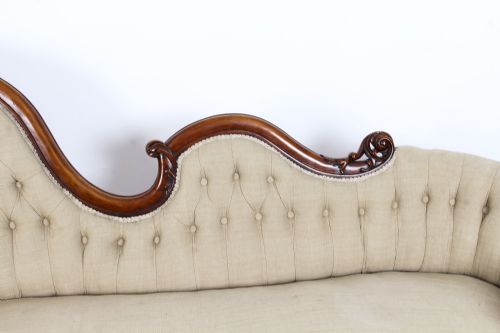
It has been reupholstered in a stunning beige fabric, which is in excellent condition.
There is no mistaking its beautiful and stylish design, which is certain to make it a treasured and comfortable addition to one of the rooms in your home.
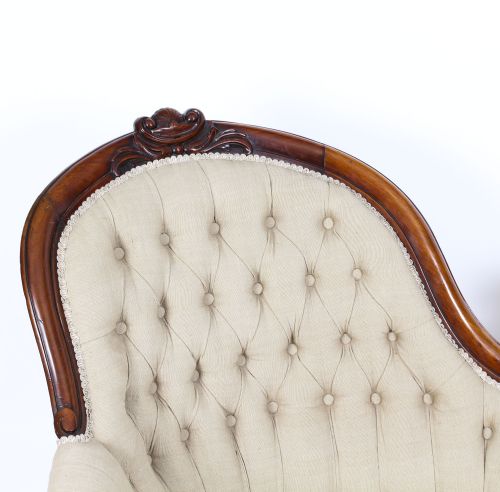
Condition:
In excellent condition, please see photos for confirmation.
Dimensions in cm:
Height 100 x Width 194 x Depth 86
Dimensions in inches:
Height 39.4 x Width 76.4 x Depth 33.9
Chaise longue
is an upholstered sofa in the shape of a chair that is long enough to support the legs. The architect, Le Corbusier designed Chaise Longue, LC-4 - Chaise longue "Long chair" which has become a classic item.
It is thought that the first blend of a chair and daybed originated in Egypt. The earliest known models were made from palm sticks lashed together with pieces of cord or rawhide. Later, Egyptian bed-makers introduced mortise-and-tenon construction and wood bed frames veneered with bone or ebony, in common use with many examples being found in the 1st dynasty (3100–2890 BC) tombs.
Ancient Greek art depicts gods and goddesses lounging in this type of chair. The Greeks changed from the normal practice of sitting at a table to the far more distinctive practice of reclining on couches as early as the 8th century BC.
The Romans also used a daybed for reclining in the daytime and to sleep on at night. At Roman banquets, the usual number of persons occupying each bed was three, with three daybeds forming three sides of a small square, so that the triclinium. The Romans did not practice upholstery, so the couches were made comfortable with pillows, loose covers and animal skins.
Mahogany
is probably one of the largest ‘families’ of hardwood, having many different varieties within its own species.
Mahogany has been used for centuries in ship building, house building, furniture making etc and is the core structure of just about every 19th century vanity box, dressing case or jewellery box. It became more of a Victorian trend to dress Mahogany with these decorative veneers, such as Rosewood, Kingwood, Burr Walnut and Coromandel, so that the actual Mahogany was almost hidden from view.
Mahogany itself is a rich reddish brown wood that can range from being plain in appearance to something that is so vibrant, figured and almost three dimensional in effect.
Although Mahogany was most often used in its solid form, it also provided some beautifully figured varieties of veneer like ‘Flame’ Mahogany and ‘Fiddleback’ Mahogany (named after its preferred use in the manufacture of fine musical instruments).
Cuban Mahogany was so sought after, that by the late 1850's, this particular variety became all but extinct.
Our reference: A1322
Regent Antiques has dated this piece to the 1860s.
We specialise in english and continental furniture, silver, porcelain and decorative items.
You can view the stock and full dealer information on the Regent Antiques Profile Page
Regent Antiques is a registered member of LAPADA CINOA
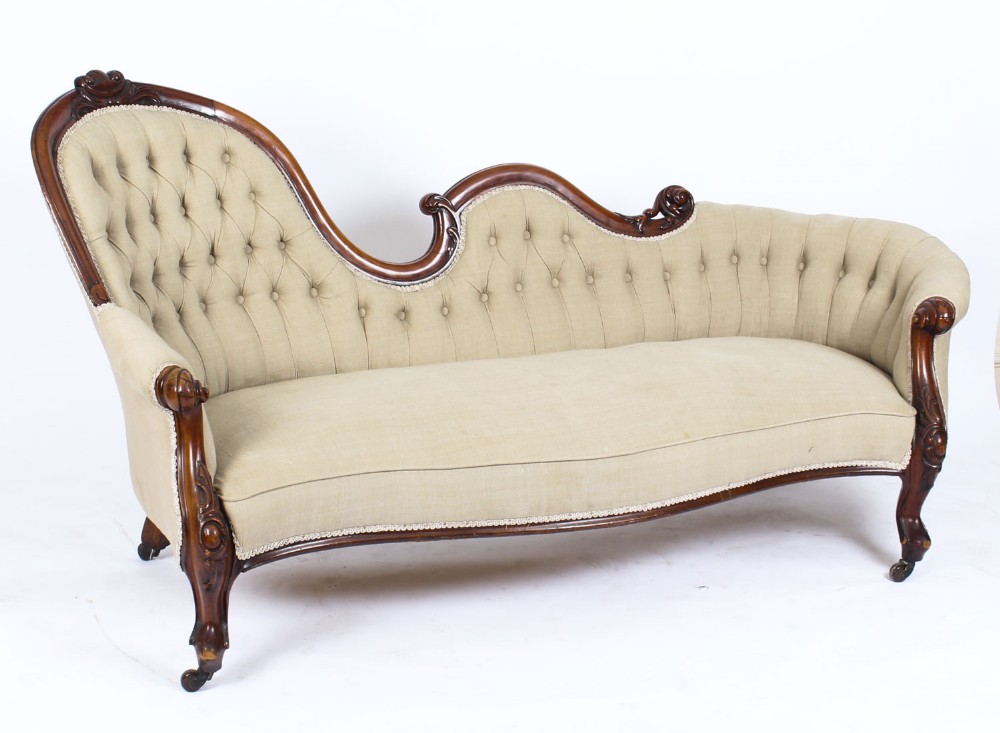
Antique Victorian Mahogany Sofa Chaise Longue Settee C.1860 19th Century