14,238  PAGES BROWSED TODAY PAGES TODAY 51 ANTIQUES UPLOADED TODAYNEW ARRIVALS
51 ITEMS ADDED TODAY
Sort Order
Items Per Page
Browse Categories
Sort order
Items per page
ID #SA731431
SOLD
Email
Save
Salesmans Sample of a Wasteneys Smith Patent Stockless Anchor
Jason Clarke Antiques
sold SA731431
Sorry, but this item has been sold.
Jason Clarke Antiques

Jason Clarke Antiques

Sellingantiques Verified Since Jul 2015
View Dealers Stock Page
Id #SA731431
PDF SHARE
SAVE

Salesmans Sample of a Wasteneys Smith Patent Stockless Anchor

1900 - 1920
Description

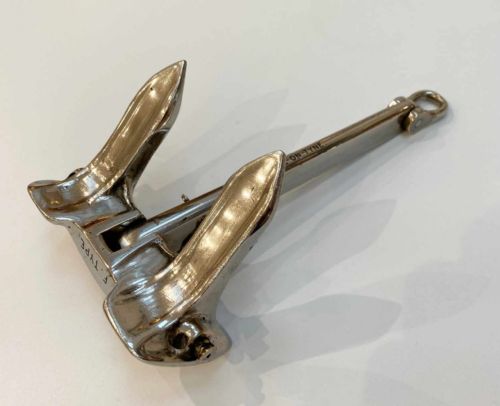
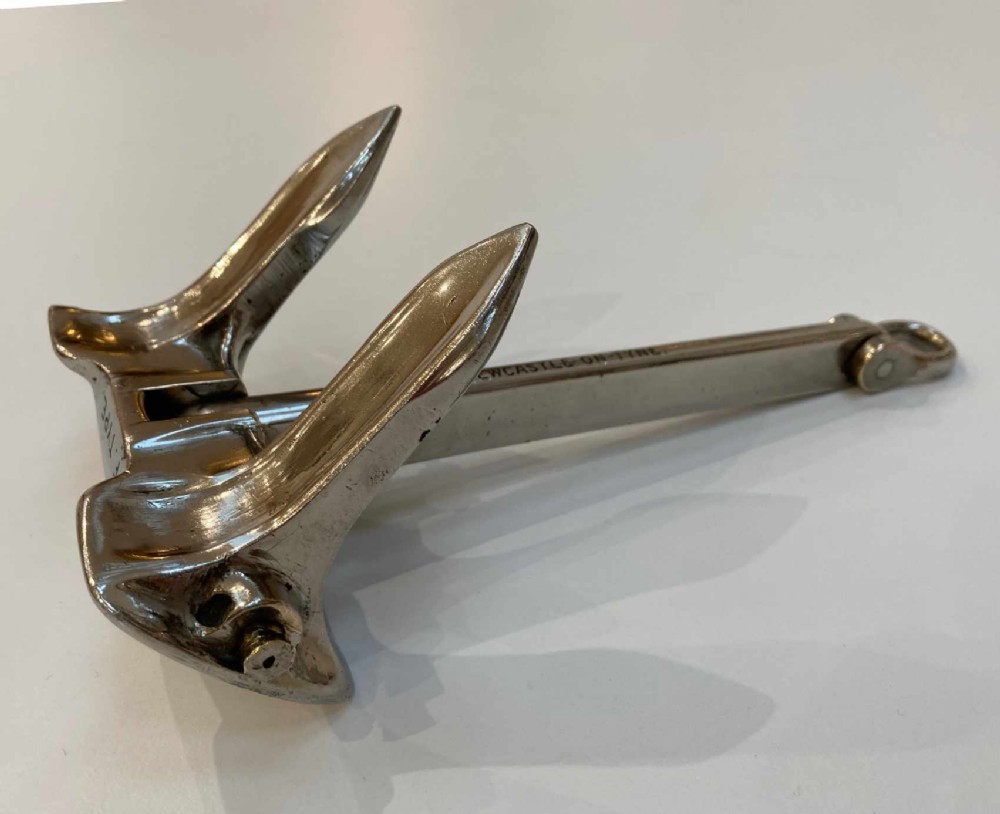
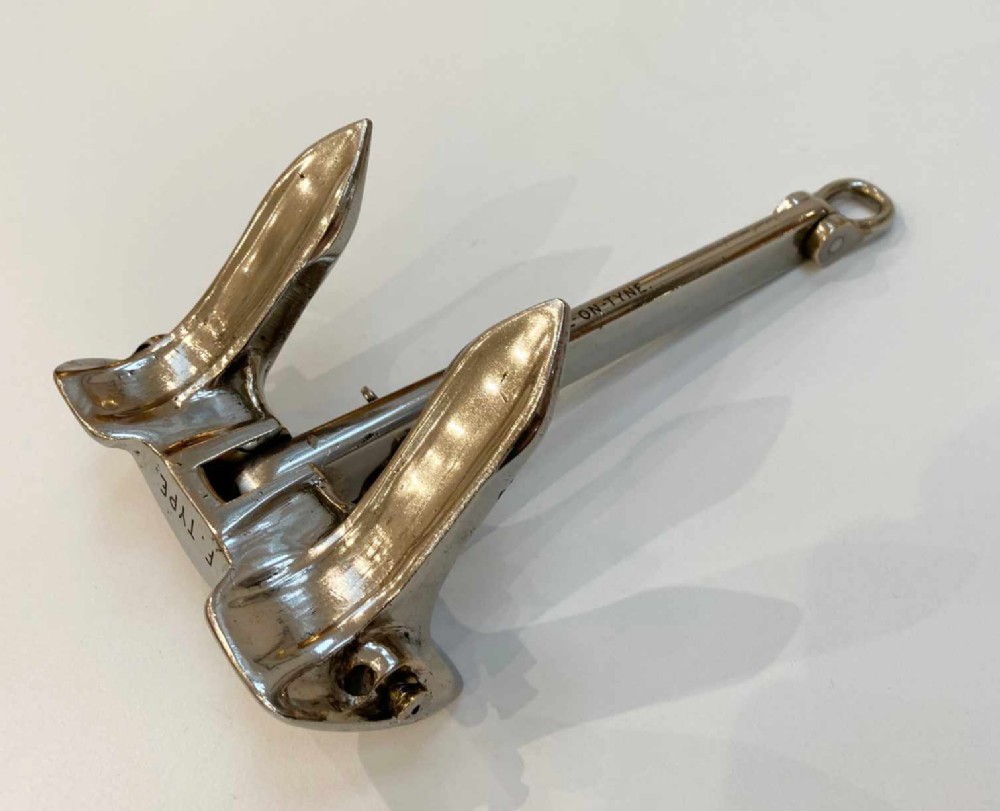
For sale, a rare salesman’s model of a Wasteney Smith improved patent F-Type anchor.

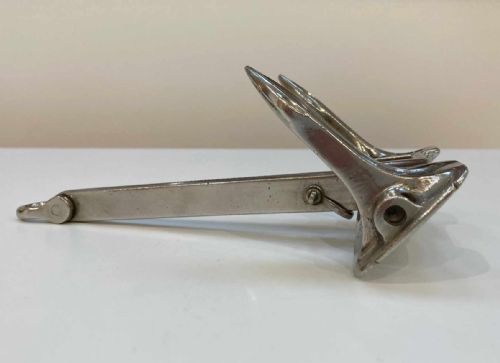
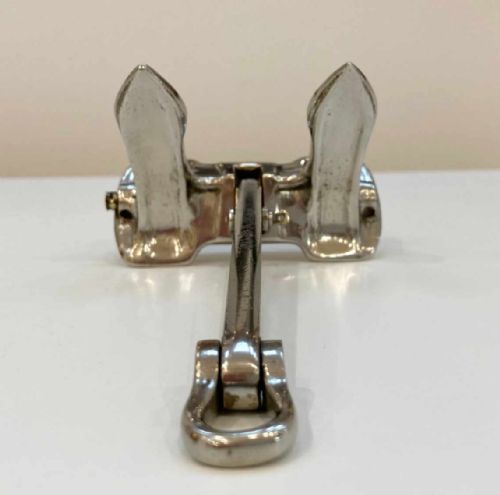
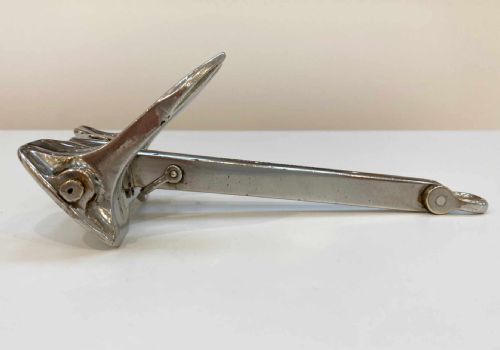
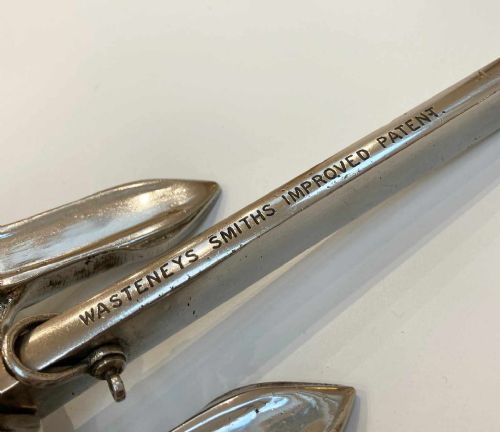
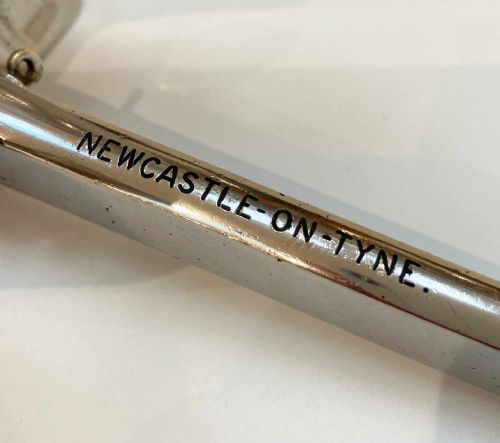
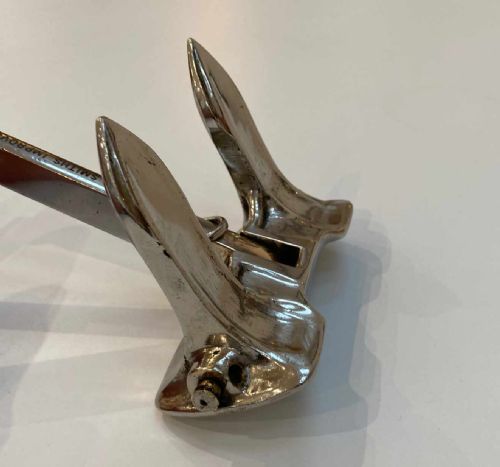
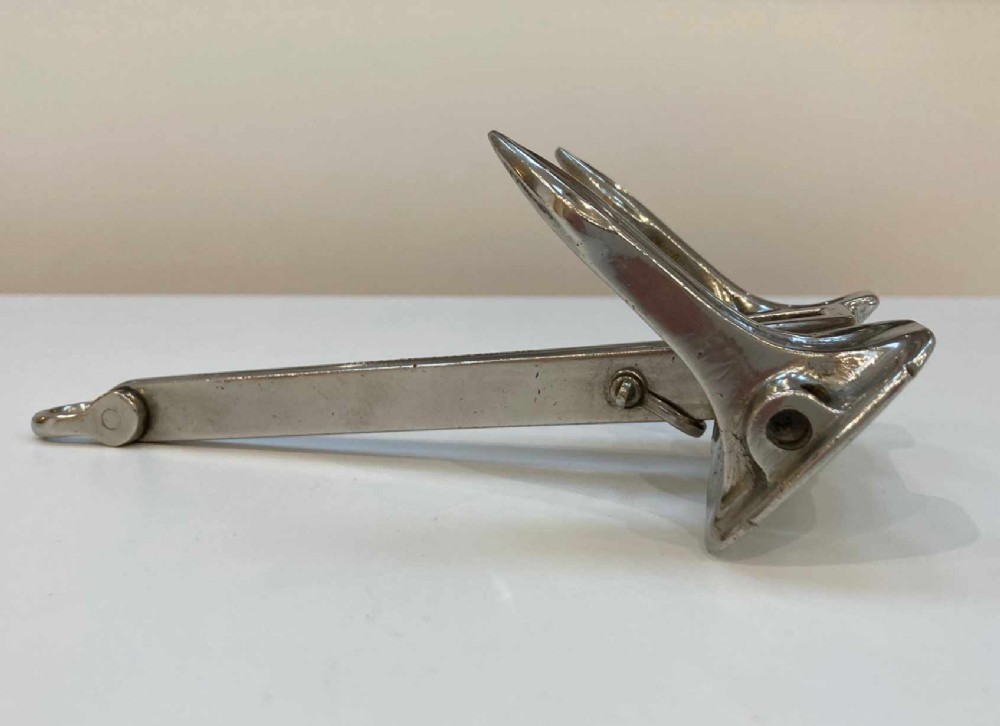
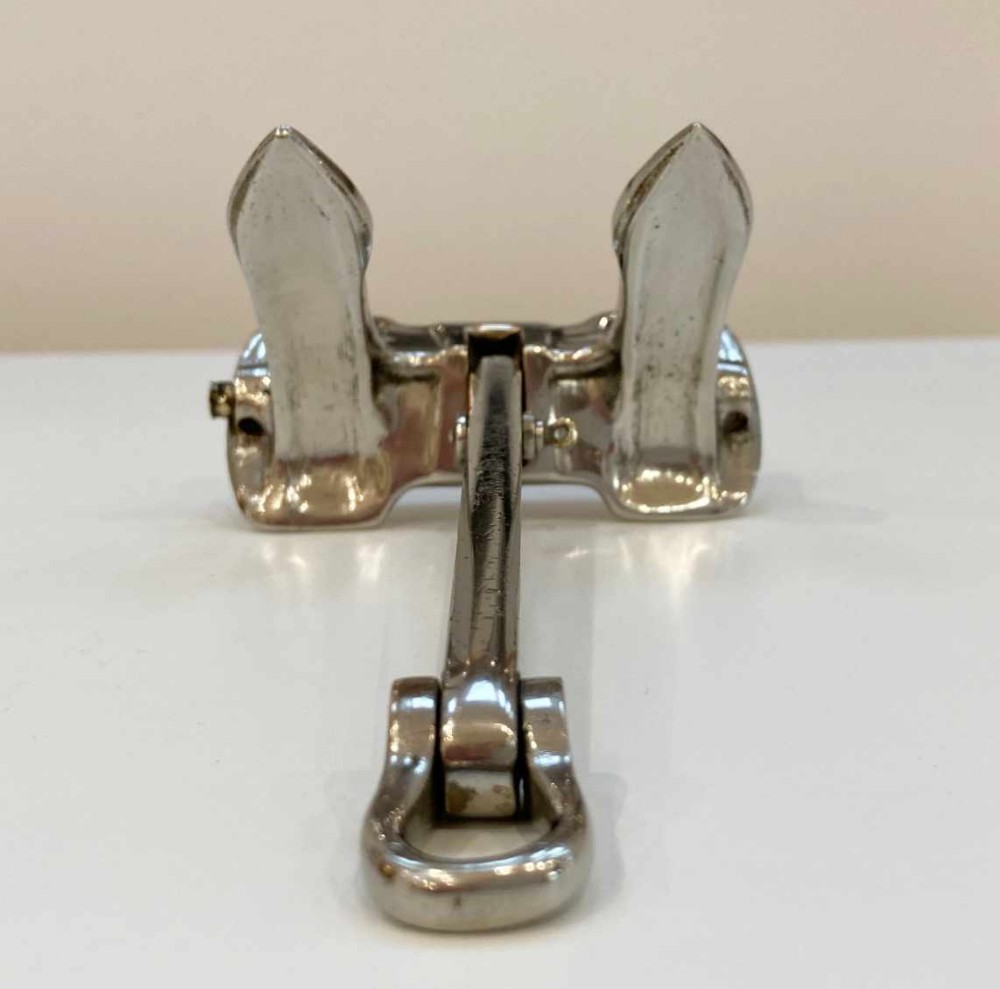
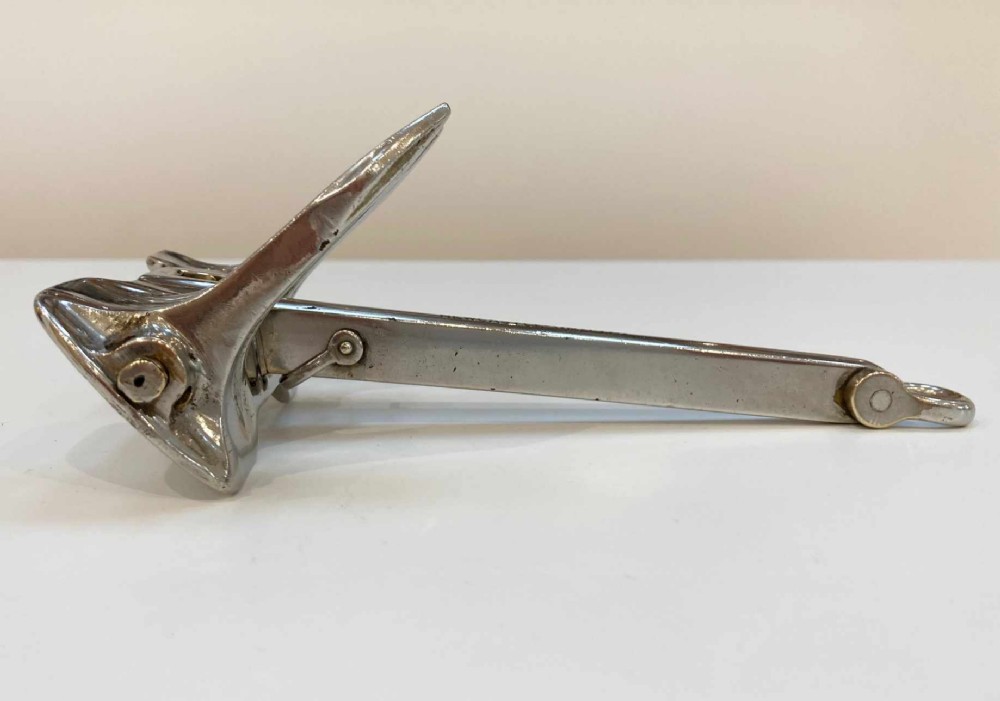
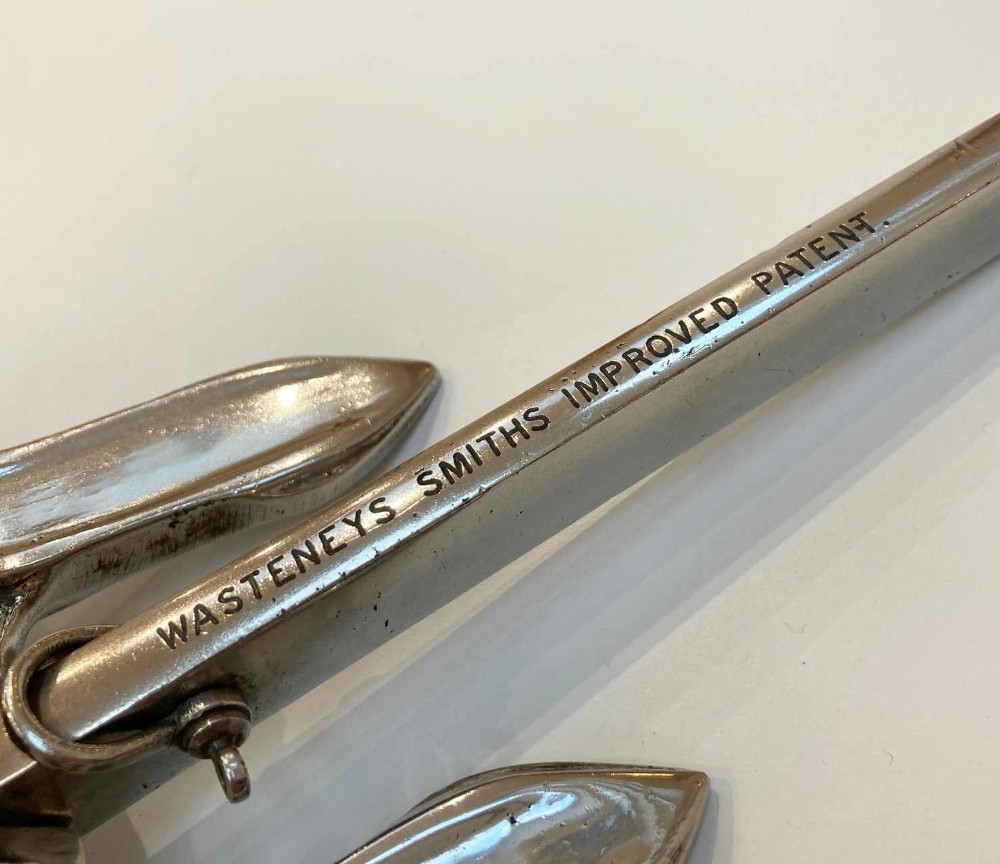
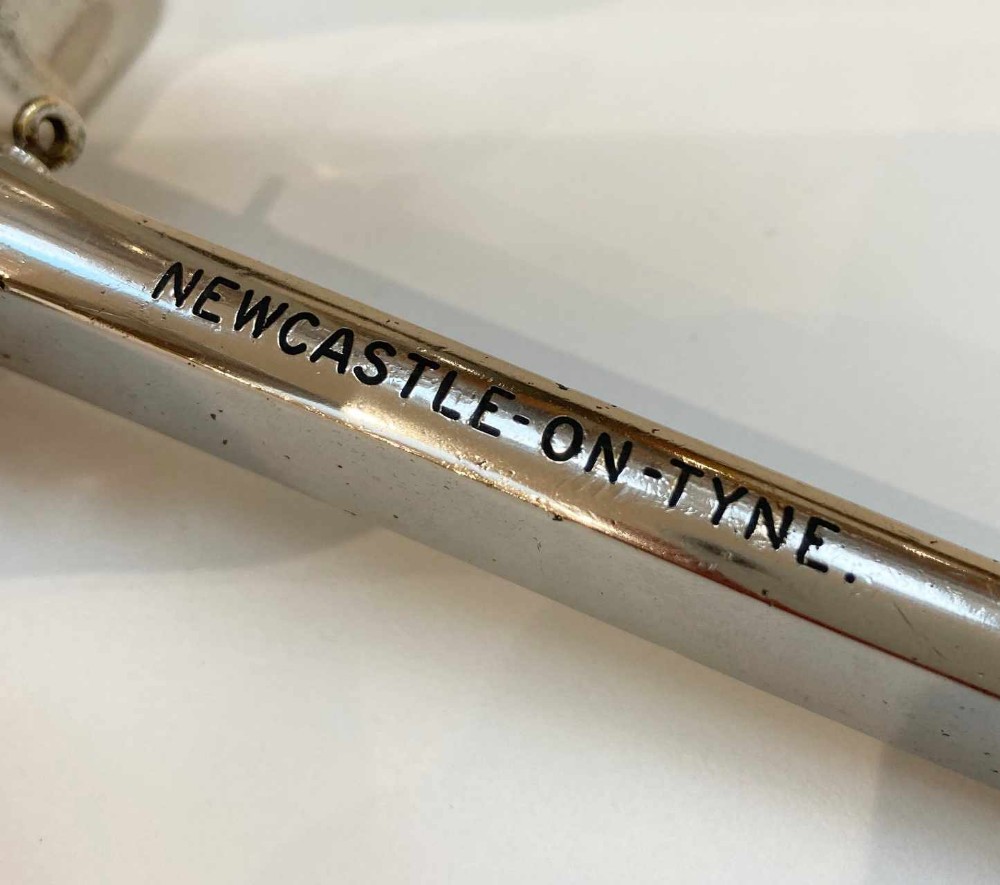
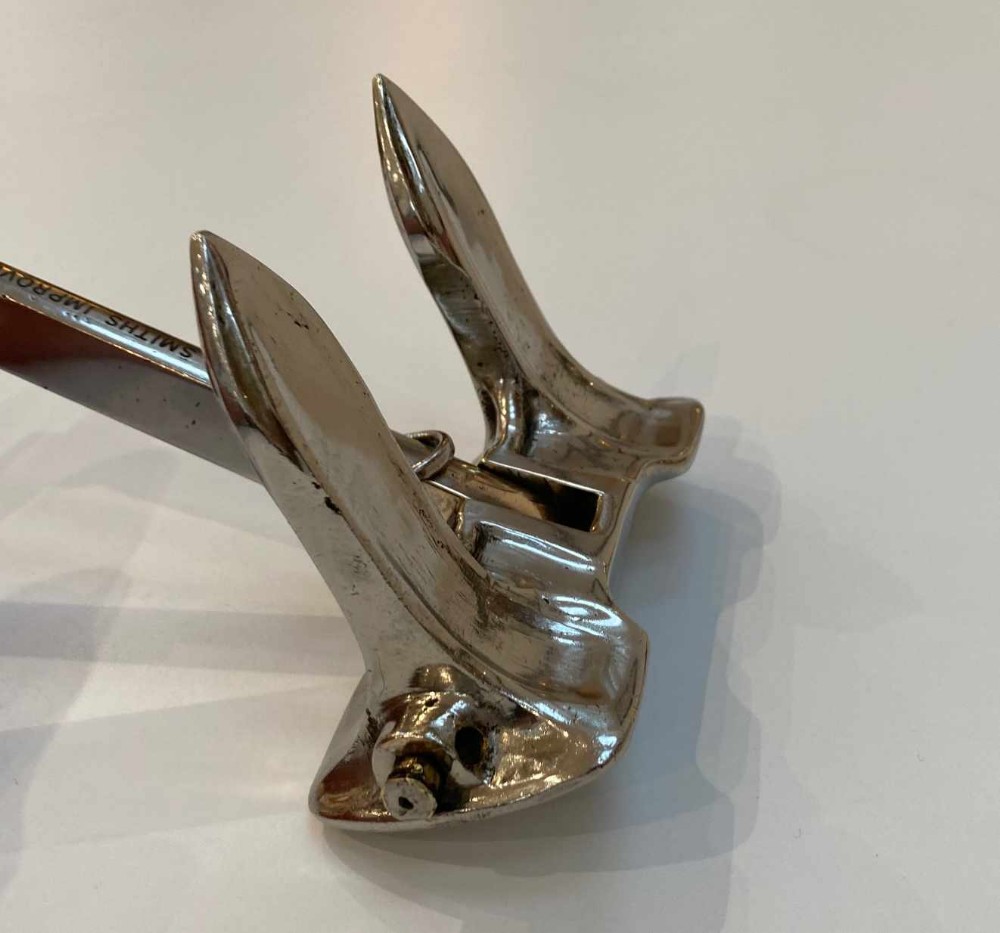
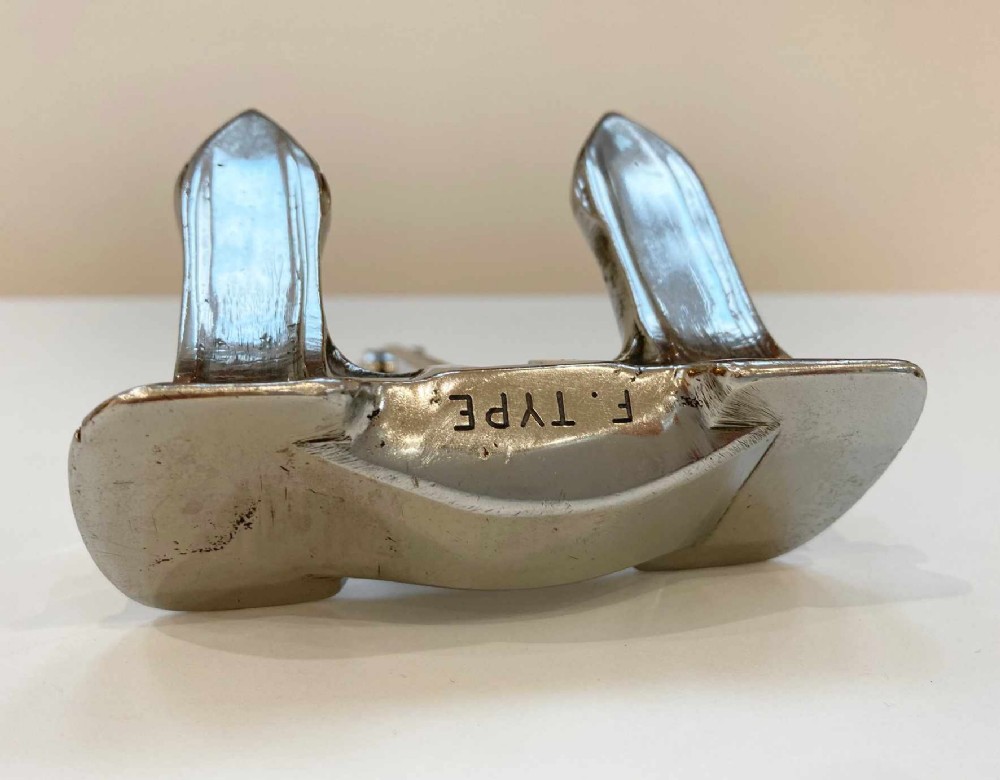
The shank is rectangular in section and tapers to a rounded top to which is attached a D-ring shackle. Towards the bottom of the shank is a double shackle which pivots on a central rivet. On the faces of the shank are two inscriptions: 'Wasteney Smiths Improved Patent' and 'Newcastle on Tyne'. The arms have flat rectangular bottoms and tall integral flukes that are half the height of the shank. The base is further engraved with the inscription: ‘F-Type’.
Wasteney Smith produced secured five varying patents (1871, 1874, 1885, 1899 & 1904) and this is likely to have been a salesmans sample or perhaps a model that would have been used as a submission for Governmental contracts. His anchors were favoured by The Royal Navy in the early part of the Twentieth Century and he maintained that relationship until 1912. The competition for sales to large bodies such as the Royal Navy and The Royal Life Boat Institution were fierce and there is evidence of trials involving his anchors in numerous contemporary journals.
Although this particular model is not present in the Greenwich National Maritime Museum, a large collection of model anchors exists as part of their inventory which may have been a result of aforementioned submissions.
William Wasteney Smith was born in Conisborough in 1838 and served an apprenticeship with the locomotive builders Fodds & Sons of Rotherham but in 1859 he left to join the Royal Navy as an Assistant Engineer serving for four years on HMS Bacchante in the Pacific.
Eventually leaving in 1866, he took a position as a civil engineer with Waring Brothers and was sent to Portugal to assist with railway construction and by 1868 he was appointed Inspector of Bridges to the Russian government and spent time overseeing work carried out by Hawks, Crayshaw & Co in Newcastle who were commissioned to provide ironwork for the Trancaucasian railways.
Remaining in Newcastle, in 1872 Wasteney Smith started to trade on his own account, a company that eventually incorporated his sons to become Wasteneys Smith & Sons. The move is likely to have co-incided with his patenting of an improved stockless anchor in 1871.
The US Patent remains available and reads thus:

“Be it known that I, William Wasteneys Smith of Newcastle on Tyne, have invented certain improvements in anchirs of which the following specification:

This invention consists in certain improvements in anchors, in which, by using a crosshead at the crown end, no stock is needed; at the same time greater steadiness is imparted, while from the large section offered for resistance, increased holding power is given. Also, by this steadying power being at the crown end, when the cable lifts the shank off the ground the nchor will not uncant as all anchors with stocks, or those that are curved at the crown end instead of square, do. By this means a ship may ride in safety with much less cable – an important advantage. Another improvement is the position and the use of the horns of the loose arms; which being always bearing points for the anchor when on the ground, they cause the arms to enter as soon as any strain is put on the cable, and by giving great bearing surface at wide distance from each other, they greatly add to the steadiness of the anchor.
Wasteney Smith died in 1914 but his company continued under his son’s management and it seems to have existed until the latter part of the Twentieth Century.

A rare and desirable miniature model, circa 1904

Physical Dimensions
Height
19cm (7.48")
Width
11cm (4.33")
Depth
5cm (1.97")
Declaration

Jason Clarke Antiques has dated this piece to the 1900s.

Reference Numbers
Sellingantiques Reference
SA731431
Description
For sale, a rare salesman’s model of a Wasteney Smith improved patent F-Type anchor.
The shank is rectangular in section and tapers to a rounded top to which is attached a D-ring shackle.
Jason Clarke Antiques

Towards the bottom of the shank is a double shackle which pivots on a central rivet. On the faces of the shank are two inscriptions: 'Wasteney Smiths Improved Patent' and 'Newcastle on Tyne'. The arms have flat rectangular bottoms and tall integral flukes that are half the height of the shank. The base is further engraved with the inscription: ‘F-Type’.

fig 1. Salesmans Sample of a Wasteneys Smith Patent Stockless Anchor

Wasteney Smith produced secured five varying patents (1871, 1874, 1885, 1899 & 1904) and this is likely to have been a salesmans sample or perhaps a model that would have been used as a submission for Governmental contracts. His anchors were favoured by The Royal Navy in the early part of the Twentieth Century and he maintained that relationship until 1912. The competition for sales to large bodies such as the Royal Navy and The Royal Life Boat Institution were fierce and there is evidence of trials involving his anchors in numerous contemporary journals.

fig 2. Salesmans Sample of a Wasteneys Smith Patent Stockless Anchor

Although this particular model is not present in the Greenwich National Maritime Museum, a large collection of model anchors exists as part of their inventory which may have been a result of aforementioned submissions.

fig 3. Salesmans Sample of a Wasteneys Smith Patent Stockless Anchor

William Wasteney Smith was born in Conisborough in 1838 and served an apprenticeship with the locomotive builders Fodds & Sons of Rotherham but in 1859 he left to join the Royal Navy as an Assistant Engineer serving for four years on HMS Bacchante in the Pacific.

fig 4. Salesmans Sample of a Wasteneys Smith Patent Stockless Anchor

Eventually leaving in 1866, he took a position as a civil engineer with Waring Brothers and was sent to Portugal to assist with railway construction and by 1868 he was appointed Inspector of Bridges to the Russian government and spent time overseeing work carried out by Hawks, Crayshaw & Co in Newcastle who were commissioned to provide ironwork for the Trancaucasian railways.

fig 5. Salesmans Sample of a Wasteneys Smith Patent Stockless Anchor

Remaining in Newcastle, in 1872 Wasteney Smith started to trade on his own account, a company that eventually incorporated his sons to become Wasteneys Smith & Sons. The move is likely to have co-incided with his patenting of an improved stockless anchor in 1871.

fig 6. Salesmans Sample of a Wasteneys Smith Patent Stockless Anchor

The US Patent remains available and reads thus:

“Be it known that I, William Wasteneys Smith of Newcastle on Tyne, have invented certain improvements in anchirs of which the following specification:

This invention consists in certain improvements in anchors, in which, by using a crosshead at the crown end, no stock is needed; at the same time greater steadiness is imparted, while from the large section offered for resistance, increased holding power is given. Also, by this steadying power being at the crown end, when the cable lifts the shank off the ground the nchor will not uncant as all anchors with stocks, or those that are curved at the crown end instead of square, do. By this means a ship may ride in safety with much less cable – an important advantage. Another improvement is the position and the use of the horns of the loose arms; which being always bearing points for the anchor when on the ground, they cause the arms to enter as soon as any strain is put on the cable, and by giving great bearing surface at wide distance from each other, they greatly add to the steadiness of the anchor.

fig 7. Salesmans Sample of a Wasteneys Smith Patent Stockless Anchor

Wasteney Smith died in 1914 but his company continued under his son’s management and it seems to have existed until the latter part of the Twentieth Century.

A rare and desirable miniature model, circa 1904

Height
19cm (7.48")
Width
11cm (4.33")
Depth
5cm (1.97")
Date of Manufacture

Jason Clarke Antiques has dated this piece to the 1900s.

Reference Numbers
Sellingantiques Ref
SA731431
Jason Clarke Antiques
Sellingantiques verified Since Jul 2015
Dealer Profile

You can view the stock and full dealer information on the Jason Clarke Antiques Profile Page
PDF SHARE
SAVE
Salesmans Sample of a Wasteneys Smith Patent Stockless Anchor
1 / 10
Archive I Salesmans Sample of a Wasteneys Smith Patent Stockless Anchor
Salesmans Sample of a Wasteneys Smith Patent Stockless Anchor
Archive II Salesmans Sample of a Wasteneys Smith Patent Stockless Anchor View II
Archive III Salesmans Sample of a Wasteneys Smith Patent Stockless Anchor View III
Archive IV Salesmans Sample of a Wasteneys Smith Patent Stockless Anchor View IV
Archive V Salesmans Sample of a Wasteneys Smith Patent Stockless Anchor View V
Archive VI Salesmans Sample of a Wasteneys Smith Patent Stockless Anchor View VI
Archive VII Salesmans Sample of a Wasteneys Smith Patent Stockless Anchor View VII
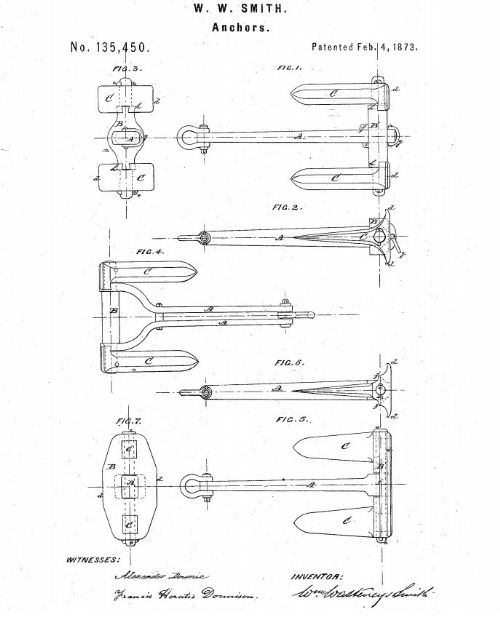
Archive VIII Salesmans Sample of a Wasteneys Smith Patent Stockless Anchor View VIII
Archive IX Salesmans Sample of a Wasteneys Smith Patent Stockless Anchor View IX
Archive X Salesmans Sample of a Wasteneys Smith Patent Stockless Anchor View X
Enlarged Archival View
Telephone 07815 046645
Location
Newbury
Berkshire
United Kingdom
Verified Since Jul 2015
Items For Sale 80
Items Sold 607
Jason Clarke Antiques
Verified Since Jul 2015
View Dealer Info
Location: Newbury, Berkshire, United Kingdom
Verified
Jul 2015
For Sale
80
Sold
607
Salesmans Sample of a Wasteneys Smith Patent Stockless Anchor
Ref: SA731431
Salesmans Sample of a Wasteneys Smith Patent Stockless Anchor
Detail View 1
Detail View 2
Detail View 3
Detail View 4
Detail View 5
Detail View 6
Detail View 7
Detail View 8
Detail View 9
Archival Detail
Every single antique dealer on our platform is individually approved by our internal team. We verify their professional trade history, ethical standards, and photographic quality to ensure a secure, high-standard buying environment. Upon joining, every dealer agrees to a strict 9-point code of conduct. While issues can occasionally arise, our dealers typically resolve them swiftly and directly with the buyer. In fact, since our founding in 2002, Sellingantiques has only had to step in to help resolve an issue on roughly five occasions—a true testament to the quality of our dealers and their dedication to your happiness.
Our dealers are highly experienced in packing and shipping fragile, high-value antiques. Because you are in direct contact with the dealer, you will be able to easily go through all available shipping and insurance options together to ensure your item arrives safely.
Antiques are the ultimate green purchase. By choosing historical pieces over newly manufactured goods, you completely eliminate the carbon footprint of modern mass production while preserving exceptional, timeless craftsmanship.
items
Add keywords to the filter
Price
£100
£250000
Era
Movements
Material
Origin
Stock Location
Freshness
Online Payments
Categories