64,514  PAGES BROWSED TODAY PAGES TODAY • 207 ANTIQUES UPLOADED TODAYNEW ARRIVALS
GIFTS
207 ITEMS ADDED TODAY
Sort Order
Items Per Page
Antiques dealer?
Join as a Seller
Browse Categories
Sort order
Relevant Links
Items per page
for sale
€25,740     $27,940
£22,000
Selling price
Period Portraits

Period Portraits

Sellingantiques Verified Since Jan 2017
Browse dealers 48 items
  • About Us
    Specialist dealer in portraits from the 17th century to the 20th century. Our stock includes quality oil paintings, drawings, and mezzotints
Id #SA1248333
PDF SHARE
SAVE

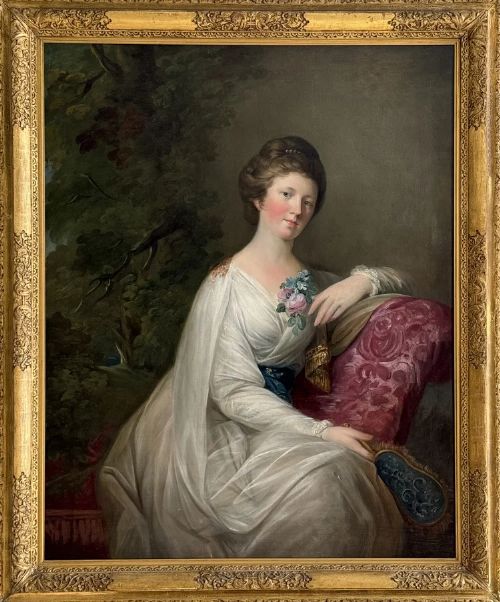
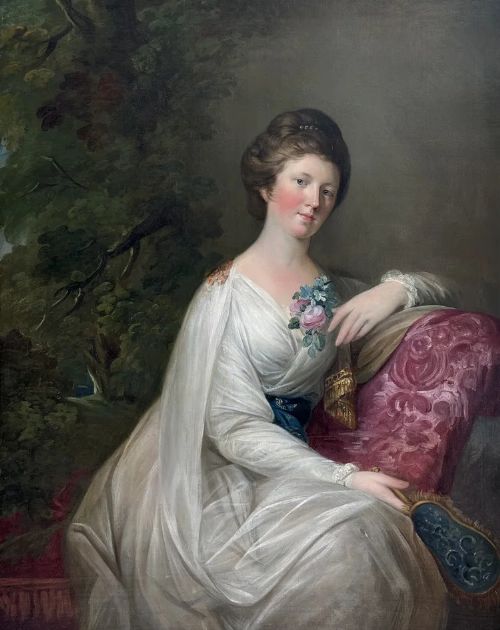
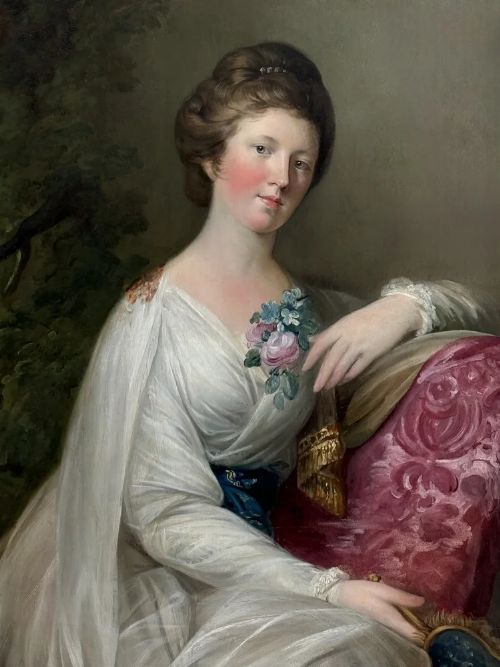
George Willison (1741-1797) - Oil on Canvas Portrait of Henrietta Fordyce (Nee Cumming)

18th century
For Sale by Period Portraits
Description

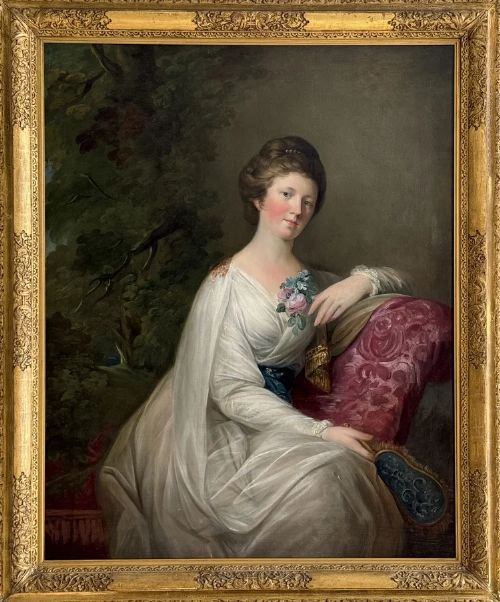
Fine, large and graceful 18th century portrait of Henrietta Fordyce (nee Cumming) by the celebrated Scottish portrait artist George Willison (1741-1797).

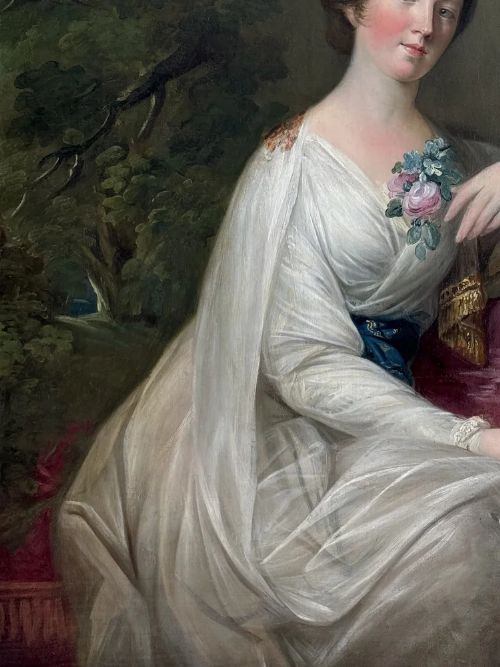
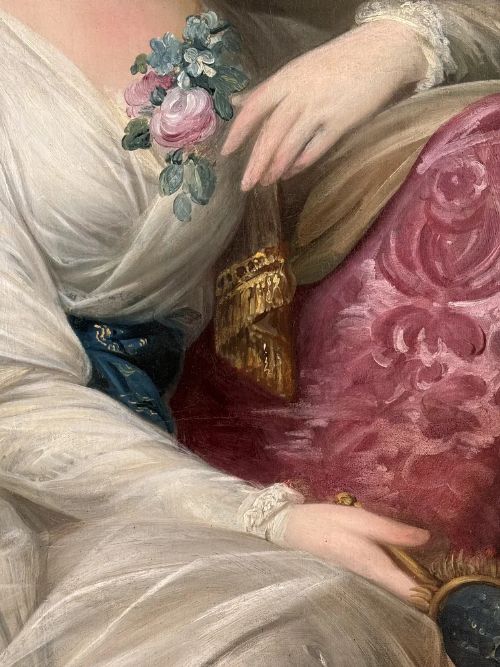
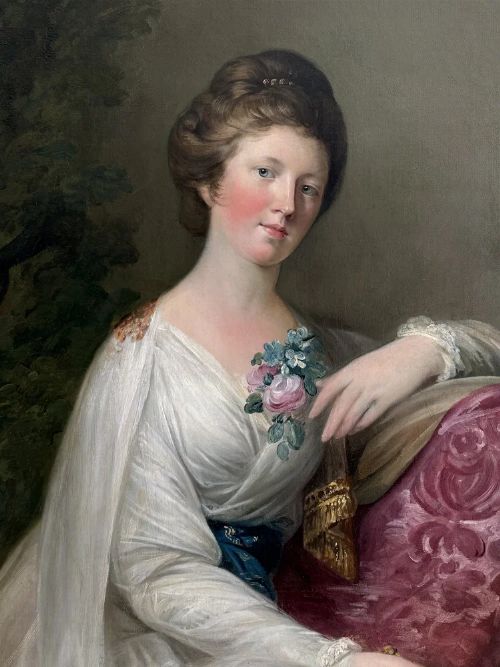
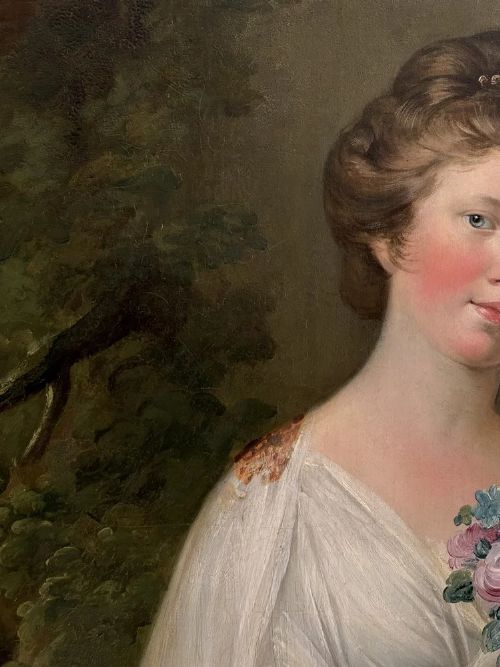
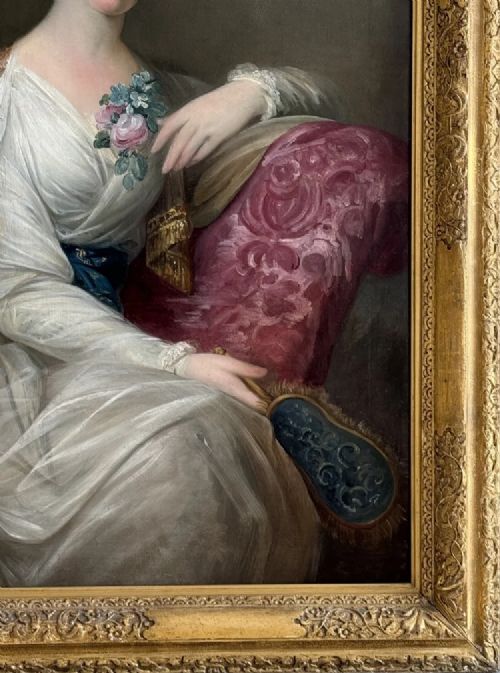
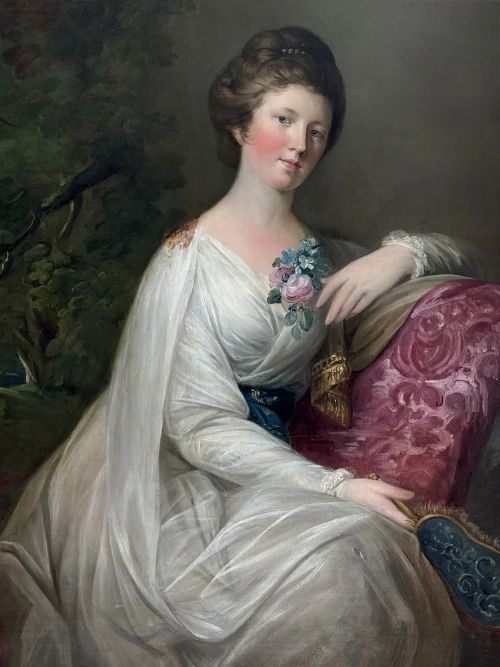
The elegant sitter is depicted three-quarter length reclining on a claret coloured chaise, amidst foliage. Wearing a white draped silk dress, she holds a fan in one hand and clasps a corsage to her busom with the other. Her hair is piled elegantly upwards and secured by pearl ornaments.

Henrietta Fordyce (1734–1823) Praised for her beauty and virtue. Henrietta Fordyce (née Cumming) was a governess renowned for her educational role in aristocratic households, and later for being the wife of Reverend James Fordyce, DD (1720–1 October 1796) Scottish Presbyterian minister and poet.

Born into a Scottish family, Fordyce received her early education in a French convent. Later in youth she began to be embedded in literary and social networks, and progressed to maintaining friendships with figures such as General Henry Seymour Conway and the poet Alison Cockburn. This exposure to Edinburgh's vibrant cultural milieu, amid the Scottish Enlightenment, shaped her developing interests in literature and moral philosophy.

Later working as a governess, Fordyce educated Lady Anne Barnard and her sisters in a period marked by informal yet influential domestic instruction. She married James Fordyce in 1771 after which the couple resided primarily in London, he was already recognised for his influential Sermons to Young Women (1765) which shaped contemporary views on female conduct. In fact in Pride and Prejudice, Mr. Collins chooses to read Fordyce’s Sermons for Young Women aloud to the Bennet sisters.

After James Fordyce's death in 1796, Henrietta became the subject of Kelly's Memoir of the late Mrs. Henrietta Fordyce (1823), an anonymous biography that highlighted her character, family life, and connections through letters, anecdotes, and poetry, portraying her as an exemplary figure of resilience and piety.

Fordyce was also a celebrated figure within the cultural milieu of Enlightenment Scotland and England, and she is depicted in several notable portraits from the late eighteenth century. One of the earliest of which is a 1774 red chalk drawing by Scottish artist Alexander Nasmyth, titled Henrietta Fordyce Cummyng Holding a Bird. In this work, Fordyce is portrayed in a delicate, intimate pose, ad this graceful portrait highlights her poise and refinement.

Her close friendhsip with celebrated Swiss neoclassical painter Angelica Kauffman resulted in Henrietta being depicted as ‘Mrs. Fordyce, at the Grave of Fingal’ it shows her in a full-length, almost profile view, showering flowers from a basket onto the grave of the legendary hero Fingal amid a mountainous Highland landscape. This work was likely commissioned within Kauffman's circle of friends, including the Fordyce family, whom she affectionately termed "the all harmonious Triad" comprising Henrietta, her husband James, and his brother William.

George Willison (1741-1797) Edinburgh-born George Willison was primarily a painter of portraits, although examples of mythological subjects are also known. The artist was much aided in his career by his wealthy uncle, George Dempster, who sponsored his nephew's training in Edinburgh and, from 1760 to 1767, in Rome.

A pupil of Mengs in Rome (before Mengs left for Madrid in 1761) Willison painted James Boswell, 1740 - 1795. Diarist and biographer of Dr Samuel Johnson in Rome in 1765 and this portrait is now on display in the Scottish National Portrait Gallery.

The artist returned to work in London from 767 and exhibited at the Scottish Academy between 1767 - 1770, and at the Royal Academy in 1771 and 1772.

Dempster, who was Director of the

Date of Manufacture

Period Portraits has dated this 18th Century Portrait Painting to the 18th Century.

Physical Dimensions
Height
145cm (57.09")
Width
120cm (47.24")
Depth
3cm (1.18")
Reference Numbers
Sellingantiques Reference
SA1248333
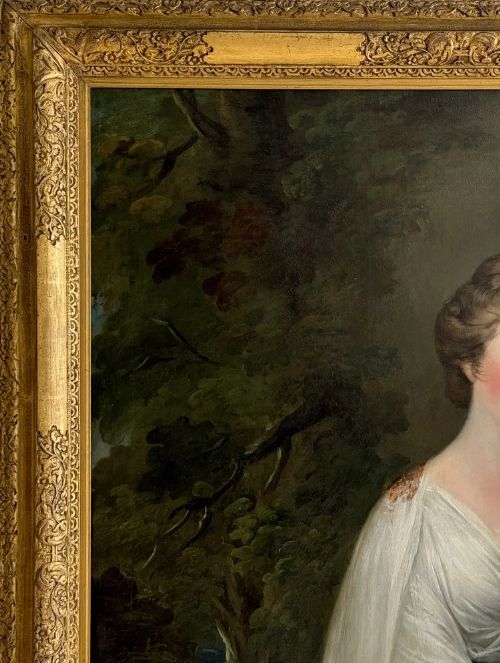
An eighteenth-century oil portrait on canvas depicting a seated woman in a white gown within an ornate carved giltwood frame.Detail view 1Detail view 2Detail view 3Detail view 4Detail view 5Detail view 6Detail view 7Detail view 8Detail view 9Detail view 10
1 / 11
18th Century · SA1248333
George Willison (1741-1797) - Oil on Canvas Portrait of Henrietta Fordyce (Nee Cumming)
£22,000€25,740    $27,940

Delivery and payment for this piece are arranged with the dealer.

Ask the dealer a question
Description
Fine, large and graceful 18th century portrait of Henrietta Fordyce (nee Cumming) by the celebrated Scottish portrait artist George Willison (1741-1797).

The elegant sitter is depicted three-quarter length reclining on a claret coloured chaise, amidst foliage. Wearing a white draped silk dress, she holds a fan in one hand and clasps a corsage to her busom with the other. Her hair is piled elegantly upwards and secured by pearl ornaments.

Henrietta Fordyce (1734–1823) Praised for her beauty and virtue. Henrietta Fordyce (née Cumming) was a governess renowned for her educational role in aristocratic households, and later for being the wife of Reverend James Fordyce, DD (1720–1 October 1796) Scottish Presbyterian minister and poet.

Born into a Scottish family, Fordyce received her early education in a French convent. Later in youth she began to be embedded in literary and social networks, and progressed to maintaining friendships with figures such as General Henry Seymour Conway and the poet Alison Cockburn. This exposure to Edinburgh's vibrant cultural milieu, amid the Scottish Enlightenment, shaped her developing interests in literature and moral philosophy.

Later working as a governess, Fordyce educated Lady Anne Barnard and her sisters in a period marked by informal yet influential domestic instruction. She married James Fordyce in 1771 after which the couple resided primarily in London, he was already recognised for his influential Sermons to Young Women (1765) which shaped contemporary views on female conduct. In fact in Pride and Prejudice, Mr. Collins chooses to read Fordyce’s Sermons for Young Women aloud to the Bennet sisters.

After James Fordyce's death in 1796, Henrietta became the subject of Kelly's Memoir of the late Mrs. Henrietta Fordyce (1823), an anonymous biography that highlighted her character, family life, and connections through letters, anecdotes, and poetry, portraying her as an exemplary figure of resilience and piety.

Fordyce was also a celebrated figure within the cultural milieu of Enlightenment Scotland and England, and she is depicted in several notable portraits from the late eighteenth century. One of the earliest of which is a 1774 red chalk drawing by Scottish artist Alexander Nasmyth, titled Henrietta Fordyce Cummyng Holding a Bird. In this work, Fordyce is portrayed in a delicate, intimate pose, ad this graceful portrait highlights her poise and refinement.

Her close friendhsip with celebrated Swiss neoclassical painter Angelica Kauffman resulted in Henrietta being depicted as ‘Mrs. Fordyce, at the Grave of Fingal’ it shows her in a full-length, almost profile view, showering flowers from a basket onto the grave of the legendary hero Fingal amid a mountainous Highland landscape. This work was likely commissioned within Kauffman's circle of friends, including the Fordyce family, whom she affectionately termed "the all harmonious Triad" comprising Henrietta, her husband James, and his brother William.

George Willison (1741-1797) Edinburgh-born George Willison was primarily a painter of portraits, although examples of mythological subjects are also known. The artist was much aided in his career by his wealthy uncle, George Dempster, who sponsored his nephew's training in Edinburgh and, from 1760 to 1767, in Rome.

A pupil of Mengs in Rome (before Mengs left for Madrid in 1761) Willison painted James Boswell, 1740 - 1795. Diarist and biographer of Dr Samuel Johnson in Rome in 1765 and this portrait is now on display in the Scottish National Portrait Gallery.

The artist returned to work in London from 767 and exhibited at the Scottish Academy between 1767 - 1770, and at the Royal Academy in 1771 and 1772.

Dempster, who was Director of the
Date18th Century
Height145cm (57.09")
Width120cm (47.24")
Depth3cm (1.18")
ReferenceSA1248333
Period Portraits
Period PortraitsSellingantiques verified since Jan 2017

Specialist dealer in portraits from the 17th century to the 20th century. Our stock includes quality oil paintings, drawings, and mezzotints

PDF SHARE
SAVE
£22,000
Ask the dealer
Archive I An eighteenth-century oil portrait on canvas depicting a seated woman in a white gown within an ornate carved giltwood frame.

George Willison (1741-1797) - Oil on Canvas Portrait of Henrietta Fordyce (Nee Cumming)

Archive II An eighteenth-century oil portrait on canvas depicting a seated woman in a white gown within an ornate carved giltwood frame. View II
Archive III An eighteenth-century oil portrait on canvas depicting a seated woman in a white gown within an ornate carved giltwood frame. View III
Archive IV An eighteenth-century oil portrait on canvas depicting a seated woman in a white gown within an ornate carved giltwood frame. View IV
Archive V An eighteenth-century oil portrait on canvas depicting a seated woman in a white gown within an ornate carved giltwood frame. View V
Archive VI An eighteenth-century oil portrait on canvas depicting a seated woman in a white gown within an ornate carved giltwood frame. View VI
Archive VII An eighteenth-century oil portrait on canvas depicting a seated woman in a white gown within an ornate carved giltwood frame. View VII
Archive VIII An eighteenth-century oil portrait on canvas depicting a seated woman in a white gown within an ornate carved giltwood frame. View VIII
Archive IX An eighteenth-century oil portrait on canvas depicting a seated woman in a white gown within an ornate carved giltwood frame. View IX
Archive X An eighteenth-century oil portrait on canvas depicting a seated woman in a white gown within an ornate carved giltwood frame. View X
Archive XI An eighteenth-century oil portrait on canvas depicting a seated woman in a white gown within an ornate carved giltwood frame. View XI
FURTHER BROWSING

Visitors also looked at these ⇣

Enlarged Archival View
Telephone 07889 859729
Location
North Yorkshire
United Kingdom
Verified Since Jan 2017
Items For Sale 48
Items Sold 67
Period Portraits
Period Portraits
Verified Since Jan 2017
View Dealer Info
Location: North Yorkshire, United Kingdom
Verified
Jan 2017
For Sale
48
Sold
67
An eighteenth-century oil portrait on canvas depicting a seated woman in a white gown within an ornate carved giltwood frame.
GEORGE WILLISON (1741-1797) - OIL ON CANVAS PORTRAIT OF HENRIETTA FORDYCE (NEE CUMMING)
Ref: SA1248333
An eighteenth-century oil portrait on canvas depicting a seated woman in a white gown within an ornate carved giltwood frame.
Detail View 1
Detail View 2
Detail View 3
Detail View 4
Detail View 5
Detail View 6
Detail View 7
Detail View 8
Detail View 9
Detail View 10
Archival Detail
Every single antique dealer on our platform is individually approved by our internal team. We verify their professional trade history, ethical standards, and photographic quality to ensure a secure, high-standard buying environment. Upon joining, every dealer agrees to a strict 9-point code of conduct. While issues can occasionally arise, our dealers typically resolve them swiftly and directly with the buyer. In fact, since our founding in 2002, Sellingantiques has only had to step in to help resolve an issue on roughly five occasions—a true testament to the quality of our dealers and their dedication to your happiness.
Our dealers are highly experienced in packing and shipping fragile, high-value antiques. Because you are in direct contact with the dealer, you will be able to easily go through all available shipping and insurance options together to ensure your item arrives safely.
Antiques are the ultimate green purchase. By choosing historical pieces over newly manufactured goods, you completely eliminate the carbon footprint of modern mass production while preserving exceptional, timeless craftsmanship.
Written by Sellingantiques from the dealer’s photographs and listing
  • ObjectOil Painting
  • Period18th century
  • StyleGeorgian
  • MaterialOil on Canvas, Giltwood Frame
  • ColourGold and Cream
  • MotifsHigh-waisted draped gown, Powdered hairstyle, Floral corsage, Carved leaf gilt frame
  • SizeH 145 cm (57 in) x W 120 cm (47 in) x D 3 cm (1 in)

This eighteenth-century Georgian oil on canvas portrait depicts Henrietta Fordyce (nee Cumming) by George Willison. The sitter wears a cream high-waisted draped gown with a blue ribbon, a floral corsage, and pearl ornaments in her powdered hairstyle, while reclining against a claret-coloured upholstered chaise. The canvas is set within a gold-coloured ornately carved giltwood frame featuring elaborate leaf motifs and corner scrolls. The piece measures 145 cm high, 120 cm wide, and 3 cm deep. Positioned within an English Country House aesthetic, the work serves as a formal wall hanging suited for placement above a mantel in a principal reception room, drawing room, or study. The portrait provides historical interest through its connection to Enlightenment figures and Scottish literary circles. The palette combines neutral cream tones with vivid claret and deep green foliage against a muted background.

Georgian portraiture of the eighteenth century is distinguished by its formal composition, soft lighting, and attention to drapery and costume. Artists of this era frequently depicted subjects in classical or romanticised attire set against atmospheric or landscape backgrounds to convey status and refinement.

Portraits from this era were typically executed using oil paints on linen or cotton canvas stretched over wooden frames. They were usually housed in ornate hand-carved softwood or plaster frames finished with real gold leaf gilding.

Authentic paintings from this period display natural craquelure throughout the paint layers, evidence of hand-stretching on period wooden strainers, and age-related oxidisation on the reverse of the canvas. Frame construction typically features traditional joinery and authentic gilding wear.

An eighteenth-century oil portrait provides a strong focal point when positioned above a fireplace mantelpiece, credenza, or sideboard. It contrasts effectively with clean-lined modern furniture or complements traditional period decor in formal dining rooms and drawing rooms.

Keep the canvas away from direct sunlight, heat sources, and fluctuating humidity to prevent cracking or warping. Lightly dust the gilded frame and painting surface with a dry, soft-bristled brush, avoiding water, chemical cleaners, or damp cloths.
items
Add keywords to the filter
Price
£100
£250000
Era
Period
Style
Material
Origin
Stock Location
Recently Added
Online Payments
Categories