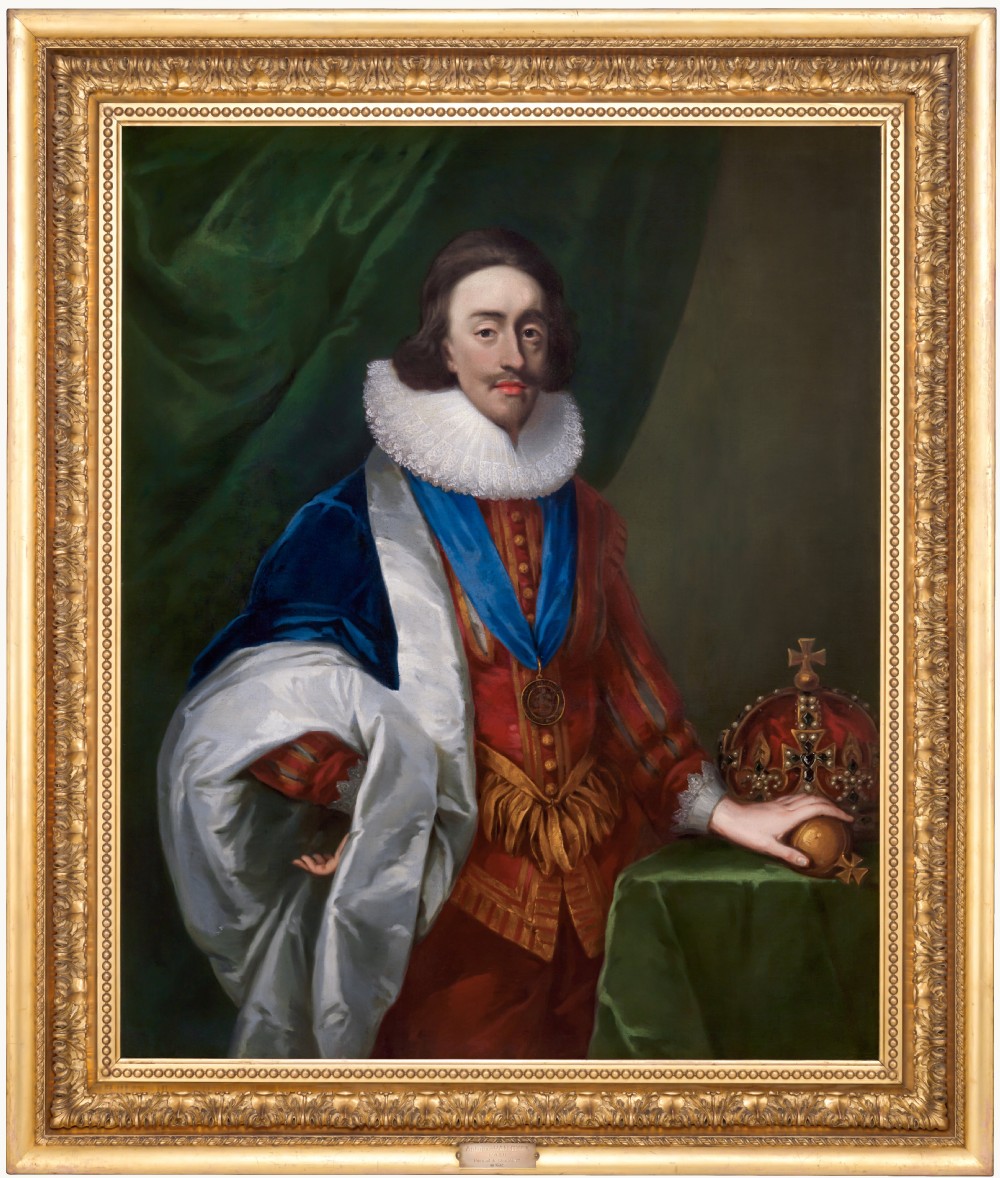
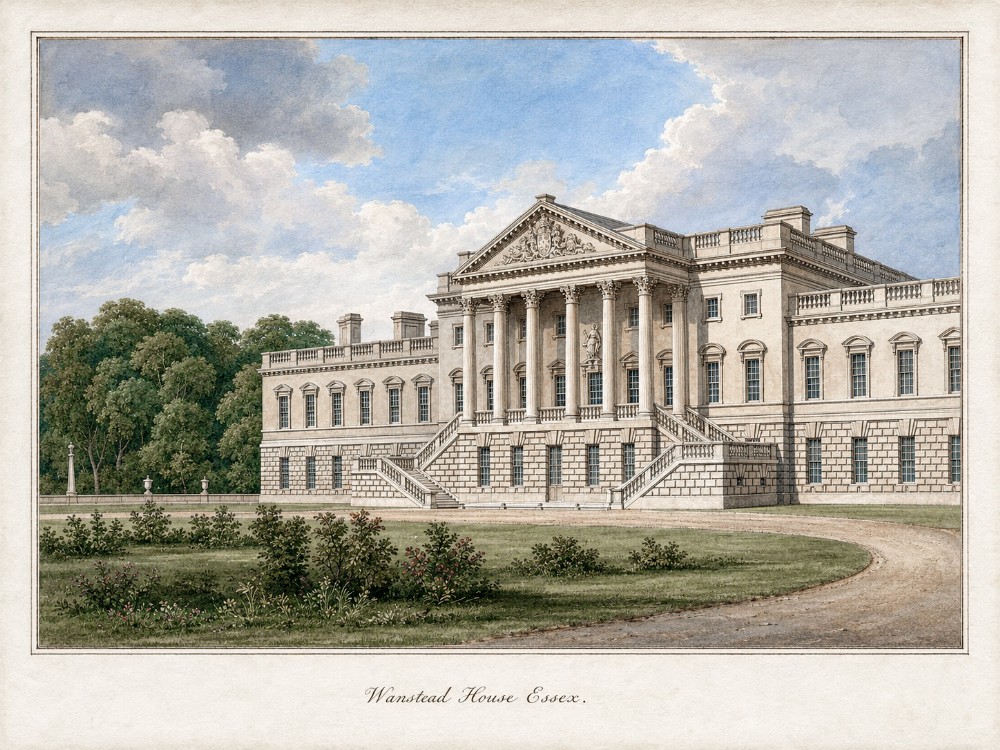
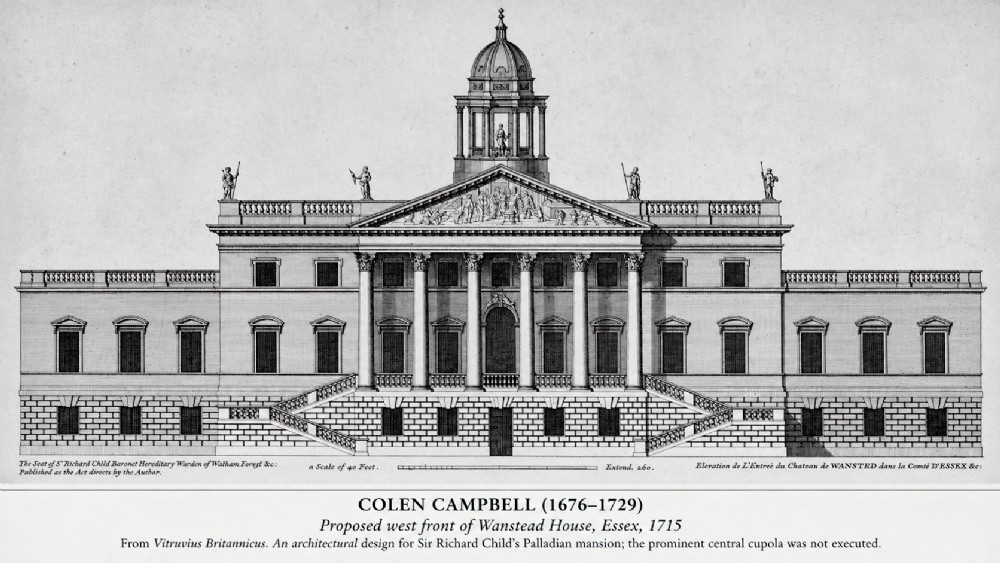
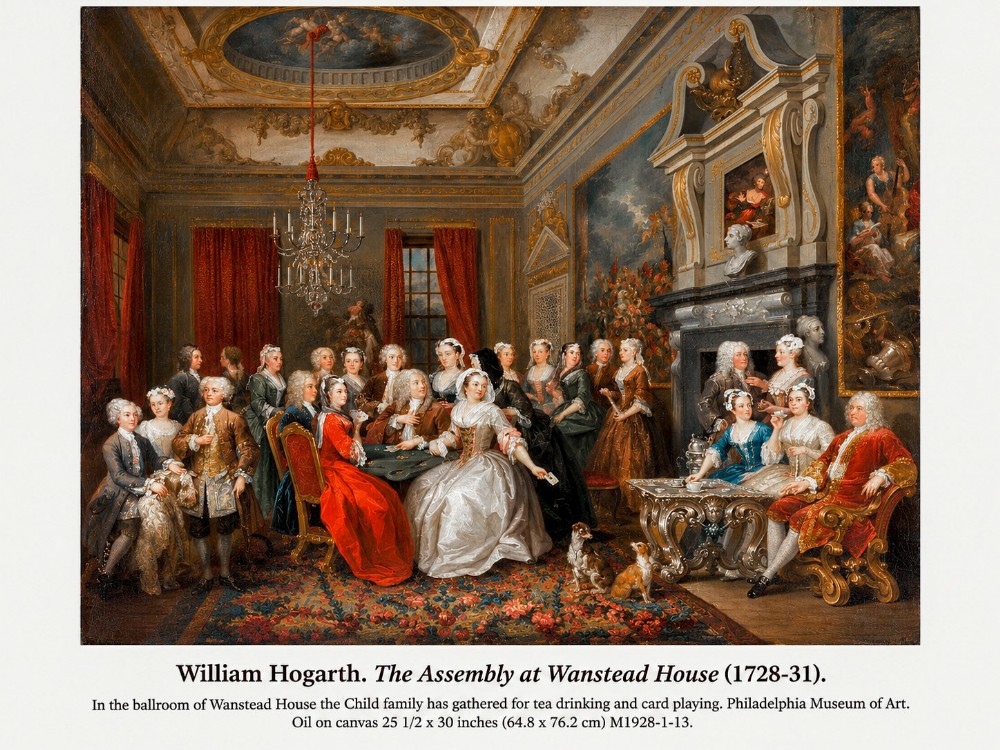
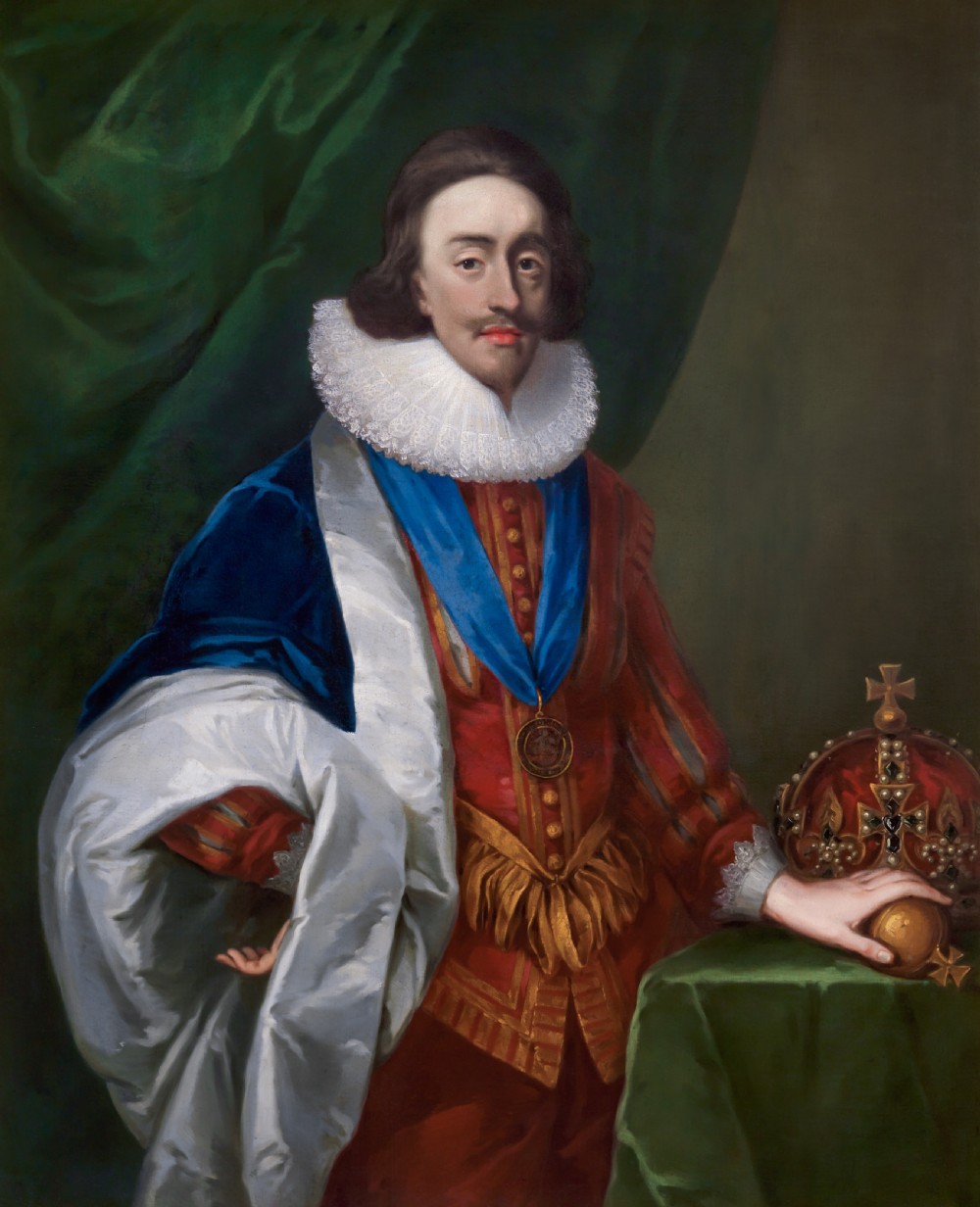
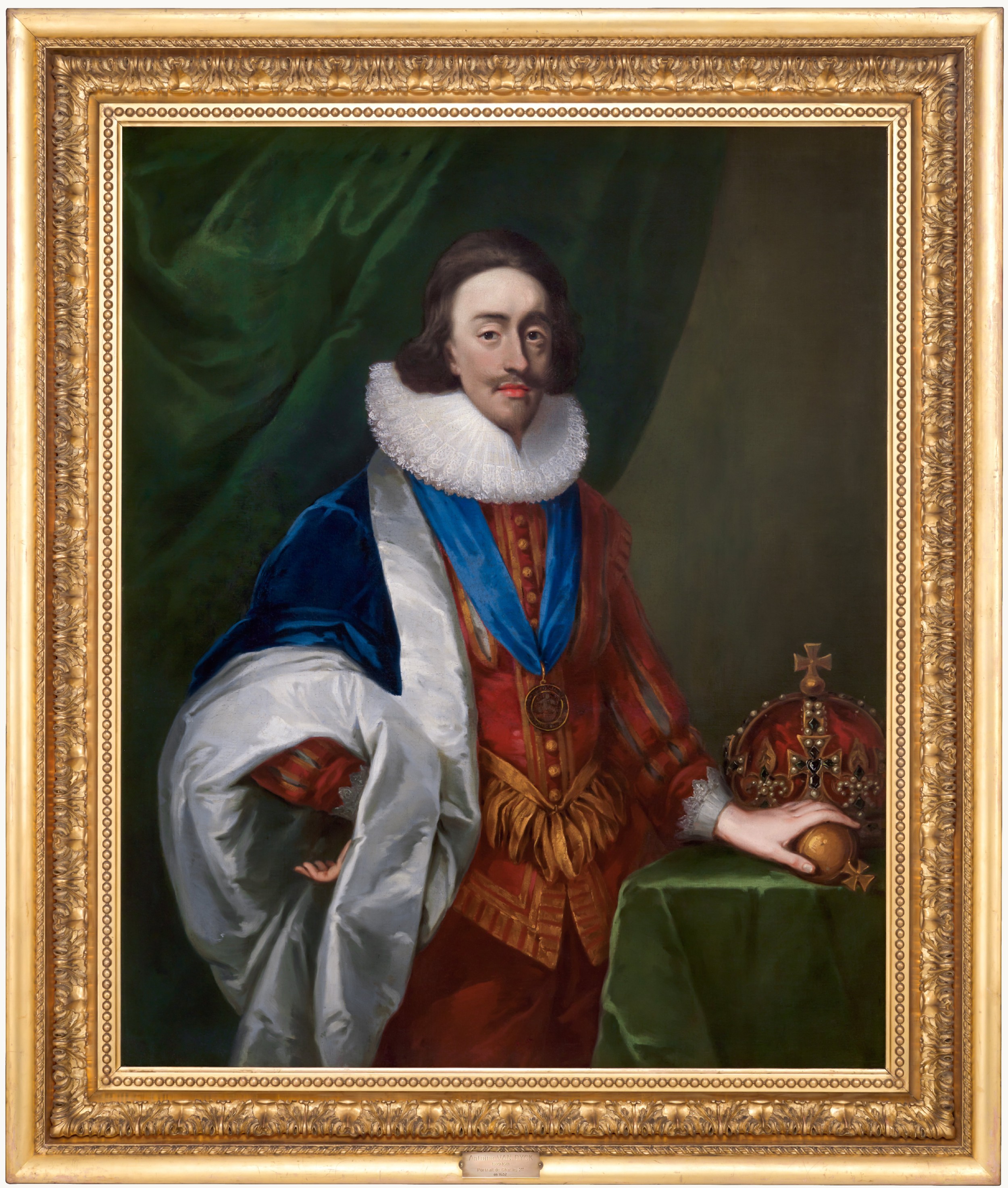
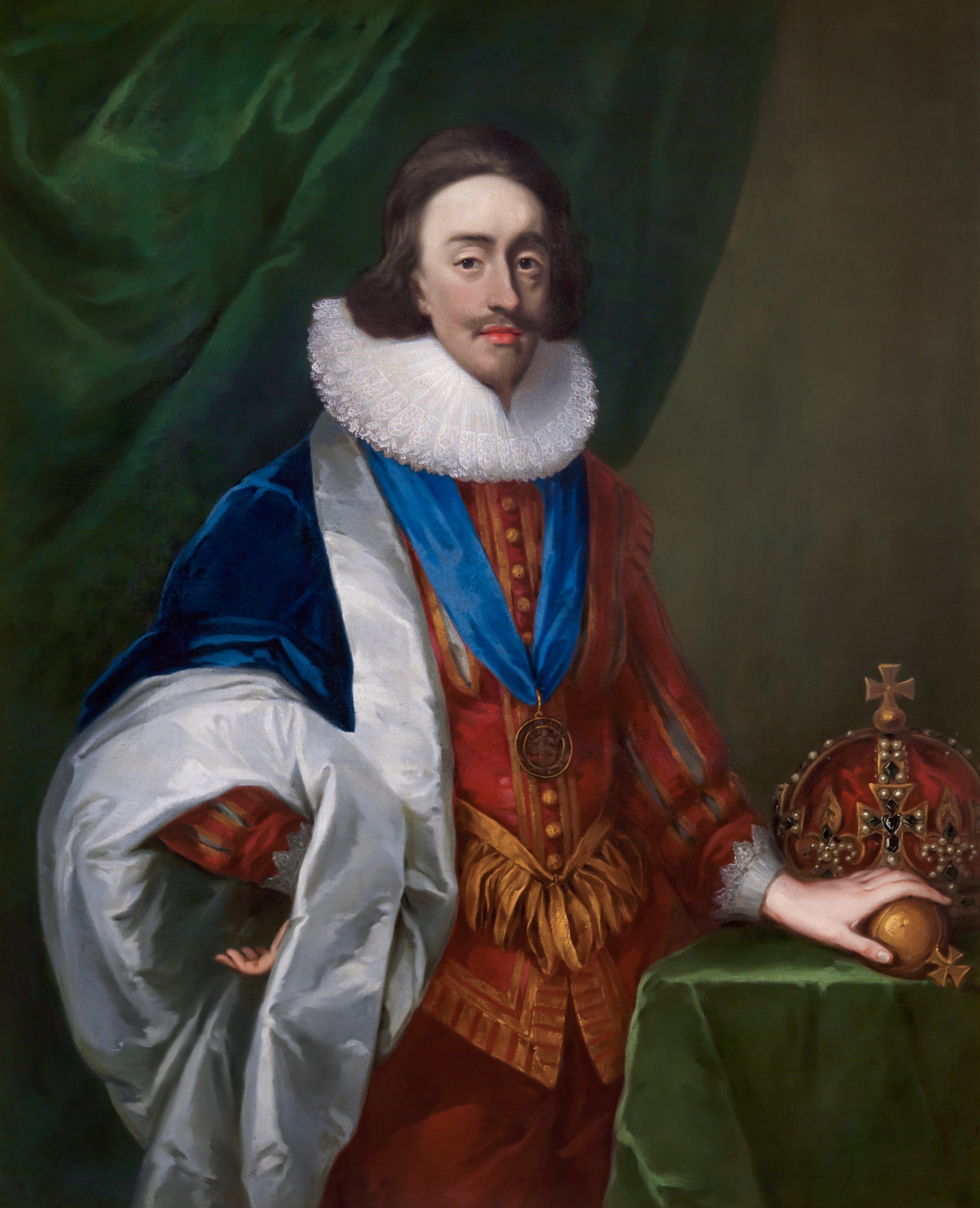
An impressive, richly coloured portrait of King Charles I, once part of the celebrated collection at Wanstead House, Essex – one of England’s greatest lost country houses. A distinguished royal portrait whose striking decorative appeal is enriched by a fascinating association with Wanstead House and the extraordinary dispersal of its treasures.
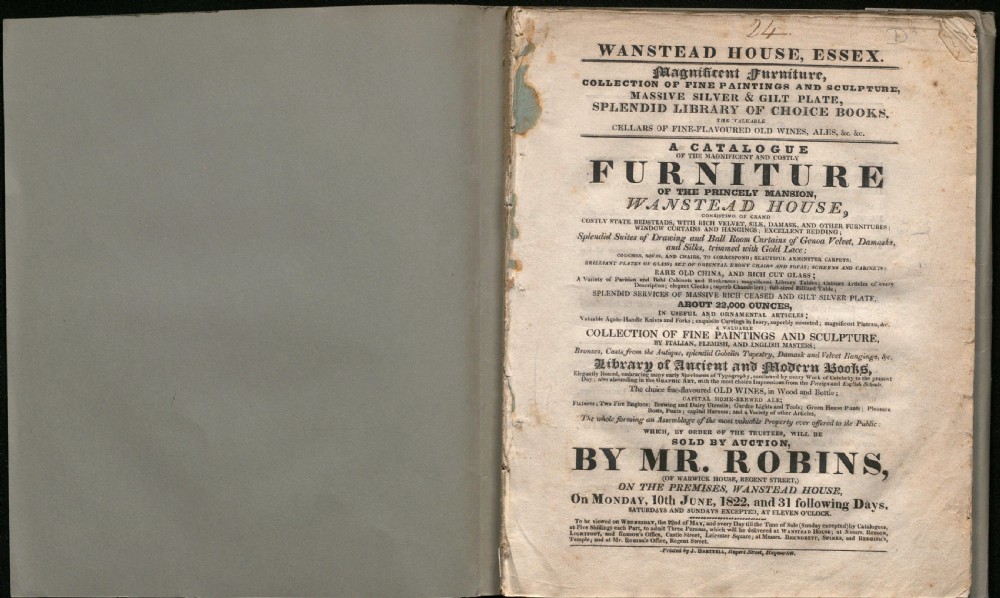
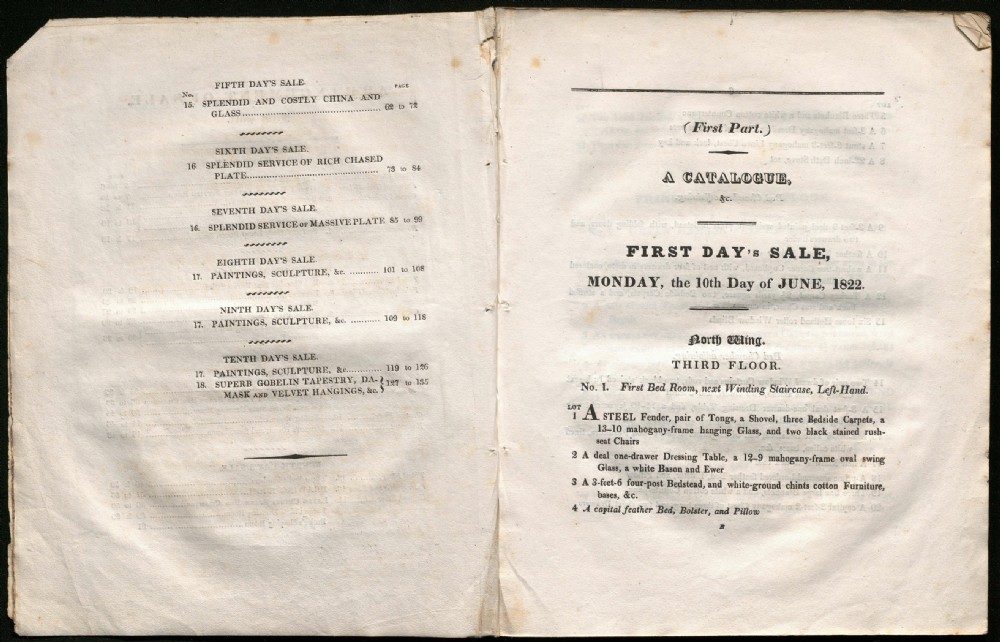
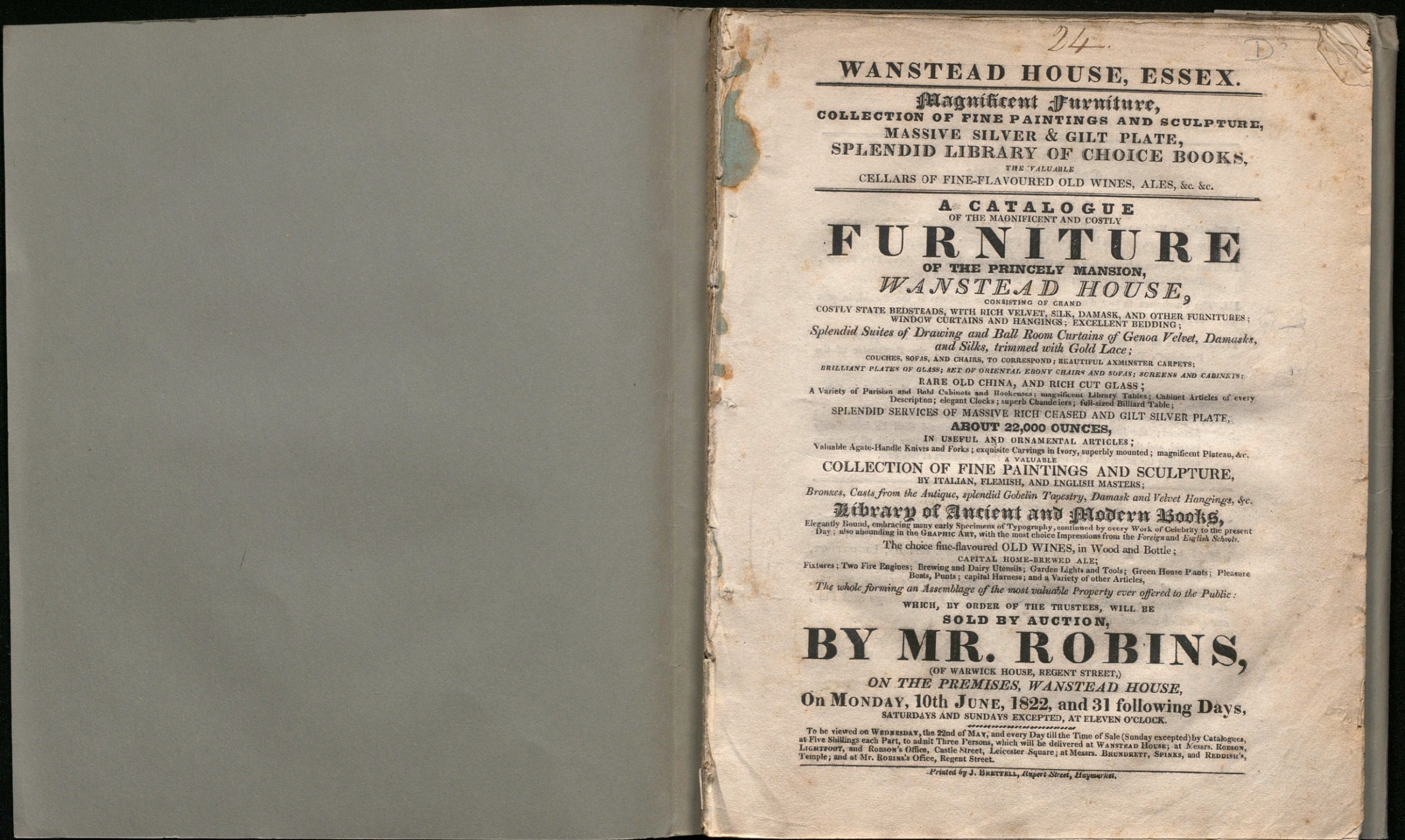
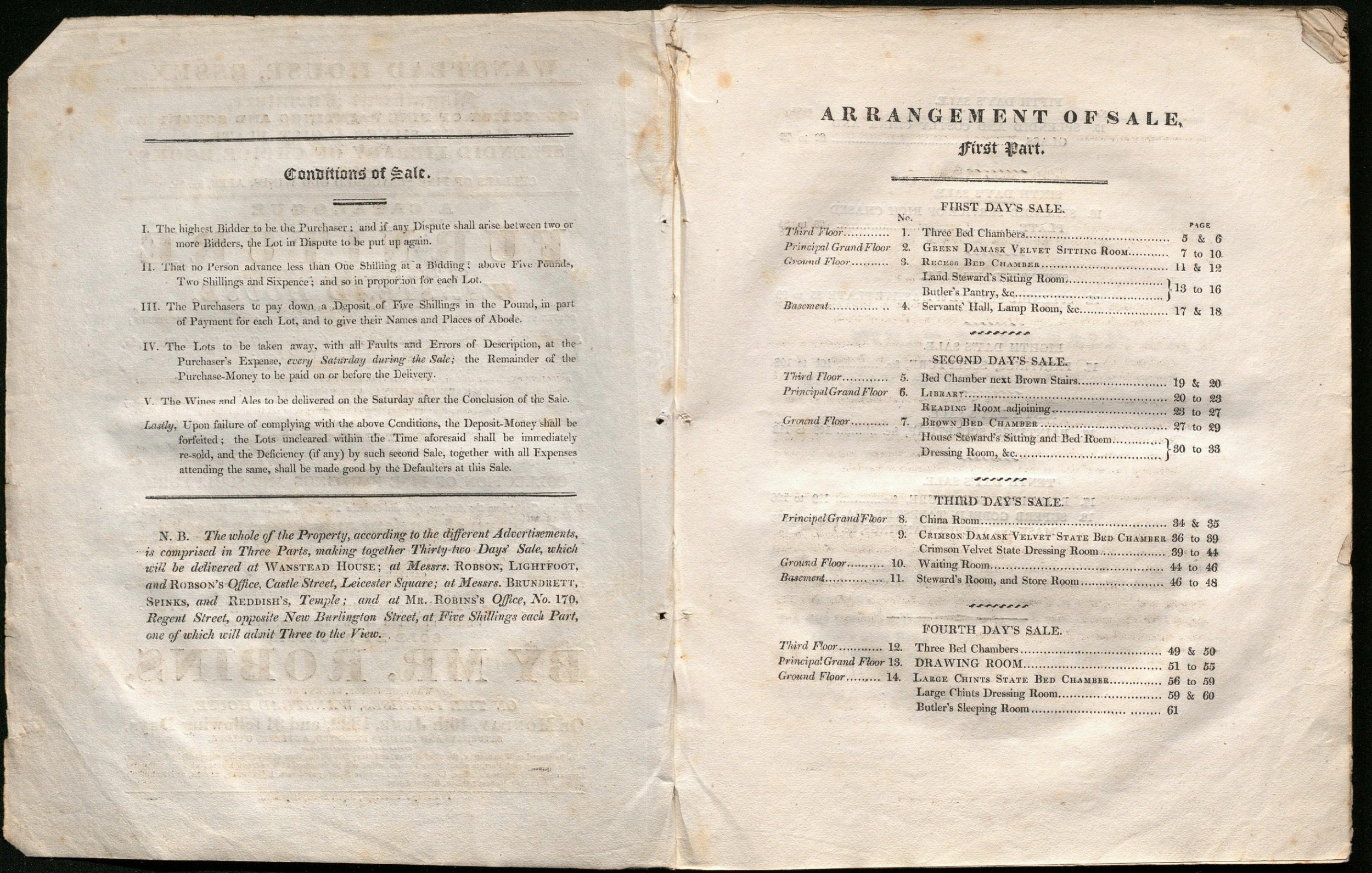
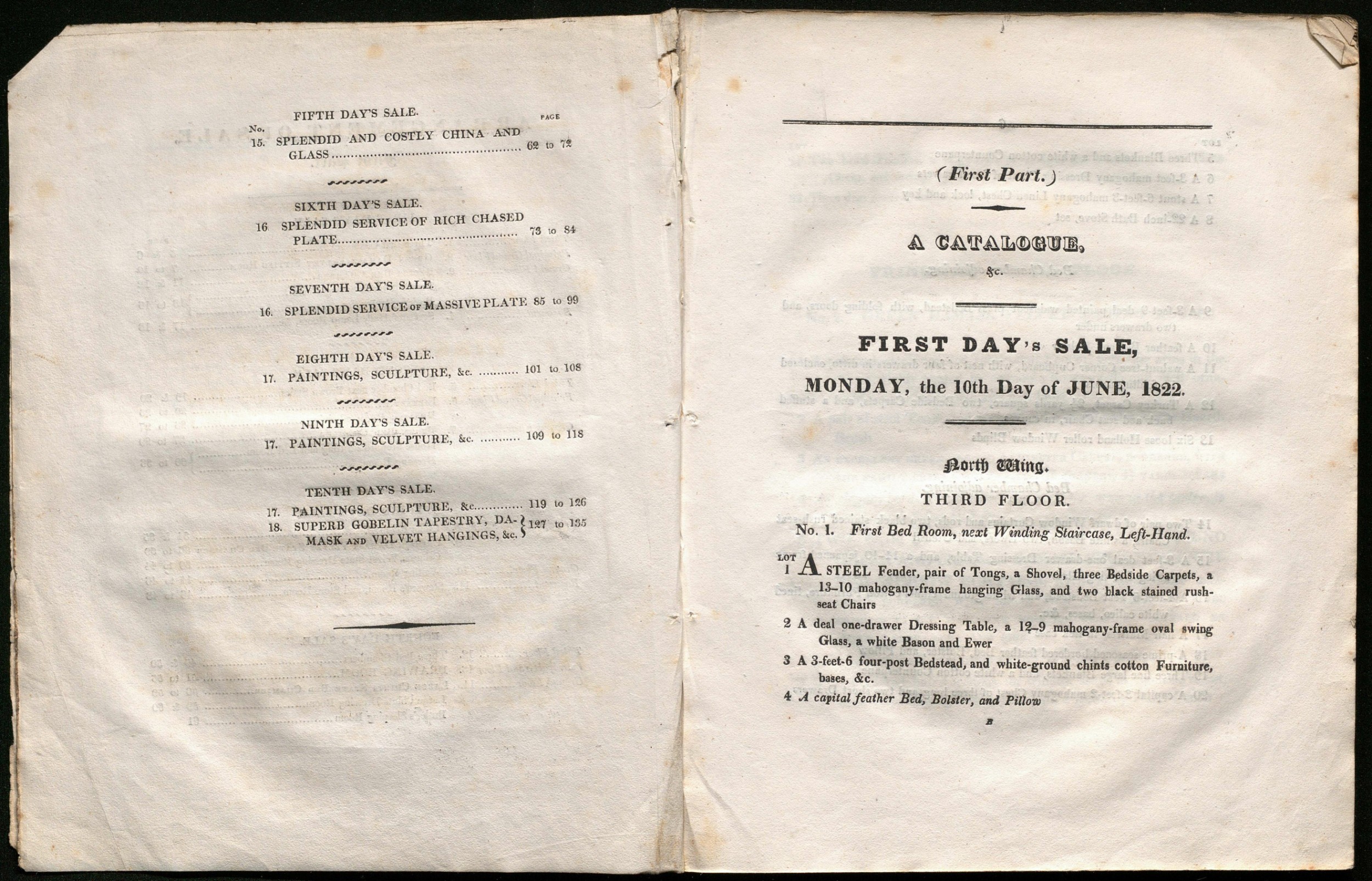
Wanstead House was the magnificent Palladian seat of the Child and Tylney-Long families, renowned for lavish interiors, landscaped gardens and an important collection of paintings. Catherine Tylney-Long (1789–1825), one of England’s wealthiest heiresses, inherited the estate. Her marriage to William Wellesley-Pole was followed by financial disaster, and in 1822 the contents of Wanstead were dispersed in a spectacular auction lasting 32 sale days.
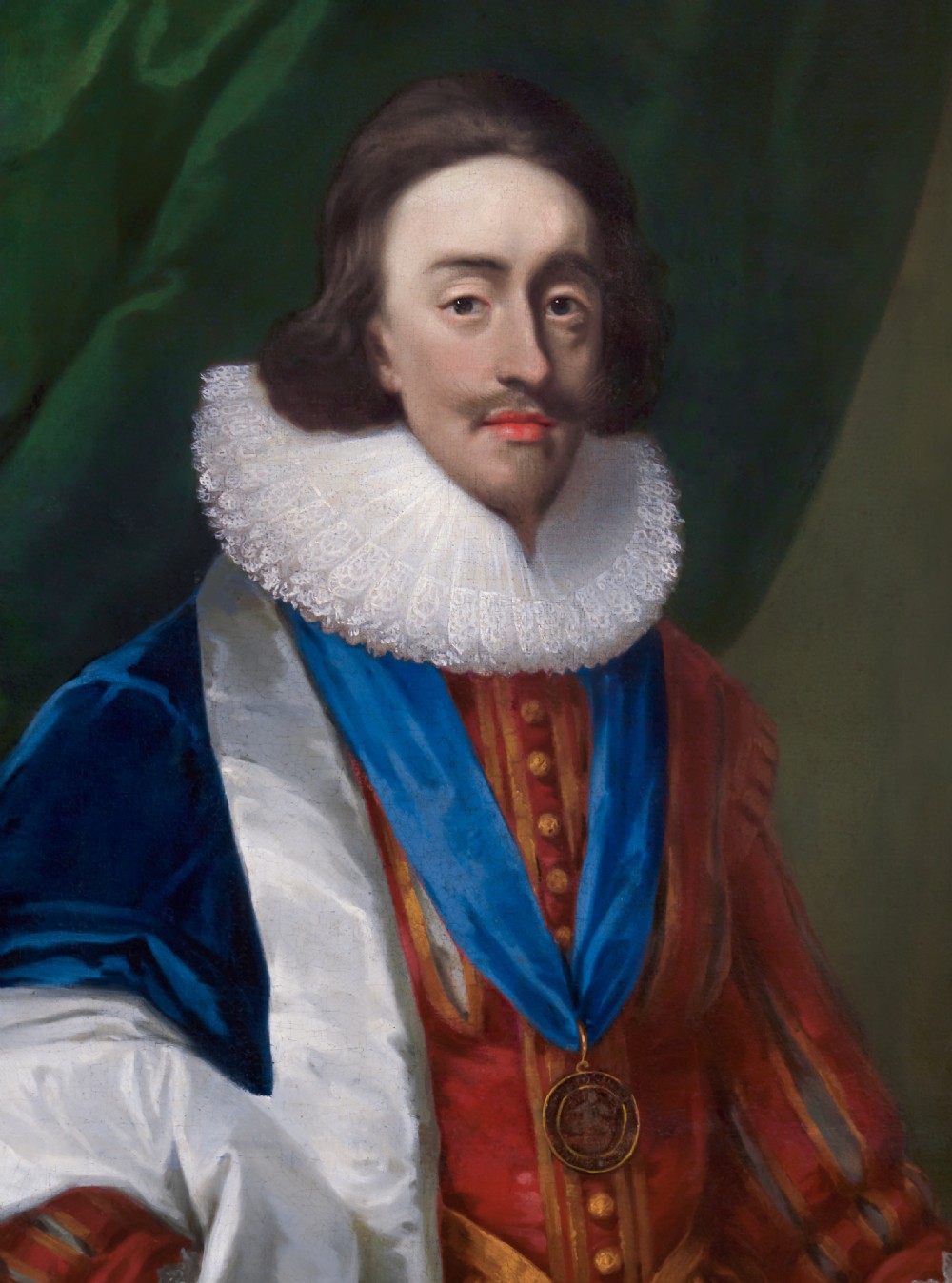
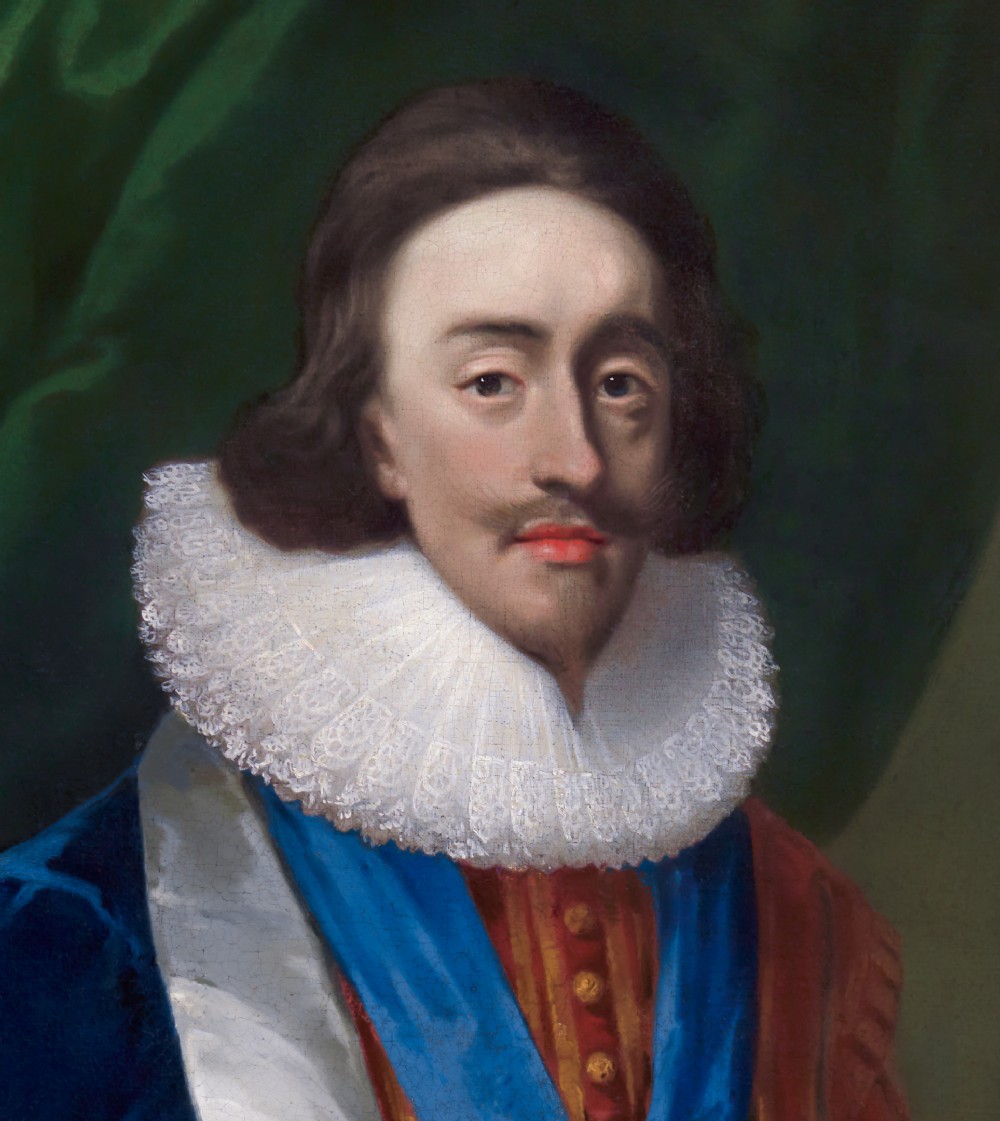
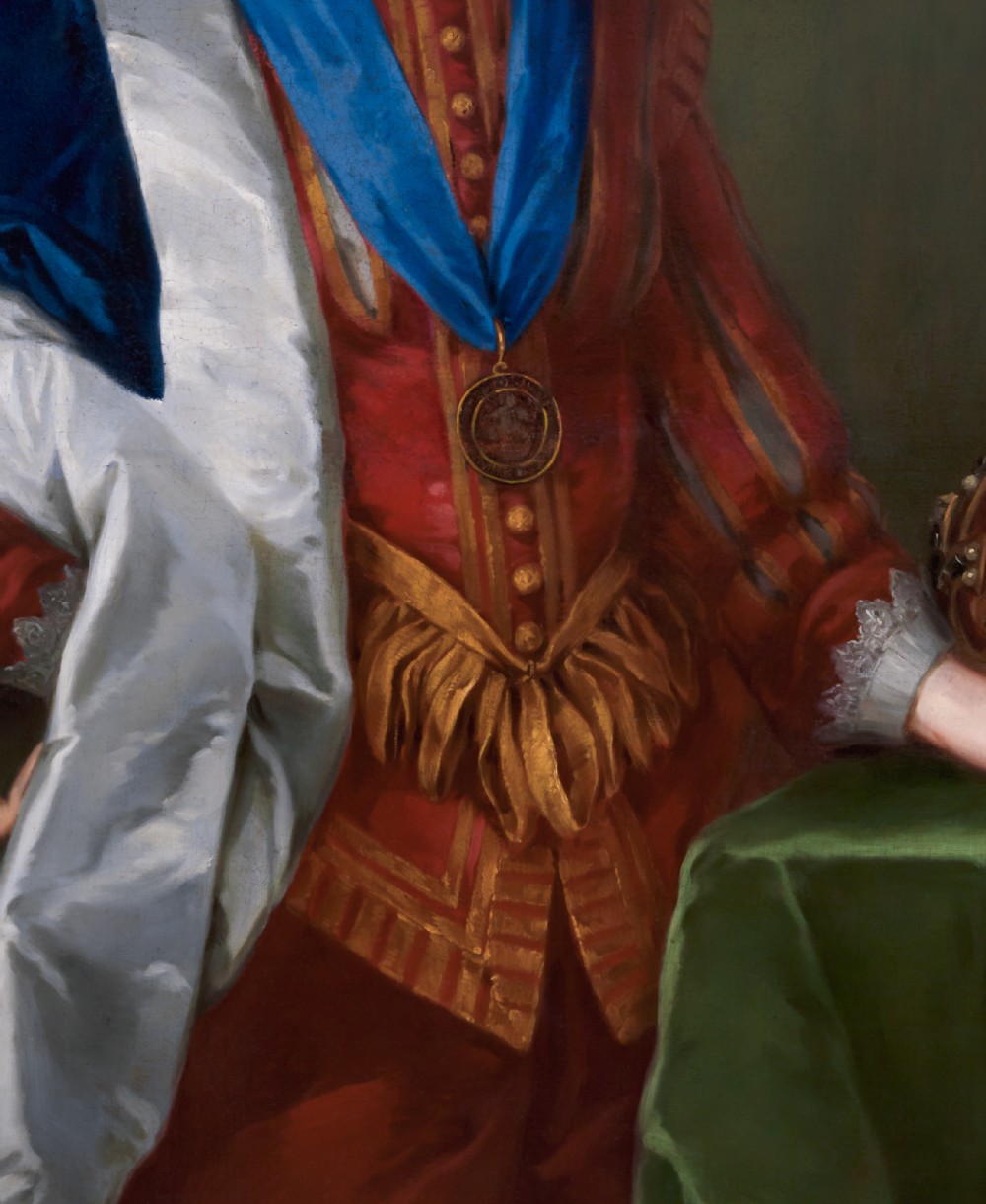
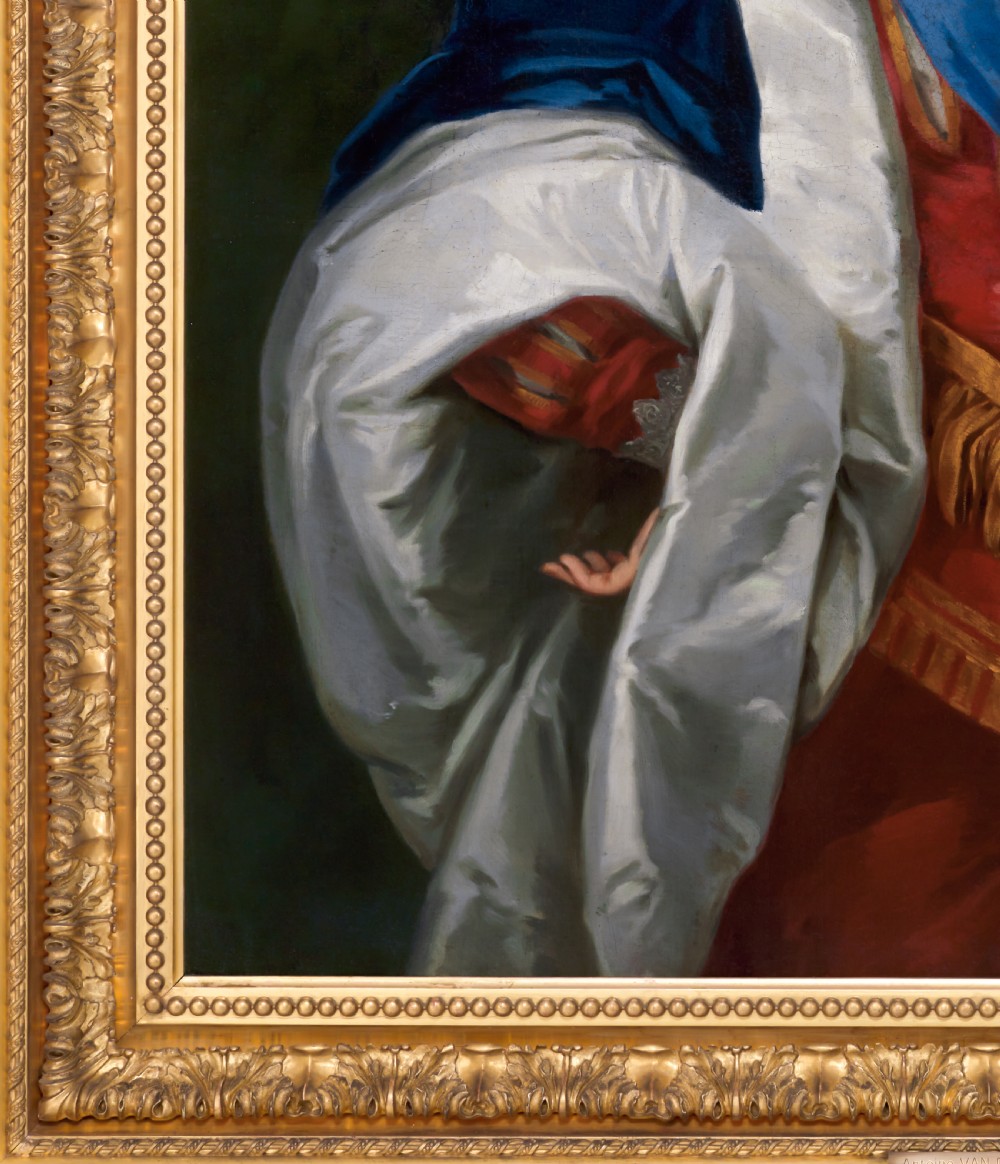
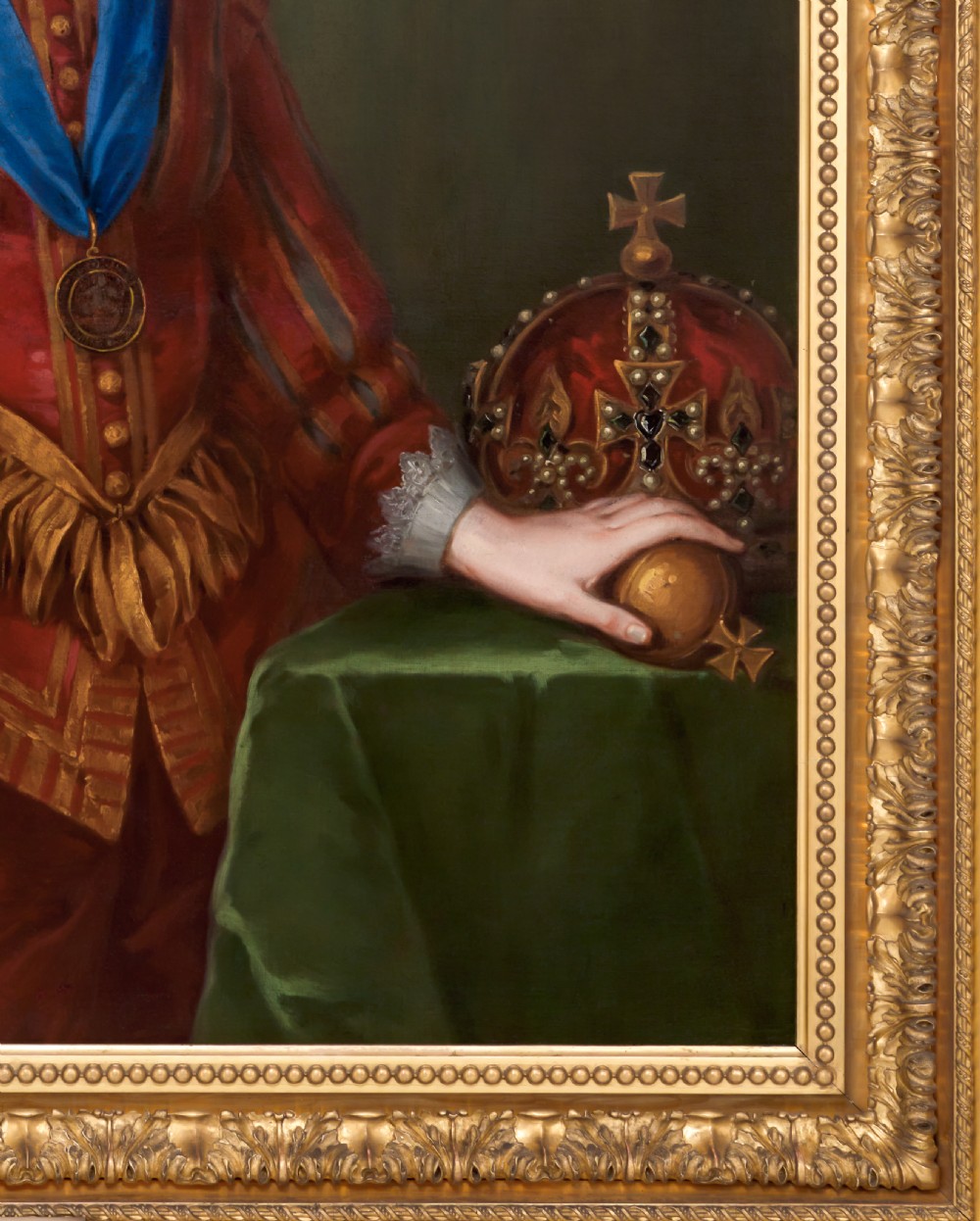
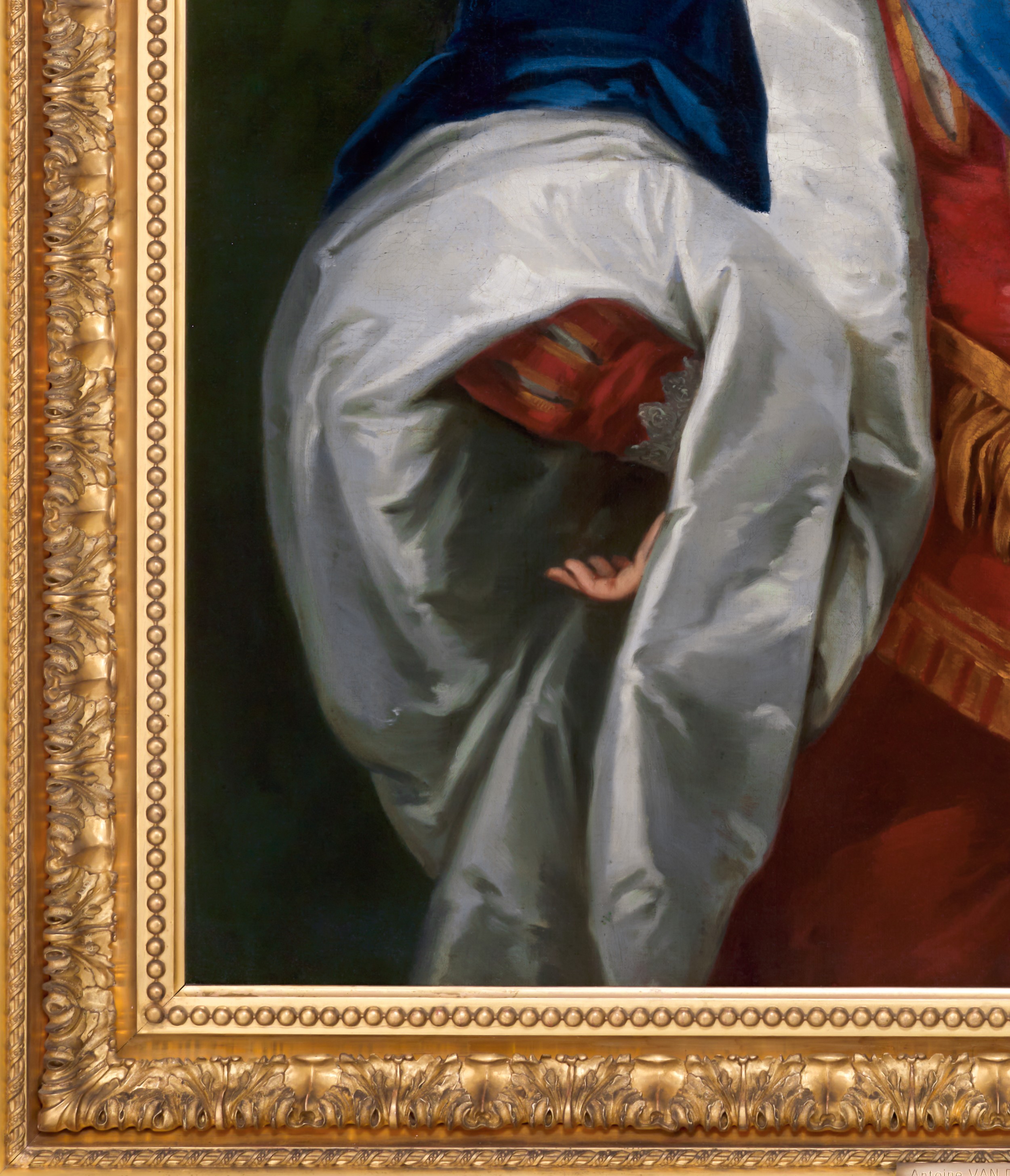
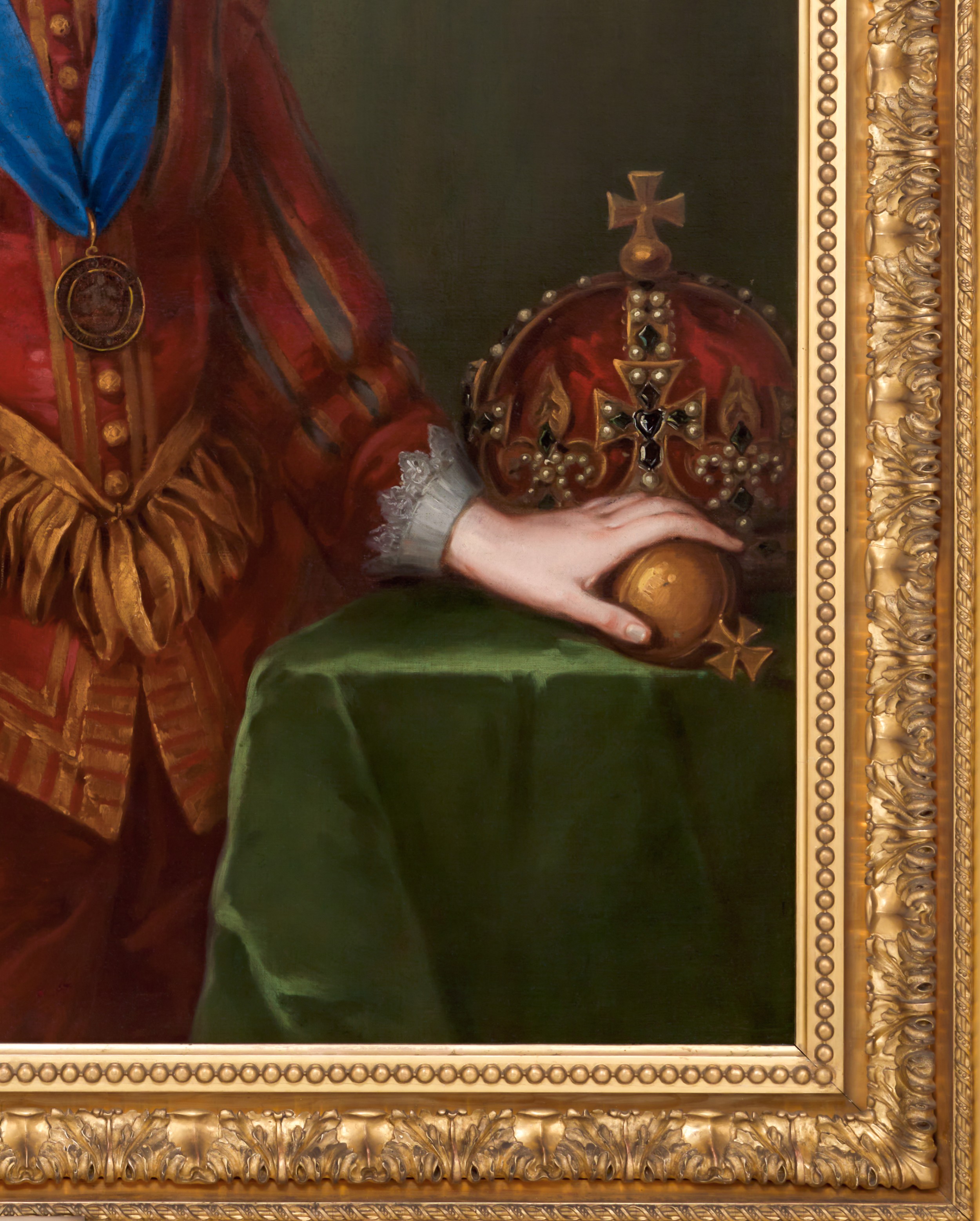
The royal sitter is shown in a sumptuous crimson doublet with gold detailing, a fine lace ruff and the brilliant blue riband of the Order of the Garter. His hand rests upon the golden orb beside the jewelled crown, while silver-white drapery and an emerald-green curtain lend the scene grandeur and depth.
Charles I was one of the most important artistic patrons of his age. Before Anthony van Dyck became his principal portraitist, the Dutch-born Daniel Mytens helped establish the dignified royal likenesses by which the King was recognised. This work follows the Mytens portrait tradition of the late 1620s. The face is especially close to Mytens’s signed portrait of 1628 in the Royal Collection (RCIN 404448), while a related full-length portrait of 1629 is in the Metropolitan Museum of Art. The present painting is best described as English School, after Daniel Mytens, circa 1700, rather than an autograph work by van Dyck or William Dobson, to whom it was formerly attributed.
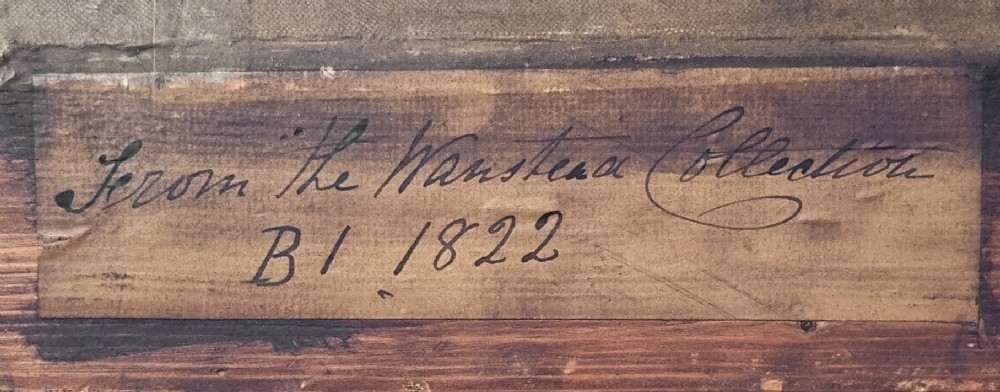
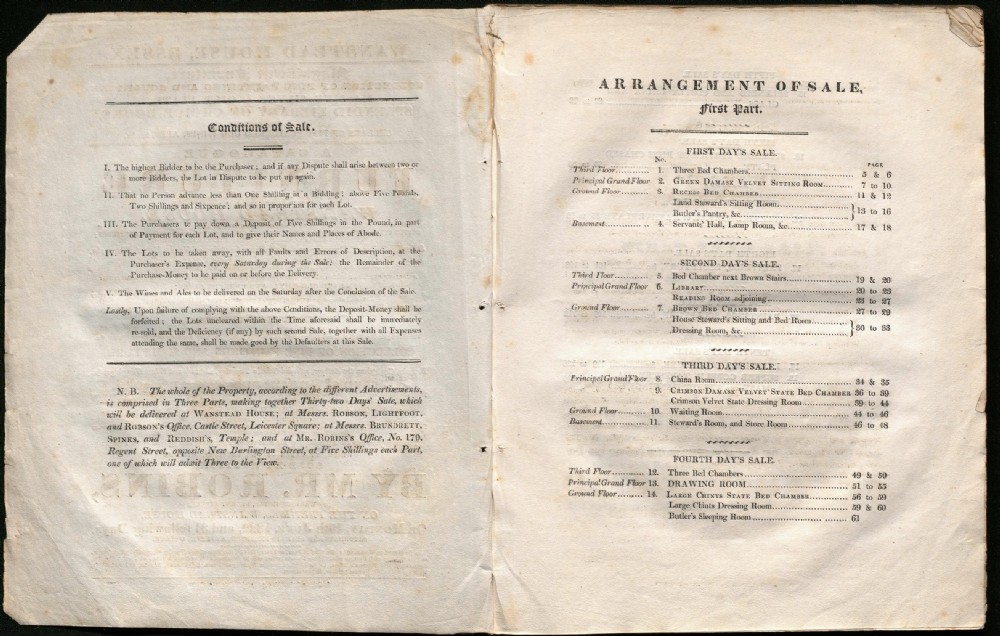
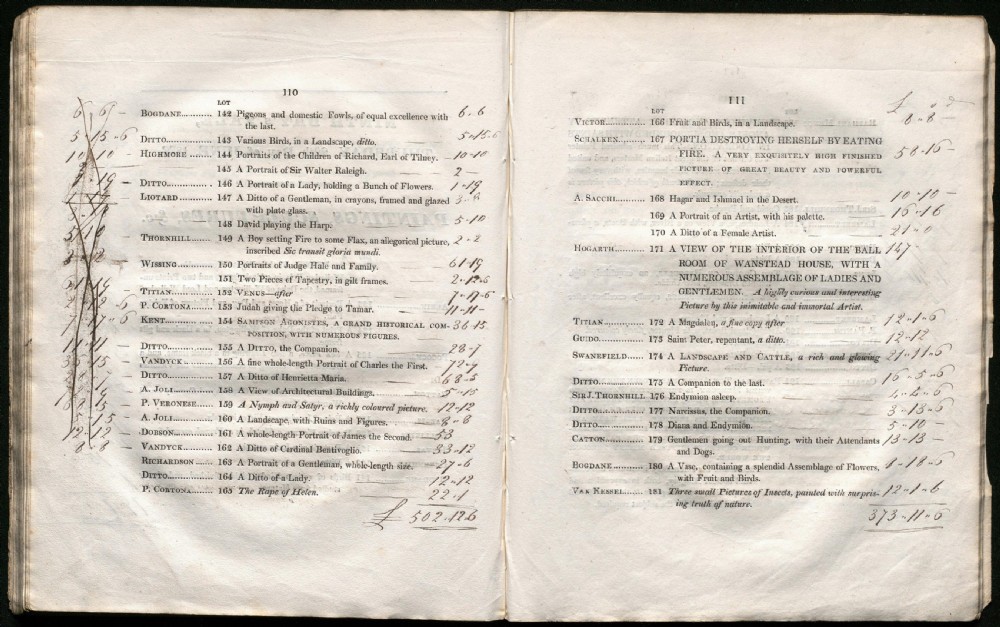
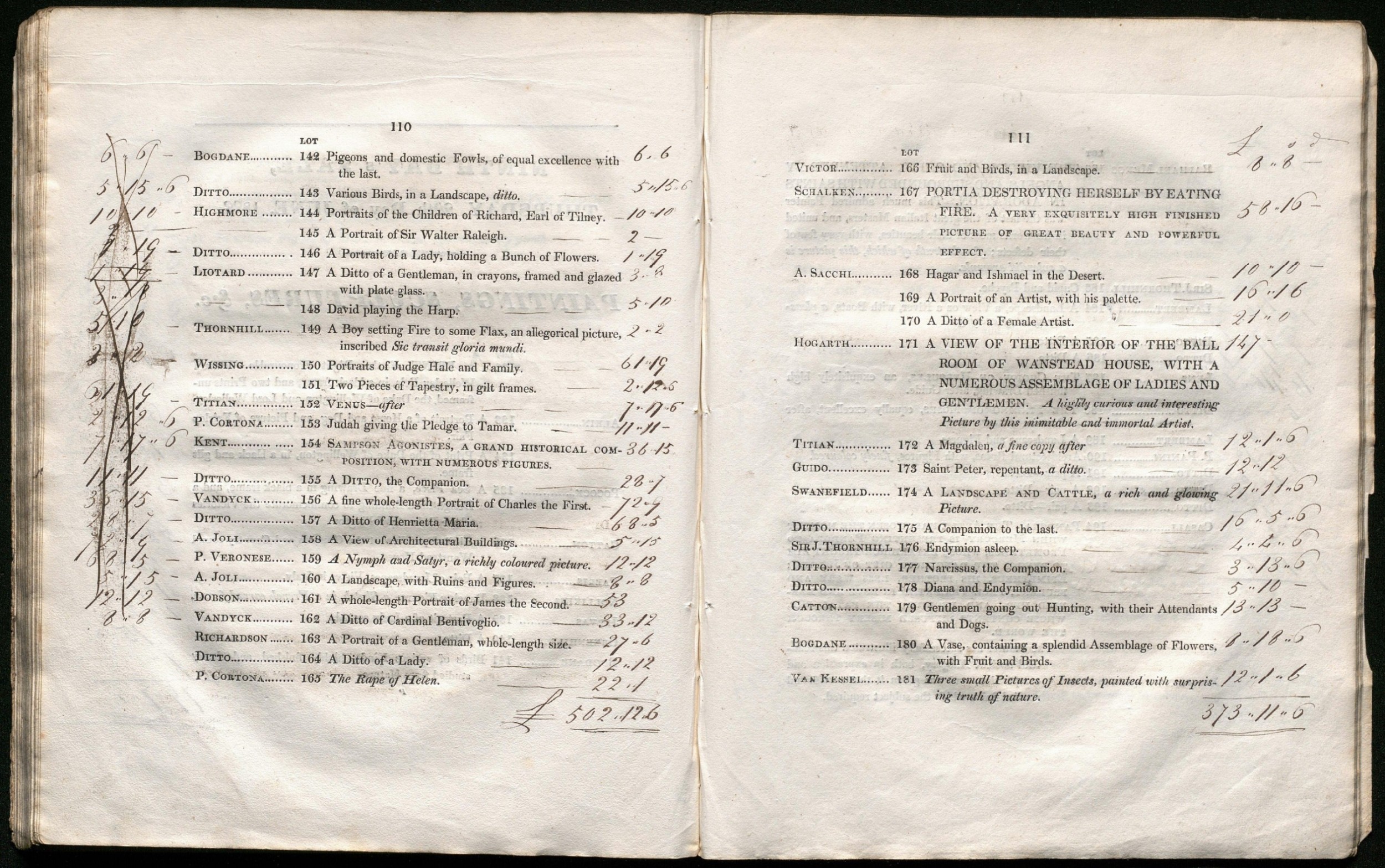
The sale catalogue of George Robins records, on 20 June 1822, lot 156: “A fine whole-length Portrait of Charles the First”, then attributed to Van Dyck, sold for £72 9s. An old inscription on the reverse of the present painting reads “From the Wanstead Collection” and includes the date 1822. These details support its traditional identification with that lot, although the connection cannot be demonstrated conclusively from the surviving catalogue alone. The following lot was a portrait of Queen Henrietta Maria.
Later recorded history includes a Vienna sale in 1911, when the work was attributed to William Dobson; its acquisition in Paris by the dealer-scholar Ulysse Moussalli in 1939; discussion in his 1948 article on van Dyck and Mytens; a Paris exhibition in 1956; and an appearance at the Hôtel Drouot in 1985.
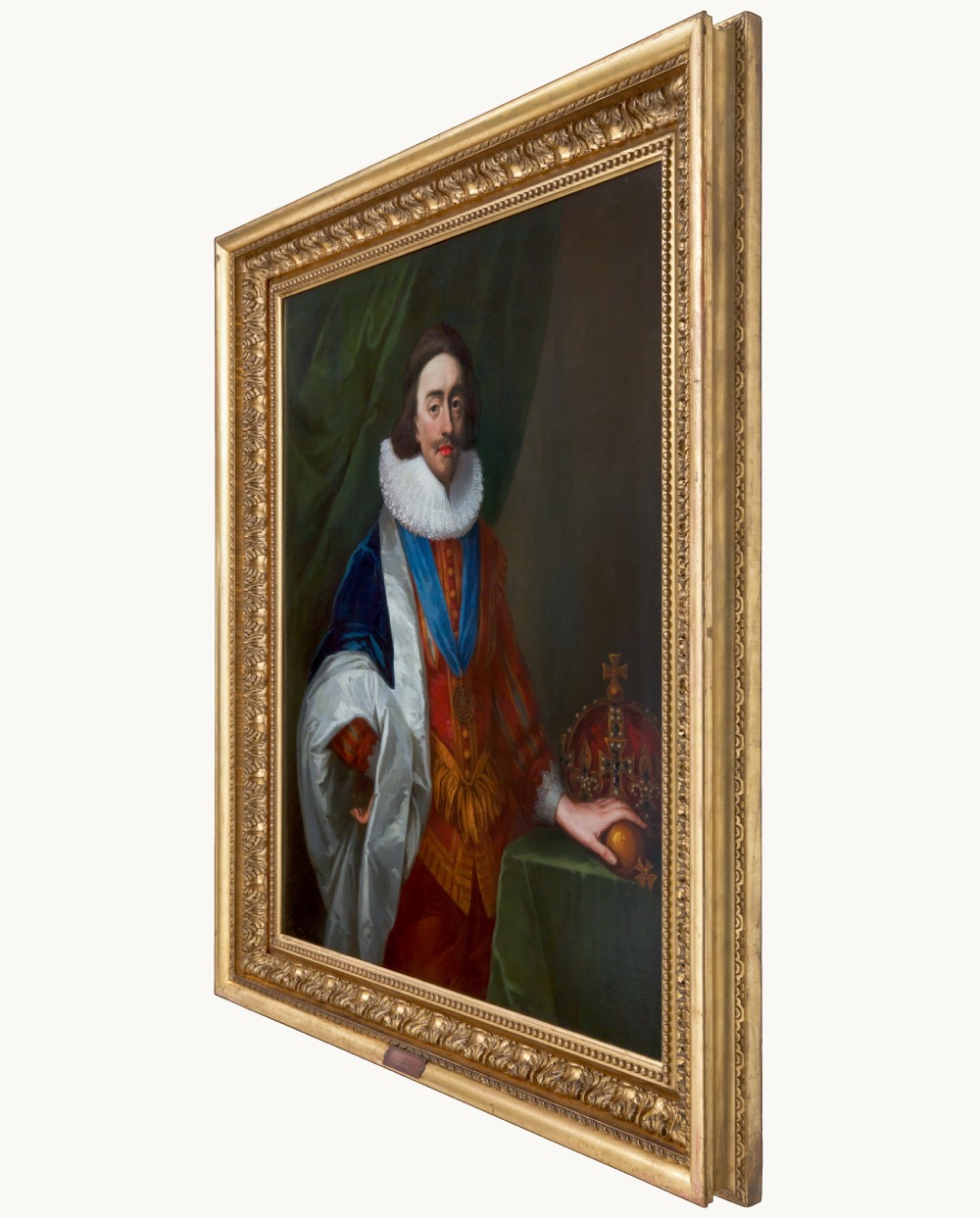
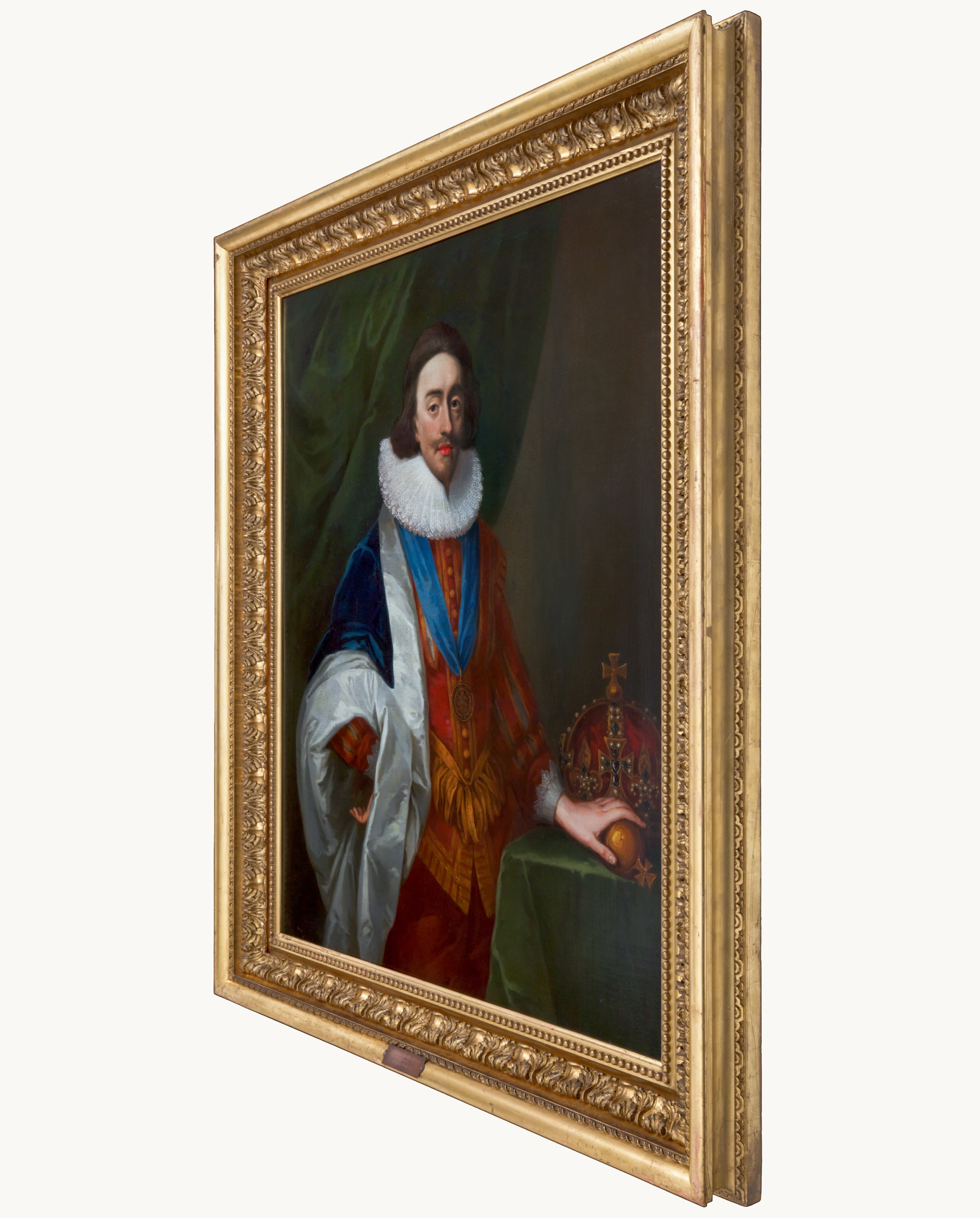
The portrait is housed in an imposing carved and gilded Carlo Maratta-type frame, ornamented with scrolling foliage and a beaded inner edge. The painting and frame have recently undergone light conservation and are presented in very good condition, ready to hang and enjoy.
Complete description at: www.titanfineart.com