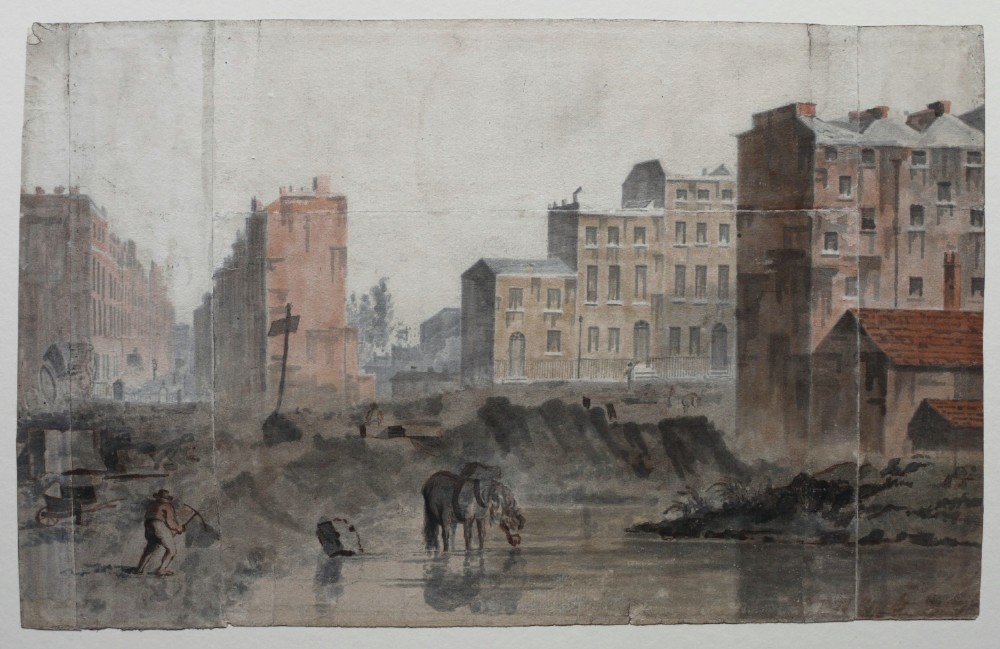
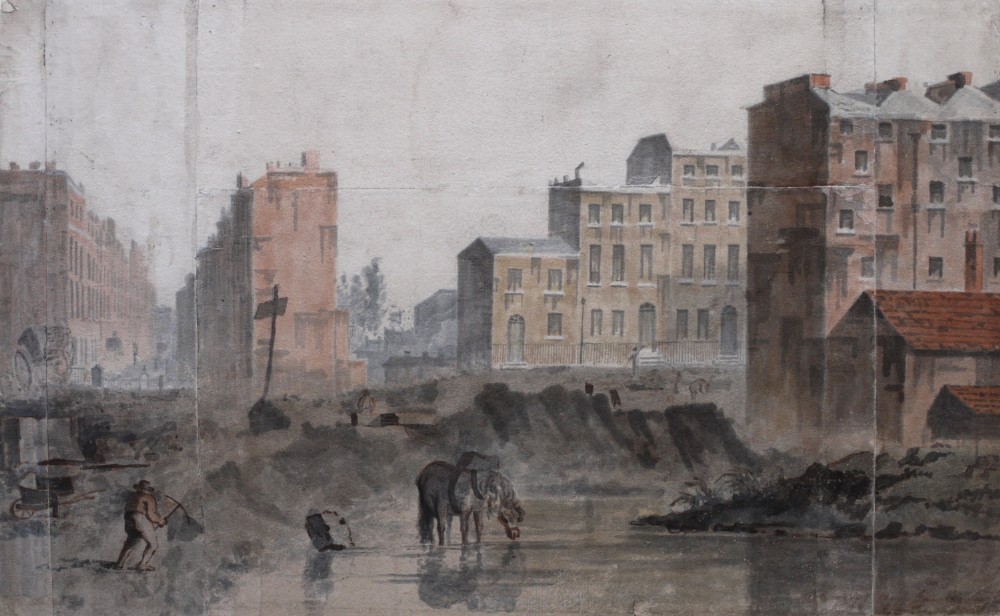
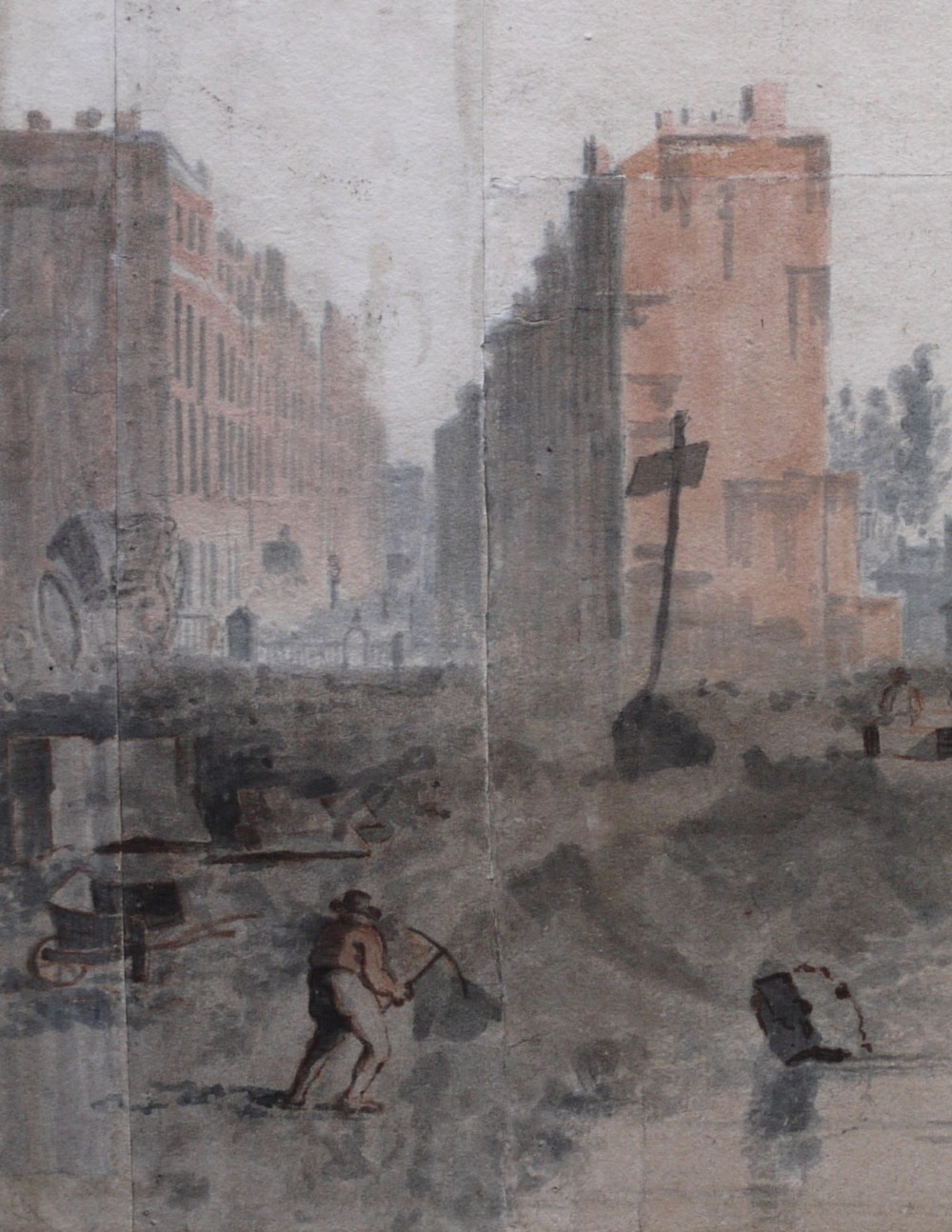
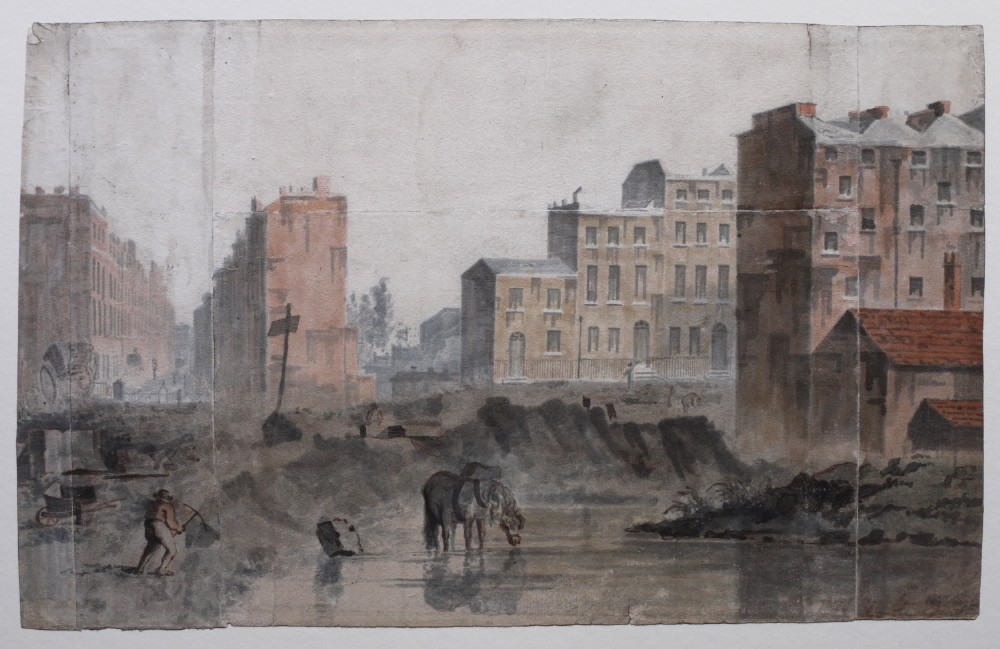
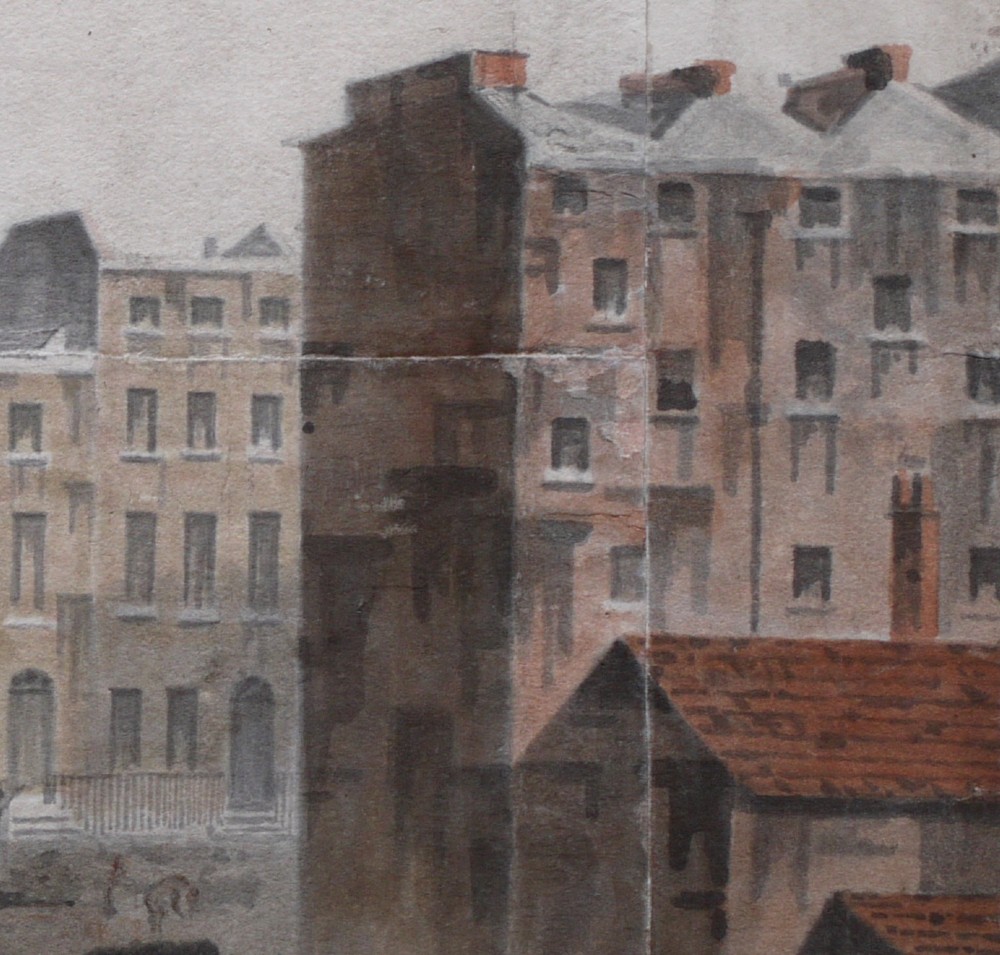
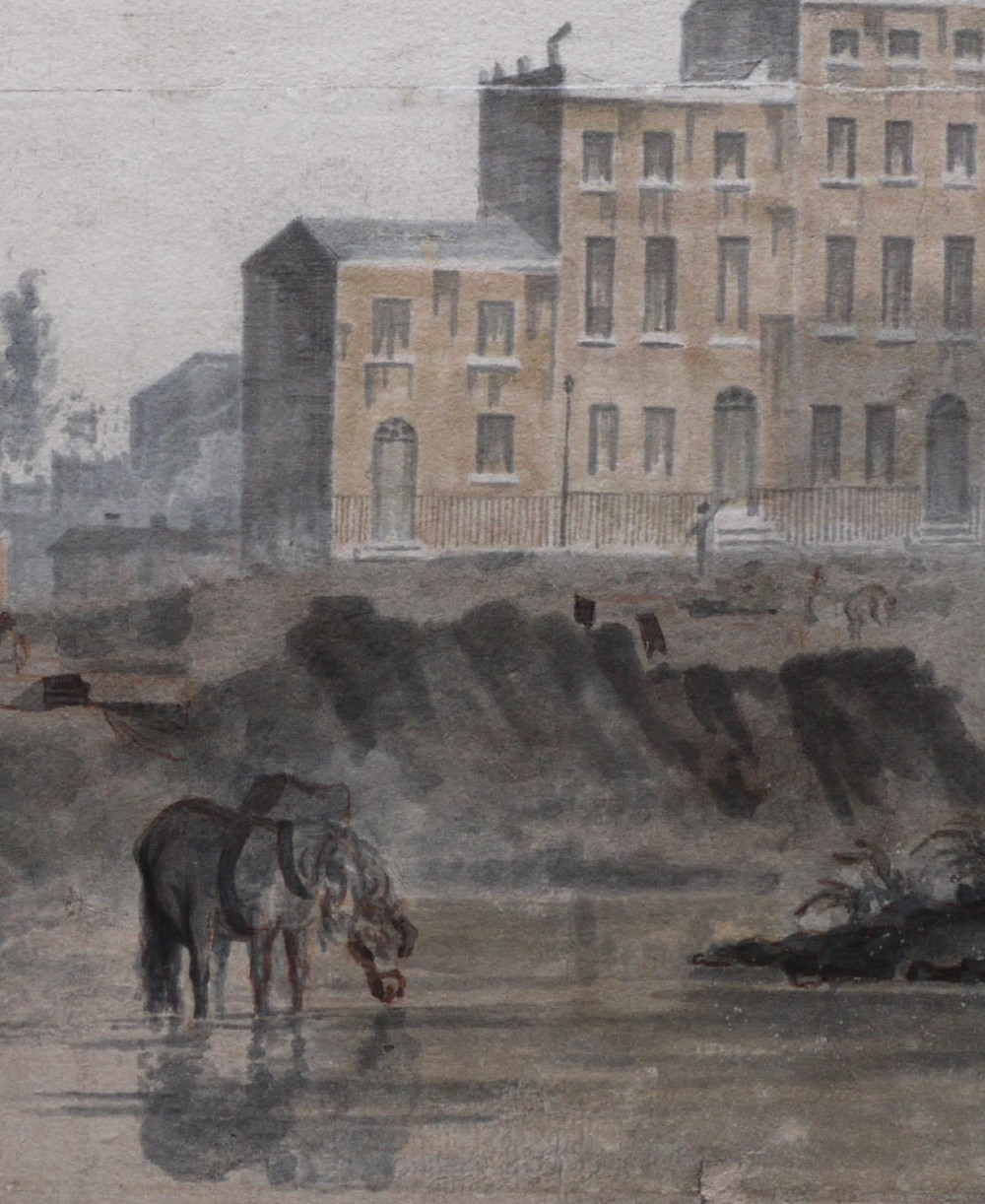
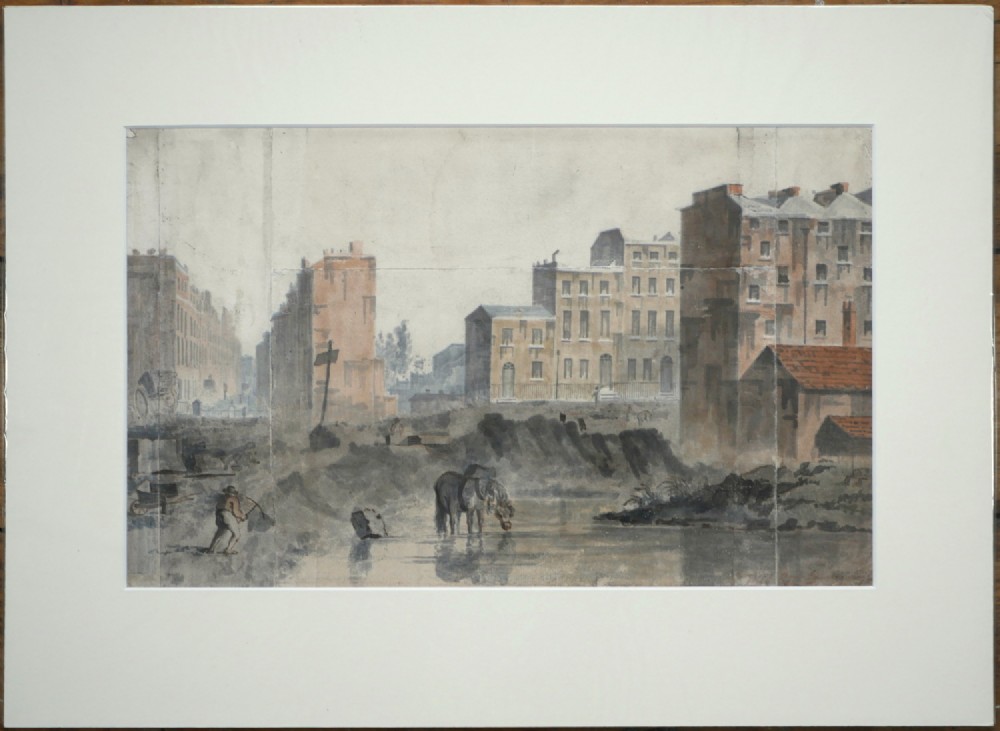
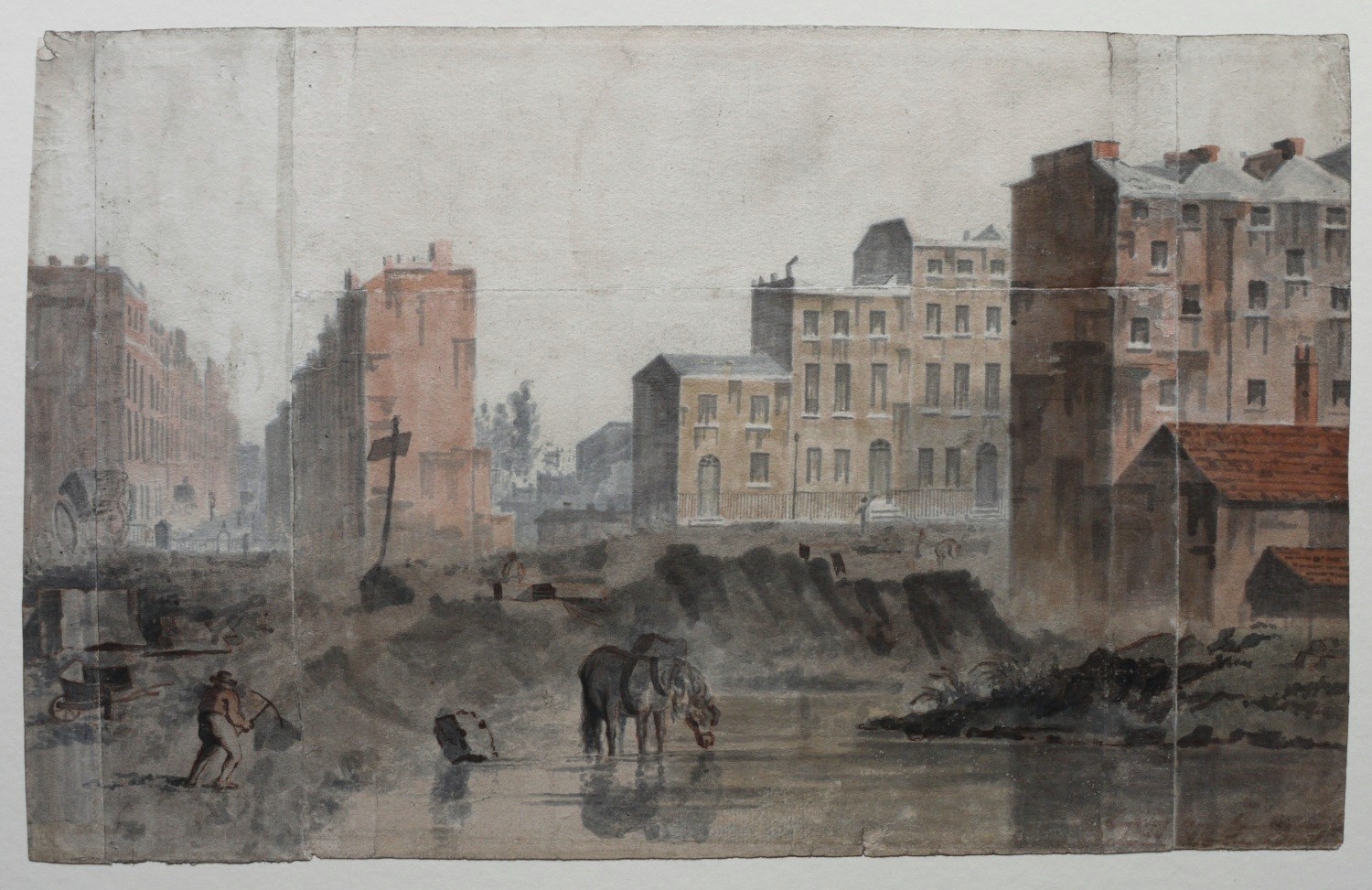
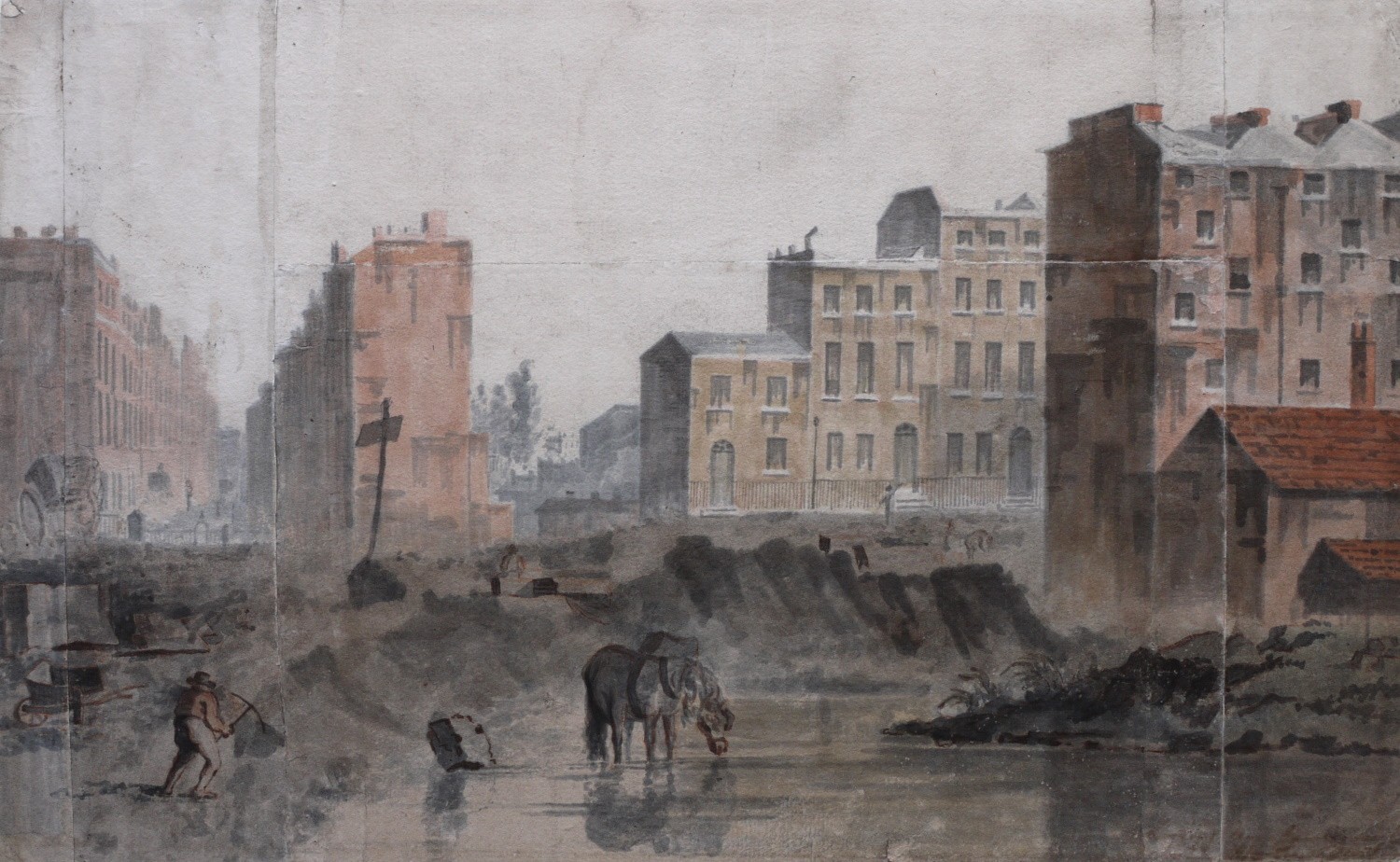
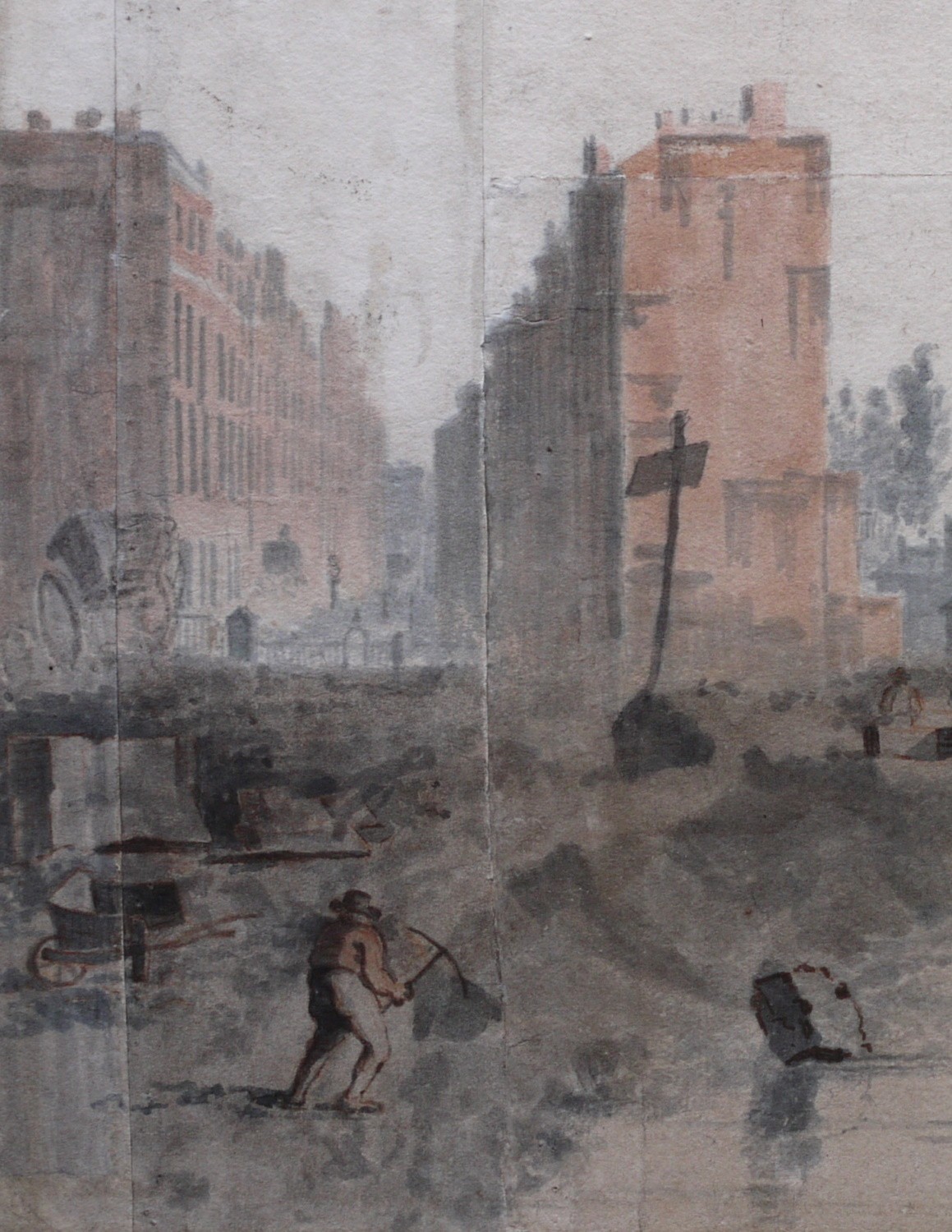
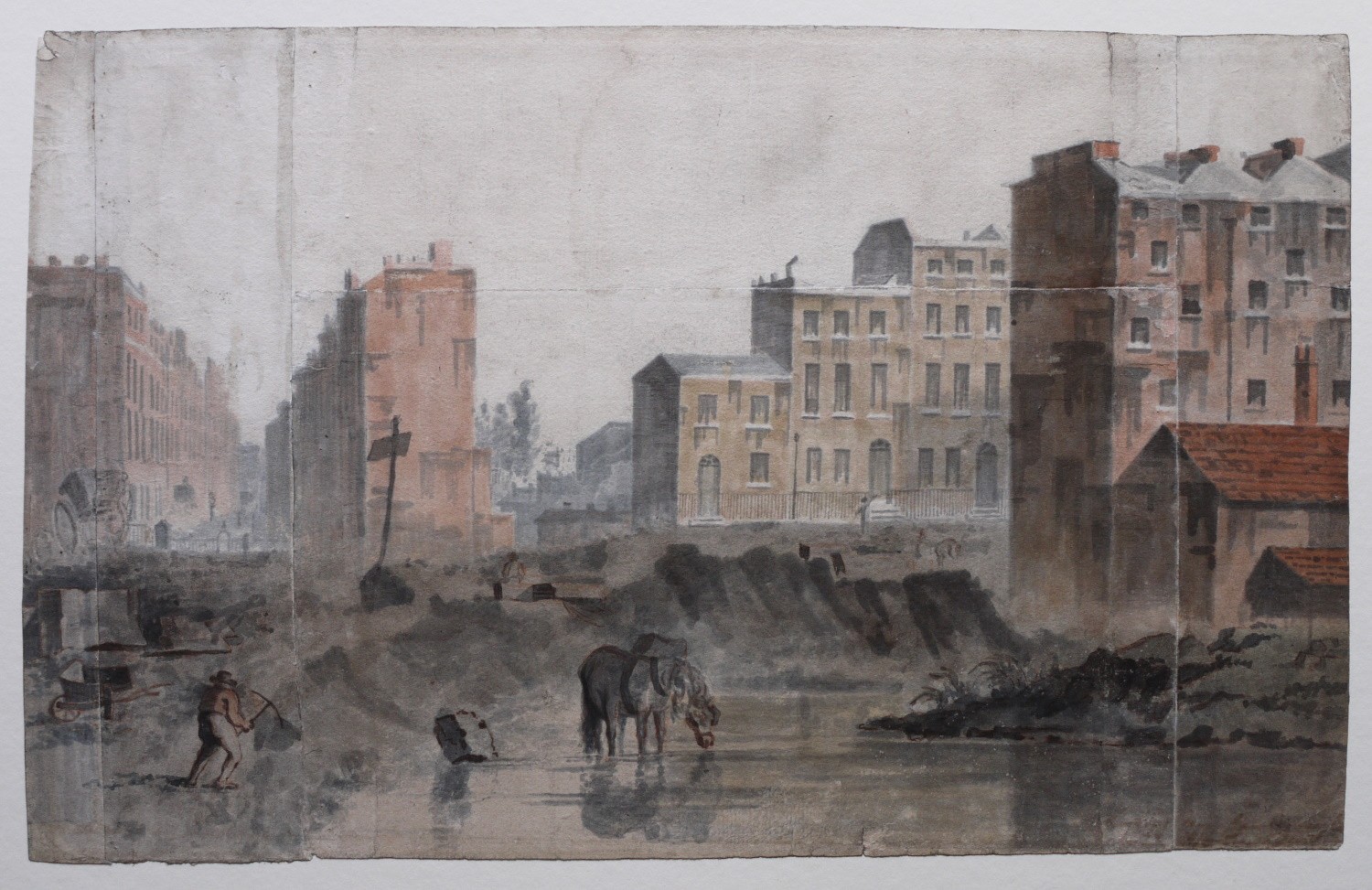
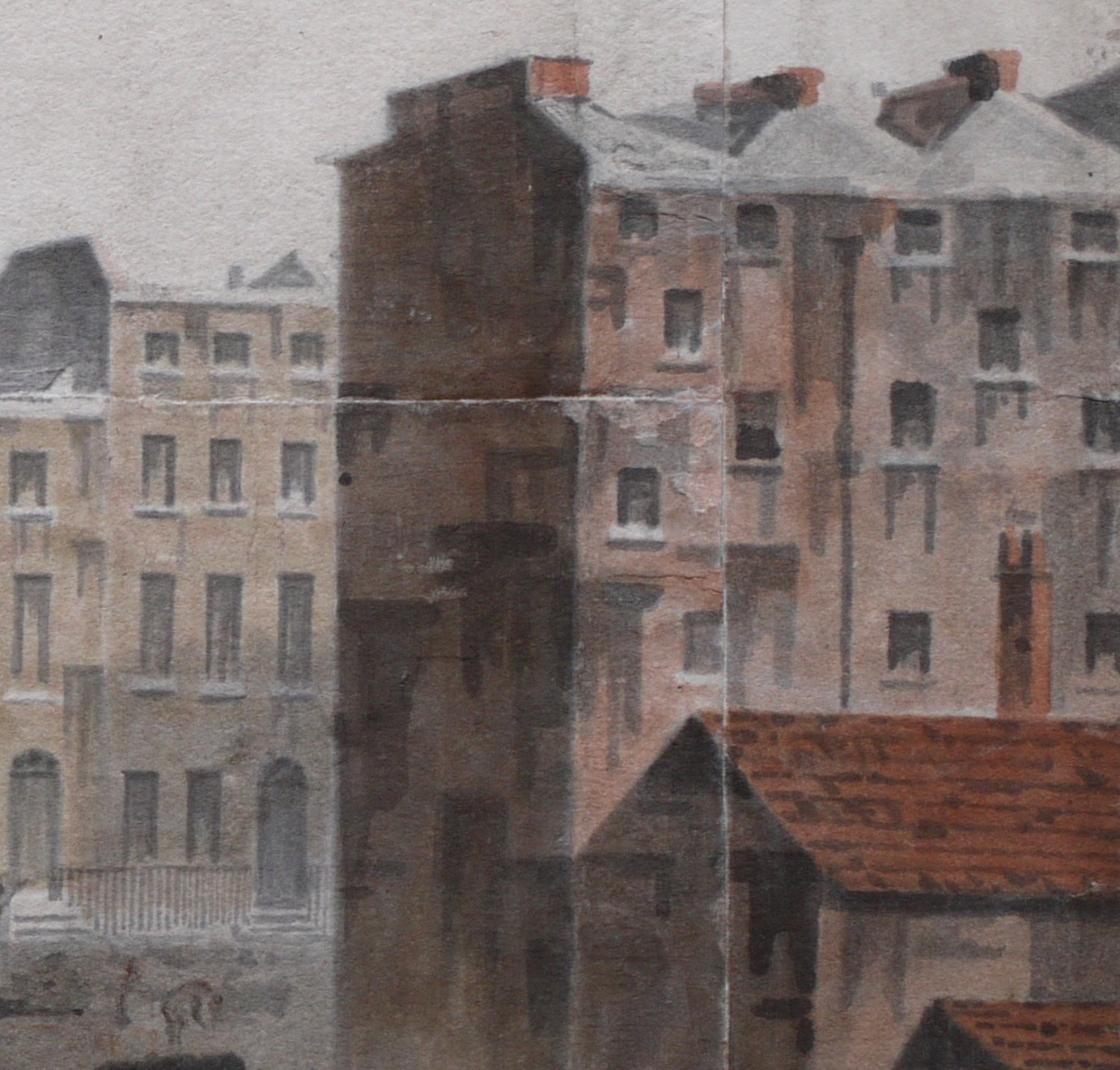
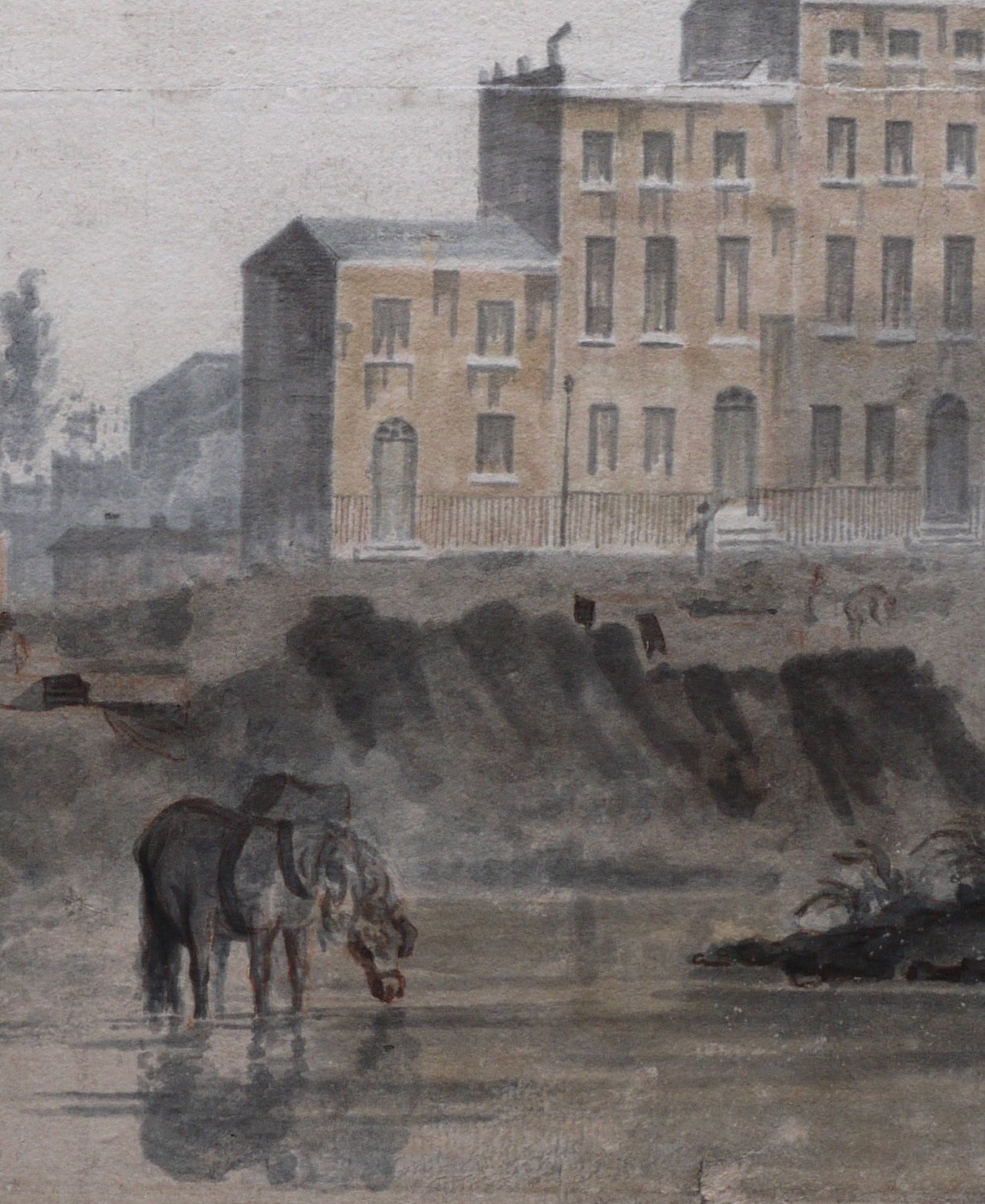
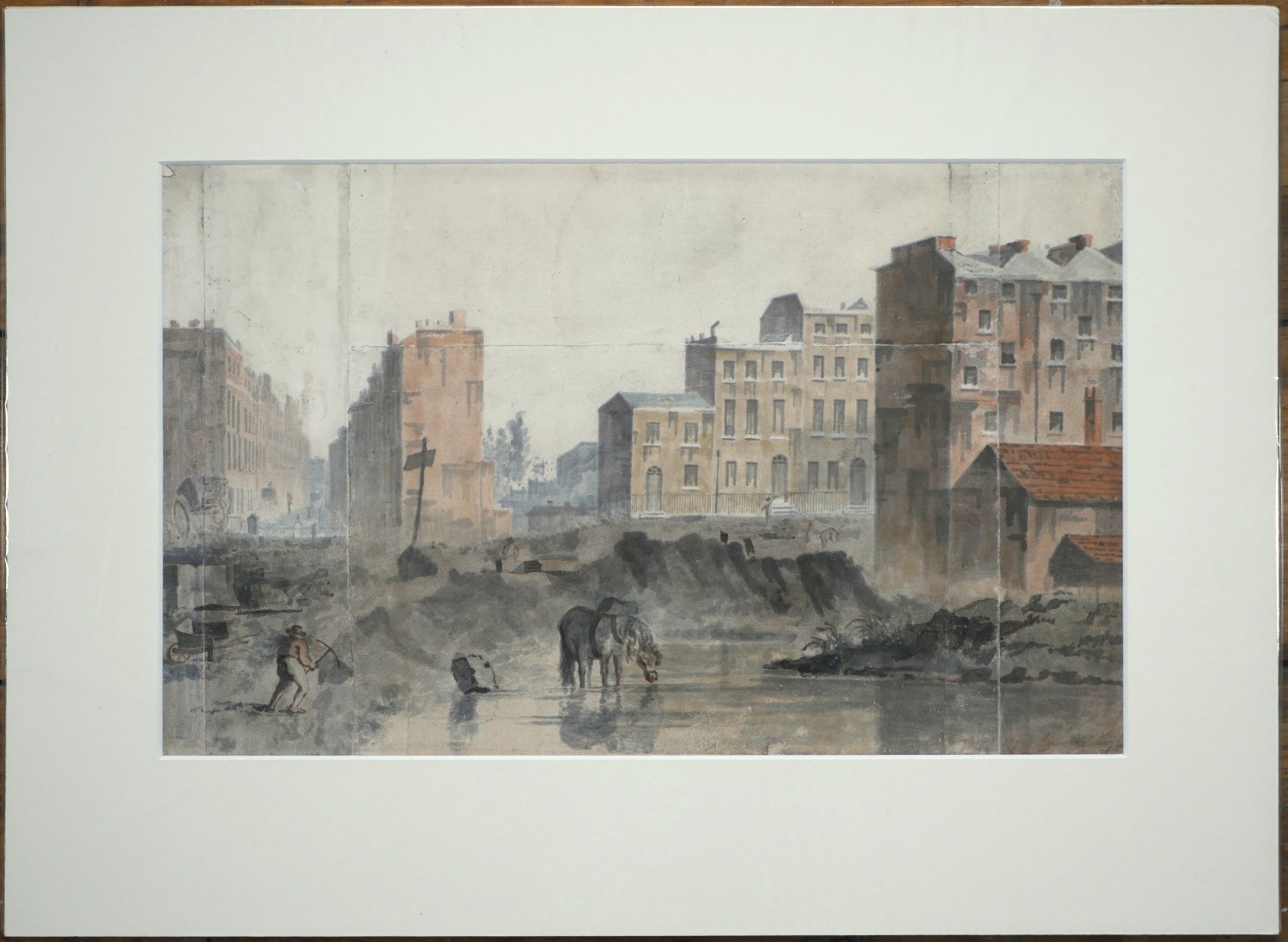
Watercolour, brown ink and monochrome wash, joined from 5 sections of laid paper, indistinctly inscribed (lower right). Presented in a new mount.
Sheet: 10 5/8 x 17 1/8 in. (27 x 43.5 cm.)
Mount: 16 3/8 x 22 1/2 in. (41.7 x 57.2 cm.)
The historical London illustrator T. Nugent is most likely Thomas Nugent (b. 1767 – d. after 1829), an Irish-born engraver and draughtsman who worked in London from the late 18th century into the early 19th century.
This watercolour and its partner St. Paul’s Cathedral and Islington from Regent’s Park where previously thought to be by the merchant and amateur artist John Colley Nixon (1755 – 1818).
However recent research has discovered a number of watercolours ascribed to T. Nugent that are undoubtedly by the same hand. The watercolours are available to view on the website of the London Museum and are mostly signed and dated from 1809 to 1823.
Born in Drogheda, Ireland, Nugent trained at the Dublin Society’s Schools—winning a medal in 1785—before relocating to London around 1791. He is best known in standard art reference dictionaries as a stipple engraver who excelled in portraiture, contributing plates to publications such as Edward Harding’s Shakespeare and The Biographical Mirror. Despite his primary reputation as a portrait engraver, archival records attribute early 19th-century London street scenes and topographical watercolours to “T. Nugent,” most notably Kentish Town, London, 1817—a detailed watercolour depicting a street view with a horse-drawn carriage in Camden.
His surviving London illustrations are primarily held in civic archives rather than national fine art museums: The watercolour of Kentish Town, London, 1817 is catalogued under the Guildhall Library Art Gallery and The London Archives (formerly the London Metropolitan Archives).
His engraved works on paper are held in major institutions, including the National Portrait Gallery, the British Museum, and the Royal Collection Trust.