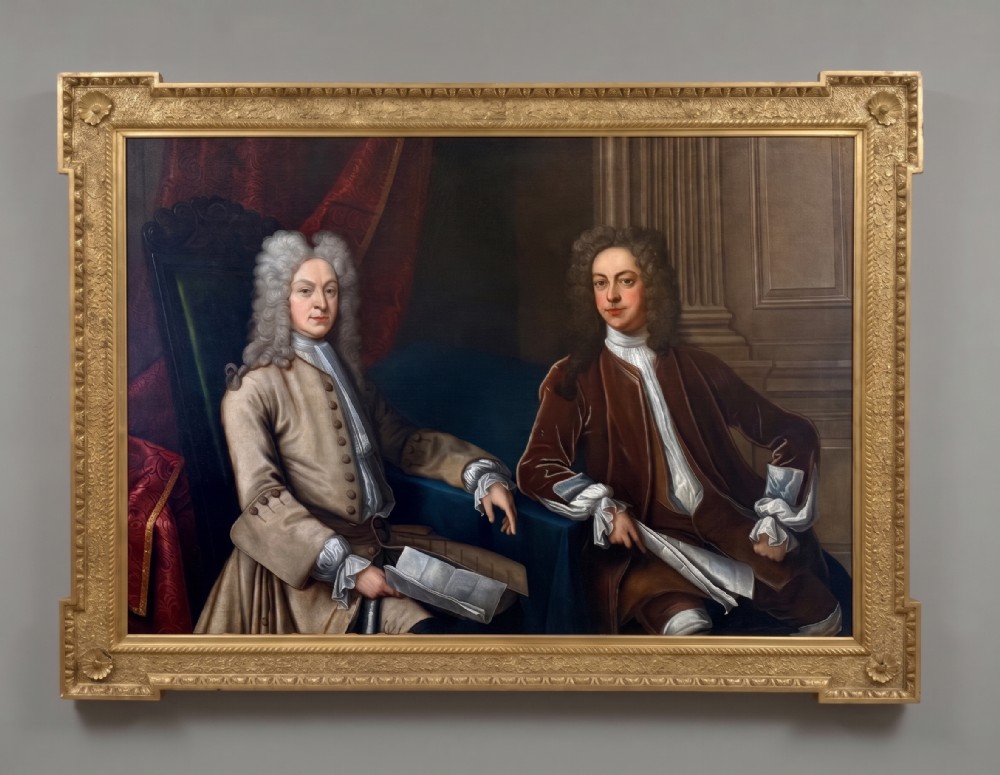
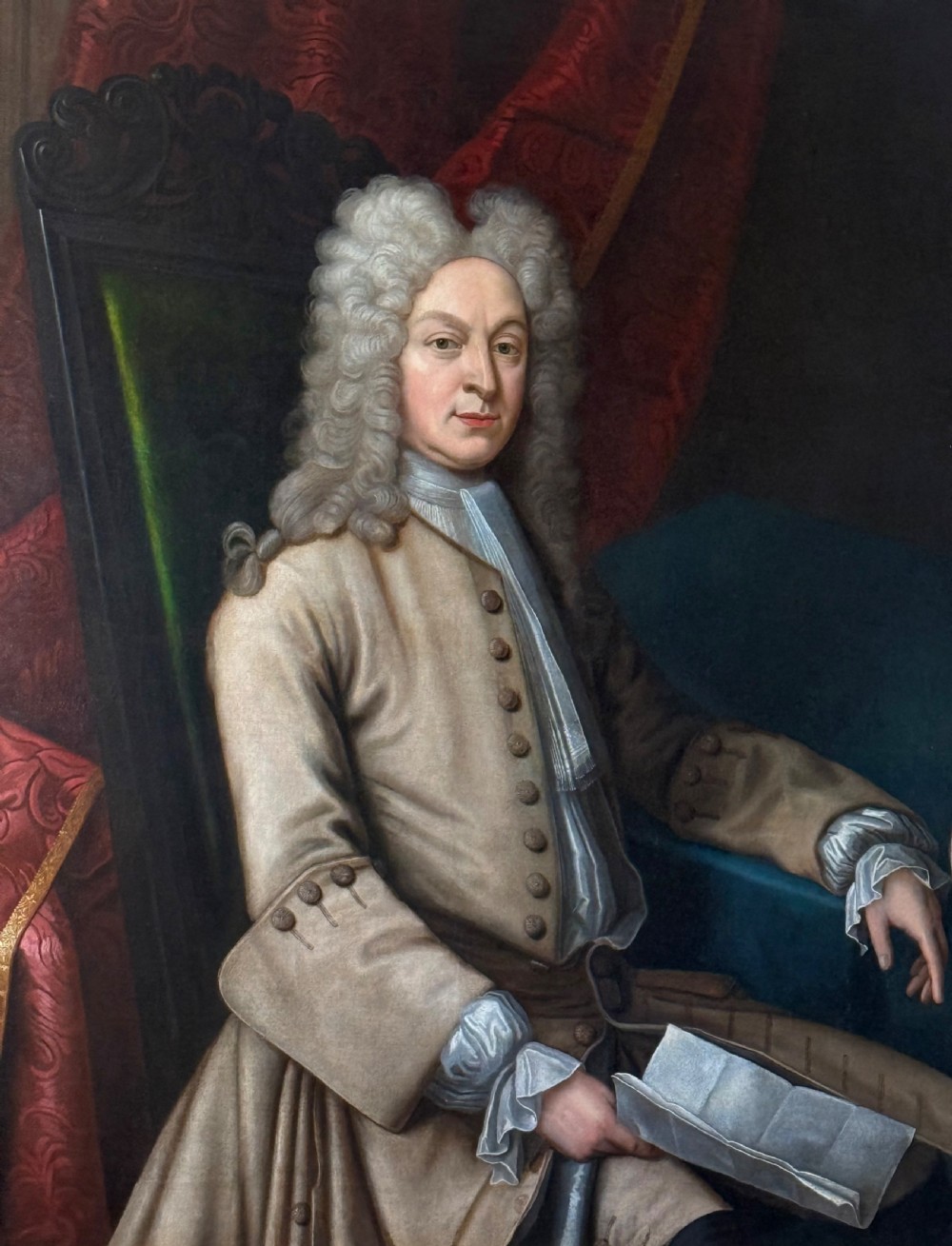
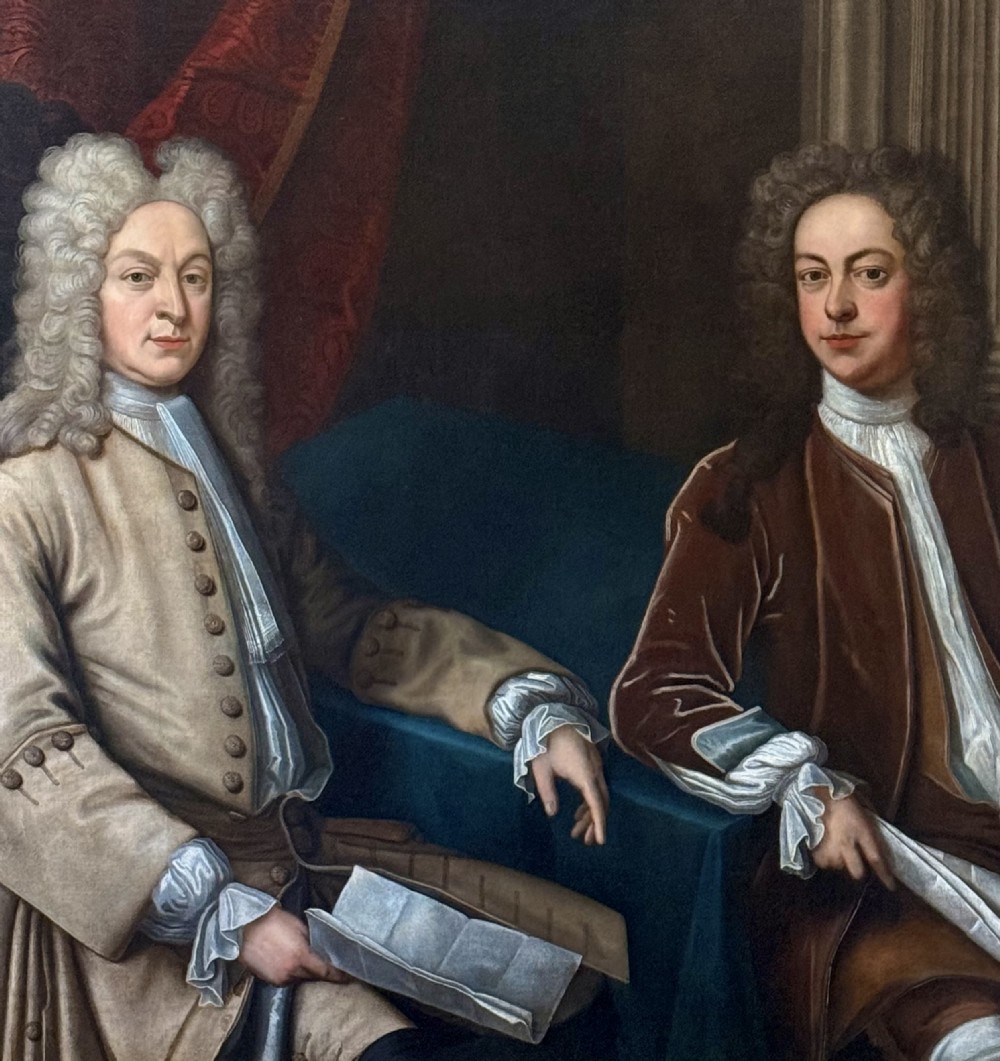
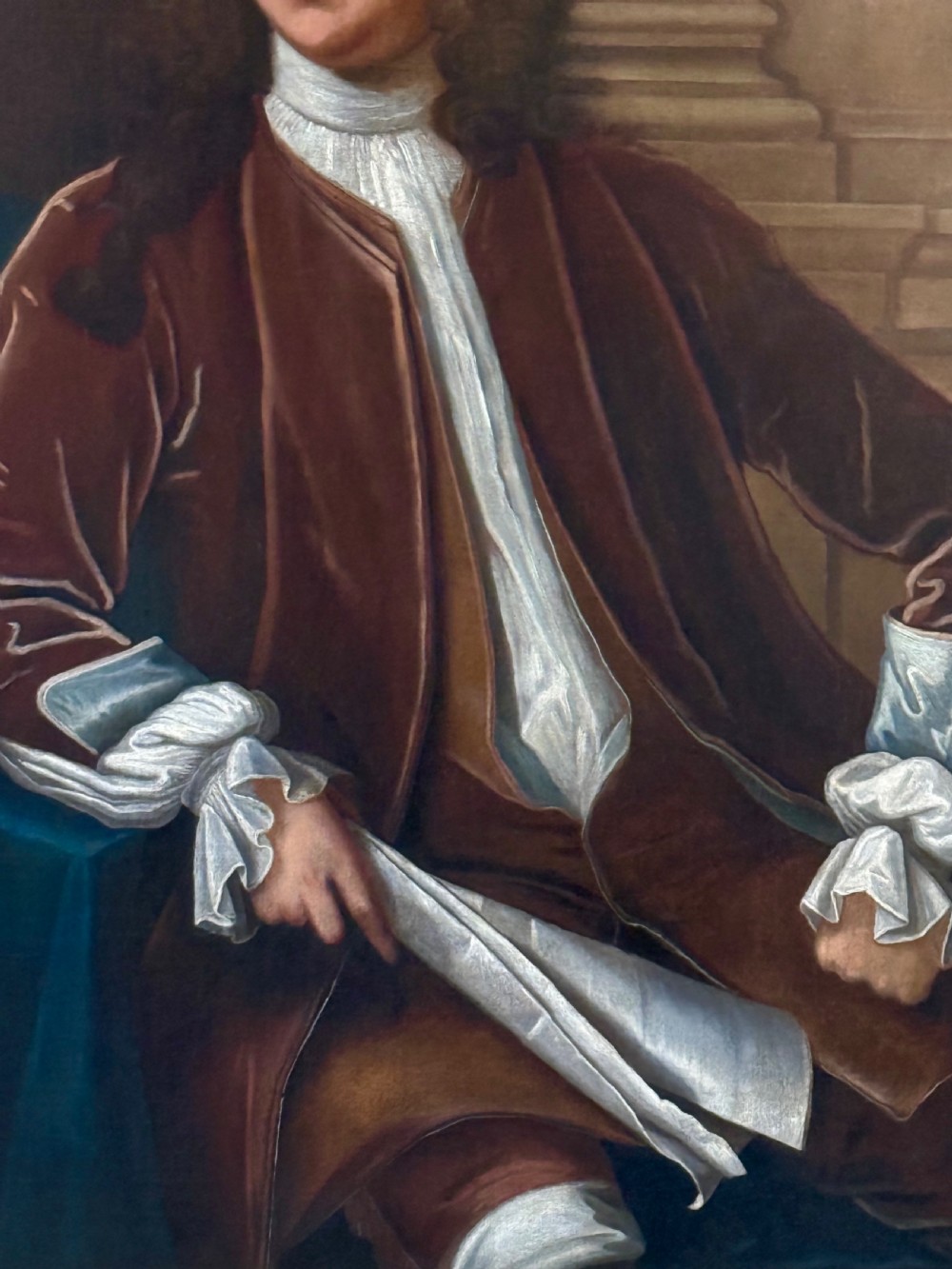
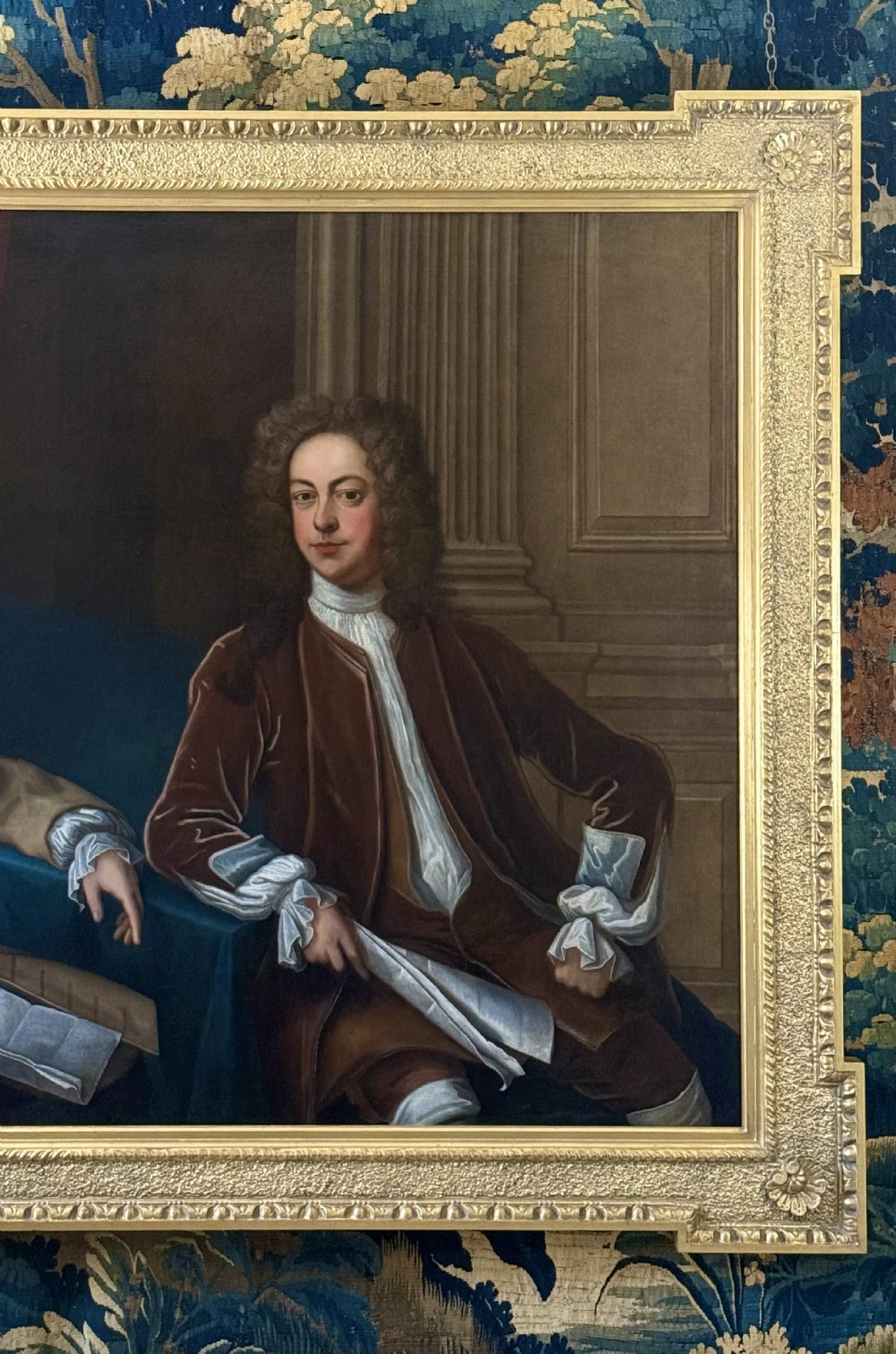
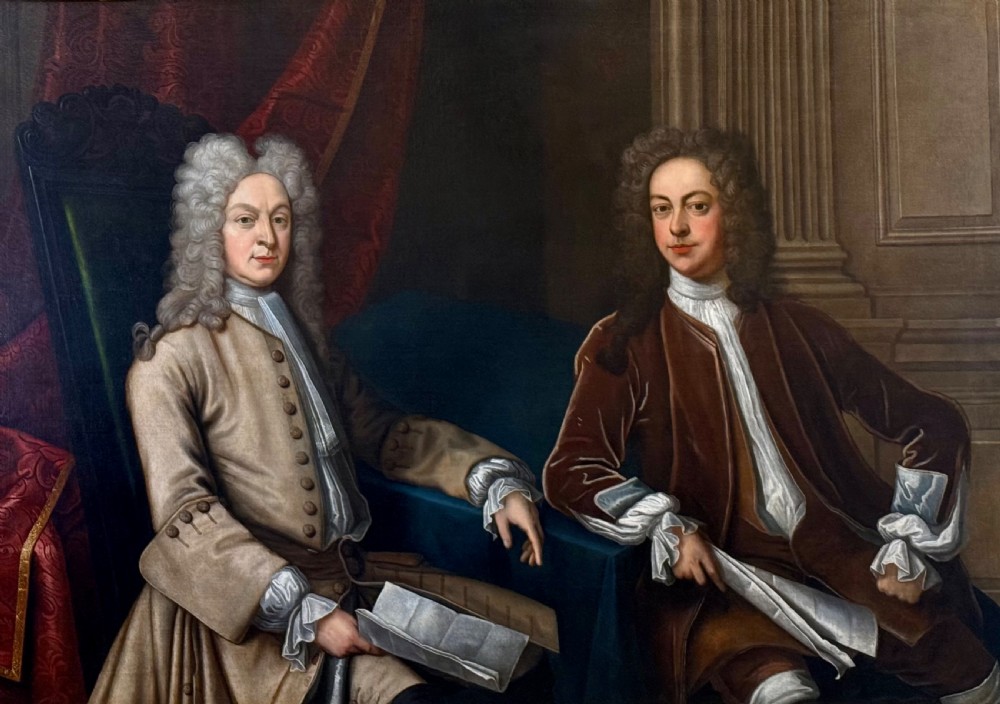
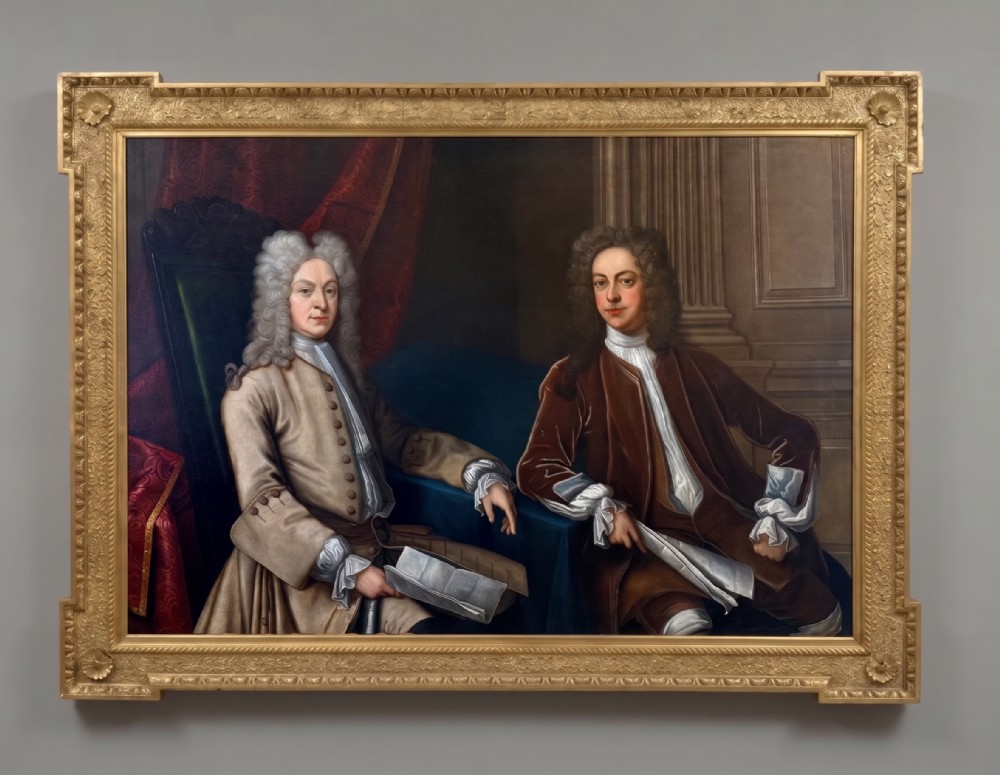
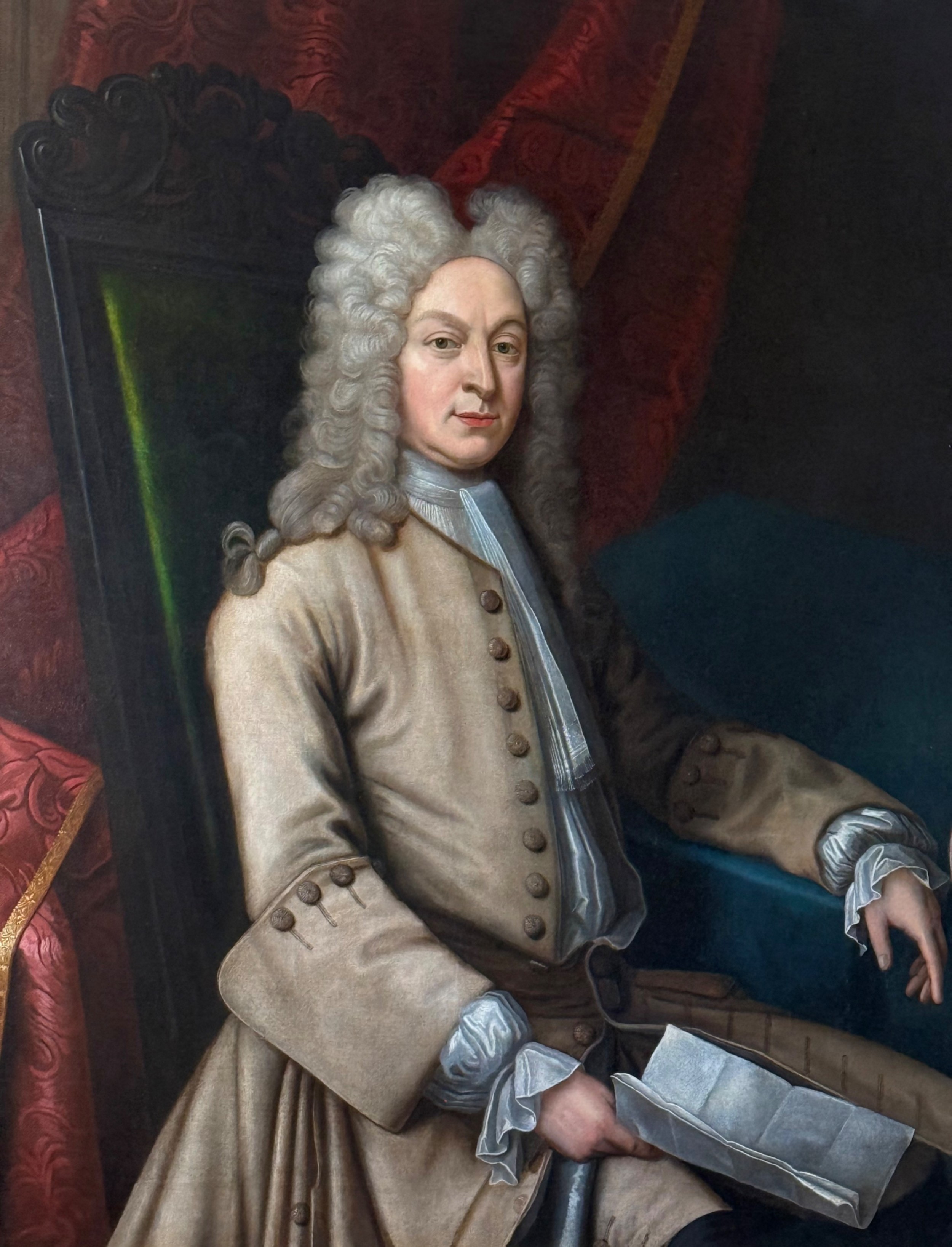
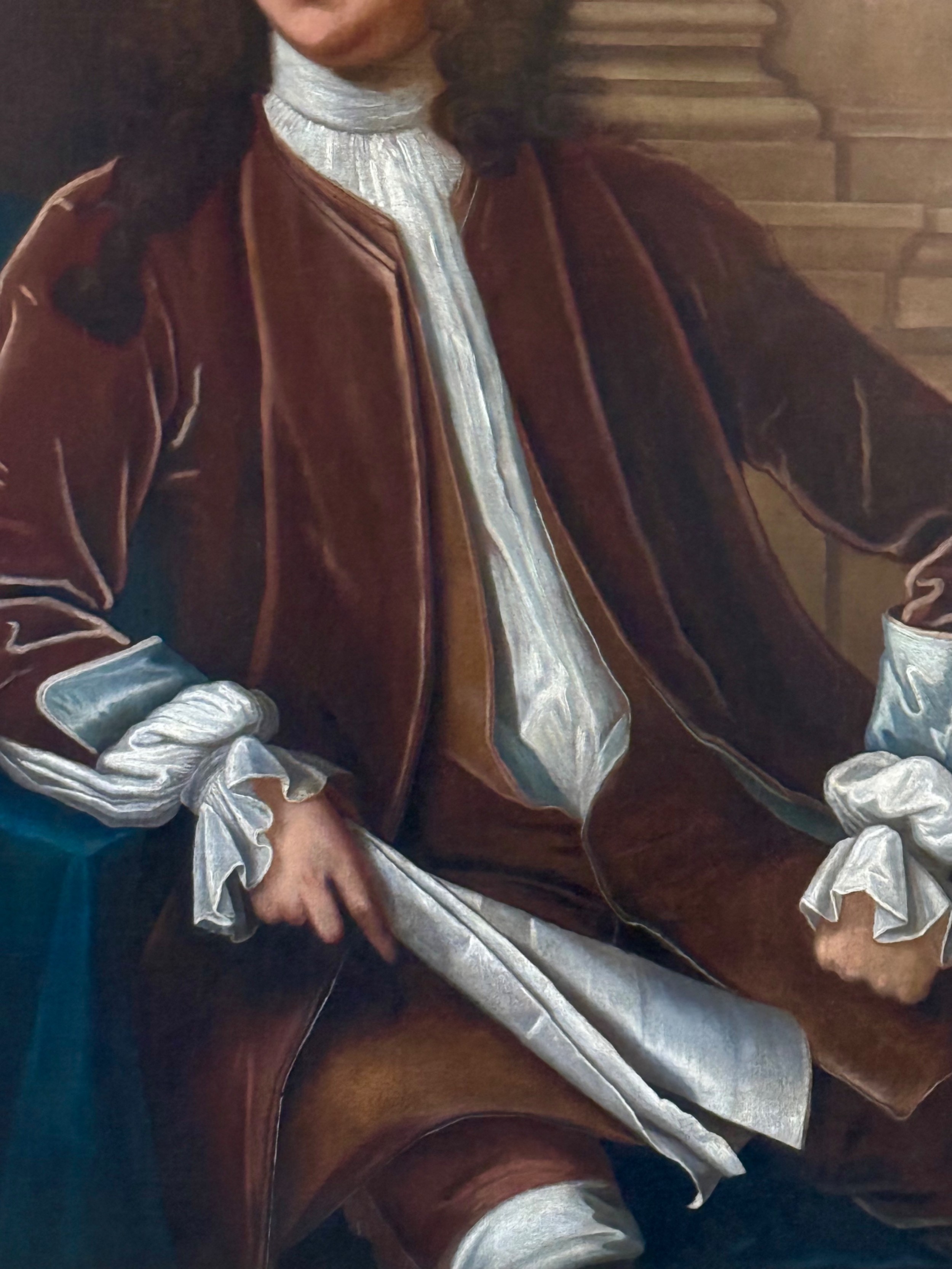
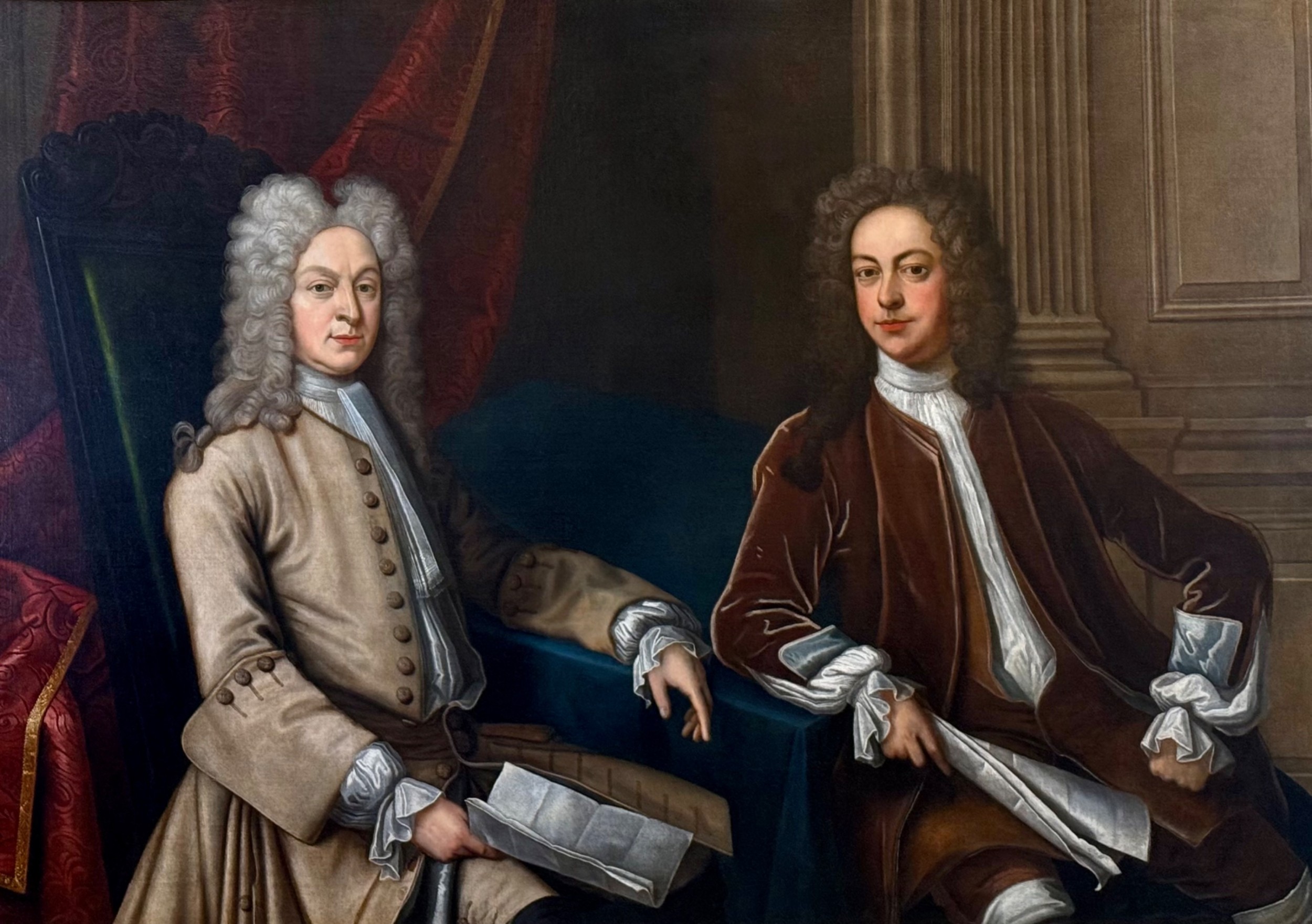
Portrait of the first Lord Bolingbroke and first Lord Walpole both seated at a table wearing wigs and light fawn and dark brown clothes respectively
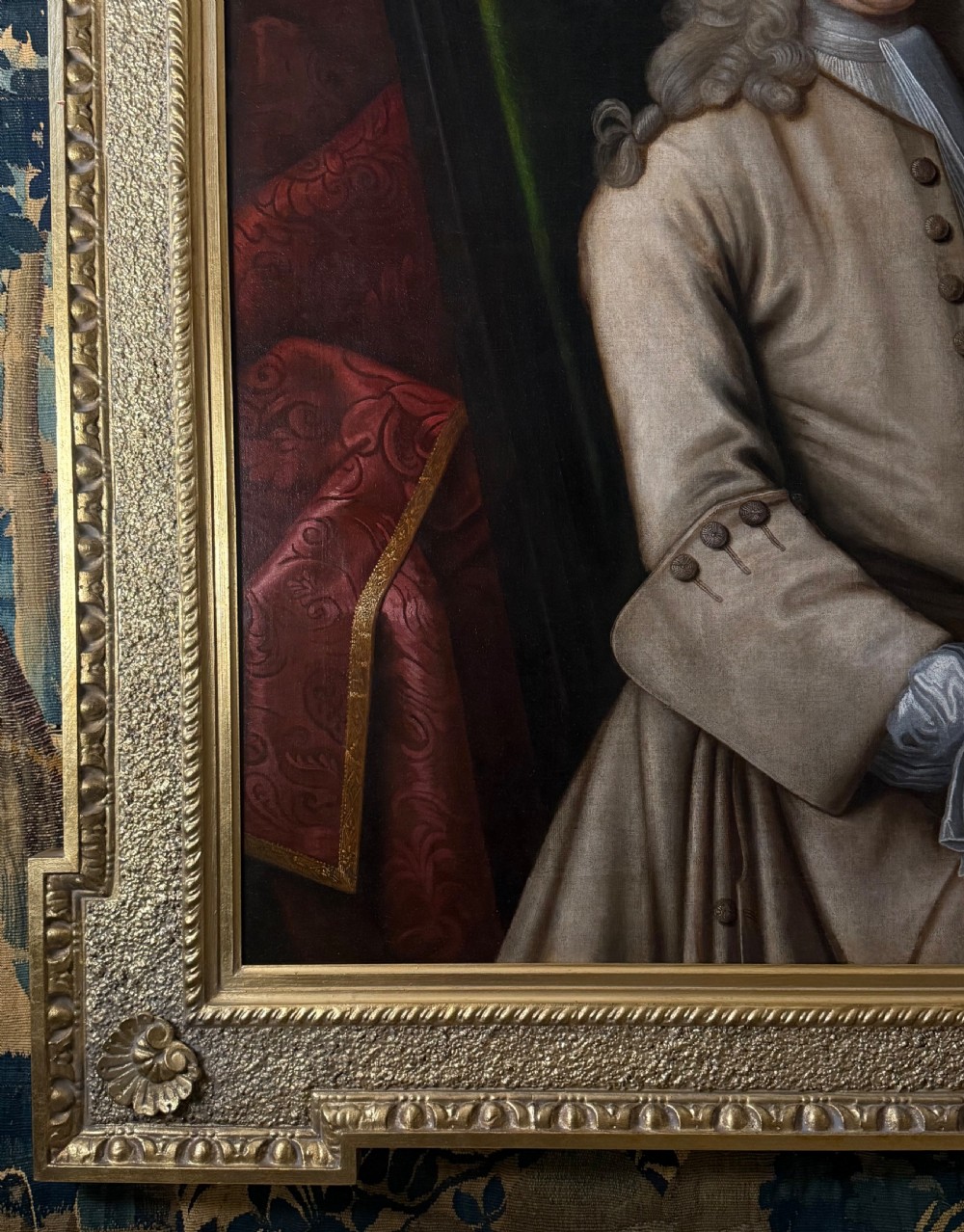
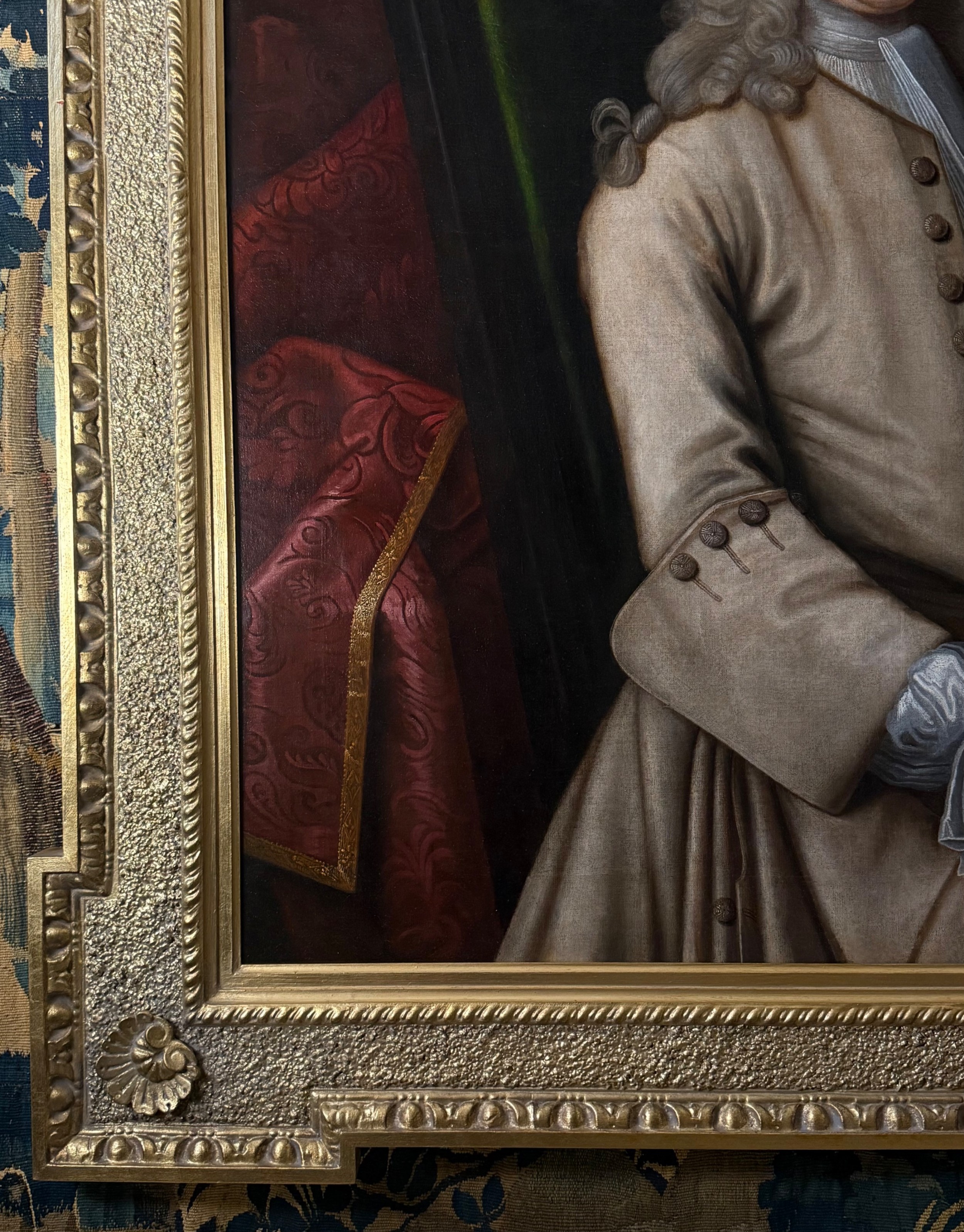
Oil on canvas in a later Kentian style frame Canvas: 136.2 cm. x 199.1 cm / Framed: 157cm x 228cm
Price: £56000
PROVENANCE Lady Milford, Thorpe Lee, Egham, England. Albemarle Gallery (1910) 1364 Collinson The Children's Society Sotheby's, London, "Eighteenth Century and Modern Drawings and Paintings", February 27, 1957, lot 58 (as "Henry, Ist Viscount Bolingbroke and Horatio, Ist Baron Walpole" by Joseph Highmore) Appleby Bros., London (February 27, 1957), £12 David Pleydell-Bouverie Gift of Mr. David Pleydell-Bouverie to Beaverbrook Art Gallery Fredericton, N.B Canada Where acquired by Period Portraits
VERSO White chalk, stretcher: stamped, stretcher: “I364" blue-edged label, stretcher: “Highmore" label, stretcher: "113 lll Bolingbroke and Walpole. Highmore" "Joseph Highmore-portraits of Henry St. John,lst Lord Bolingbroke and Horatio, Ist Lord Walpole"
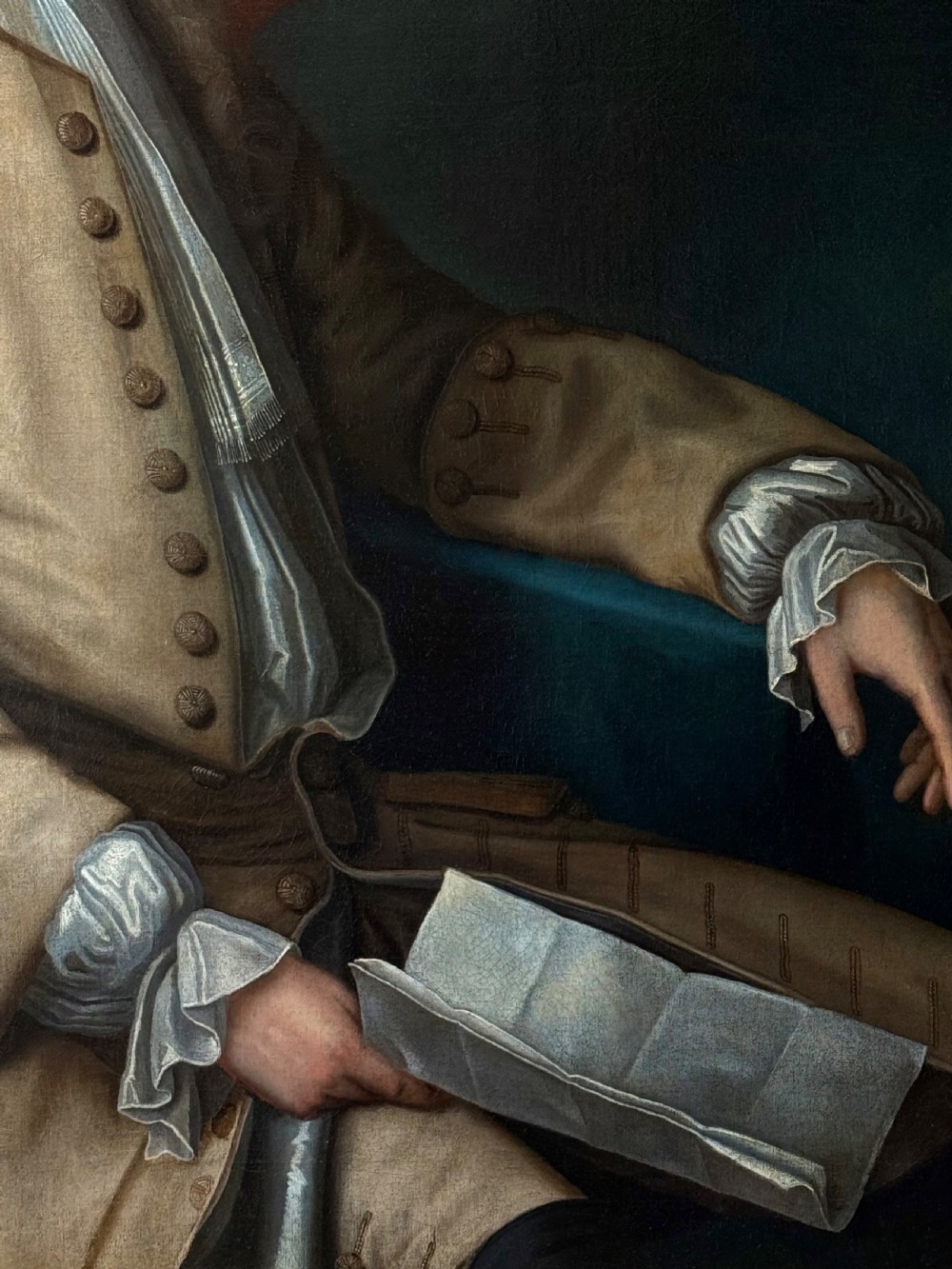
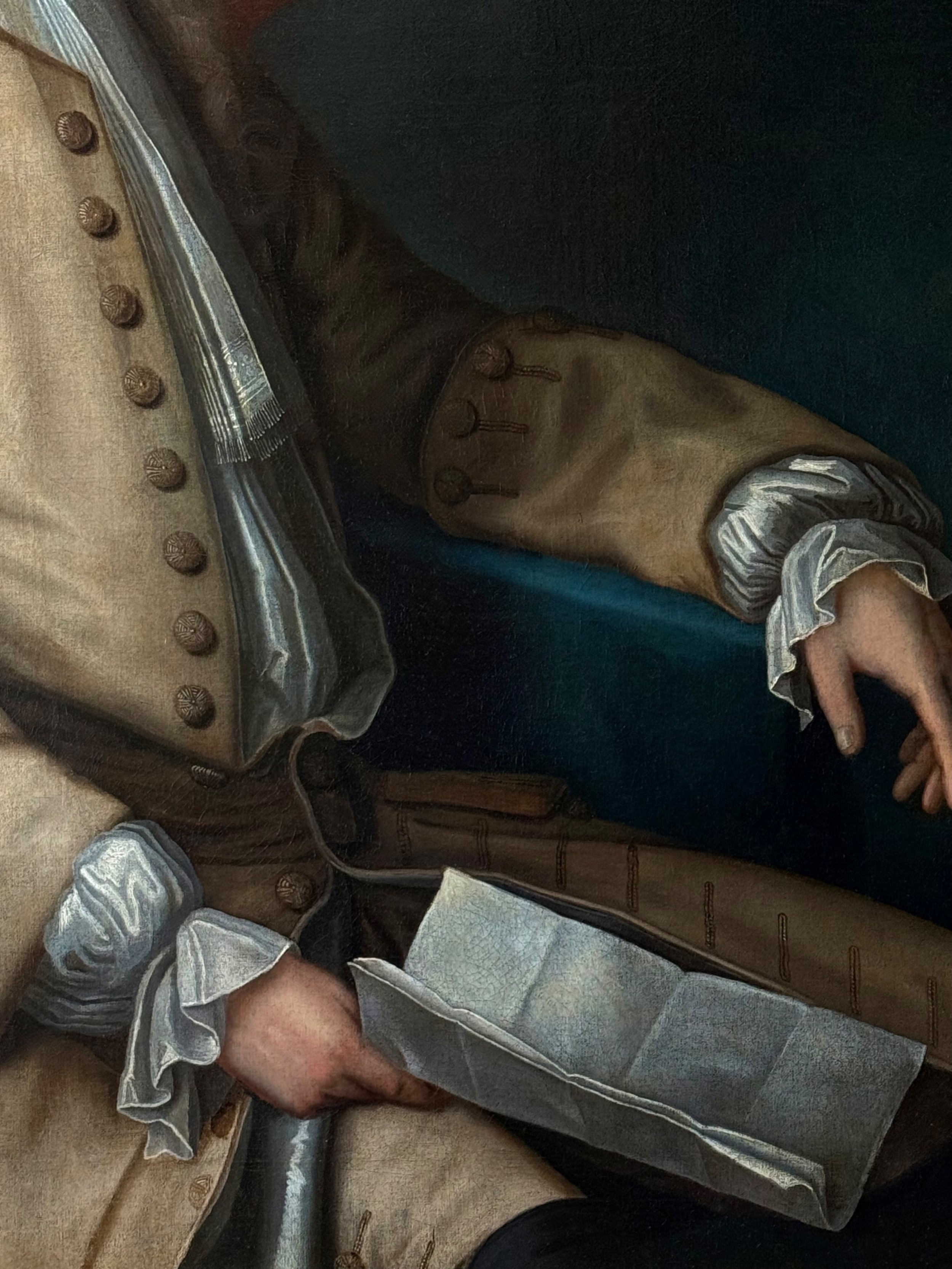
THOMAS GIBSON (1680-1751) Gibson's studio specialised in restrained, dignified three-quarter-length seated portraits of statesmen, clerics, and intellectuals set against classical architectural pilasters and heavy drapery. The smooth modelling of the faces, the soft handling of the velvet and wool fabrics, and the slightly stiff, formal placement of the hands resting on a green baize-covered table with folded diplomatic or state papers are all characteristic of Gibson's work from c. 1712–1720. The artist painted several prominent Tory and Whig figures during this exact decade (including well-known portraits of George I, Archbishop William Wake, and John Flamsteed), making him a natural choice for high-ranking government or diplomatic figures.
The historical relationship between Henry St John, 1st Viscount Bolingbroke (1678–1751) and Horatio Walpole, 1st Baron Walpole of Wolterton (1678–1757)—the younger brother of Britain's first Prime Minister, Sir Robert Walpole—was defined by a bitter, lifelong political and intellectual rivalry. As a leading Tory strategist, Bolingbroke fought fiercely against the Whig administration led by the Walpole brothers, resulting in sharp diplomatic clashes and posthumously published literary rebuttals.
As Queen Anne’s Secretary of State, Bolingbroke was the principal architect behind the Treaty of Utrecht, which extracted Britain from the War of the Spanish Succession. Horatio Walpole and the Whigs furiously opposed the treaty, viewing it as a treacherous betrayal of Britain’s continental allies in favour of France.
When the Whigs took power under George I, Bolingbroke fled to France to escape treason charges. Meanwhile, Horatio Walpole rose through the diplomatic ranks, serving as an ambassador to Paris and The Hague. Horatio actively worked to build alliances that would isolate the Jacobite rebels whom Bolingbroke briefly served.
Even after Bolingbroke returned from exil