34,789  PAGES BROWSED TODAY PAGES TODAY 117 ANTIQUES UPLOADED TODAYNEW ARRIVALS
117 ITEMS ADDED TODAY
Sort Order
Items Per Page
Browse Categories
Sort order
Relevant Links
Items per page
ID #SA1232230
FOR SALE
£5,250
Email Buy
Save
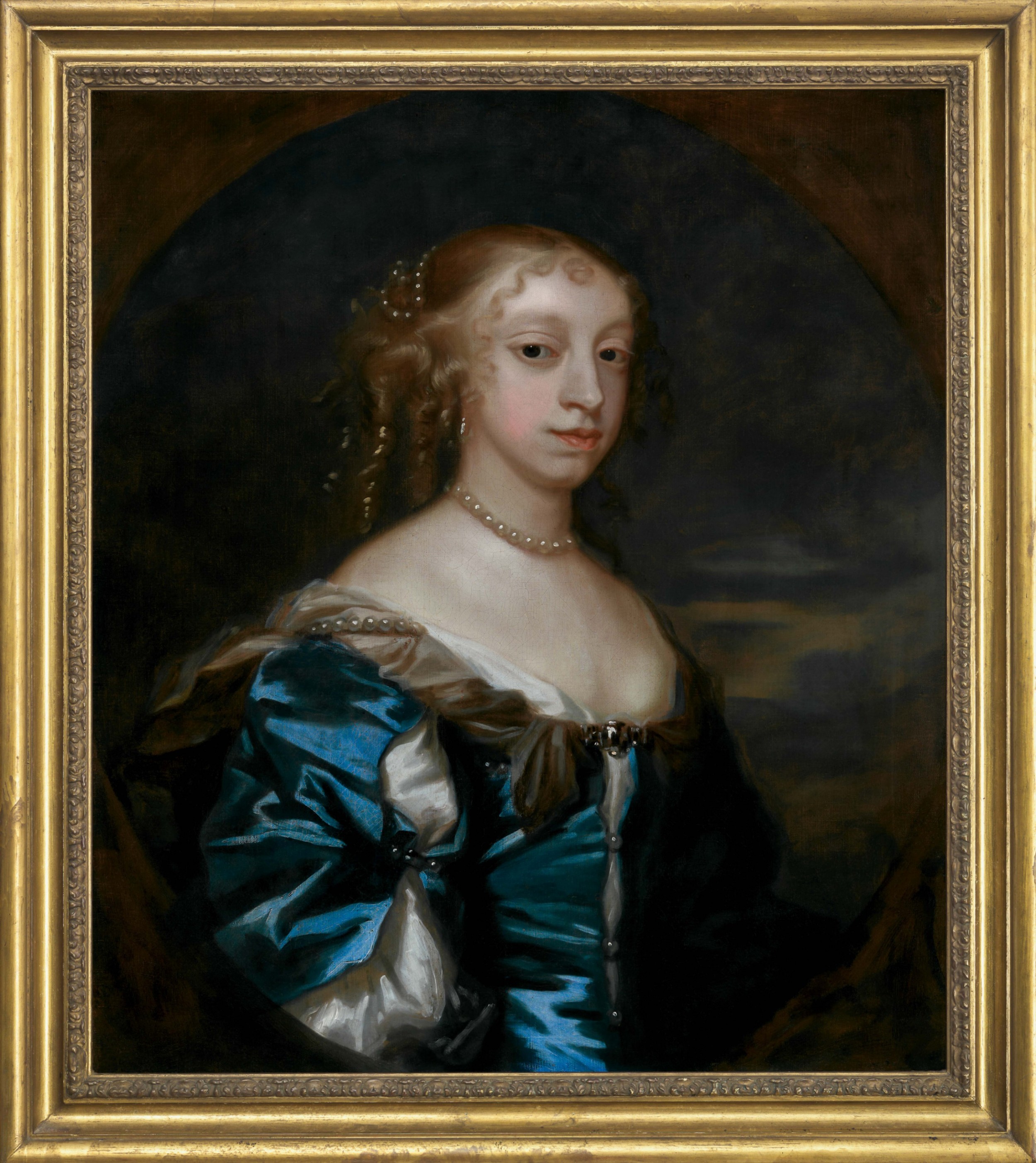
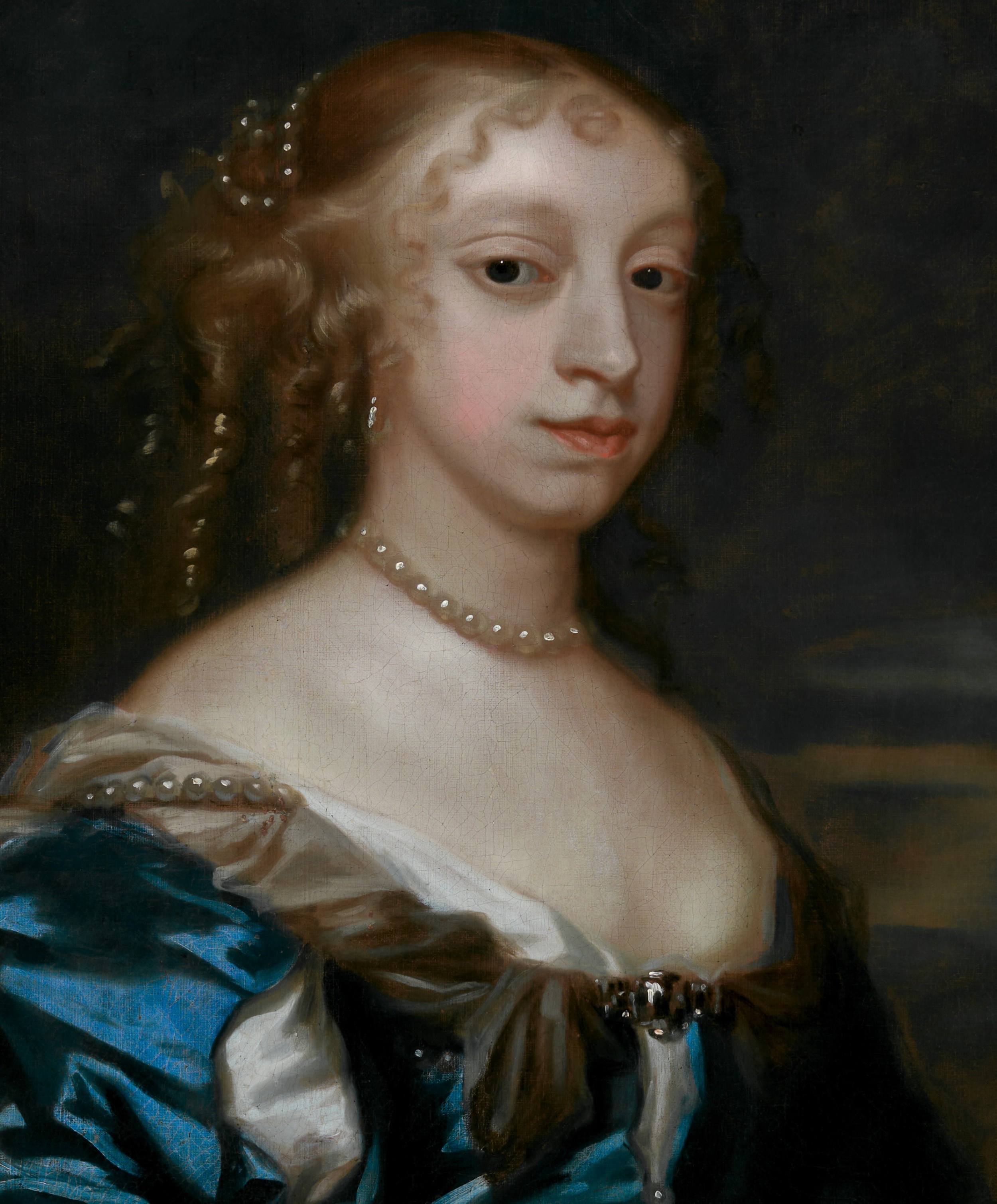
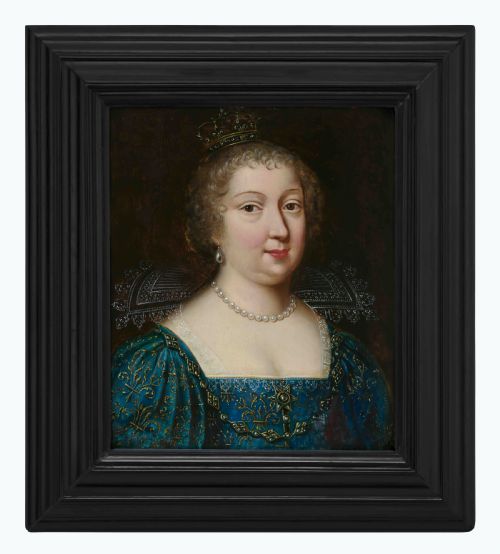
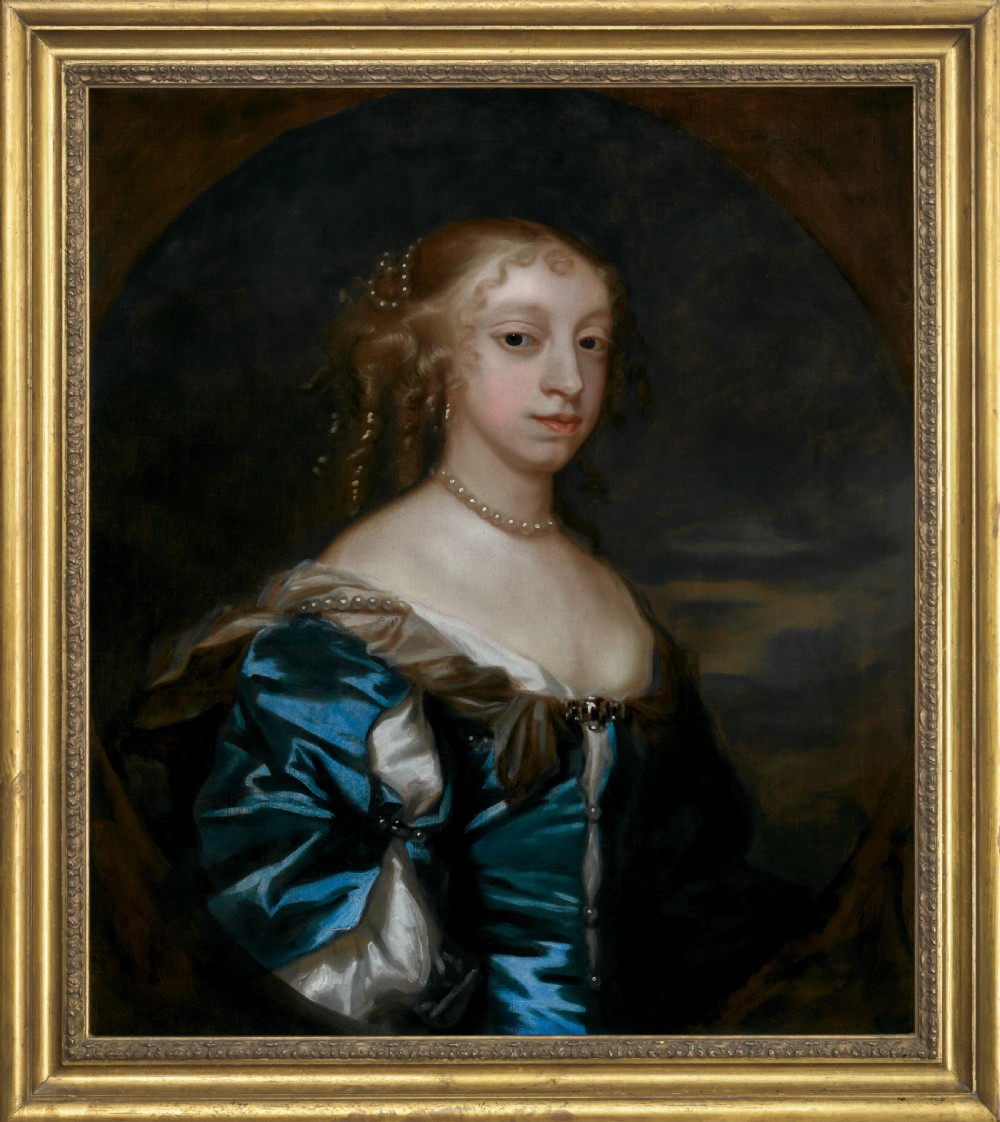
Portrait of Lady Diana Bruce, Duchess of Rutland, in a Blue Dress with Cut Sleeves C.1660-1670, Oil on Canvas Painting
Titan Fine Art
for sale €6,143     $6,668
£5,250
Titan Fine Art

Titan Fine Art

Sellingantiques Verified Since Jul 2016
View Dealers Stock Page
  • About Us
    Specialist in 17th & 18thc portraits. Highly curated selection, museum-level research & pro conservation. Exceptional art, expertly vetted.
Id #SA1232230
PDF SHARE
SAVE

Portrait of Lady Diana Bruce, Duchess of Rutland, in a Blue Dress with Cut Sleeves C.1660-1670, Oil on Canvas Painting

17th century
For Sale by Titan Fine Art
Description

Presented is a captivating portrait of the noble Lady Diana Bruce; it is an exemplary work from the highly fashionable and influential circle of Sir Peter Lely. Created circa 1660-1670, this striking painting offers a rare glimpse into the opulent world of the English Restoration court and aristocracy, a period of cultural resurgence and political intrigue following the turbulent years of the English Civil War and the Interregnum.

The subject of this portrait is Lady Diana Bruce, a woman of truly remarkable lineage and social standing in the seventeenth century. Born circa1648, she was the daughter of Robert Bruce, 1st Earl of Ailesbury, and Lady Diana Grey. Her aunt was the ill-fated Lady Jane Grey (1537-1554), the nominal Queen of England for just nine days in 1553 during the tumultuous succession crisis following the death of King Edward VI.
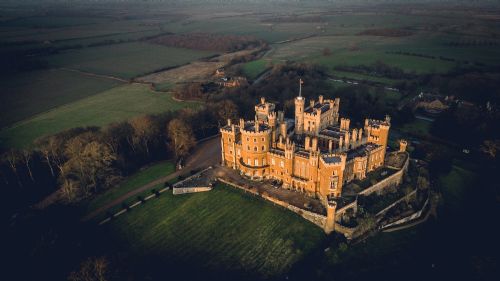
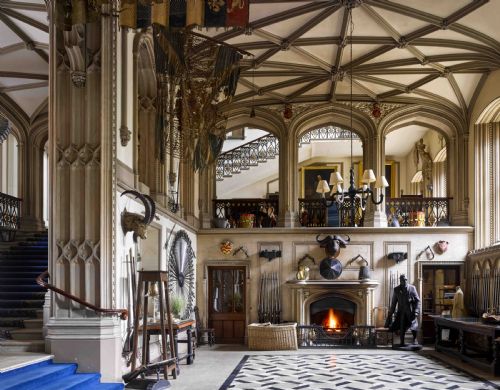
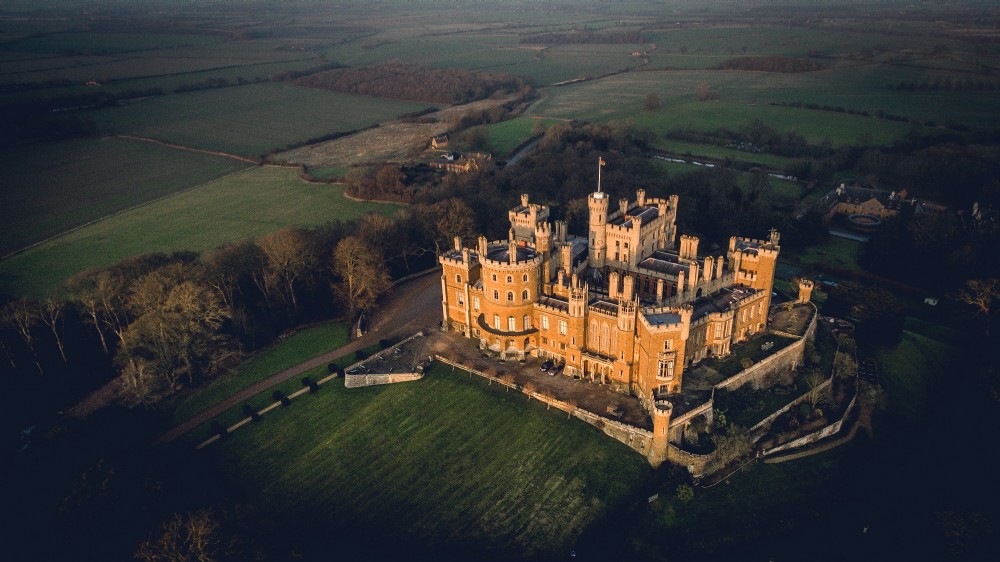
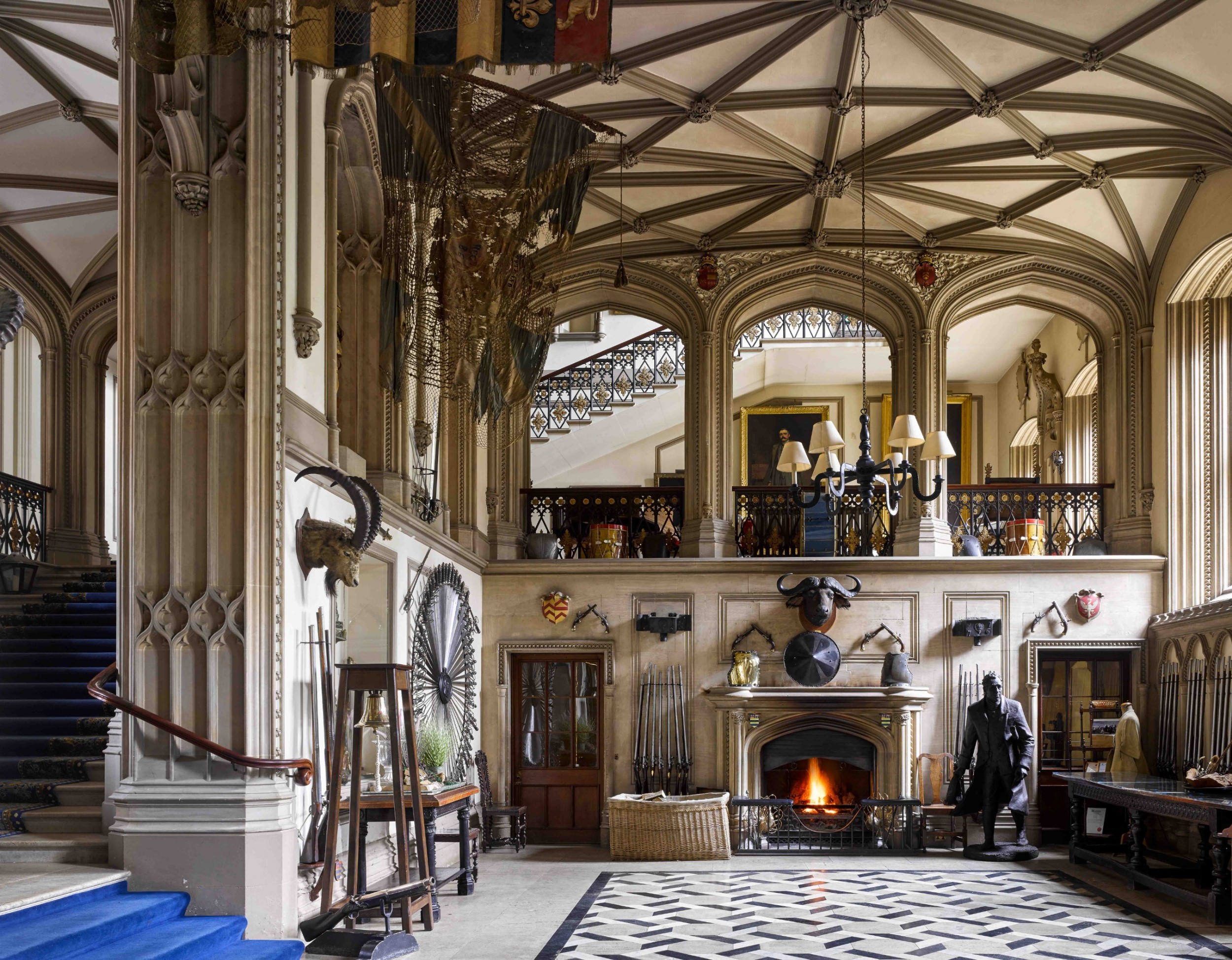
Lady Diana's life was marked by two marriages and a tragically early death. On January 29, 1666, she married her first husband, Sir Seymour Shirley, 5th Baronet. They lived at the Shirley family seat, Staunton Harold Hall in Leicestershire. She bore him one son, Robert Shirley, who was born posthumously after Sir Seymour's death in 1667. She married her second husband, Sir John Manners (later 1st Duke of Rutland), on November 10, 1671. The couple resided at the historic Belvoir Castle in Leicestershire (see photo), the magnificent family home of the Manners family since 1067. Lady Diana tragically died there in childbirth on July 15, 1672, at the approximate age of 24. She was buried in the church at Bottesford, Leicestershire, where many members of the Manners family were interred. Her brief life, though constrained by the expectations for women of her rank to secure advantageous marriages and produce heirs, left a notable mark on the history of two prominent aristocratic families.
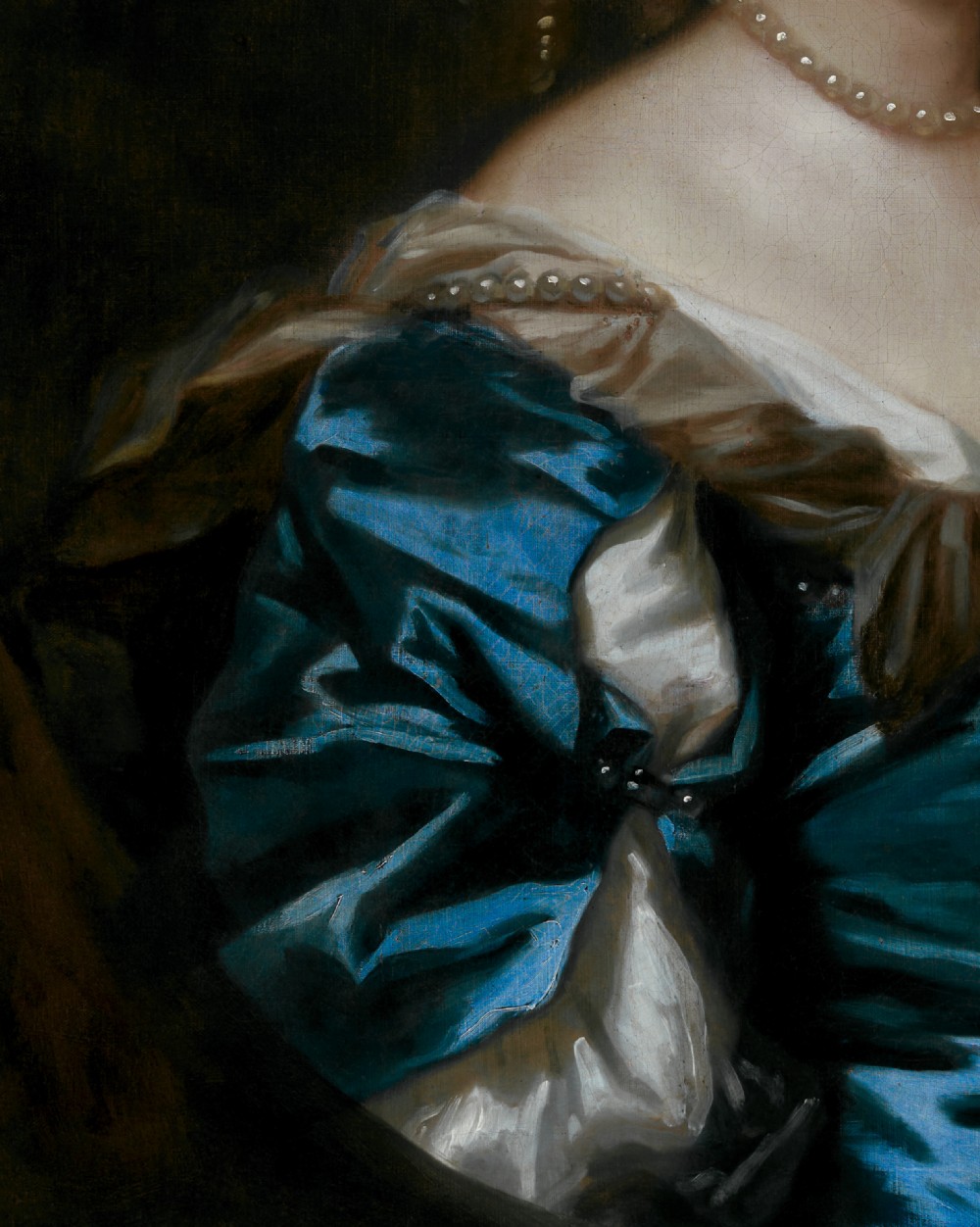
In this portrait, Lady Diana Bruce is presented in the height of Restoration fashion, a style popularised by Lely that emphasised wealth, elegance, and a studied languor. Her posture is formal yet relaxed, characteristic of Lely's "beauties." This cultivated image was crucial for aristocratic women; it projected stability, good taste, and an appropriate level of refinement, making the painting an important historical artifact illustrating the visual language of power and gentility of the era.
This painting serves as a vital historical document, reflecting life in the English countryside during a transformative era. The Restoration period (1660-1700) was a time of immense social and political change. With the monarchy restored, the austere Puritan lifestyle of the Commonwealth period gave way to a more vibrant, pleasure-seeking culture. The aristocracy largely maintained their power and influence through their vast country estates. Life in the country for a noblewoman like Lady Diana would have involved managing a large household, social visits, and fulfilling familial duties, all within a hierarchical society that was still recovering from civil war. This portrait, in its elegance and formal pose, speaks to the stability and social order the restored monarchy sought to project.
Sir Peter Lely (1618–1680), a Dutch-born artist who established his career in London, was the preeminent portrait painter of his era, serving as Principal Painter to King Charles II. Known for his technical proficiency and ability to capture an "air of sensuous languor," Lely defined the aesthetic of the Restoration court. The present painting, produced within this dynamic circle, showcases the rich colour, masterful rendering of textiles, and elegance characteristic of Lely's style, a visual echo of the full-length version held in the collection of the National Galleries Scotland.

Full description at: www.titanfineart.com

Physical Dimensions
Height
88cm (34.65")
Width
79cm (31.10")
Depth
5cm (1.97")
Declaration

Titan Fine Art has dated this 17th Century Portrait Painting to the 17th Century.

Reference Numbers
Sellingantiques Reference
SA1232230
Dealers Notes

Much more info about this item at: www.titanfineart.com

In a market saturated with available paintings, Titan Fine Art offers a distinct advantage: we sift through thousands of works to provide a specially curated selection. Each piece is meticulously chosen based on technical merit, provenance, and decorative appeal, ensuring our clients view only the finest examples of British and European art.

With over 20 years of expertise and 1,000+ works placed with collectors and institutions, we are one of the most prolific specialists in 17th and 18th-century portraiture. We combine a scholarly approach with museum-level rigor to replace the uncertainty of the open market with absolute confidence.

Why Buy From Titan Fine Art?

• Expertly Curated Selection

We act as your expert eye, selecting only high-quality works that offer genuine historical and artistic value.

• Museum-Level Research

Each portrait is supported by extensive academic research, often exceeding 40 hours, to establish attribution, sitter identity, and historical context.

• Professional Conservation

All paintings are carefully cleaned and stabilised by professional conservators, and are presented ready to hang.

• Transparent Pricing

No buyer’s premium or hidden fees—unlike auction houses, where additional costs can add 25–35%.

• Export Pricing Advantage

Reduced pricing is available for works exported outside the UK.

• Specialist Global Shipping

We manage the entire process, including custom crating, export documentation, and fully tracked delivery worldwide.

• Buy with Confidence

A 7-day return policy and the option to pay in GBP, USD, or EUR for convenience and transparency.

• Original Period Frames

Many works retain their original carved and gilded frames, which are works of art in their own right and enhance both historical authenticity and decorative impact.

• Personal Advisory Service

We work directly with collectors and interior designers, offering guidance on selection, scale, and placement—including bespoke room mock-ups on request.

Subscribe to our monthly 'new item alert' to be the first to hear about new works

Description
Presented is a captivating portrait of the noble Lady Diana Bruce; it is an exemplary work from the highly fashionable and influential circle of Sir Peter Lely. Created circa 1660-1670, this striking painting offers a rare glimpse into the opulent world of the English Restoration court and aristocracy, a period of cultural resurgence and political intrigue following the turbulent years of the English Civil War and the Interregnum.
The subject of this portrait is Lady Diana Bruce, a woman of truly remarkable lineage and social standing in the seventeenth century.
Titan Fine Art

Born circa1648, she was the daughter of Robert Bruce, 1st Earl of Ailesbury, and Lady Diana Grey. Her aunt was the ill-fated Lady Jane Grey (1537-1554), the nominal Queen of England for just nine days in 1553 during the tumultuous succession crisis following the death of King Edward VI.

fig 1. An antique seventeenth-century oil portrait on canvas depicting a noblewoman in a blue satin dress framed within a carved gilt wood frame.
fig 1. Portrait of Lady Diana Bruce, Duchess of Rutland, in a Blue Dress with Cut Sleeves C.1660-1670, Oil on Canvas Painting

Lady Diana's life was marked by two marriages and a tragically early death. On January 29, 1666, she married her first husband, Sir Seymour Shirley, 5th Baronet. They lived at the Shirley family seat, Staunton Harold Hall in Leicestershire. She bore him one son, Robert Shirley, who was born posthumously after Sir Seymour's death in 1667. She married her second husband, Sir John Manners (later 1st Duke of Rutland), on November 10, 1671. The couple resided at the historic Belvoir Castle in Leicestershire (see photo), the magnificent family home of the Manners family since 1067. Lady Diana tragically died there in childbirth on July 15, 1672, at the approximate age of 24. She was buried in the church at Bottesford, Leicestershire, where many members of the Manners family were interred. Her brief life, though constrained by the expectations for women of her rank to secure advantageous marriages and produce heirs, left a notable mark on the history of two prominent aristocratic families.

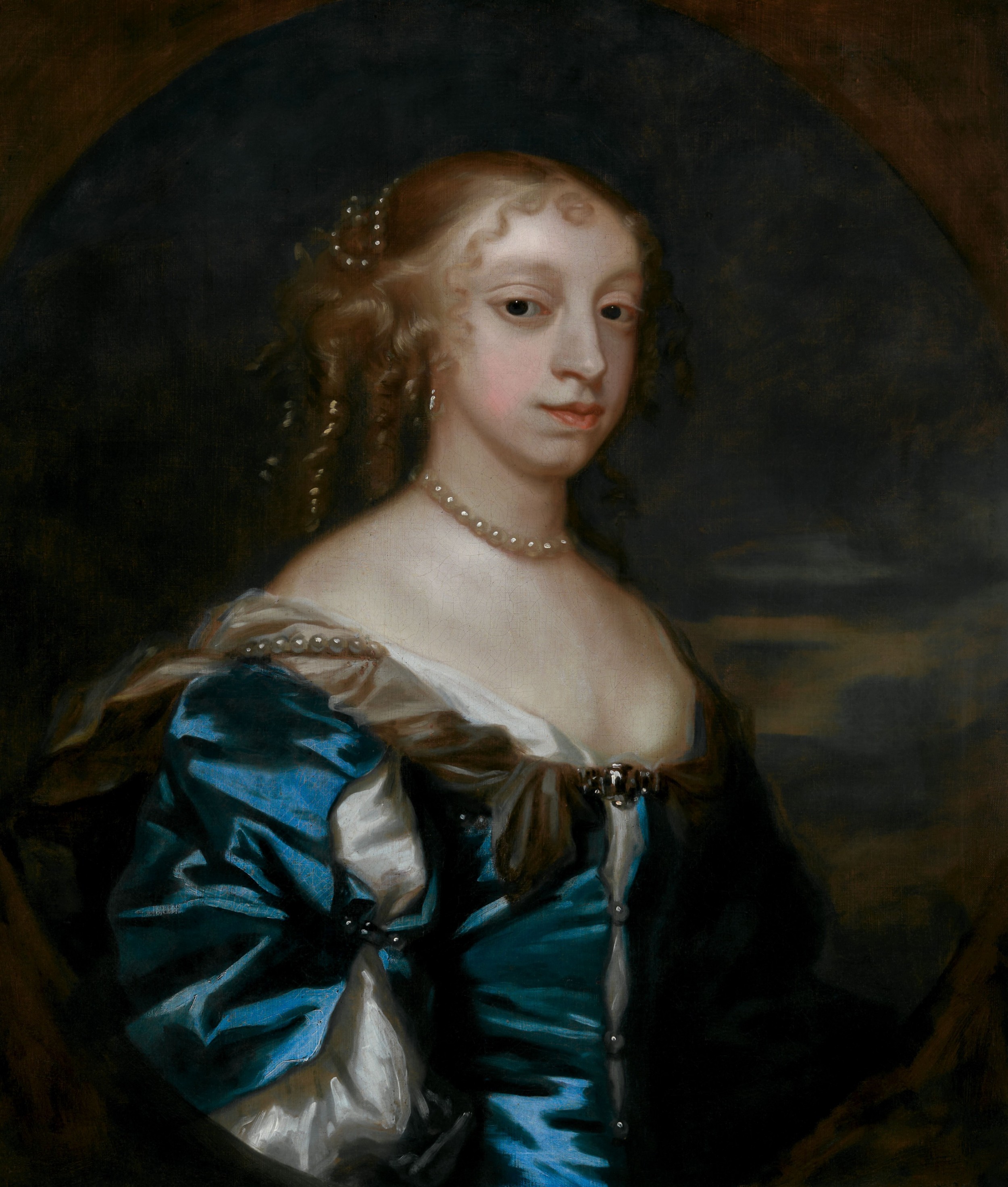
fig 2. An antique seventeenth-century oil portrait on canvas depicting a noblewoman in a blue satin dress framed within a carved gilt wood frame.
fig 2. Portrait of Lady Diana Bruce, Duchess of Rutland, in a Blue Dress with Cut Sleeves C.1660-1670, Oil on Canvas Painting

In this portrait, Lady Diana Bruce is presented in the height of Restoration fashion, a style popularised by Lely that emphasised wealth, elegance, and a studied languor. Her posture is formal yet relaxed, characteristic of Lely's "beauties." This cultivated image was crucial for aristocratic women; it projected stability, good taste, and an appropriate level of refinement, making the painting an important historical artifact illustrating the visual language of power and gentility of the era.

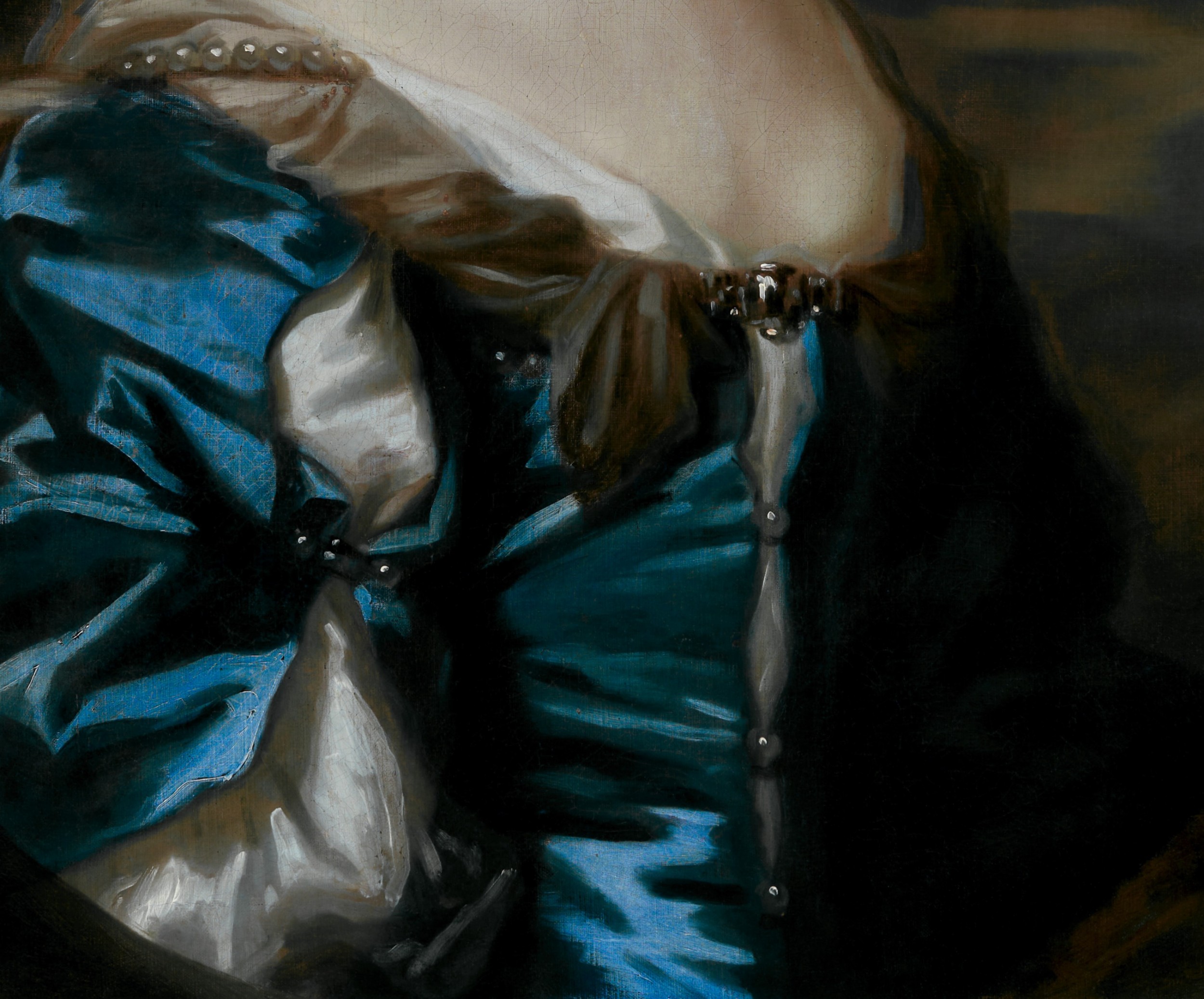
fig 3. An antique seventeenth-century oil portrait on canvas depicting a noblewoman in a blue satin dress framed within a carved gilt wood frame.
fig 3. Portrait of Lady Diana Bruce, Duchess of Rutland, in a Blue Dress with Cut Sleeves C.1660-1670, Oil on Canvas Painting

This painting serves as a vital historical document, reflecting life in the English countryside during a transformative era. The Restoration period (1660-1700) was a time of immense social and political change. With the monarchy restored, the austere Puritan lifestyle of the Commonwealth period gave way to a more vibrant, pleasure-seeking culture. The aristocracy largely maintained their power and influence through their vast country estates. Life in the country for a noblewoman like Lady Diana would have involved managing a large household, social visits, and fulfilling familial duties, all within a hierarchical society that was still recovering from civil war. This portrait, in its elegance and formal pose, speaks to the stability and social order the restored monarchy sought to project.

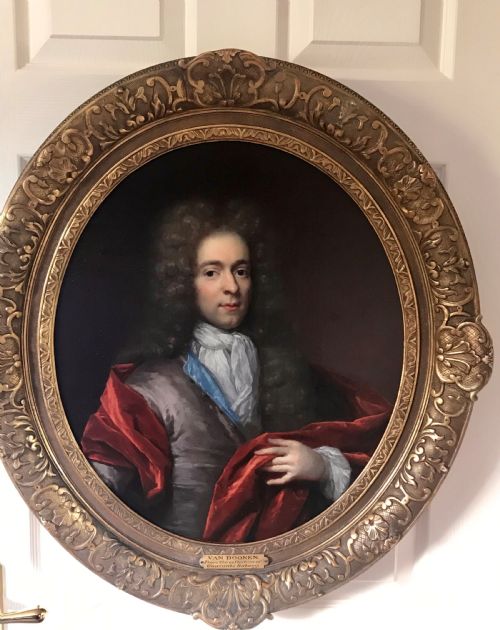
fig 4. An antique seventeenth-century oil portrait on canvas depicting a noblewoman in a blue satin dress framed within a carved gilt wood frame.
fig 4. Portrait of Lady Diana Bruce, Duchess of Rutland, in a Blue Dress with Cut Sleeves C.1660-1670, Oil on Canvas Painting

Sir Peter Lely (1618–1680), a Dutch-born artist who established his career in London, was the preeminent portrait painter of his era, serving as Principal Painter to King Charles II. Known for his technical proficiency and ability to capture an "air of sensuous languor," Lely defined the aesthetic of the Restoration court. The present painting, produced within this dynamic circle, showcases the rich colour, masterful rendering of textiles, and elegance characteristic of Lely's style, a visual echo of the full-length version held in the collection of the National Galleries Scotland.

Full description at: www.titanfineart.com

Height
88cm (34.65")
Width
79cm (31.10")
Depth
5cm (1.97")
Date of Manufacture

Titan Fine Art has dated this 17th Century Portrait Painting to the 17th Century.

Reference Numbers
Sellingantiques Ref
SA1232230
Titan Fine Art
Titan Fine Art
Sellingantiques verified Since Jul 2016

Specialist in 17th & 18thc portraits. Highly curated selection, museum-level research & pro conservation. Exceptional art, expertly vetted.

Dealer Profile

You can view the stock and full dealer information on the Titan Fine Art Profile Page
PDF SHARE
SAVE
An antique seventeenth-century oil portrait on canvas depicting a noblewoman in a blue satin dress framed within a carved gilt wood frame.
1 / 9
Archive I An antique seventeenth-century oil portrait on canvas depicting a noblewoman in a blue satin dress framed within a carved gilt wood frame.

Portrait of Lady Diana Bruce, Duchess of Rutland, in a Blue Dress with Cut Sleeves C.1660-1670, Oil on Canvas Painting
Archive II An antique seventeenth-century oil portrait on canvas depicting a noblewoman in a blue satin dress framed within a carved gilt wood frame. View II
Archive III An antique seventeenth-century oil portrait on canvas depicting a noblewoman in a blue satin dress framed within a carved gilt wood frame. View III
Archive IV An antique seventeenth-century oil portrait on canvas depicting a noblewoman in a blue satin dress framed within a carved gilt wood frame. View IV
Archive V An antique seventeenth-century oil portrait on canvas depicting a noblewoman in a blue satin dress framed within a carved gilt wood frame. View V
Archive VI An antique seventeenth-century oil portrait on canvas depicting a noblewoman in a blue satin dress framed within a carved gilt wood frame. View VI
Archive VII An antique seventeenth-century oil portrait on canvas depicting a noblewoman in a blue satin dress framed within a carved gilt wood frame. View VII
Archive VIII An antique seventeenth-century oil portrait on canvas depicting a noblewoman in a blue satin dress framed within a carved gilt wood frame. View VIII
Archive IX An antique seventeenth-century oil portrait on canvas depicting a noblewoman in a blue satin dress framed within a carved gilt wood frame. View IX
FURTHER BROWSING

Visitors also looked at these ⇣

Enlarged Archival View
Telephone 07875 412 111
Location
London
United Kingdom
Dealer Profile Page sellingantiques.co.uk/titan
Verified Since Jul 2016
Items For Sale 16
Items Sold 401
Titan Fine Art
Titan Fine Art
Verified Since Jul 2016
View Dealer Info
Location: London, United Kingdom
Verified
Jul 2016
For Sale
16
Sold
401
An antique seventeenth-century oil portrait on canvas depicting a noblewoman in a blue satin dress framed within a carved gilt wood frame.
Portrait of Lady Diana Bruce, Duchess of Rutland, in a Blue Dress with Cut Sleeves c.1660-1670, Oil on canvas painting
Ref: SA1232230
An antique seventeenth-century oil portrait on canvas depicting a noblewoman in a blue satin dress framed within a carved gilt wood frame.
Detail View 1
Detail View 2
Detail View 3
Detail View 4
Detail View 5
Detail View 6
Detail View 7
Detail View 8
Archival Detail
Every single antique dealer on our platform is individually approved by our internal team. We verify their professional trade history, ethical standards, and photographic quality to ensure a secure, high-standard buying environment. Upon joining, every dealer agrees to a strict 9-point code of conduct. While issues can occasionally arise, our dealers typically resolve them swiftly and directly with the buyer. In fact, since our founding in 2002, Sellingantiques has only had to step in to help resolve an issue on roughly five occasions—a true testament to the quality of our dealers and their dedication to your happiness.
Our dealers are highly experienced in packing and shipping fragile, high-value antiques. Because you are in direct contact with the dealer, you will be able to easily go through all available shipping and insurance options together to ensure your item arrives safely.
Antiques are the ultimate green purchase. By choosing historical pieces over newly manufactured goods, you completely eliminate the carbon footprint of modern mass production while preserving exceptional, timeless craftsmanship.

Seventeenth-century Baroque portraiture is distinguished by dramatic chiaroscuro lighting, rich fabric depictions, and formal compositions often framed within feigned ovals. Portraits from this period emphasised social status through elaborate attire, pearls, and serene postures.

Painters during this period primarily used hand-stretched linen canvases primed with natural gesso grounds. Pigments derived from natural minerals and organic sources were mixed with linseed or walnut oil and finished with natural resin varnishes.

Authentic paintings of this era typically display age-appropriate craquelure patterns across the oil surface, natural oxidisation of varnish layers, and historic stretcher bar configurations. The reverse of the canvas often shows subtle discolouration and signs of age.

An antique oil portrait makes a striking focal point when hung against modern neutral walls or rich heritage paint colours. Pairing the framed canvas with contemporary lighting or understated timber furniture highlights its historic detail without cluttering the space.

Display the canvas away from direct sunlight, radiators, and areas of high humidity to protect the paint layer and wood frame. Dust lightly with a dry, soft-bristled brush, and consult a professional conservator for any varnish cleaning or structural repairs.
items
Add keywords to the filter
Price
£100
£250000
Era
Movements
Material
Origin
Stock Location
Freshness
Online Payments
Categories