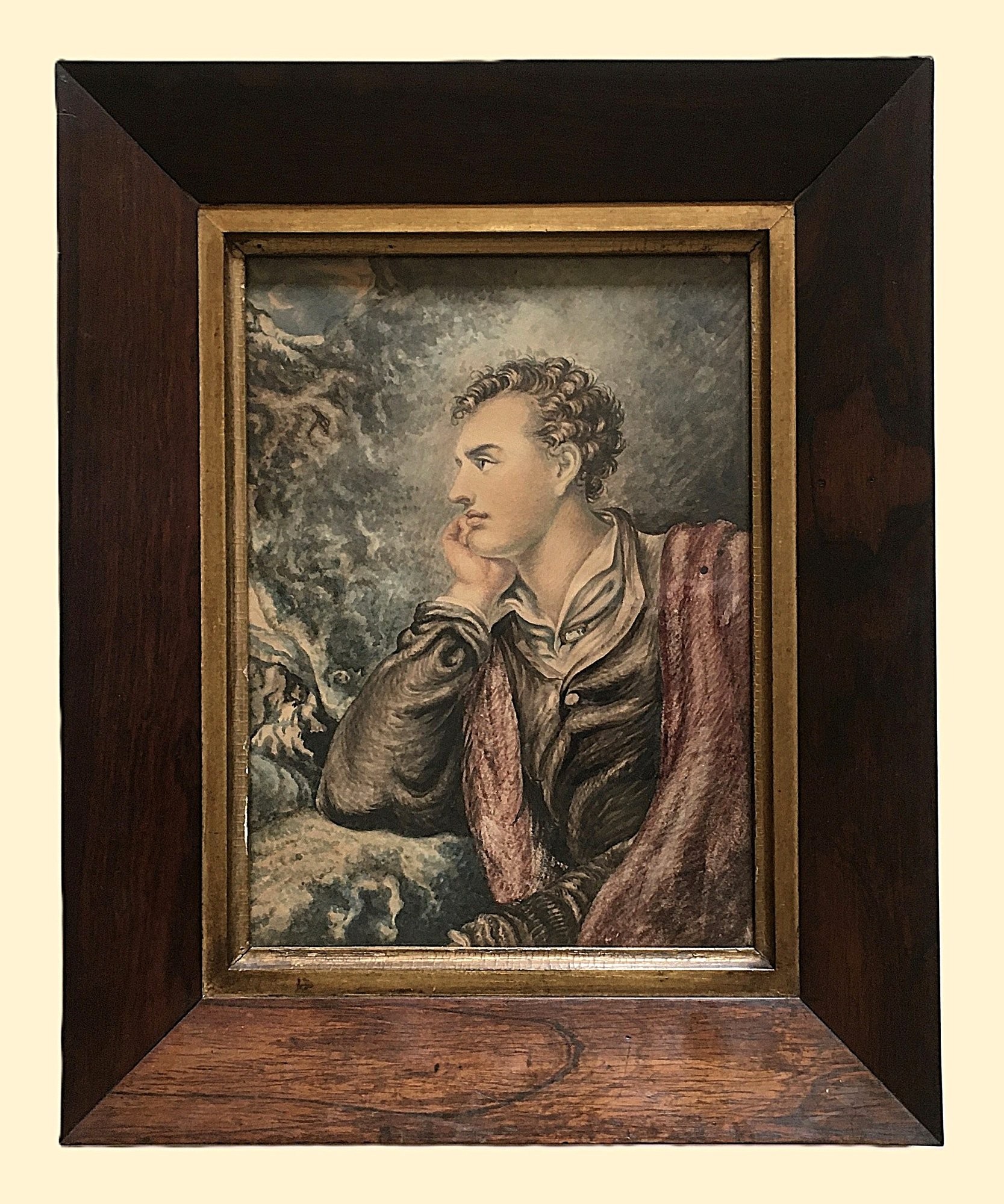
Miles Barton Art and Interiors has dated this Lord Byron Watercolour Portrait to the 19th Century.
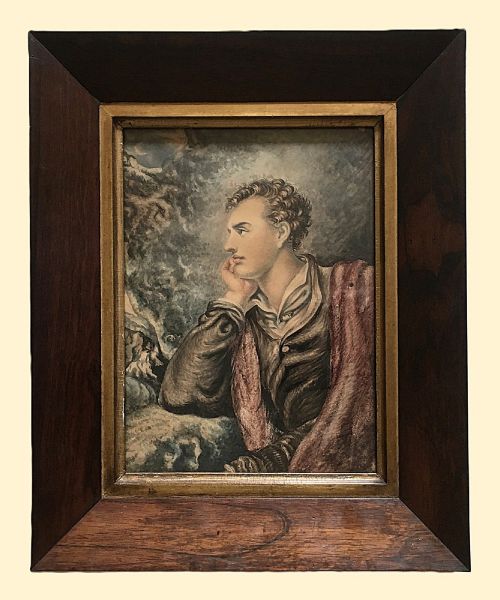
Paper size: 29 x 21 cm (11 ¼ 8 ¼ in)
Frame size: 42 x 34 cm (16 ½ by 14 in)
Provenance: Private Collection, Dorset, England
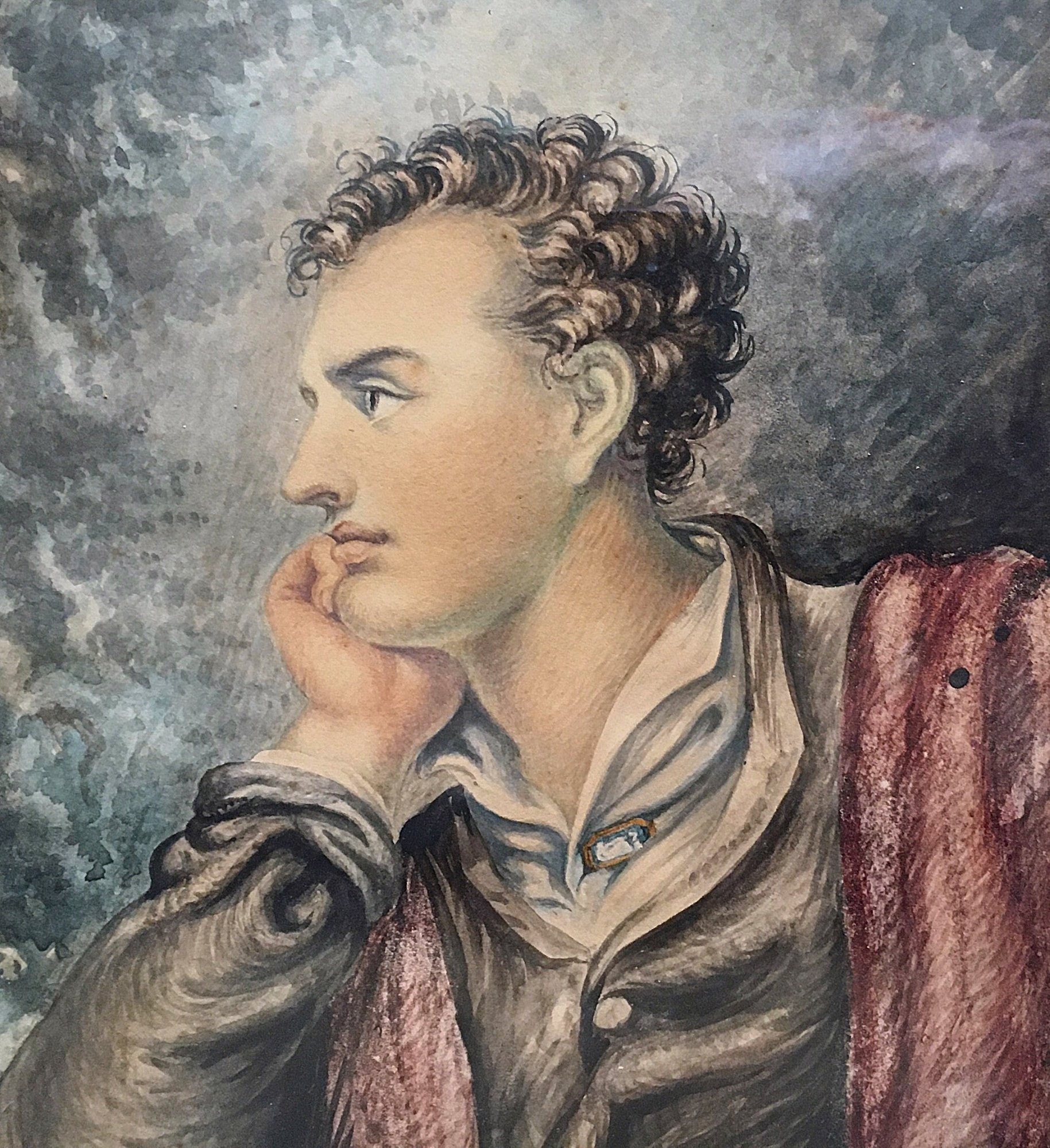
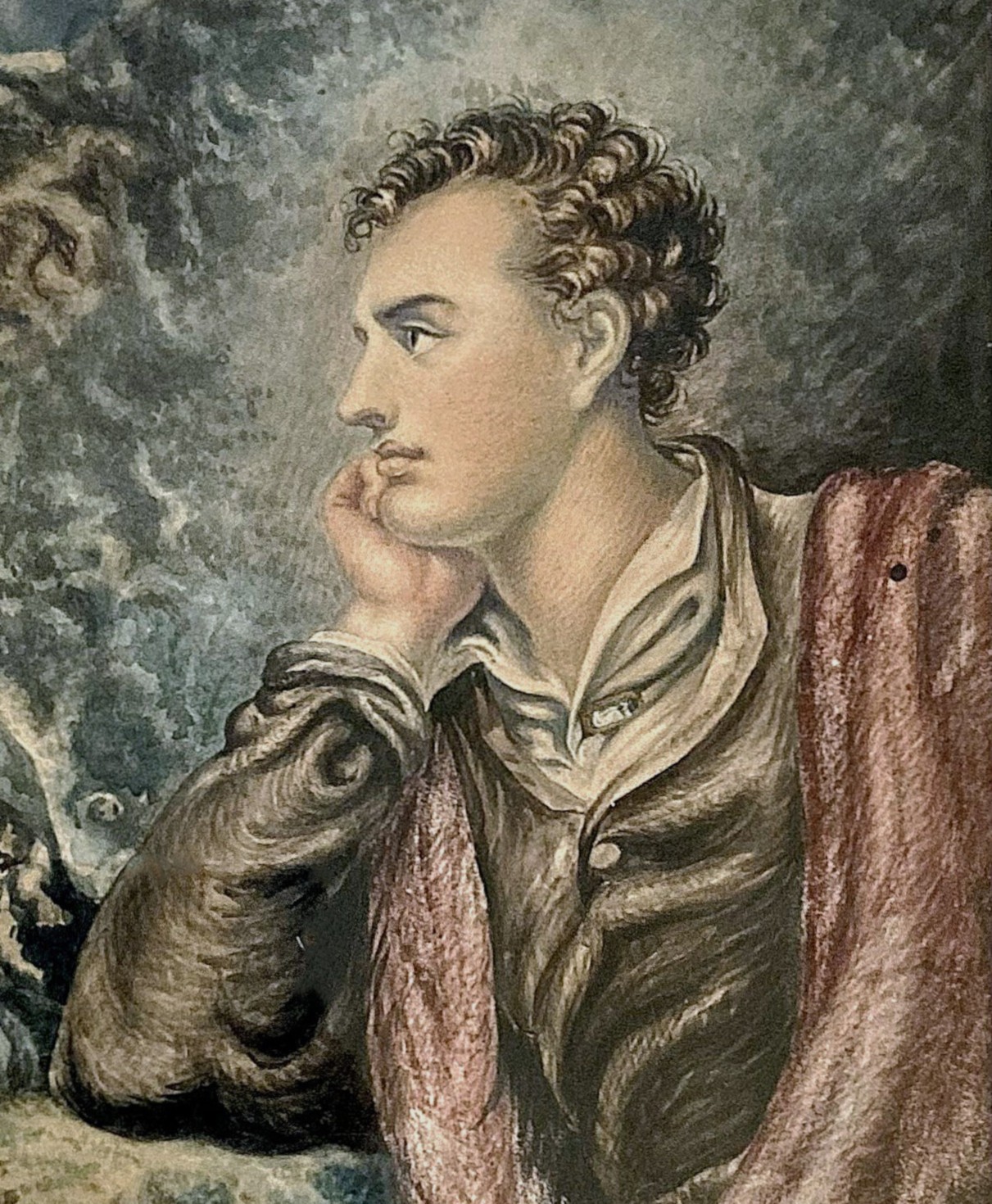
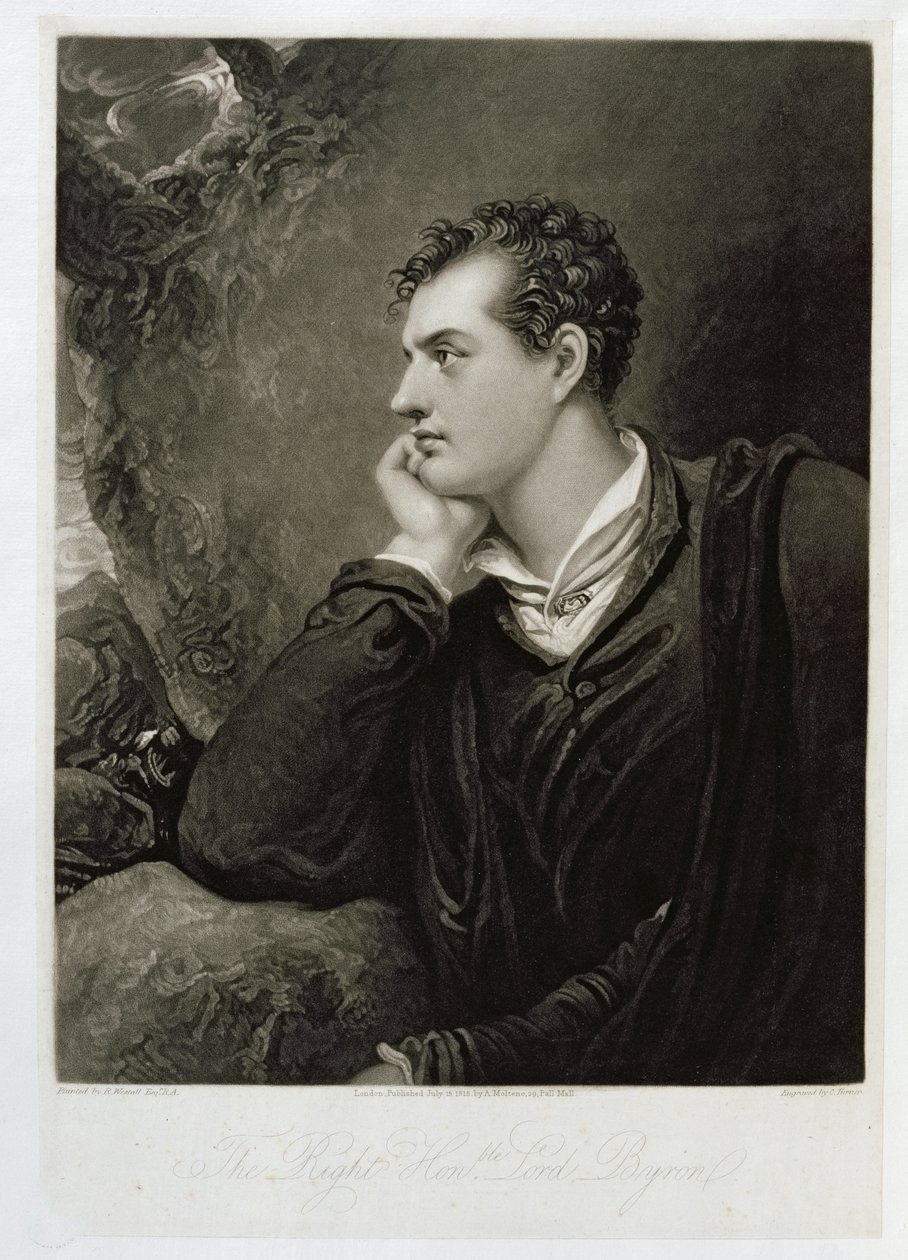
Created at the absolute zenith of the poet's fame - just after the meteoric success of ‘Childe Harold's Pilgrimage’ catapulted him into unprecedented celebrity - the picture did not merely record Byron’s physical features; it institutionalised the very concept of the ‘Byronic hero’. The image was highly praised by those who knew him well and sporned a craze for engraved editions which probably was the basis for this striking watercolour portrait.
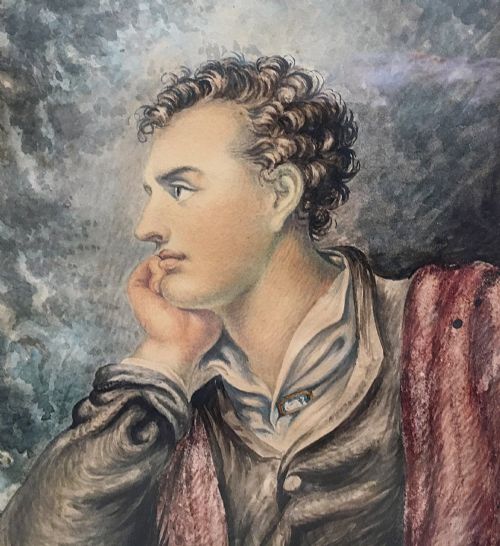
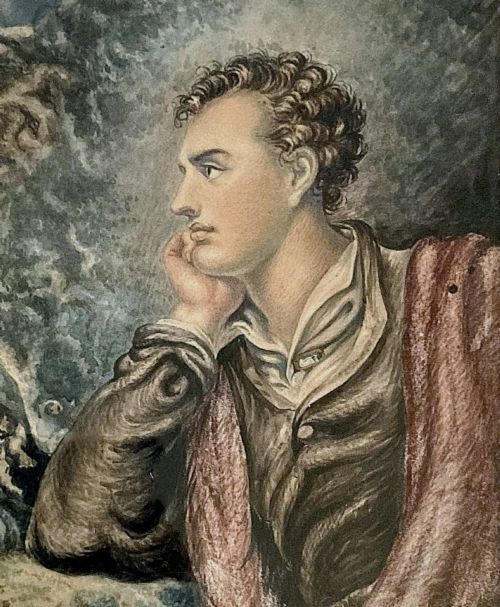
Byron is captured in a half-length profile, seated in a pose of deep thought and contemplation. He rests his chin upon his hand, his gaze fixed on some distant, unseen point. The poet is swathed in a red cloak over a dark velvet jacket, clothing that enhances his pale complexion and the dark intensity of his features. By utilizing a dramatic, shadowed backdrop, Westall framed Byron not as a conventional aristocrat, but as an brooding intellectual consumed by tempestuous thoughts.
George Gordon Byron, 6th Baron Byron (1788–1824), was a leading British Romantic poet and a global cultural icon. Famously described as "mad, bad, and dangerous to know," he was as celebrated for his brilliant poetry as he was for his scandalous love affairs, fluid sexuality, and mountain of debt. Born with a clubbed foot that left him lifelong insecurities, he inherited his aristocratic title at the age of 10. Educated at Harrow and Cambridge - where he famously kept a pet bear in his rooms to protest rules against keeping dogs - Byron shot to celebrity in 1812 with the publication of ‘Childe Harold's Pilgrimage’. However, his chaotic personal life soon overshadowed his literary success. Following a string of high-profile affairs - including a rumored relationship with his half-sister and a volatile, brief marriage to Annabella Milbanke that produced his daughter, future computer pioneer Ada Lovelace - he fled England in 1816 to escape social ruin.
Living in exile, Byron spent a famous summer in Switzerland with Percy Bysshe and Mary Shelley, where he inspired the ghost-story contest that resulted in the novel ‘Frankenstein’. He then settled in Italy for 7 years, during which he wrote his satirical masterpiece, ‘Don Juan’. Driven by a passion for liberty, Byron poured his fortune and energy into the Greek War of Independence against the Ottoman Empire in 1823 but died of a violent fever at just 36, cementing his legacy as a Greek national hero and the definitive blueprint for the brooding, rebellious 'Byronic hero.'
Miles Barton Art and Interiors has dated this Lord Byron Watercolour Portrait to the 19th Century.
British and european pictures and works of art from the 17th to 20th century
You can view the stock and full dealer information on the Miles Barton Art and Interiors Profile Page
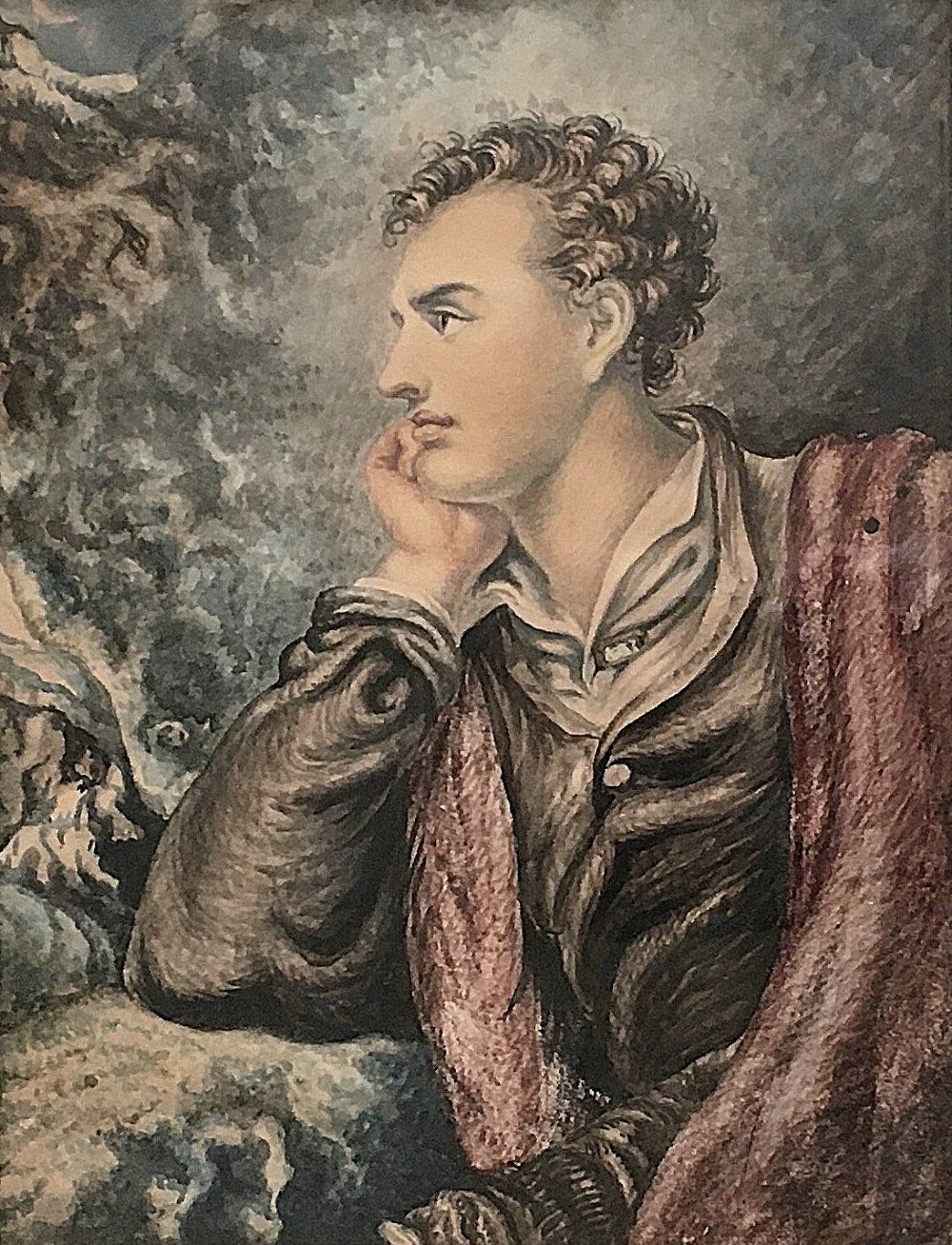
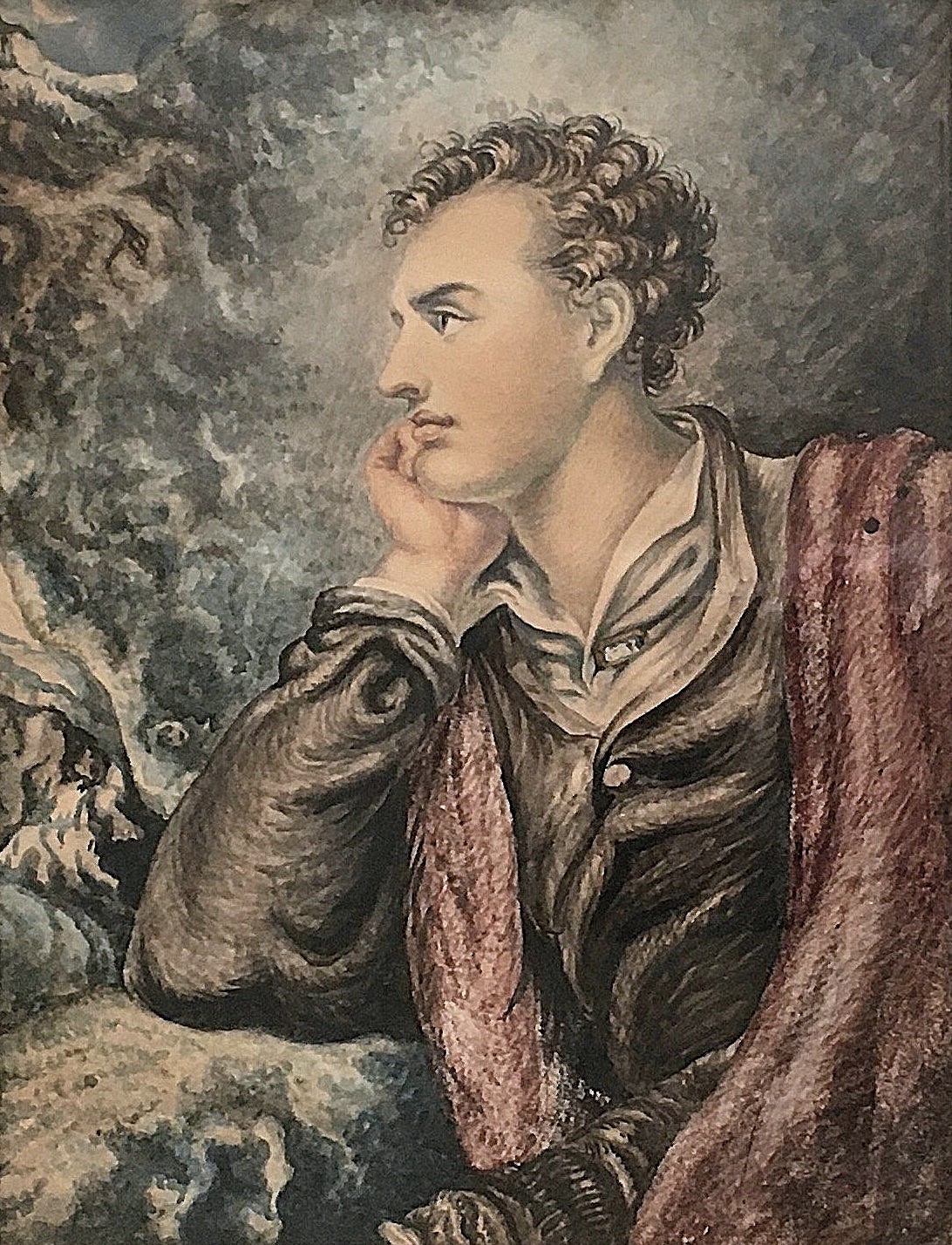
Portrait of George Gordon 6th Lord Byron (1788-1824), Watercolour, 19th Century