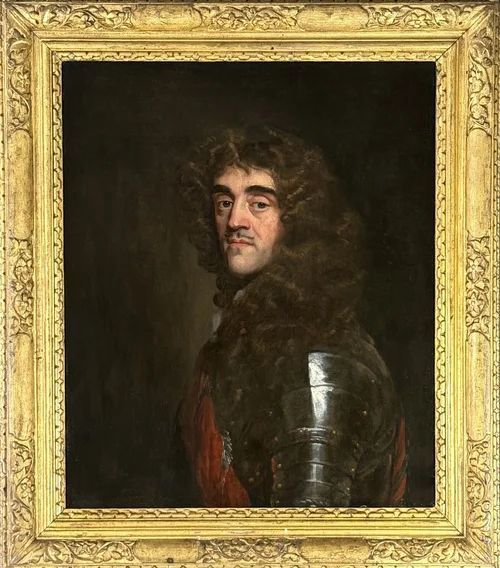
Isherwood Fine Art has dated this 17th Century Portrait Painting to the 17th Century.
Oil on canvas in a giltwood frame
Dimensions: 186 x 126cm
John Riley (1646-1691) was born in Bishopsgate, London and was the son of John Riley Senior and his stepmother Jochebed (d. Jan 1693). In around 1660 Riley began training under Isaac Fuller (1606-1672) and later under Gerard Soest (1605-1681). The courtier and Keeper of the King's Jewels and Closet, Thomas Chiffinch sat for him, and was so pleased with his portrait (Dulwich Picture Gallery) that he showed it to King Charles II. Charles II gave Riley some commissions, eventually sitting for him himself where he commented 'Is this like me? then odds fish I'm an ugly fellow!'. Riley allegedly took this comment personally and he was never able to bear looking at the portrait again.
His friend and earliest biographer, Richard Graham claimed 'that which eminently distinguished [Riley] from all his contemporaries was his peculiar excellence in a Head and especially the colouring part'. Riley realised where his strengths and weaknesses lay and hired fellow artists such as Baptiste Gaspars (1641-1692), who had also worked with Lely to paint 'postures'. (in 1681 the Painter Stainers' Company asked Riley and Gaspars to paint a portrait of the Duchess of York for them). Riley also worked in partnership with John Closterman who was particularly skilled in painting clothes or 'draperies' and who finished several of Riley`s portraits after his death. The three quarter length of Katherine Elliott (d.1688) in the Royal Collection is described in a Queen Anne inventory as 'Ryley ye Head Closterman ye drapery' (Millar, no. 331).
According to Riley's pupil Thomas Murray (1663-1735), Riley refused to even allow his students to watch him while he was painting 'from life'. This contrasted with his rival Kneller in the 1680's who was incredibly confident and allowed anyone to watch him at close quarters while he worked. Graham claimed that one of the reasons Riley was so successful as a portrait painter was because 'he was a gentleman extremely courteous in his behaviour, obliging in his conversation, never guilty of a piece of vanity of saying mighty things on his own behalf and was prudent in his actions'. Thomas Murray's account corroborates this, showing how Riley could 'hide his feelings and be agreeable'. Riley was a quiet, modest man and appears to have been more comfortable occupying himself with less illustrious sitters from the professional classes and more unusually from the lower serving classes - with one of his most famous portraits being a grand society full length portrait of serving lady Bridget Holmes (Royal Collection).
Riley is known for his gentleness and sensitivity of approach in depicting the characters of his sitters, giving an air of engaging modesty about them, such as seen in his portrait of the playwright Aphra Benn. This sobriety of manner was an aspect of his style which he passed on to his pupil Jonathan Richardson (1667-1745) which in turn went on to influence the painting of his pupil Thomas Hudson and then his pupil Joshua Reynolds.
Riley's career culminated in July 1689 when he was appointed joint Principal Painter to William III and Queen Mary with Godfrey Kneller. Richardson is said to have married Riley`s niece who then administered his will on Riley's death in 1691, selling Riley's art collection in 1693.
Isherwood Fine Art has dated this 17th Century Portrait Painting to the 17th Century.
16th to 19th century old master, british and european paintings and sculpture, specialising in period portraiture. Member BADA, LAPADA.
You can view the stock and full dealer information on the Isherwood Fine Art Profile Page
Isherwood Fine Art is a registered member of LAPADA BADA
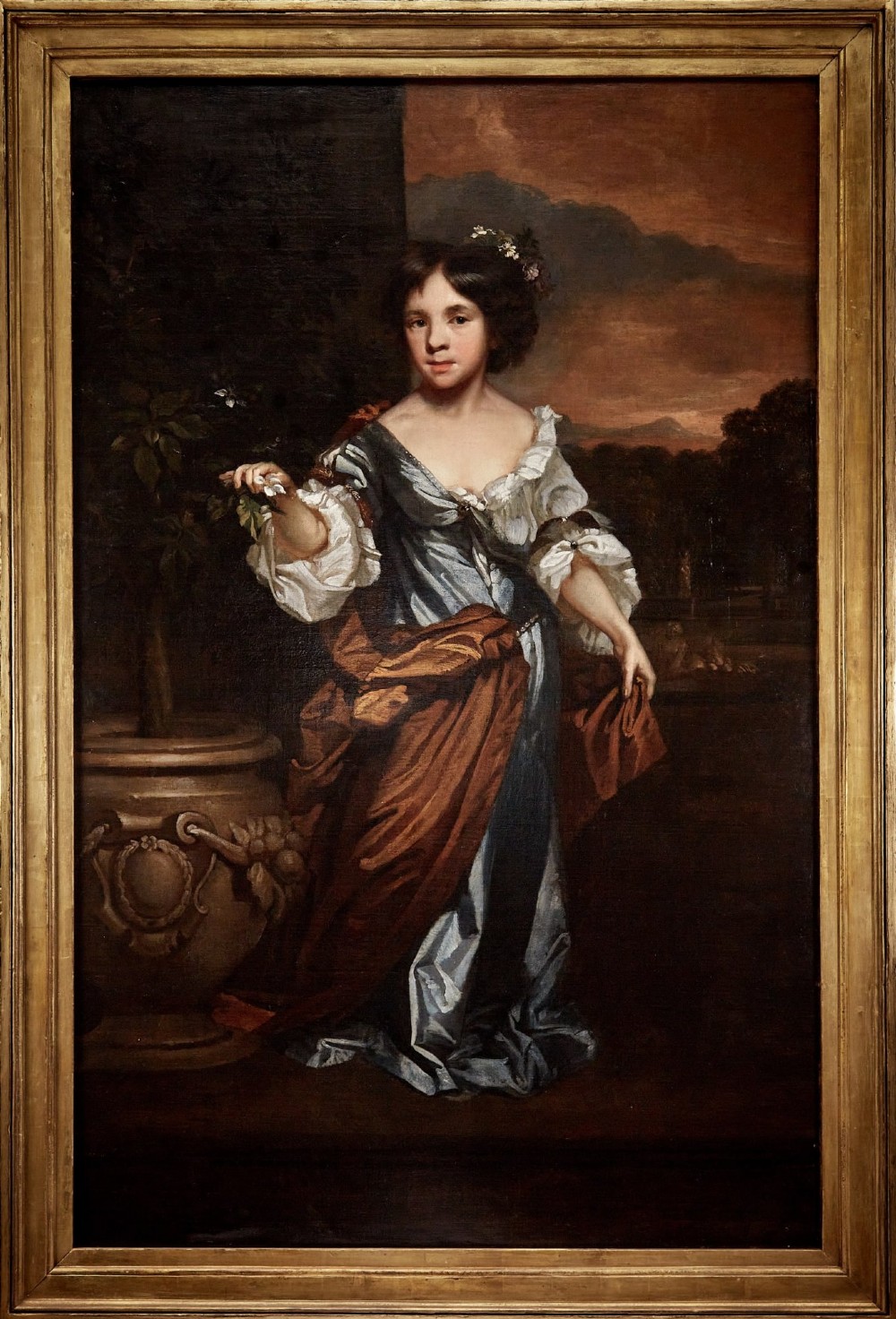
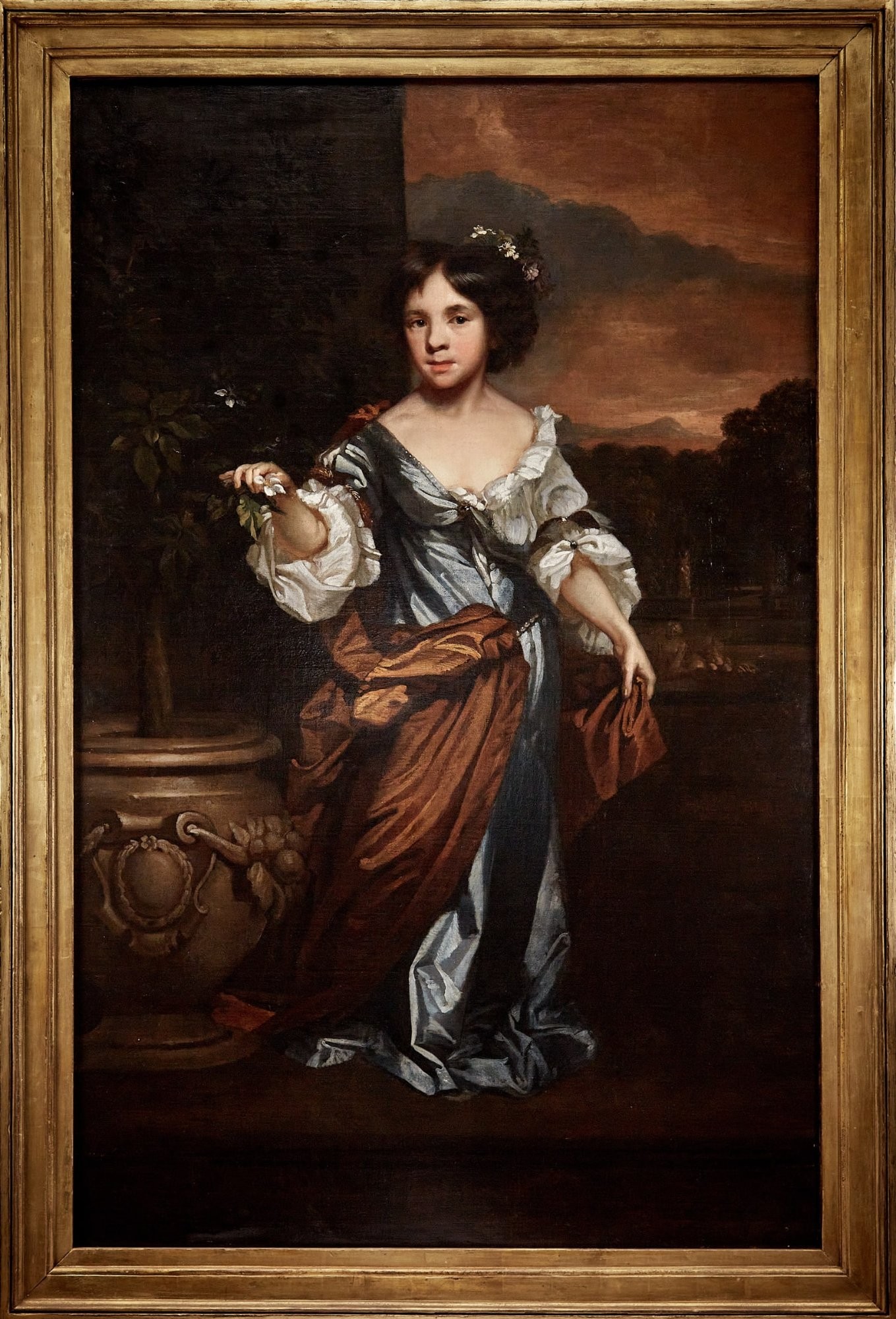
17th Century Portrait of a Young Girl Standing on a Garden Terrace, Attributed to John Riley (1646-1691) and John Closterman (1660-1711)