20,950  PAGES BROWSED TODAY PAGES TODAY 36  ANTIQUES UPLOADED TODAY NEW ARRIVALS
ID #SA1217106
FOR SALE
£24,000
Email
Save
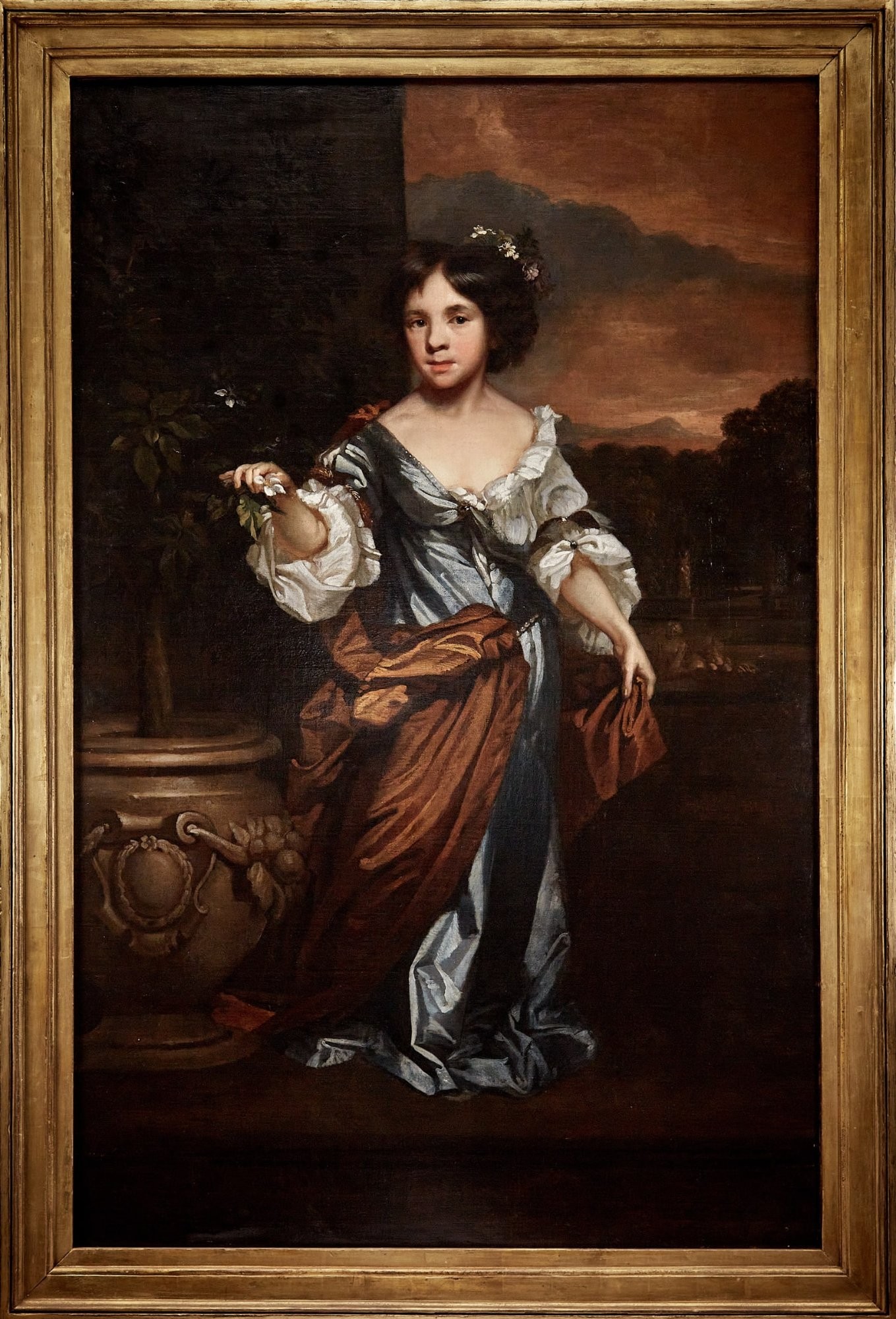
17th Century Portrait of a Young Girl Standing on a Garden Terrace, Attributed to John Riley (1646-1691) and John Closterman (1660-1711)
Isherwood Fine Art
for sale €28,080     $30,480
£24,000
Isherwood Fine Art

Isherwood Fine Art

Sellingantiques Verified Since Oct 2023
View Dealers Stock Page
  • About Us
    16th to 19th century old master, british and european paintings and sculpture, specialising in period portraiture. Member BADA, LAPADA.
  • Trade Associations
    Isherwood Fine Art is a registered member of LAPADA  BADA 
Id #SA1217106
PDF SHARE
SAVE

17th Century Portrait of a Young Girl Standing on a Garden Terrace, Attributed to John Riley (1646-1691) and John Closterman (1660-1711)

17th century
Description

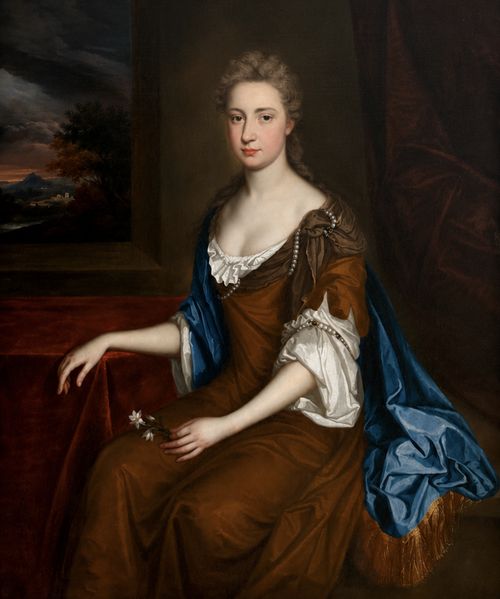
The sensitively painted young girl's face has a softness and realism conveying a sense of her character which is typical of Riley's artistic style, rather than the usual idealised depiction of beauty in this period. The white blossom she holds is possibly orange blossom which was often used to symbolise the purity and youth of the sitter and her availability for marriage.

Oil on canvas in a giltwood frame

Dimensions: 186 x 126cm

John Riley (1646-1691) was born in Bishopsgate, London and was the son of John Riley Senior and his stepmother Jochebed (d. Jan 1693). In around 1660 Riley began training under Isaac Fuller (1606-1672) and later under Gerard Soest (1605-1681). The courtier and Keeper of the King's Jewels and Closet, Thomas Chiffinch sat for him, and was so pleased with his portrait (Dulwich Picture Gallery) that he showed it to King Charles II. Charles II gave Riley some commissions, eventually sitting for him himself where he commented 'Is this like me? then odds fish I'm an ugly fellow!'. Riley allegedly took this comment personally and he was never able to bear looking at the portrait again.

His friend and earliest biographer, Richard Graham claimed 'that which eminently distinguished [Riley] from all his contemporaries was his peculiar excellence in a Head and especially the colouring part'. Riley realised where his strengths and weaknesses lay and hired fellow artists such as Baptiste Gaspars (1641-1692), who had also worked with Lely to paint 'postures'. (in 1681 the Painter Stainers' Company asked Riley and Gaspars to paint a portrait of the Duchess of York for them). Riley also worked in partnership with John Closterman who was particularly skilled in painting clothes or 'draperies' and who finished several of Riley`s portraits after his death. The three quarter length of Katherine Elliott (d.1688) in the Royal Collection is described in a Queen Anne inventory as 'Ryley ye Head Closterman ye drapery' (Millar, no. 331).

According to Riley's pupil Thomas Murray (1663-1735), Riley refused to even allow his students to watch him while he was painting 'from life'. This contrasted with his rival Kneller in the 1680's who was incredibly confident and allowed anyone to watch him at close quarters while he worked. Graham claimed that one of the reasons Riley was so successful as a portrait painter was because 'he was a gentleman extremely courteous in his behaviour, obliging in his conversation, never guilty of a piece of vanity of saying mighty things on his own behalf and was prudent in his actions'. Thomas Murray's account corroborates this, showing how Riley could 'hide his feelings and be agreeable'. Riley was a quiet, modest man and appears to have been more comfortable occupying himself with less illustrious sitters from the professional classes and more unusually from the lower serving classes - with one of his most famous portraits being a grand society full length portrait of serving lady Bridget Holmes (Royal Collection).

Riley is known for his gentleness and sensitivity of approach in depicting the characters of his sitters, giving an air of engaging modesty about them, such as seen in his portrait of the playwright Aphra Benn. This sobriety of manner was an aspect of his style which he passed on to his pupil Jonathan Richardson (1667-1745) which in turn went on to influence the painting of his pupil Thomas Hudson and then his pupil Joshua Reynolds.

Riley's career culminated in July 1689 when he was appointed joint Principal Painter to William III and Queen Mary with Godfrey Kneller. Richardson is said to have married Riley`s niece who then administered his will on Riley's death in 1691, selling Riley's art collection in 1693.

Physical Dimensions
Height
186cm (73.23")
Width
126cm (49.61")
Declaration

Isherwood Fine Art has dated this 17th Century Portrait Painting to the 17th Century.
Reference Numbers
Sellingantiques Reference
SA1217106
Dealers Notes

Isherwood fine art

Description
The sensitively painted young girl's face has a softness and realism conveying a sense of her character which is typical of Riley's artistic style, rather than the usual idealised depiction of beauty in this period.
The white blossom she holds is possibly orange blossom which was often used to symbolise the purity and youth of the sitter and her availability for marriage.
Isherwood Fine Art
fig 1. A full-length 17th-century oil portrait of a young girl wearing a blue gown standing on a terrace beside a stone urn inside a gilt wood frame.
fig 1. 17th Century Portrait of a Young Girl Standing on a Garden Terrace, Attributed to John Riley (1646-1691) and John Closterman (1660-1711)

Oil on canvas in a giltwood frame

Dimensions: 186 x 126cm

John Riley (1646-1691) was born in Bishopsgate, London and was the son of John Riley Senior and his stepmother Jochebed (d. Jan 1693). In around 1660 Riley began training under Isaac Fuller (1606-1672) and later under Gerard Soest (1605-1681). The courtier and Keeper of the King's Jewels and Closet, Thomas Chiffinch sat for him, and was so pleased with his portrait (Dulwich Picture Gallery) that he showed it to King Charles II. Charles II gave Riley some commissions, eventually sitting for him himself where he commented 'Is this like me? then odds fish I'm an ugly fellow!'. Riley allegedly took this comment personally and he was never able to bear looking at the portrait again.

His friend and earliest biographer, Richard Graham claimed 'that which eminently distinguished [Riley] from all his contemporaries was his peculiar excellence in a Head and especially the colouring part'. Riley realised where his strengths and weaknesses lay and hired fellow artists such as Baptiste Gaspars (1641-1692), who had also worked with Lely to paint 'postures'. (in 1681 the Painter Stainers' Company asked Riley and Gaspars to paint a portrait of the Duchess of York for them). Riley also worked in partnership with John Closterman who was particularly skilled in painting clothes or 'draperies' and who finished several of Riley`s portraits after his death. The three quarter length of Katherine Elliott (d.1688) in the Royal Collection is described in a Queen Anne inventory as 'Ryley ye Head Closterman ye drapery' (Millar, no. 331).

According to Riley's pupil Thomas Murray (1663-1735), Riley refused to even allow his students to watch him while he was painting 'from life'. This contrasted with his rival Kneller in the 1680's who was incredibly confident and allowed anyone to watch him at close quarters while he worked. Graham claimed that one of the reasons Riley was so successful as a portrait painter was because 'he was a gentleman extremely courteous in his behaviour, obliging in his conversation, never guilty of a piece of vanity of saying mighty things on his own behalf and was prudent in his actions'. Thomas Murray's account corroborates this, showing how Riley could 'hide his feelings and be agreeable'. Riley was a quiet, modest man and appears to have been more comfortable occupying himself with less illustrious sitters from the professional classes and more unusually from the lower serving classes - with one of his most famous portraits being a grand society full length portrait of serving lady Bridget Holmes (Royal Collection).

Riley is known for his gentleness and sensitivity of approach in depicting the characters of his sitters, giving an air of engaging modesty about them, such as seen in his portrait of the playwright Aphra Benn. This sobriety of manner was an aspect of his style which he passed on to his pupil Jonathan Richardson (1667-1745) which in turn went on to influence the painting of his pupil Thomas Hudson and then his pupil Joshua Reynolds.

Riley's career culminated in July 1689 when he was appointed joint Principal Painter to William III and Queen Mary with Godfrey Kneller. Richardson is said to have married Riley`s niece who then administered his will on Riley's death in 1691, selling Riley's art collection in 1693.

Height
186cm (73.23")
Width
126cm (49.61")
Date of Manufacture

Isherwood Fine Art has dated this 17th Century Portrait Painting to the 17th Century.

Reference Numbers
Sellingantiques Ref
SA1217106
Isherwood Fine Art
Isherwood Fine Art
Sellingantiques verified Since Oct 2023

16th to 19th century old master, british and european paintings and sculpture, specialising in period portraiture. Member BADA, LAPADA.

Dealer Profile

You can view the stock and full dealer information on the Isherwood Fine Art Profile Page

Trade Associations

Isherwood Fine Art is a registered member of LAPADA  BADA 
PDF SHARE
SAVE
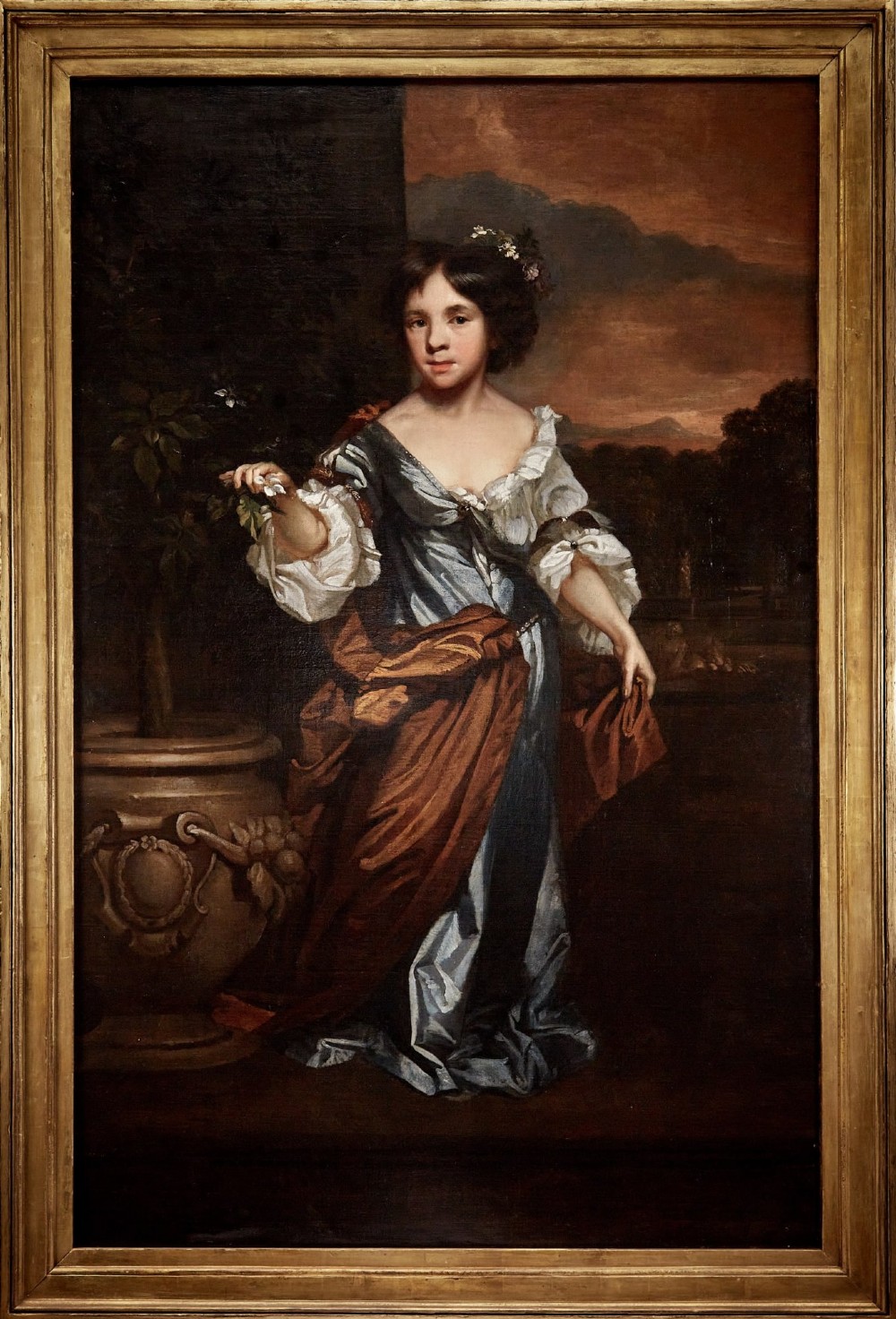
A full-length 17th-century oil portrait of a young girl wearing a blue gown standing on a terrace beside a stone urn inside a gilt wood frame.
1 / 2
Archive I A full-length 17th-century oil portrait of a young girl wearing a blue gown standing on a terrace beside a stone urn inside a gilt wood frame.

17th Century Portrait of a Young Girl Standing on a Garden Terrace, Attributed to John Riley (1646-1691) and John Closterman (1660-1711)
Archive II A full-length 17th-century oil portrait of a young girl wearing a blue gown standing on a terrace beside a stone urn inside a gilt wood frame. View II
FURTHER BROWSING

Visitors also looked at these ⇣

Enlarged Archival View
Telephone 07984 699799
Location
Bath and London
United Kingdom

By appointment only.
Verified Since Oct 2023
Items For Sale 43
Items Sold 32
Isherwood Fine Art
Isherwood Fine Art
Verified Since Oct 2023
View Dealer Info
Location: Bath and London, United Kingdom, , By appointment only.
Verified
Oct 2023
For Sale
43
Sold
32
A full-length 17th-century oil portrait of a young girl wearing a blue gown standing on a terrace beside a stone urn inside a gilt wood frame.
17th century portrait of a young girl standing on a garden terrace, attributed to John Riley (1646-1691) and John Closterman (1660-1711)
Ref: SA1217106
A full-length 17th-century oil portrait of a young girl wearing a blue gown standing on a terrace beside a stone urn inside a gilt wood frame.
Detail View 1
Archival Detail
Every single antique dealer on our platform is individually approved by our internal team. We verify their professional trade history, ethical standards, and photographic quality to ensure a secure, high-standard buying environment. Upon joining, every dealer agrees to a strict 9-point code of conduct. While issues can occasionally arise, our dealers typically resolve them swiftly and directly with the buyer. In fact, since our founding in 2002, Sellingantiques has only had to step in to help resolve an issue on roughly five occasions—a true testament to the quality of our dealers and their dedication to your happiness.
Our dealers are highly experienced in packing and shipping fragile, high-value antiques. Because you are in direct contact with the dealer, you will be able to easily go through all available shipping and insurance options together to ensure your item arrives safely.
Antiques are the ultimate green purchase. By choosing historical pieces over newly manufactured goods, you completely eliminate the carbon footprint of modern mass production while preserving exceptional, timeless craftsmanship.

17th-century English Baroque portraiture, particularly during the Restoration period, is defined by theatrical compositions, idealised landscape backdrops, rich drapery, and formal poses designed to demonstrate nobility and social standing.

Painters during this period utilised hand-stretched linen or canvas, oil paints mixed from natural mineral and earth pigments, and varnish derived from tree resins, often framed in hand-carved and gilt wooden frames.

Authentic period paintings show age-appropriate craquelure across the paint surface, historic canvas lining or hand-forged stretcher construction, natural pigment degradation, and signs of hand-carved frame joinery.

A large period portrait creates a strong focal point when mounted above a sideboard or fireplace mantelpiece, contrasting effectively with clean-lined contemporary furniture and neutral walls.

Keep the artwork away from direct sunlight and heat sources, maintain consistent indoor humidity levels, dust lightly with a soft dry brush, and consult a professional conservator for surface cleaning.
items
Add keywords to the filter
Price
£100
£250000
Era
Movements
Material
Origin
Stock Location
Freshness
Online Payments
Categories