Brave Fine Art has dated this piece to the 1800s.
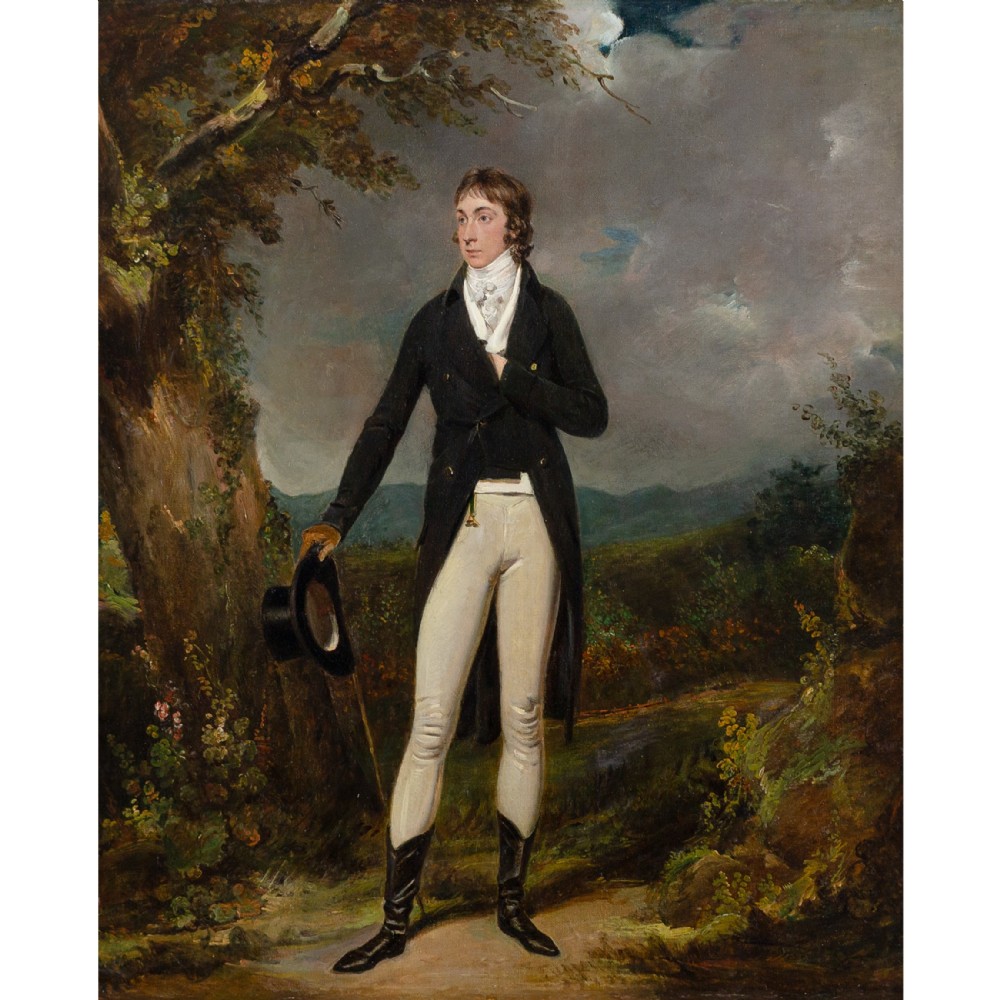
Behind him, a substantial tree anchors the composition, its foliage opening onto a distant, softly modulated landscape beneath a shifting sky.
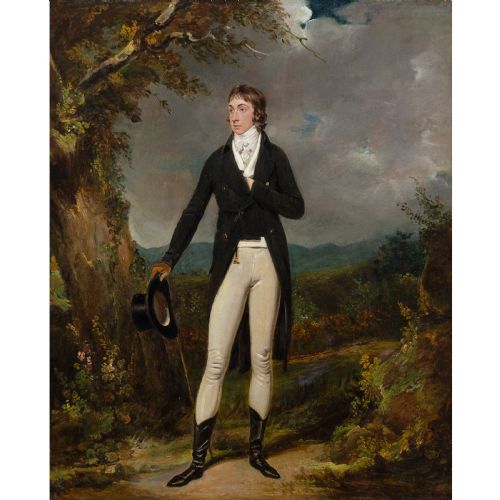
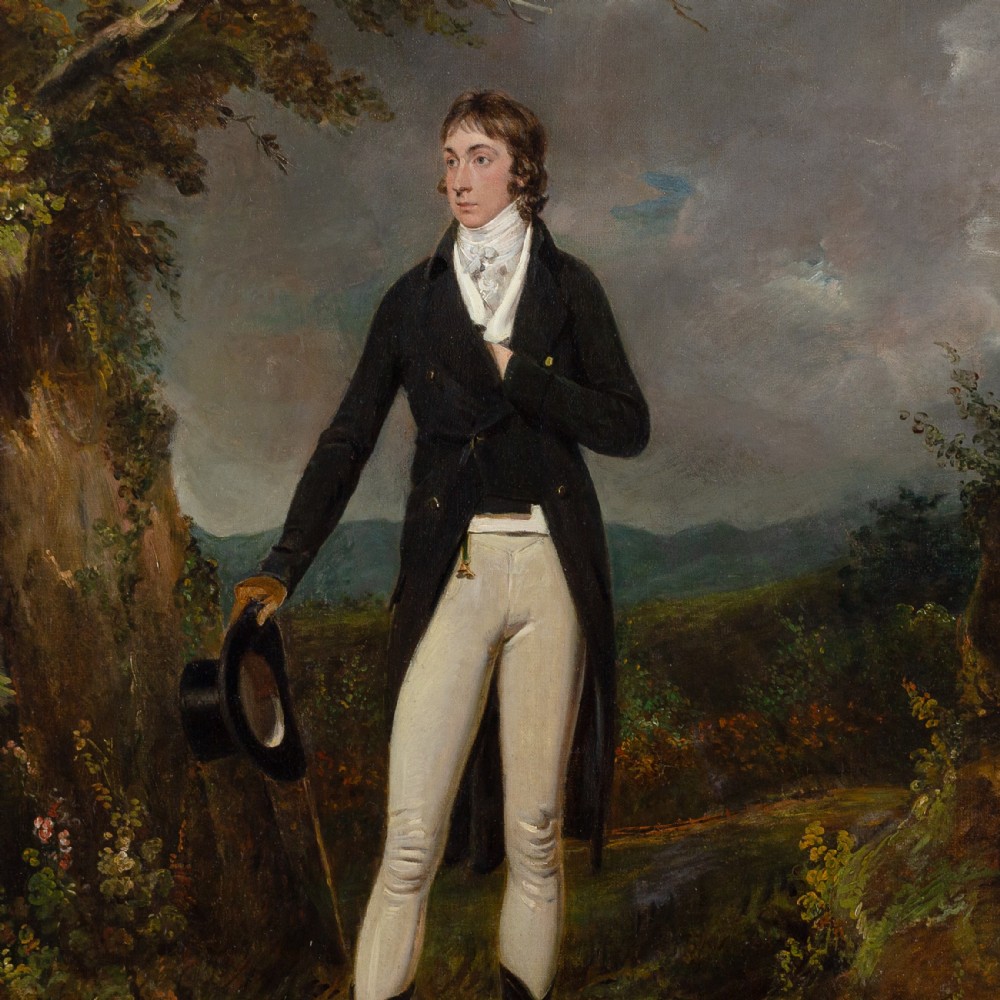
There is a deft and notable balance within this work. The figure is clearly the subject, yet the landscape is rendered with technical ability. The painter has allowed the atmosphere to unify the scene: earth and sky are tonally married, with a controlled palette. The gentleman does not dominate the landscape so much as belong to it.
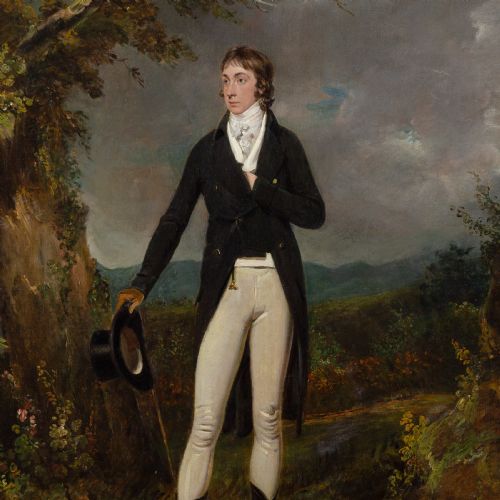
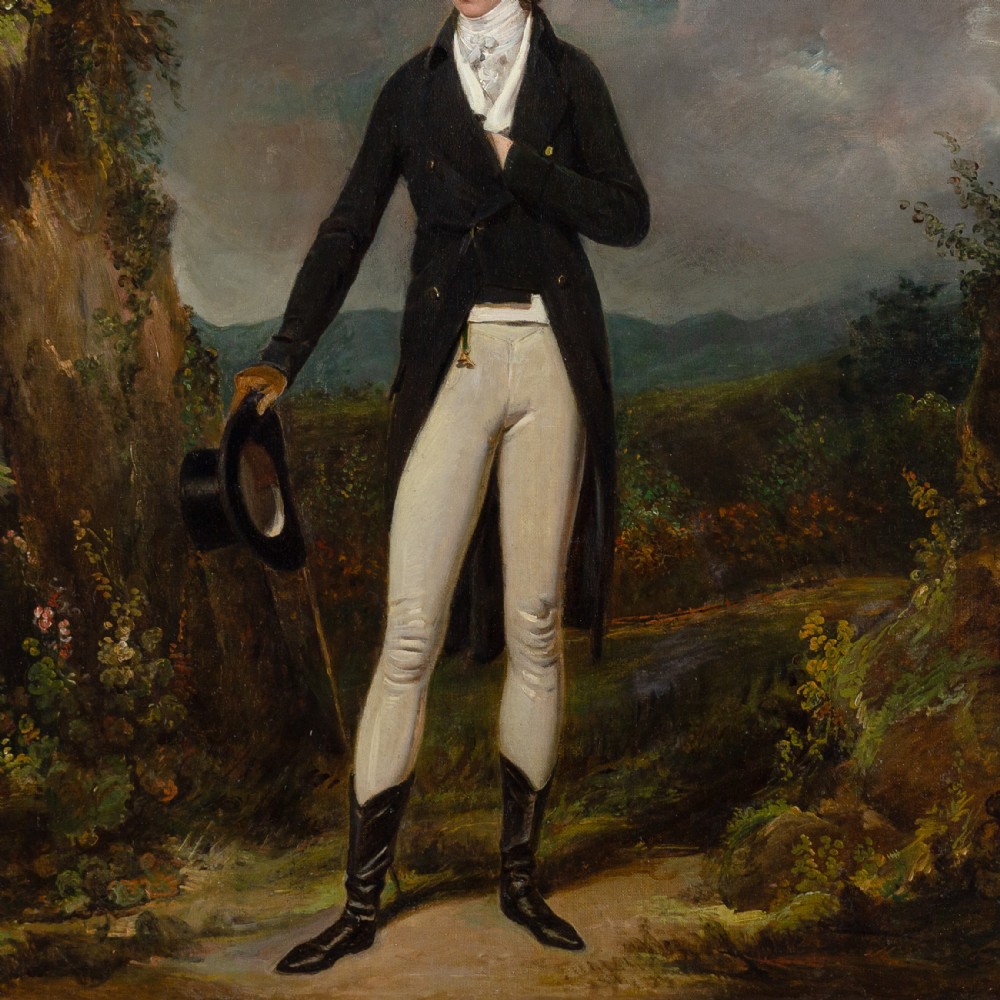
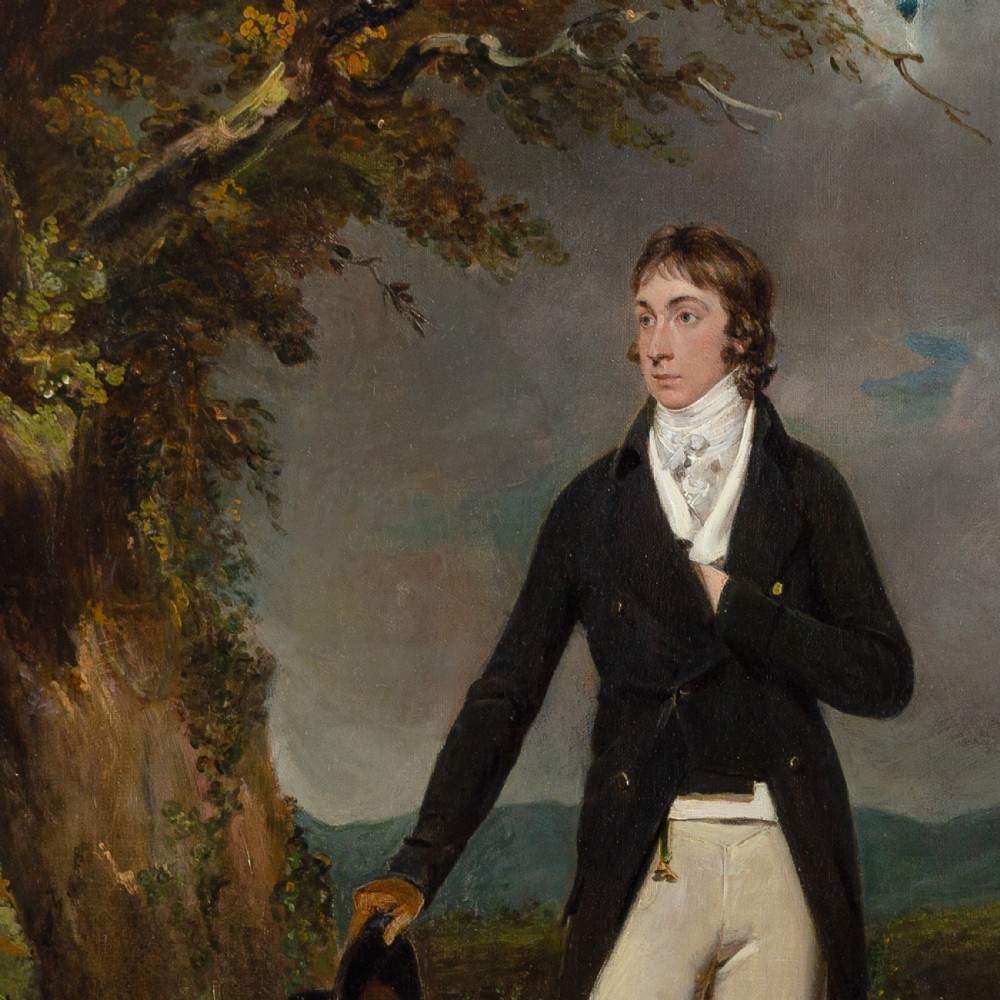
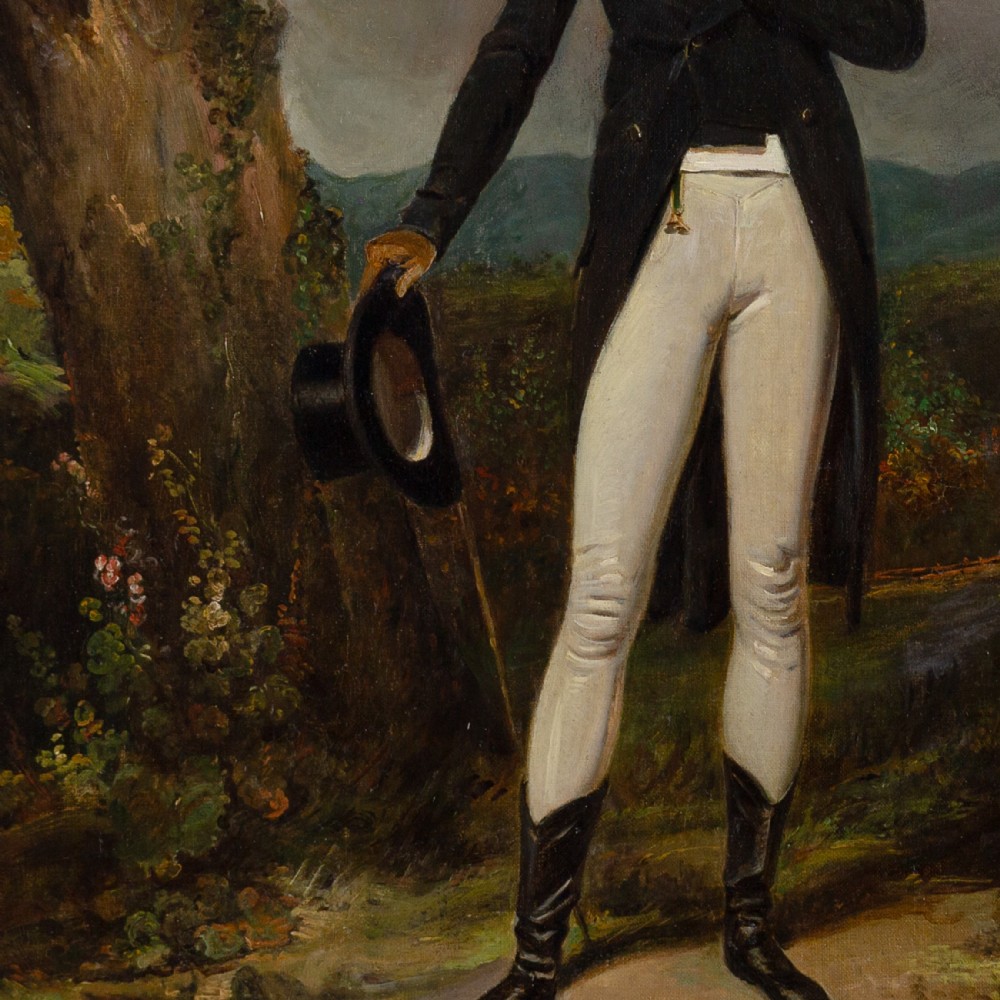
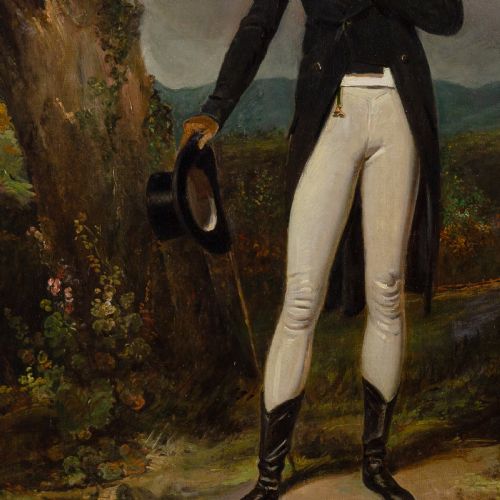
In terms of handling, the breeches and cravat are treated with a confident, almost sculptural impasto, catching light with assurance. The coat is more restrained, absorbing rather than reflecting illumination. The face, by contrast, is economical - nicely observed but without a heightened sense of bravura. This hierarchy is revealing as it suggests an artist deeply comfortable with landscape construction, applying that same structural thinking to a portrait commission.
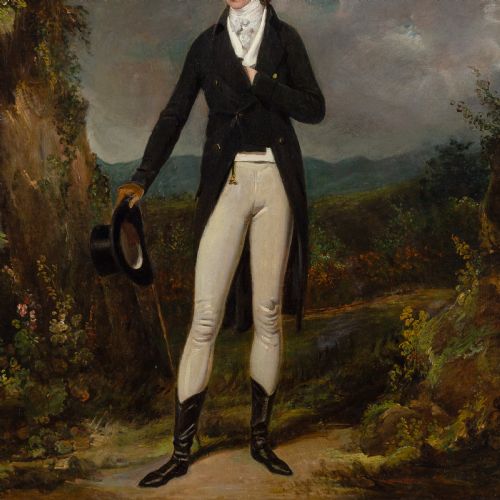
This places the work firmly within the British academic tradition at the turn of the 19th century. Around 1798-1810, portraiture in Britain was undergoing subtle shifts. The grand manner of the late 18th century, associated with Joshua Reynolds, was giving way to something quieter and more naturalistic. Figures were increasingly situated within believable environments rather than theatrical backdrops. At the same time, Britain’s rural identity, shaped by land ownership, sporting culture, and estate life, found expression in portraits that integrated sitter and setting.
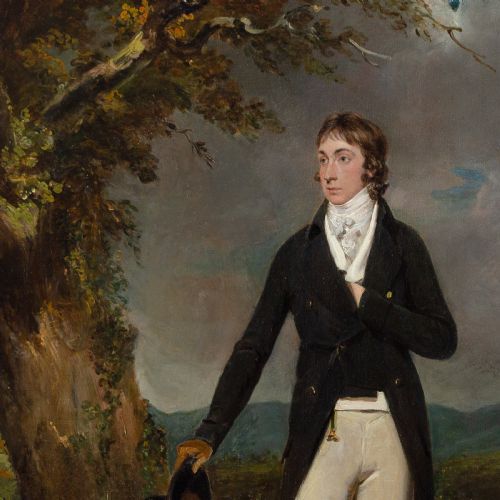
The painting can be dated to around 1800-1810. The cut of the coat, the high, structured cravat, the transition from 18th-century dress to Regency tailoring, and the use of breeches rather than trousers all point precisely to this period. The handling of paint further supports this dating. The visible underpainting at certain contours, the controlled tonal structure, and the absence of later 19th-century slickness all reinforce an early 19th-century origin.
Importantly, this is not the work of an amateur hand. The painter demonstrates an understanding of academic principles. This suggests a trained artist, likely with landscape inclinations, operating either outside the metropolitan centre or within its broader orbit. The tree on the left is particularly Constable-esque. It's also conceivable that the artist responsible was well versed in sporting scenes and equestrian portraiture.
Held in a later giltwood frame in the Rococo revival taste, with a swept outline, scrolling acanthus and rocaille ornament, and a beaded inner edge.
Medium: Oil on canvas
Overall size: 32½” x 38” / 83cm x 97cm
Year of creation: c. 1810
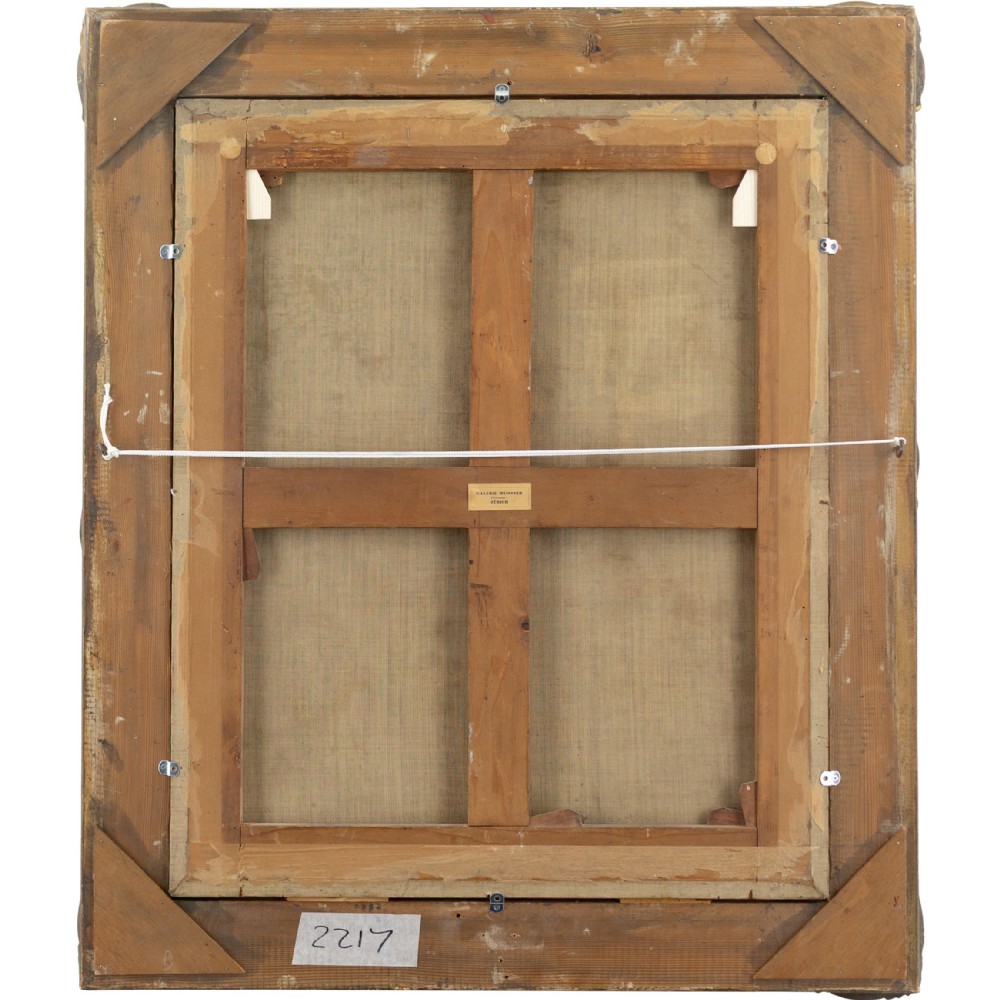
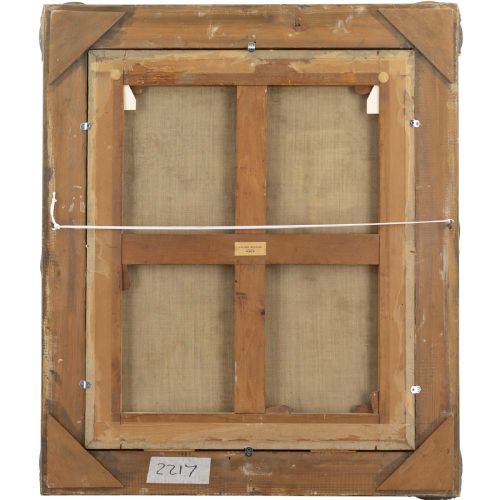
Labels & Inscriptions: Gallery Meissner on the reverse.
Provenance: With Gallery Meissner, Zurich, Switzerland / Private Collection, Italy.
Condition: Cleaned. Revarnished. Canvas relined. Areas of fine and settled craquelure, as you would expect. The paint layer is stable. Frame in excellent condition.
Our reference: BRV2217
Brave Fine Art has dated this piece to the 1800s.
Exquisite antique paintings that capture the imagination.
You can view the stock and full dealer information on the Brave Fine Art Profile Page
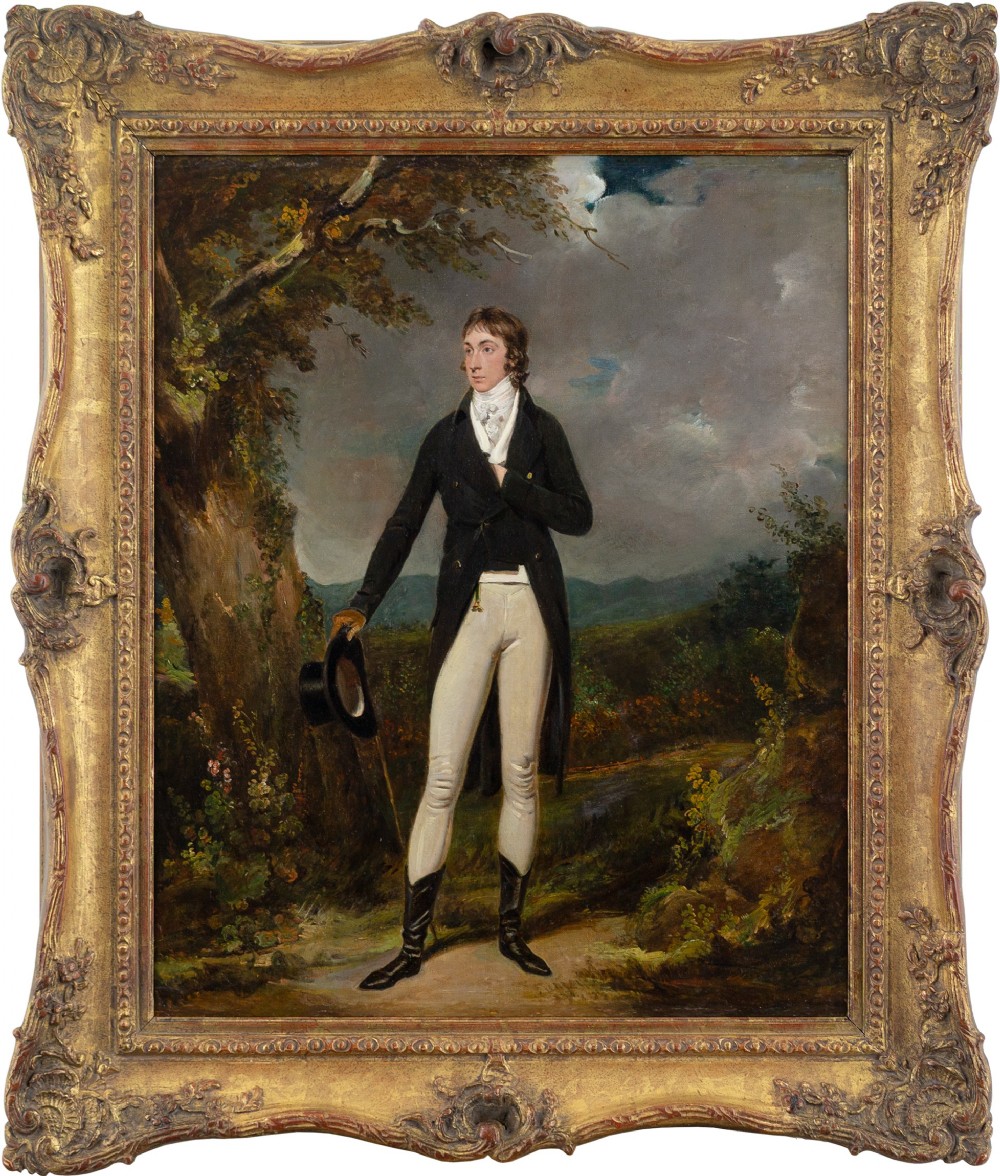
Early 19th-century English School, Portrait of a Gentleman in a Landscape - Antique Oil Painting