
20,159  PAGES BROWSED TODAY PAGES TODAY 88 ANTIQUES UPLOADED TODAYNEW ARRIVALS
88 ITEMS ADDED TODAY
Sort Order
Items Per Page
Browse Categories
Sort order
Items per page
ID #SA1180432
SOLD
Email
Save
Portrait of a Gentleman with Blue Cloak & Portrait of a Lady in Russet Dress C.1697; by Thomas Murray (1663-1735) Oil on Canvas Paintings
Titan Fine Art
sold SA1180432
Sorry, but this item has been sold.
Titan Fine Art

Titan Fine Art

Sellingantiques Verified Since Jul 2016
View Dealers Stock Page
  • About Us
    Specialist in 17th & 18thc portraits. Highly curated selection, museum-level research & pro conservation. Exceptional art, expertly vetted.
Id #SA1180432
PDF SHARE
SAVE

Portrait of a Gentleman with Blue Cloak & Portrait of a Lady in Russet Dress C.1697; by Thomas Murray (1663-1735) Oil on Canvas Paintings

17th century
Description

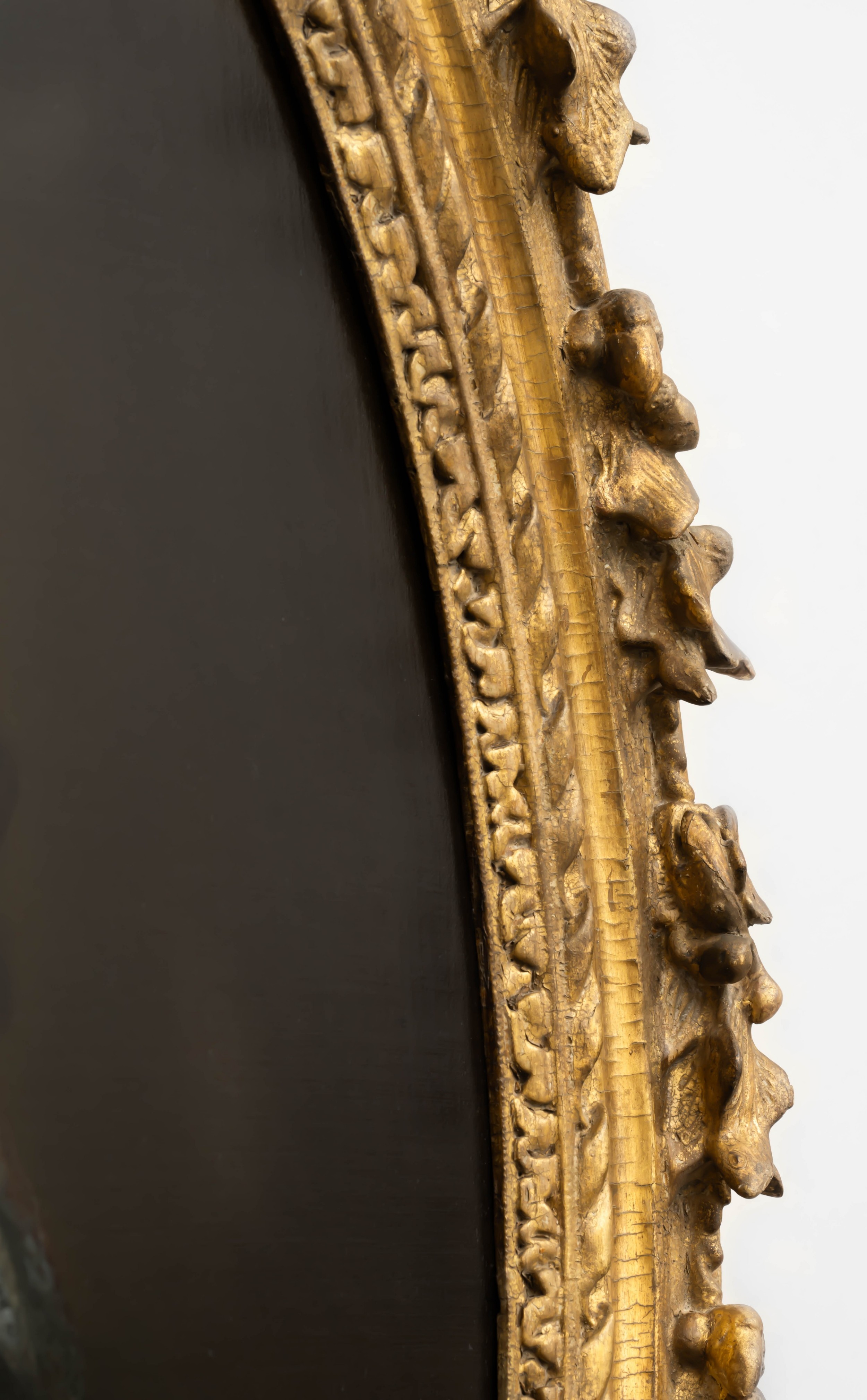
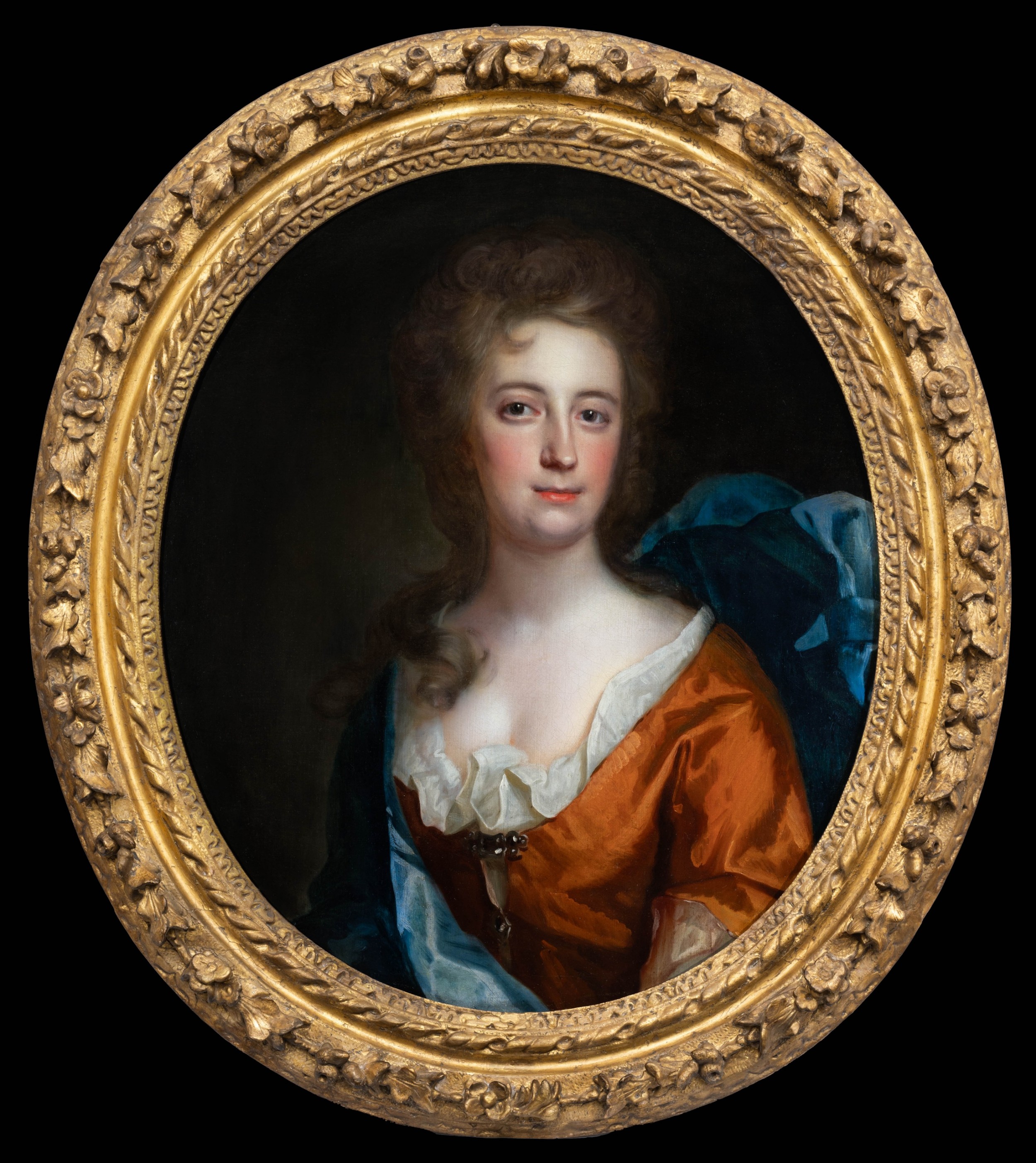
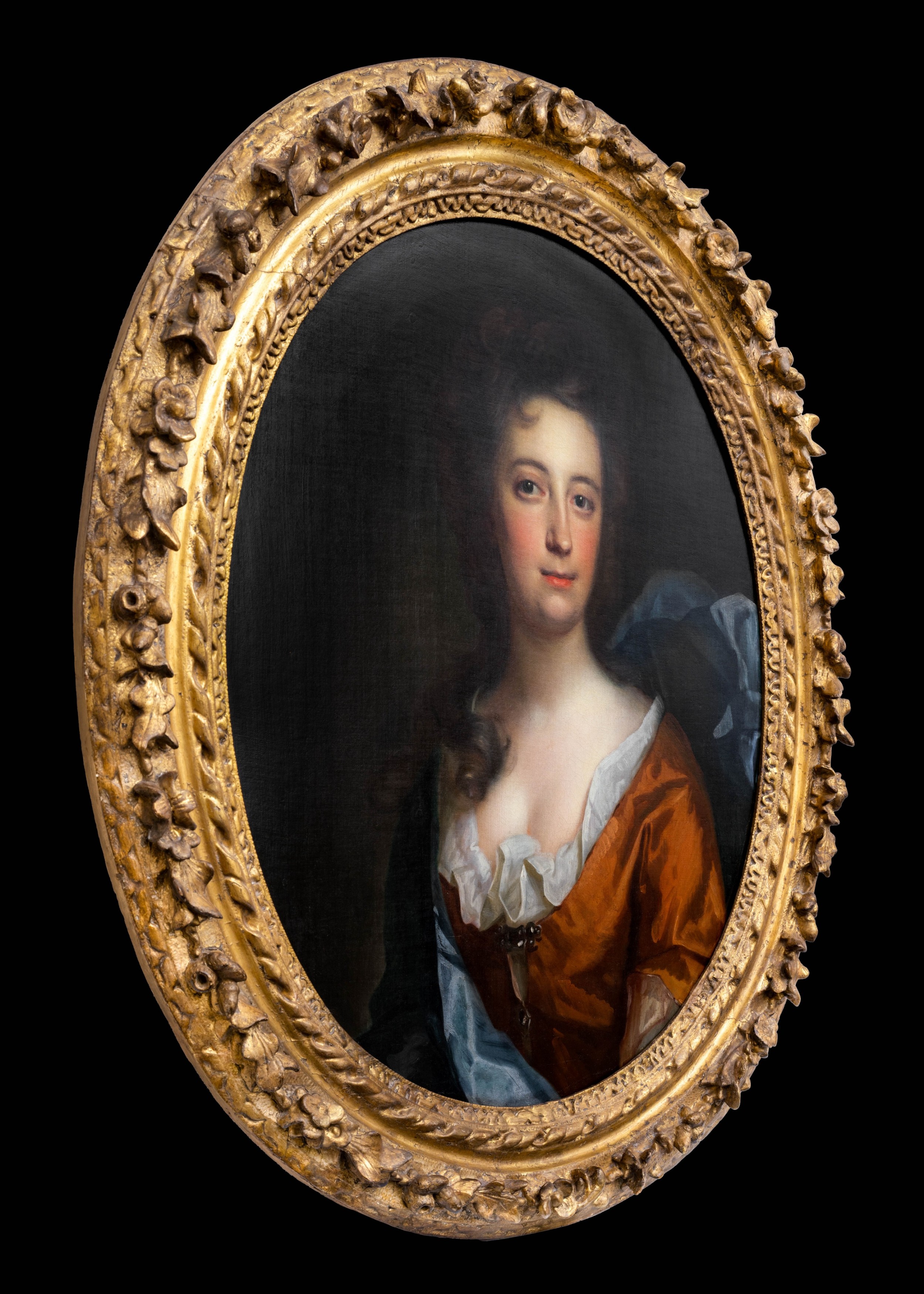
These fascinating portraits are exquisite examples of portraiture in England during the end of the seventeenth century. Painted by Thomas Murray, who can be described as one of the most successful and talented artists during the last part of the seventeenth century; it is not surprising that Murray painted the portraits of King William III, Queen Mary, Queen Ann as well as several other high-ranking individuals. They are noteworthy in their excellent state of preservation and their remarkable quality; they are amongst Murray’s finest works, and are presented in an outstanding carved and gilded antique frames, which are fine work of art in themselves.

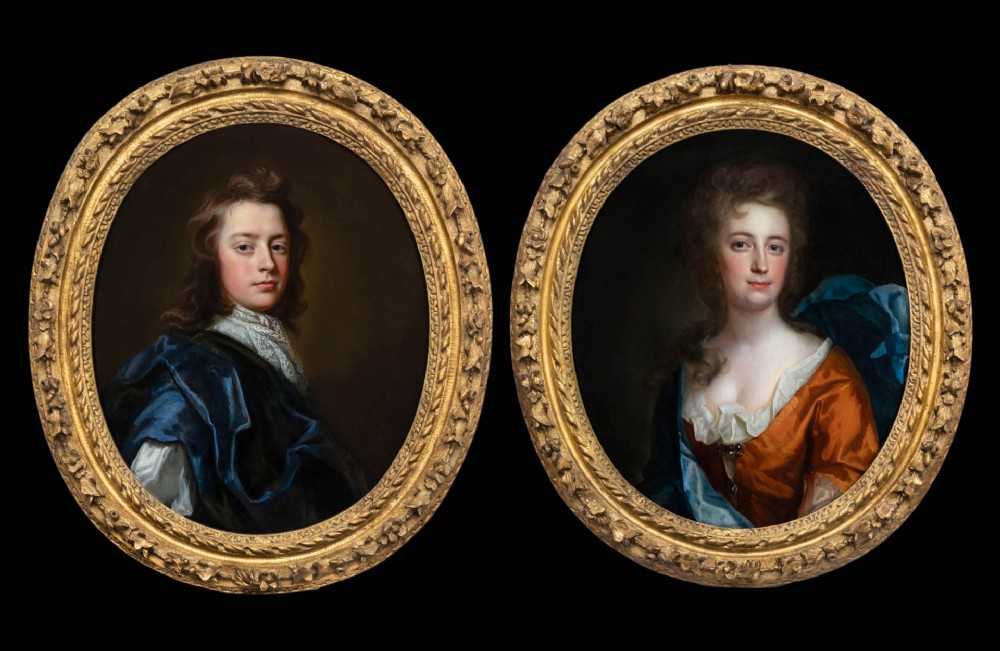
The sitters are most likely husband and wife as he is inclined to is elegantly attired in a blue silk dress over a white frilled chemise and a striking crimson mantle. The right facing stance of the gentleman and the lady slightly inclined to our left, suggests that the couple were married, according to the traditional rules of marriage portraiture at the time.
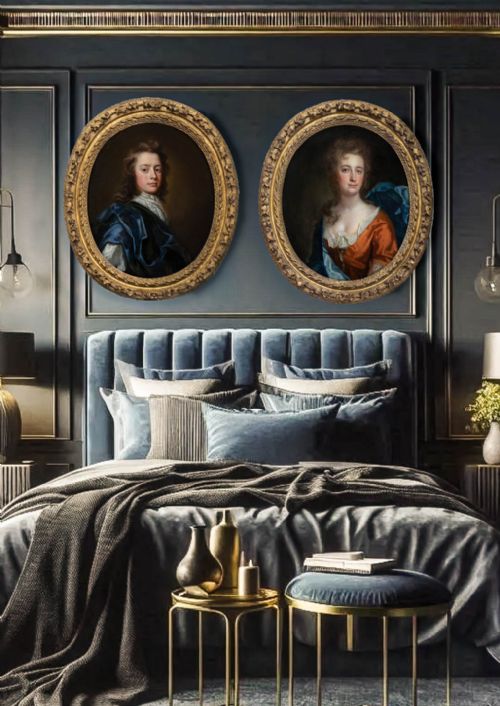
The portrait genre was valued particularly highly in English society. Neither landscapes nor allegorical pictures were ever priced so highly at exhibitions and in the trade as depictions of people, from the highest aristocracy to scholars, writers, poets and statesmen.
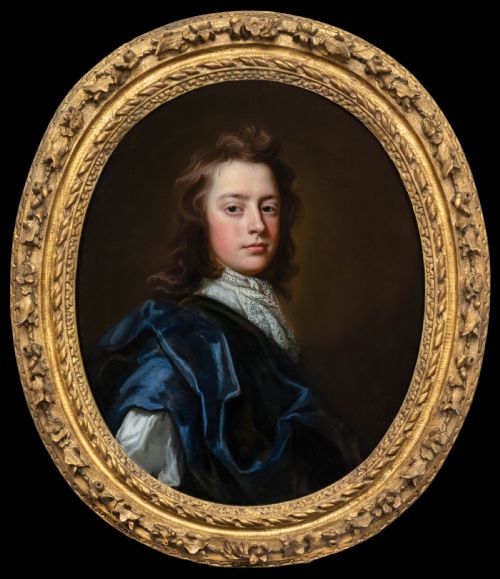
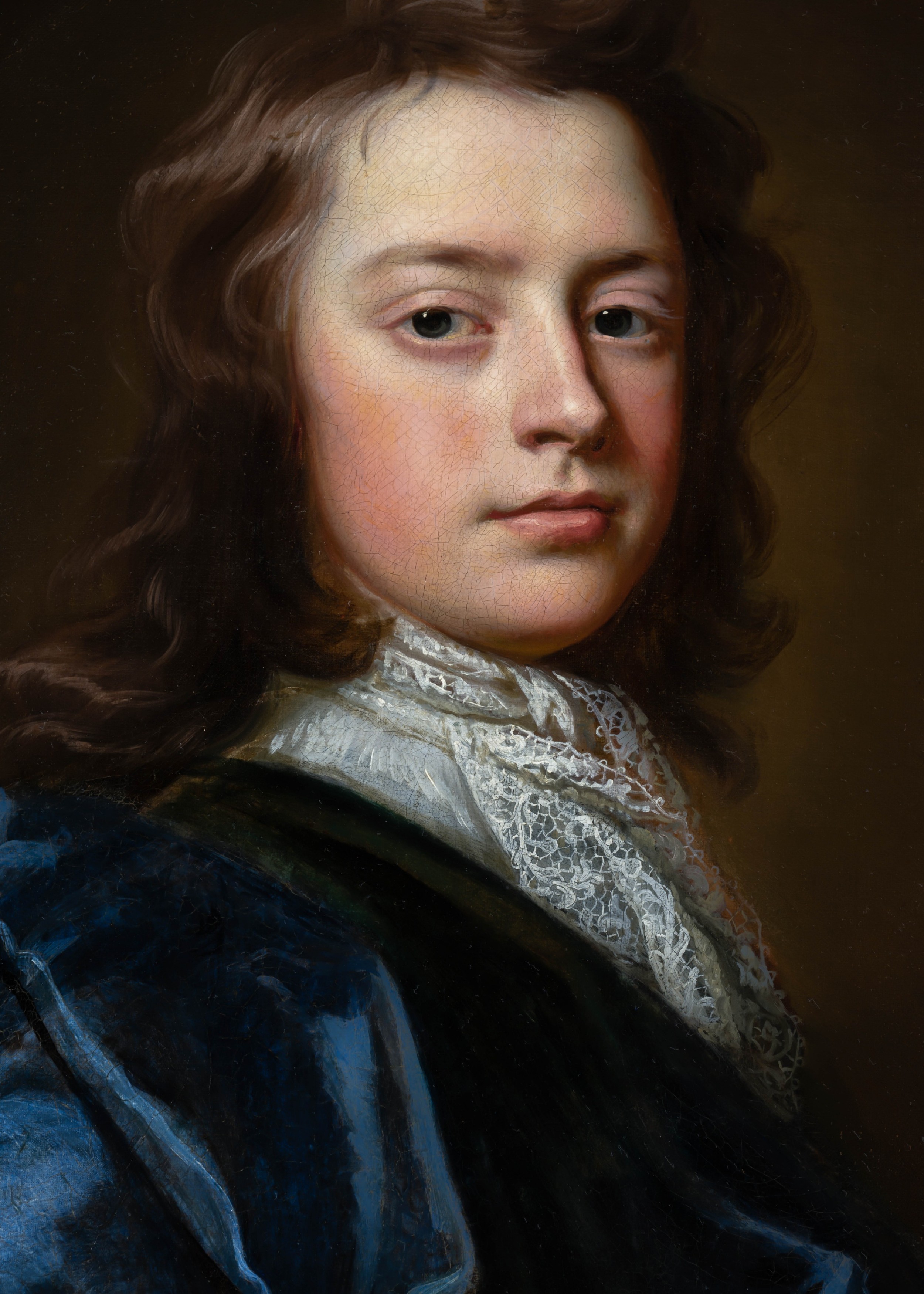
These portraits can be dated to circa 1697 based on the fashionable hair and clothing styles. The lady’s russet coloured dress is held in place on the bodice by a huge diamond and gold brooch, the azure silk scarf is suspended in the air and flows off the pictoral space, a deliberate attempt by the artist to create a sense of movement, away from a ‘standard’ portrait. The gentleman wears a shimmering striking blue cloak over a white lace cravat, his hair is worn natural instead of a wig. The strong and vibrant blue pigment in his cloak is indicative of the remarkable state of preservation of this portrait; blue pigment from this period today often appears faded and abraded. This is a very fine example.
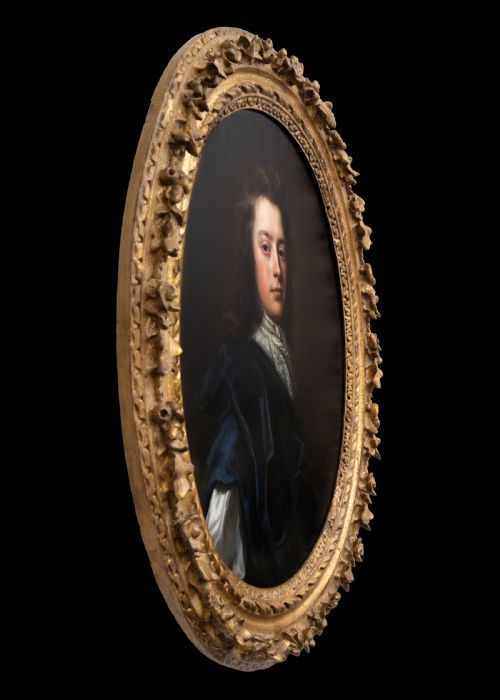
Murray’s work retains an individual style and easily distinguishable by a refined and elegant manner. He also favoured the exaggerated horizontal flowing mantle for both his female and males’ sitters, as seen in our portrait of the lady, and also placed male sitters with the shoulder prominently facing the viewer. This illustrates the studio practice at the time; when an artist found success with a formula they were not afraid to repeat it. Murray’s earlier work is similar to John Closterman, who was a fellow pupil, and many consider this period to be his finest.
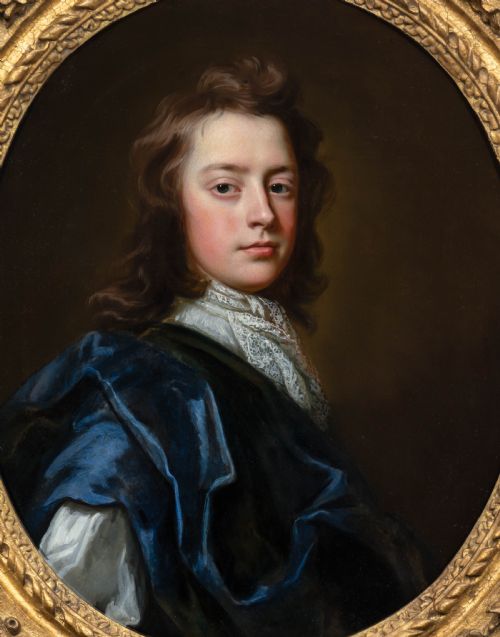
Thomas Murray was born in Scotland but moved to London to study with a member of the De Critz family. Later he was a pupil of the English portraitist John Riley (1646-1691), who was court painter to King William III and Queen Mary, and was practising as a painter on his own in the 1680s. In 1691 he took over Riley’s studio when that artist died in 1691 and he established a very successful practice.
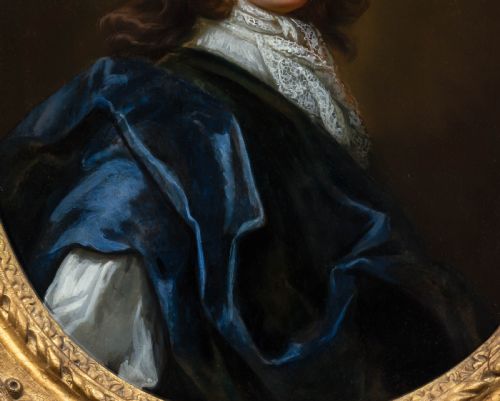
The Rev, James Dalloway accounted that Murray “was remarkable for his personal beauty and for the elegance of his manner” and he was also noted to have been hard working, courteous and popular with his customers.
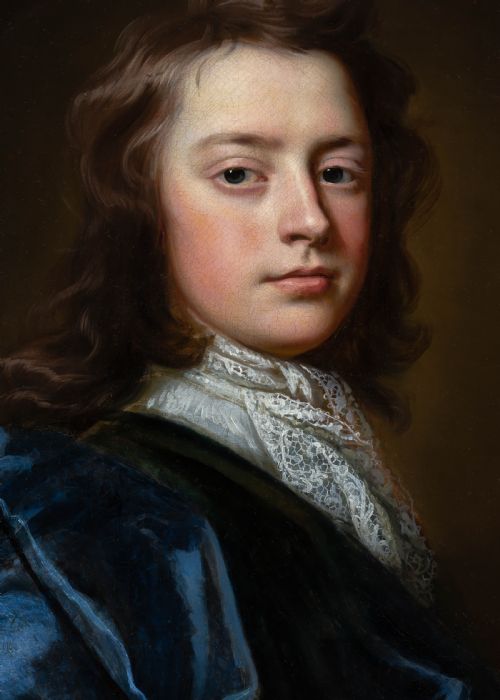
Murray invested wisely in property and raised a considerable sum by lending money; when he died in 1735, he left around £40,000. He had no children and he bequeathed his money to a nephew with instructions that his monument, with a bust, should be erected in Westminster Abbey, provided that it did not cost too much – but his nephew decided that it was indeed “too expensive” and the plan did not proceed. He is buried in St. Paul's Church in Covent Garden, London.

Full description at: www.titanfineart.com

Physical Dimensions
Height
86cm (33.86")
Width
85cm (33.46")
Depth
7cm (2.76")
Declaration

Titan Fine Art has dated this piece to the 17th Century.

Reference Numbers
Sellingantiques Reference
SA1180432
Dealers Notes

Much more info about this item at: www.titanfineart.com

In a market saturated with available paintings, Titan Fine Art offers a distinct advantage: we sift through thousands of works to provide a specially curated selection. Each piece is meticulously chosen based on technical merit, provenance, and decorative appeal, ensuring our clients view only the finest examples of British and European art.

With over 20 years of expertise and 1,000+ works placed with collectors and institutions, we are one of the most prolific specialists in 17th and 18th-century portraiture. We combine a scholarly approach with museum-level rigor to replace the uncertainty of the open market with absolute confidence.

Why Buy From Titan Fine Art?

• Expertly Curated Selection

We act as your expert eye, selecting only high-quality works that offer genuine historical and artistic value.

• Museum-Level Research

Each portrait is supported by extensive academic research, often exceeding 40 hours, to establish attribution, sitter identity, and historical context.

• Professional Conservation

All paintings are carefully cleaned and stabilised by professional conservators, and are presented ready to hang.

• Transparent Pricing

No buyer’s premium or hidden fees—unlike auction houses, where additional costs can add 25–35%.

• Export Pricing Advantage

Reduced pricing is available for works exported outside the UK.

• Specialist Global Shipping

We manage the entire process, including custom crating, export documentation, and fully tracked delivery worldwide.

• Buy with Confidence

A 7-day return policy and the option to pay in GBP, USD, or EUR for convenience and transparency.

• Original Period Frames

Many works retain their original carved and gilded frames, which are works of art in their own right and enhance both historical authenticity and decorative impact.

• Personal Advisory Service

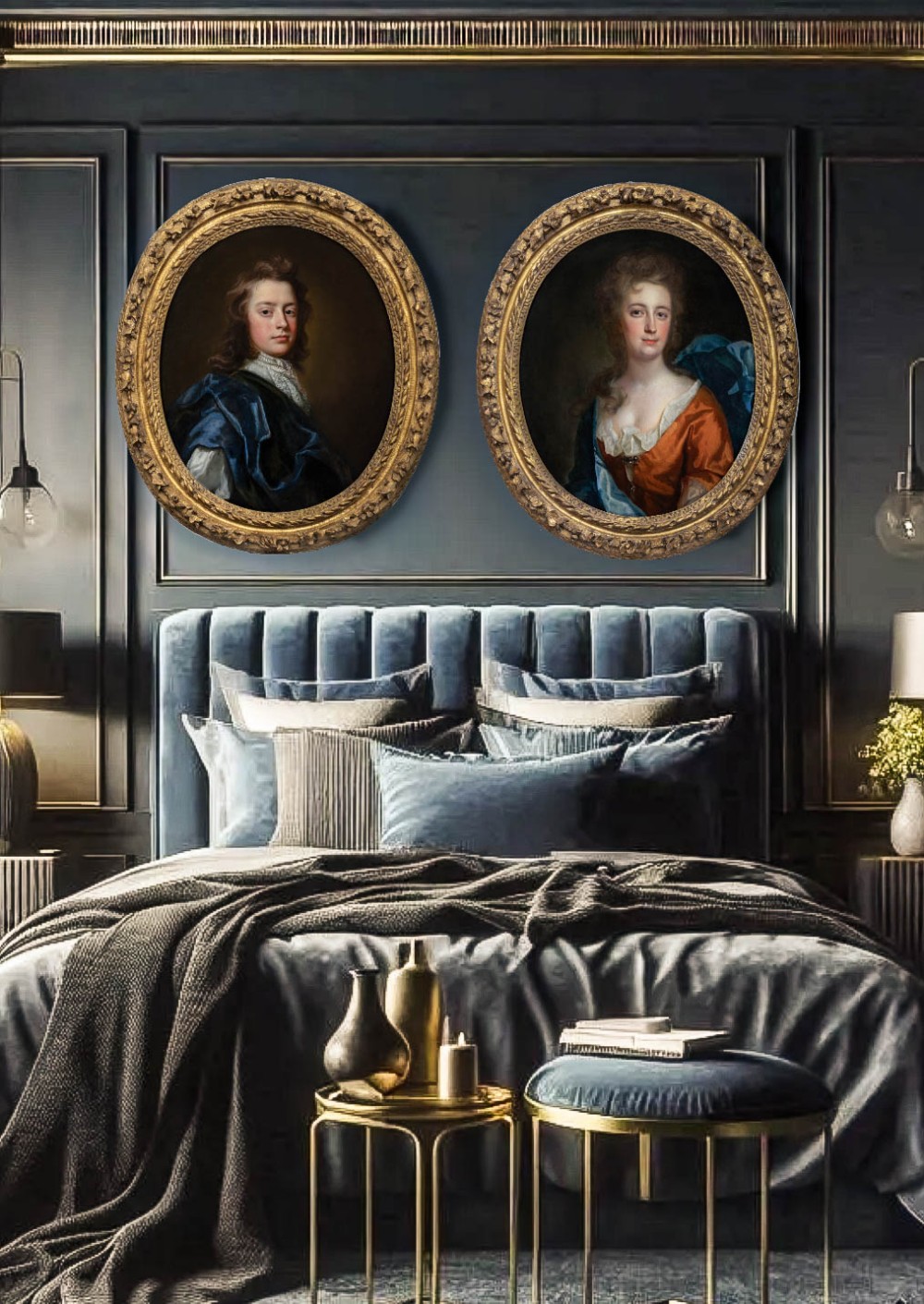
We work directly with collectors and interior designers, offering guidance on selection, scale, and placement—including bespoke room mock-ups on request.

Subscribe to our monthly 'new item alert' to be the first to hear about new works

Description
These fascinating portraits are exquisite examples of portraiture in England during the end of the seventeenth century. Painted by Thomas Murray, who can be described as one of the most successful and talented artists during the last part of the seventeenth century; it is not surprising that Murray painted the portraits of King William III, Queen Mary, Queen Ann as well as several other high-ranking individuals. They are noteworthy in their excellent state of preservation and their remarkable quality; they are amongst Murray’s finest works, and are presented in an outstanding carved and gilded antique frames, which are fine work of art in themselves.
The sitters are most likely husband and wife as he is inclined to is elegantly attired in a blue silk dress over a white frilled chemise and a striking crimson mantle.
Titan Fine Art

The right facing stance of the gentleman and the lady slightly inclined to our left, suggests that the couple were married, according to the traditional rules of marriage portraiture at the time.

fig 1. Portrait of a Gentleman with Blue Cloak & Portrait of a Lady in Russet Dress c.1697; by Thomas Murray (1663-1735) Oil on Canvas Paintings
fig 1. Portrait of a Gentleman with Blue Cloak & Portrait of a Lady in Russet Dress C.1697; by Thomas Murray (1663-1735) Oil on Canvas Paintings

The portrait genre was valued particularly highly in English society. Neither landscapes nor allegorical pictures were ever priced so highly at exhibitions and in the trade as depictions of people, from the highest aristocracy to scholars, writers, poets and statesmen.

fig 2. Portrait of a Gentleman with Blue Cloak & Portrait of a Lady in Russet Dress c.1697; by Thomas Murray (1663-1735) Oil on Canvas Paintings
fig 2. Portrait of a Gentleman with Blue Cloak & Portrait of a Lady in Russet Dress C.1697; by Thomas Murray (1663-1735) Oil on Canvas Paintings

These portraits can be dated to circa 1697 based on the fashionable hair and clothing styles. The lady’s russet coloured dress is held in place on the bodice by a huge diamond and gold brooch, the azure silk scarf is suspended in the air and flows off the pictoral space, a deliberate attempt by the artist to create a sense of movement, away from a ‘standard’ portrait. The gentleman wears a shimmering striking blue cloak over a white lace cravat, his hair is worn natural instead of a wig. The strong and vibrant blue pigment in his cloak is indicative of the remarkable state of preservation of this portrait; blue pigment from this period today often appears faded and abraded. This is a very fine example.

fig 3. Portrait of a Gentleman with Blue Cloak & Portrait of a Lady in Russet Dress c.1697; by Thomas Murray (1663-1735) Oil on Canvas Paintings
fig 3. Portrait of a Gentleman with Blue Cloak & Portrait of a Lady in Russet Dress C.1697; by Thomas Murray (1663-1735) Oil on Canvas Paintings

Murray’s work retains an individual style and easily distinguishable by a refined and elegant manner. He also favoured the exaggerated horizontal flowing mantle for both his female and males’ sitters, as seen in our portrait of the lady, and also placed male sitters with the shoulder prominently facing the viewer. This illustrates the studio practice at the time; when an artist found success with a formula they were not afraid to repeat it. Murray’s earlier work is similar to John Closterman, who was a fellow pupil, and many consider this period to be his finest.

fig 4. Portrait of a Gentleman with Blue Cloak & Portrait of a Lady in Russet Dress c.1697; by Thomas Murray (1663-1735) Oil on Canvas Paintings
fig 4. Portrait of a Gentleman with Blue Cloak & Portrait of a Lady in Russet Dress C.1697; by Thomas Murray (1663-1735) Oil on Canvas Paintings

Thomas Murray was born in Scotland but moved to London to study with a member of the De Critz family. Later he was a pupil of the English portraitist John Riley (1646-1691), who was court painter to King William III and Queen Mary, and was practising as a painter on his own in the 1680s. In 1691 he took over Riley’s studio when that artist died in 1691 and he established a very successful practice.

fig 5. Portrait of a Gentleman with Blue Cloak & Portrait of a Lady in Russet Dress c.1697; by Thomas Murray (1663-1735) Oil on Canvas Paintings
fig 5. Portrait of a Gentleman with Blue Cloak & Portrait of a Lady in Russet Dress C.1697; by Thomas Murray (1663-1735) Oil on Canvas Paintings

The Rev, James Dalloway accounted that Murray “was remarkable for his personal beauty and for the elegance of his manner” and he was also noted to have been hard working, courteous and popular with his customers.

fig 6. Portrait of a Gentleman with Blue Cloak & Portrait of a Lady in Russet Dress c.1697; by Thomas Murray (1663-1735) Oil on Canvas Paintings
fig 6. Portrait of a Gentleman with Blue Cloak & Portrait of a Lady in Russet Dress C.1697; by Thomas Murray (1663-1735) Oil on Canvas Paintings

Murray invested wisely in property and raised a considerable sum by lending money; when he died in 1735, he left around £40,000. He had no children and he bequeathed his money to a nephew with instructions that his monument, with a bust, should be erected in Westminster Abbey, provided that it did not cost too much – but his nephew decided that it was indeed “too expensive” and the plan did not proceed. He is buried in St. Paul's Church in Covent Garden, London.

Full description at: www.titanfineart.com

Height
86cm (33.86")
Width
85cm (33.46")
Depth
7cm (2.76")
Date of Manufacture

Titan Fine Art has dated this piece to the 17th Century.

Reference Numbers
Sellingantiques Ref
SA1180432
Titan Fine Art
Titan Fine Art
Sellingantiques verified Since Jul 2016

Specialist in 17th & 18thc portraits. Highly curated selection, museum-level research & pro conservation. Exceptional art, expertly vetted.

Dealer Profile

You can view the stock and full dealer information on the Titan Fine Art Profile Page
PDF SHARE
SAVE
Portrait of a Gentleman with Blue Cloak & Portrait of a Lady in Russet Dress c.1697; by Thomas Murray (1663-1735) Oil on Canvas Paintings
1 / 13
Archive I Portrait of a Gentleman with Blue Cloak & Portrait of a Lady in Russet Dress c.1697; by Thomas Murray (1663-1735) Oil on Canvas Paintings

Portrait of a Gentleman with Blue Cloak & Portrait of a Lady in Russet Dress C.1697; by Thomas Murray (1663-1735) Oil on Canvas Paintings
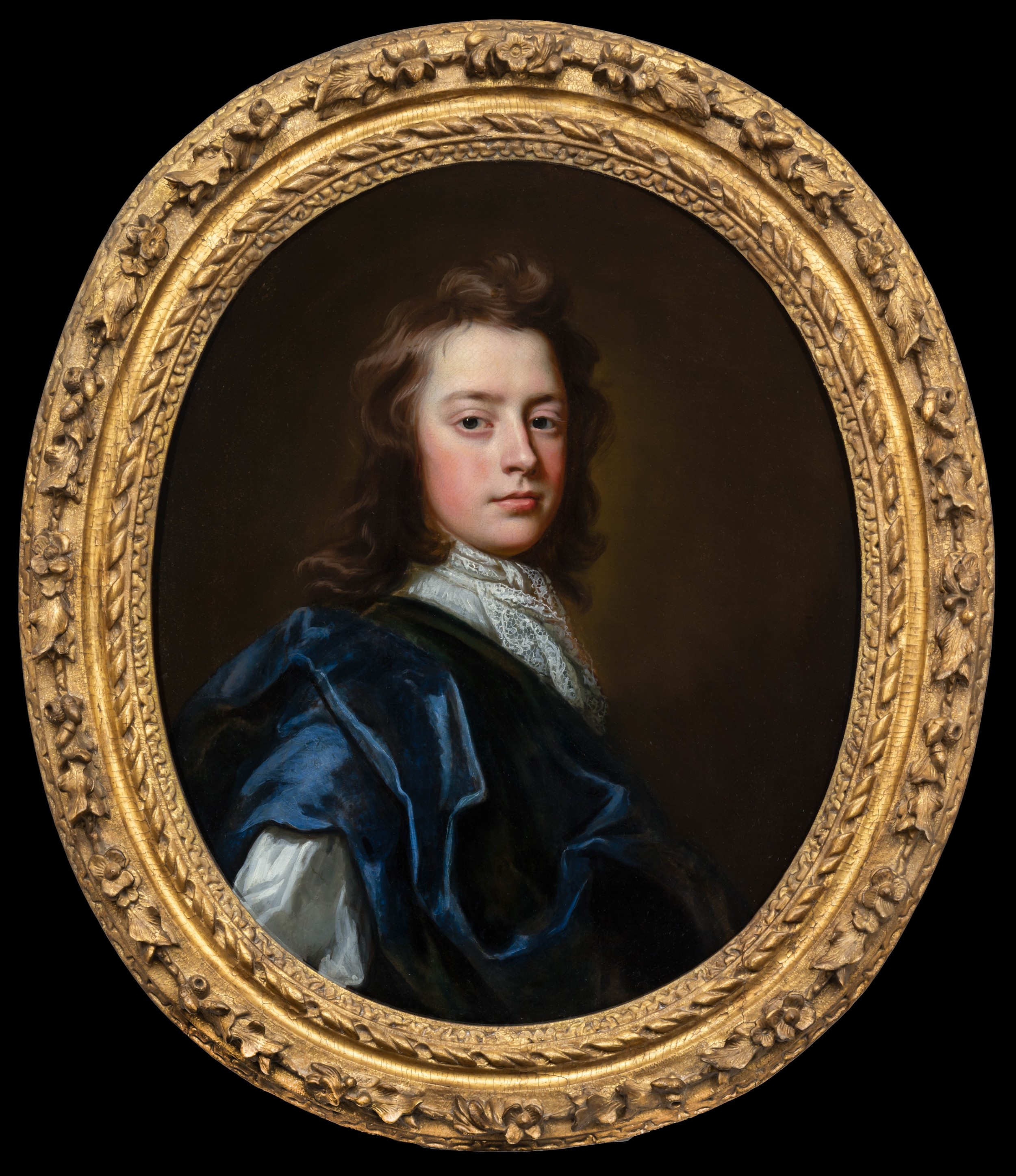
Archive II Portrait of a Gentleman with Blue Cloak & Portrait of a Lady in Russet Dress c.1697; by Thomas Murray (1663-1735) Oil on Canvas Paintings View II
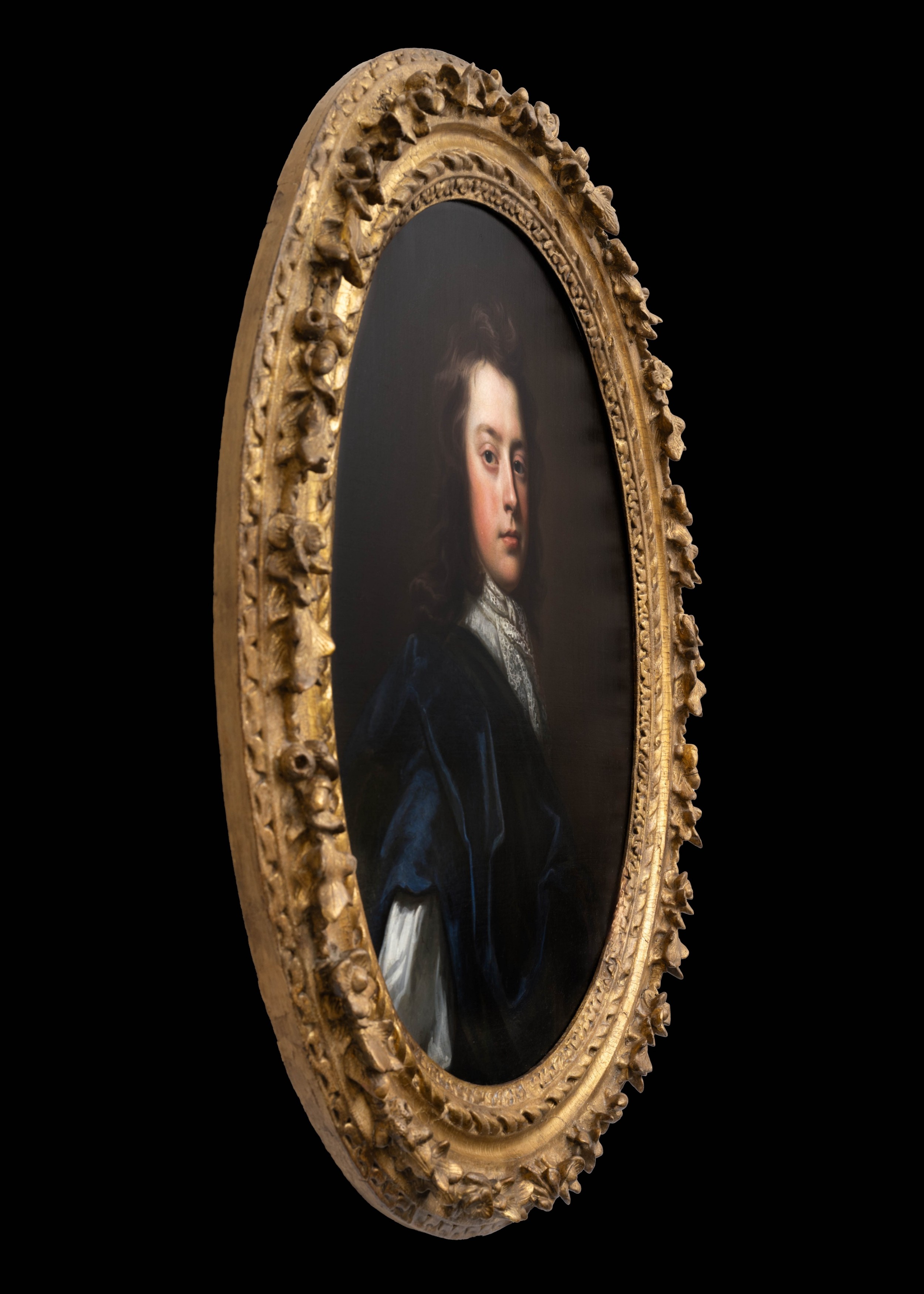
Archive III Portrait of a Gentleman with Blue Cloak & Portrait of a Lady in Russet Dress c.1697; by Thomas Murray (1663-1735) Oil on Canvas Paintings View III
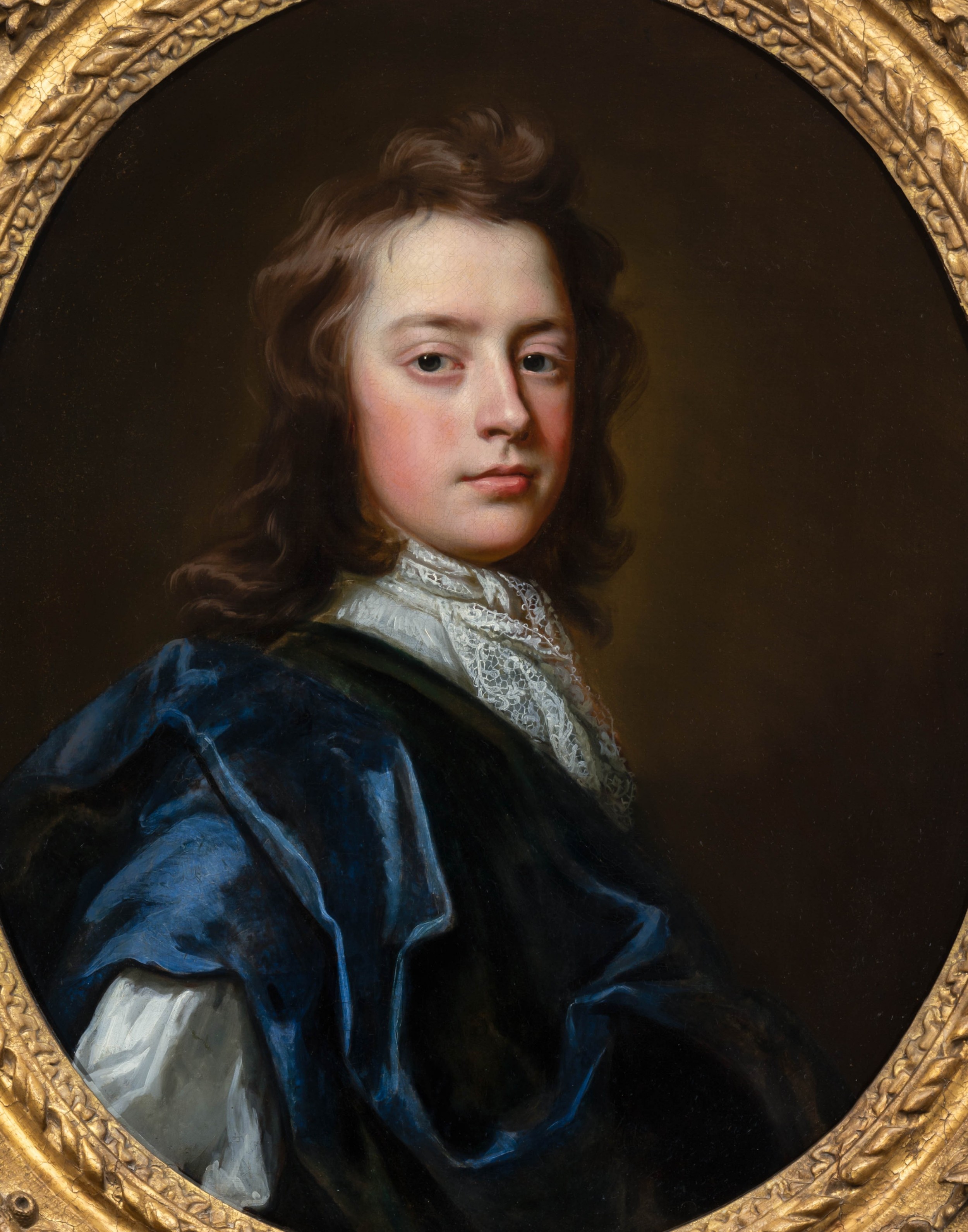
Archive IV Portrait of a Gentleman with Blue Cloak & Portrait of a Lady in Russet Dress c.1697; by Thomas Murray (1663-1735) Oil on Canvas Paintings View IV
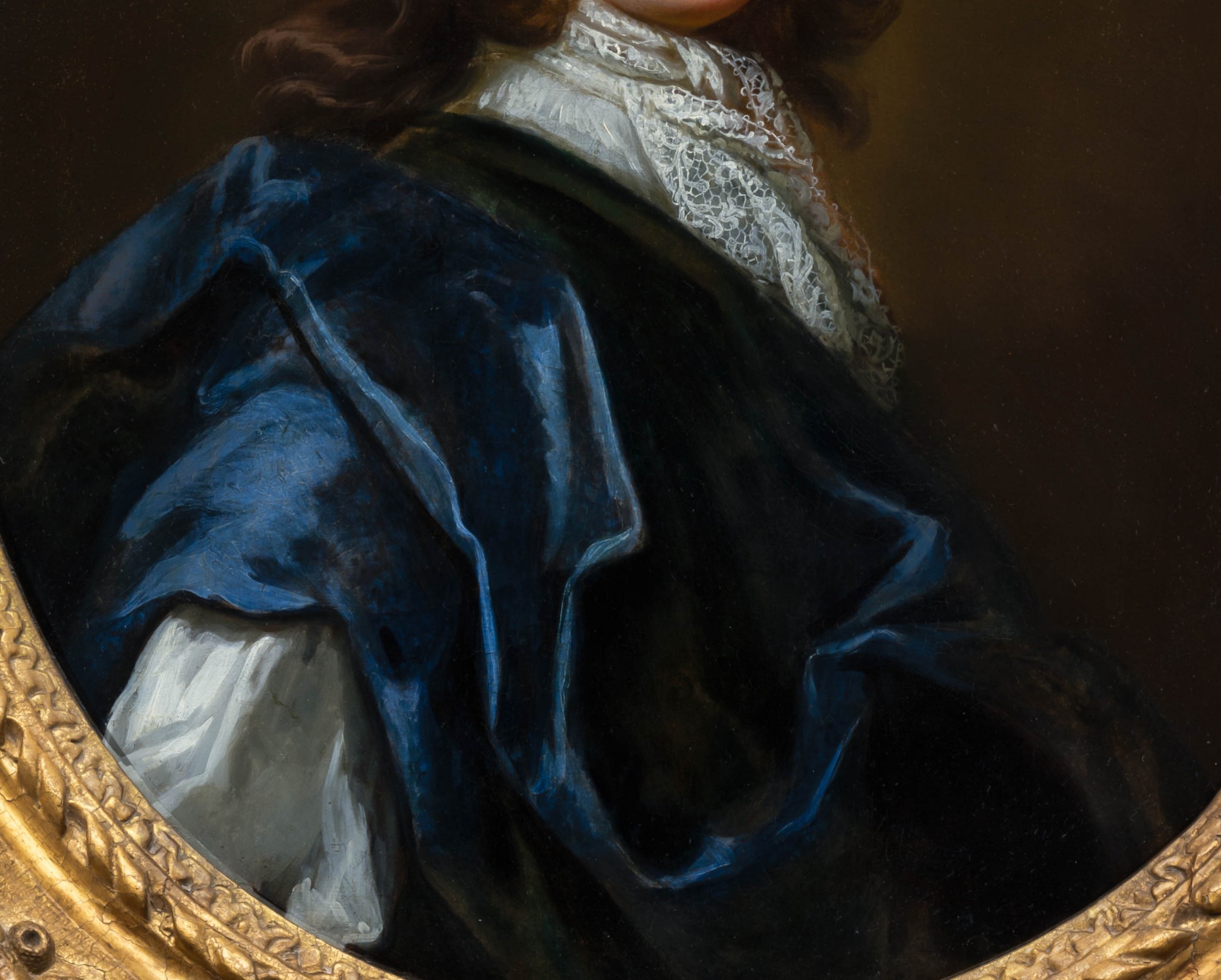
Archive V Portrait of a Gentleman with Blue Cloak & Portrait of a Lady in Russet Dress c.1697; by Thomas Murray (1663-1735) Oil on Canvas Paintings View V
Archive VI Portrait of a Gentleman with Blue Cloak & Portrait of a Lady in Russet Dress c.1697; by Thomas Murray (1663-1735) Oil on Canvas Paintings View VI
Archive VII Portrait of a Gentleman with Blue Cloak & Portrait of a Lady in Russet Dress c.1697; by Thomas Murray (1663-1735) Oil on Canvas Paintings View VII
Archive VIII Portrait of a Gentleman with Blue Cloak & Portrait of a Lady in Russet Dress c.1697; by Thomas Murray (1663-1735) Oil on Canvas Paintings View VIII
Archive IX Portrait of a Gentleman with Blue Cloak & Portrait of a Lady in Russet Dress c.1697; by Thomas Murray (1663-1735) Oil on Canvas Paintings View IX
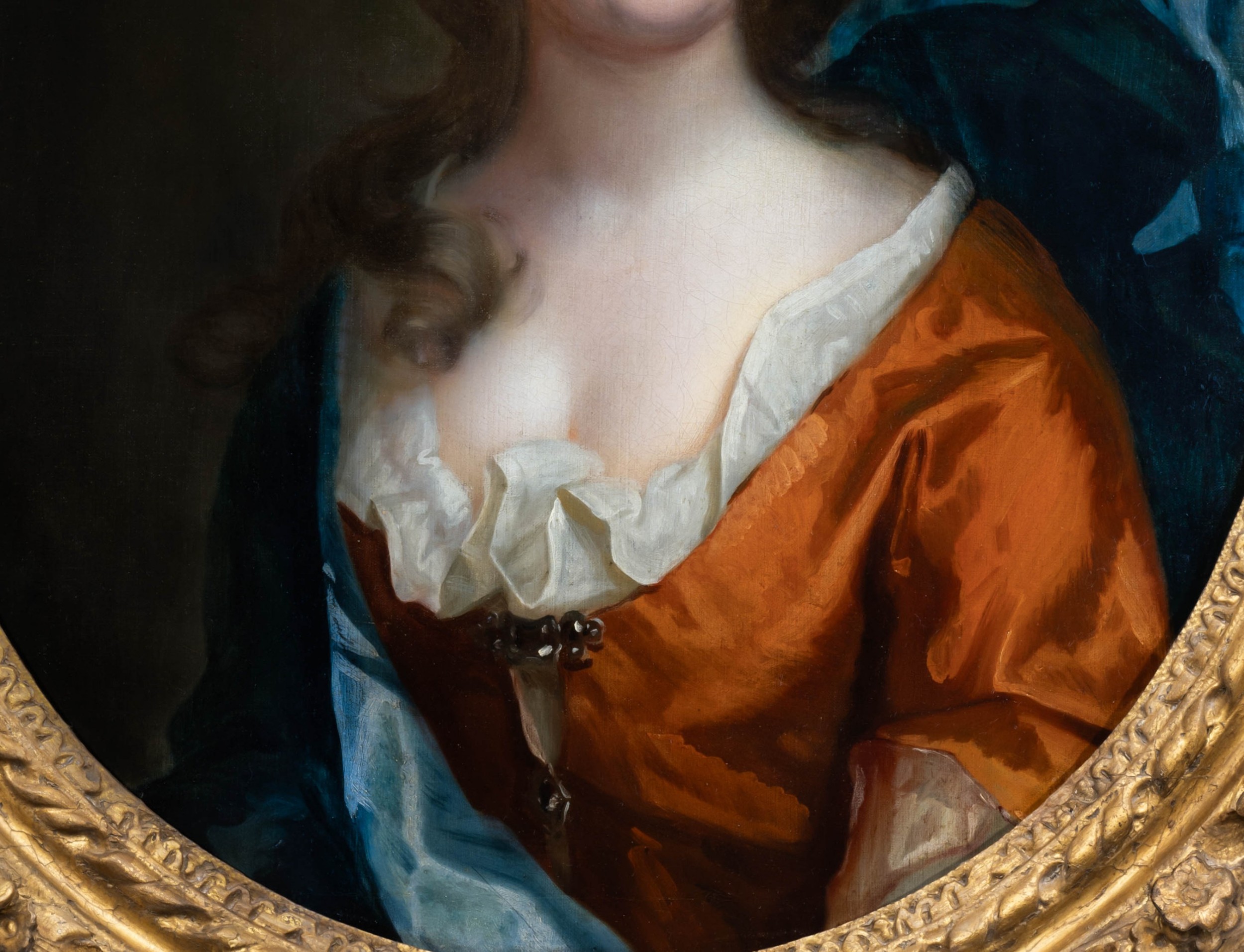
Archive X Portrait of a Gentleman with Blue Cloak & Portrait of a Lady in Russet Dress c.1697; by Thomas Murray (1663-1735) Oil on Canvas Paintings View X
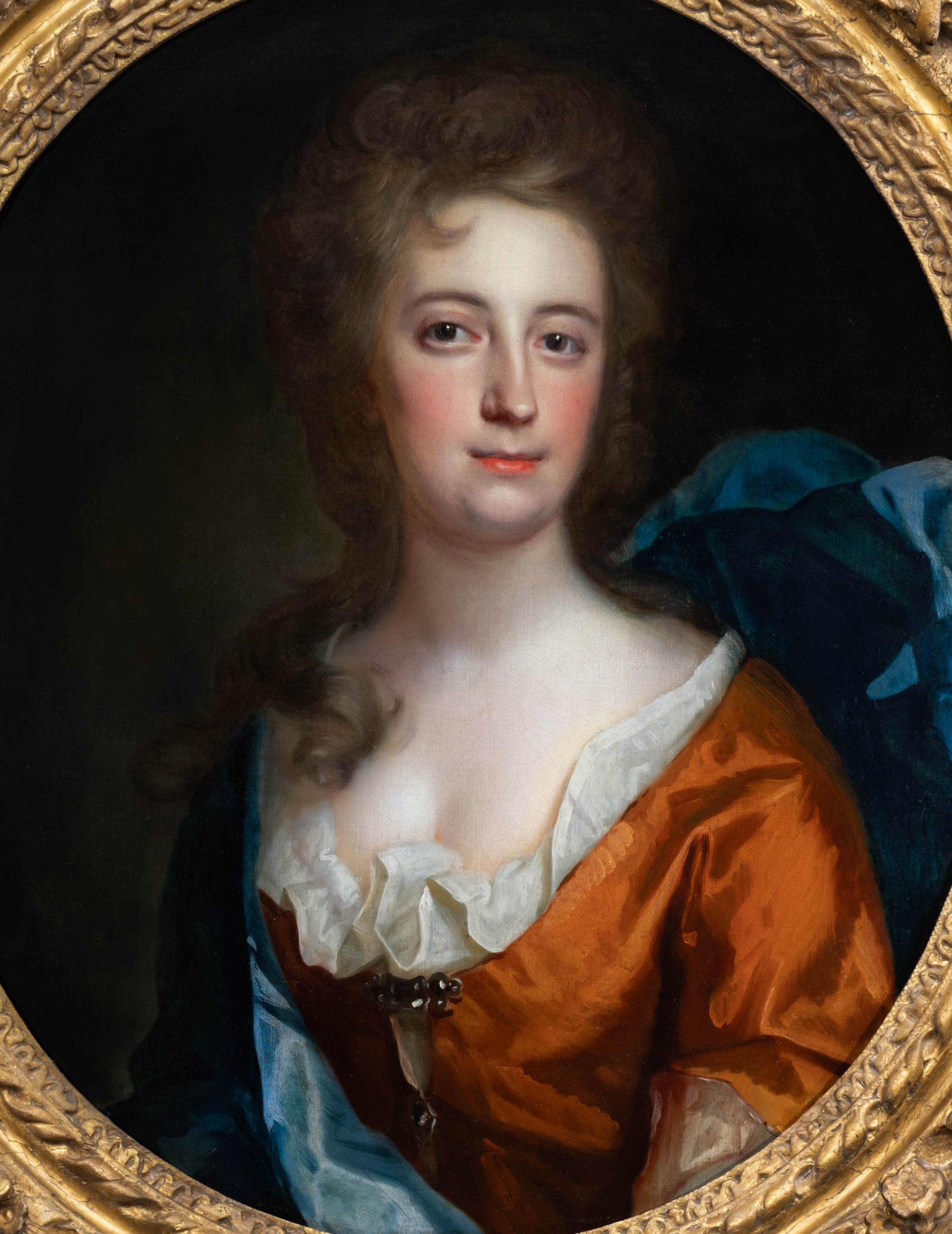
Archive XI Portrait of a Gentleman with Blue Cloak & Portrait of a Lady in Russet Dress c.1697; by Thomas Murray (1663-1735) Oil on Canvas Paintings View XI
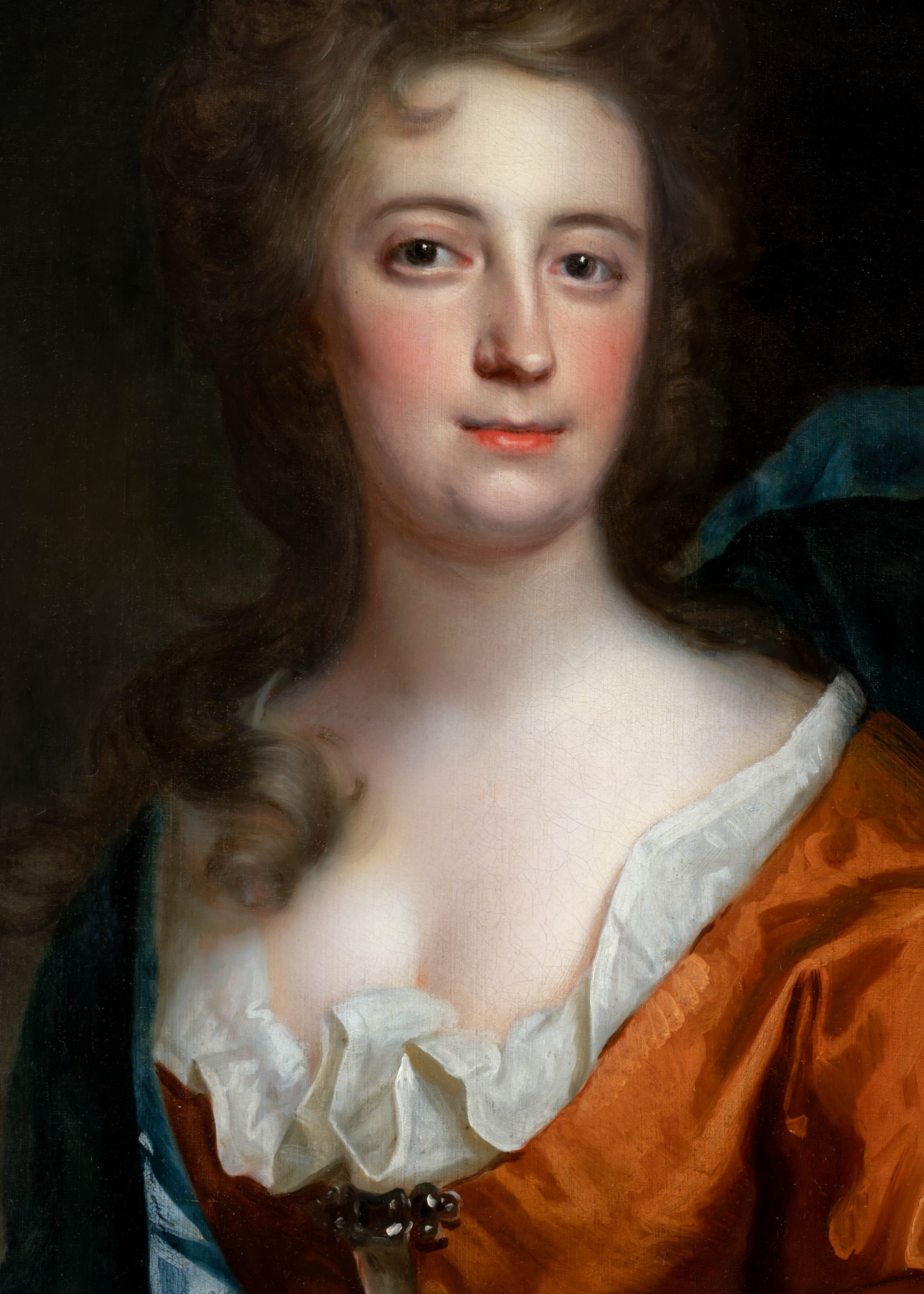
Archive XII Portrait of a Gentleman with Blue Cloak & Portrait of a Lady in Russet Dress c.1697; by Thomas Murray (1663-1735) Oil on Canvas Paintings View XII
Archive XIII Portrait of a Gentleman with Blue Cloak & Portrait of a Lady in Russet Dress c.1697; by Thomas Murray (1663-1735) Oil on Canvas Paintings View XIII
Enlarged Archival View
Telephone 07875 412 111
Location
London
United Kingdom
Dealer Profile Page sellingantiques.co.uk/titan
Verified Since Jul 2016
Items For Sale 16
Items Sold 401
Titan Fine Art
Titan Fine Art
Verified Since Jul 2016
View Dealer Info
Location: London, United Kingdom
Verified
Jul 2016
For Sale
16
Sold
401
Portrait of a Gentleman with Blue Cloak & Portrait of a Lady in Russet Dress c.1697; by Thomas Murray (1663-1735) Oil on Canvas Paintings
Ref: SA1180432
Portrait of a Gentleman with Blue Cloak & Portrait of a Lady in Russet Dress c.1697; by Thomas Murray (1663-1735) Oil on Canvas Paintings
Detail View 1
Detail View 2
Detail View 3
Detail View 4
Detail View 5
Detail View 6
Detail View 7
Detail View 8
Detail View 9
Detail View 10
Detail View 11
Detail View 12
Archival Detail
Every single antique dealer on our platform is individually approved by our internal team. We verify their professional trade history, ethical standards, and photographic quality to ensure a secure, high-standard buying environment. Upon joining, every dealer agrees to a strict 9-point code of conduct. While issues can occasionally arise, our dealers typically resolve them swiftly and directly with the buyer. In fact, since our founding in 2002, Sellingantiques has only had to step in to help resolve an issue on roughly five occasions—a true testament to the quality of our dealers and their dedication to your happiness.
Our dealers are highly experienced in packing and shipping fragile, high-value antiques. Because you are in direct contact with the dealer, you will be able to easily go through all available shipping and insurance options together to ensure your item arrives safely.
Antiques are the ultimate green purchase. By choosing historical pieces over newly manufactured goods, you completely eliminate the carbon footprint of modern mass production while preserving exceptional, timeless craftsmanship.
items
Add keywords to the filter
Price
£100
£250000
Era
Movements
Material
Origin
Stock Location
Freshness
Online Payments
Categories