Brave Fine Art has dated this piece to the 18th Century.
One of the earliest was produced by Hans Holbein the Younger between 1520 and 1522, and when seen in person, its grotesque sense of realism evokes a visceral reaction. Holbein’s is life-size with Christ’s head tilting outwards - mouth and eyes open. It’s jarring, as the suggestion of movement creates an unnerving juxtaposition of life and death.
During the mid 17th century, French artist Philippe de Champaigne (1602-1674) rendered Christ with his head raised - open wounds gaping, with a bloodied crown of thorns resting against discoloured cloth. It’s equally disturbing due to its realism and seems to emit an ethereal glow.
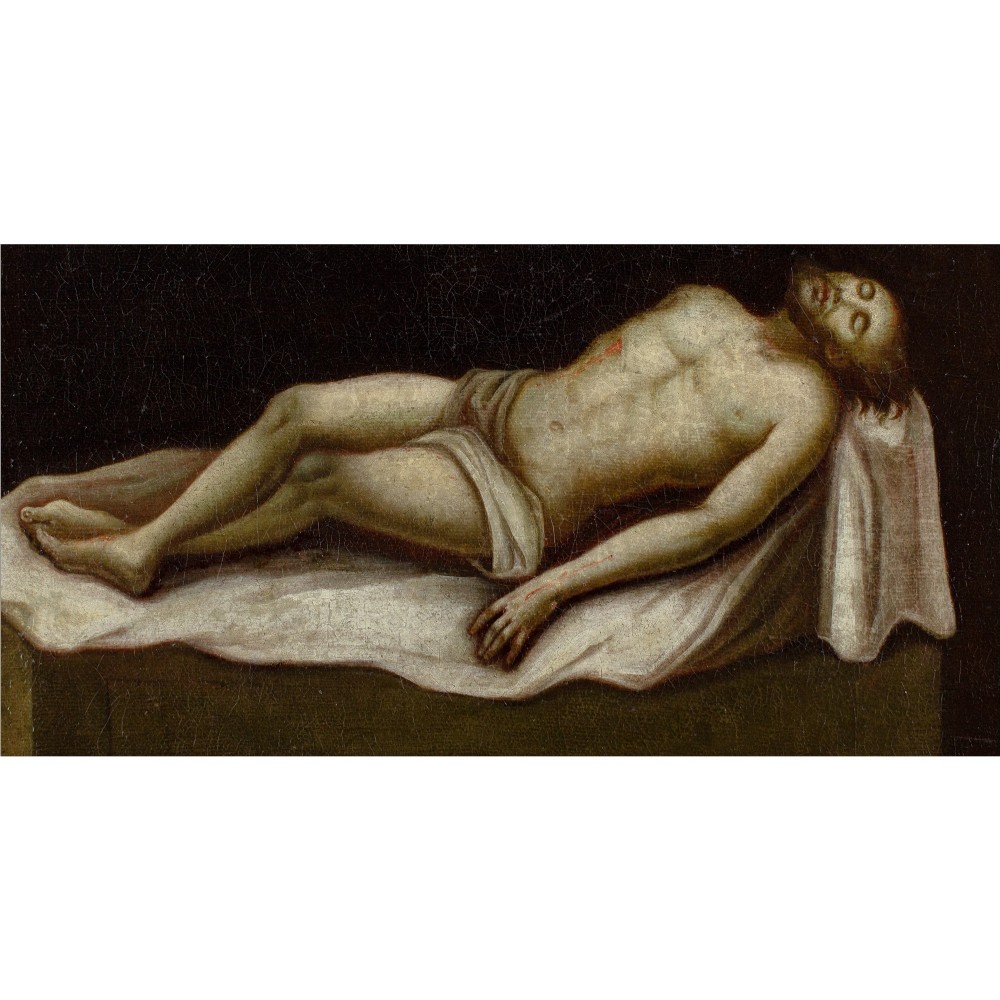
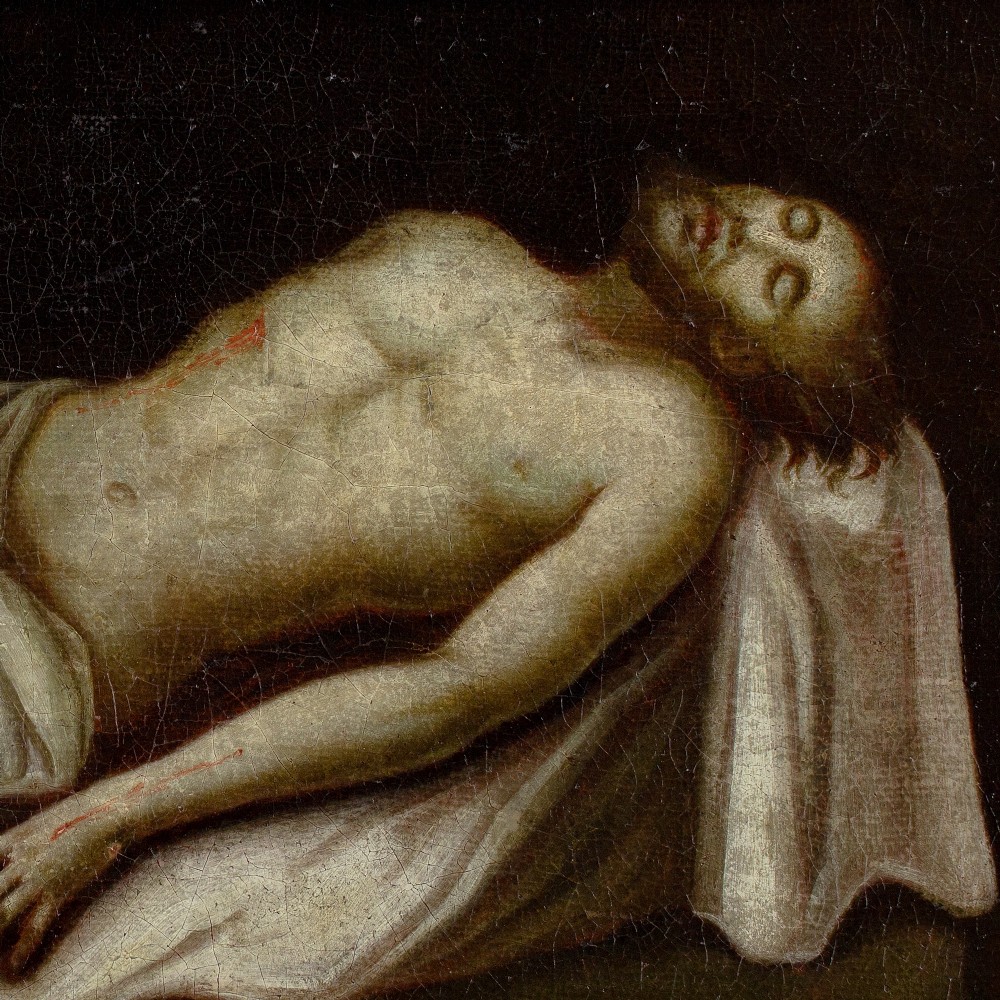
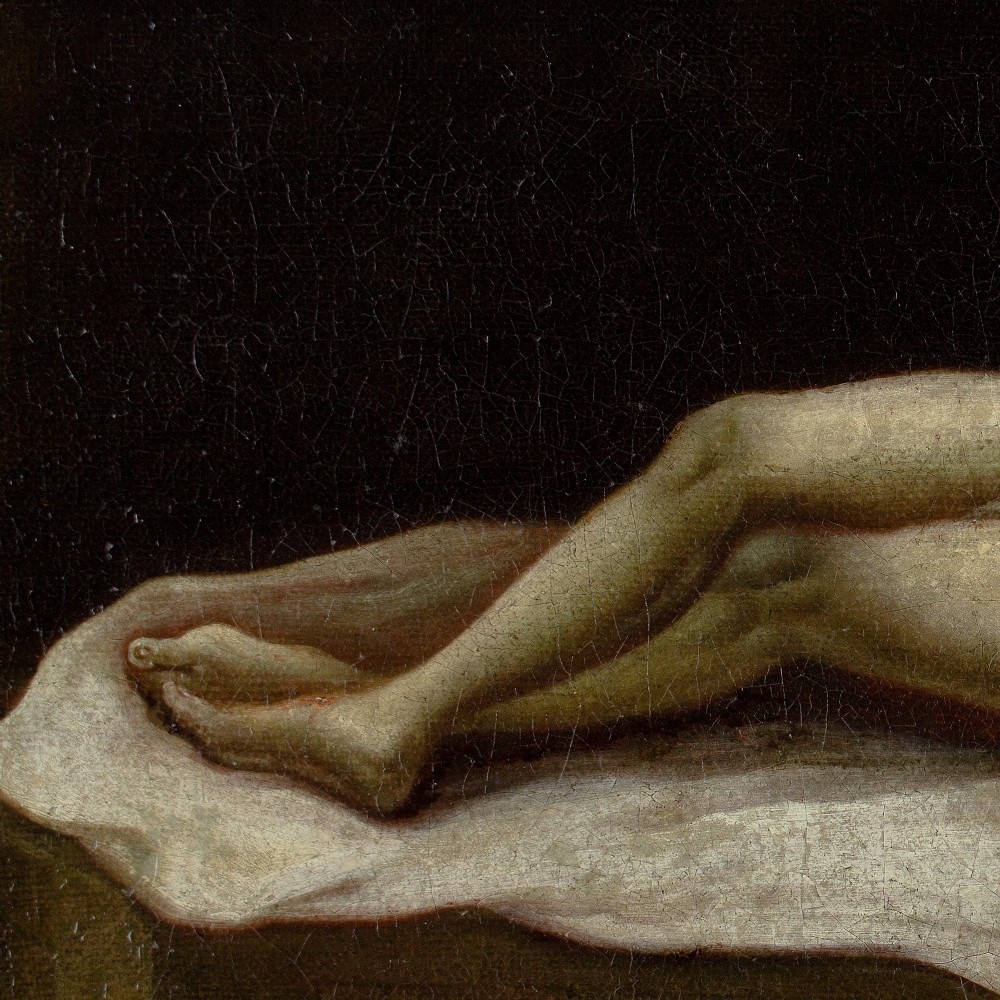
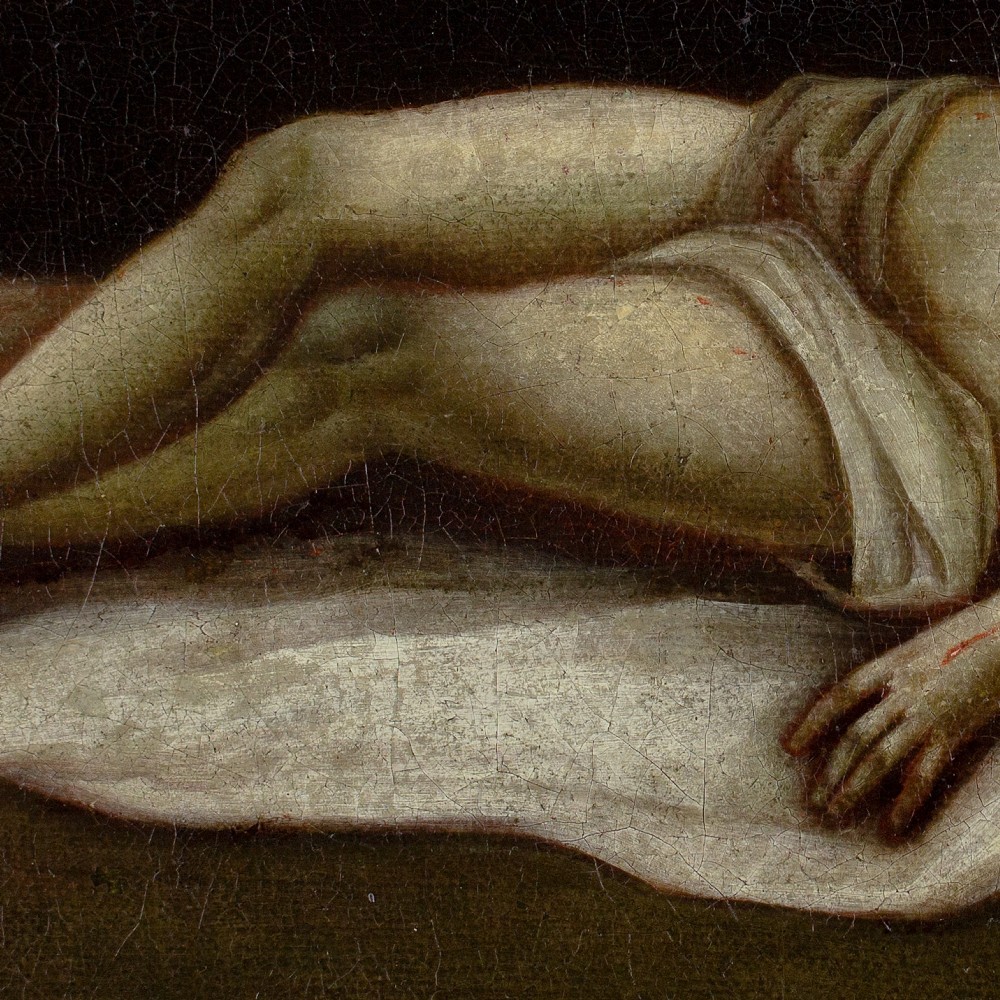
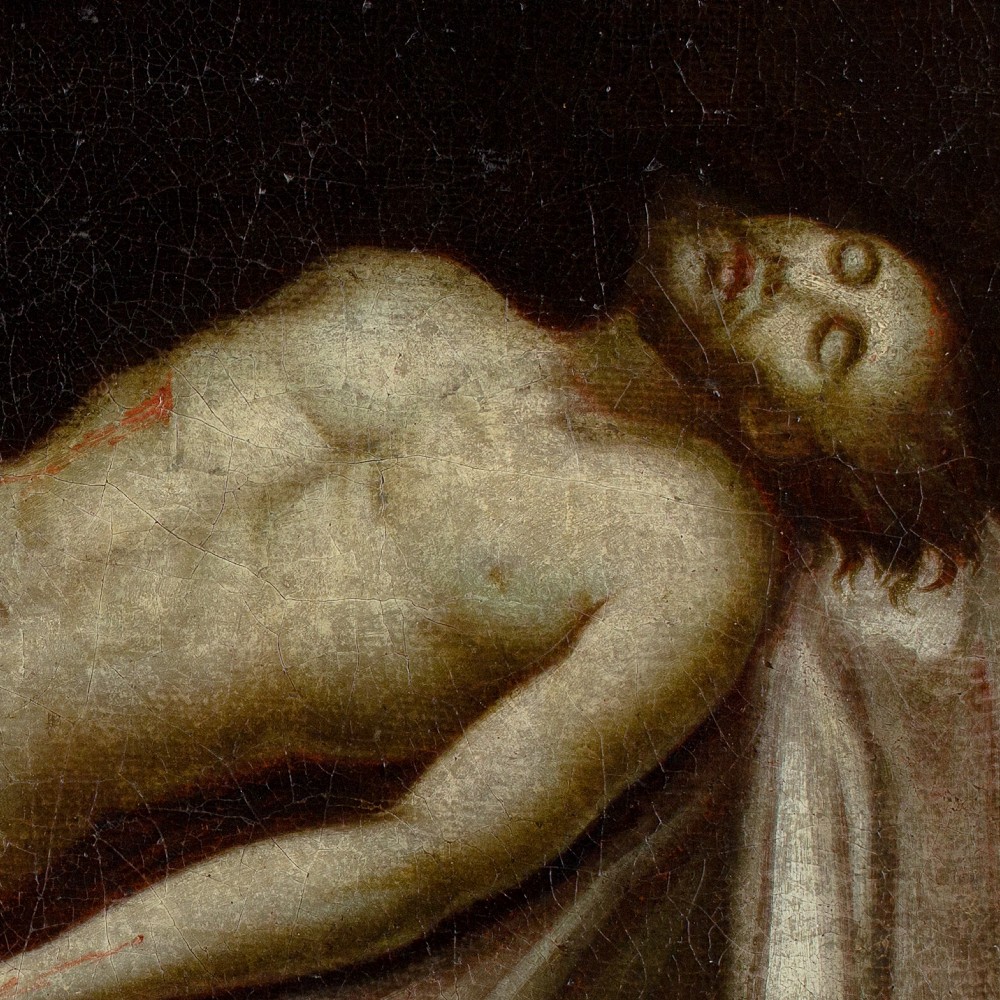
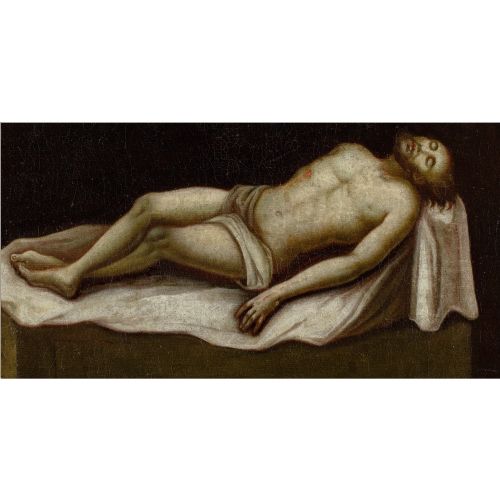
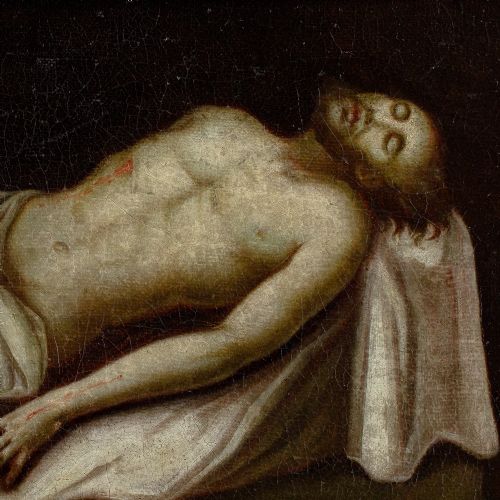
In ours, which appears to borrow from 17th-century Spanish models, Christ’s greenish-grey flesh is turned towards the viewer with his left arm hanging limp. His eyes are closed, head tilted back - almost hovering above the slab.
In this moment, between the crucifixion and the resurrection, we’re reminded of Christ’s mortality on Earth, and indeed our own. It’s a ‘memento mori’ and a portrayal of suffering. However, within every depiction of Christ in the tomb, the common denominator is hope. For even in one’s darkest hour, each of us can rise again.
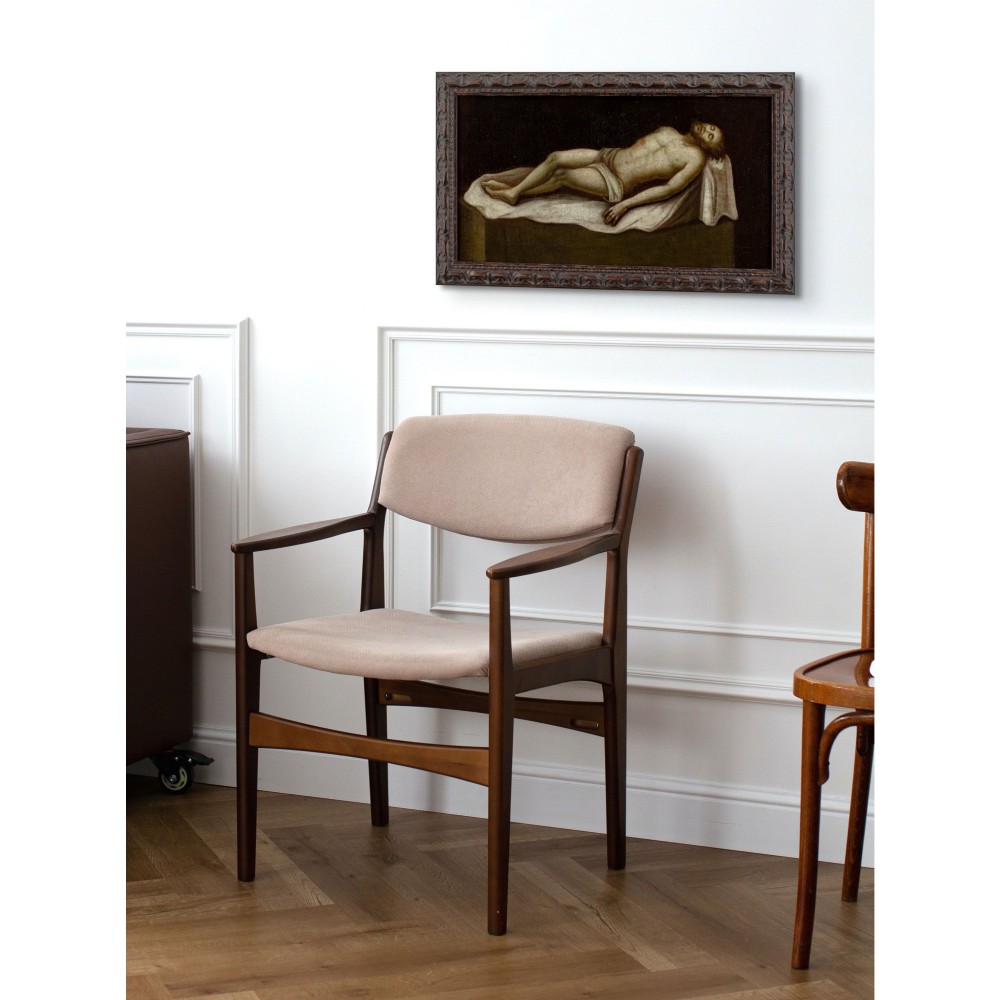
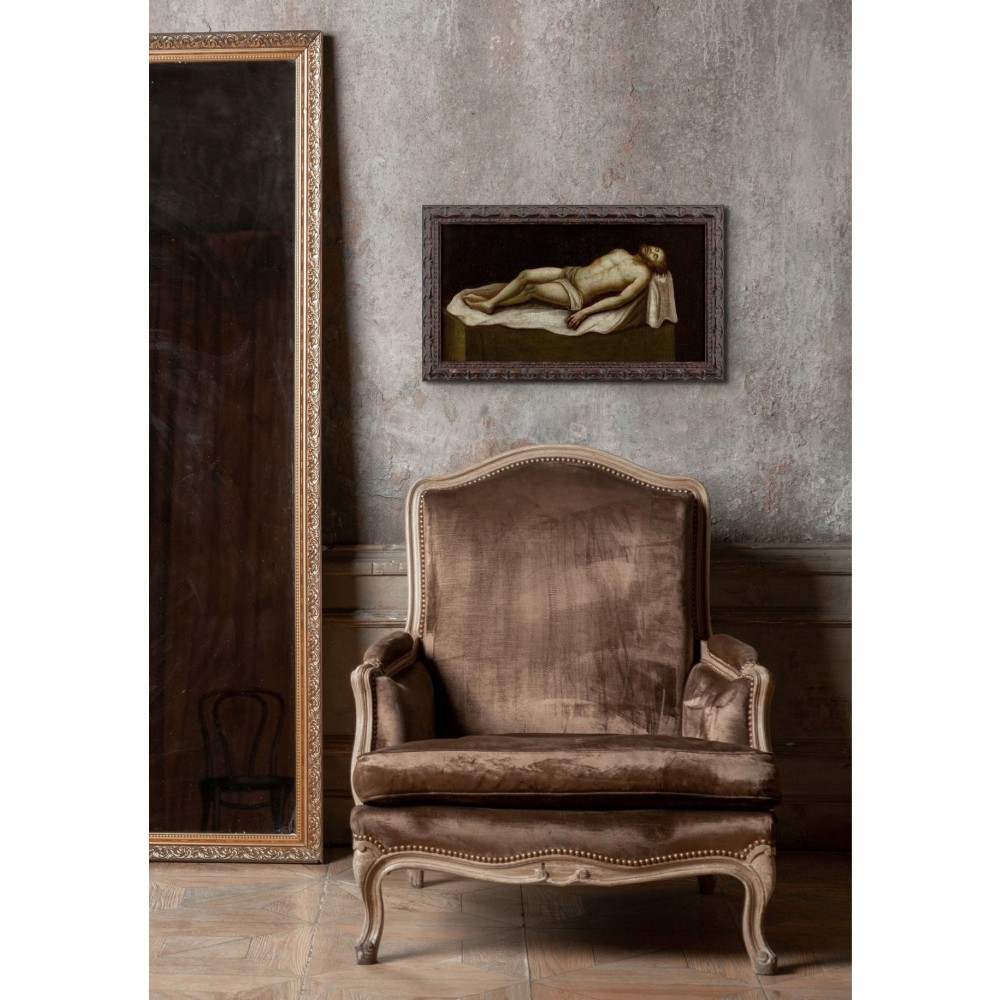
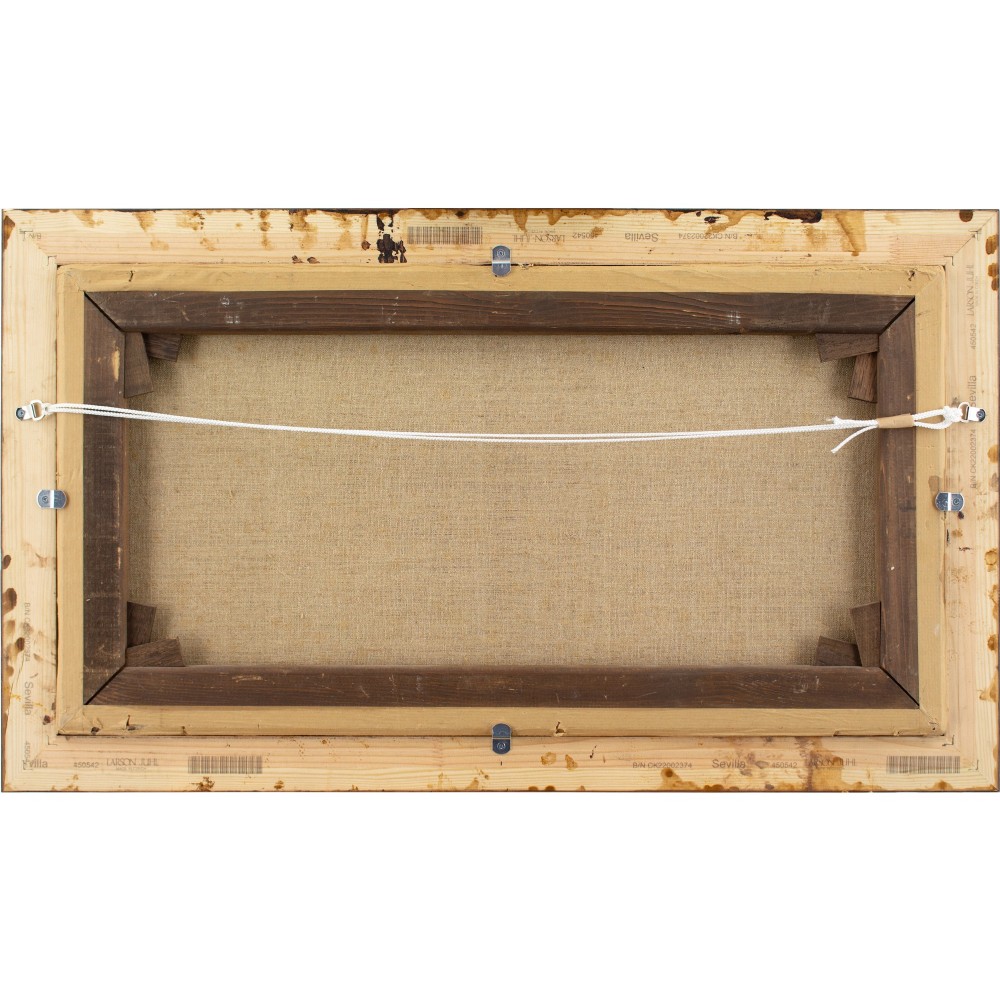
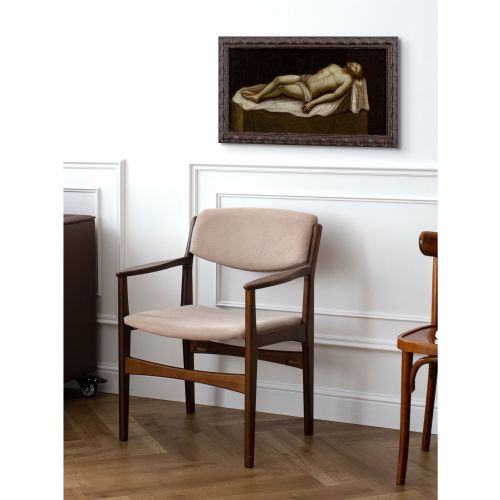
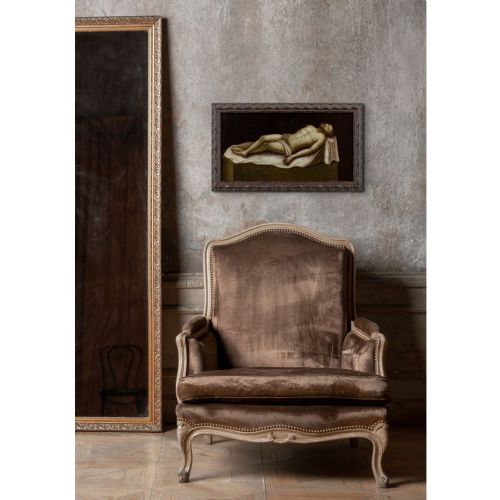
Held in a contemporary frame.
Medium: Oil on canvas
Overall size: 28½” x 16½” / 72cm x 42cm
Year of creation: c. 1725
Provenance: Private collection, Germany.
Condition: Cleaned. Revarnished. Canvas relined. Craquelure throughout. The paint layer is stable. Later stretcher. Frame in excellent condition.
Our reference: BRV2140
Brave Fine Art has dated this piece to the 18th Century.
Exquisite antique paintings that capture the imagination.
You can view the stock and full dealer information on the Brave Fine Art Profile Page
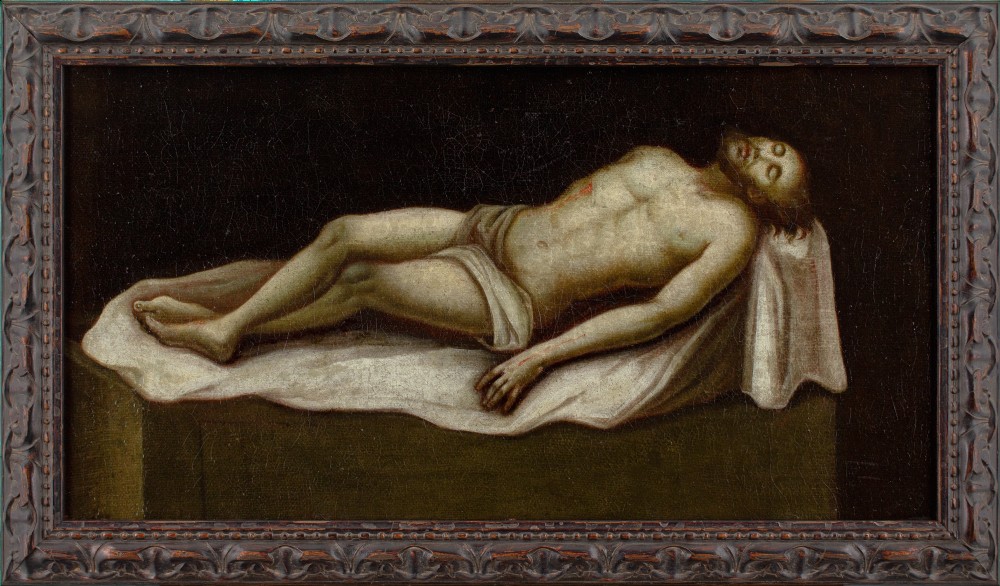
Early 18th-century Spanish School, Christ in the Tomb