3,581  PAGES BROWSED TODAY PAGES TODAY 0 ANTIQUES UPLOADED TODAYNEW ARRIVALS
LATEST STOCK
Sort Order
Items Per Page
Browse Categories
Sort order
Relevant Links
Items per page
ID #SA1144360
FOR SALE
£1,250
Email
Save
Rare Japanese Iron Tsuba Guard - Polearm of Guan Yu. Dragon. Signed. Edo Period. Circa 1750.
Dragoncharger Antiques
for sale €1,463     $1,588
£1,250

Dragoncharger Antiques

Sellingantiques Verified Since Aug 2024
View Dealers Stock Page
  • About Us
    Specialising in early japanese cloisonne, edo enamel artisan period.
Id #SA1144360
PDF SHARE
SAVE

Rare Japanese Iron Tsuba Guard - Polearm of Guan Yu. Dragon. Signed. Edo Period. Circa 1750.

18th century
Description

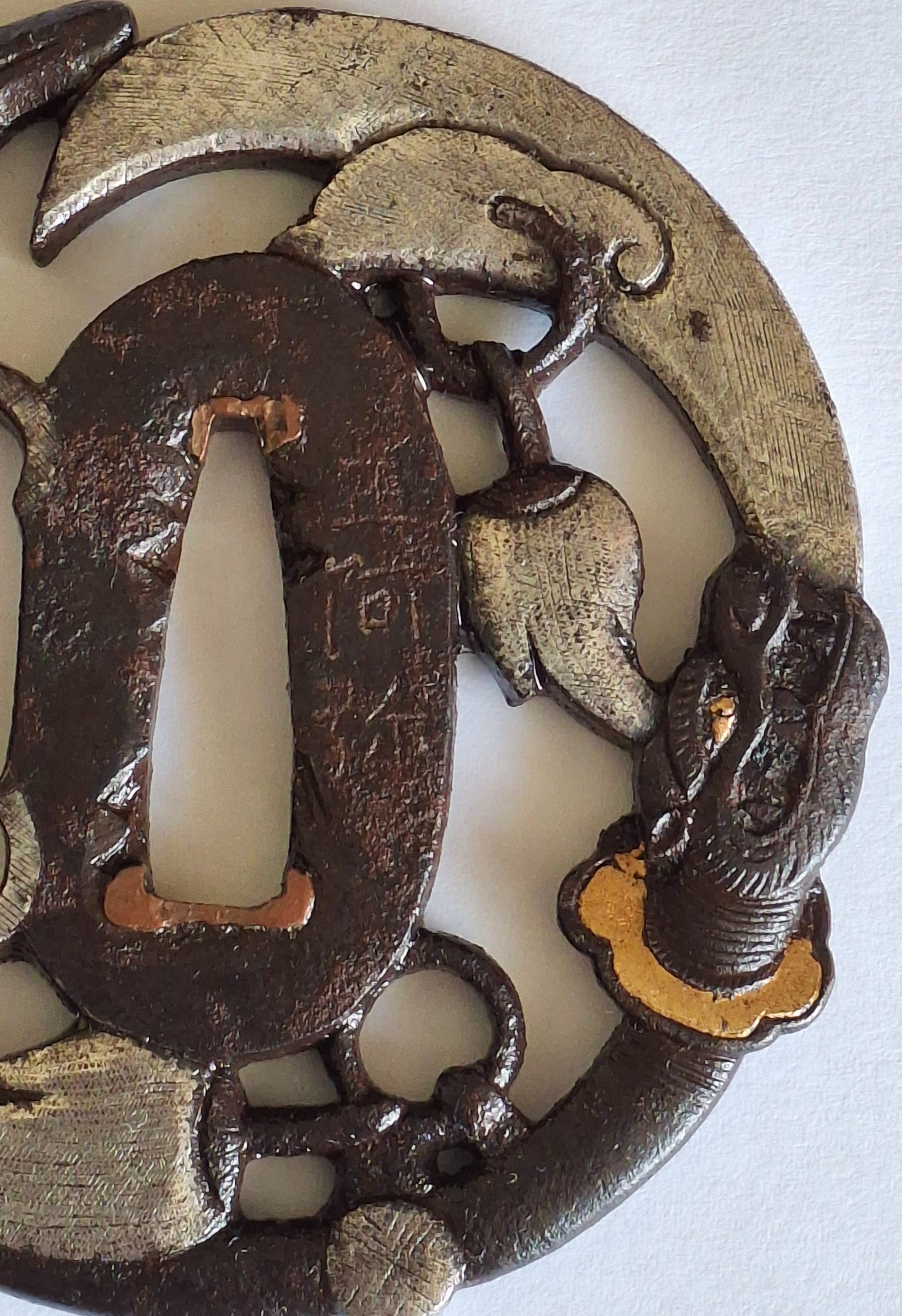
Rare Japanese Iron Tsuba Guard - Polearm of Guan Yu*. Signed Bushu ju Masafusa. Circa 1750. Mid Edo Period. Museum number 31G. Excellent craftsmanship.

Masafusa (of the Bushu School), a notable Japanese swordsmith known for his fine and creative workmanship. Specifically, "Bushu" is a Japanese province. A gold and silver inlaid iron tsuba with dragon spear. Superb.
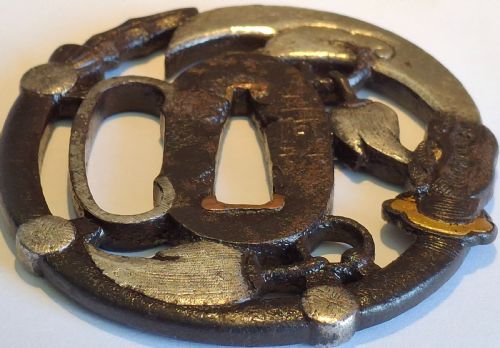
Condition: Unrestored original and authentic condition, with very slight surface pitting / rusting. (This particular tsuba seemingly undocumented).

Dimensions: (very slight oval form).

Height = 6.7m.

Width = 6.5cm.
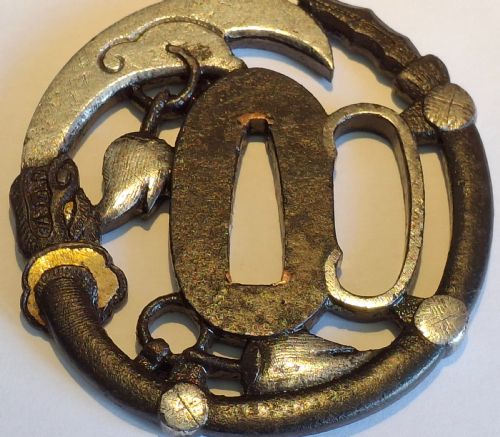
Thickness = 3-4mm.

*Remembered as a culture hero in Asian culture and is still worshipped by many people of Asian descent, and other countries today. In religious devotion, he is reverentially called the "Emperor Guan" (Guan Dì) or "Lord Guan" (Guan Gong). Guan Yu's most famous weapon is the Green Dragon Crescent Blade, also known as the Green Dragon Blade or the Azure Dragon Axe. It's a type of traditional weapon called a guandao, which is essentially a long-pole (Polearm) version of a dao (a wide, curved sword).
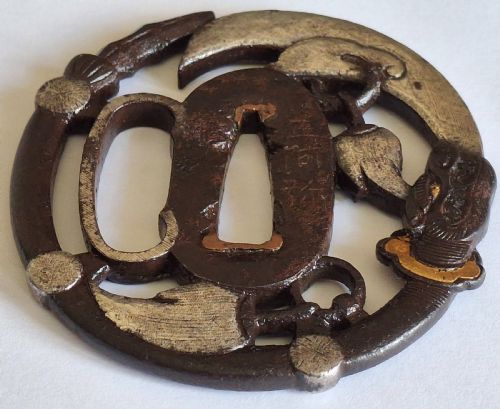
A tsuba (Japanese sword guard) depicting the polearm of Guan Yu typically features the Green Dragon Crescent Blade (guandao), a legendary weapon associated with the Chinese general from The Romance of the Three Kingdoms. These tsuba often showcase high-quality iron craftsmanship from the Edo period (circa 1750), depicting the iconic curved blade or Guan Yu himself. Historical Context: While Guan Yu is a Chinese figure, Japanese artists during the Edo period (1603-1868) produced skilled iron tsuba depicting Chinese legends, including the hero Guan Yu preparing to throw a spear or wielding his signature blade.

Physical Dimensions
Height
6.7cm (2.64")
Width
6.5cm (2.56")
Depth
3cm (1.18")
Declaration

Dragoncharger Antiques has dated this Japanese Iron Tsuba Guard to the 1750s.

Reference Numbers
Sellingantiques Reference
SA1144360
Dealers Internal Reference
D:00645
Description
Rare Japanese Iron Tsuba Guard - Polearm of Guan Yu*. Signed Bushu ju Masafusa. Circa 1750. Mid Edo Period. Museum number 31G. Excellent craftsmanship.
Masafusa (of the Bushu School), a notable Japanese swordsmith known for his fine and creative workmanship.
Dragoncharger Antiques

Specifically, "Bushu" is a Japanese province. A gold and silver inlaid iron tsuba with dragon spear. Superb.

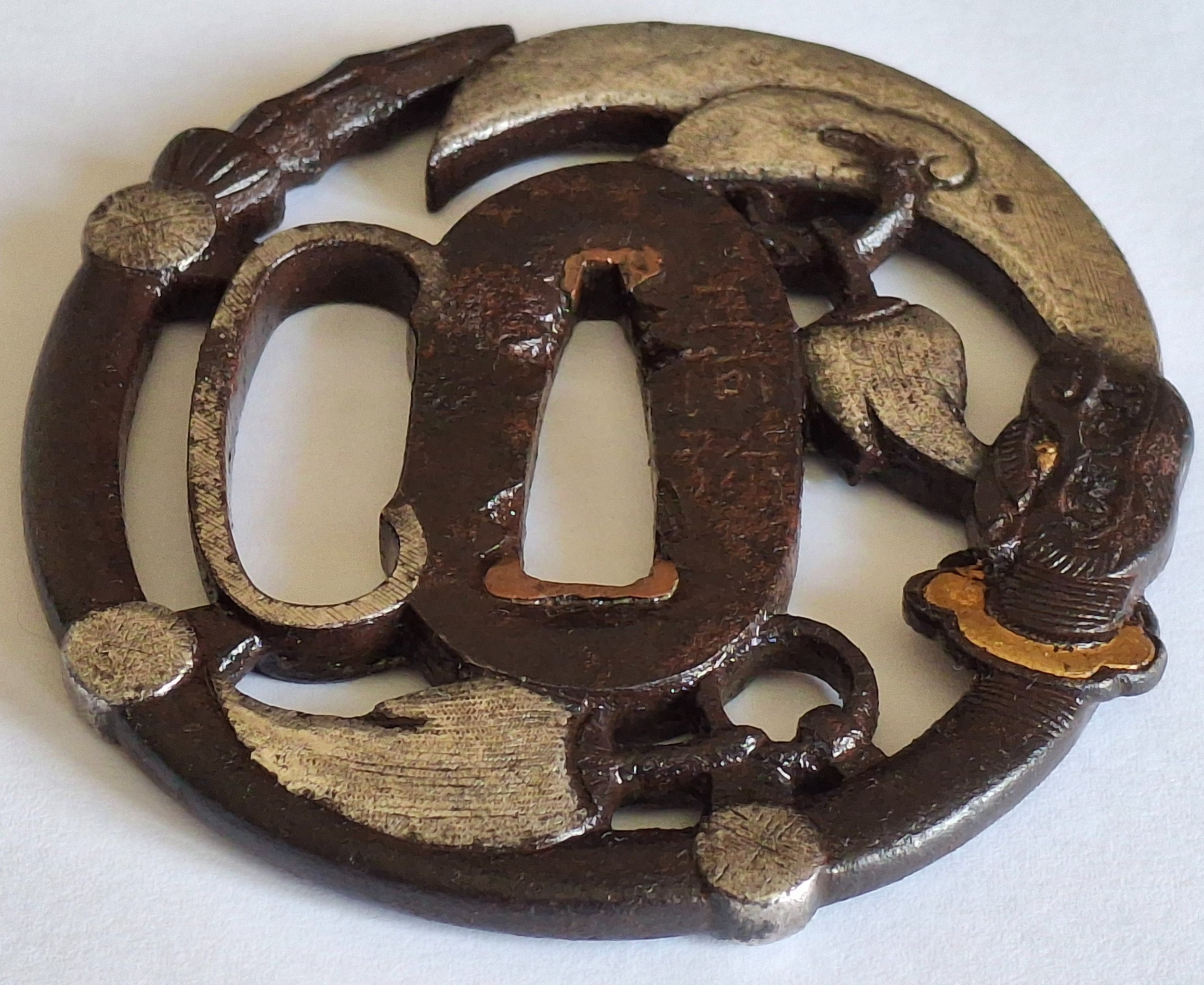
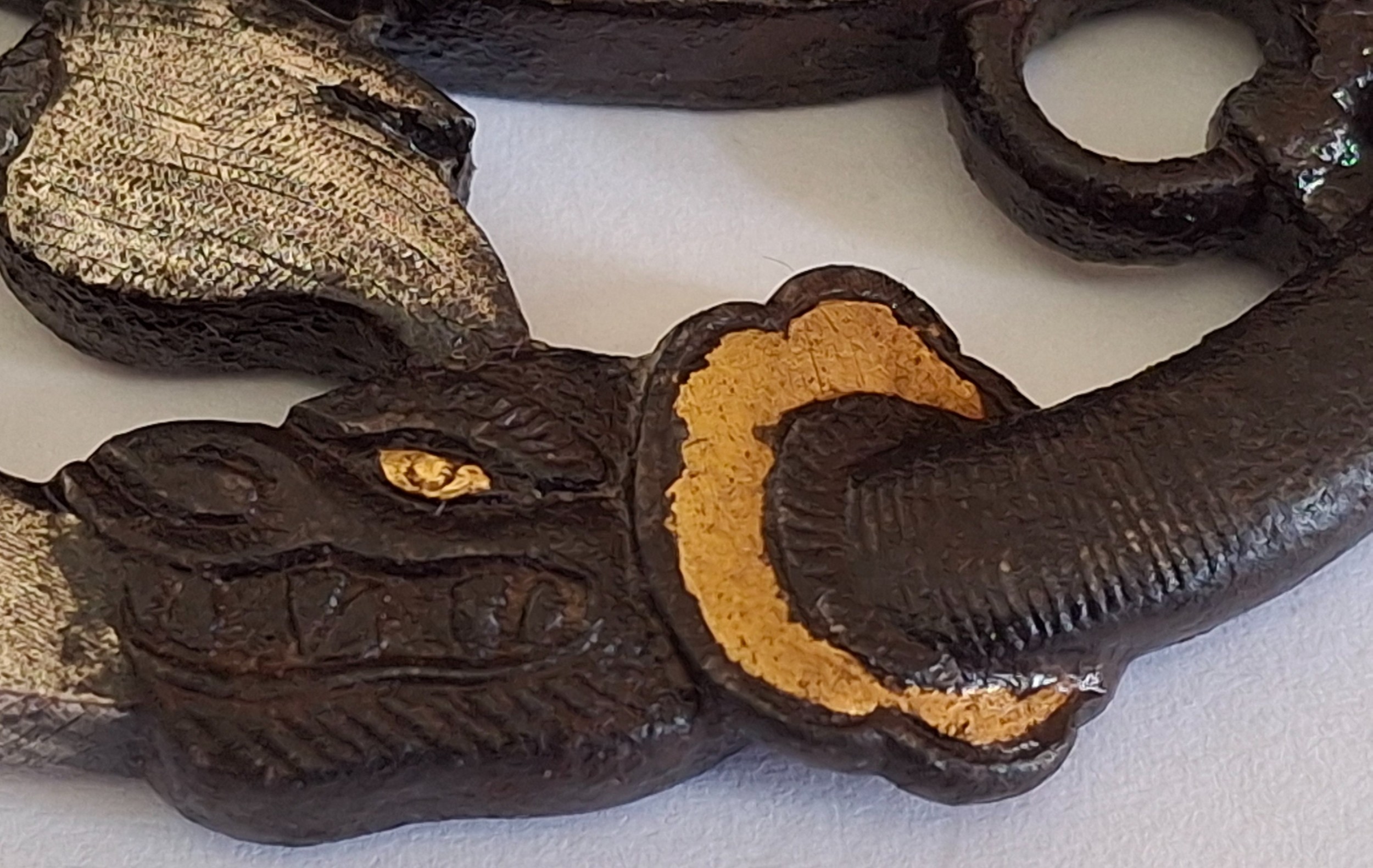
fig 1. A circular dark iron Japanese sword guard featuring openwork carving of a dragon head holding a curved blade with gold and silver inlay.
fig 1. Rare Japanese Iron Tsuba Guard - Polearm of Guan Yu. Dragon. Signed. Edo Period. Circa 1750.

Condition: Unrestored original and authentic condition, with very slight surface pitting / rusting. (This particular tsuba seemingly undocumented).

Dimensions: (very slight oval form).

Height = 6.7m.

Width = 6.5cm.

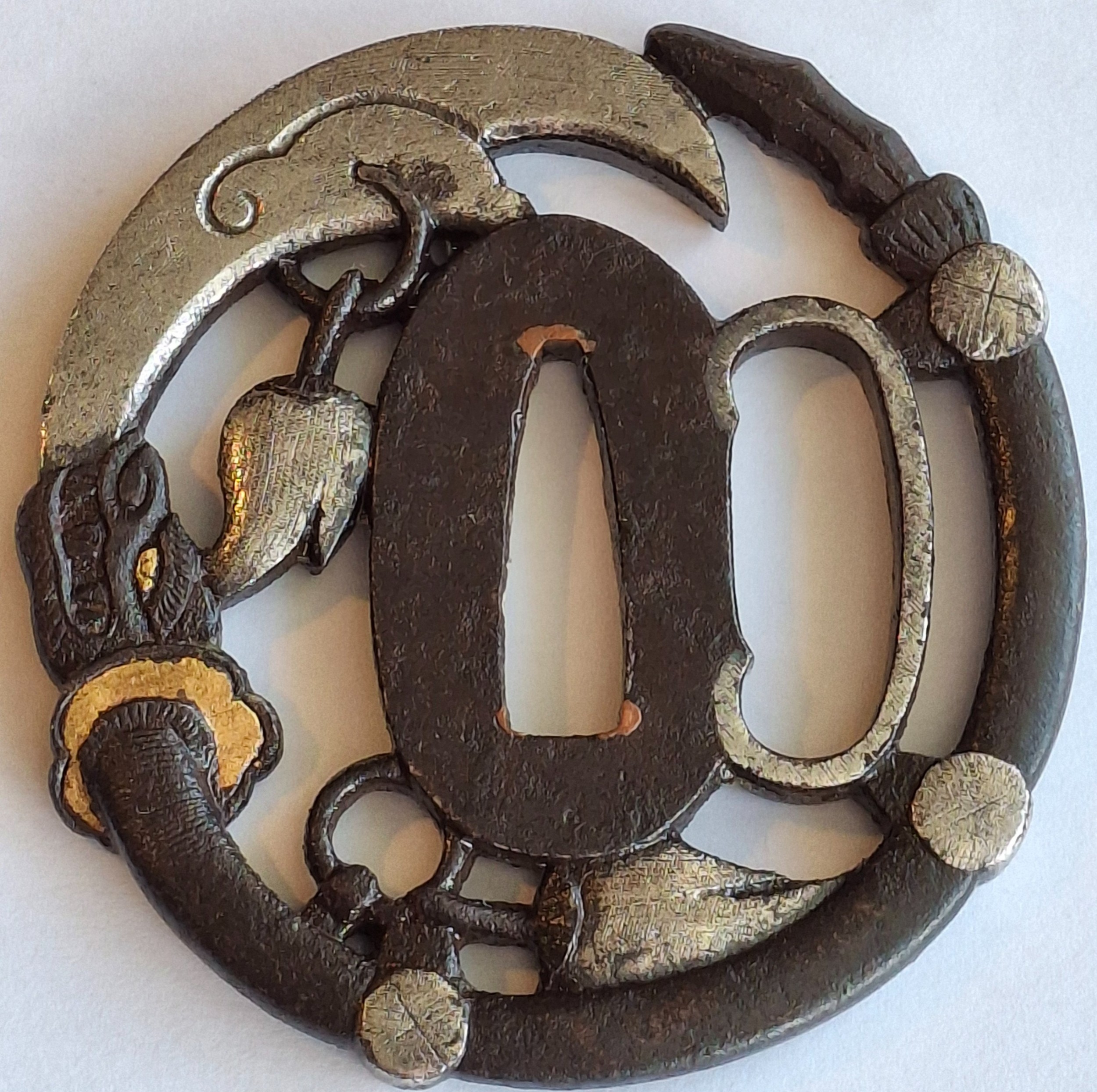
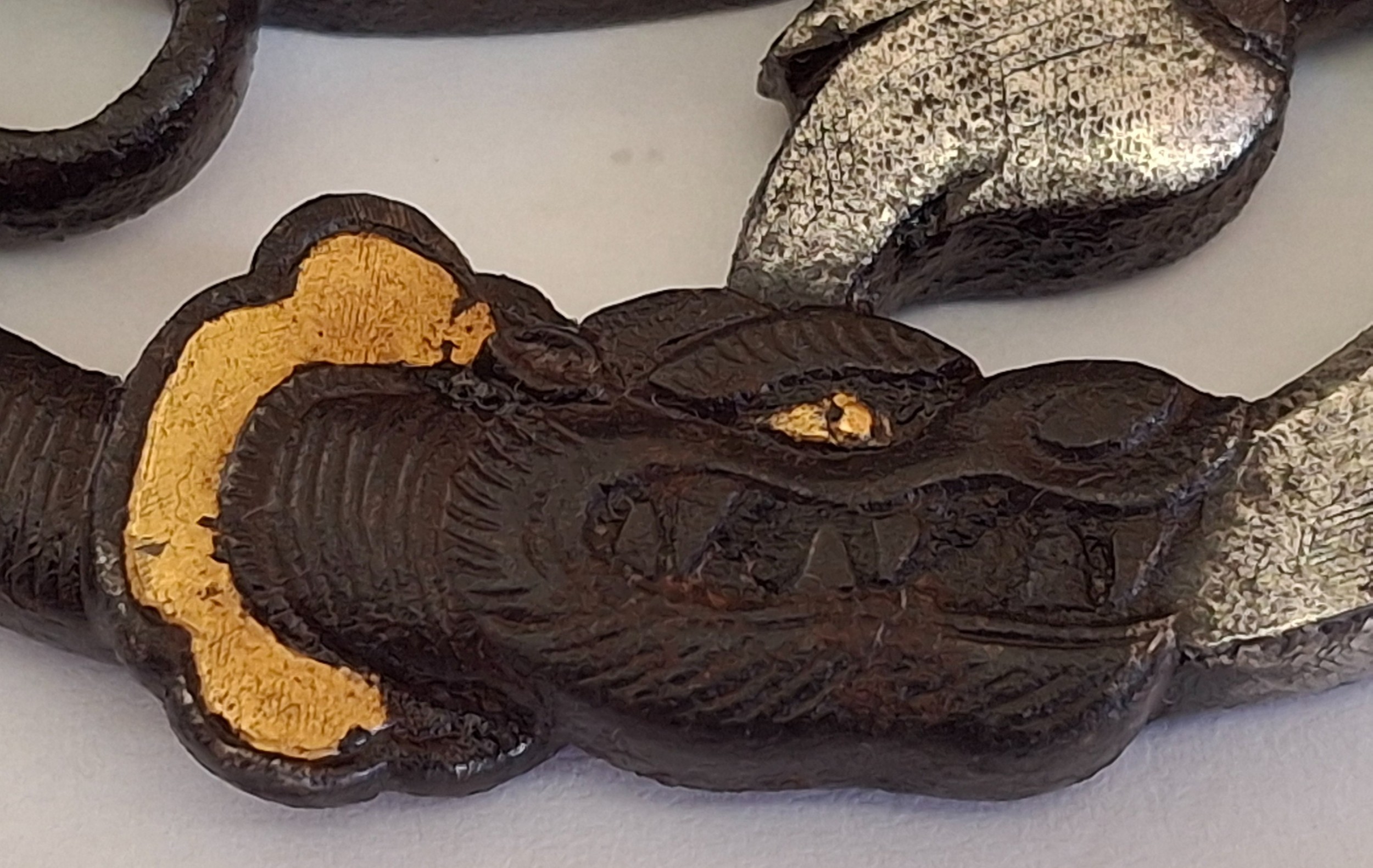
fig 2. A circular dark iron Japanese sword guard featuring openwork carving of a dragon head holding a curved blade with gold and silver inlay.
fig 2. Rare Japanese Iron Tsuba Guard - Polearm of Guan Yu. Dragon. Signed. Edo Period. Circa 1750.

Thickness = 3-4mm.

Remembered as a culture hero in Asian culture and is still worshipped by many people of Asian descent, and other countries today. In religious devotion, he is reverentially called the "Emperor Guan" (Guan Dì) or "Lord Guan" (Guan Gong). Guan Yu's most famous weapon is the Green Dragon Crescent Blade, also known as the Green Dragon Blade or the Azure Dragon Axe. It's a type of traditional weapon called a guandao, which is essentially a long-pole (Polearm) version of a dao (a wide, curved sword).

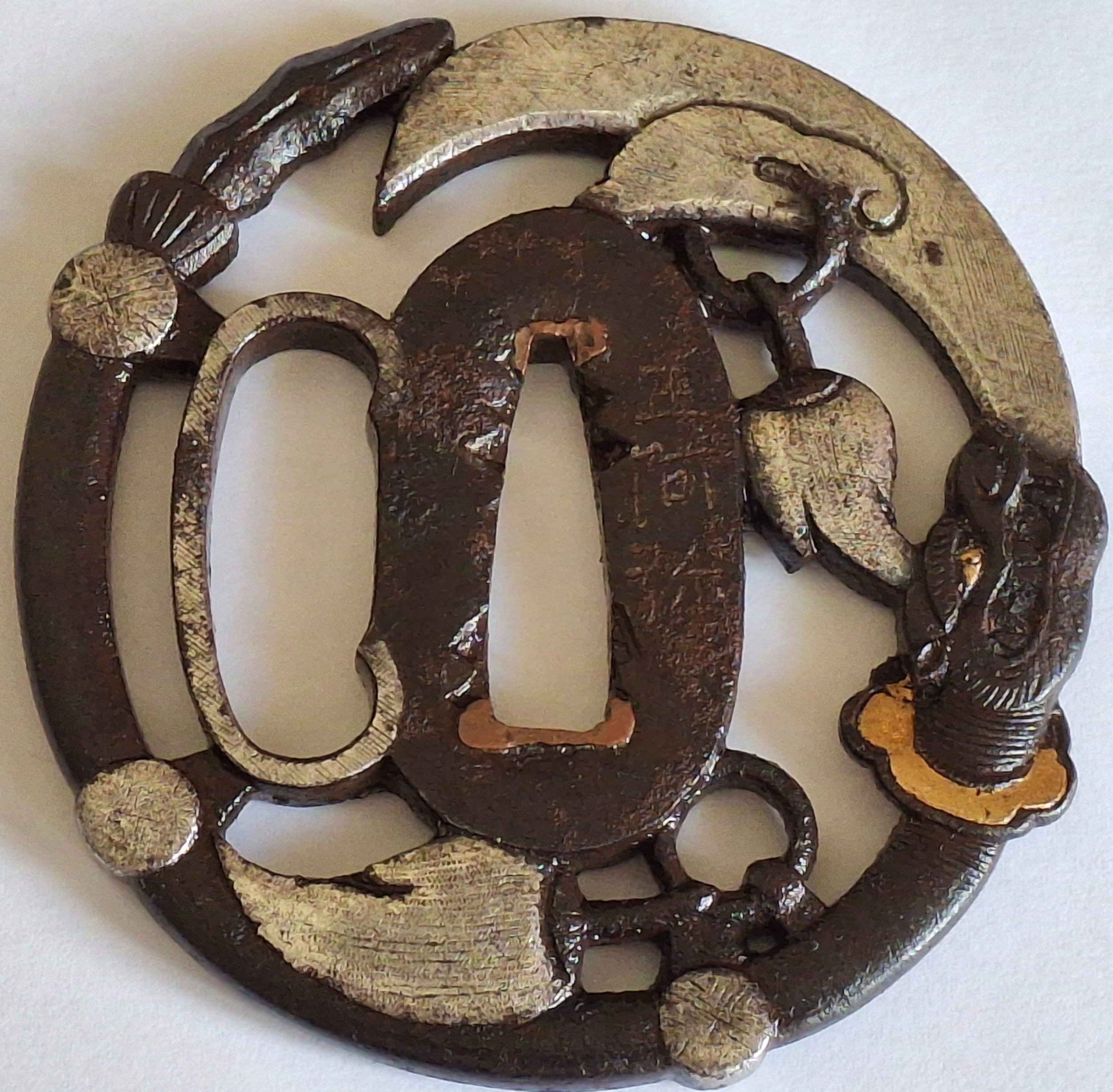
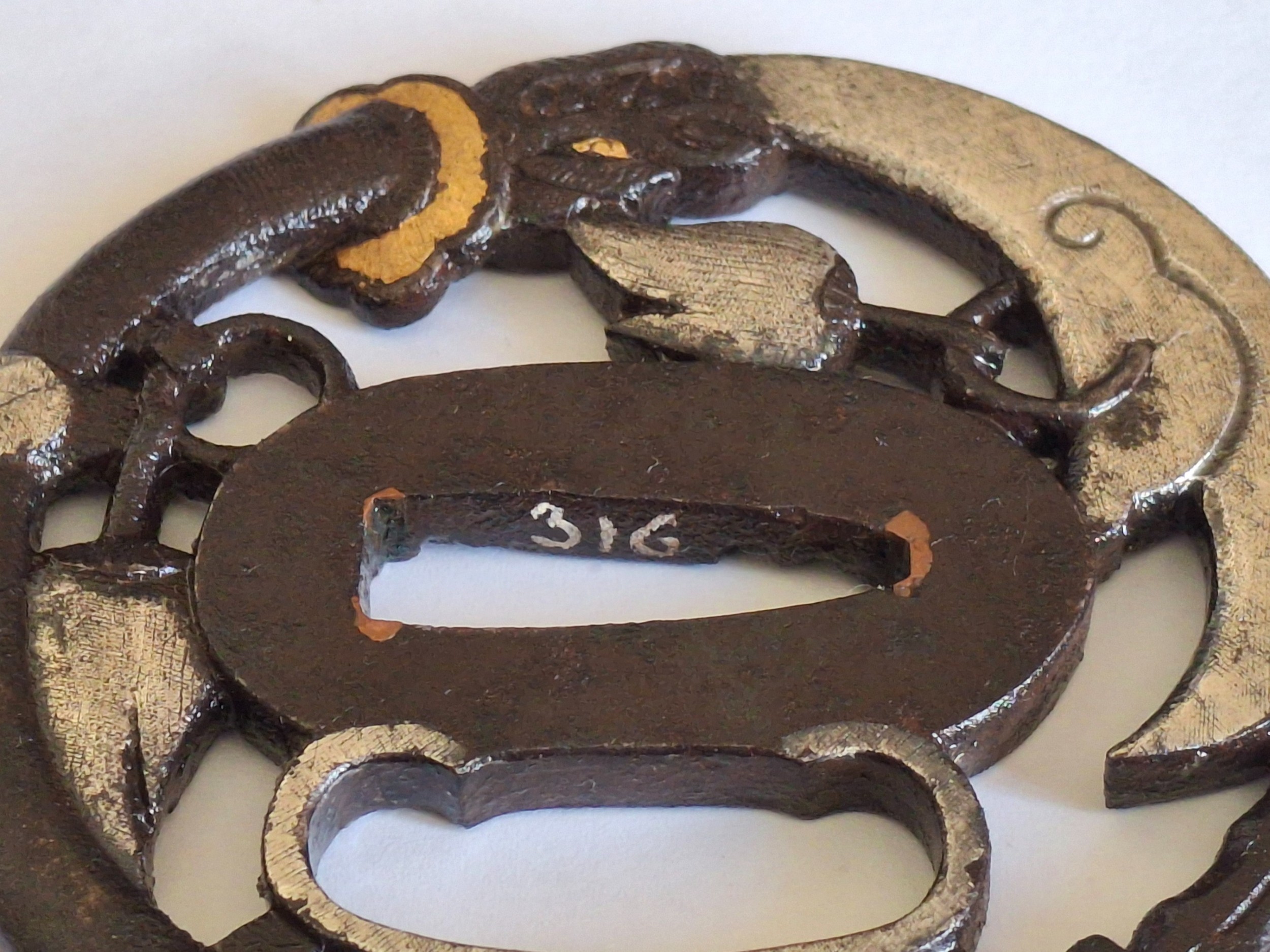
fig 3. A circular dark iron Japanese sword guard featuring openwork carving of a dragon head holding a curved blade with gold and silver inlay.
fig 3. Rare Japanese Iron Tsuba Guard - Polearm of Guan Yu. Dragon. Signed. Edo Period. Circa 1750.

A tsuba (Japanese sword guard) depicting the polearm of Guan Yu typically features the Green Dragon Crescent Blade (guandao), a legendary weapon associated with the Chinese general from The Romance of the Three Kingdoms. These tsuba often showcase high-quality iron craftsmanship from the Edo period (circa 1750), depicting the iconic curved blade or Guan Yu himself. Historical Context: While Guan Yu is a Chinese figure, Japanese artists during the Edo period (1603-1868) produced skilled iron tsuba depicting Chinese legends, including the hero Guan Yu preparing to throw a spear or wielding his signature blade.

Height
6.7cm (2.64")
Width
6.5cm (2.56")
Depth
3cm (1.18")
Date of Manufacture

Dragoncharger Antiques has dated this Japanese Iron Tsuba Guard to the 1750s.

Reference Numbers
Sellingantiques Ref
SA1144360
Dealers Internal Ref
D:00645
Dragoncharger Antiques
Sellingantiques verified Since Aug 2024

Specialising in early japanese cloisonne, edo enamel artisan period.

Dealer Profile

You can view the stock and full dealer information on the Dragoncharger Antiques Profile Page
PDF SHARE
SAVE
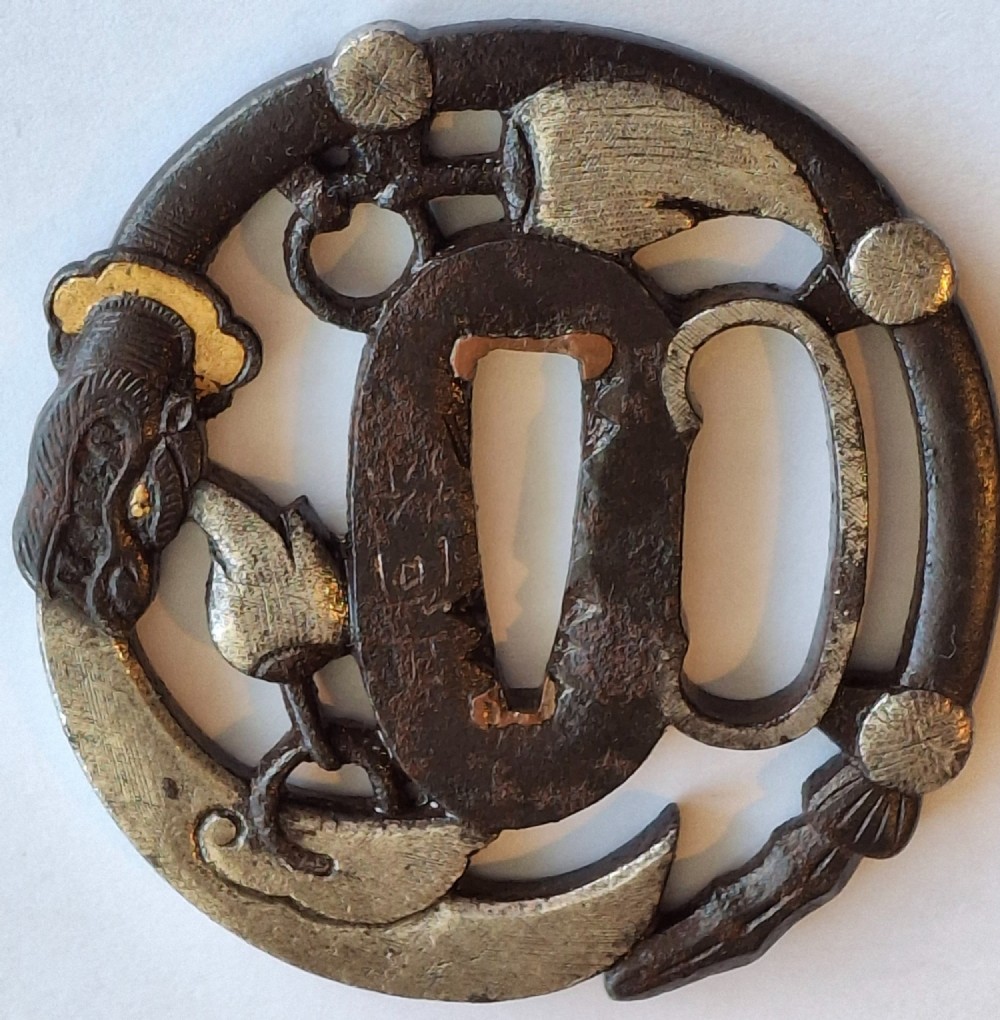
A circular dark iron Japanese sword guard featuring openwork carving of a dragon head holding a curved blade with gold and silver inlay.
1 / 11
Archive I A circular dark iron Japanese sword guard featuring openwork carving of a dragon head holding a curved blade with gold and silver inlay.

Rare Japanese Iron Tsuba Guard - Polearm of Guan Yu. Dragon. Signed. Edo Period. Circa 1750.
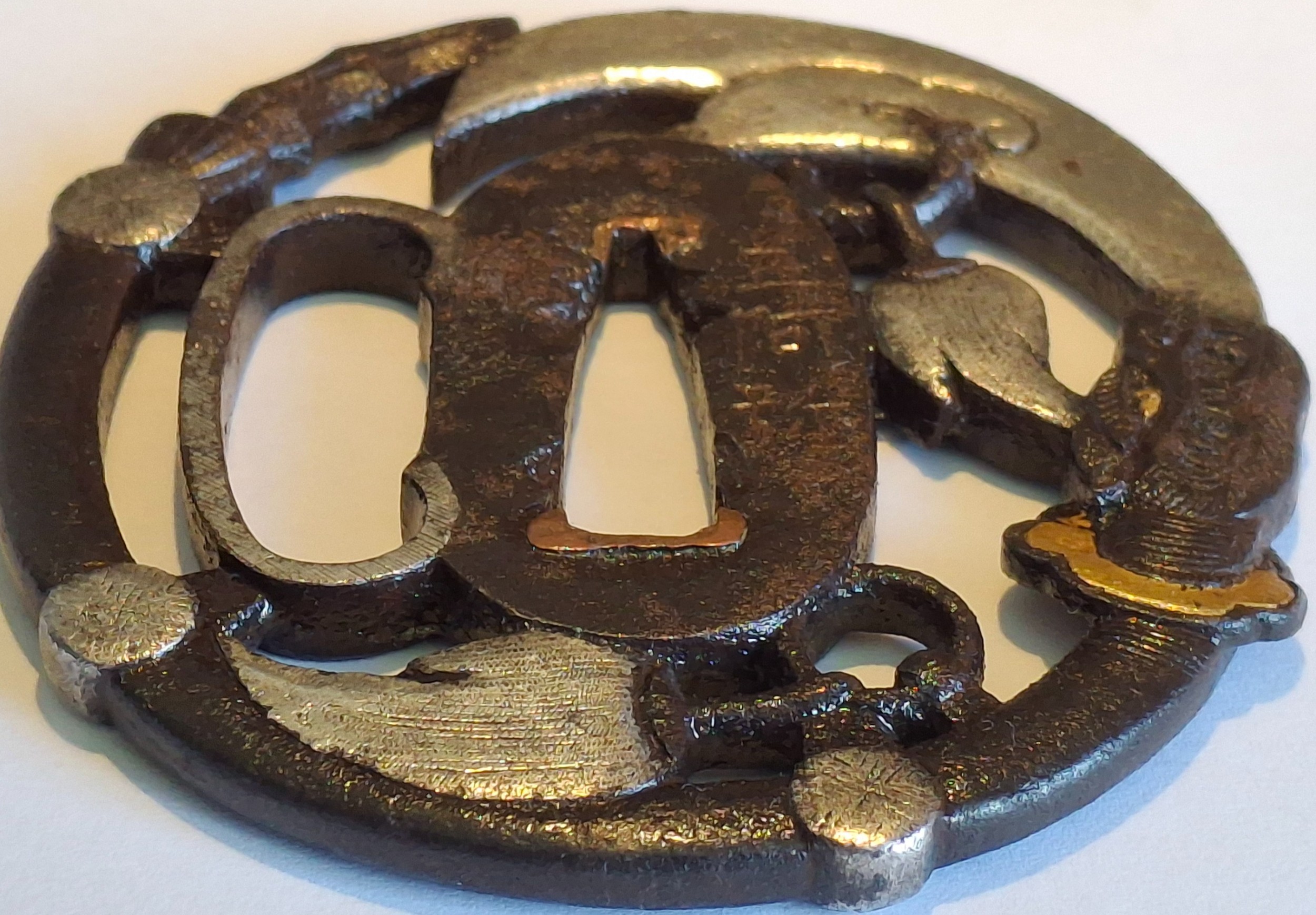
Archive II A circular dark iron Japanese sword guard featuring openwork carving of a dragon head holding a curved blade with gold and silver inlay. View II
Archive III A circular dark iron Japanese sword guard featuring openwork carving of a dragon head holding a curved blade with gold and silver inlay. View III
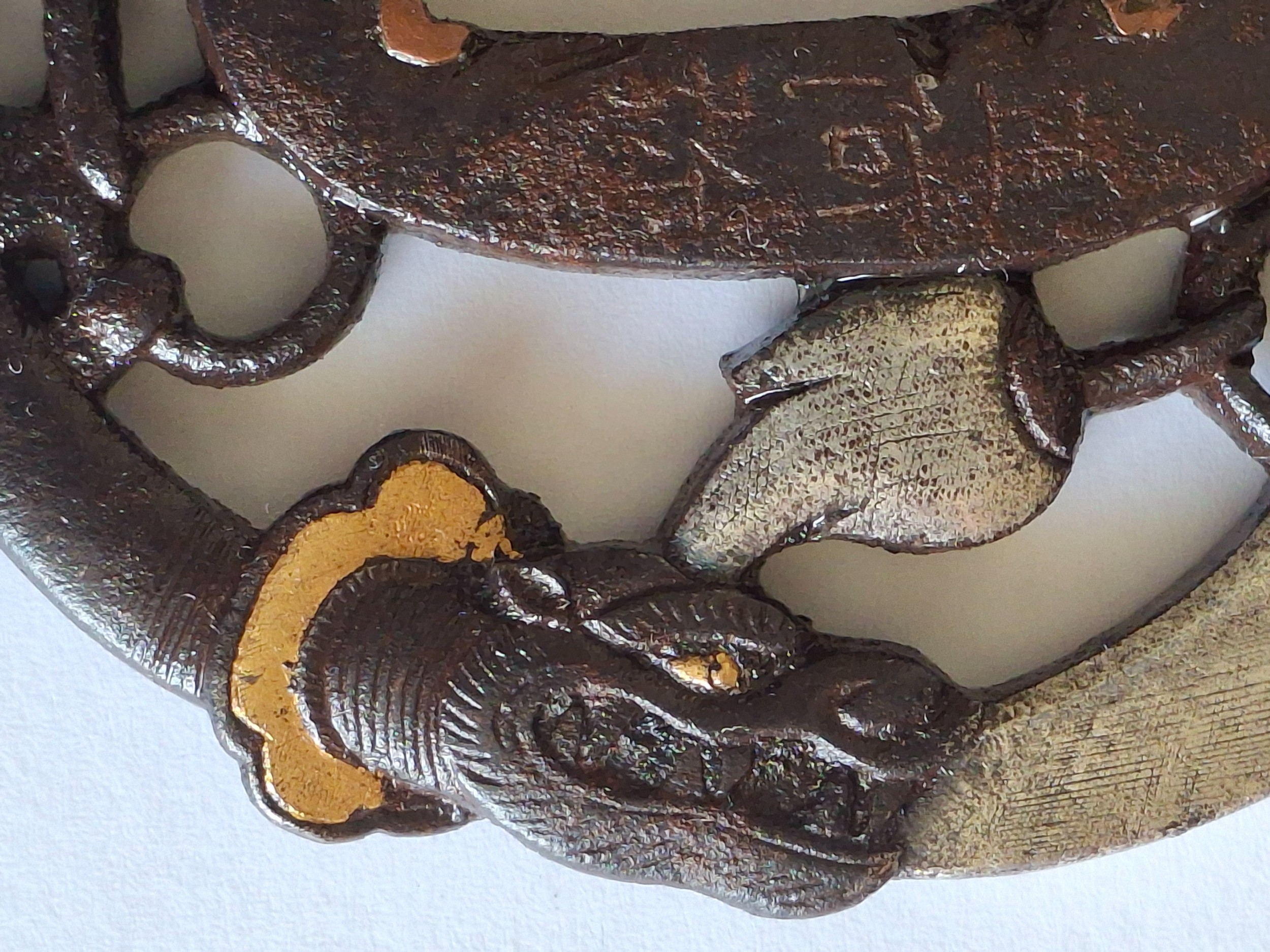
Archive IV A circular dark iron Japanese sword guard featuring openwork carving of a dragon head holding a curved blade with gold and silver inlay. View IV
Archive V A circular dark iron Japanese sword guard featuring openwork carving of a dragon head holding a curved blade with gold and silver inlay. View V
Archive VI A circular dark iron Japanese sword guard featuring openwork carving of a dragon head holding a curved blade with gold and silver inlay. View VI
Archive VII A circular dark iron Japanese sword guard featuring openwork carving of a dragon head holding a curved blade with gold and silver inlay. View VII
Archive VIII A circular dark iron Japanese sword guard featuring openwork carving of a dragon head holding a curved blade with gold and silver inlay. View VIII
Archive IX A circular dark iron Japanese sword guard featuring openwork carving of a dragon head holding a curved blade with gold and silver inlay. View IX
Archive X A circular dark iron Japanese sword guard featuring openwork carving of a dragon head holding a curved blade with gold and silver inlay. View X
Archive XI A circular dark iron Japanese sword guard featuring openwork carving of a dragon head holding a curved blade with gold and silver inlay. View XI
Enlarged Archival View
Telephone 07974 144321
Location
Bristol
United Kingdom
Verified Since Aug 2024
Items For Sale 150
Items Sold 17
Dragoncharger Antiques
Verified Since Aug 2024
View Dealer Info
Location: Bristol, United Kingdom
Verified
Aug 2024
For Sale
150
Sold
17
A circular dark iron Japanese sword guard featuring openwork carving of a dragon head holding a curved blade with gold and silver inlay.
Rare Japanese Iron Tsuba Guard - Polearm of Guan Yu. Dragon. Signed. Edo Period. Circa 1750.
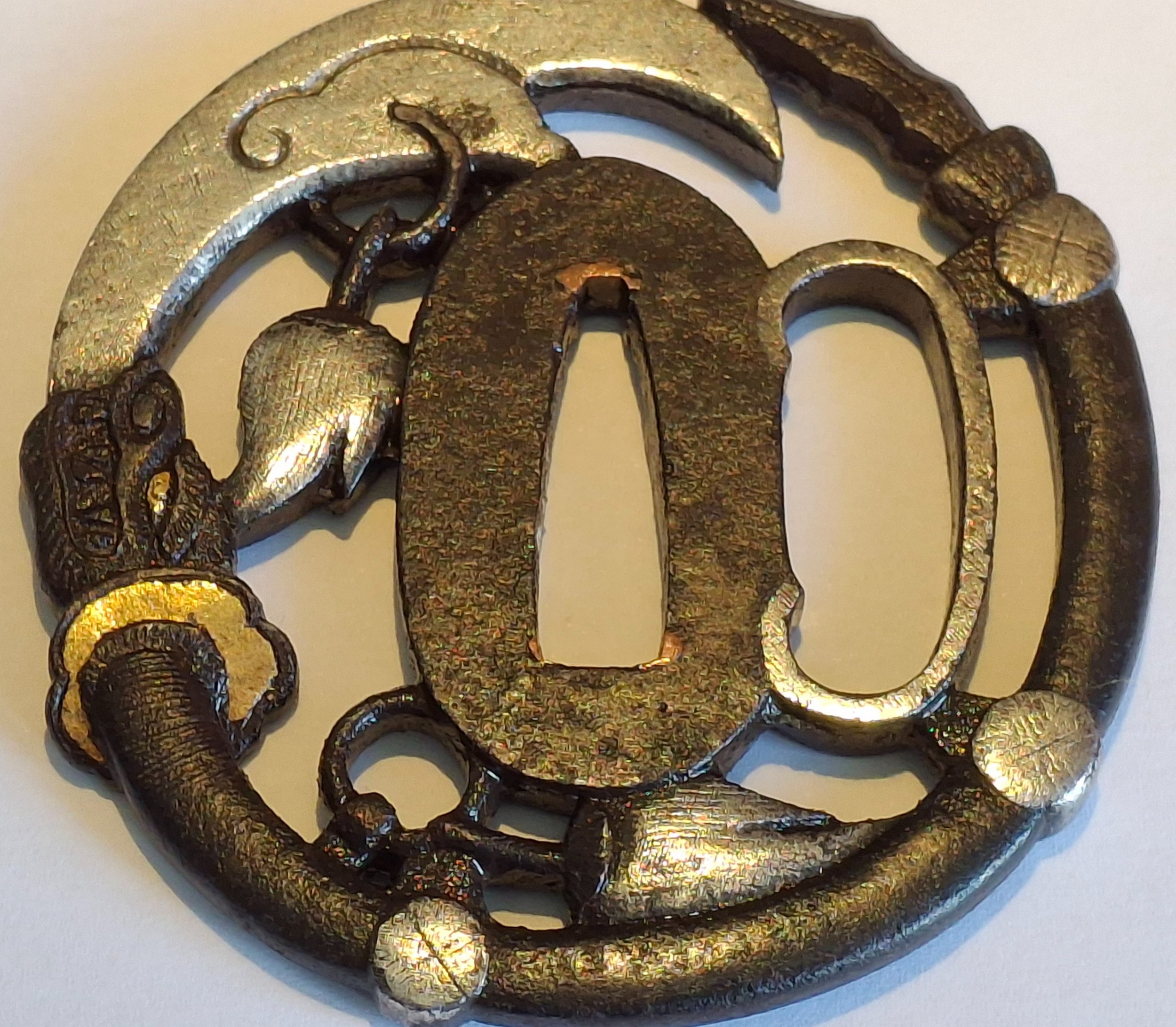
Ref: SA1144360
A circular dark iron Japanese sword guard featuring openwork carving of a dragon head holding a curved blade with gold and silver inlay.
Detail View 1
Detail View 2
Detail View 3
Detail View 4
Detail View 5
Detail View 6
Detail View 7
Detail View 8
Detail View 9
Detail View 10
Archival Detail
Every single antique dealer on our platform is individually approved by our internal team. We verify their professional trade history, ethical standards, and photographic quality to ensure a secure, high-standard buying environment. Upon joining, every dealer agrees to a strict 9-point code of conduct. While issues can occasionally arise, our dealers typically resolve them swiftly and directly with the buyer. In fact, since our founding in 2002, Sellingantiques has only had to step in to help resolve an issue on roughly five occasions—a true testament to the quality of our dealers and their dedication to your happiness.
Our dealers are highly experienced in packing and shipping fragile, high-value antiques. Because you are in direct contact with the dealer, you will be able to easily go through all available shipping and insurance options together to ensure your item arrives safely.
Antiques are the ultimate green purchase. By choosing historical pieces over newly manufactured goods, you completely eliminate the carbon footprint of modern mass production while preserving exceptional, timeless craftsmanship.

A tsuba is the handguard fitted between the blade and handle of a Japanese sword, designed to protect the swordsmans hand and balance the weapon. Iron tsuba have been forged for centuries, but highly decorated iron examples flourished during the Edo period (16031867) when peace allowed craftsmen to focus on artistic embellishment.

Edo period tsuba were primarily forged from iron or soft metal alloys such as shakudo and shibuichi. Artisans employed complex metalworking techniques including openwork carving (sukashi), chiselling (tagane-bori), and precious metal inlays (zogan) using gold, silver, and copper to create detailed pictorial designs.

Authentic antique tsuba exhibit natural surface patination (sabi) developed over centuries, precise chisel work, and signs of mounting on actual sword blades, such as insertion marks around the central aperture (nakago-ana). Genuine Edo period pieces display refined proportions and high-grade metalwork rather than cast, modern reproductions.

A Japanese tsuba is best displayed on a minimalist acrylic or wooden stand within a glass cabinet, on an office desk, or integrated into a bookshelf collection. Framing the tsuba in a custom shadow box with neutral conservation mounting accentuates its sculptural silhouette and detailed metal inlay.

Iron tsuba should be kept in a stable climate with low humidity to prevent active rust formation. They should be handled using cotton gloves and preserved with a micro-thin application of mineral oil or specialist choji oil using a soft cloth, avoiding chemical polishes or abrasive cleaning.
items
Add keywords to the filter
Price
£100
£250000
Era
Movements
Material
Origin
Stock Location
Freshness
Online Payments
Categories