It was listed by Titan Fine Art. Sold pieces stay on Sellingantiques as a record of what has passed through, and the next one is rarely far away.
Titan Fine Art has dated this Oil on Canvas Portrait to the 17th Century.
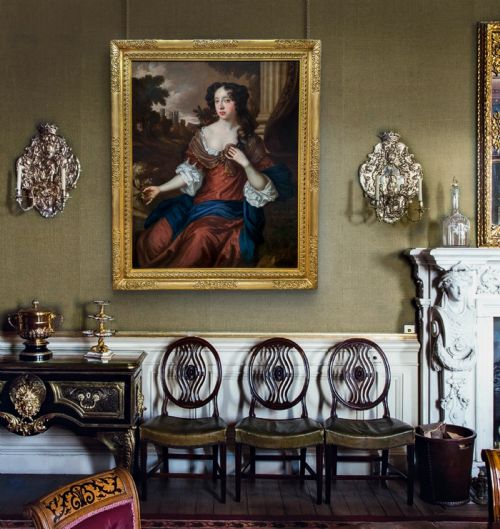
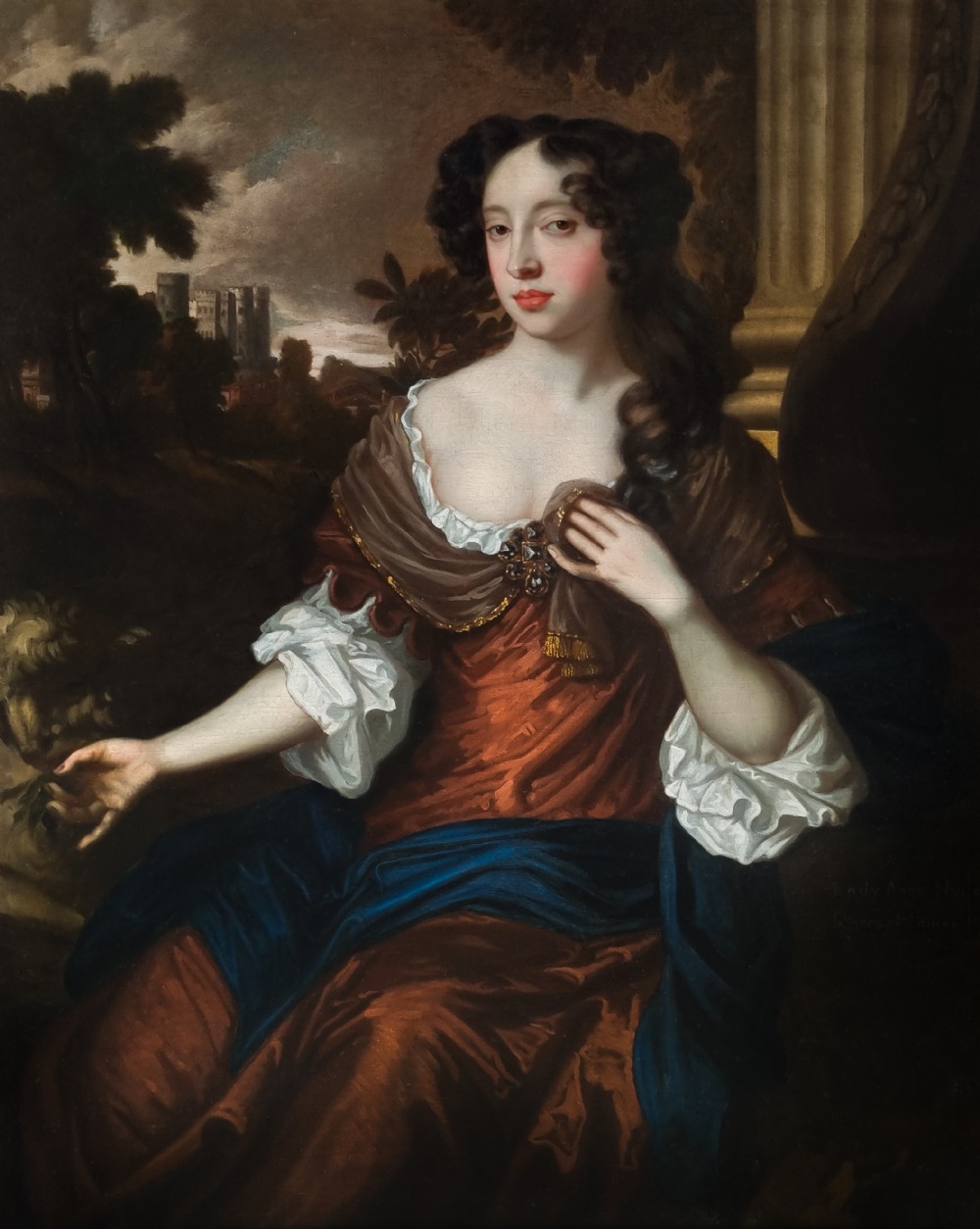
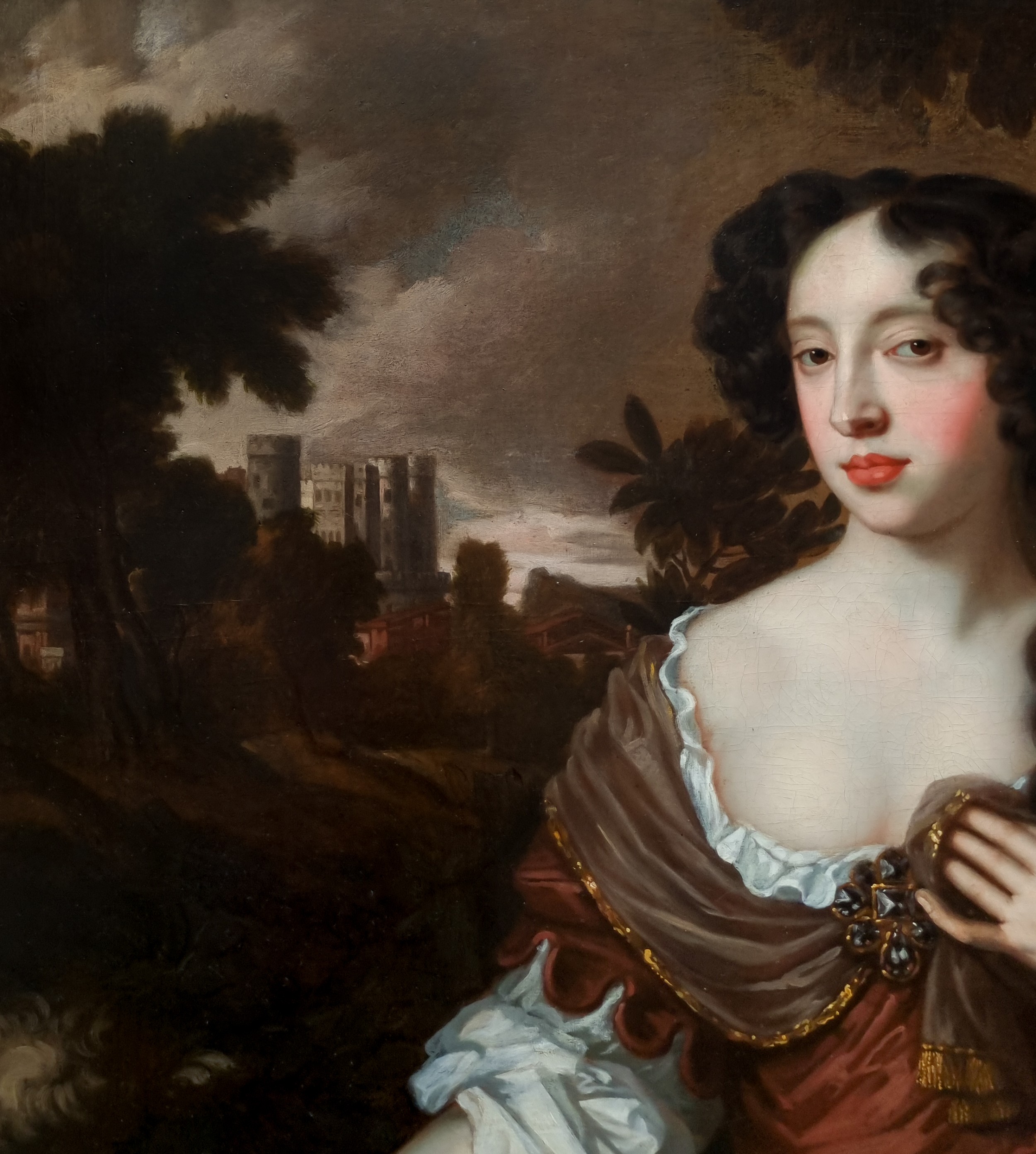
The pasture, classical column, and the laidback stance of the sitter invoke a sense of arcadia; this draws from the tradition of pastoral literature where life in the country was perceived as peaceful, contemplative, free of worry, and a time to pursue pleasure. By the early seventeenth century, Arcadia was already a popular theme in art and all educated individuals would have instantly recognised its meaning when viewing this portrait.
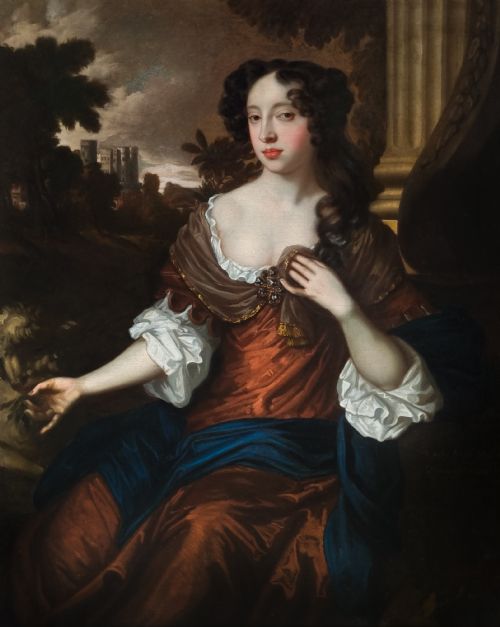
Maria Beatrice Anna Margherita Isabella d'Este was born on 5 October 1658 as the daughter of Alfonso IV, Duke of Modena and Reggio (1634–62). Raised in the Palazzo Ducale in Modena in Italy, she was a devout catholic, and had intended to enter a convent. However, in 1673, following the Pope’s encouragement that she should marry, she was chosen out of many princesses as the most suitable to wed James, Duke of York (younger brother to King Charles II of England), who acceded to the throne as James VII and II in 1685.
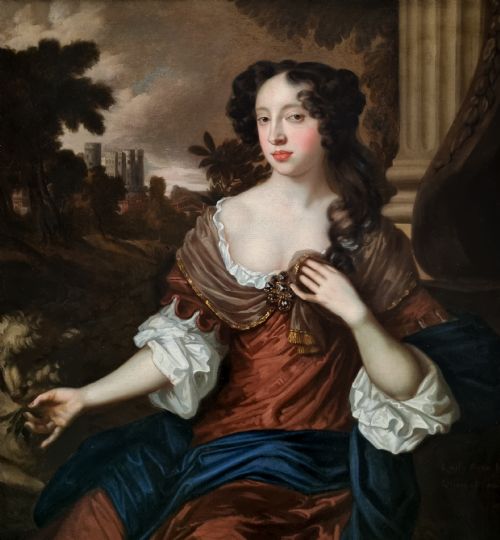
Mary, herself and her faith, were perceived as challenges to the Protestant line of succession. Irrespective of the religious difficulty which added its own intensity to the debates, the marriage of the presumptive heir to the Crown of England let loose a flood of intrigue, speculation, treaties, and negotiations. Mary and her baby eventually sought refuge in France, where she was referred to as the "Queen over the Water" by the Jacobite’s, and resided in the Château de Saint-Germain-en-Laye, a residence provided by King Louis XIV. Cherished by her French contemporaries, Mary died in 1718, and was interred in Chaillot, France.
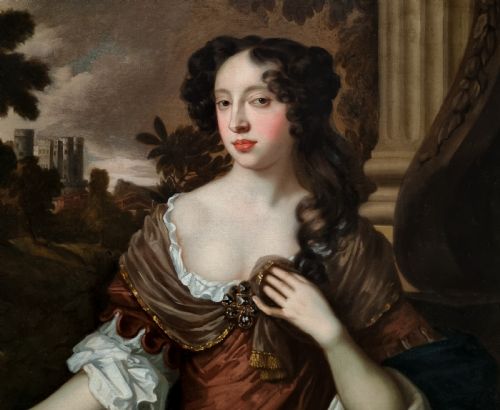
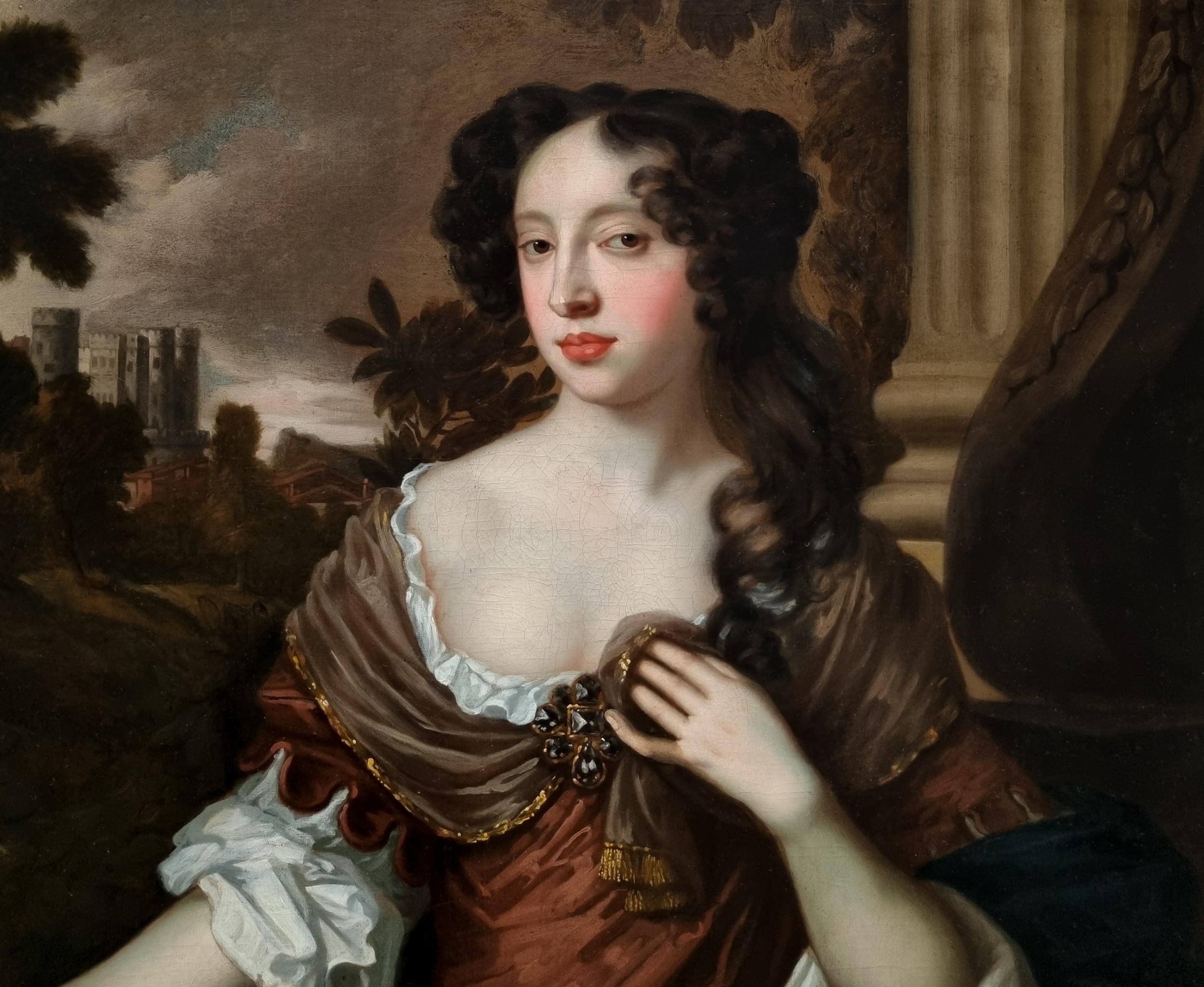
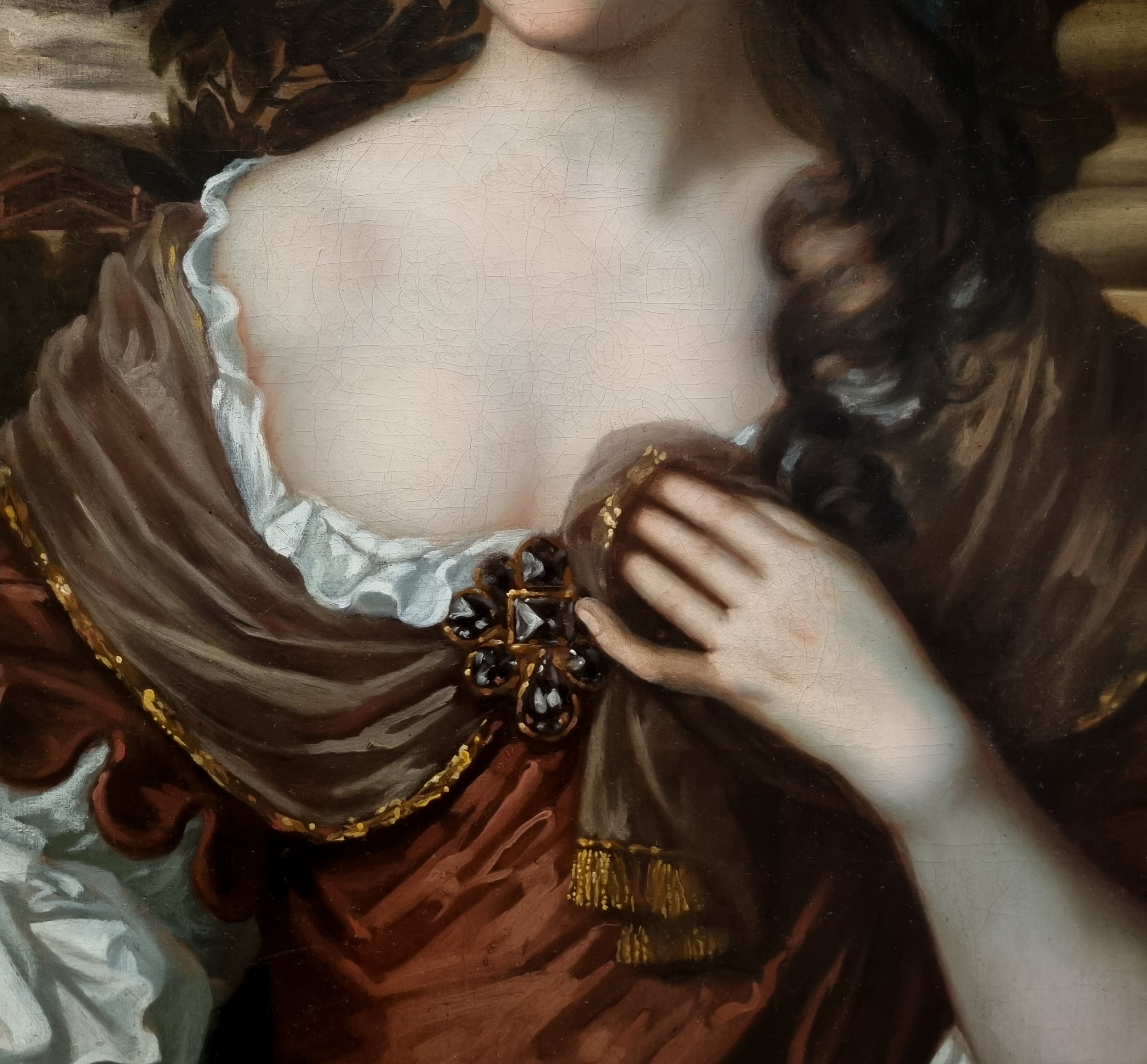
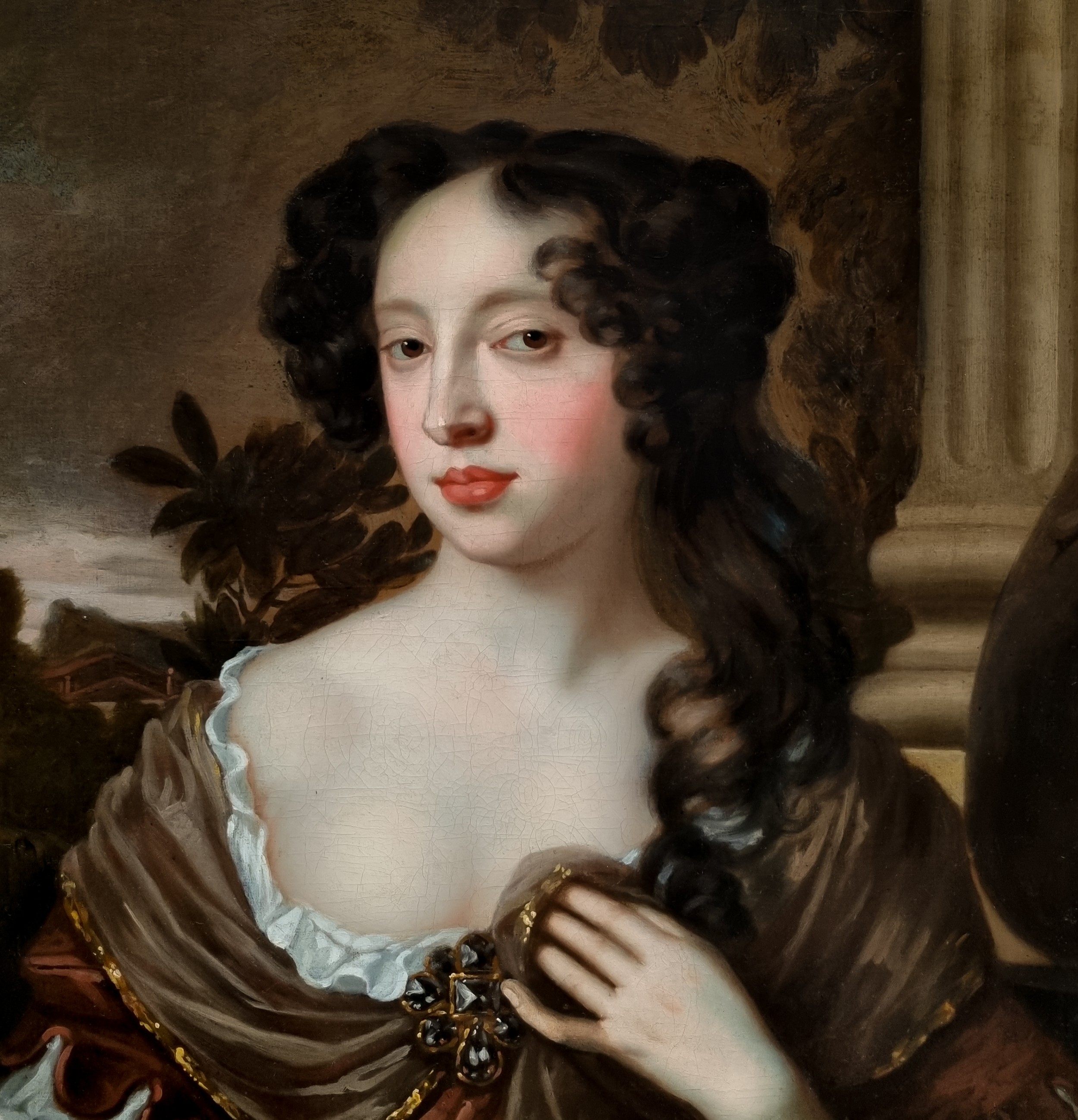
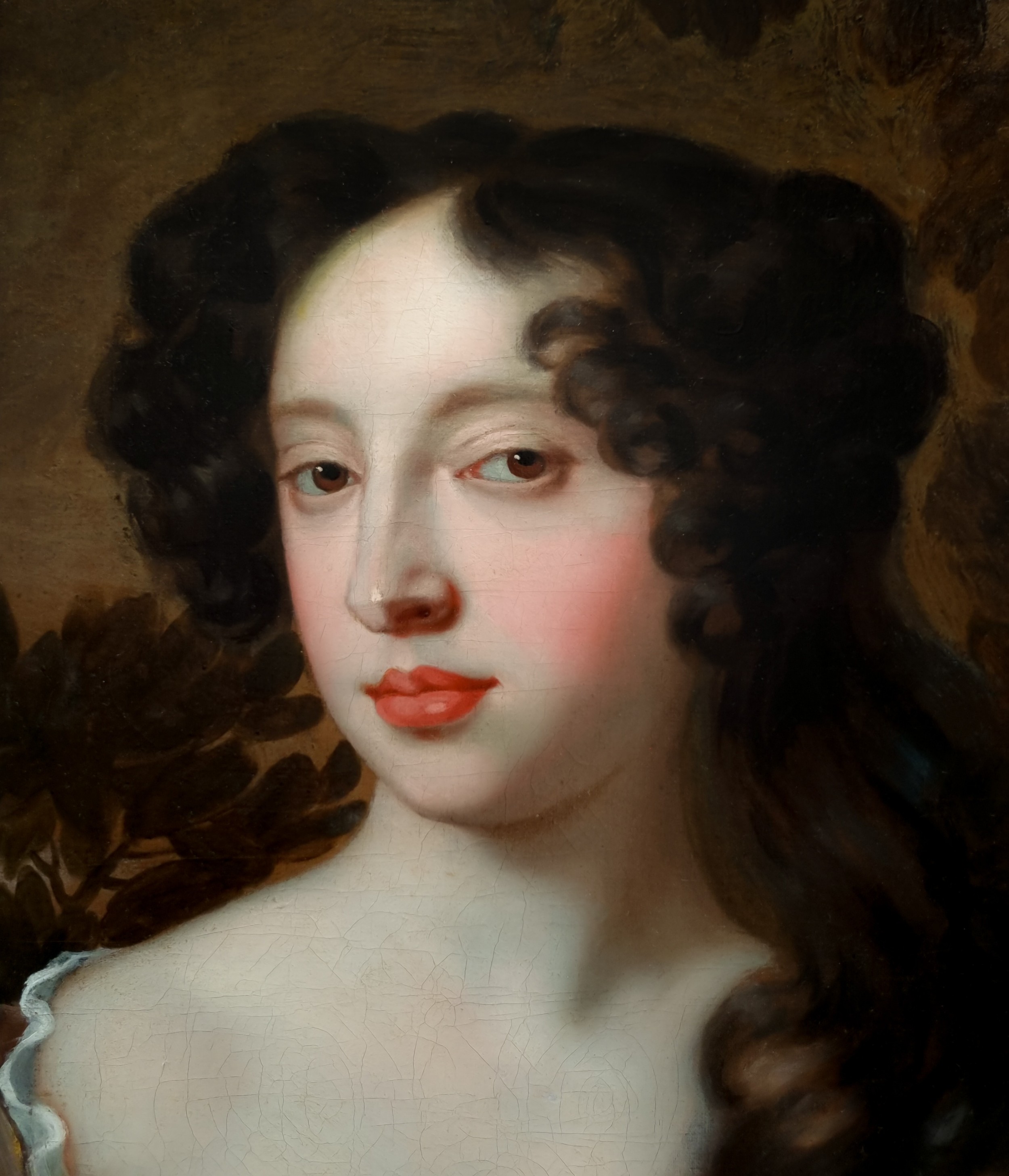
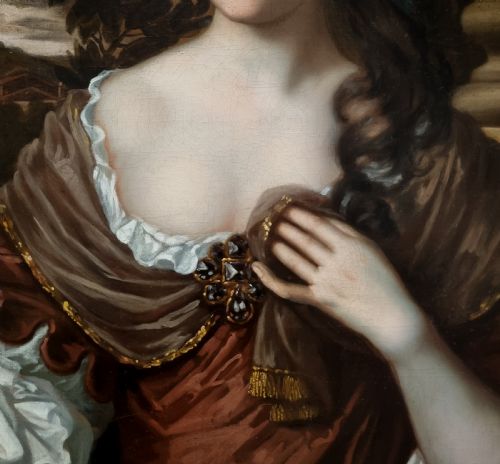
The Royal family garnered much interest from the public, as modern day celebrities do now, and there was intense interest in their lives, including what they were wearing. Portraits of them were in high demand and the studios at the time were all too willing to rise to this demand. The Duchess sat to Lely on several occasions and his studio painted several versions of the same painting. Our portrait is one such example, painted during the sitter’s lifetime, and is based on another portrait of the sitter by Lely currently in the Royal Collection (RCIN 403225). The main differences being the drapery, and in our portrait one hand is holding leaves (rather than resting on a lamb’s head) and the other is holding a scarf (rather than red drapery). Both paintings probably date to the latter part of the 1670s, and probably before 1678, when the Duke and Duchess of York journeyed to the Continent to evade the anti-Catholic fervour stemming from the Popish Plot in London.
Peter Lely, the son of a Dutch military officer, was born in Germany at Soest in Westphalia in 1618. He studied in Haarlem before moving to London in 1641, and in 1647 he became a freeman of the Painter-Stainers’ Company. He quickly recognised the strength of the English market for portraiture and by the end of the Commonwealth, he had become the best-known portraitist in England, with a busy studio painting the most elite and influential members of the court and of everyone of importance, and established the basic English portrait style for decades. By the end of his life, he had assembled one the finest non-princely art collections in Europe.
Full description at: www.titanfineart.com
Titan Fine Art has dated this Oil on Canvas Portrait to the 17th Century.
Specialist in 17th & 18thc portraits. Highly curated selection, museum-level research & pro conservation. Exceptional art, expertly vetted.
You can view the stock and full dealer information on the Titan Fine Art Profile Page
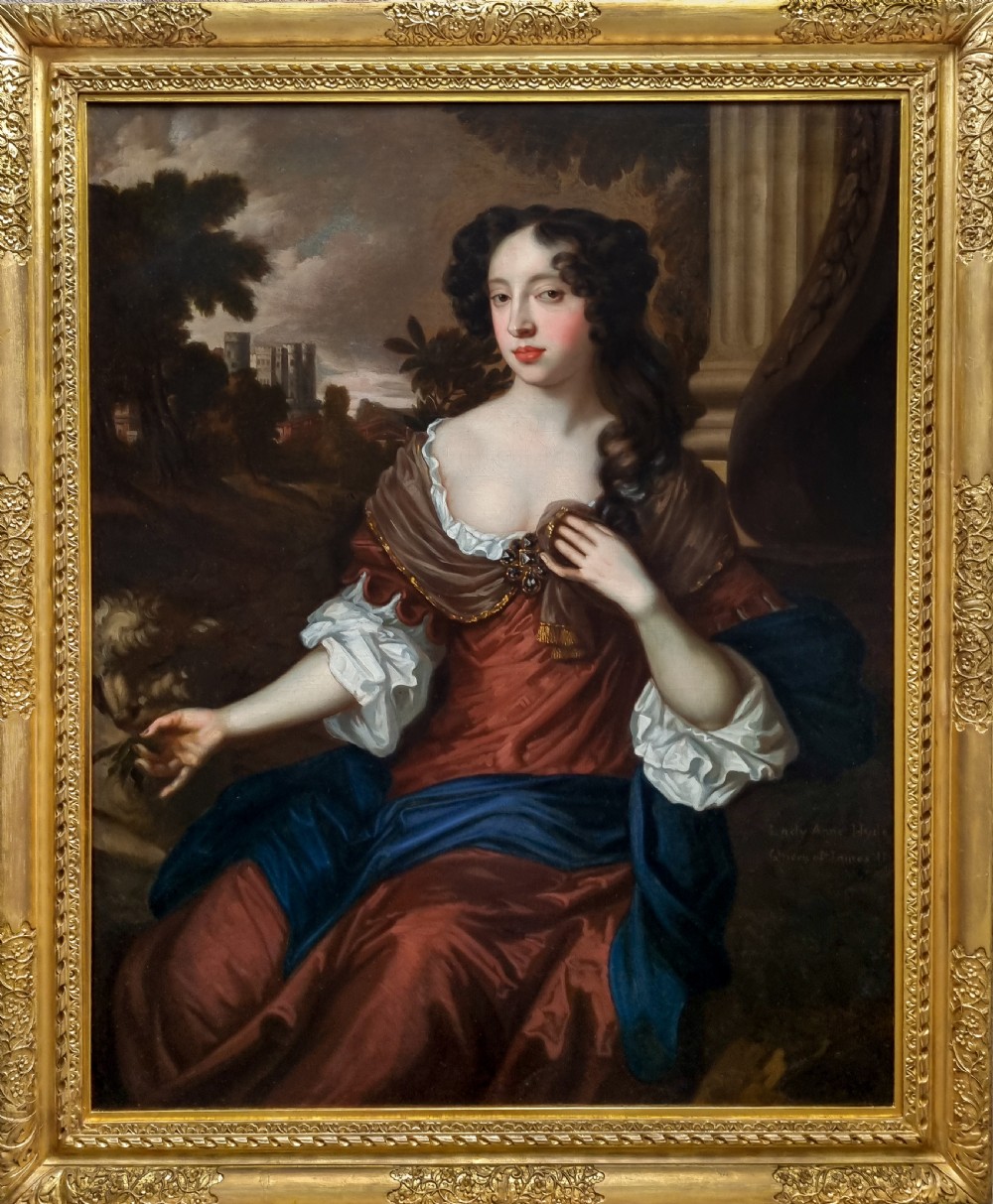
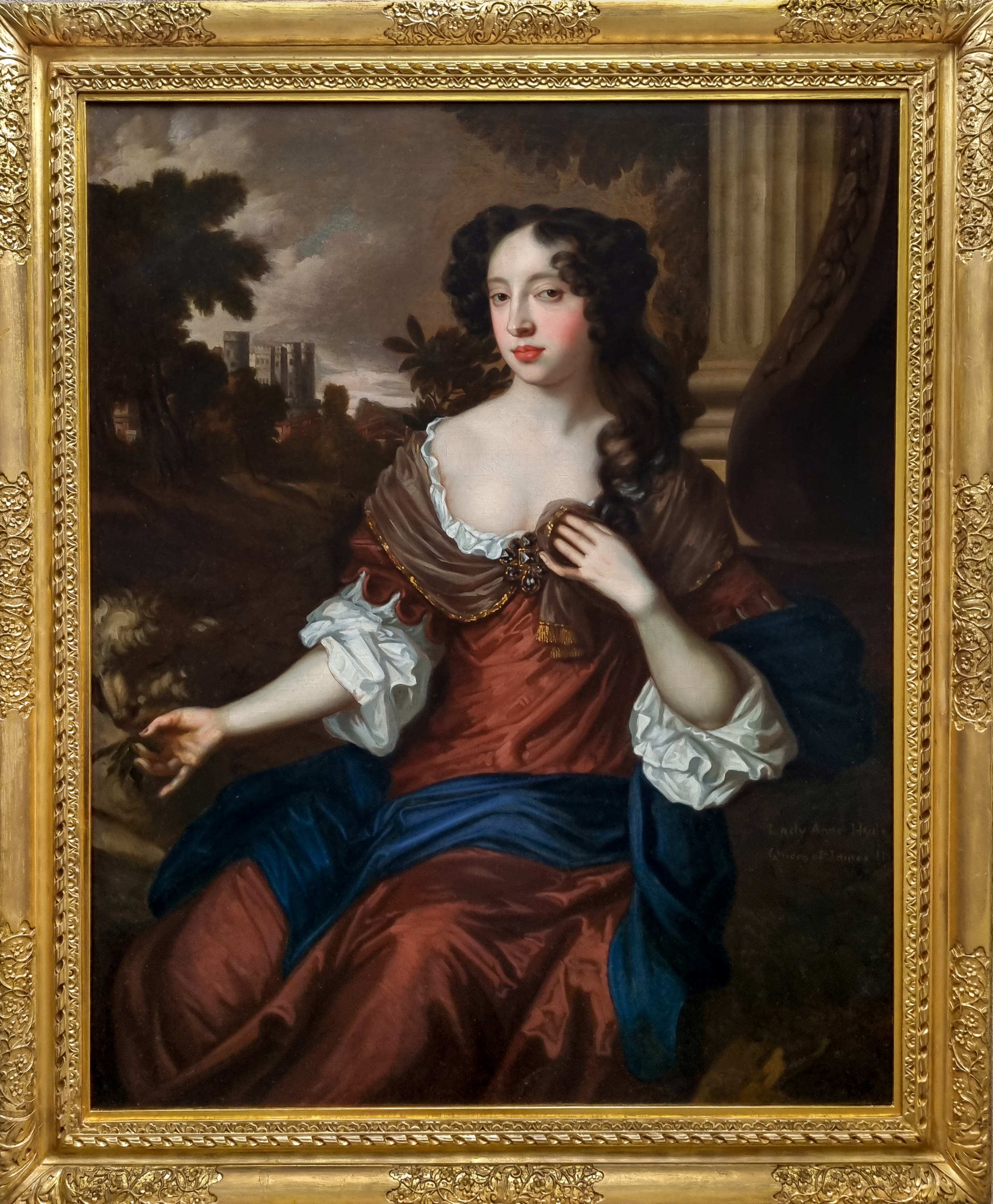
Portrait of Mary of Modena, When Duchess of York C.1675-80; Studio of Sir Peter Lely (1618-80), Oil on Canvas Painting