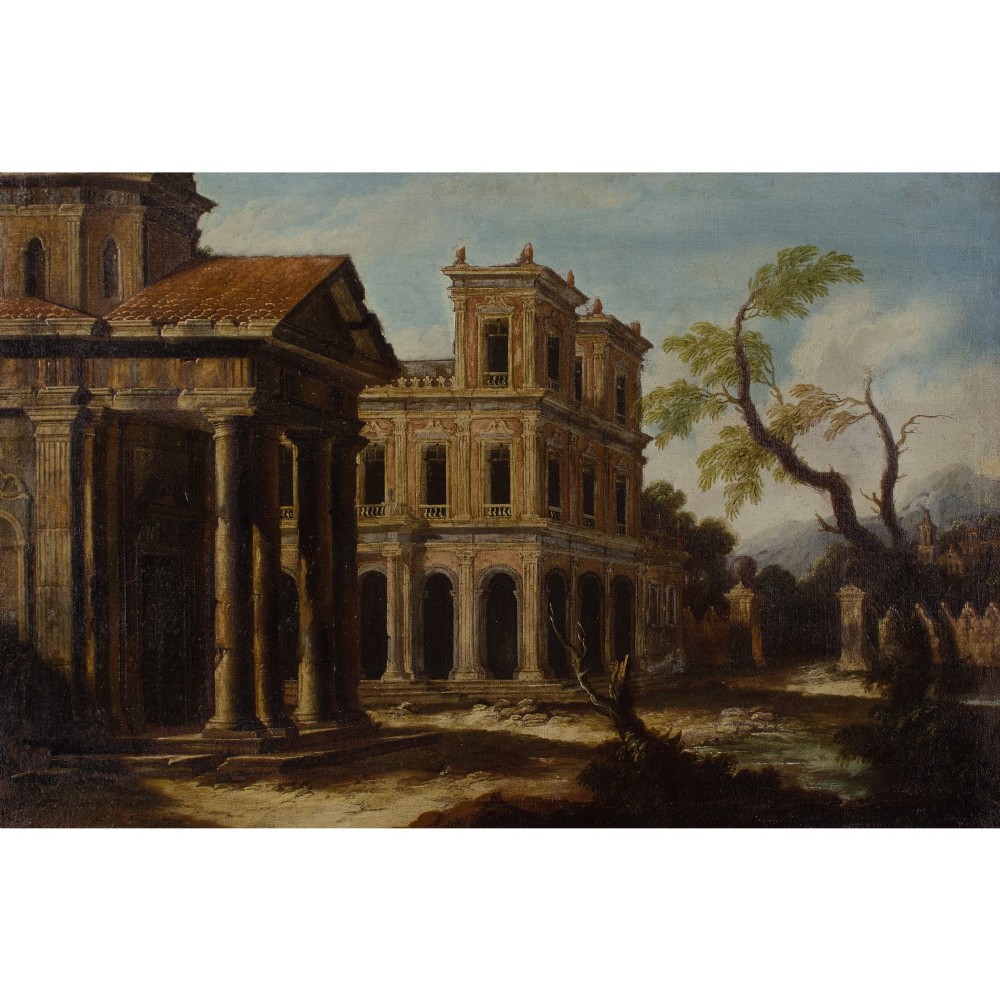
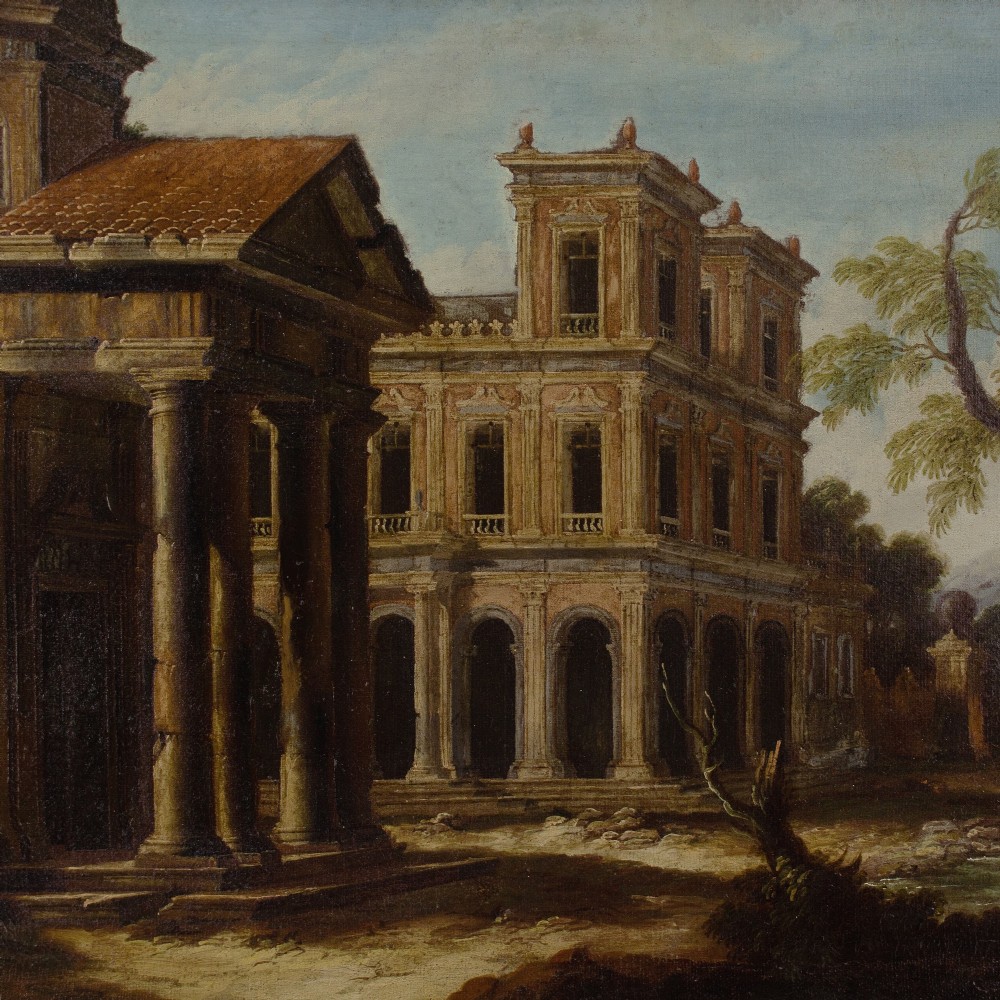
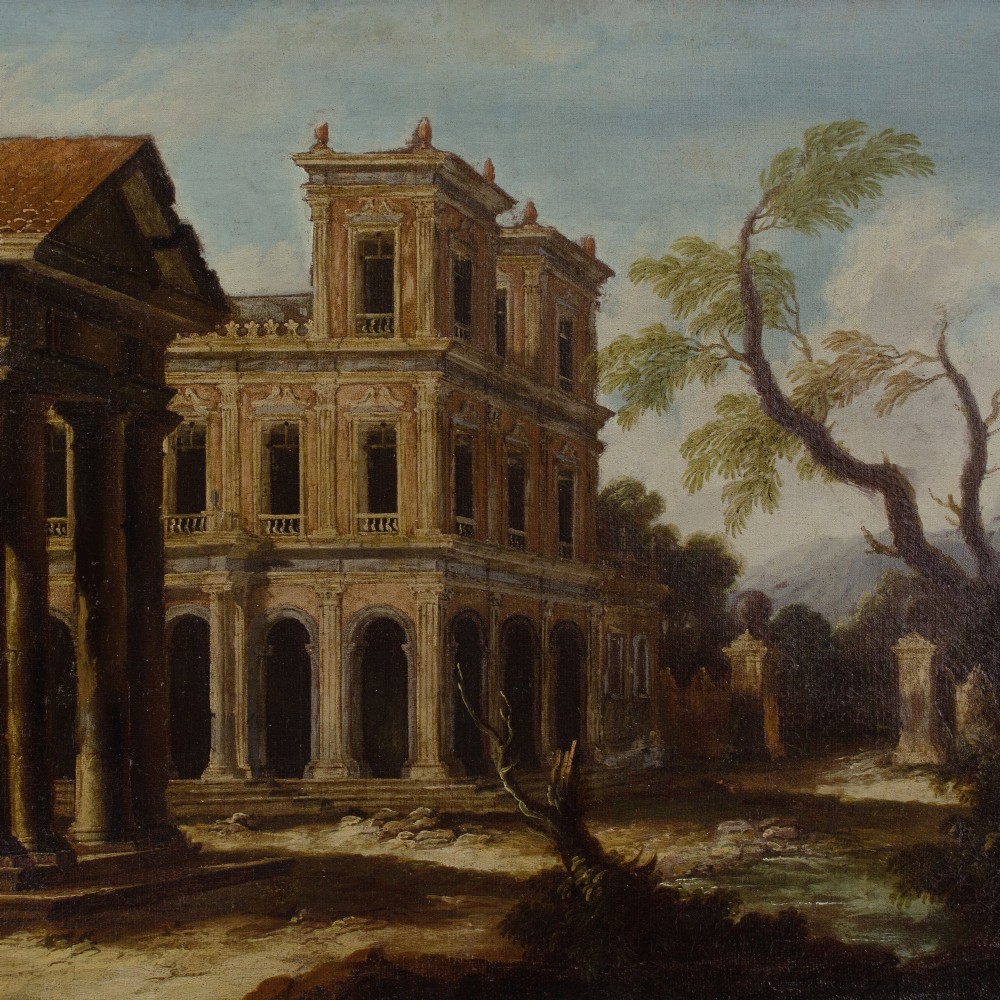
Brave Fine Art has dated this piece to the 17th Century.
Artists were at liberty to interpret a view as they wished, rearranging, resizing, and even redesigning entire buildings. The results were fantastical, thought-provoking, and intended for a sophisticated buyer.
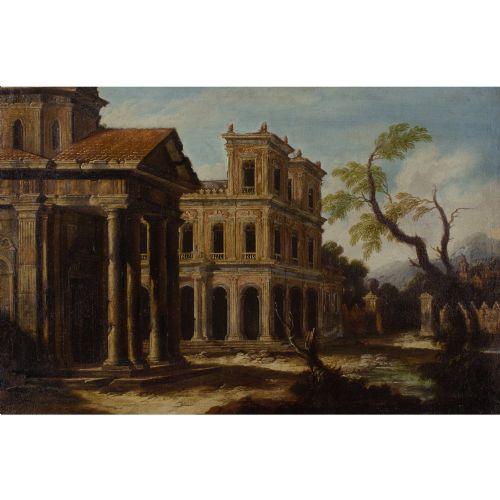
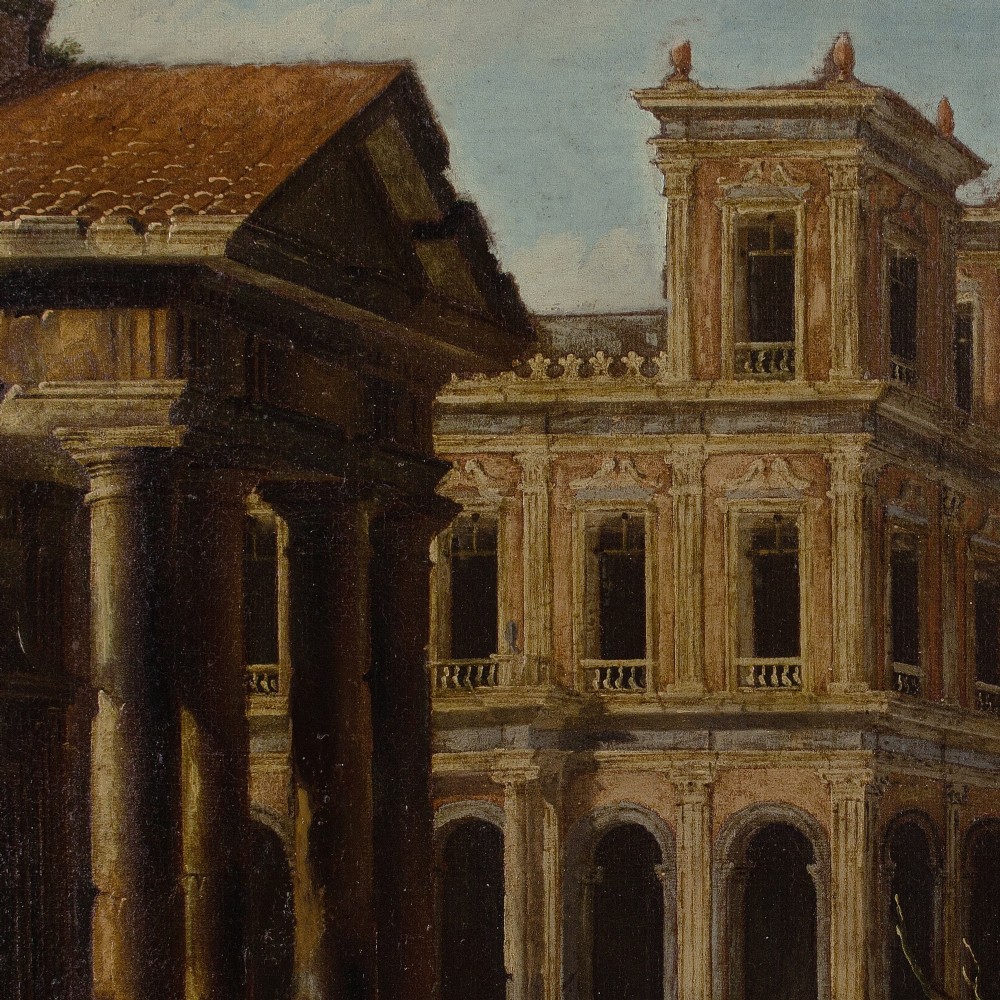
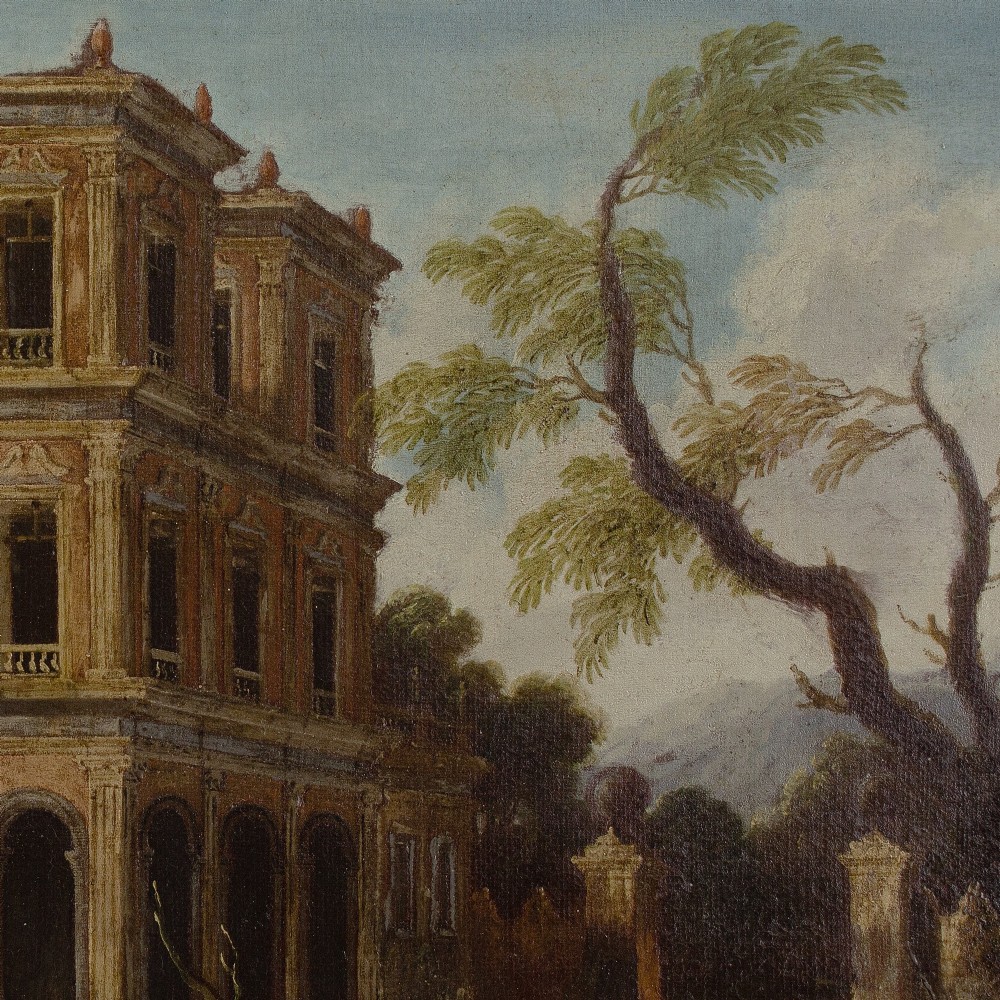
Many architectural capriccios feature a clear structure, which emphasises linear perspective and robust vertical planes. Here, the composition feels balanced despite the ‘weight’ being unequally distributed towards the left. This is achieved through the inclusion of the sinuous tree and distant mountain.
One particularly successful practitioner of this technique was Alessandro Salucci (1590-1655/60), the Florentine painter who worked predominantly in Rome. He adopted a light palette, in a similar way to our piece, to reduce over-dramatisation and convey a sense of classical refinement. It’s conceivable that the artist was influenced by Salucci’s oeuvre.
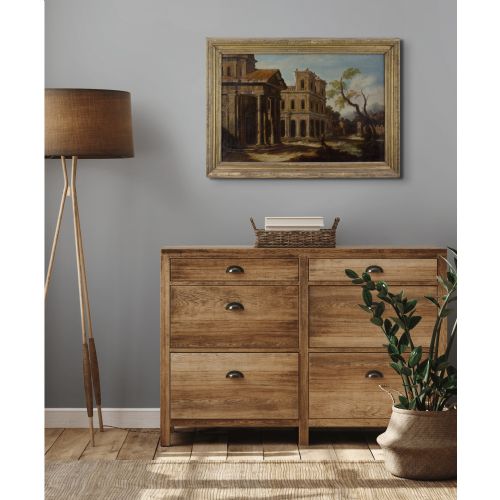
Today, as we consider these distinguished old relics of 17th-century Rome, they convey a sense of much-needed gravitas and enduring dependability.
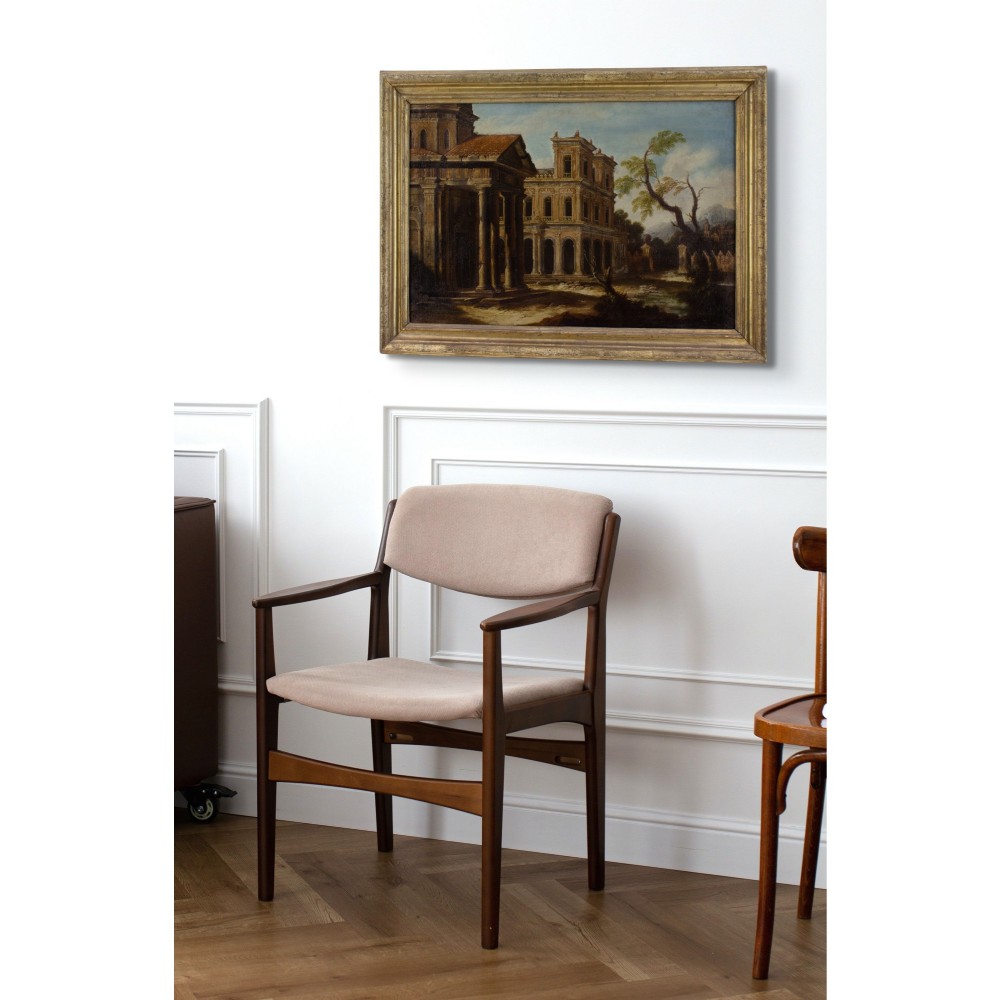
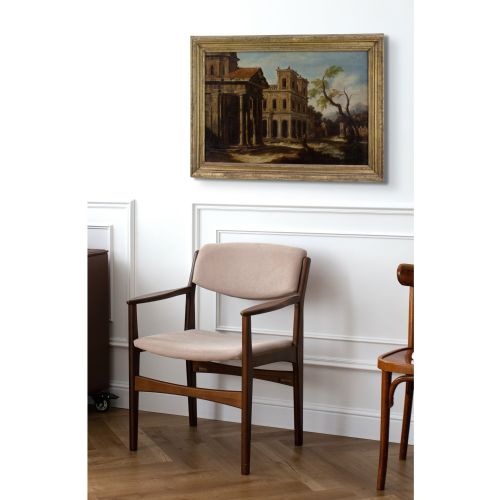
Held in an early 19th-century frame.
Medium: Oil on canvas
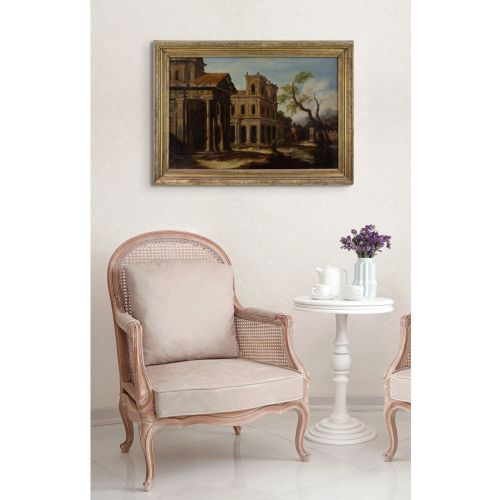
Overall size: 34½” x 25” / 88cm x 64cm
Year of creation: c. 1680
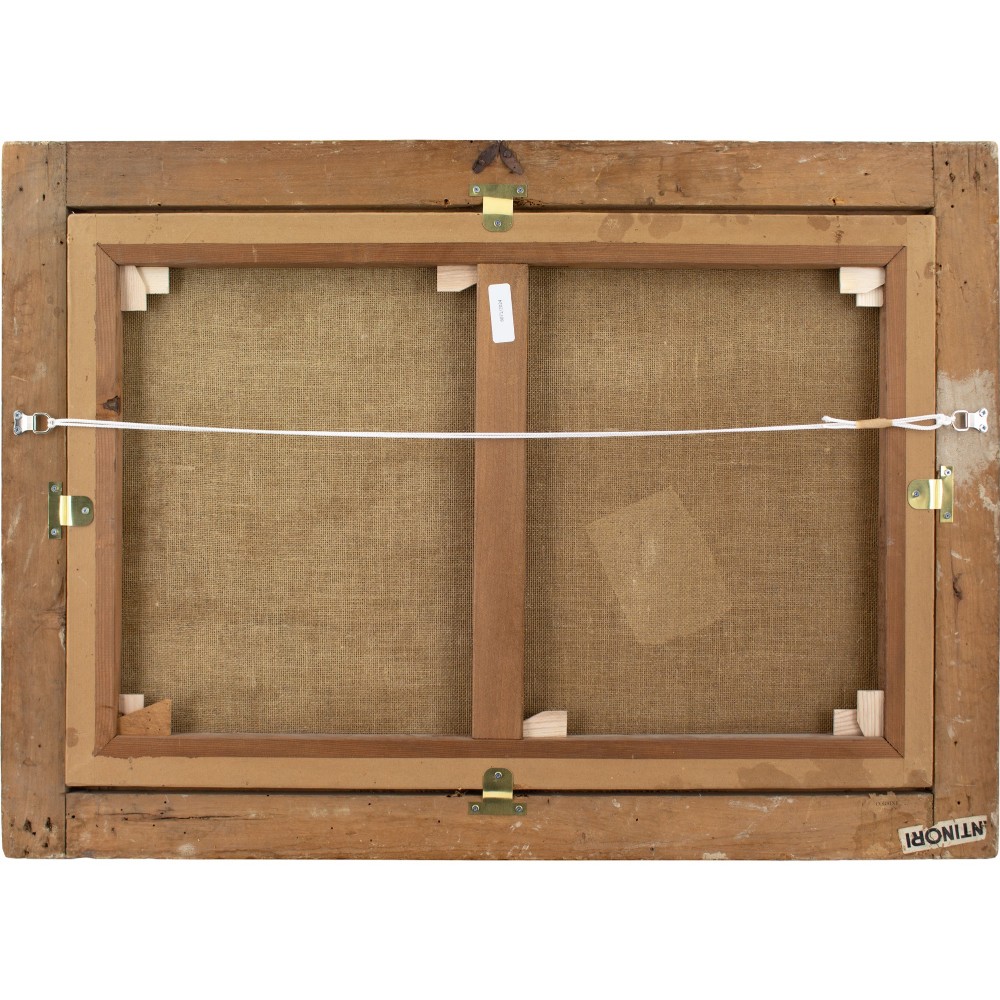
Labels & Inscriptions: Inscribed ‘(a)ntinori’ and ‘corsini’ on the reverse.
Provenance: Giovanni Pratesi, Florence / Private collection, Italy.
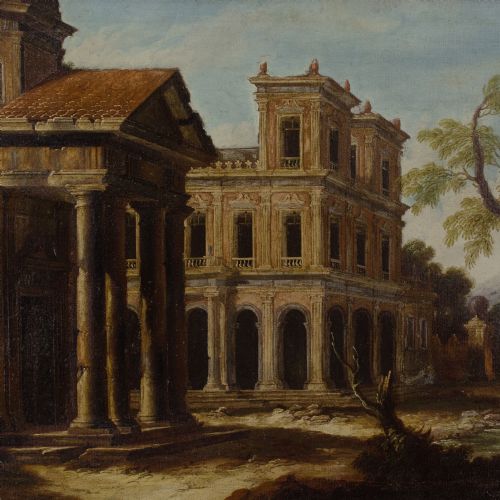
Condition: Cleaned. Revarnished. Canvas relined. Areas of fine and settled craquelure, as you would expect. Later stretcher. The paint layer is stable. Frame with various marks and showing its age.
Our reference: BRV2022
Brave Fine Art has dated this piece to the 17th Century.
Exquisite antique paintings that capture the imagination.
You can view the stock and full dealer information on the Brave Fine Art Profile Page
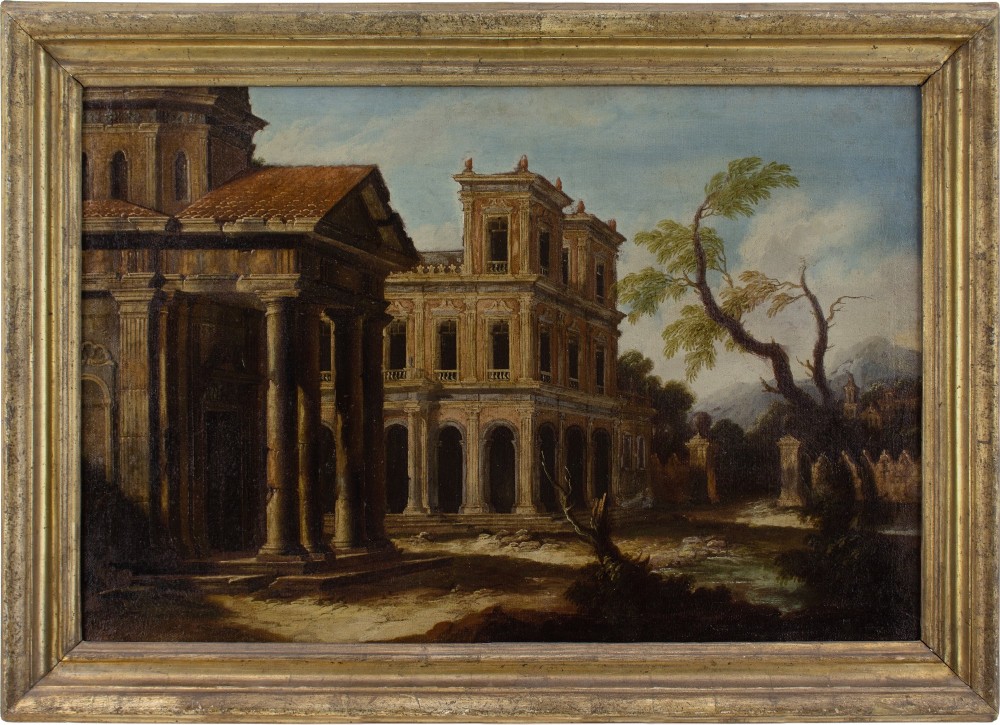
Late 17th-century Italian School, Architectural Capriccio with Portico & Distant Mountain - Antique Oil Painting