It was listed by Titan Fine Art. Sold pieces stay on Sellingantiques as a record of what has passed through, and the next one is rarely far away.
Titan Fine Art has dated this 17th Century Oil Painting to the 17th Century.
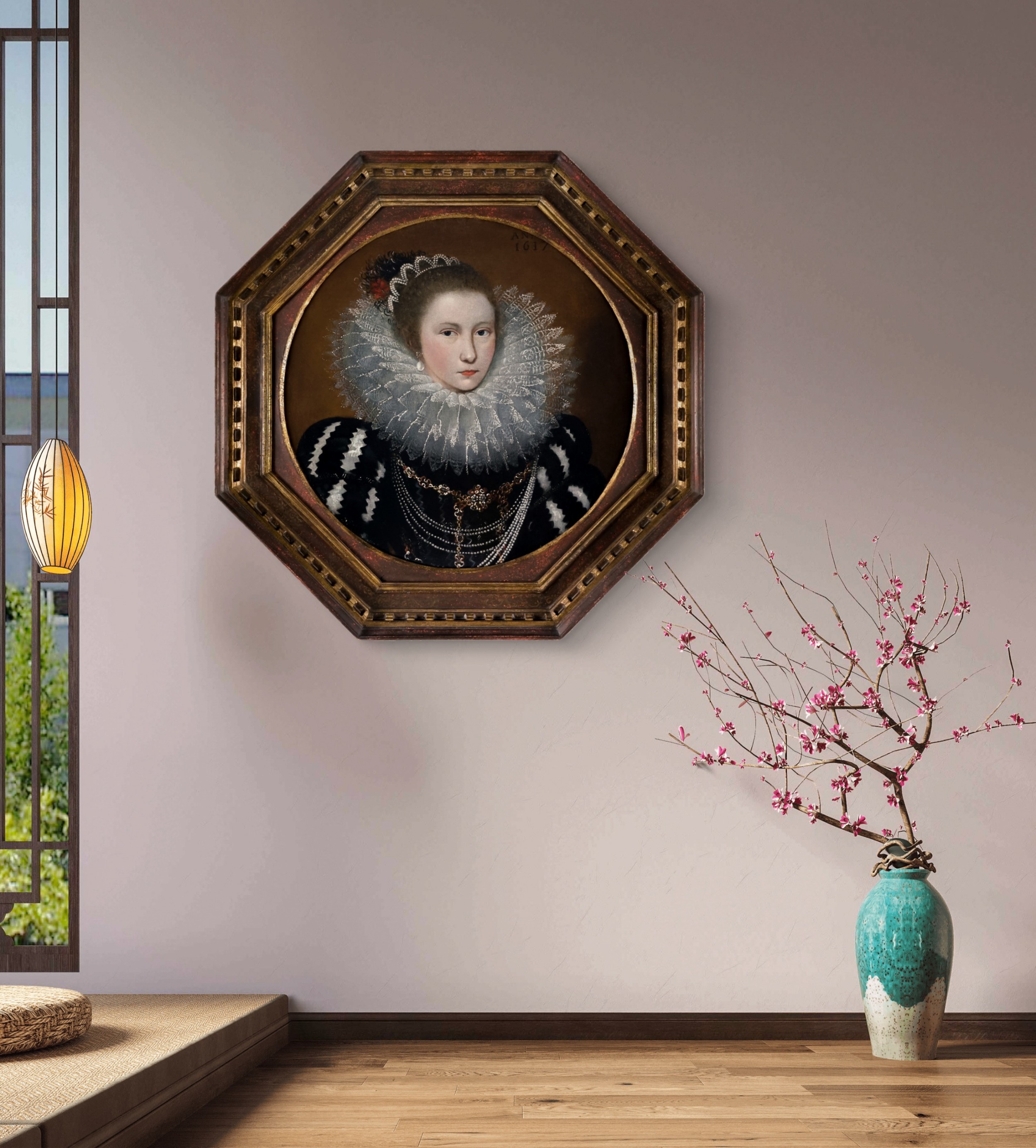
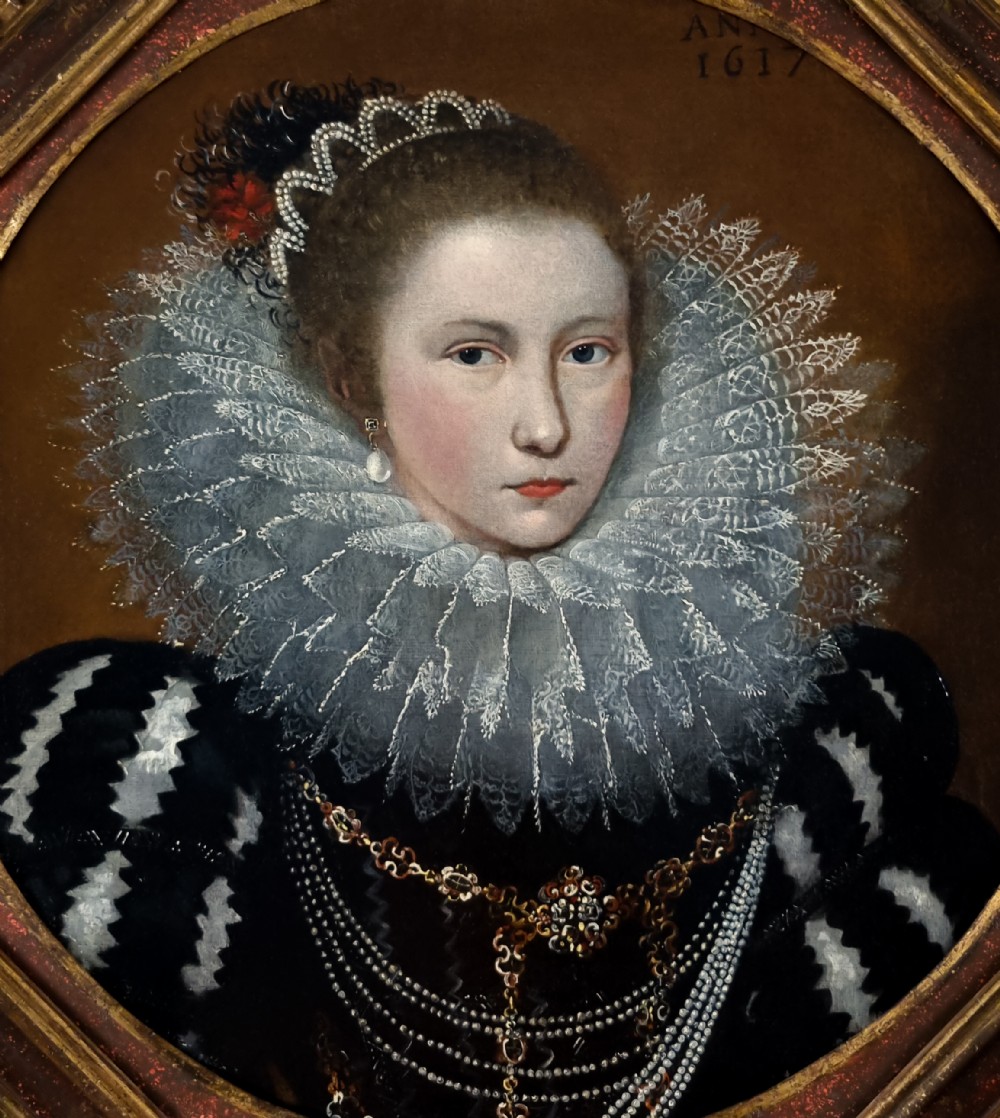
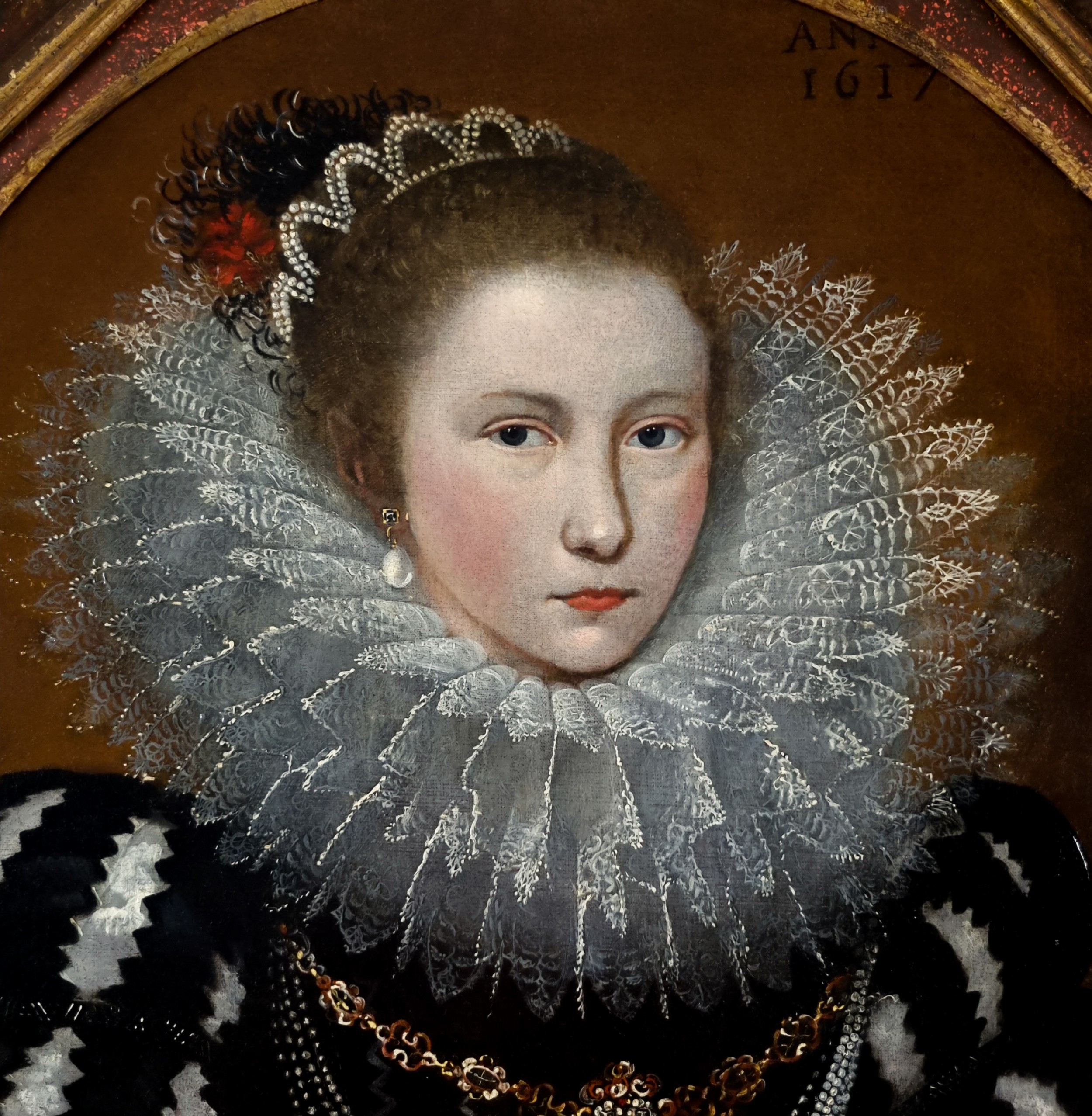
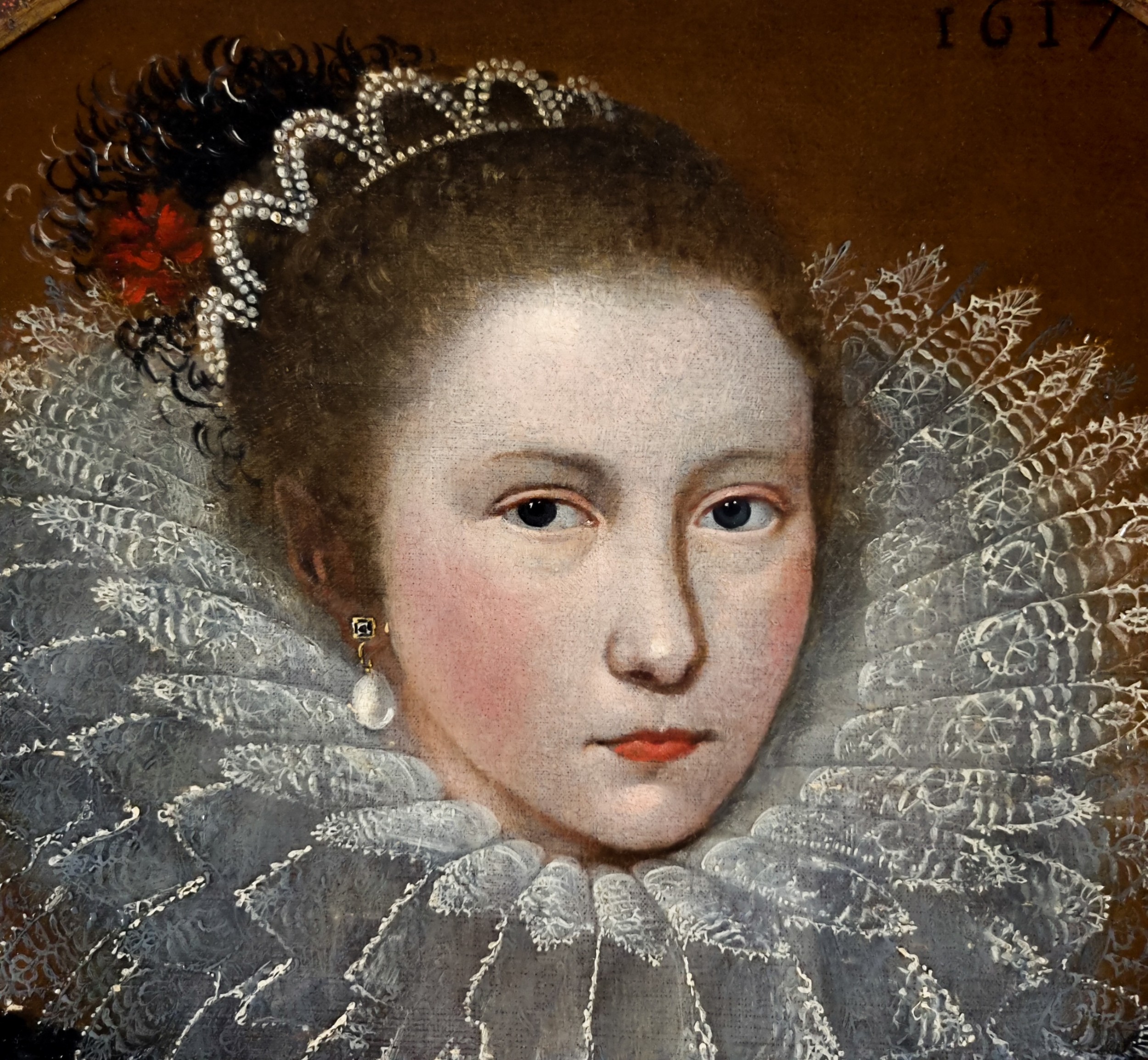
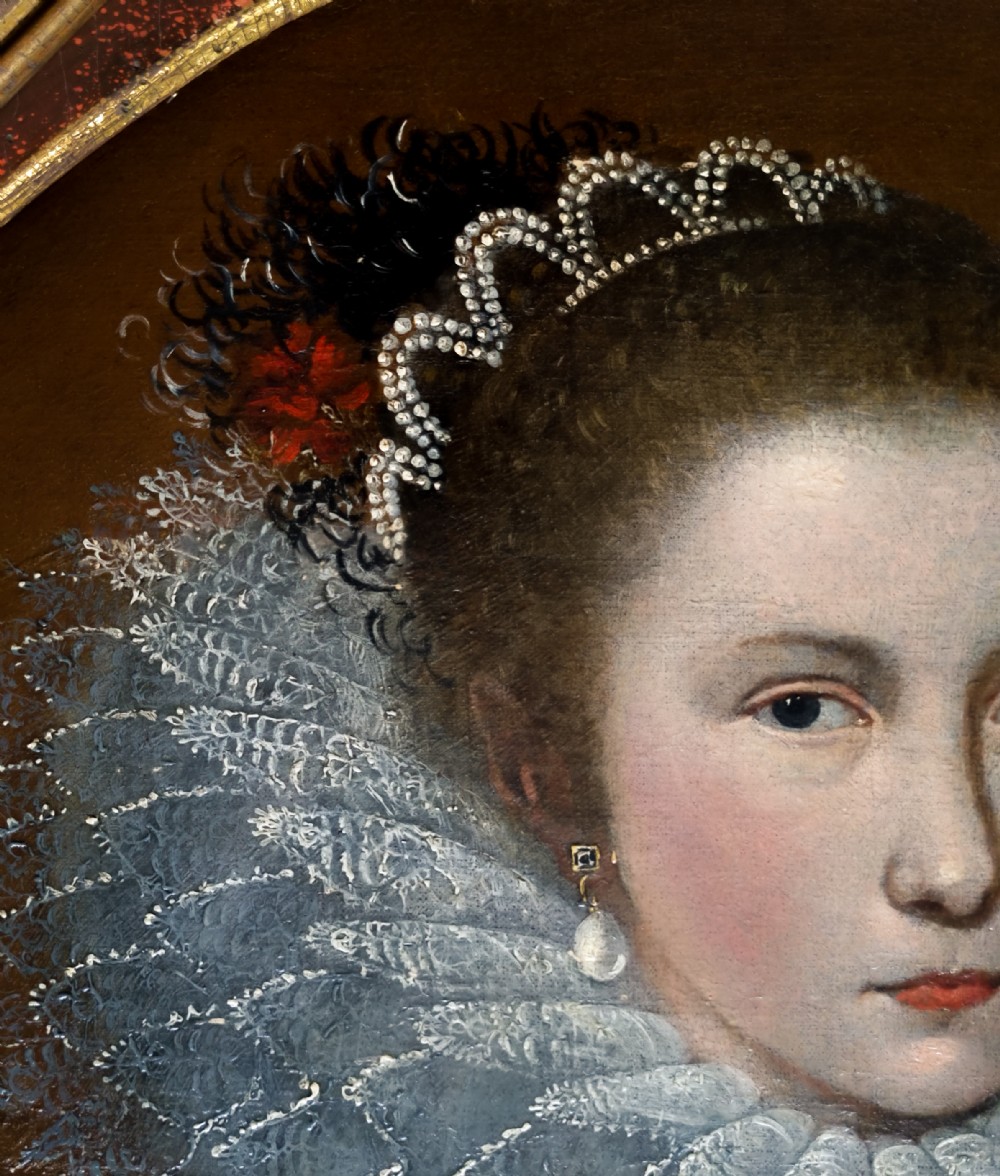
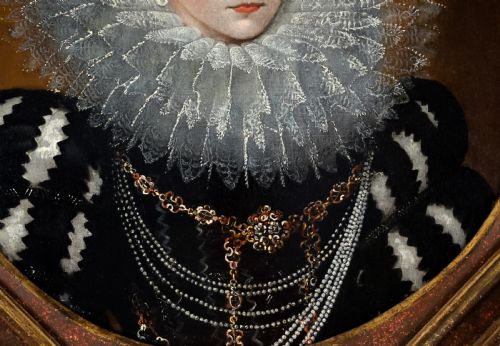
The colour black was one of the costliest fabrics to purchase and maintain, and it is juxtaposed against the white to great effect. The sitter’s face is almost completely enveloped in her enormous needlepoint collar, with three superimposed layers. This type of collar was an extraordinary costly item and a great indicator of wealth. Here, it has been depicted with great precision. Full slashed sleeves (manches ballonnees) emphasise the width across the upper part of the body.
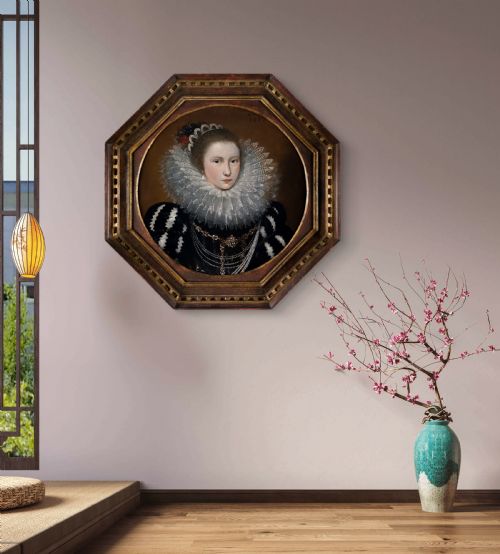
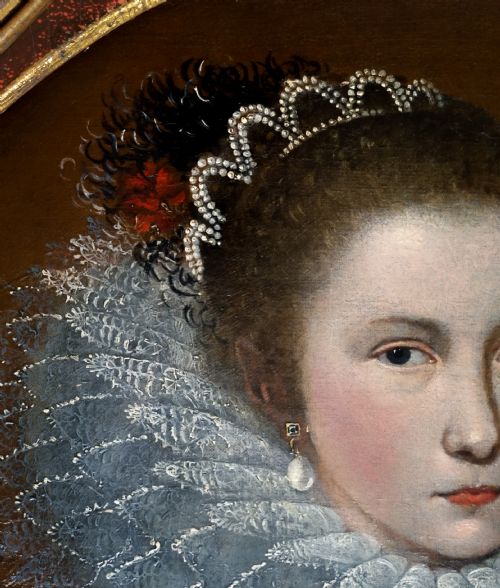
A fortune of jewellery is displayed as an intricate gold and enamel filigree collar (chain necklace) with diamonds, and pearls worn on a coronet and several ropes across the bodice. The expensive attire proclaims to every onlooker that this is a superior being.
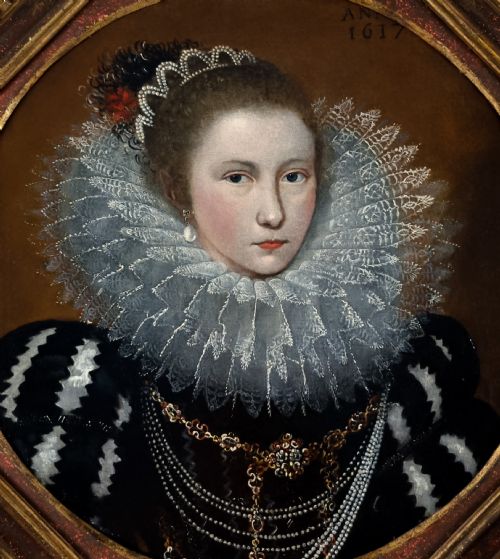
The red carnation pinned in the hair is, in all probability, an allusion to a promise of marriage, according to a Flemish wedding custom passed into courtly portraiture. The style of the dress and the type of hairstyle are congruous with the date on the portrait, 1617.
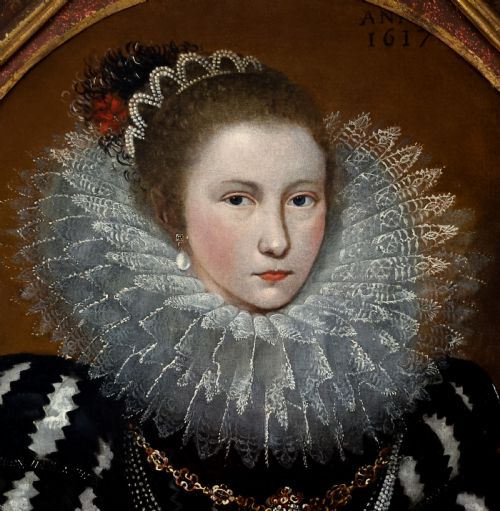
The style suggests that of Frans Pourbus the Younger but is likely that of a contemporary influenced by his successful manner - Pourbus was a superb portraitist of the aristocracy and worked in many courts in Europe as did other Flemish artists, known for their immensurate skills. Our portrait, most likely painted in the low countries or in Italy where many Flemish artists travelled to work in the courts there at the end of the sixteenth century and the early seventeenth century.
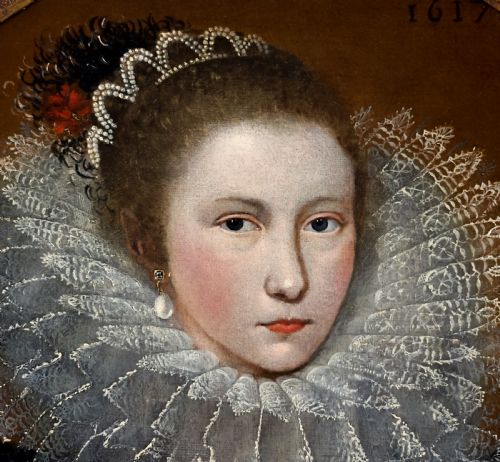
Surviving for over four hundred years, this is a marvellous example of European court portraiture, and in exemplary condition.
Frans Pourbus the Younger, also known as Frans Pourbus (II), was a renowned Flemish painter who specialised in portrait painting. Born in Antwerp in 1569, he belonged to a prominent family of religious and portrait painters, making him the third generation to carry on this artistic legacy. Throughout his career, Pourbus achieved great success as a court painter. He served as the official painter for the Archdukes in Brussels, the Gonzaga Duke of Mantua, and later, the French court.
His grandfather, Pieter Pourbus (1523 – 1584), was a leading portrait and history painter in Bruges during the latter half of the 16th century, and his mother was the niece of his father's master, Frans Floris, a well-known painter from Antwerp.
Frans was admitted as a master in the Guild of St. Luke of Antwerp in the guild year 1591-92, when he was 22 years old. On 27 June 1600, he received payment for a portrait of the Infanta, which was then presented to Anne of Denmark, the wife of James VI and I, by the Ambassador of the Spanish Netherlands. In 1600, Frans was recruited as a court painter in Mantua by Vincenzo Gonzaga, the Duke of Mantua. In 1609, at the request of Marie de' Medici, the Queen of France, Frans relocated to Paris and served as her court painter until his death.
Examples of his work can be found in the Royal Collection UK, the National Museum in Warsaw, the Louvre, the Prado, the Rijksmuseum, the Royal College of Art, and the Metropolitan Museum of Art to name a few.
Titan Fine Art has dated this 17th Century Oil Painting to the 17th Century.
Specialist in 17th & 18thc portraits. Highly curated selection, museum-level research & pro conservation. Exceptional art, expertly vetted.
You can view the stock and full dealer information on the Titan Fine Art Profile Page
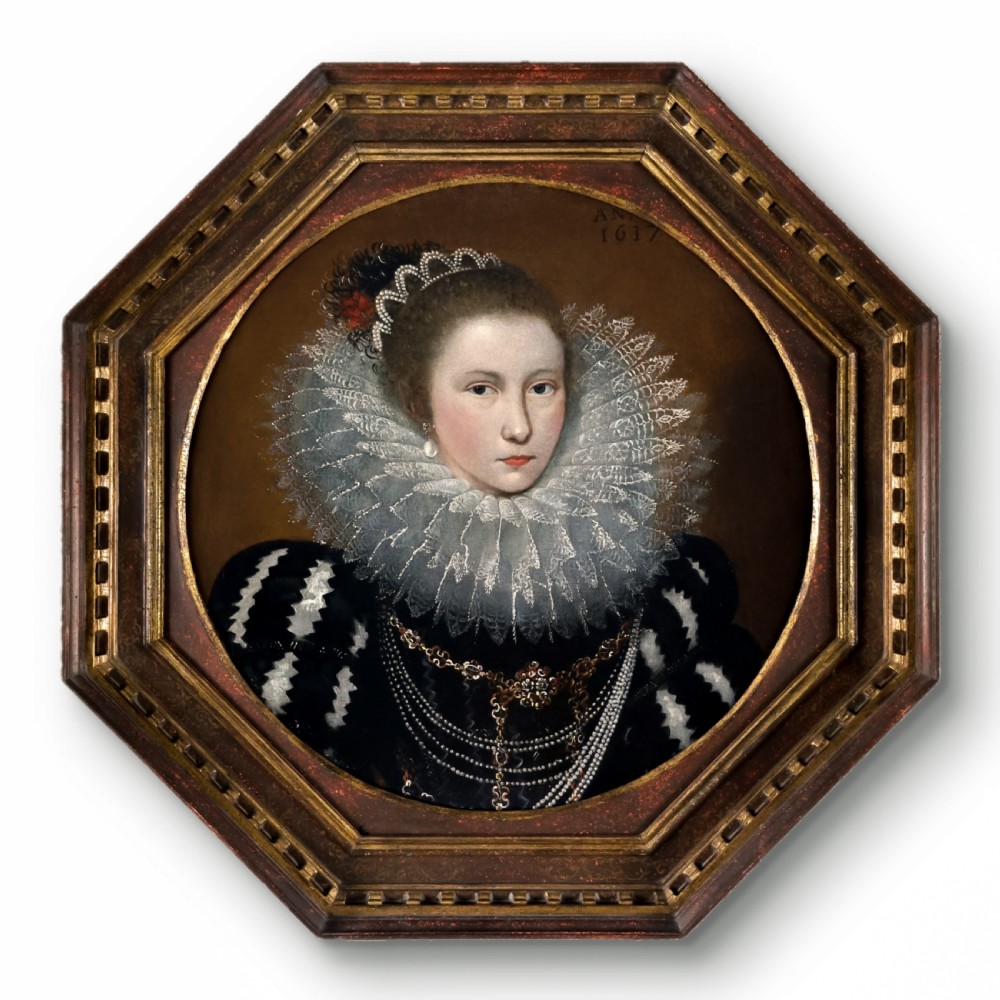
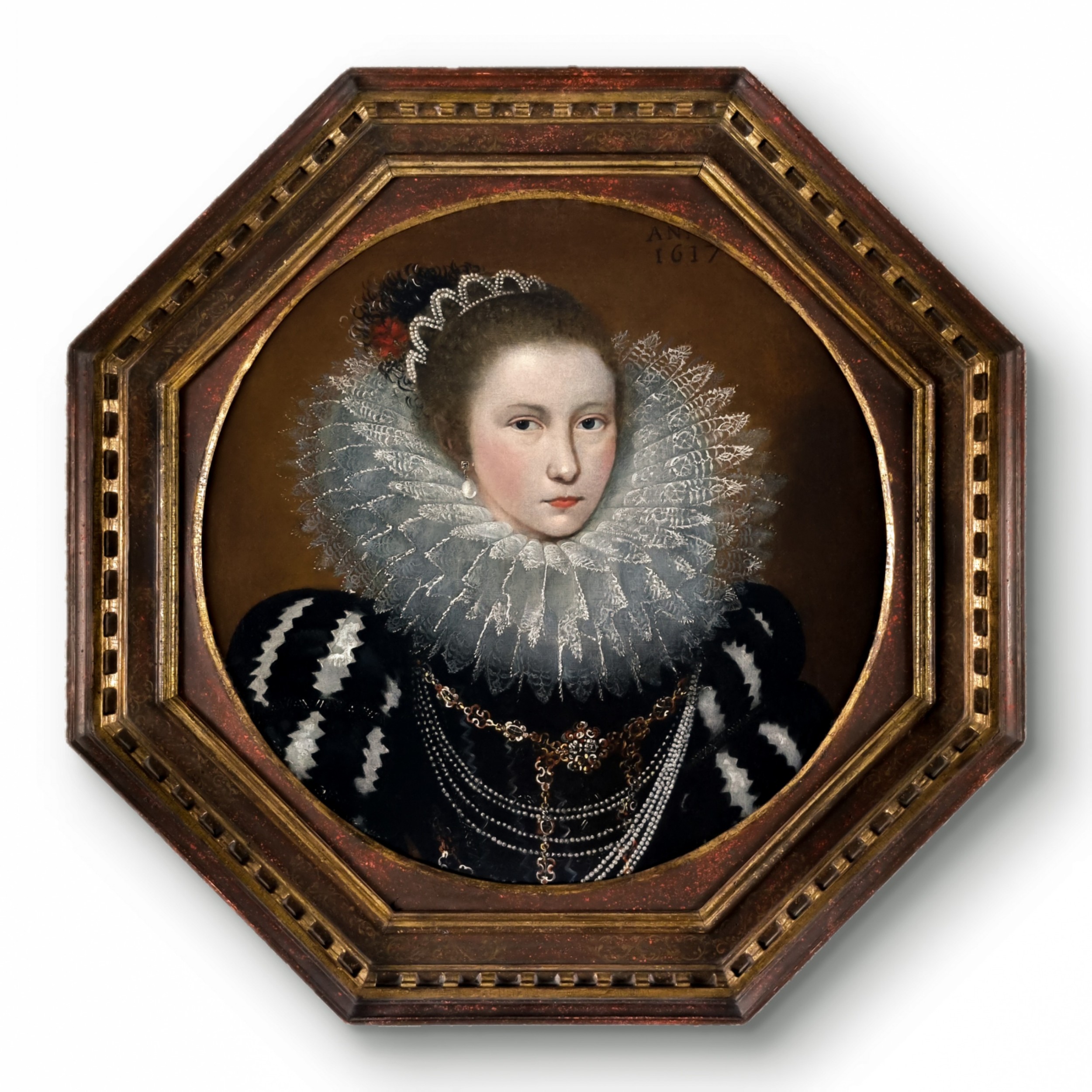
Portrait of a Young Lady in an Elaborate Ruff, Dated 1617; Circle of Frans Pourbus the Younger (1569–1622), Oil on Canvas Painting