It was listed by Titan Fine Art. Sold pieces stay on Sellingantiques as a record of what has passed through, and the next one is rarely far away.
Titan Fine Art has dated this 18th Century Oil Painting to the 18th Century.
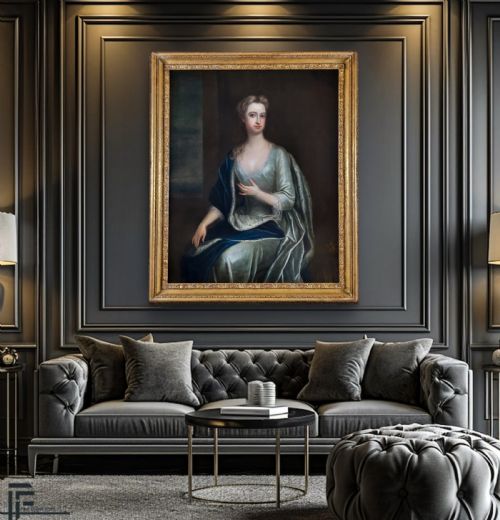
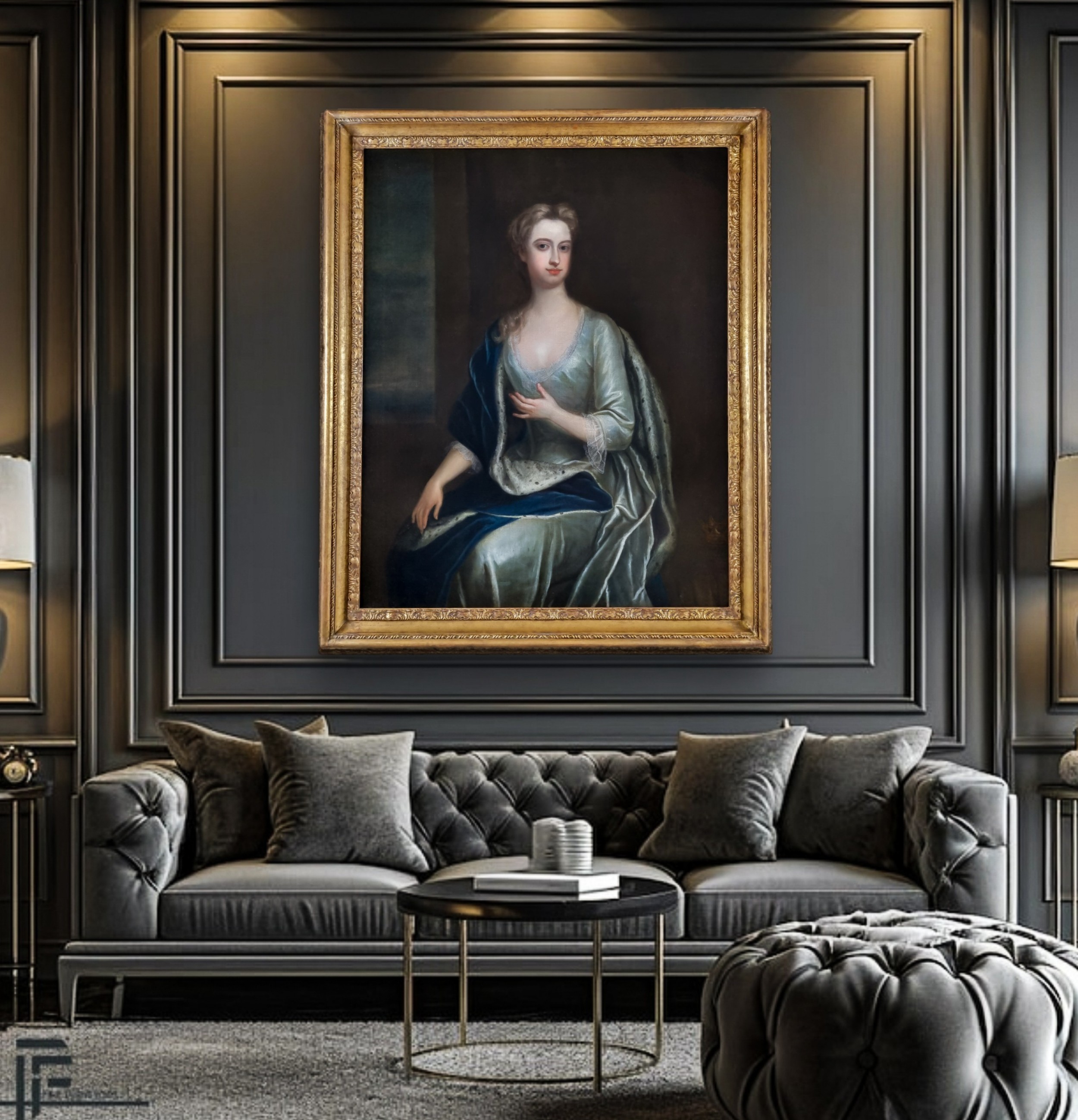
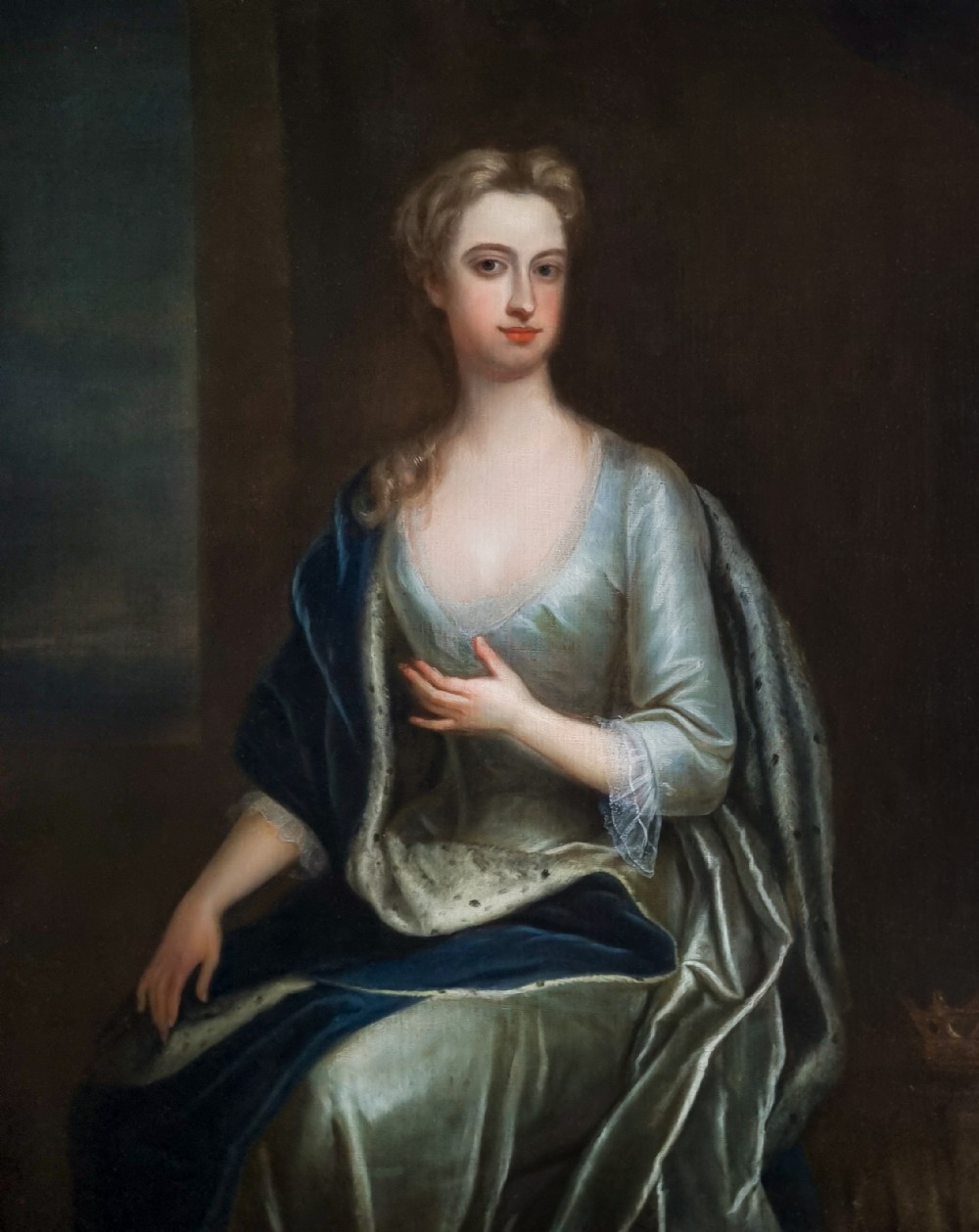
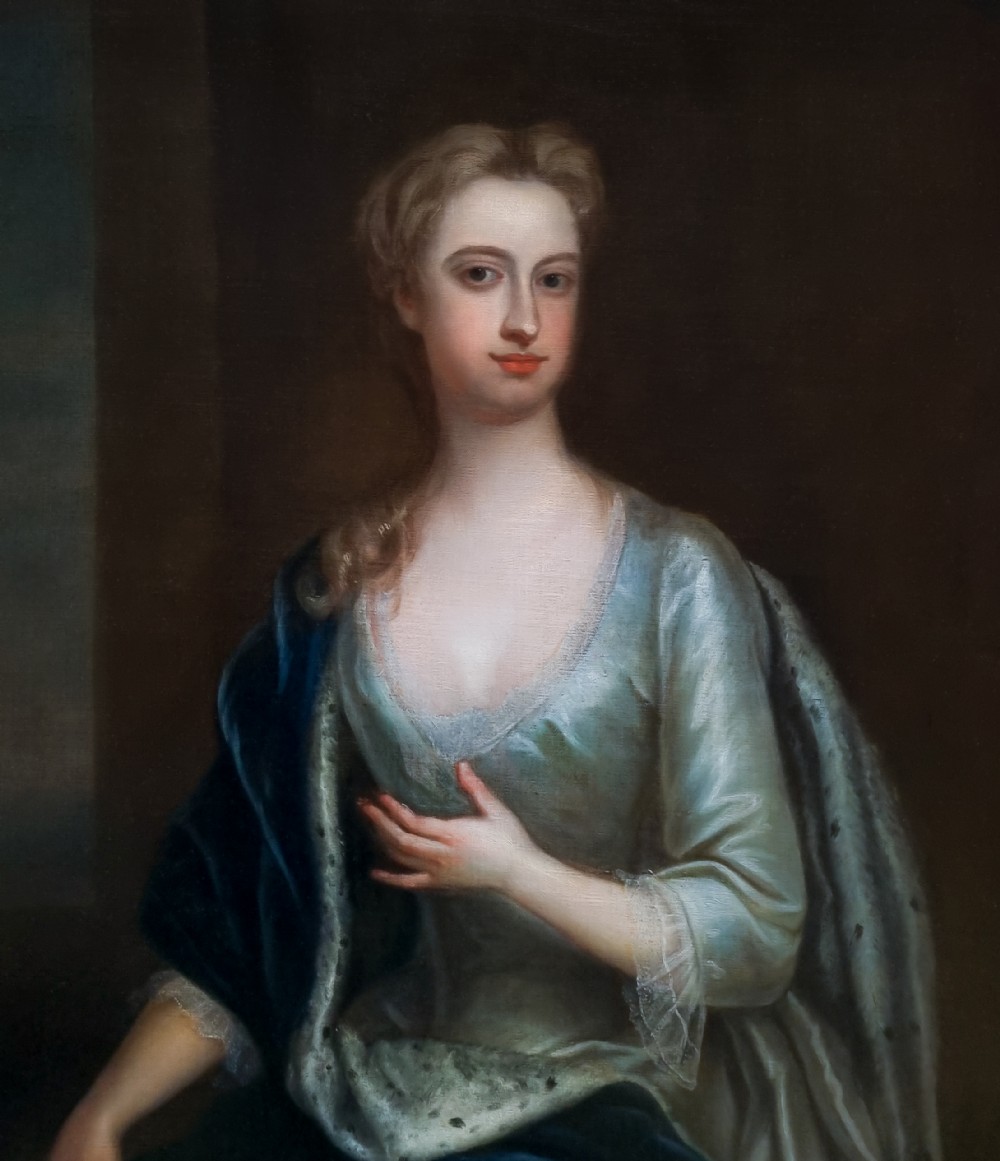
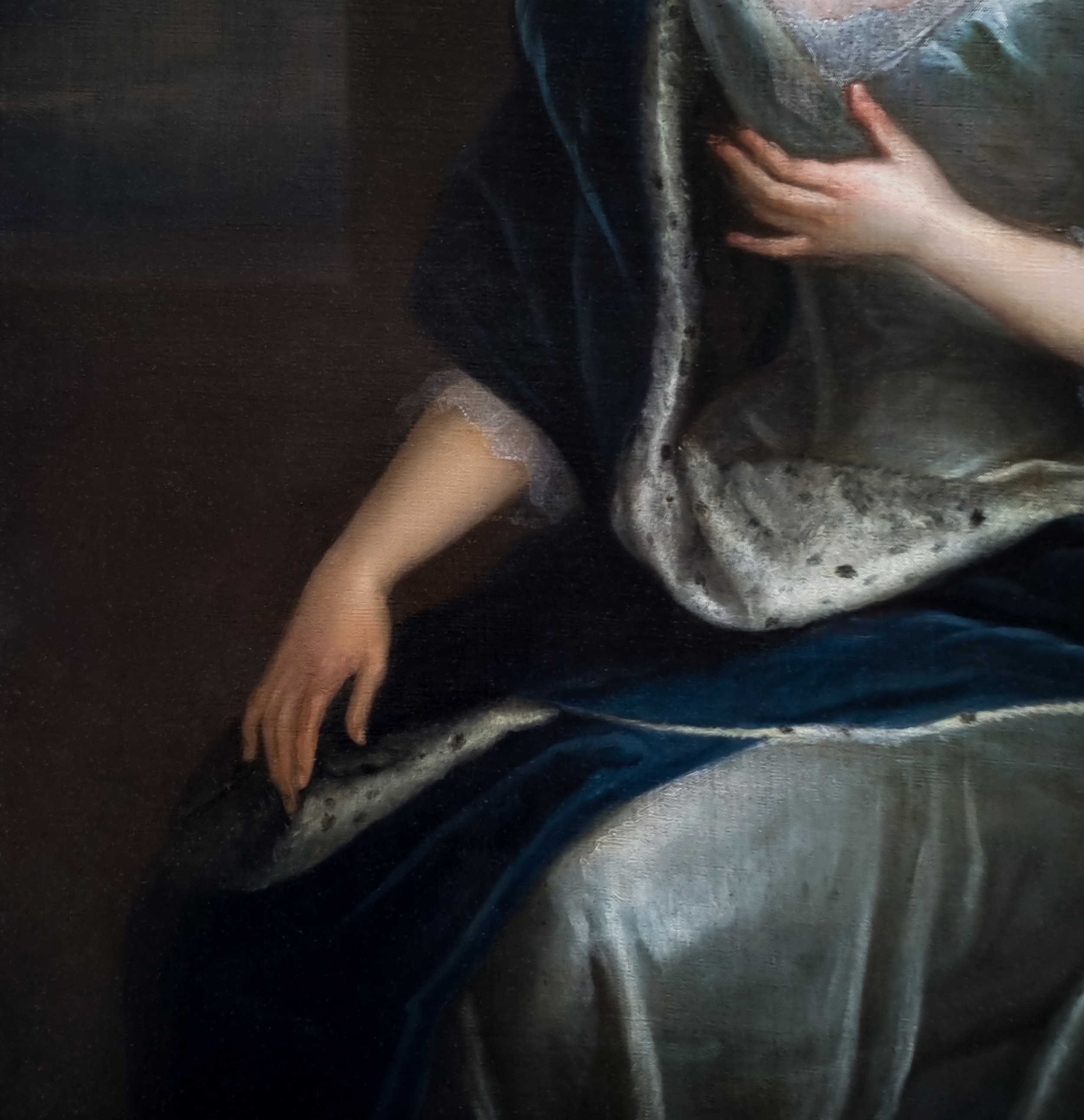
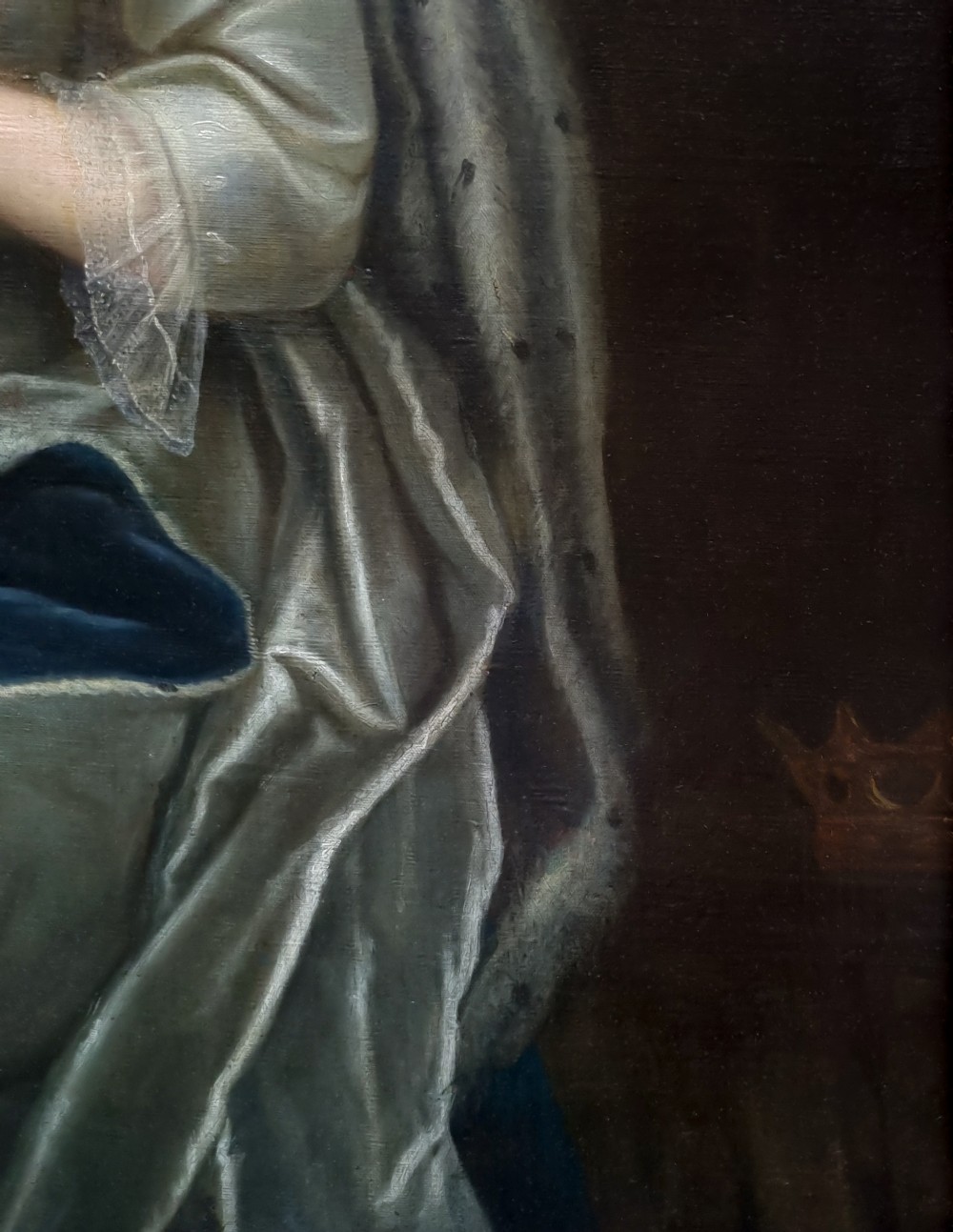
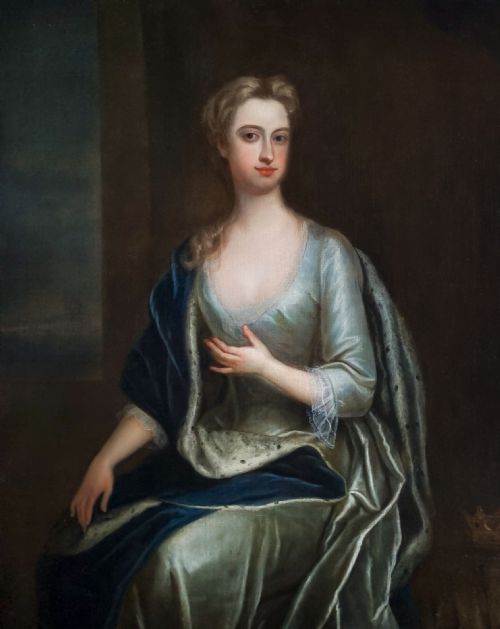
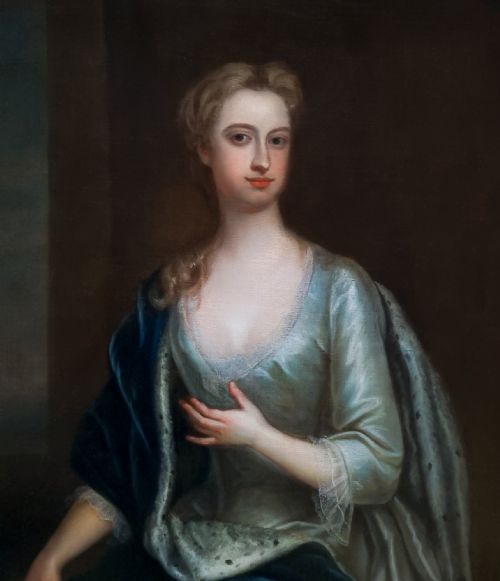
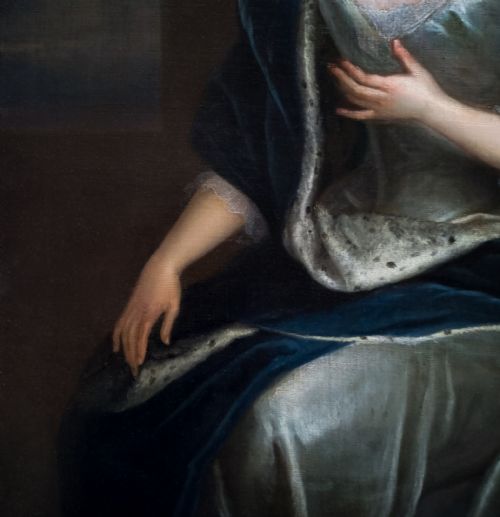
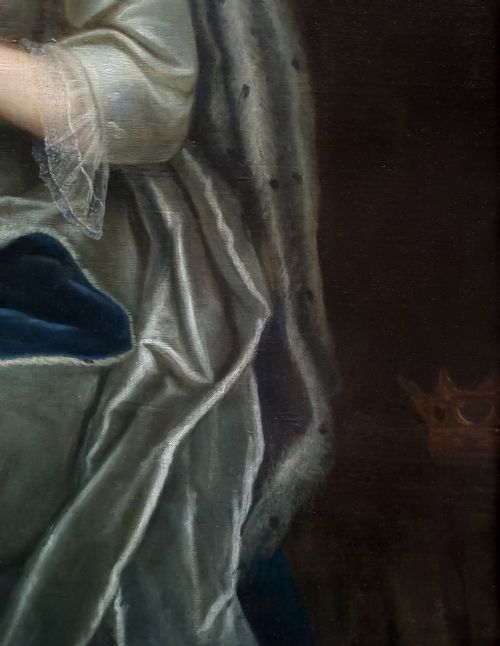
The sitter has been portrayed in a silver dress and an ermined-lined azure cape, seated beside a crown resting on a draped table. The subject is said to be Frances, Viscountess Scudamore (c.1684-1729). Born Francis Digby, she was the daughter of Simon Digby, 4th Baron Digby. Like so many other titled women at the early Georgian court who made prominent political marriages, she was an only surviving daughter who inherited a substantial part of her father's wealth, thus making the alliance an attractive and valuable business investment for the Scudamore family. It appears as though she was brought up in Coleshill, the house of her uncle William Digby, the 5th Baron Digby, and his wife Jane, as one of their own children, the couple also had four sons and eight daughters. In 1698, when she was fifteen, her uncle's cousin died and left him the estates concentrated around Sherborne Castle, in Dorset, a sprawling mansion originally built for Sir Walter Ralegh and greatly extended in the seventeenth century.
On 7th March 1706, our sitter married the English landowner and politician, James, 3rd Viscount Scudamore (c.1684-1716); her husband was her exact contemporary in age. The couple must have removed to Holme Lacy, the substantial estates in Herefordshire that the 3rd Viscount had inherited, along with the title, in 1697. Four years later, in 1710, Lady Scudamore's husband nearly died from injuries relating to a horrible fall from his horse, and after he recovered, he was noticeably intellectually disabled. He did succumb, likely to complications attendant on his accident, on 2 December 1716. The Dowager Viscountess appears to have withdrawn to Twickenham, the bohemian suburb on the upper banks of the Thames favoured by the nobility, and there immersed herself in literary society, introducing Alexander Pope to her uncle and entertaining Pope, John Gay and the playwright Thomas Southerne from time-to-time at Holme Lacy. Lady Scudamore died in 1729.
The couple had one daughter Frances (1711–c.1750), who married Henry Somerset, 3rd Duke of Beaufort, who divorced her in 1743 for adultery with William Talbot, 1st Earl Talbot. She remarried to Charles FitzRoy-Scudamore, the illegitimate son of the 1st Duke of Grafton, and the couple had one daughter Frances (1750–1820), who married Charles Howard, 11th Duke of Norfolk - this marriage produced no heirs and eventually the Scudamore property reverted to a collateral descendant of the 1st Viscount.
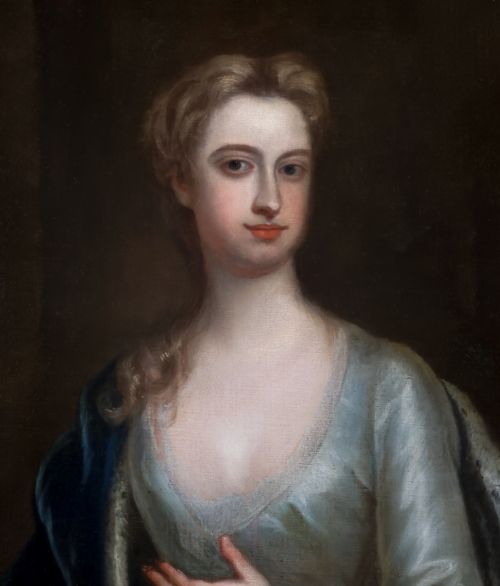
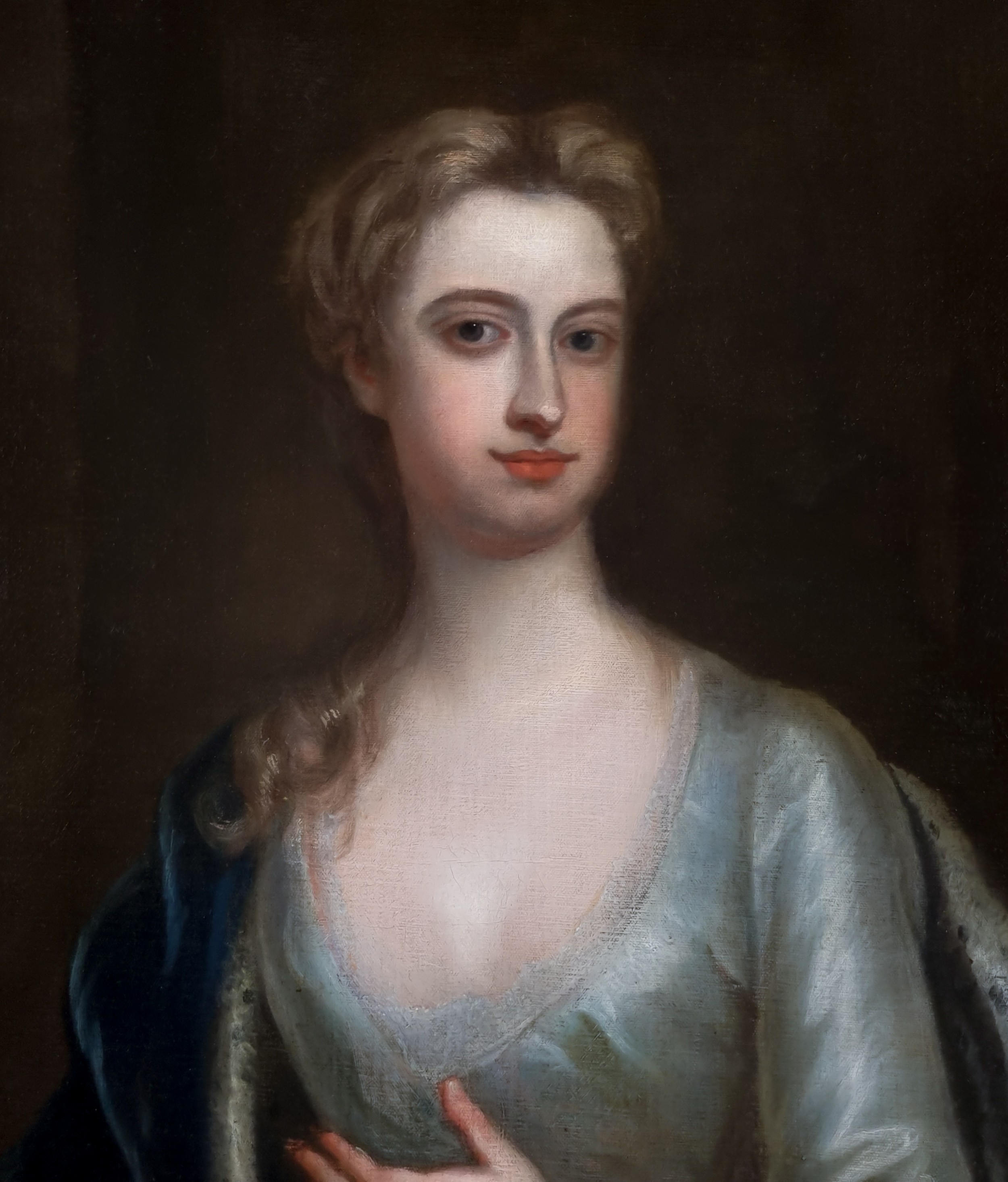
The sitter appears to be around 25 to 35 years of age, and based on the stye of clothing and hair, and the Viscountess’ crown, the portrait was most likely painted between 1709, when Jervas returned to London, and 1719, the year of Lord Scudamor’s death.
Charles Jervas was born in Ireland in 1675 and received his artistic training in Kneller’s studio, and was later his assistant. He studied abroad and on his return to London in 1709 Tatler (15th April 1709) remarked that he was 'the last great painter Italy has sent us'. In 1727 he married a widow, Penelope Hume, a lady of considerable means (£20,000). He died in November 1739 and in following spring his considerable art collection was sold in 2265 lots over 9 days.
Apart from royalty Jervas gained the patronage of many of the ruling and intellectual elite. He moved in the highest circles of the literary and social world and became an intimate of Sir Robert Walpole and the poet Alexander Pope, to whom he gave drawing lessons.
Titan Fine Art has dated this 18th Century Oil Painting to the 18th Century.
Specialist in 17th & 18thc portraits. Highly curated selection, museum-level research & pro conservation. Exceptional art, expertly vetted.
You can view the stock and full dealer information on the Titan Fine Art Profile Page
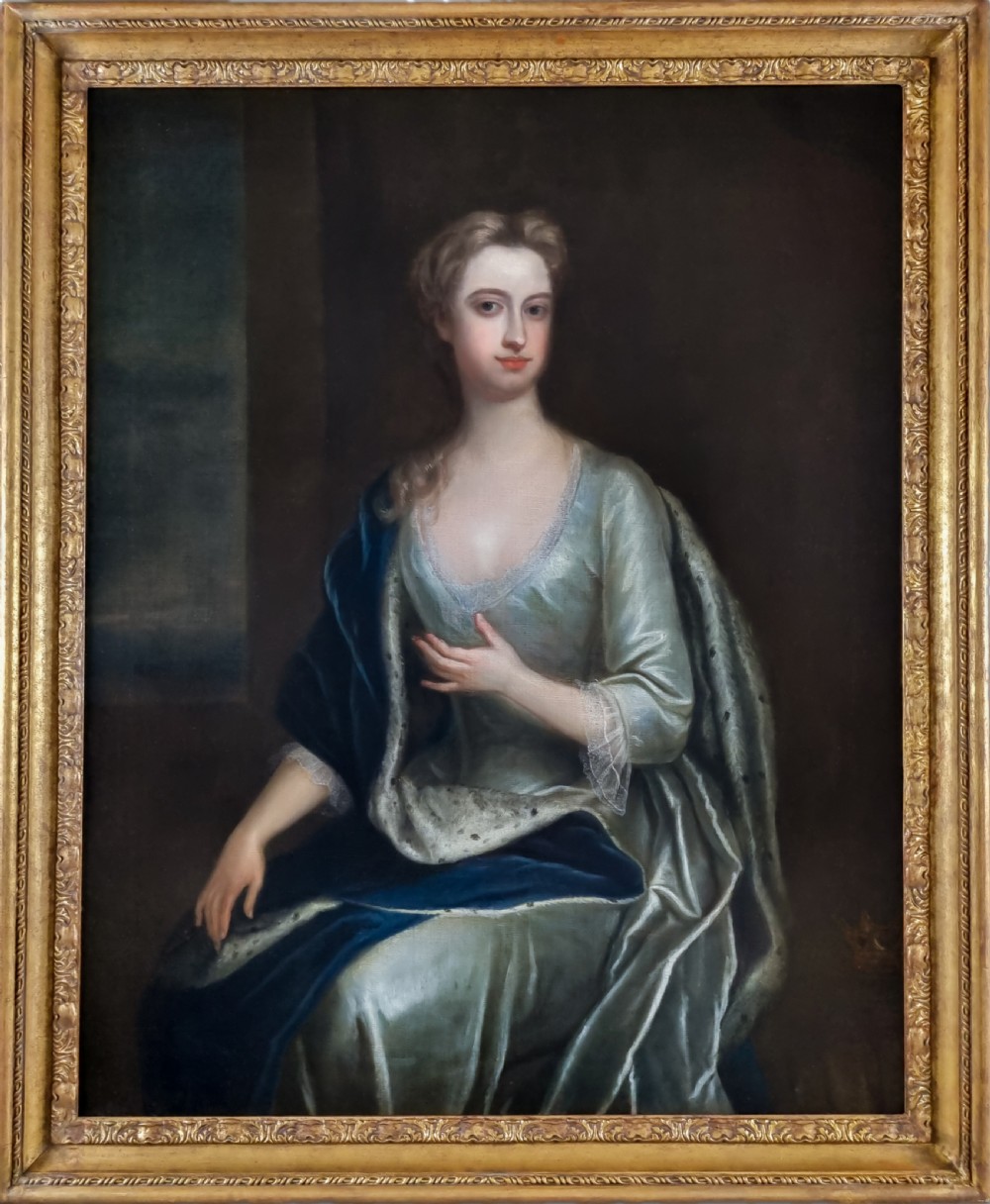
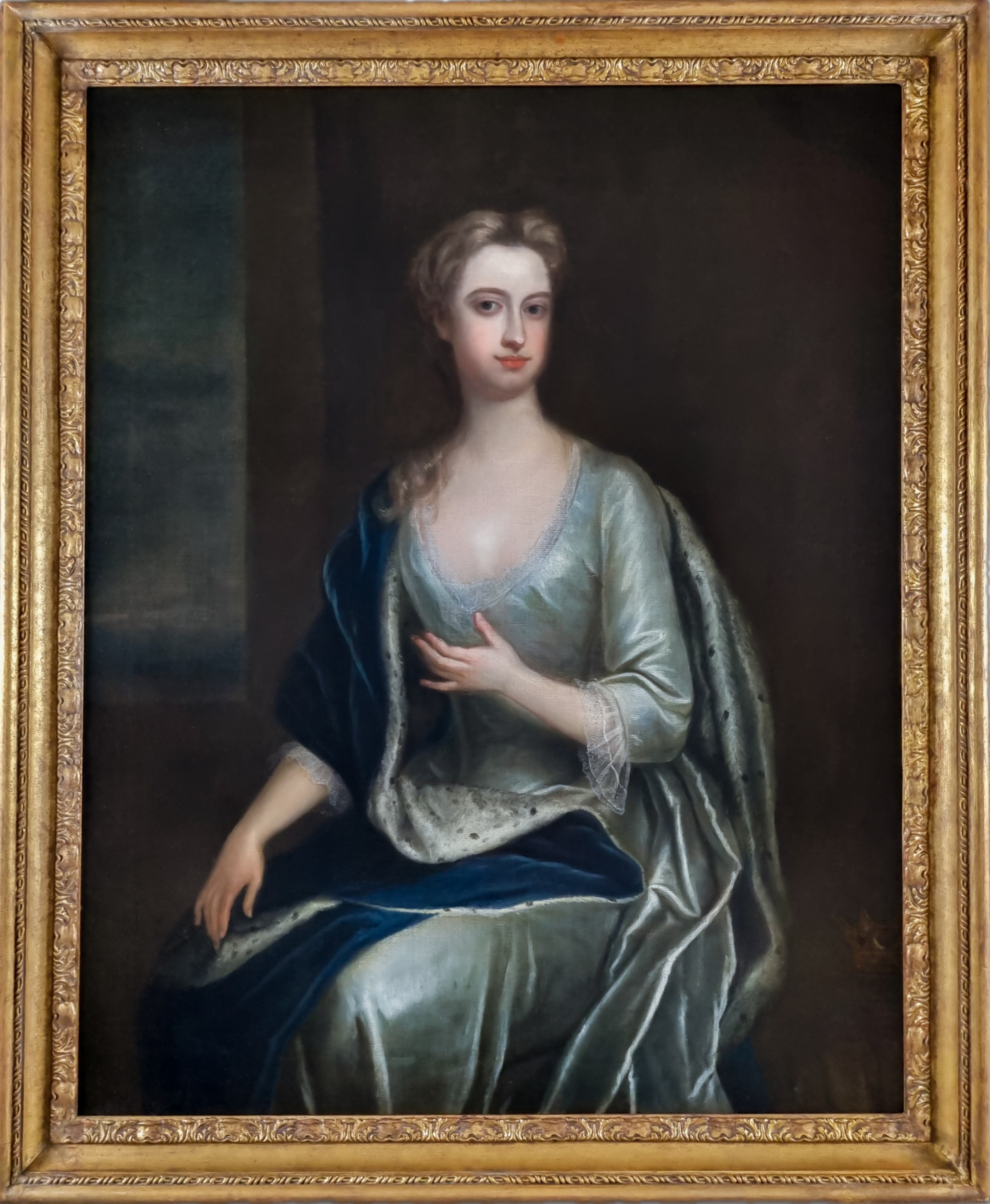
Portrait of a Lady, Frances, Viscountess Scudamore in a Silver Dress and Blue Cloak C.1709-1719; by Charles Jervas (1675-1739), Oil on Canvas Painting