35,801  PAGES BROWSED TODAY PAGES TODAY 88 ANTIQUES UPLOADED TODAYNEW ARRIVALS
88 ITEMS ADDED TODAY
Sort Order
Items Per Page
Browse Categories
Sort order
Items per page
ID #SA1078227
SOLD
Email
Save
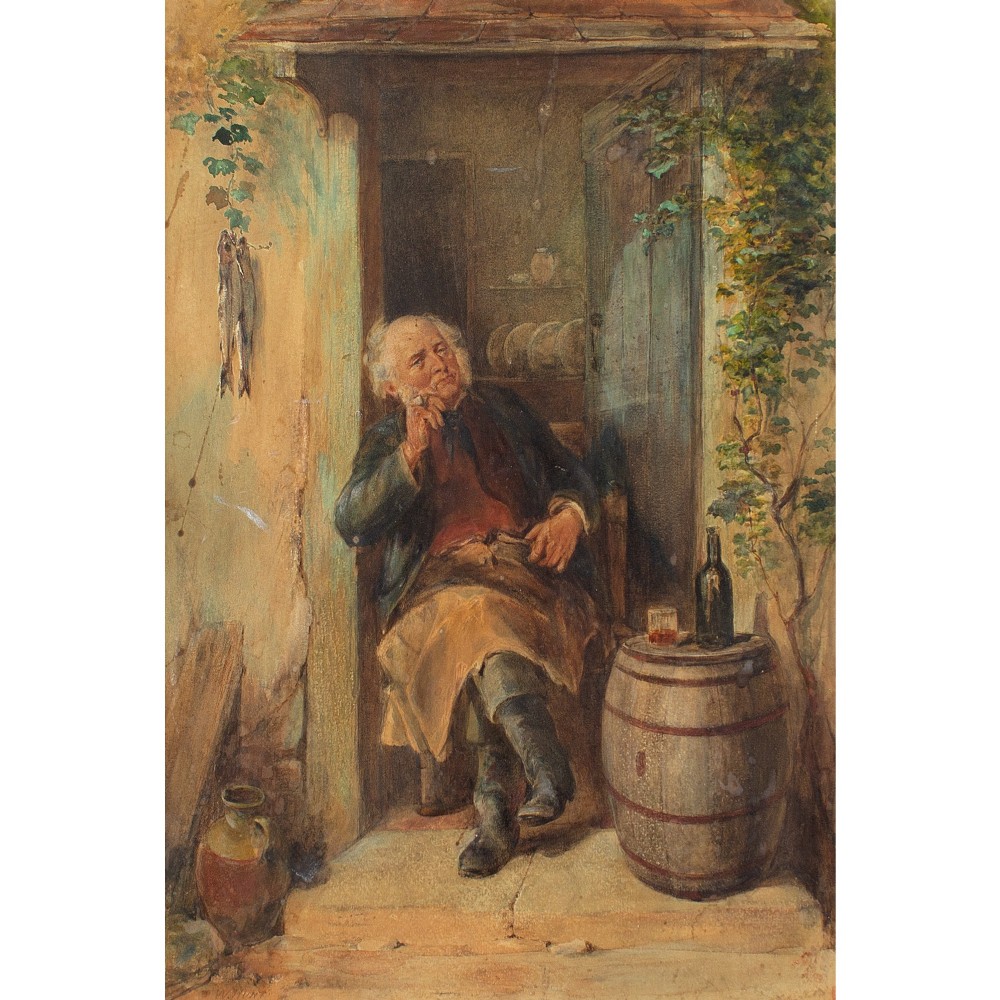
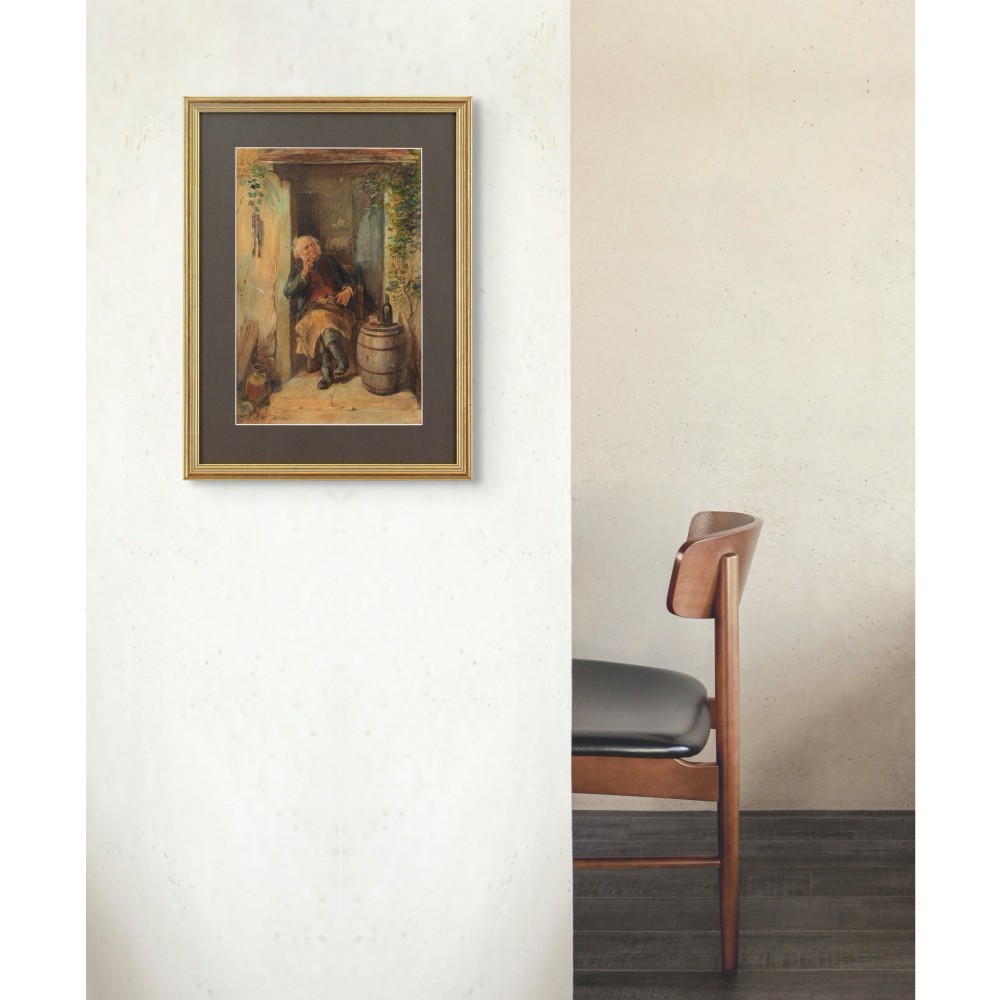
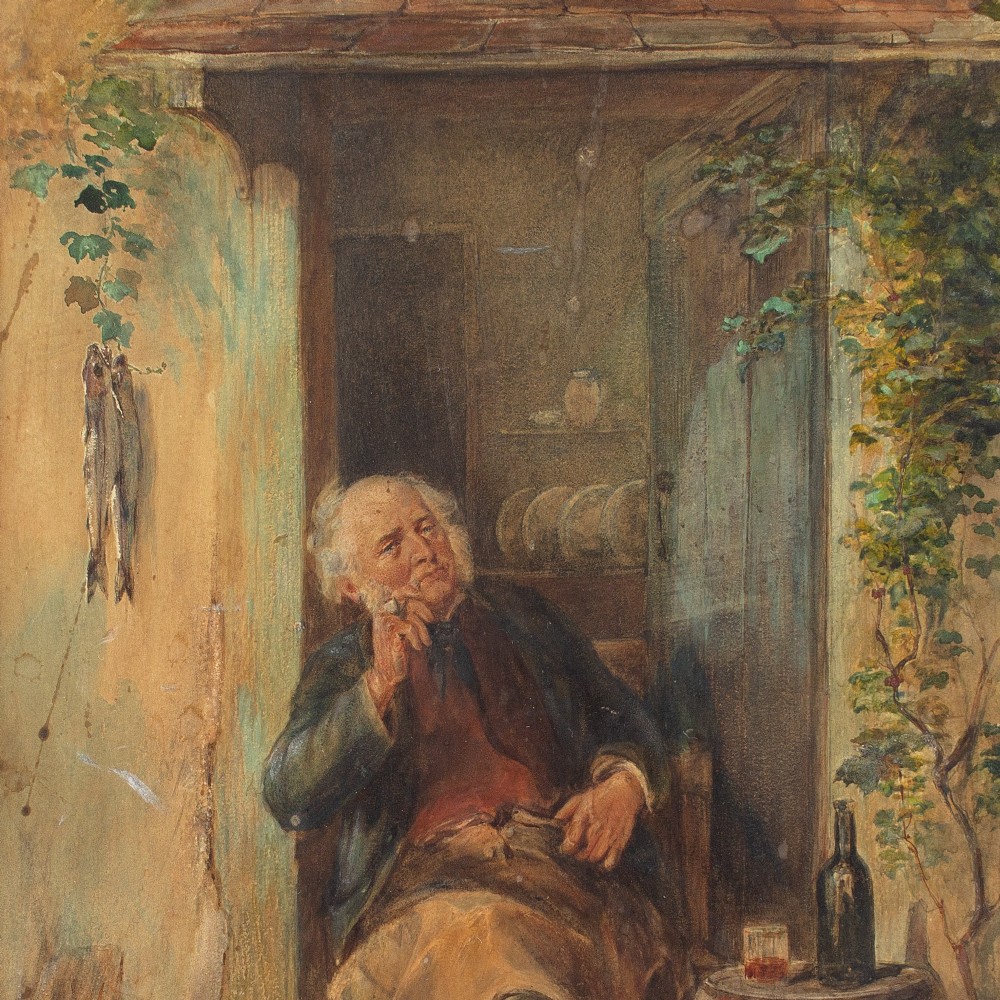
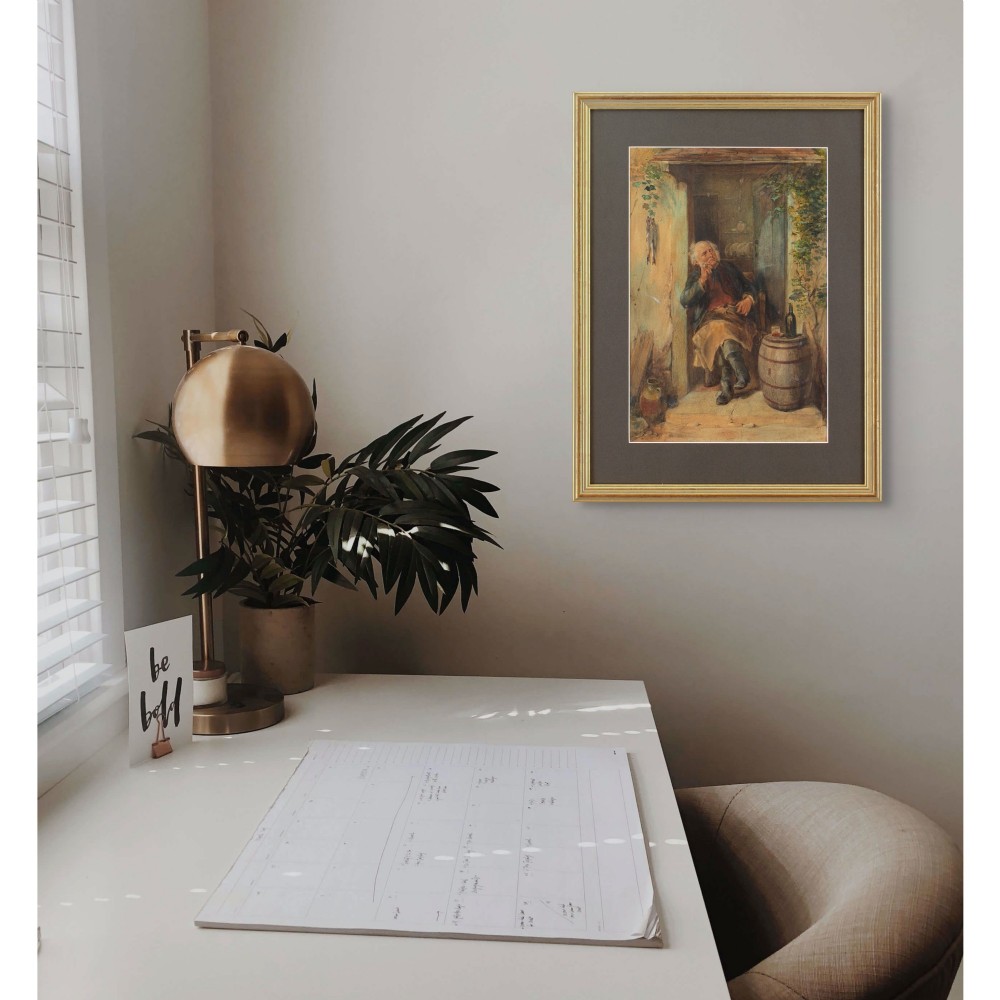
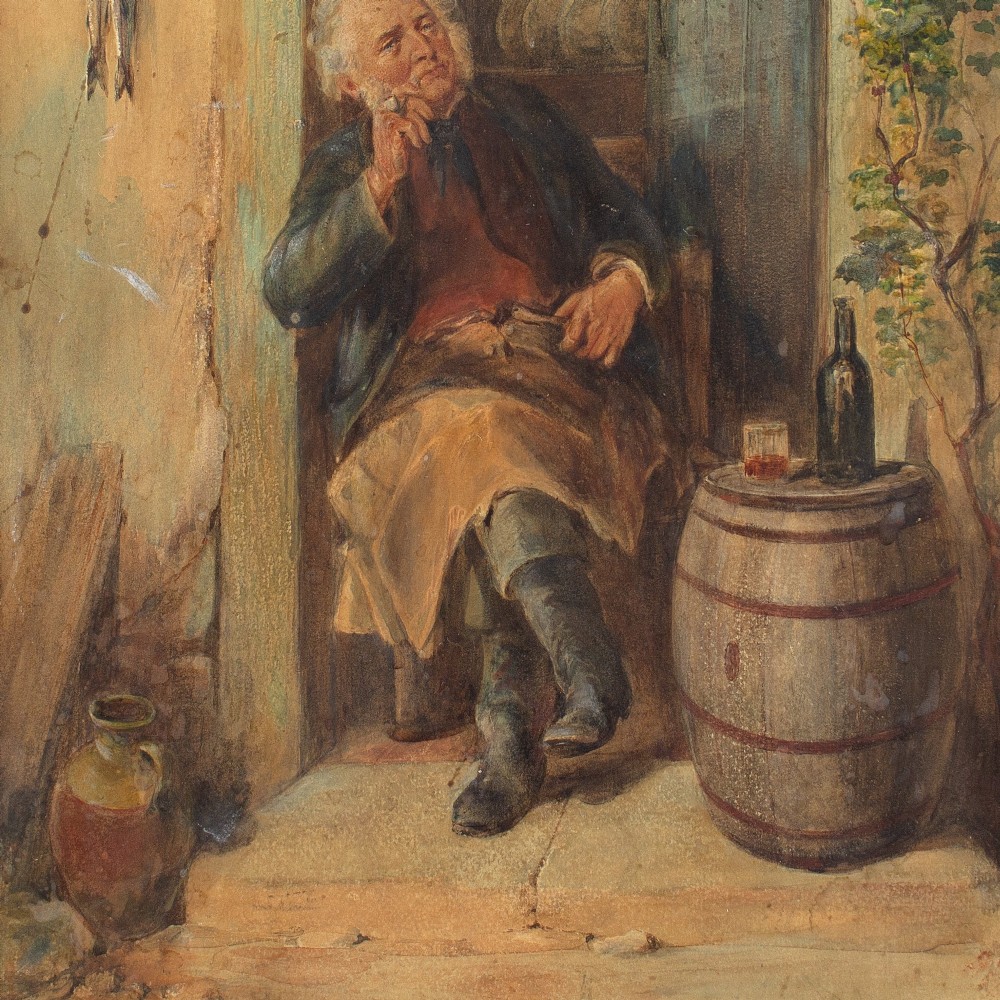
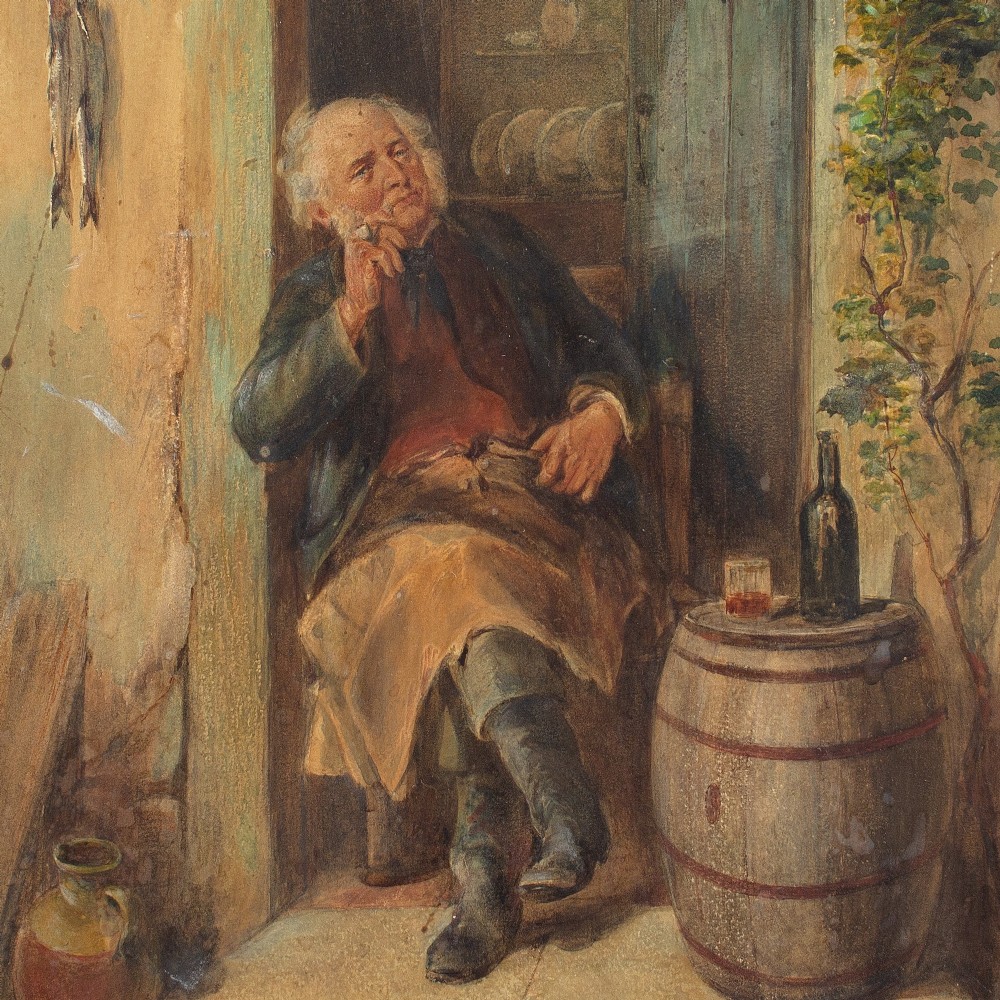
William Henry Hunt, Portrait of a Restful Man in a Doorway - Antique Watercolour
Brave Fine Art
sold SA1078227
Sorry, but this item has been sold.
Brave Fine Art

Brave Fine Art

Sellingantiques Verified Since Nov 2018
View Dealers Stock Page
  • About Us
    Exquisite antique paintings that capture the imagination.
Id #SA1078227
PDF SHARE
SAVE

William Henry Hunt, Portrait of a Restful Man in a Doorway - Antique Watercolour

19th century
Description

This charming mid-19th-century watercolour by British artist William Henry Hunt (1790-1864) depicts an older gentleman resting in a cottage doorway.

The son of a tinplate maker, Hunt was hindered in helping his father’s business by a physical disability to his legs. The father agreed, therefore, for his son to pursue the artistic zeal he had always shown and acquired him an apprenticeship under watercolourist John Varley (1778-1842). During his time with Varley, the young man would make sketches of the surrounding landscapes, often with his friend and fellow pupil John Linnell (1792-1882). It was perhaps these younger years with Varley that infused Hunt with a love for nature. Varley would often say "go to nature for everything."
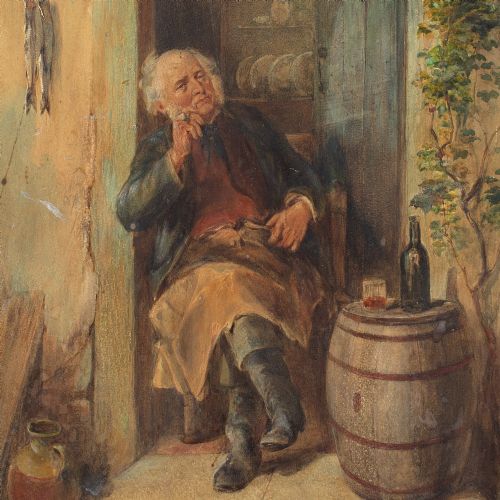
It was through Varley that Hunt was introduced to Doctor Thomas Munro (1759-1833). Monro was a patron to young watercolourists and took many notable aspiring artists under his wing, including J.M.W. Turner (1775-1851) and Peter de Wint (1784-1849). He was in good company and, alongside the nourishing environment Munro offered him, he also attended lessons at Royal Academy Schools. He began exhibiting within its hallowed halls in 1807.
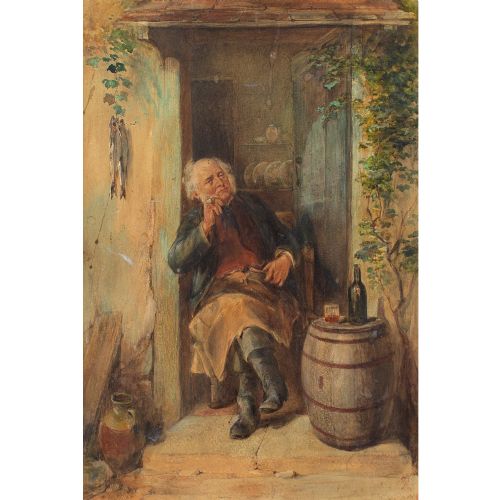
The productions of Hunt’s early years were primarily landscapes and architectural drawings. Indeed, by 1815 it seems he had established himself as an artist producing these types of works. Colours are vibrant in these early pieces which would become a staple of his oeuvre as his career progressed. The dining room at the Earl of Essex’s residence of Cassiobury House is drenched in glorious emerald wallpaper. Gold glints with unnerving realism from the luxurious furniture and decoration.
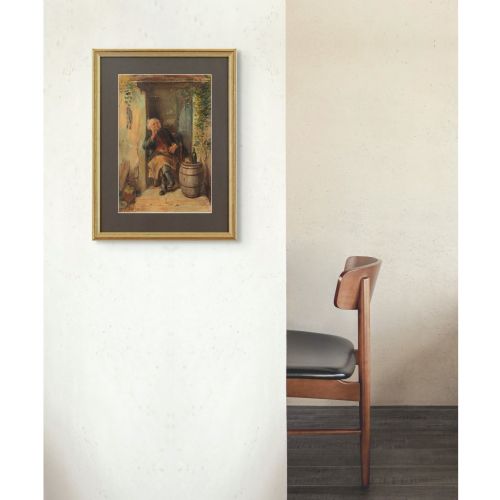
Indeed, the Earl of Essex would become an important early patron for Hunt’s art, as would the Duke of Devonshire. As Hunt’s career progressed and he became more renowned, they would also become figures of jealousy for others. Novelist William Makepeace Thackeray would comment that if he were the Duke of Devonshire, he would hang “a couple of Hunts in every room in all my houses”.
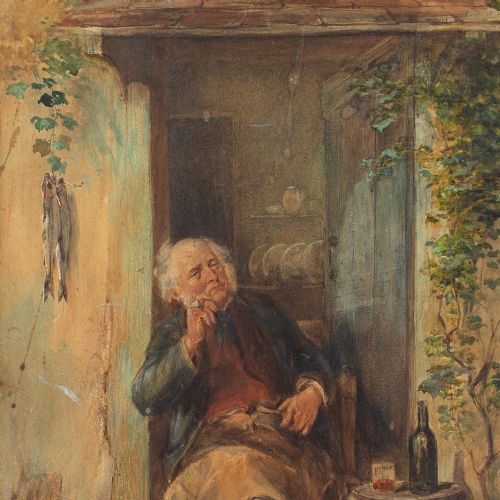
It was Hunt, along with other prominent artists such as J.M.W. Turner, who would elevate the status of watercolour as a medium. With John Varley’s celebration of nature instilled in his mind, he began producing still lifes focussing on the minutiae of the natural world around him. He was made a full member of the Society for Painters in Watercolour only two years after becoming an associate.
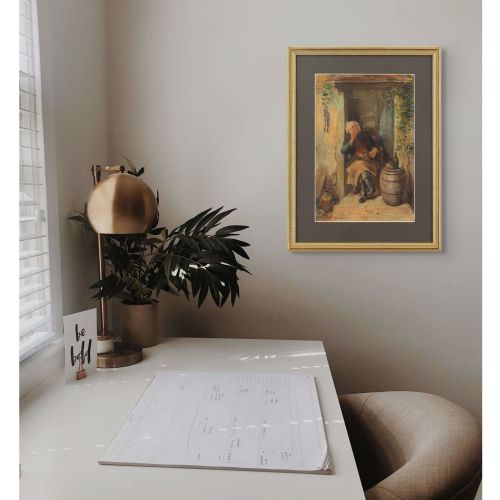
Still life, too, saw an elevation under his hand. Typically regarded as the lowest genre of art, it was the work of Hunt and others that would generate increasing respect both in the art world and among the public. He saw many buyers among the middle classes. With the breaking down of the old traditional hierarchies and the growing celebration of nature, his works seem to represent a convergence of some of the key art developments of the 19th century.
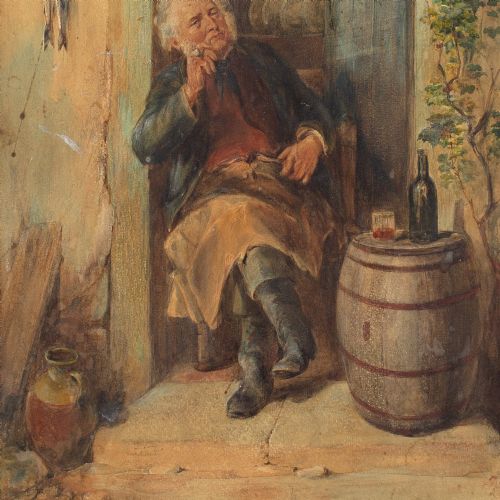
Whilst his still life paintings are his most enduring legacy, Hunt would also produce a number of successful genre scenes during his career. These images focus on subjects of a more rural, rustic life, often posed in cottages or farmhouses, as we here. Injected with his typical realism and strong colourisation, they are executed with varying levels of humour or gravitas. Each of his genre scenes found an audience and they were incredibly successful.
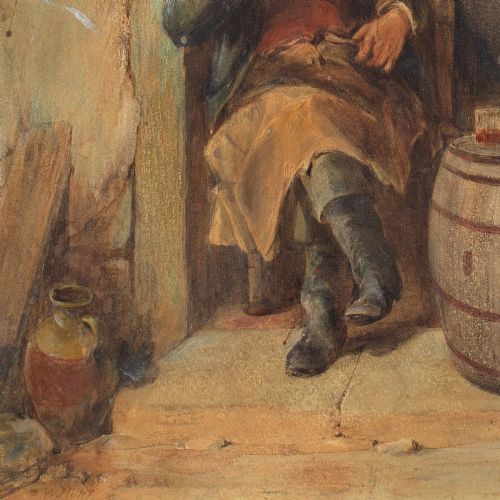
Upon Hunt’s death in 1864, the art critic John Ruskin would write to his daughter, Emma, that “no one living of your father’s friends will mourn him more deeply than I” and “it was my pride, that I could recognise his unrivalled powers in art.”
Though greatly celebrated, Hunt never seemed to rest on his laurels - famously stating that “it is never late to do better.” Perhaps it was this constant challenging of his own abilities that led to him becoming one of the foremost Victorian watercolourists.

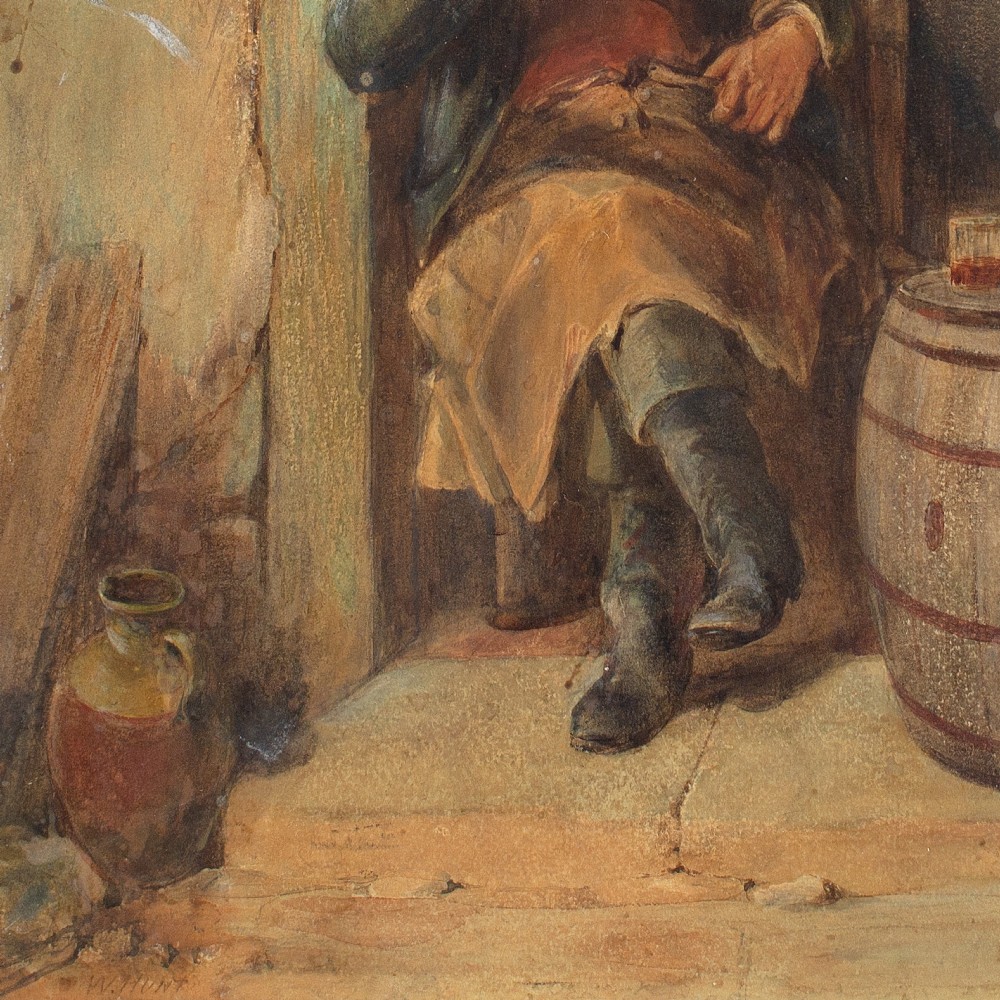
Signed i

Physical Dimensions
Height
59cm (23.23")
Width
44cm (17.32")
Depth
1cm (0.39")
Declaration

Brave Fine Art has dated this piece to the 1850s.

Reference Numbers
Sellingantiques Reference
SA1078227
Description
This charming mid-19th-century watercolour by British artist William Henry Hunt (1790-1864) depicts an older gentleman resting in a cottage doorway.
The son of a tinplate maker, Hunt was hindered in helping his father’s business by a physical disability to his legs.
Brave Fine Art

The father agreed, therefore, for his son to pursue the artistic zeal he had always shown and acquired him an apprenticeship under watercolourist John Varley (1778-1842). During his time with Varley, the young man would make sketches of the surrounding landscapes, often with his friend and fellow pupil John Linnell (1792-1882). It was perhaps these younger years with Varley that infused Hunt with a love for nature. Varley would often say "go to nature for everything."

fig 1. William Henry Hunt, Portrait Of A Restful Man In A Doorway - Antique Watercolour
fig 1. William Henry Hunt, Portrait of a Restful Man in a Doorway - Antique Watercolour

It was through Varley that Hunt was introduced to Doctor Thomas Munro (1759-1833). Monro was a patron to young watercolourists and took many notable aspiring artists under his wing, including J.M.W. Turner (1775-1851) and Peter de Wint (1784-1849). He was in good company and, alongside the nourishing environment Munro offered him, he also attended lessons at Royal Academy Schools. He began exhibiting within its hallowed halls in 1807.

fig 2. William Henry Hunt, Portrait Of A Restful Man In A Doorway - Antique Watercolour
fig 2. William Henry Hunt, Portrait of a Restful Man in a Doorway - Antique Watercolour

The productions of Hunt’s early years were primarily landscapes and architectural drawings. Indeed, by 1815 it seems he had established himself as an artist producing these types of works. Colours are vibrant in these early pieces which would become a staple of his oeuvre as his career progressed. The dining room at the Earl of Essex’s residence of Cassiobury House is drenched in glorious emerald wallpaper. Gold glints with unnerving realism from the luxurious furniture and decoration.

fig 3. William Henry Hunt, Portrait Of A Restful Man In A Doorway - Antique Watercolour
fig 3. William Henry Hunt, Portrait of a Restful Man in a Doorway - Antique Watercolour

Indeed, the Earl of Essex would become an important early patron for Hunt’s art, as would the Duke of Devonshire. As Hunt’s career progressed and he became more renowned, they would also become figures of jealousy for others. Novelist William Makepeace Thackeray would comment that if he were the Duke of Devonshire, he would hang “a couple of Hunts in every room in all my houses”.

fig 4. William Henry Hunt, Portrait Of A Restful Man In A Doorway - Antique Watercolour
fig 4. William Henry Hunt, Portrait of a Restful Man in a Doorway - Antique Watercolour

It was Hunt, along with other prominent artists such as J.M.W. Turner, who would elevate the status of watercolour as a medium. With John Varley’s celebration of nature instilled in his mind, he began producing still lifes focussing on the minutiae of the natural world around him. He was made a full member of the Society for Painters in Watercolour only two years after becoming an associate.

fig 5. William Henry Hunt, Portrait Of A Restful Man In A Doorway - Antique Watercolour
fig 5. William Henry Hunt, Portrait of a Restful Man in a Doorway - Antique Watercolour

Still life, too, saw an elevation under his hand. Typically regarded as the lowest genre of art, it was the work of Hunt and others that would generate increasing respect both in the art world and among the public. He saw many buyers among the middle classes. With the breaking down of the old traditional hierarchies and the growing celebration of nature, his works seem to represent a convergence of some of the key art developments of the 19th century.

fig 6. William Henry Hunt, Portrait Of A Restful Man In A Doorway - Antique Watercolour
fig 6. William Henry Hunt, Portrait of a Restful Man in a Doorway - Antique Watercolour

Whilst his still life paintings are his most enduring legacy, Hunt would also produce a number of successful genre scenes during his career. These images focus on subjects of a more rural, rustic life, often posed in cottages or farmhouses, as we here. Injected with his typical realism and strong colourisation, they are executed with varying levels of humour or gravitas. Each of his genre scenes found an audience and they were incredibly successful.

fig 7. William Henry Hunt, Portrait Of A Restful Man In A Doorway - Antique Watercolour
fig 7. William Henry Hunt, Portrait of a Restful Man in a Doorway - Antique Watercolour

Upon Hunt’s death in 1864, the art critic John Ruskin would write to his daughter, Emma, that “no one living of your father’s friends will mourn him more deeply than I” and “it was my pride, that I could recognise his unrivalled powers in art.”

fig 8. William Henry Hunt, Portrait Of A Restful Man In A Doorway - Antique Watercolour
fig 8. William Henry Hunt, Portrait of a Restful Man in a Doorway - Antique Watercolour

Though greatly celebrated, Hunt never seemed to rest on his laurels - famously stating that “it is never late to do better.” Perhaps it was this constant challenging of his own abilities that led to him becoming one of the foremost Victorian watercolourists.

Signed i

Height
59cm (23.23")
Width
44cm (17.32")
Depth
1cm (0.39")
Date of Manufacture

Brave Fine Art has dated this piece to the 1850s.

Reference Numbers
Sellingantiques Ref
SA1078227
Brave Fine Art
Brave Fine Art
Sellingantiques verified Since Nov 2018

Exquisite antique paintings that capture the imagination.

Dealer Profile

You can view the stock and full dealer information on the Brave Fine Art Profile Page
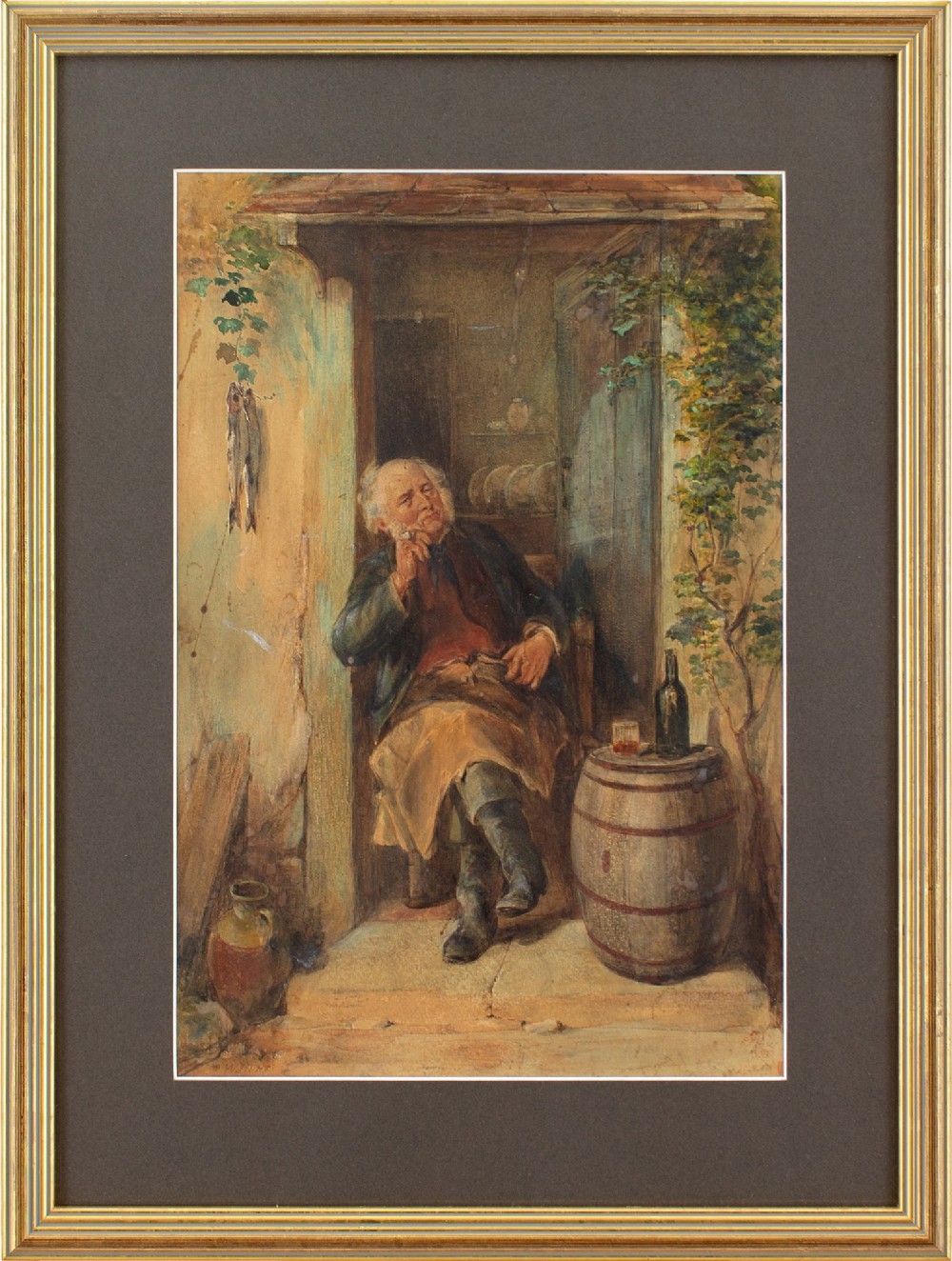
PDF SHARE
SAVE
William Henry Hunt, Portrait Of A Restful Man In A Doorway - Antique Watercolour
1 / 9
Archive I William Henry Hunt, Portrait Of A Restful Man In A Doorway - Antique Watercolour

William Henry Hunt, Portrait of a Restful Man in a Doorway - Antique Watercolour
Archive II William Henry Hunt, Portrait Of A Restful Man In A Doorway - Antique Watercolour View II
Archive III William Henry Hunt, Portrait Of A Restful Man In A Doorway - Antique Watercolour View III
Archive IV William Henry Hunt, Portrait Of A Restful Man In A Doorway - Antique Watercolour View IV
Archive V William Henry Hunt, Portrait Of A Restful Man In A Doorway - Antique Watercolour View V
Archive VI William Henry Hunt, Portrait Of A Restful Man In A Doorway - Antique Watercolour View VI
Archive VII William Henry Hunt, Portrait Of A Restful Man In A Doorway - Antique Watercolour View VII
Archive VIII William Henry Hunt, Portrait Of A Restful Man In A Doorway - Antique Watercolour View VIII
Archive IX William Henry Hunt, Portrait Of A Restful Man In A Doorway - Antique Watercolour View IX
Enlarged Archival View
Telephone 01684 215986
Location
21 Enterprise Way
Arle Road
Cheltenham
Cotswolds
GL51 8LZ
United Kingdom

Under appointment only.
Verified Since Nov 2018
Items For Sale 66
Items Sold 1,841
Brave Fine Art
Brave Fine Art
Verified Since Nov 2018
View Dealer Info
Location: 21 Enterprise Way, Arle Road, Cheltenham, Cotswolds, GL51 8LZ, United Kingdom, , Under appointment only.
Verified
Nov 2018
For Sale
66
Sold
1,841
William Henry Hunt, Portrait Of A Restful Man In A Doorway - Antique Watercolour
Ref: SA1078227
William Henry Hunt, Portrait Of A Restful Man In A Doorway - Antique Watercolour
Detail View 1
Detail View 2
Detail View 3
Detail View 4
Detail View 5
Detail View 6
Detail View 7
Detail View 8
Archival Detail
Every single antique dealer on our platform is individually approved by our internal team. We verify their professional trade history, ethical standards, and photographic quality to ensure a secure, high-standard buying environment. Upon joining, every dealer agrees to a strict 9-point code of conduct. While issues can occasionally arise, our dealers typically resolve them swiftly and directly with the buyer. In fact, since our founding in 2002, Sellingantiques has only had to step in to help resolve an issue on roughly five occasions—a true testament to the quality of our dealers and their dedication to your happiness.
Our dealers are highly experienced in packing and shipping fragile, high-value antiques. Because you are in direct contact with the dealer, you will be able to easily go through all available shipping and insurance options together to ensure your item arrives safely.
Antiques are the ultimate green purchase. By choosing historical pieces over newly manufactured goods, you completely eliminate the carbon footprint of modern mass production while preserving exceptional, timeless craftsmanship.
items
Add keywords to the filter
Price
£100
£250000
Era
Movements
Material
Origin
Stock Location
Freshness
Online Payments
Categories