


Traditional Watercolours
Traditional watercolours capture the shifting light of British landscapes and quiet domestic scenes on paper through delicate washes of pigment.
Traditional Watercolours
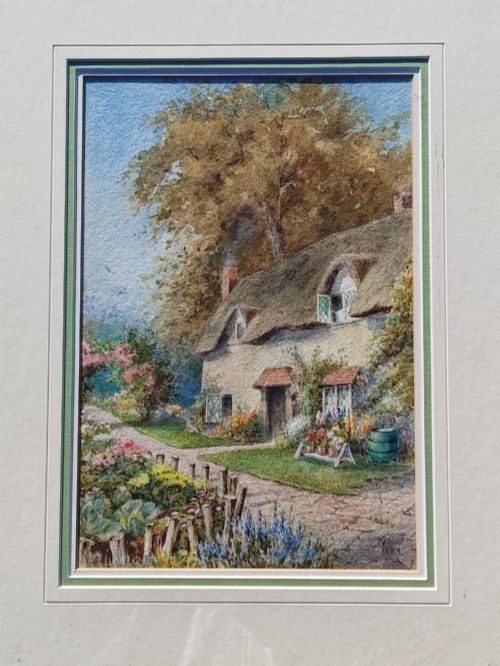
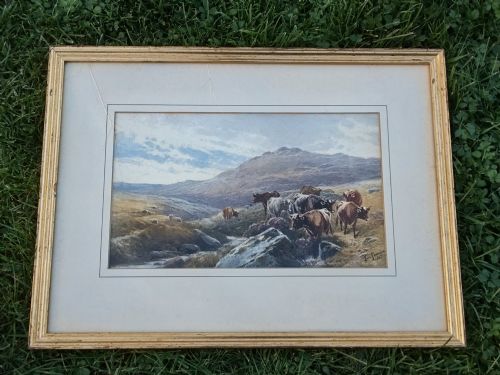
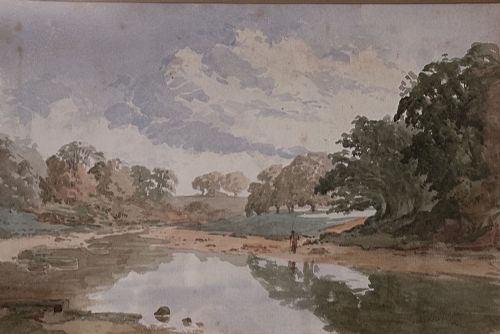
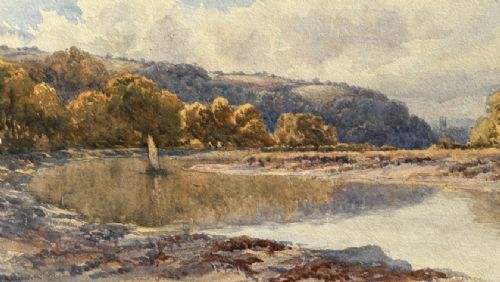
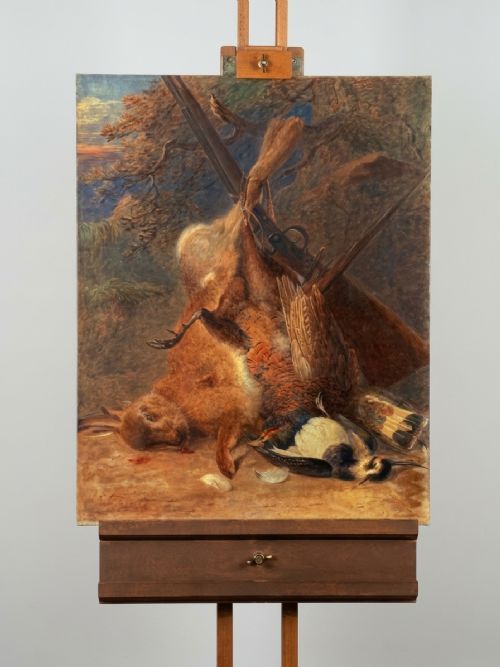
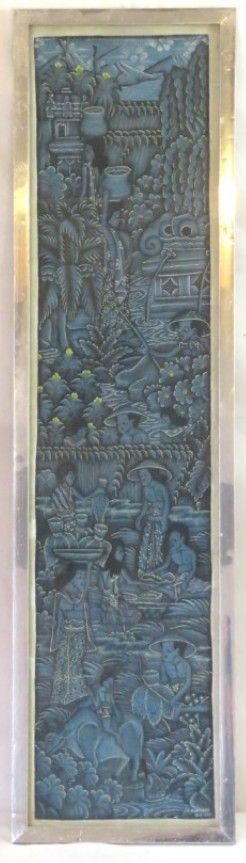
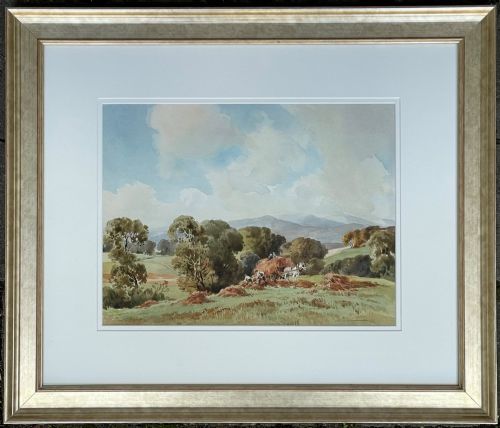
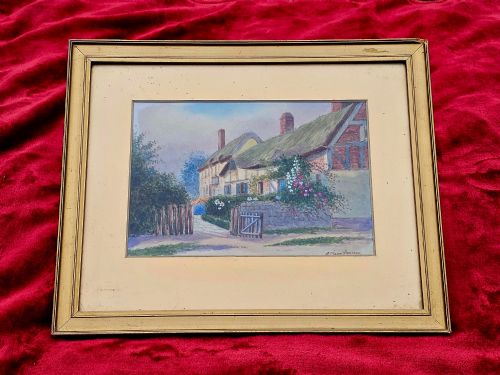
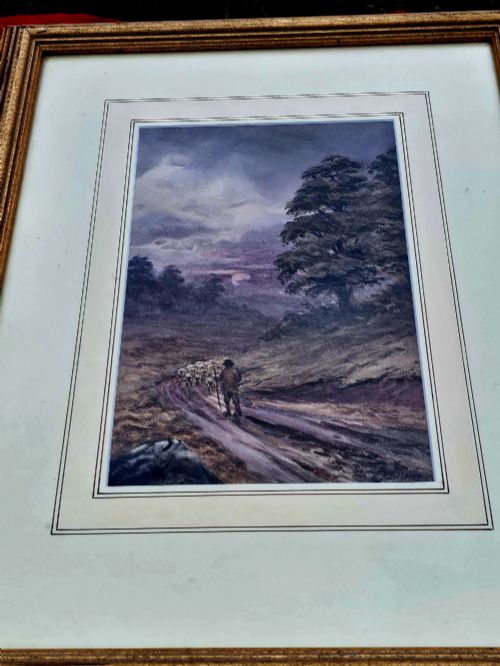
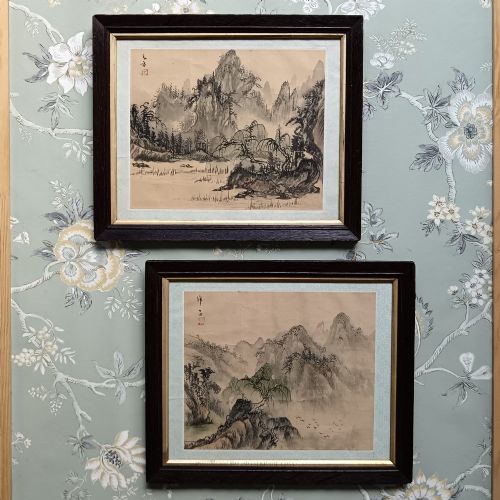
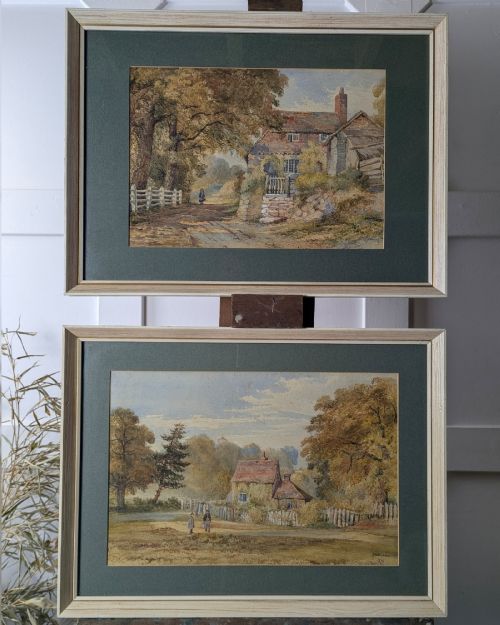
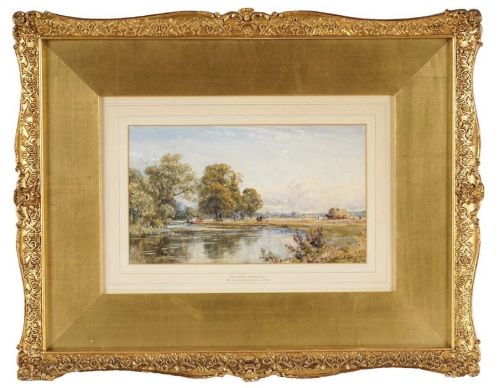
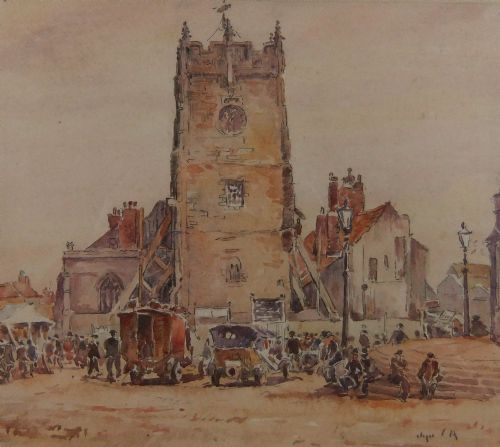
When a buyer searches for traditional watercolours, they encounter framed paintings on paper documenting pastoral views, coastal harbours, and rural cottages. The examples on this page span the nineteenth century through the mid twentieth century, reflecting Victorian, Edwardian, and British Impressionist tastes.
Most pieces depict recognisable British topography, from Scottish rivers and Welsh passes to English country gardens and fishing ports. Alongside these landscape watercolours, works occasionally record figures, animals, and architectural landmarks rendered in precise detail.
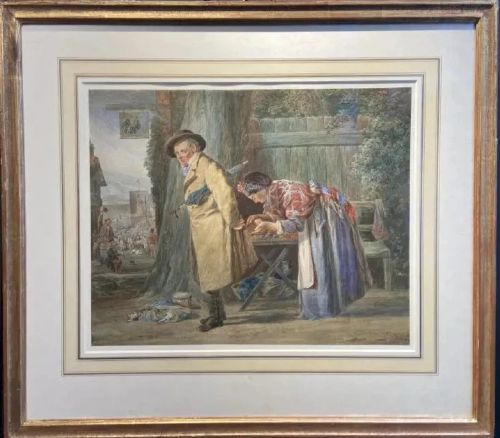
The materials remain consistent across the selection, uniting watercolour pigment, ink, and bodycolour on paper, housed within original wooden and gilt frames protected by glass.
How they were made
Artists apply watercolour pigment suspended in water onto sheets of paper, utilising translucent washes to build luminosity and depth. Detail work often incorporates ink for definition and bodycolour for opaque highlights.
Finished paintings find protection beneath glass and within wooden frames, frequently finished with gilt moulding. These framing choices preserve the fragile paper supports from atmospheric moisture and handling over decades.
Listings feature paper supports, watercolour pigment, and wood frames spanning the nineteenth century to the mid twentieth century.
What varies in quality
Quality rests upon the artist's handling of light, atmospheric perspective, and the preservation of the paper support. Superior works demonstrate confident brushwork and stable pigments that retain their original tonal contrast.
The integration of the original frame and backing paper contributes significantly to the integrity of a piece. Fading from light exposure and surface discolouration distinguish lesser examples from those kept in optimal conditions.
George Sydney Shepherd·Henry Barlow Carter·Henry Charles Fox·Robert Thorne Waite·David Law
The Traditional Watercolours Glossary
- Bodycolour
- Watercolour pigment mixed with a white base to make it opaque rather than transparent. This technique allows artists to add solid highlights and dense details.
- Wash
- A thin, fluid layer of diluted watercolour pigment spread evenly across paper. It creates expansive areas of sky or water.
- Gilt
- A gold leaf or gold coloured finish applied to wooden picture frames. It provides a traditional decorative border for antique artworks.
- Pastoral
- A style of art depicting rural life, countryside landscapes, and agricultural scenes. These works romanticise country living and farming traditions.
- Provenance
- The documented history of ownership surrounding an artwork. It establishes the authenticity and journey of a piece from its creation to the present day.
Traditional Watercolours: Frequently Asked Questions
How should I display traditional watercolours safely?
Hang paintings away from direct sunlight and damp environments to protect the fragile paper supports and pigments from fading or foxing. Utilising UV filtering glass adds an extra layer of conservation.
Ensure pieces remain securely framed with breathable backing materials that prevent moisture accumulation behind the paper.
What subjects are common in these paintings?
The subjects focus predominantly on British landscapes, coastal harbours, pastoral scenes, and rural architecture. Artists also documented specific local landmarks, rivers, and agricultural life.
Occasional works depict portraiture, botanical studies, and still life compositions using the same medium on paper.
Are these watercolours always signed by the artist?
Many examples bear the artist signature or monogram, while others remain attributed based on style, subject matter, and archival records. Unsigned works were frequently produced by competent practitioners or exhibited regionally.
Documentation on the mount or reverse often provides clues to the origin and creator when a signature is absent.