





Ziegler Wool Carpet
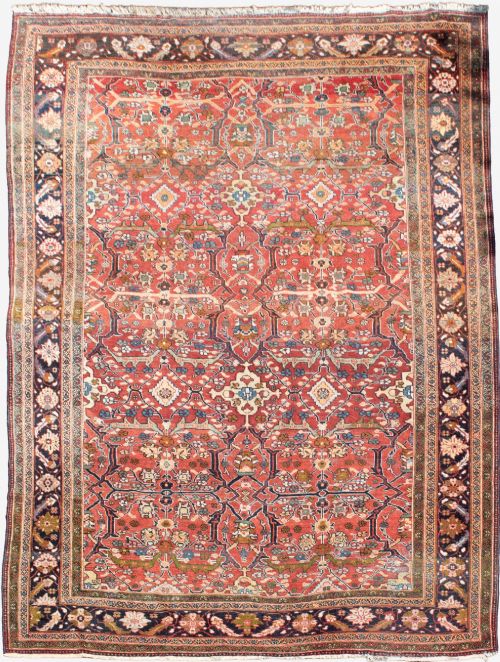
A ziegler wool carpet brings open floral designs and muted colour palettes into large rooms, offering Western taste applied to Persian knotwork.
Ziegler Wool Carpet
When you search for a ziegler wool carpet, you encounter large format floor coverings originating from Persia during the late nineteenth century. These pieces bridge traditional carpet weaving and Western decorative demand by employing softer colourways and expansive open fields.
The selections available here span periods from 1880 to 1900, alongside broader nineteenth century examples. Alongside pieces specifically designated as Ziegler, you will find related regional designations such as Sultanabad, Mahal, and Fereghan.
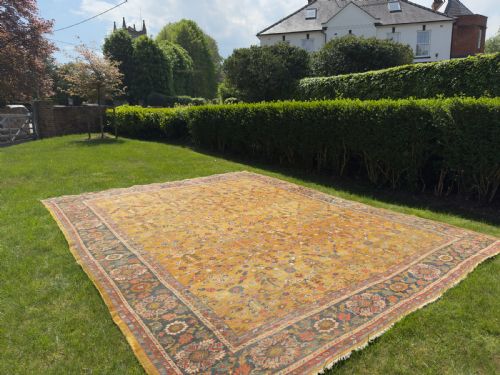
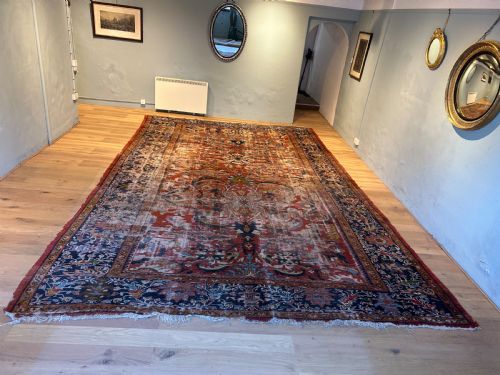
Most entries function as rugs or carpets, ranging from compact area rugs up to palace and country house proportions. The design vocabulary relies on characteristic oversized botanical motifs set against muted grounds.
How they were made
The construction of these floor coverings relies on wool pile knotted onto cotton foundations. This pairing provides durability for heavy floor use while maintaining flexibility across substantial room scales.
Weavers utilised natural dyestuffs to achieve the subdued tones characteristic of the period, producing faded terracotta, soft blues, and muted golds. The technical execution combines traditional Persian knotting methods with designs tailored for European and American drawing rooms.
Listings span the late nineteenth century, specifically featuring pieces dated 1880, 1890, and 1900, alongside broader nineteenth century designations.
What varies in quality
Knot density and the precision of the botanical drawing dictate the upper tiers of quality in these textiles. Finer executions maintain crispness in the floral outlines even across expansive formats.
Condition and scale drive distinction between standard room sizes and palace proportions. Original edge finishes and even wear across the wool pile separate well preserved examples from heavily restored pieces.
Ziegler and Co
The Ziegler Wool Carpet Glossary
- Ziegler
- A nineteenth century commercial enterprise and style associated with large scale Persian carpets made for the Western market. These pieces feature open compositions and softened palettes.
- Sultanabad
- A regional carpet weaving centre in West Persia known for large floral patterns. Pieces from this area often share design traits with Ziegler productions.
- Mahal
- A designation for Persian carpets from the district surrounding Sultanabad. They typically display bolder, spaced floral motifs on muted fields.
- Fereghan
- A Persian weaving style noted for fine knotting and intricate overall patterns. Fereghan influence appears in certain nineteenth century carpet variants.
- Pile
- The upright yarn surface of the carpet formed by the knotted wool. Pile condition determines the texture and visual depth of the design.
Ziegler Wool Carpet: Frequently Asked Questions
How do I date a ziegler wool carpet?
Dating relies on stylistic markers and historical production records from the late nineteenth century. Most examples cluster between 1880 and 1900.
Examination of the wool quality, dye palette, and structural materials provides further indication of the period. Comparing the weave to documented Sultanabad and Mahal pieces helps narrow the timeframe.
Where were these carpets made?
Production took place in Persia, specifically within the Sultanabad region and surrounding districts. Workshops operated under both local and European supervision to supply international markets.
Exports were directed primarily toward Western buyers seeking specific interior decoration standards. This export focus accounts for the distinctive open compositions.
How do I care for an antique wool carpet?
Regular gentle vacuuming without a beater bar removes surface dirt from the wool pile. Professional cleaning suited to antique textiles preserves the natural dyes.
Positioning the piece away from direct sunlight prevents fading of the muted tones. Using a suitable underlay reduces friction and wear against the cotton foundation.
What is the difference between Ziegler and Sultanabad carpets?
Ziegler pieces specifically denote carpets commissioned or produced through the firm Ziegler and Co for Western tastes. Sultanabad refers more broadly to carpets originating from the same Persian region.
In practice, the terms often overlap because Ziegler production centred in and around Sultanabad. Both share characteristic large scale floral designs and softened palettes.