


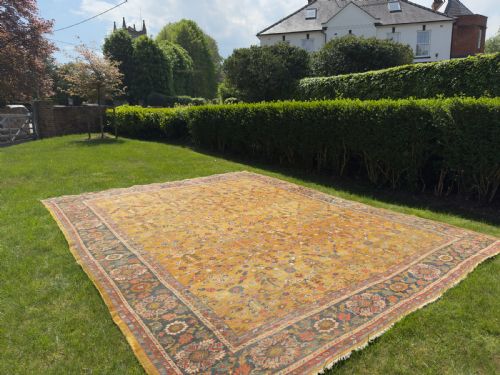

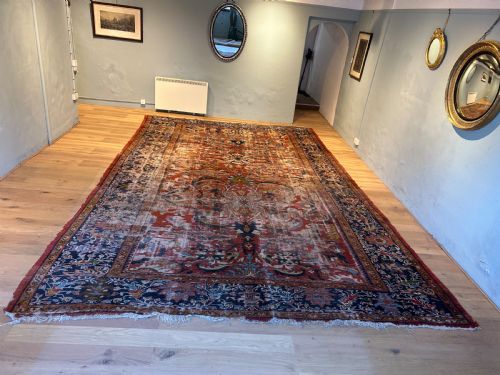


Ziegler Sultanabad Rug
A ziegler sultanabad rug brings grand Persian scale and muted western palettes into a room through masterful nineteenth-century weaving.
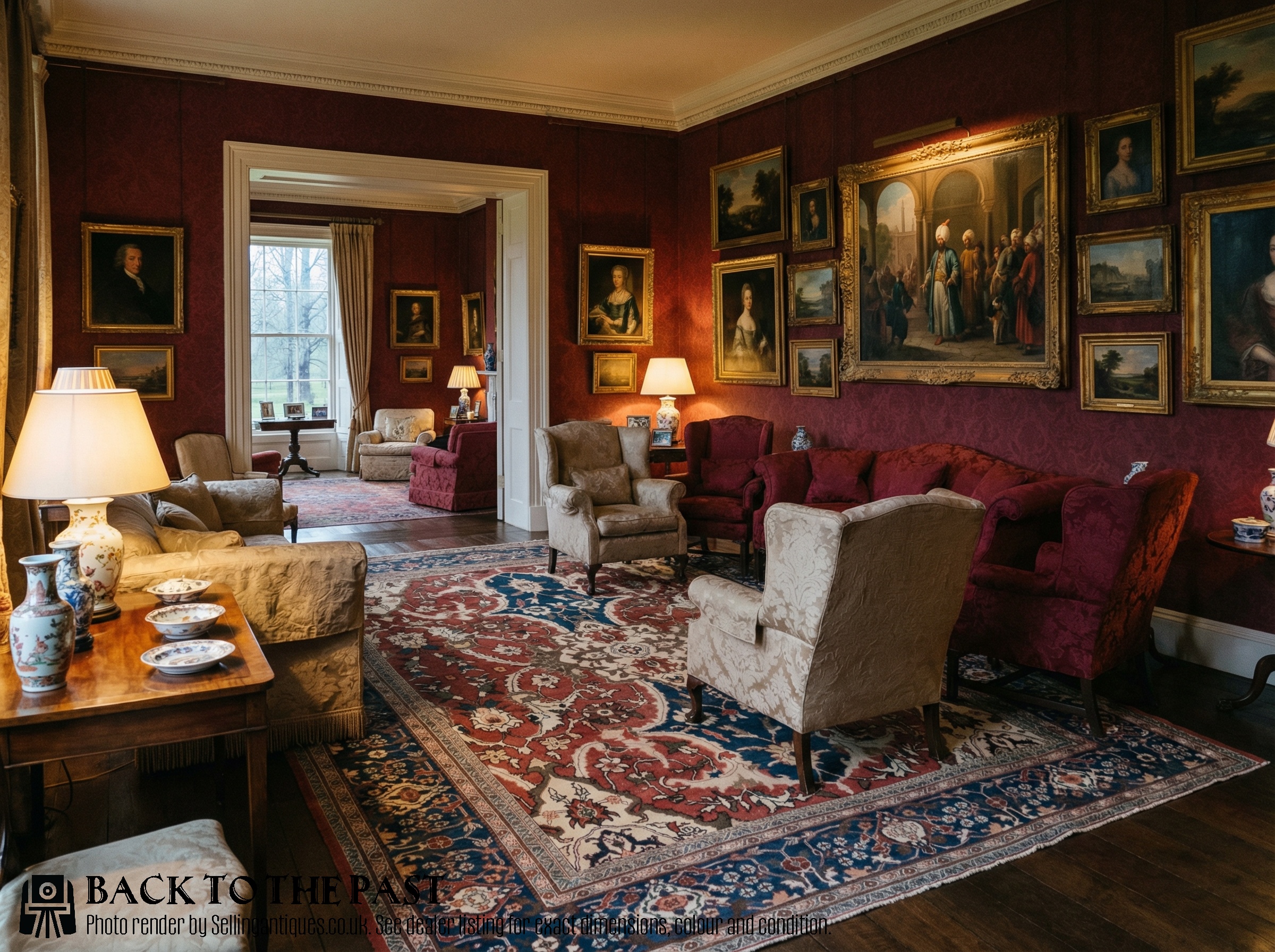
Ziegler Sultanabad Rug
When you examine a ziegler sultanabad rug, you look at floor coverings originating from the West Persia region during the late nineteenth century. These pieces bridge traditional Persian craftsmanship with the interior design demands of Victorian Europe.
The specimens on this page include large palace-size carpets alongside smaller area rugs and formats. Most examples date from the periods around eighteen eighty and eighteen ninety, carrying labels such as Persian Ziegler, Sultanabad, and Ziegler Mahal.
Buyers choose this type for its expansive scale and softer, more open floral motifs than standard tribal carpets. They anchor large reception rooms with muted tones and grand central medallions.
How they were made
Makers utilised wool for the pile to achieve durability and a dense surface texture underfoot. Cotton provided the sturdy foundation threads for both warp and weft foundations.
Weavers knotted wool yarn by hand onto cotton structures in workshops across the Sultanabad region. This combination allowed large carpets to maintain structural integrity while handling heavy foot traffic.
Current listings span the nineteenth century, focusing heavily on production dates around eighteen eighty and eighteen ninety using wool and cotton.
What varies in quality
Knot density and wool quality distinguish fine examples from standard production pieces. Superior wool retains rich natural lanolin, which creates a softer handle and deeper lustre.
Structural scale also dictates merit, as palace-size carpets demand exceptional symmetry and precision across vast expanses of cotton foundation.
The Ziegler Sultanabad Rug Glossary
- Ziegler & Co
- A Manchester-based firm that established production facilities in Sultanabad during the nineteenth century to adapt Persian designs for western tastes.
- Mahal
- A designation for rugs produced in the same region as Sultanabad, often featuring similar overarching design characteristics.
- Warp
- The vertical cotton threads stretched tightly on the loom that form the structural backbone of the rug.
- Weft
- The horizontal threads passed between warp threads to secure the rows of wool knots in place.
Ziegler Sultanabad Rug: Frequently Asked Questions
How do I clean a ziegler sultanabad rug?
Professional specialist cleaning is essential for nineteenth-century wool pile rugs to protect the delicate cotton foundations.
Regular gentle vacuuming without a beater bar removes surface grit before it damages the fibres.
Are these rugs suitable for high traffic areas?
The durable wool pile and cotton construction handle moderate movement in hallways and reception rooms.
Placement in direct, harsh sunlight should be avoided to preserve the softer dyes characteristic of these carpets.
What size do these carpets usually come in?
Dimensions range from compact area rugs up to massive palace-size carpets measuring over five metres in length.
Larger formats dominate the selection, reflecting the original export market requirements for spacious European homes.
How do I identify a period ziegler sultanabad rug?
Look for the characteristic nineteenth-century palette, softer floral layouts, and regional weave structures in wool and cotton.
Attributions often reference West Persia, Sultanabad, or the specific Manchester firm involved in their nineteenth-century production.