
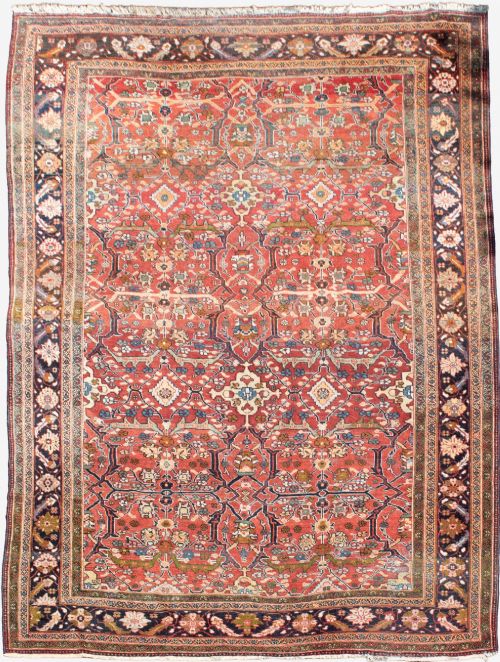


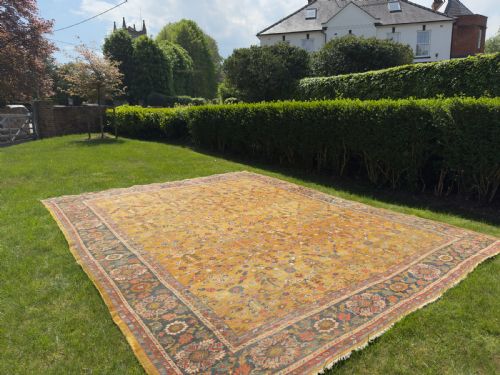

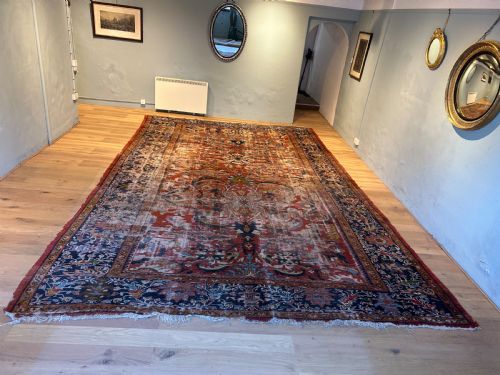


Wool Ziegler Rug
A wool ziegler rug brings nineteenth-century Persian artistry into a modern room with muted palettes and grand scale.
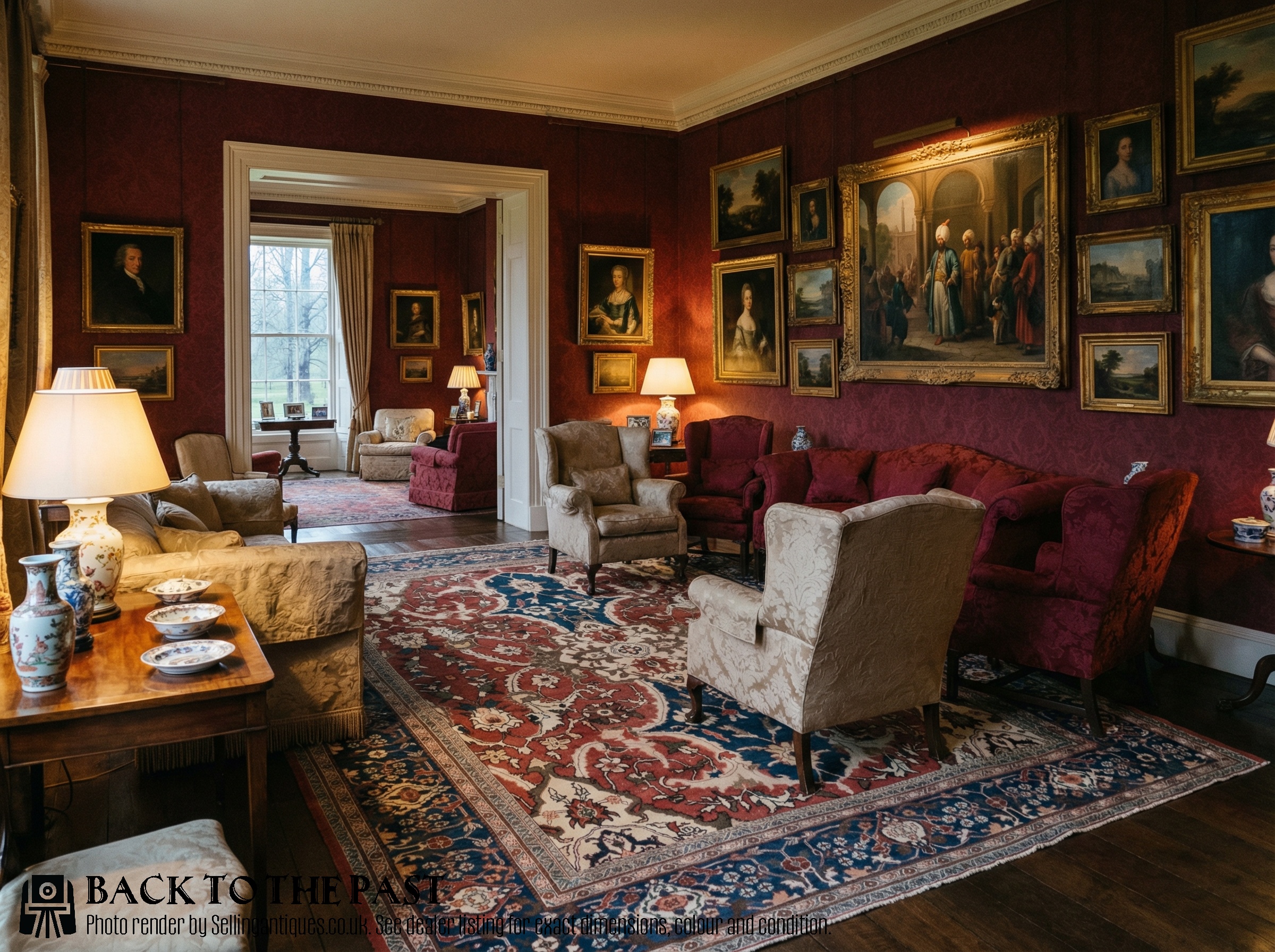
Wool Ziegler Rug
A wool ziegler rug represents a specific nineteenth-century Persian weaving tradition created to suit Western interior tastes. These carpets typically emerge from the Sultanabad and Mahal regions, carrying softer colorways and more open field designs than traditional village carpets.
When searching for a wool ziegler rug, buyers encounter large-format area rugs and palace-size carpets dating principally from the 1880s and 1890s. The selection on this page consists entirely of nineteenth-century Persian pieces, including works associated with Ziegler and Company alongside related Sultanabad and Mahal productions.
How they were made
These carpets combine durable wool pile hand-knotted onto sturdy cotton foundations. The quality of the wool yields a dense, resilient surface designed to withstand heavy use while maintaining a supple drape.
Weavers utilised natural dyestuffs to achieve the characteristic subdued tones that define the style. The combination of hand-spun wool and traditional dyeing methods creates subtle variations in colour across the field.
Nineteenth-century weavers occasionally incorporated slight abrasash variations, recording subtle shifts in mood where dye batches changed mid-knot.
What varies in quality
Knot density and the precision of the drawing dictate the refinement of each piece. Finer examples display greater clarity in the floral motifs and more balanced proportions in the border systems.
The integrity of the foundation and the uniformity of the remaining pile determine the structural longevity of the carpet. Original wool pile depth and even wear across large formats separate standard examples from exceptional palace-size pieces.
Ziegler and Co
The Wool Ziegler Rug Glossary
- Sultanabad
- A West Persian rug-producing centre known for large-scale floral designs. Carpets from this region often share aesthetic ties with ziegler productions.
- Mahal
- A district in Persia encompassing numerous rug-weaving villages. Mahal carpets typically feature all-over patterns and mellow vegetable dyes.
- Fereghan
- A Persian region associated with finely knotted nineteenth-century carpets. Pieces carrying this attribution often show intricate detailing within the field.
- Foundation
- The underlying structure of a rug formed by the warp and weft threads. Cotton serves as the standard foundation material in these Persian carpets.
Wool Ziegler Rug: Frequently Asked Questions
Where were these rugs made?
These carpets originate from the Sultanabad and Mahal districts in West Persia during the nineteenth century. European firms established workshops there to adapt traditional designs for Western markets.
Production focused on creating scaled-down colour palettes and open compositions that suited Victorian drawing rooms. The regional weaving traditions combined local materials with foreign commercial oversight.
How do I care for a wool ziegler rug?
Regular vacuuming without a beater bar removes surface grit and protects the wool pile. Professional cleaning by a specialist familiar with antique vegetable dyes preserves the integrity of the fibres.
Positioning the carpet away from direct sunlight prevents uneven fading of the natural colours. Using a quality underlay reduces friction between the cotton foundation and the floor.
What size do these carpets come in?
The selection ranges from smaller area formats to vast palace sizes exceeding five metres in length. Large formats dominate the inventory, reflecting their original commission for substantial nineteenth-century residences.
Dimensions vary significantly, with square and rectangular proportions both represented in the listings. Buyers should measure their room carefully to accommodate the expansive borders typical of these pieces.
How do I distinguish a Sultanabad from a Ziegler?
Sultanabad and Ziegler carpets share overlapping regional origins and design vocabularies from nineteenth-century Persia. Specific pieces bear direct attribution to the firm Ziegler and Company through documentation or distinct commercial standards.
Both categories utilise hand-spun wool and cotton foundations with muted vegetable dyes. The terminology often reflects commercial distribution alongside geographical weaving origin.