






Blue Ziegler Mahal Rug
A blue ziegler mahal rug brings muted Persian design and grand proportions into a room.
Blue Ziegler Mahal Rug
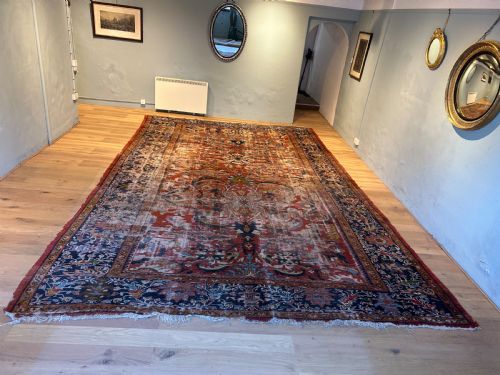
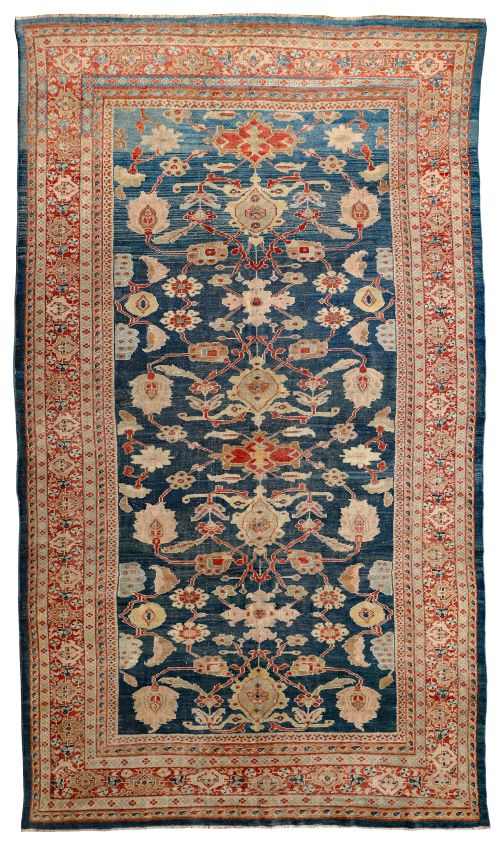
A blue ziegler mahal rug is a large-scale floor covering rooted in nineteenth-century Persian workshop production. These pieces span periods from 1880 to 1900, carrying the distinct aesthetic of the Persian Ziegler and Sultanabad traditions.
Most examples found on this page are substantial carpets rather than small floor mats, often reaching palace sizes exceeding five metres in length. They emerge from the late nineteenth century, reflecting the commercial weaving enterprises established to supply Western tastes.
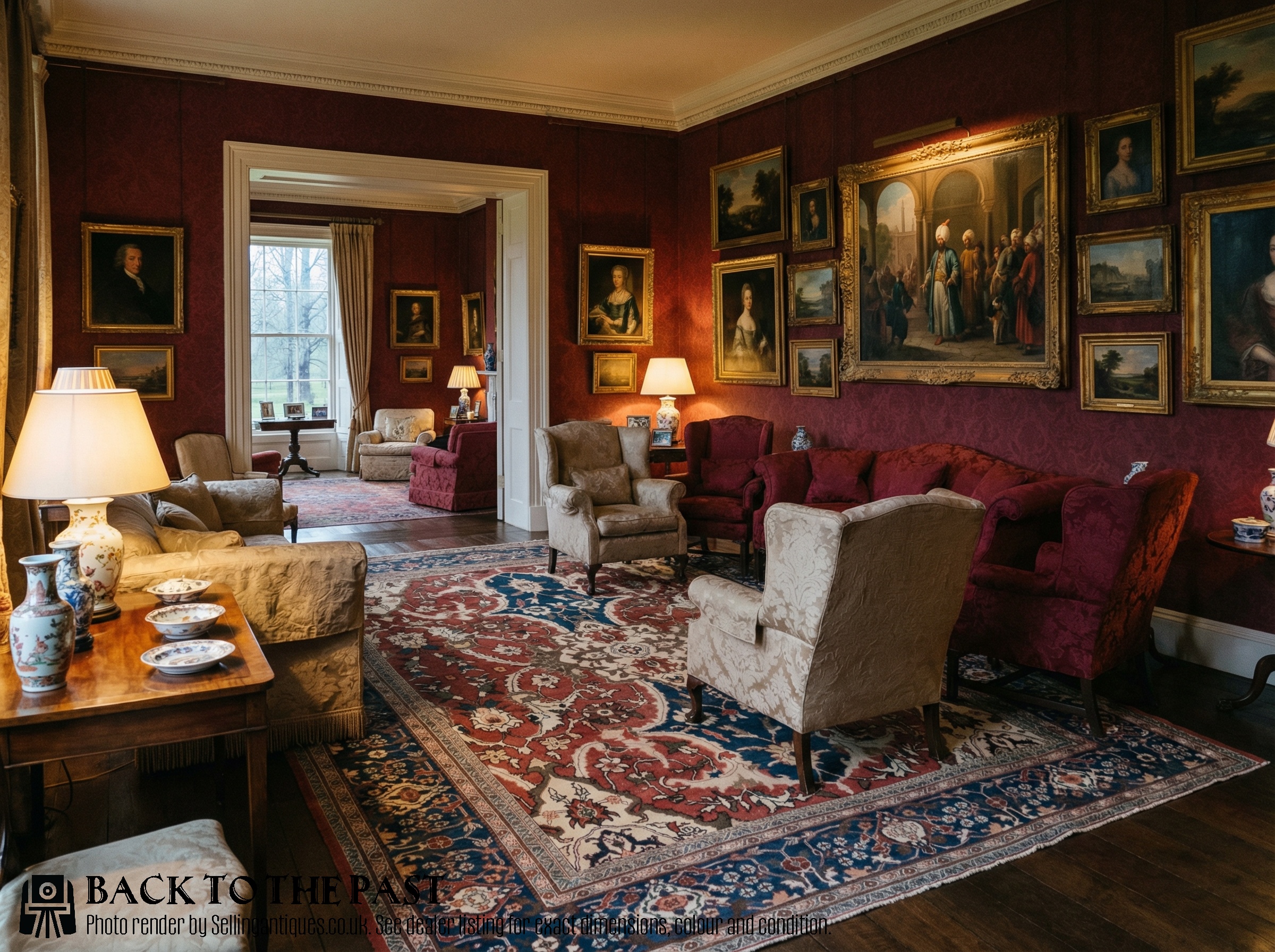
The aesthetic centres on expansive fields and softer vegetable-dyed palettes adapted from classical Persian designs for European drawing rooms. Buyers encounter grand room-size formats suited to high-ceilinged interiors.
How they were made
The construction relies on a sturdy foundation of cotton warps andwefts that supports dense wool pile knotted by hand. Weavers utilised resilient materials capable of enduring heavy foot traffic in large reception rooms.
Dyers employed natural colourants to achieve the characteristic muted tones associated with nineteenth-century Persian workshops. The interplay of wool pile and cotton foundations allows these grand carpets to maintain their structural integrity over centuries.
Some carpets are so vast they require an entire ballroom just to stretch their legs.
What varies in quality
Quality rests in the handling of scale and the fineness of the knotting across expansive formats. Superior examples maintain balanced proportions in the central medallions and border systems, even when stretching to palace proportions.
The nuance of the dye palette and the crispness of the drawing separate standard room-size pieces from exceptional ones. Finer execution in nineteenth-century workshop weaving ensures the large field designs retain clarity.
The Blue Ziegler Mahal Rug Glossary
- Ziegler
- A nineteenth-century Persian carpet style developed for Western export markets. It is known for softer palettes and larger-scale floral motifs.
- Mahal
- A designation for rugs and carpets woven in the district surrounding Sultanabad. These pieces often feature all-over patterns and muted colourways.
- Fereghan
- A Persian weaving style associated with fine knotting and intricate Herati patterns. These rugs originate from a specific valley renowned for quality production.
- Sultanabad
- A regional centre of carpet production in nineteenth-century Persia. It produced large-scale decorative carpets for international buyers.
- Warp
- The stationary vertical threads stretched on a loom that form the foundation of the carpet. Fringe typically extends from these structural elements.
Blue Ziegler Mahal Rug: Frequently Asked Questions
Where did these carpets originate?
These carpets originate from nineteenth-century Persian workshops established to meet European and American demand. The production centred around Sultanabad and surrounding districts.
Master weavers adapted classical Persian designs into larger formats and softer palettes suitable for Western drawing rooms. This heritage defines the characteristic aesthetic of the pieces seen today.
How do I care for a large carpet?
Large wool and cotton carpets require gentle, regular vacuuming without rotating brush heads to protect the pile. Professional cleaning by specialists in antique textiles is essential every few years.
Placing the carpet out of direct strong sunlight preserves the natural dyes. Using a quality underlay prevents slipping and cushions the cotton foundation against hard floors.
What size do these carpets come in?
These carpets typically come in generous room and palace dimensions, often exceeding four or five metres in length. The substantial proportions reflect their original purpose in nineteenth-century reception rooms.
Smaller area rug formats appear less frequently than expansive room-size carpets. Buyers should measure their space carefully to accommodate these grand dimensions.
How can I tell the age of a rug?
Age is identified through structural examination of the wool, cotton foundations, and natural dye characteristics. Nineteenth-century pieces display specific wear patterns and regional knotting techniques consistent with workshops from 1880 to 1900.
Stylistic shifts in the floral motifs and border designs also help date the weaving. Comparing the weave density provides further clues to the period of manufacture.