
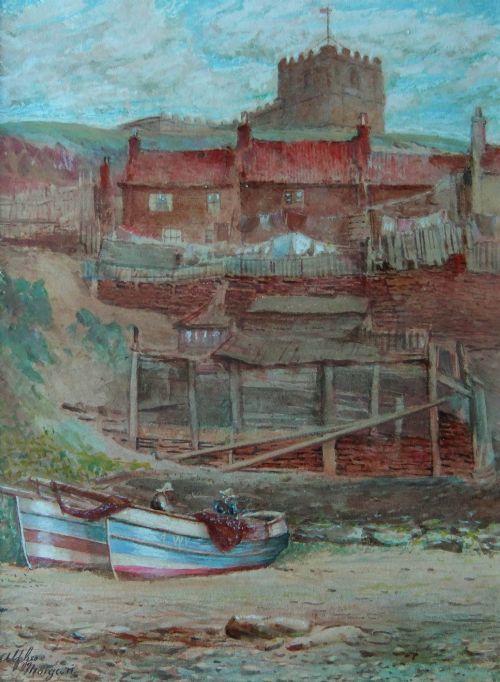


Yorkshire Coastal Scene Artwork
Yorkshire coastal scene artwork captures harbours, fishing communities and dramatic shorelines through the eyes of British painters working from the nineteenth century into the twentieth.
Yorkshire Coastal Scene Artwork
Yorkshire coastal scene artwork primarily comprises watercolour paintings and oil paintings depicting familiar North Yorkshire locations such as Whitby, Staithes, Scarborough and Runswick Bay. These works focus on maritime life, busy harbours, local fishing docks and historic landmarks like Whitby Abbey.
The pieces available span from the Victorian era and the nineteenth century through Edwardian times into the nineteen-twenties and nineteen-thirties. You will most frequently encounter works executed in watercolour pigment on paper, alongside occasional canvas oil paintings depicting coastal views and townscapes.
Artists capture the particular light and atmosphere of the northern coastline, documenting historical views of fishwives, market places and harbour craft. The subjects reflect both the bustling maritime trade and the quieter domestic routines of Yorkshire fishing villages.
What varies in quality
The strength of composition and the handling of light distinguish exceptional works from more modest topographical records. Master painters manage tone and atmosphere with surety, capturing the movement of water and the specific quality of northern daylight rather than merely documenting a scene.
Condition and preservation play a vital role in watercolours on paper, where stability of pigment and absence of foxing preserve the original visual impact. The quality of the framing, particularly period gesso and wood mouldings, also contributes to the integrity of the piece.
Several Victorian artists clearly braved the bracing Yorkshire winds with easel and brush to capture fishermen mending nets right on the quay.
Alfred G Morgan·Arthur Tucker·James Watson·Kate E Booth·George Hamilton Constantine·Rowland Henry Hill·Harry Wanless·Thomas Clavering Alder·Robert Farren·Walter Emsley·Frank Rousse·Fred Lawson·Donald Wood·Walter Meegan·Alec Caruthers Gould
The Yorkshire Coastal Scene Artwork Glossary
- Watercolour
- A painting method in which the paints are made of pigments suspended in a water-based solution. It allows for transparent washes of colour on paper support.
- Gesso
- A plaster mix used as a base for moulding or framing before gilding or painting. It provides a smooth surface on wooden frames.
- British Impressionism
- A painting style developed in the late nineteenth and early twentieth centuries that focuses on light, brushwork and everyday subjects. Artists working in this manner moved away from rigid academic finishes.
- Flither pickers
- Collectors of limpets and shellfish along the shore for bait and food. The term appears in nineteenth-century Yorkshire coastal subjects.
- Marine oil painting
- An artwork executed in oil pigment on canvas depicting ships, harbours and coastal seascapes. This medium offers deep colour saturation and durability.
Yorkshire Coastal Scene Artwork: Frequently Asked Questions
What subjects do these paintings show?
The works depict recognizable Yorkshire locations including Whitby harbour, Staithes, Scarborough and Runswick Bay. Scenes frequently record local fishing vessels, market places, historic abbeys and daily coastal activities.
Artists document the landscape and maritime heritage of the North Yorkshire coast from the Victorian period through the early twentieth century. These views offer a record of fishing communities and coastal architecture from the past.
How should I care for a watercolour?
Watercolours on paper require protection from direct sunlight to prevent fading of the pigments over time. Glazing helps shield the paper surface from airborne dust and moisture.
Maintain stable indoor humidity levels where the artwork hangs. Professional framing using acid-free materials ensures long-term preservation of the paper support.
What periods are represented here?
The selection spans from the nineteenth century and the Victorian era into the Edwardian period, nineteen-tens, nineteen-twenties and nineteen-thirties. This timeline covers the transition from Victorian realism towards early twentieth-century British art movements.
Different decades bring distinct artistic approaches to coastal subjects, ranging from detailed maritime records to looser impressionistic interpretations of light and weather.
What is the difference between oil and watercolour?
Watercolours use pigment suspended in water on paper, yielding a transparent and luminous quality. They are typically framed under glass to protect the delicate paper surface.
Oil paintings use pigment bound in drying oil applied to canvas, allowing for heavier impasto and deeper colour layering. Oils present a textured surface that reflects light differently than paper works.