


Yorkshire Coast Art
Yorkshire coast art captures maritime scenes, fishing villages and stormy harbours painted across the nineteenth and twentieth centuries.
Yorkshire Coast Art
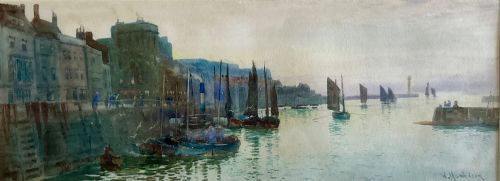
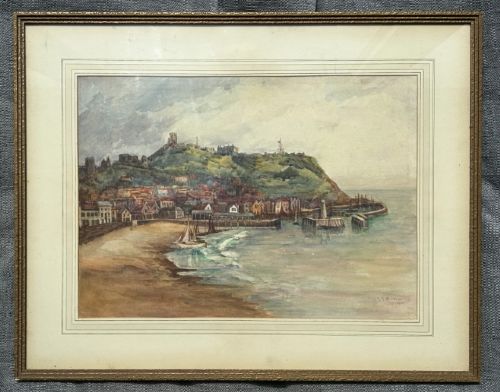
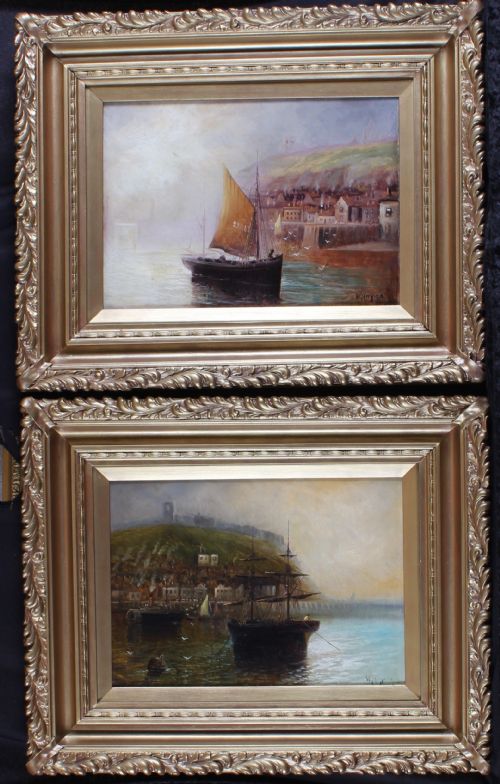
Yorkshire coast art encompasses paintings depicting local coastal scenes, harbours and maritime activity along the eastern seaboard of England. The pieces you encounter here range from Victorian watercolours to mid-century impressionist works.
Most examples focus on specific locations such as Whitby, Scarborough, Runswick Bay, Staithes and Robin Hood's Bay. These topographical depictions record working fishing communities, local vessels like cobles, and distinct geological formations.
The selection leans heavily towards works executed on paper, canvas and artist board. Painters utilised these supports to render sea and sky under varying atmospheric conditions.
Materials and techniques
Watercolour pigment on paper forms a significant portion of the works, often combined with pencil outlines or bodycolour highlights. Artists applied washes to capture translucent effects in water and shifting skies over the North Sea.
Oil paint on canvas and artist board provides heavier impasto and richer textures. Painters built up pigment to describe the turbulent movement of choppy waters and the solidity of harbour walls.
Support materials reflect the working methods of artists painting outdoors or in coastal studios. Canvas stretched over wooden frames and prepared boards offer durable surfaces for both rapidplein-air sketches and finished studio compositions.
Yorkshire Coast Art Retail Price Guide 2026
Typical asking prices for yorkshire coast art among the pieces listed under this phrase on Sellingantiques today, from the lower quarter to the upper quarter. They describe what is for sale here now, not the wider market.
Local seaweed gatherers share coastal waters with herring drifters and traditional fishing cobles.
Distinctions in quality
Quality rests upon the artist's command of light, atmosphere and maritime topography. Finer examples display confident brushwork and accurate draughtsmanship in rendering rigging, hulls and coastal architecture.
Compositional balance separates standard topographical records from more accomplished artistic interpretations. Stronger pieces integrate human figures, such as seaweed gatherers or fishermen, harmoniously into the broader coastal landscape.
William Matthison·F A Roylance·William J B Jenkins·Robert Leslie Howey·Frank H Mason·George Hamilton Constantine·Frederick William Booty·Kate E Booth·William Kay Blacklock·Julian Drummond·Harry Wanless·James Watson·Edward T Jones·Walter Meegan·Alec Caruthers Gould·Fred Stead·Fred Dade·Henry Barlow Carter·Edith E Hoyle
The Yorkshire Coast Art Glossary
- Coble
- A traditional type of open fishing boat native to the north-east coast of England. These flat-bottomed craft featured high bows and were designed for launching from open beaches.
- Watercolour pigment
- A colourant suspended in a water-soluble binder, used on paper supports. This medium allows for rapid application and luminous washes.
- Oil on canvas
- Pigment mixed with drying oil applied to a woven fabric stretched across a frame. This combination permits deep tonal gradations and varied surface textures.
- Board
- A rigid substrate used as an alternative to canvas for painting. Artists frequently utilised artist boards for smaller coastal studies.
Yorkshire Coast Art: Frequently Asked Questions
What subjects appear most often in Yorkshire coast art?
Paintings frequently depict harbour scenes, fishing vessels and coastal villages along the North Yorkshire shore. Whitby, Scarborough and Runswick Bay recur across multiple works.
Artists also recorded local maritime industries, including fishing fleets and the gathering of seaweed along the rocky shores.
Which periods do these coastal paintings span?
The works date from the nineteenth century through to the middle of the twentieth century. Victorian and Edwardian examples sit alongside mid-century interpretations.
Styles shift from traditional maritime realism towards British impressionism as the decades progress.
What mediums were used by these artists?
Watercolour pigment on paper is particularly common among the regional views. Artists valued watercolours for capturing atmospheric coastal light and weather.
Oil paint on canvas and artist board also appears frequently, offering a heavier texture suitable for choppy seas.