



Yomut Woven Textile
These pieces of yomut woven textile bring the nomadic heritage of the Trans-Caspian steppes directly into modern interiors through striking geometric motifs.
Yomut Woven Textile
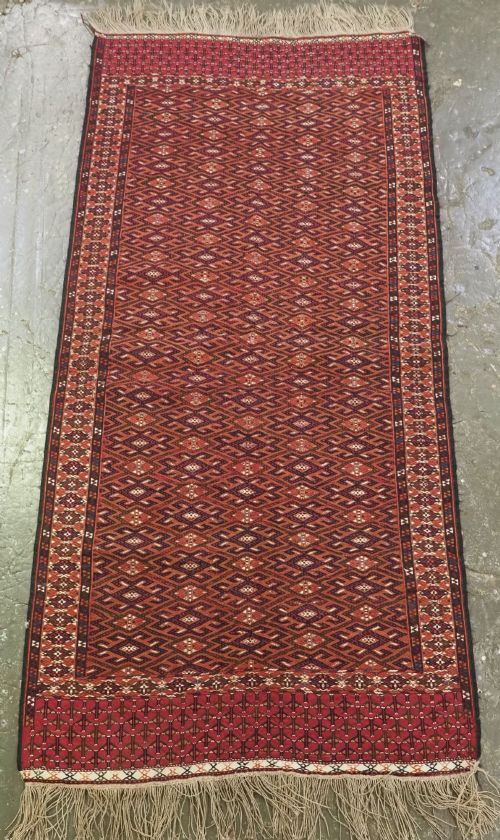
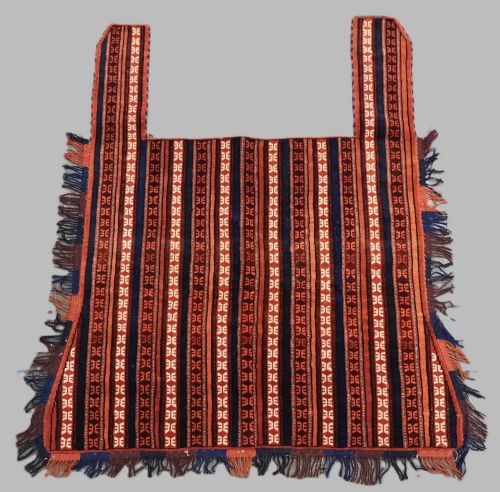
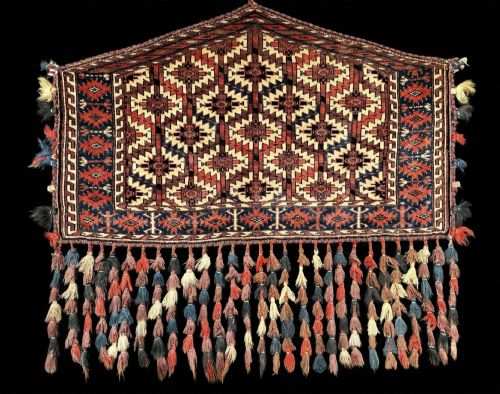
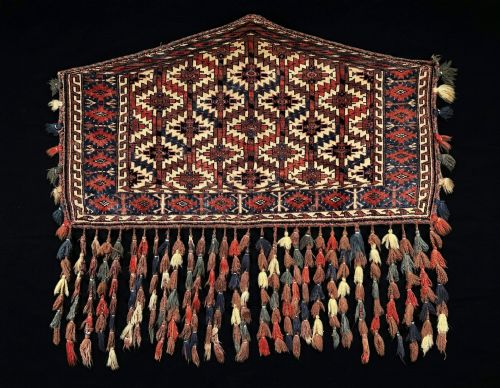
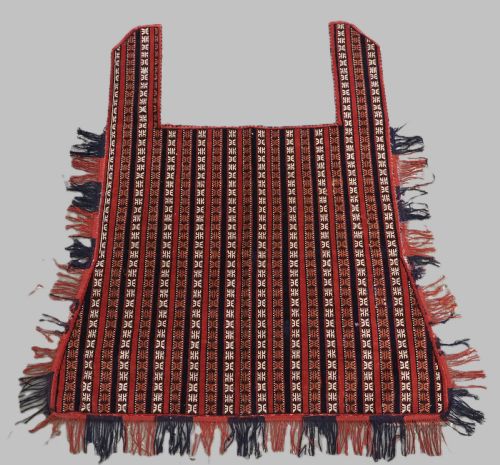
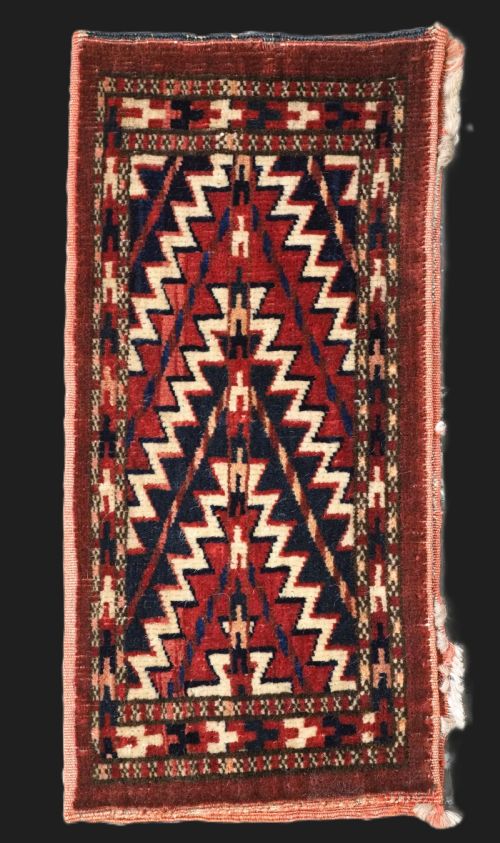
A yomut woven textile originates from the Turkmen tribes of Central Asia, taking forms shaped by daily nomadic life and ritual necessity. Buyers encounter items ranging from utilitarian storage bags and tent-pole covers to ceremonial horse blankets and asmalyks.
The selection on this page centres on pieces produced across the nineteenth and early twentieth centuries, reflecting traditional tribal patterns. These items served practical functions within the yurt while expressing identity through distinctive weaving structures.
Wool and natural dyes
Makers utilised hand-spun wool and cotton, combining pile knotting with flatweave techniques to create durable textiles. Natural dyes provided the characteristic deep palette seen across horse covers, torbas, and spindle bags.
Structures vary from soumak palas kilims to full pile asmalyks with tassels, demonstrating the technical versatility of Turkmen weavers. The integration of dyed yarn created the repetitive geometric guls characteristic of these tribal works.
Yomut Woven Textile Retail Price Guide 2026
Typical asking prices for yomut woven textile among the pieces listed under this phrase on Sellingantiques today, from the lower quarter to the upper quarter. They describe what is for sale here now, not the wider market.
The listings span from the eighteen-sixties to the nineteen-twenties, documenting decades of Turkmen tribal woolwork.
Density and handling
Finer knot density and tighter flatweave construction distinguish the upper tier of these textiles from simpler utilitarian items. The clarity of the design motifs and the richness of the natural dye palette indicate the weaver's skill.
Preservation of original backs, tassels, and complete formats elevates the standing of individual pieces. The precision in executing complex guls separates standard domestic containers from ceremonial examples.
The Yomut Woven Textile Glossary
- Asmalyk
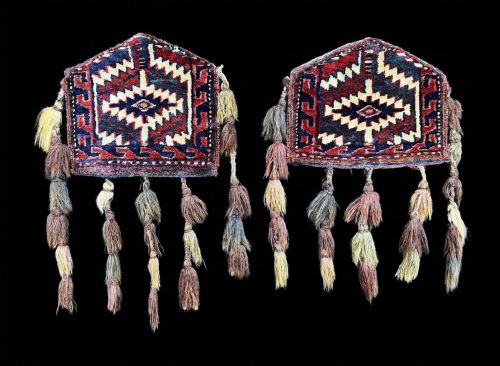
- A pentagonal trapping often produced in pairs for camel weddings and tribal ceremonies. These decorative pieces display intricate Turkmen tribal designs.
- Torba
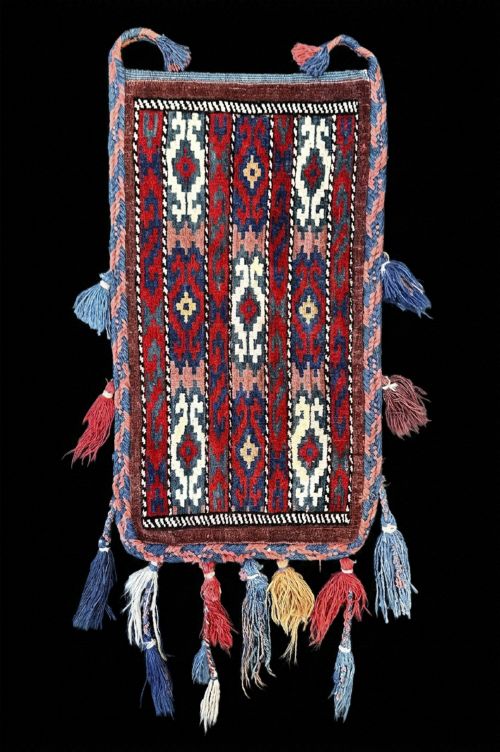
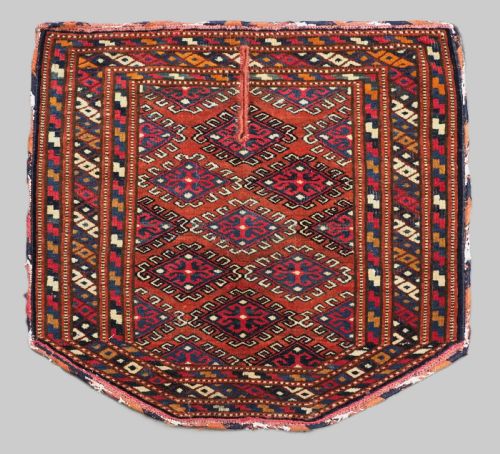
- A small storage bag utilised within the tent for household possessions. They feature structured banded flatweave or pile designs.
- Chuval
- A large tent-storage bag woven by nomadic groups for bedding and clothing. These pieces typically exhibit repeating gul patterns across the face.
- Soumak
- A flatweaving technique producing a durable structure resembling cable stitch on the surface. This method creates crisp geometric lines without pile.
- Gul
- A primary medallion motif repeated across Turkmen rugs and bags to denote tribal affiliation. Each design identifies the specific weaving group.
Yomut Woven Textile: Frequently Asked Questions
What is an asmalyk?
An asmalyk is a large pentagonal trapping traditionally used to decorate wedding camels during Turkmen ceremonies. These pieces represent some of the most elaborate tribal weaving.
They display distinctive Yomut design structures and were treasured family possessions passed down through generations.
How were spindle bags used?
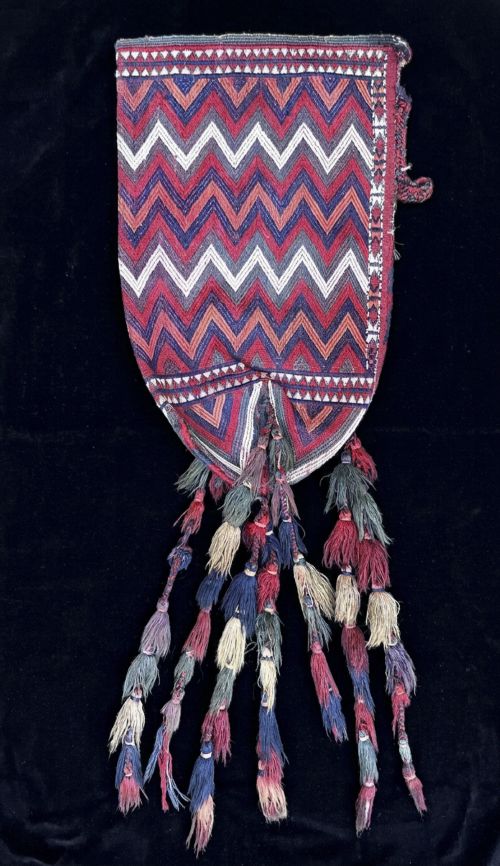
Spindle bags, known as igsalyks, held wool spinning tools and raw materials during daily camp life. Their narrow formats accommodated portable equipment for nomadic women.
Many examples survive with plain weave backs intact, showing their practical role in pastoral households.
Where did Yomut weavers live?
Yomut tribes inhabited the Trans-Caspian steppes of Central Asia, primarily modern-day Turkmenistan. Their nomadic lifestyle influenced the portable nature of their woven textiles.
This geography shaped the materials used, relying heavily on locally sourced sheep's wool and natural dye stuffs.
How do I hang a textile?
Flatweave rugs, chuvals, and wall hangings mount well using non-damaging sleeve methods or specialist textile conservation Velcro. Proper weight distribution prevents distortion of the wool structure over time.
Displaying these pieces away from direct sunlight protects the natural dyes from fading.