
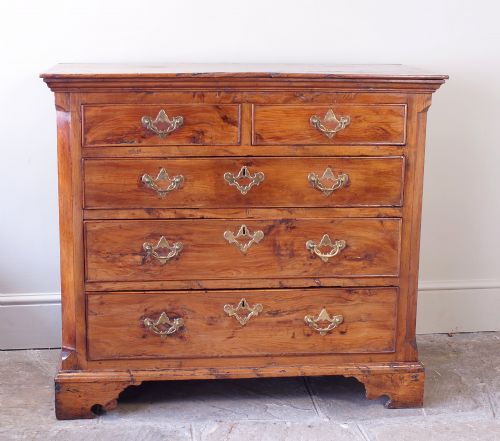
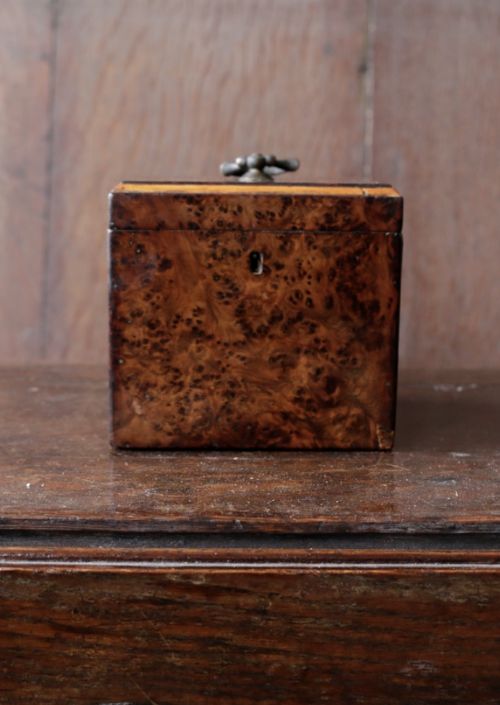


Yew Wood Chest
A yew wood chest brings a distinct golden warmth and rich grain pattern to any room, offering both history and sturdy storage.
Yew Wood Chest
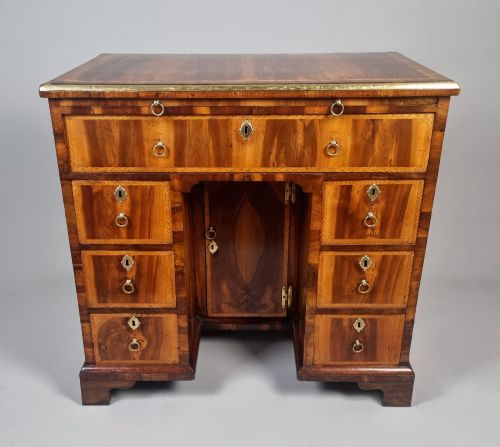
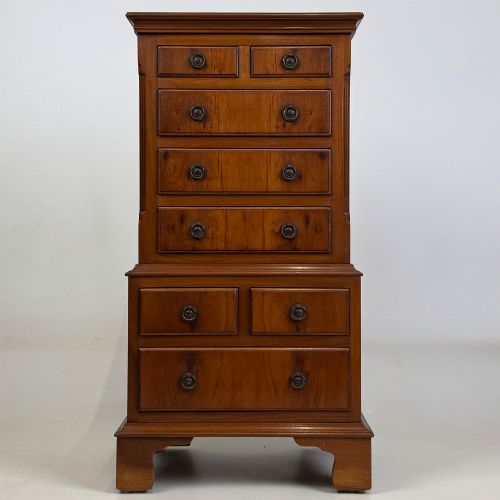
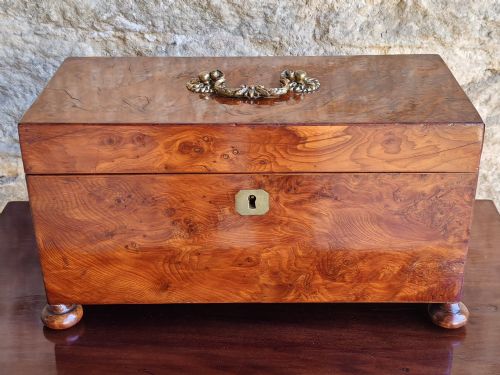
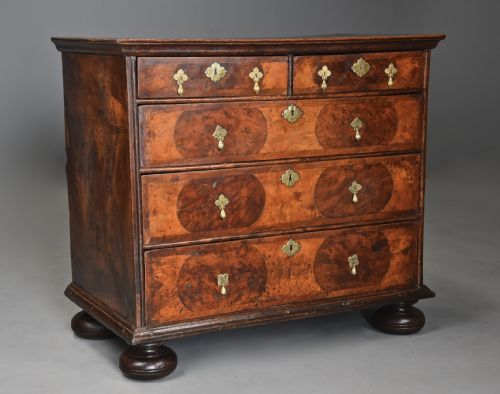
When searching for a yew wood chest, a buyer encounters a diverse range of furniture forms spanning multiple centuries, from seventeenth-century oyster-veneered examples to twentieth-century utility pieces. The most common forms on this page include traditional chests of drawers, smaller campaign styles, and miniature apprentice pieces, often shaped during the Georgian and Regency periods.
The material itself varies greatly in appearance, utilising straight-grained timber alongside heavily figured burr yew, walnut, and oak. These pieces reflect stylistic shifts across the 17th Century, 18th Century, Regency, and Edwardian eras, demonstrating how cabinetmakers adapted durable native wood into practical domestic items.
How they were made
Makers utilised solid yew and intricate veneers, frequently applying oyster cuts or burr sections over foundational timbers like oak and walnut. Surfaces often incorporated brass handles, bone details, and delicate stringing to accent the rich natural figuring of the wood.
Joinery techniques evolved across the periods represented, moving from early chest on stand constructions and dovetailed drawer linings to campaign brass binding and Edwardian framing. Craftsmen paired these structural methods with polished finishes to highlight the distinctive grain patterns.
Listings feature items built from the 17th Century through to the 1930s, utilising brass, bone, oak, walnut, and solid or veneered yew wood.
What varies in quality
The standard of a piece rests on the choice of timber and the complexity of its grain, with heavily figured burr yew and tightly patterned oyster veneer commanding greater visual depth. The skill of the veneer matching across drawer fronts and top panels distinguishes standard domestic furniture from finer workshop output.
Proportion and original brass hardware further separate examples within the range. Pieces retaining their early handles, stable carcass structures, and clean interior drawer construction show the enduring care of their original makers.
The Yew Wood Chest Glossary
- Burr yew
- A growth deformity in the yew tree that yields a swirling, highly figured wood grain prized for decorative veneer.
- Oyster veneer
- Small circular or oval slices cut across branches or small trunks, laid in patterned arrangements resembling oyster shells.
- Campaign chest
- A modular piece of furniture made in sections with brass corners and recessed handles, designed for military travel.
- Chest on stand
- A cabinet or set of drawers elevated on a separate frame with legs, common in seventeenth and eighteenth-century designs.
- Featherbanding
- A type of inlay using contrasting strips of wood arranged in a V-shape pattern around drawer edges.
Yew Wood Chest: Frequently Asked Questions
How do I date a yew wood chest?
Dating relies on observing construction methods, timber combinations, and overall stylistic details like bracket feet or brass hardware.
Comparing the drawer linings, backboards, and handles to known period examples helps clarify whether a piece originates from the 18th Century or later revivals.
What is burr yew?
Burr yew comes from an irregular growth on the tree that produces dense, complex swirls and knots across the timber.
Cabinetmakers sliced this wood into thin veneers to cover drawer fronts and table tops, creating rich patterns that stand out from straight-grained timber.
Are these chests made of solid yew?
While some examples feature solid yew wood boards, many period pieces use yew veneers applied over secondary woods like oak, pine, or walnut.
This technique provided stability for large surfaces while showcasing the decorative grain of the yew on the exterior.
How should I care for yew wood furniture?
Maintain the wood by keeping it away from direct sunlight and maintaining stable room humidity to prevent veneer lifting or timber splitting.
Apply a traditional wax polish occasionally to nourish the surface and preserve the soft sheen on the antique finish.